TL;DR:
- Florida’s hot climate and intense UV exposure lead to accelerated pool surface wear, making warranties crucial for protection. Proper startup chemistry within 28 days is essential, as improper procedures void most warranties, especially with salt systems. Regular maintenance, clear contractor guidance, and choosing durable finishes with longer warranties help homeowners safeguard their investment.
Florida’s punishing heat, intense UV exposure, and year-round swim seasons put pool surfaces under serious strain. Most homeowners focus on the cost of resurfacing and overlook the warranty entirely until something goes wrong. That’s when they discover their coverage was voided by a single chemistry mistake made during the first month after resurfacing. Understanding how pool resurfacing warranties work, what they truly cover, and how Florida’s climate shapes their terms is the difference between real protection and a very expensive lesson.
Table of Contents
- What is a pool resurfacing warranty?
- How warranties safeguard your investment
- Common pitfalls that void warranties
- Choosing the right warranty for your pool finish
- What most pool owners miss about warranties
- Get professional resurfacing and warranty guidance
- Frequently asked questions
Key Takeaways
| Point | Details |
|---|---|
| Warranty basics | Pool resurfacing warranties protect against defects but often exclude environmental and maintenance errors. |
| Climate risks | Florida’s heat and humidity can void or reduce warranty coverage if water chemistry is neglected. |
| Avoiding mistakes | Improper startup chemistry or early salt addition are leading causes of warranty denial. |
| Matching warranty to needs | Choose warranties based on finish type, climate resilience, and pool usage. |
| Ongoing diligence | Maintaining detailed records and following post-resurfacing protocols preserves warranty benefits. |
What is a pool resurfacing warranty?
A pool resurfacing warranty is a guarantee from the contractor or material manufacturer that the new surface finish will perform as intended for a defined period. It is not the same as a general pool warranty. It does not cover your pump, heater, filter system, or any mechanical equipment. The warranty applies specifically to the applied finish, whether that’s marcite plaster, quartz aggregate, or a premium material like Pebble Tec®.
Coverage typically addresses:
- Delamination (when the finish separates from the shell)
- Blistering or bubbling in the surface material
- Cracking that results from application errors
- Discoloration caused by material defects
What it does not cover is equally important. Most warranties exclude damage caused by improper water chemistry, physical impact, freeze events, and acts of nature. One of the most significant exclusions involves startup chemistry. Improper startup chemistry or salt addition within the first 28 days voids the warranty outright on many finishes. That is a narrow window that catches homeowners off guard constantly.
Understanding these exclusions before you sign is critical. Ask your contractor for the full warranty document, read every exclusion clause, and keep a copy somewhere you will actually find it.
Pro Tip: Request your contractor’s specific startup checklist at the time of the estimate, not after the job is done. Many contractors have a written protocol for the first 30 days. Getting that document early gives you time to ask questions and prepare your maintenance plan.
For a deeper breakdown of how these documents are structured, reviewing pool surface warranties specific to Florida conditions is a smart first step.
How warranties safeguard your investment
With a basic understanding of what resurfacing warranties offer, let’s see how they directly impact your finances and pool resilience.
The financial difference between having and not having a valid warranty becomes clear when something goes wrong. A full pool resurfacing job in Florida ranges from $5,000 to over $15,000 depending on pool size and finish type. If delamination appears two years into a five-year warranty, a valid claim means you pay nothing for the repair. Without warranty coverage, you bear that full cost.
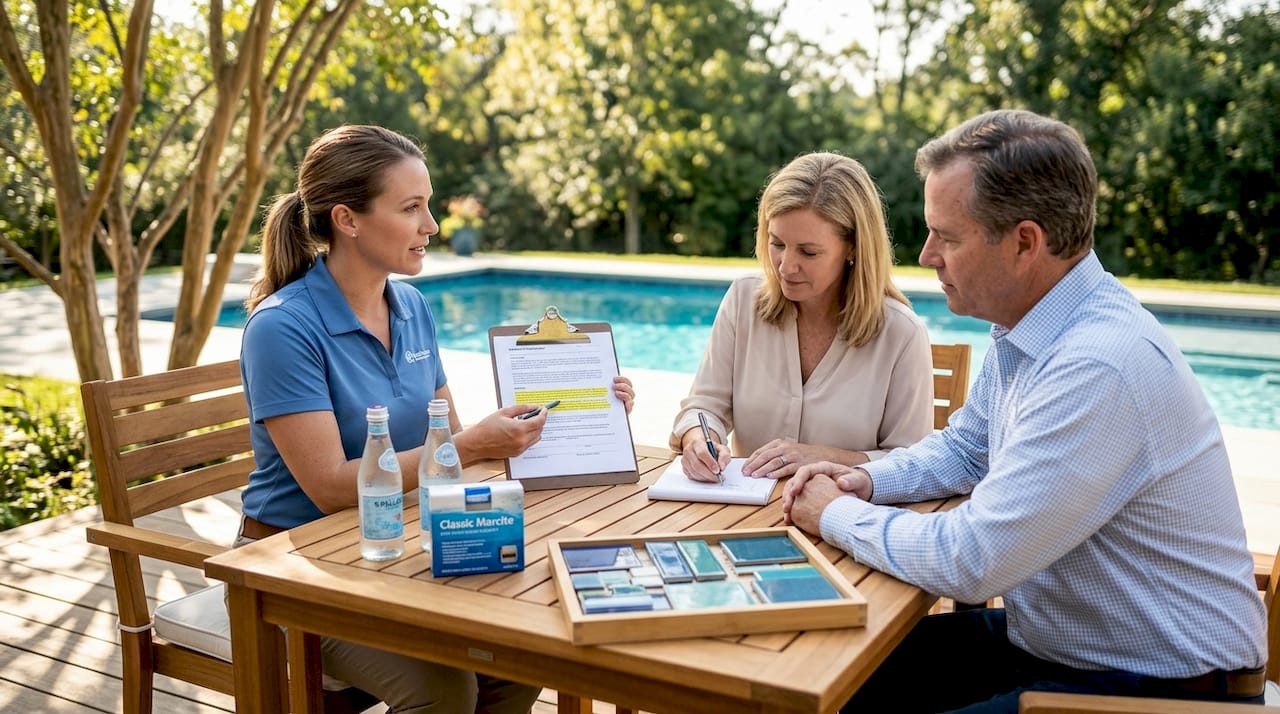
Florida’s heat and humidity accelerate surface wear when water chemistry is out of balance, meaning unprotected homeowners face repair costs sooner than they would in cooler climates.
| Scenario | With valid warranty | Without warranty |
|---|---|---|
| Delamination at year 2 | $0 repair cost (covered) | $3,000 to $8,000 out of pocket |
| Surface discoloration (defect) | Contractor corrects at no charge | You negotiate and often pay |
| Application-related cracking | Fully remedied under warranty | Full repair cost falls on you |
| Chemistry-caused scaling | Not covered (excluded) | Same, but no warranty dispute |
Notice the last row. A warranty does not save you from chemistry mistakes. It saves you from contractor or material failures. That distinction matters for how you upgrade pool surface durability over time.
Steps in a typical pool resurfacing warranty claim:
- Document the problem. Photograph the affected area and note the date it appeared.
- Review your warranty document. Confirm the issue type is covered and you are within the coverage window.
- Contact your contractor in writing. Email is better than a phone call because it creates a paper trail.
- Schedule an inspection. Most contractors will visit to assess whether the problem falls under warranty.
- Receive a written repair or denial decision. If denied, ask for the specific exclusion cited in writing.
- Follow up on repair completion. Confirm the repair is done to your satisfaction before closing the claim.
One statistic worth noting: properly resurfaced pools with consistent maintenance and valid warranty support can extend surface life by 5 to 10 additional years compared to unprotected surfaces in Florida’s climate. Understanding how the weather impact on pool resurfacing shapes both finish lifespan and warranty terms keeps you ahead of problems rather than reacting to them.
Common pitfalls that void warranties
Knowing the benefits is only useful if you can hold on to them. Most warranty voids in Florida come from a short list of predictable mistakes.
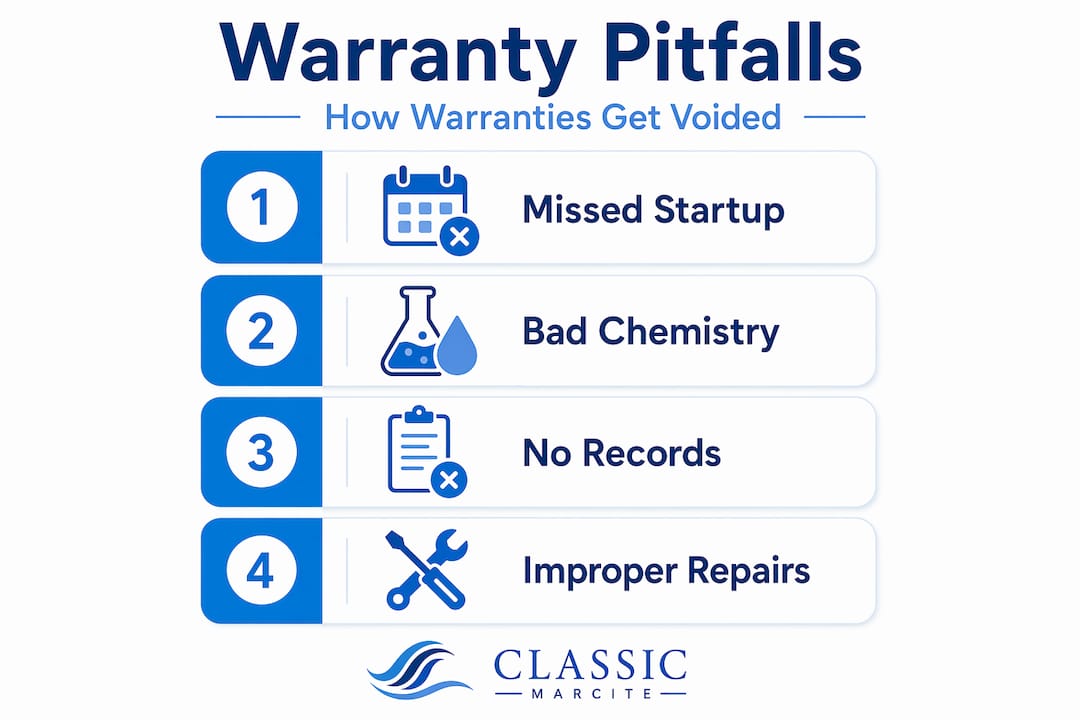
The most common warranty-voiding mistakes:
- Adding salt to a saltwater system within 28 days of resurfacing
- Using a pool ionizer or mineral system too early
- Allowing pH to drop below 7.2 or rise above 7.8 consistently
- Draining the pool completely without contractor guidance
- Applying algaecide concentrations above recommended levels
- Patching sections of old plaster instead of doing a full resurface before warranty period
Improper startup chemistry or salt addition within 28 days voids most resurfacing warranties, and Florida’s heat and humidity accelerate wear when water is unbalanced. That combination is particularly harsh because Orlando and Jacksonville summers produce water temperatures that push chemical reactions faster than the national norm.
High water temperatures speed up calcium scaling. They also make pH swing more dramatically, meaning you need to test more often than you might in a northern climate. Twice weekly testing during summer months is not excessive. It is responsible ownership.
Expert warning: “Salt water pool systems are a growing source of warranty disputes. Homeowners assume the system can be activated immediately after resurfacing. In practice, introducing salt too early causes surface etching and chemical breakdown that the manufacturer will not cover. Always wait the full 28 days and get confirmation from your contractor before activating any salt system.” This caution applies especially in Florida where salt systems are extremely popular.
Pro Tip: Keep a simple log book near your pool equipment pad. Record every chemical addition, the date, and the reading that prompted it. This takes about two minutes per test session. If a warranty dispute arises, this record is your strongest evidence that you followed proper maintenance protocol.
Working with a knowledgeable swimming pool contractor who communicates these requirements clearly from day one reduces your risk significantly. For ongoing guidance, following pool maintenance tips tailored to Florida’s unique environment keeps your finish in good standing through the full warranty period.
Choosing the right warranty for your pool finish
Avoiding pitfalls is important, but selecting your warranty wisely is where real protection begins.
Not all warranties are equal, and the finish you choose determines what kind of protection is even available to you. Standard white marcite plaster typically carries a 3 to 5 year warranty. Quartz aggregate finishes often come with 7 to 10 year coverage. Premium pebble finishes like Pebble Tec® can carry warranties extending to 15 years when properly maintained. The tradeoff is cost at installation, but the longer warranty window generally reflects a more durable product.
| Finish type | Typical warranty length | Key exclusions | Best use scenario |
|---|---|---|---|
| White marcite plaster | 3 to 5 years | Chemistry errors, staining | Budget-focused homeowners |
| Quartz aggregate | 7 to 10 years | Salt timing, freeze damage | Family pools with regular use |
| Pebble Tec® / pebble finishes | 10 to 15 years | Improper startup, patching | Rental properties, high-use pools |
| Colored quartz blend | 5 to 8 years | UV discoloration limits, chemistry | Aesthetic-focused homeowners |
Note the exclusion column. Patching old plaster may not match perfectly and typically does not fall under a new warranty. If you resurface only part of an older pool, the patched area and the original surface age differently, creating both cosmetic and structural inconsistencies that complicate future claims.
Steps to evaluate and compare warranty offers:
- Get the warranty document before you sign the contract. Do not accept verbal assurances.
- Compare exclusion lists across multiple bids. The warranty length is not the only number that matters.
- Ask specifically about salt system activation timelines. If the contractor is vague, that is a red flag.
- Confirm whether the warranty is from the contractor or the manufacturer. Manufacturer warranties are typically more reliable but may have stricter maintenance requirements.
- Match the warranty duration to your intended use. A rental property pool in Jacksonville that hosts guests year-round needs a longer, more robust warranty than a second home that sees occasional use.
For families with children who swim daily, frequent swimmers, or property managers running short-term rentals, longer warranty periods with clearly defined terms are worth the higher upfront cost. Understanding how to choose the right pool finish for your lifestyle directly shapes which warranty will serve you best. You can also review common pool repair examples to get a realistic picture of what goes wrong and when, which makes evaluating warranty exclusions much more concrete.
What most pool owners miss about warranties
Here is a perspective that most resurfacing guides do not address directly: a warranty creates comfort, but comfort without action is the fastest way to void that warranty.
Homeowners often sign the paperwork, file the warranty document somewhere, and then largely forget about it until a problem appears. The problem with that approach is that warranty compliance is an ongoing activity, not a one-time event. Every service visit, every chemical adjustment, every algae treatment is either building your case for a valid claim or quietly eroding it.
Florida’s climate adds a layer of complexity that manufacturers in other states do not fully account for. Standard warranty language is often written for moderate climates. When you are in Orlando or Jacksonville and your pool sits at 90 degrees Fahrenheit for five months straight, the chemical dynamics are fundamentally different. Calcium hardness climbs faster. pH drifts more aggressively. These conditions make your compliance window narrower than the warranty document might suggest on the surface.
This is why pool plaster cracking in Florida is often attributed to chemistry issues even when the root cause is actually the cumulative effect of climate on a slightly under-maintained surface. Contractors can argue either side of that line, and without documented maintenance records, the homeowner rarely wins.
The uncomfortable truth is that a warranty is only as strong as your ability to prove you followed the rules. Homeowners who document everything, ask for written warranty terms at the time of signing, and schedule at least one professional water chemistry check per month during the first year are the ones who successfully make claims when problems arise. Everyone else is essentially hoping for the benefit of the doubt.
Get professional resurfacing and warranty guidance
After seeing the value and the hidden challenges of warranty protection, here is how to find local professional help for your pool.
Classic Marcite has been resurfacing pools across Central Florida and Northeast Florida since 1988, with over 100,000 completed projects. That level of experience means we have seen every warranty scenario, every chemistry mistake, and every climate-related challenge Florida can throw at a pool surface.

Whether you are starting from the basics with pool resurfacing in Florida, looking for experienced crews in Winter Park resurfacing, or planning a full pool renovation in Jacksonville, our team can walk you through finish options, warranty terms, and the startup process before a single tool hits your deck. We provide written warranty documentation and startup guidance on every project. Contact Classic Marcite for a free estimate and get the warranty conversation started the right way.
Frequently asked questions
What is typically covered under a pool resurfacing warranty?
Most warranties cover defects in the applied finish such as delamination, blistering, and application-related cracking, but exclude damage caused by improper startup chemistry or salt addition within the first 28 days.
Can Florida’s climate void my pool warranty?
Yes. Florida’s heat and humidity accelerate surface wear, and consistently unbalanced water chemistry can give contractors grounds to deny warranty claims, even when the underlying defect is material-related.
How do I avoid voiding my resurfacing warranty?
Follow your contractor’s startup protocol exactly, especially water chemistry controls during the first 30 days, and avoid early salt addition to any saltwater system until the cure period is fully complete.
Is patching old plaster covered by warranty?
Typically, no. Patching old plaster may not match the existing surface and is usually excluded from new warranties, which is one reason full resurfacing is recommended over spot repairs.
How long do most pool resurfacing warranties last?
Warranty length varies by finish material. Standard plaster warranties typically run 3 to 5 years, while premium pebble finishes can carry coverage of 10 to 15 years with proper maintenance.