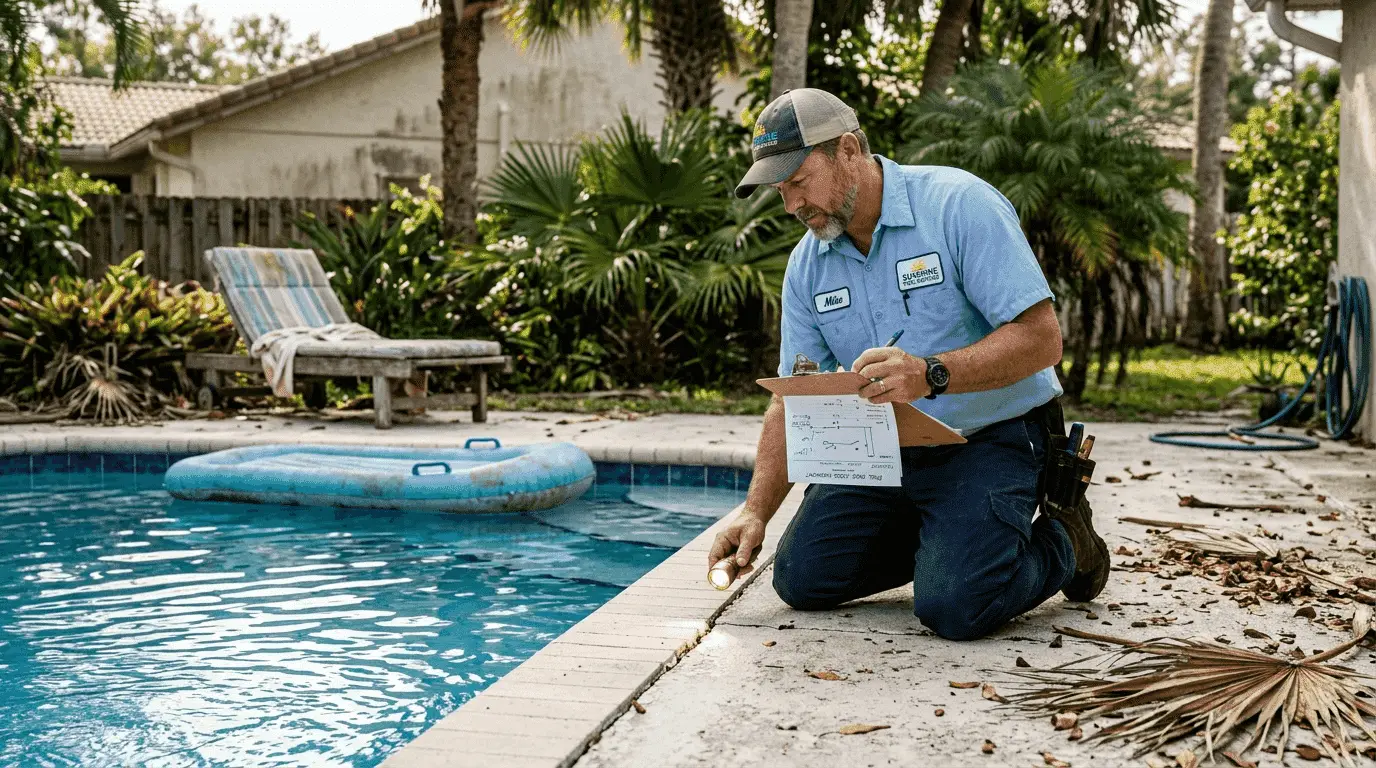
Florida pool owners face a unique challenge: relentless sun, high humidity, and intense storms accelerate pool surface deterioration faster than anywhere else in the country. Whether you notice rough patches forming or waterline tiles cracking, understanding the most common repair scenarios and selecting the right solution can save you thousands while keeping your pool safe and beautiful for years to come.
Table of Contents
- Criteria For Selecting Pool Repair Methods In Florida
- Common Pool Repair Examples: Crack Repairs, Plaster Patching, And Tile Replacement
- Popular Pool Resurfacing Finishes And Their Lifespan In Florida
- How To Decide Between Spot Repairs And Full Pool Resurfacing
- Professional Pool Resurfacing And Repair Services In Orlando And Jacksonville
- Frequently Asked Questions
Key takeaways
| Point | Details |
|---|---|
| Pool surface materials have varying lifespans | Plaster lasts 7-10 years while aggregate finishes can reach 20 years in Florida’s demanding climate. |
| Early repairs prevent expensive full resurfacing | Addressing cracks and patches promptly extends pool life and avoids structural damage. |
| Off-peak scheduling saves money and time | Booking repairs between October and February reduces costs and improves contractor availability. |
| Material choice impacts durability and cost | Premium finishes resist Florida’s heat and UV exposure better than basic plaster options. |
Criteria for selecting pool repair methods in Florida
Choosing the right repair approach requires evaluating several critical factors specific to Central Florida’s demanding environment. Your decision should balance immediate needs with long-term pool health.
Material durability directly affects how often you’ll need repairs. Pool resurfacing frequency varies based on finish type, with plaster requiring attention every 7-10 years while aggregate surfaces last 10-20 years. Florida’s intense UV exposure and acidic rainfall can shorten these timelines significantly, making material selection your first line of defense.
Your local climate plays an outsized role in repair planning. Orlando and Jacksonville pools endure UV degradation that breaks down chemical bonds in pool surfaces, while seasonal temperature swings cause expansion and contraction that create stress cracks. High humidity during summer months complicates curing processes for new finishes, which is why understanding weather impact on pool resurfacing matters for successful repairs.
Damage extent determines whether you need targeted fixes or complete surface renewal. Small hairline cracks respond well to epoxy injection repairs, while widespread surface roughness signals the need for full replastering. Evaluating pool renovation costs Florida helps you budget appropriately based on your pool’s condition.
Budget constraints shape realistic options. Consider these cost factors:
- Spot repairs typically cost $500 to $2,000 depending on damage location and size
- Partial resurfacing of high-wear areas runs $3,000 to $6,000
- Full pool resurfacing ranges from $6,500 to $15,000 based on materials and pool size
- Premium finishes add 30% to 50% more than standard plaster
Timing your repairs strategically maximizes value. Scheduling between October and February helps avoid peak summer demand and high humidity that complicates finish curing. You’ll often secure better pricing and faster project starts during these slower months.
Pro Tip: Take photos of problem areas quarterly to track deterioration patterns. This documentation helps contractors diagnose issues accurately and proves invaluable for warranty claims if repairs fail prematurely.
Proper maintenance between repairs extends surface life significantly. Learning how to maintain pool surface chemistry and cleaning practices reduces wear and postpones costly resurfacing projects.
Common pool repair examples: crack repairs, plaster patching, and tile replacement
Florida pool owners encounter predictable repair scenarios that, when addressed promptly, prevent minor issues from becoming major expenses.
Crack repairs represent the most urgent repair category. Structural cracks allow water to seep behind pool surfaces, eroding the underlying structure and causing the dreaded “hollow sound” when you tap the surface. Epoxy injection fills these voids and stops water migration, protecting your pool’s structural integrity. Ignoring cracks leads to expensive repairs as water damage compounds over time.
Plaster patching addresses surface wear without full resurfacing. High-traffic areas like steps and benches develop rough patches or thin spots years before the rest of your pool needs attention. Professional patching restores smooth surfaces in these zones, extending the time before complete replastering becomes necessary. The key is color matching existing plaster requires skill and experience to avoid obvious repair marks.
Waterline tile replacement refreshes your pool’s appearance while solving functional problems. Calcium buildup, loose grout, and cracked tiles at the waterline create both aesthetic issues and potential leak points. Replacing these tiles stops water from penetrating behind the surface where it causes hidden damage.
Common repair scenarios include:
- Beam crack repairs where the deck meets the pool wall
- Step nosing replacements on worn or chipped edges
- Return fitting resealing around inlet and outlet ports
- Skimmer throat repairs where plaster meets plastic components
- Hydrostatic valve replacements in pools with high water tables
Early detection transforms expensive disasters into manageable repairs. Rough patches and visible cracks signal structural deterioration requiring immediate professional evaluation. Regular inspections catch these issues before they escalate.
Many repairs can be localized, buying you several additional years before full resurfacing becomes necessary. Understanding when spot repairs make sense versus committing to complete surface renewal requires honest assessment of your pool’s overall condition. Our DIY pool crack repair guide helps you identify which repairs you can tackle yourself versus those requiring professional intervention.
Professional diagnosis matters because visible damage often indicates hidden problems. What looks like a simple crack might signal underlying structural movement or plumbing leaks. Experienced contractors use their pool repair service expertise to identify root causes, not just surface symptoms.
Popular pool resurfacing finishes and their lifespan in Florida
Selecting the right finish material balances upfront investment against long-term durability and maintenance requirements in Central Florida’s harsh climate.
Plaster represents the most economical option but requires the most frequent attention. Standard white plaster lasts 7-10 years in Florida conditions before roughness and staining necessitate replacement. It offers the smoothest feel underfoot and the lowest initial cost, typically $4 to $6 per square foot. However, Florida’s acidic rain and intense UV exposure accelerate surface degradation, making plaster the highest-maintenance choice.
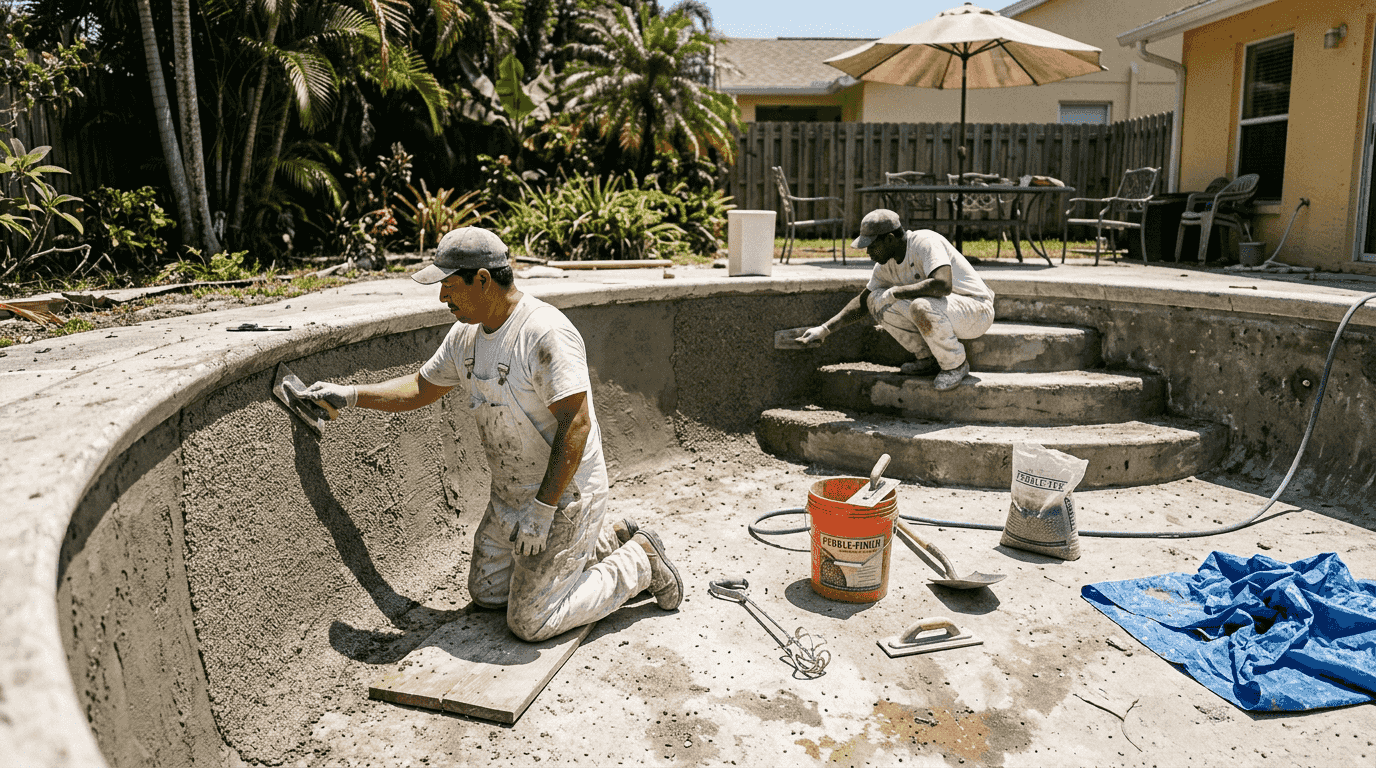
Aggregate finishes deliver superior durability and aesthetic appeal. Quartz aggregates blend crushed quartz with polymer-modified cement, creating surfaces that resist staining and chemical damage better than plaster. These finishes last 10-15 years and cost $6 to $9 per square foot. Pebble Tec and similar pebble finishes incorporate small stones for exceptional texture and color retention, lasting 15+ years with proper care at $8 to $12 per square foot.
Tile offers the longest lifespan but demands the highest initial investment. Porcelain and glass tiles can last 20+ years in Florida’s climate, resisting UV damage and chemical wear that degrades other surfaces. At $15 to $30 per square foot installed, tile represents a premium choice that virtually eliminates resurfacing needs. However, grout lines require periodic resealing and calcium deposits need regular cleaning.
| Finish Type | Lifespan | Cost Per Sq Ft | Florida Climate Rating | Maintenance Level |
|---|---|---|---|---|
| Standard Plaster | 7-10 years | $4-$6 | Fair | High |
| Quartz Aggregate | 10-15 years | $6-$9 | Good | Medium |
| Pebble Aggregate | 15-20 years | $8-$12 | Excellent | Low |
| Tile | 20+ years | $15-$30 | Superior | Medium |
Mid-range finishes provide optimal balance of aesthetic appeal and heat resistance for most Florida homeowners. Quartz and pebble aggregates resist the thermal stress and UV degradation that plague basic plaster without requiring tile’s premium investment.
Pro Tip: Request material samples and submerge them in your pool water for 48 hours before deciding. This reveals how the finish looks underwater in your specific water chemistry and lighting conditions, preventing expensive color regret.
Proper surface preparation and skilled application dramatically impact finish longevity regardless of material choice. Even premium materials fail prematurely when applied to improperly prepared surfaces or during unfavorable weather conditions. Exploring best pool resurfacing materials helps you understand how each option performs in real-world Florida conditions.
Your decision should factor in planned ownership duration and usage patterns. If you plan to sell within five years, premium finishes might not return their investment. However, if this is your forever home with heavy daily use, investing in durable aggregates pays dividends in reduced maintenance and extended surface life. Compare options in our pool finish types Florida guide.
How to decide between spot repairs and full pool resurfacing
This critical decision hinges on your pool’s current condition, your budget constraints, and your long-term ownership plans.
Spot repairs make financial sense when damage remains localized. Fixing individual cracks, patching worn areas, and replacing damaged tiles addresses immediate problems at a fraction of resurfacing costs. These targeted repairs typically cost $500 to $3,000 depending on extent and location. However, spot repairs create visible patches that rarely match surrounding surfaces perfectly, and they typically last only 2 to 4 years before attention shifts elsewhere.
Full resurfacing restores structural integrity across your entire pool surface. This comprehensive approach eliminates all existing damage, provides uniform appearance, and delivers 7 to 20 years of service depending on material choice. While initial costs range from $6,500 to $15,000, resurfacing eliminates the ongoing expense and hassle of repeated spot repairs. Resurfacing prices have stabilized in 2026 due to improved supply chain logistics, making this an opportune time for major projects.
Delaying necessary resurfacing creates cascading problems. Water penetration behind damaged surfaces causes structural deterioration that multiplies repair costs exponentially. What starts as $8,000 resurfacing can balloon to $15,000 or more when underlying damage requires structural repairs first.
| Factor | Spot Repairs | Full Resurfacing |
|---|---|---|
| Upfront Cost | $500-$3,000 | $6,500-$15,000 |
| Lifespan | 2-4 years | 7-20 years |
| Appearance | Visible patches | Uniform finish |
| Structural Benefit | Localized only | Complete restoration |
| Best For | Recent damage | Widespread wear |
Resurfacing offers greater structural restoration despite higher upfront investment, making it the superior choice for pools showing multiple problem areas.
Follow this decision framework:
- Assess damage extent by inspecting your entire pool surface for rough areas, staining, and cracks
- Calculate what percentage of your pool shows problems (over 30% favors full resurfacing)
- Evaluate your pool’s age (surfaces over 75% through their expected lifespan warrant replacement)
- Consider your timeline (selling soon favors spot repairs, staying long-term favors resurfacing)
- Compare 5-year total costs including repeated spot repairs versus one-time resurfacing
Pro Tip: Schedule resurfacing during off-peak months (October through February) to secure 10% to 15% lower pricing and ensure your pool is ready for spring swimming season. Contractors offer better rates and faster start dates when demand drops.
Understanding cost factors for pool resurfacing helps you budget accurately and avoid surprise expenses. Pool size, finish selection, and necessary repairs all influence final pricing.
The benefits of pool replastering extend beyond aesthetics. Fresh surfaces improve water chemistry stability, enhance energy efficiency by improving water circulation, and increase your property value by $10,000 to $20,000 for well-maintained pools.
Professional pool resurfacing and repair services in Orlando and Jacksonville
When your Florida pool shows signs of wear, partnering with experienced local professionals ensures repairs withstand our unique climate challenges.

Classic Marcite brings over 35 years of Central Florida pool expertise to every project. As the region’s largest Pebble Tec applicator with more than 100,000 pools resurfaced since 1988, we understand exactly how Orlando and Jacksonville’s climate affects pool surfaces. Our licensed contractors specialize in everything from minor crack repairs and tile replacement to complete resurfacing with premium aggregate finishes.
Our comprehensive services address every repair need. Whether you need emergency crack repairs to stop water loss, replastering to restore smooth surfaces, or complete resurfacing with durable Pebble Tec finishes, our team delivers quality that lasts. We back every project with a 3-year workmanship warranty, giving you confidence your investment is protected. Explore our pool resurfacing basics Florida guide to understand our process.
Scheduling during Florida’s off-peak season maximizes your project success. Our pool repair service team recommends October through February for optimal weather conditions and competitive pricing. You’ll enjoy faster project completion and have your pool ready when temperatures climb.
Stay informed about the latest techniques and materials through our pool resurfacing updates 2026 Florida resource. We continuously adopt innovations that improve durability and reduce long-term maintenance requirements.
Frequently asked questions
What are the signs that my pool needs resurfacing?
Rough texture that scratches feet, widespread staining that won’t clean away, visible cracks longer than 6 inches, and frequent water loss signal resurfacing needs. Regular inspection helps you catch these issues early for timely repairs. Learn proper inspection techniques in our maintain pool surface guide.
How much does pool resurfacing typically cost in Orlando and Jacksonville?
Average costs range from $6,500 to $15,000 for standard 15’ x 30’ pools in 2026. Material quality, pool size, and necessary structural repairs impact final pricing. Premium aggregate finishes cost more upfront but deliver superior longevity in Florida’s climate. Review detailed cost factors for pool resurfacing to budget accurately.
What warranty and licensing should I look for in a pool resurfacing contractor?
Florida pool contractors must carry state licensing and comprehensive liability insurance to operate legally. Look for companies offering at least 3-year workmanship warranty on resurfacing projects. Experienced local contractors understand Central Florida’s unique climate challenges and apply finishes accordingly. Verify credentials in our pool resurfacing basics Florida checklist.
How can I extend the life of my pool surface after repairs?
Maintain pH between 7.4 and 7.6 and total alkalinity between 80 and 120 ppm to prevent surface etching. Schedule professional inspections annually to catch small problems before they escalate. Avoid harsh acid washing and aggressive brushing that accelerate surface wear. Follow detailed maintenance protocols in our maintain pool surface guide.
