Most Florida homeowners assume a pool surface warranty works like a simple guarantee. You get the work done, something goes wrong, and the company fixes it. The reality is far more complicated, especially in Orlando and Jacksonville. Florida’s hard water exceeds 200 ppm calcium from natural aquifer sources, which accelerates scaling and can quietly void your coverage before you even notice a problem. Understanding exactly what your warranty covers, what it excludes, and how local water conditions affect your claim is the difference between a protected investment and an expensive surprise.
Table of Contents
- What is a pool surface warranty?
- Typical coverage and duration for Florida pool surfaces
- What voids a pool surface warranty in Florida?
- How to protect your warranty and maximize pool surface life
- Ready for a worry-free pool surface?
- Frequently asked questions
Key Takeaways
| Point | Details |
|---|---|
| Warranty basics | A pool surface warranty covers material or installation defects for a defined period, but has important limits. |
| Florida-specific risks | Hard water scaling and chemistry issues make maintaining warranty coverage harder for Orlando and Jacksonville homeowners. |
| Biggest pitfalls | Improper chemical balance, especially after resurfacing, voids most pool surface warranties in Florida. |
| Extend surface life | Follow startup chemistry, keep professional service records, and schedule regular maintenance for longer-lasting results. |
What is a pool surface warranty?
A pool surface warranty is a written guarantee from either the material manufacturer or the contractor that covers defects in the surface material itself and, in some cases, the quality of the application. It is not the same as a structural warranty, which covers the shell or frame of the pool. It is also separate from any equipment warranty covering your pump, heater, or filtration system.
Think of it this way: your pool has layers of protection, and each layer has its own separate coverage. The surface warranty only applies to the interior finish, whether that is plaster, quartz, pebble aggregate, or fiberglass.
Here are the key things a pool surface warranty typically covers:
- Peeling or delamination of the surface material
- Visible defects caused by manufacturing flaws
- Application errors made by the contractor during installation
- Premature deterioration not caused by owner neglect
Important: Structural warranties run 10 to 50 years, while surface warranties are much shorter and often prorated after the first year. Reading the fine print matters.
Coverage is almost always time-limited, and exclusions are detailed. Many warranties become prorated after year one, meaning the manufacturer or contractor covers a smaller percentage of repair costs as time passes. If you want to understand the foundation of what your finish is made of, reviewing pool plaster basics gives you a solid starting point before signing anything.
Typical coverage and duration for Florida pool surfaces
Different surface materials carry very different warranty periods. Knowing these numbers before you choose a finish helps you make a smarter long-term decision for your Central Florida pool.
| Surface type | Typical warranty | Estimated service life |
|---|---|---|
| Plaster/Marcite | 1 to 5 years | 7 to 12 years |
| Quartz finish | 10 to 15 years | 15 to 20 years |
| Pebble aggregate | 15 to 25 years | 20 to 30 years |
| Fiberglass | 15 years (blistering only) | 20 to 25 years |
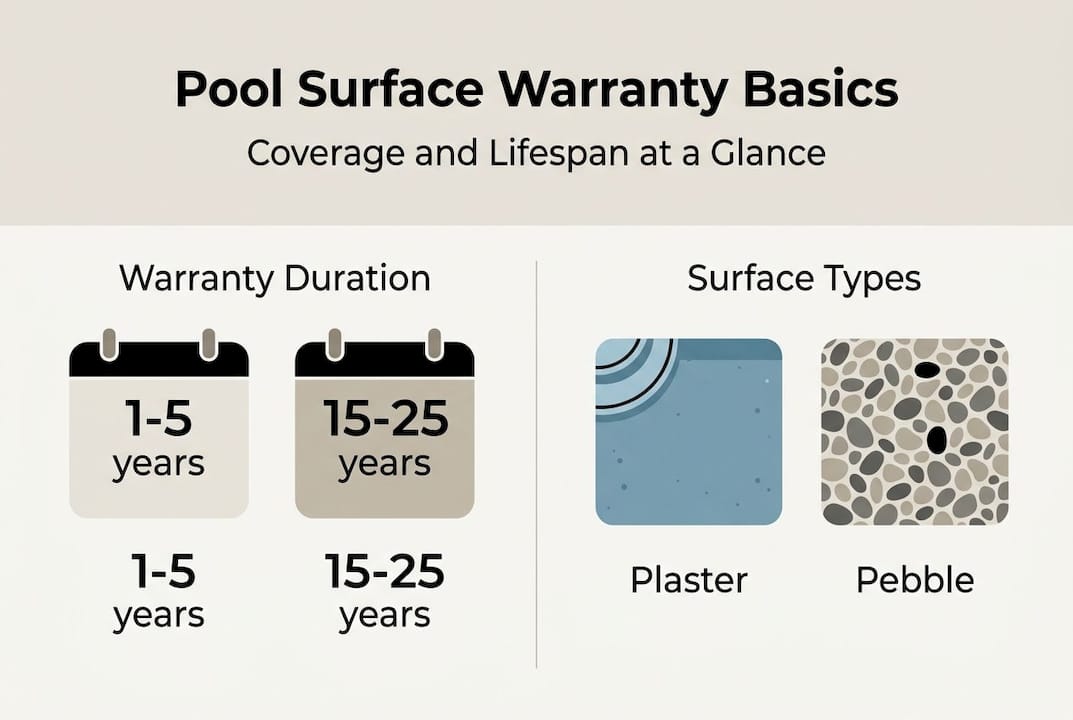
According to surface data for Florida pools, plaster carries 1 to 5 years, quartz runs 10 to 15 years, pebble aggregate reaches 15 to 25 years, and fiberglass covers 15 years but only for blistering defects. Chemical damage is almost universally excluded from fiberglass coverage.
A few important distinctions to keep in mind:
- Manufacturer warranty covers defects in the raw material itself
- Contractor workmanship warranty covers how the material was applied
- These two warranties are separate documents with separate claim processes
- Prorated coverage after year one is standard across most surface types
For a deeper look at how these finishes compare in real Florida conditions, the pool finish types guide breaks down the options clearly. If you are leaning toward a premium aggregate finish, understanding Pebble Tec lifespan in Central Florida’s climate is worth your time before committing.
Stat to know: A pebble aggregate surface can carry up to 25 years of warranty coverage, making it one of the longest-protected options available to Florida homeowners today.
What voids a pool surface warranty in Florida?
This is where most homeowners get caught off guard. You can have a perfectly installed surface with a solid warranty, and still end up with a denied claim. Florida’s environment creates specific risks that other states simply do not face at the same level.
Here are the most common reasons pool surface warranties are voided in Florida:
- Skipping or rushing the 28-day startup. After resurfacing, the surface needs a carefully managed chemistry startup period. Improper 28-day startup and hard water scaling are the leading causes of claim denials in Central Florida.
- Water chemistry imbalances. High or low pH, improper calcium hardness, and LSI (Langelier Saturation Index) imbalances cause surface damage that most warranties classify as owner-caused and therefore excluded.
- No professional service records. Professional service records are required by most manufacturers when you file a claim. Without them, your claim is likely denied regardless of the defect.
- Using harsh or incompatible chemicals. Certain algaecides, shock treatments, and off-brand chemicals can chemically attack the surface and void coverage immediately.
- Letting water levels drop too low. Exposing the surface to air and sun for extended periods causes cracking and discoloration that falls outside warranty terms.
Remember: Florida’s aquifer-fed water is naturally high in calcium. Without active management, scaling builds up fast and creates surface damage that looks like a material defect but is actually a chemistry problem. Manufacturers know the difference.
Pro Tip: Keep a dedicated folder, physical or digital, with every water test result, service receipt, and chemical log from day one. If you ever need to file a claim, this paperwork is your strongest asset.
If your surface is already showing signs of trouble, reviewing why pool finishes peel can help you identify whether the cause is a warranty-covered defect or a maintenance issue. Staying on top of Florida pool maintenance is also one of the most effective ways to keep your coverage intact. For newer finishes, sealing advice for Florida pools adds another layer of protection worth considering.
How to protect your warranty and maximize pool surface life
Knowing the pitfalls is only useful if you act on them. Here are the concrete steps that keep your warranty valid and your pool surface looking great for years in Central Florida’s climate.
- Follow the 28-day startup procedure exactly. This is non-negotiable. The 28-day startup chemistry after resurfacing is the single most critical period for your surface and your warranty. Do not skip steps or hand this off to someone unfamiliar with the process.
- Test water chemistry at least weekly. Focus on pH (7.4 to 7.6), calcium hardness (200 to 400 ppm), total alkalinity, and LSI balance. Florida’s hard water makes calcium hardness especially important to monitor.
- Hire licensed, insured professionals for all service work. DIY repairs or unlicensed contractors can void both your surface warranty and your homeowner’s insurance coverage.
- Schedule annual professional inspections. Early detection of minor scaling, small cracks, or surface roughness prevents small issues from becoming warranty-voiding damage.
- Document everything from day one. Dates, chemical readings, service visits, and any surface changes should all be recorded and stored.
| Maintenance task | Recommended frequency | Why it matters for warranty |
|---|---|---|
| Water chemistry testing | Weekly | Prevents chemistry-related claim denials |
| Professional service visit | Monthly | Builds service record for claims |
| Surface inspection | Every 6 months | Catches early defects before they worsen |
| Full water balance check | Quarterly | Maintains LSI balance in hard water areas |
Pro Tip: Ask your resurfacing contractor to provide a written startup checklist and sign off on it at each stage. This document alone can make or break a warranty claim.
For long-term care strategies, the guide on lasting pool finish maintenance covers the full picture. If you notice anything unusual with your surface, checking common pool repairs early prevents small problems from escalating. Florida’s intense sun, rain, and temperature swings also play a role, and understanding Florida weather effects on resurfacing helps you plan maintenance around seasonal risks.
Ready for a worry-free pool surface?
Understanding pool surface warranties gives you real power as a homeowner. You know what to ask for, what records to keep, and what to avoid. The next step is making sure the resurfacing work itself is done right from the start, because the best warranty in the world only works when the application behind it is solid.

At Classic Marcite, we have resurfaced over 100,000 pools across Orlando, Jacksonville, and beyond since 1988. We are the largest Pebble Tec® applicator in Central Florida, and we back our work with clear warranty terms and proper startup procedures. Whether you are exploring Florida pool resurfacing essentials, trying to choose the best pool finish for your budget and lifestyle, or ready to schedule a pool renovation in Jacksonville, we are here to help. Homeowners in The Villages can also explore pool resurfacing options nearby. Contact us today for a free estimate and get the warranty protection your pool deserves.
Frequently asked questions
Does a pool surface warranty cover cracks or discoloration?
Most surface warranties cover peeling and delamination from material defects, but minor cracks and discoloration caused by water chemistry problems are typically excluded from coverage.
What records do I need to keep for a pool warranty claim in Florida?
You need water testing logs, professional service receipts, and your 28-day startup report, since service records are required by most manufacturers before they will process any warranty claim.
What is the most common reason for pool warranty denial in Orlando and Jacksonville?
Improper water chemistry is the top cause, especially skipping the 28-day startup or allowing hard water scaling to build up unchecked in Central Florida’s calcium-rich water.
Can I transfer my pool surface warranty if I sell my home?
Many manufacturer warranties are transferable to a new owner, but you need to confirm the specific terms with your installer because paperwork requirements and transfer windows vary by brand and contract.