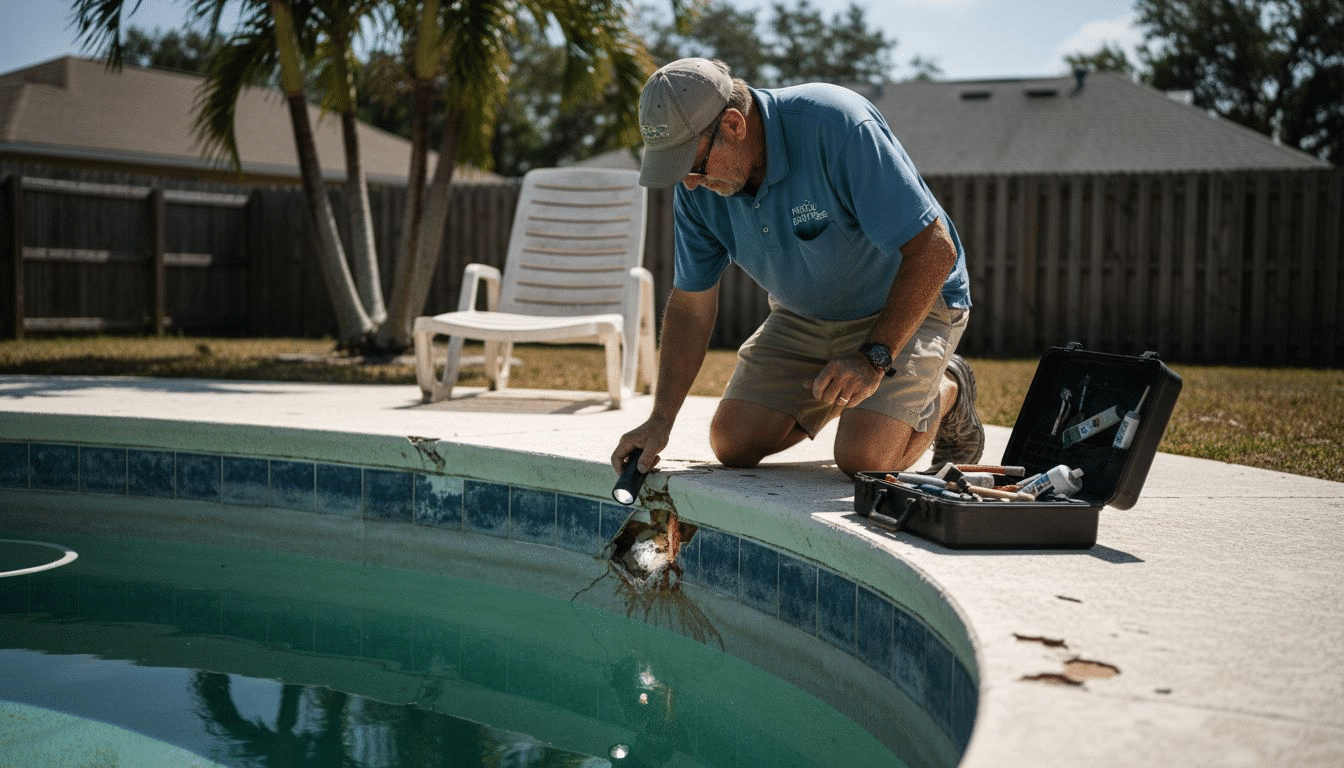
Cracks in your pool plaster often start as subtle lines but quickly become a source of worry for homeowners in Orlando and Jacksonville. Florida’s warm climate, fierce humidity, and shifting soil make pools more vulnerable to cracking, which can threaten water clarity and structural safety. By recognizing the real causes and signs behind pool plaster cracking, you can protect your investment and learn smart, cost-saving ways to prevent lasting damage.
Table of Contents
- What Pool Plaster Cracks Really Mean
- Main Causes of Pool Plaster Cracking
- Florida Climate’s Impact on Pool Surfaces
- How to Prevent and Repair Pool Cracks
Key Takeaways
| Point | Details |
|---|---|
| Crack Severity Matters | Understanding whether cracks are surface-level or structural is crucial for timely repairs and avoiding costly issues. |
| Prompt Inspection is Necessary | Small cracks should be documented and inspected early to prevent escalation into major structural problems. |
| Prevent Environmental Damage | Selecting quality materials and scheduling plaster applications properly can minimize cracks from Florida’s harsh climate. |
| Maintain Regular Chemistry Balance | Consistent monitoring of pool chemistry and water levels helps protect plaster integrity and prolongs lifespan. |
What Pool Plaster Cracks Really Mean
Plaster cracks aren’t just cosmetic flaws—they’re your pool’s way of communicating that something needs attention. Pool plaster is a cement-based coating that protects your pool’s concrete shell and maintains water clarity. When cracks appear, they signal either minor surface issues or potential structural problems lurking beneath.
Understanding crack severity matters. Not all cracks are equal, and misidentifying one can cost you thousands in repairs down the road.
Distinguishing Surface from Structural Issues
Minor cracks often stem from environmental changes like temperature and moisture fluctuations, causing materials to shrink and expand. Florida’s intense heat and humidity accelerate this process in Orlando and Jacksonville pools.
Many small plaster cracks are purely cosmetic—just cosmetic imperfections that don’t threaten your pool’s integrity. But some indicate deeper foundation or structural concerns that require professional assessment.
Signs That Demand Action
These crack characteristics warrant immediate inspection:
- Size and pattern: Hairline cracks differ drastically from quarter-inch gaps or branching patterns
- Location: Cracks near the waterline or around equipment penetrations suggest movement
- Movement: If a crack grows visibly week-to-week, structural stress is likely present
- Water loss: Accelerated water evaporation beyond normal loss indicates plaster failure
- Discoloration: Dark staining around cracks suggests water penetration behind the plaster
Surface cracks typically appear isolated and don’t follow a pattern. Structural cracks cluster, branch, or follow the pool’s geometry.
Understanding the differences between surface and structural cracks helps you take the right action:
| Crack Type | Appearance | Implications | Recommended Action |
|---|---|---|---|
| Surface Crack | Fine, isolated line | Mostly cosmetic | Seal promptly to prevent water seepage |
| Structural Crack | Branching, clustered | Indicates shell movement | Consult a professional for assessment |
| Movement Observed | Growing, widening | Sign of foundation stress | Immediate inspection and repair |
What Cracks Reveal About Your Pool
Determining whether a crack is minor or serious involves assessing crack size, location, pattern, and movement—this assessment prevents further damage and protects pool safety.
Small cracks from plaster shrinking during curing typically appear within the first year. They’re non-structural but still need sealing to prevent water infiltration.
Larger cracks suggest the pool shell is moving or settling unevenly. This happens when soil beneath shifts due to drought, flooding, or poor drainage—common occurrences in Florida’s fluctuating water table.
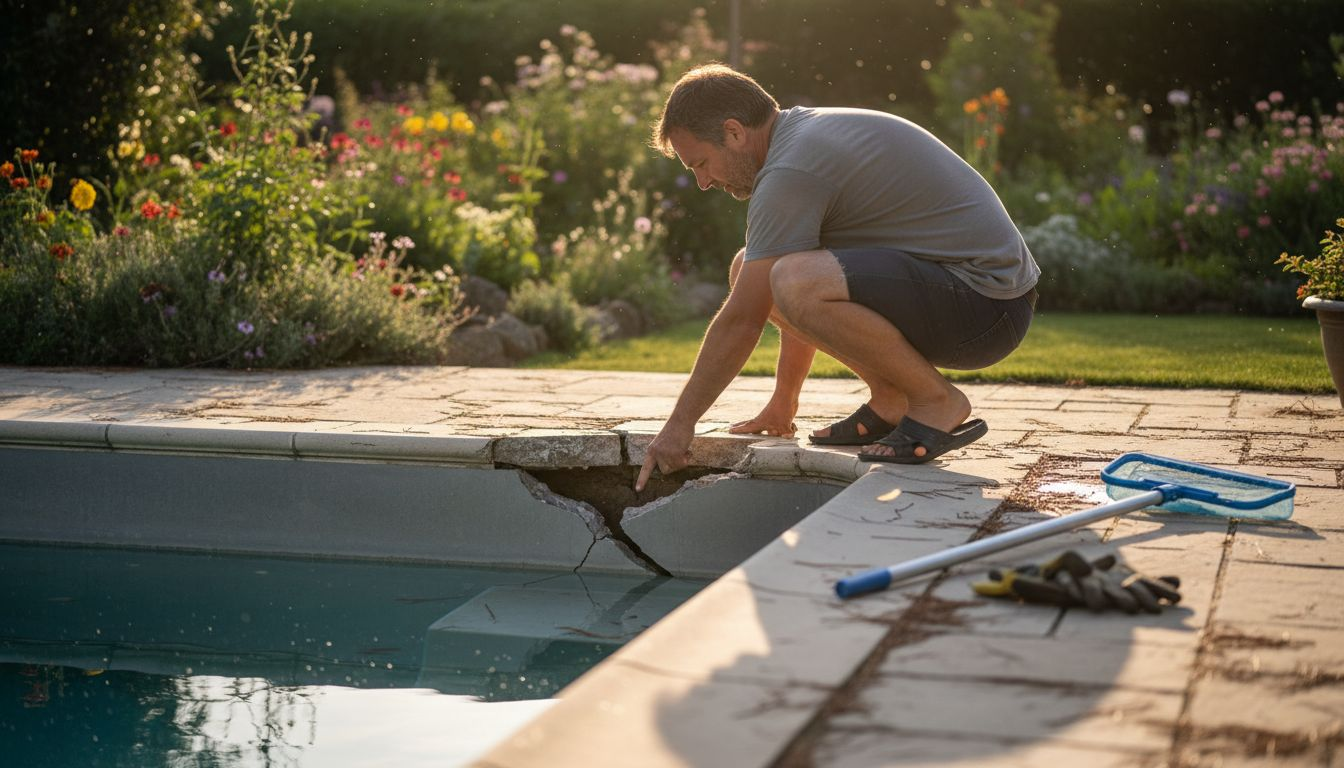
Cracks radiating from corners or spreading across large areas indicate structural stress. These require professional evaluation before they worsen and compromise your pool’s containment.
Taking the Right Next Step
Temptation to ignore small cracks is strong. Don’t. Even hairline fractures allow water to seep behind the plaster, weakening your pool shell over months.
Document your cracks with photos showing size and location. Note when they appeared and whether they’ve grown. This information helps professionals diagnose root causes accurately.
Pro tip: Schedule an inspection at the first sign of cracking rather than waiting—early intervention through patching or resurfacing costs far less than foundation repairs or shell replacement.
Main Causes of Pool Plaster Cracking
Pool plaster doesn’t crack randomly. It fails because of specific conditions—some within your control, others driven by Florida’s unforgiving climate. Understanding what causes cracks helps you prevent them or catch problems early.
Plaster cracking typically stems from a combination of factors: improper material mix, environmental stresses, substrate movement, and hydration issues. In Orlando and Jacksonville, the heat and humidity create a perfect storm for plaster failure.
Shrinkage and Curing Problems
Plastic shrinkage happens when moisture evaporates too quickly from freshly applied plaster. Florida’s intense sun and dry winds accelerate this process dramatically, especially during summer applications.
Drying shrinkage occurs as plaster hardens, and improper curing conditions make it worse. When plaster loses water too fast, it shrinks unevenly, creating stress points that crack.
Crazing and map cracking often appear within hours of application. These fine, interconnected cracks look like dried mud—usually minor but still problematic if left unsealed.
Mix and Application Issues
The recipe matters. Excessive cement content in your plaster mix increases shrinkage risk significantly.
Common application mistakes include:
- Wrong thickness: Too thin and plaster cracks under minimal stress; too thick and it dries unevenly
- Poor sand quality: Dirty or inconsistent sand weakens plaster strength
- Inadequate mixing: Unmixed material creates weak spots that crack first
- Improper substrate prep: Dirty or poorly bonded surfaces cause adhesion failure
Even professionals must follow precise standards. One deviation compounds stress on the entire shell.
Environmental Stresses in Florida
Thermal stresses, shrinkage during curing, and chemical imbalances in pool water lead to early or delayed cracking—proper methods significantly reduce these risks.
Florida’s extreme temperature swings stress plaster constantly. A 40-degree drop overnight causes expansion and contraction that cracks weakened plaster.
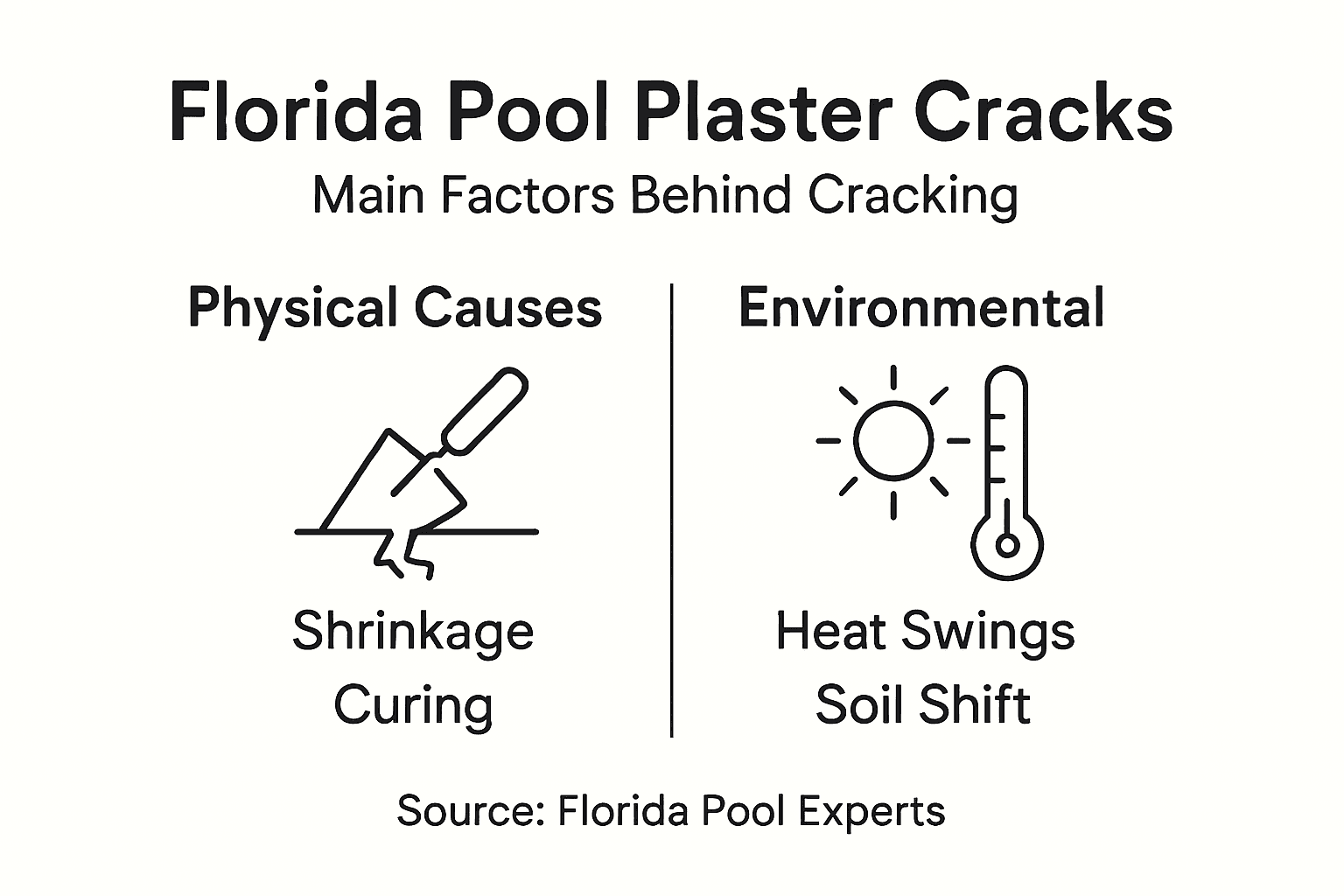
Chlorine and pH imbalances also attack plaster chemically. Acidic water dissolves the cement binder, while overly alkaline water causes efflorescence and weakening.
Substrate Movement
Your pool shell sits on soil that shifts. During dry spells, soil contracts and pulls the foundation down. Heavy rains saturate soil and cause settling.
This movement cracks plaster like an eggshell. Even hairline movement in the concrete shell translates to visible cracks on the surface.
Poor drainage around your pool accelerates this problem. Water pooling beside your equipment pad or deck forces soil expansion and contraction cycles.
Pro tip: Have your pool inspected before the summer heat hits—catching mix or application issues early prevents costly repairs when temperatures spike.
Florida Climate’s Impact on Pool Surfaces
Florida’s climate is brutal on pool plaster. Not in a gradual way—in an aggressive, relentless way that accelerates failure and shortens your pool’s lifespan dramatically. Understanding how weather impacts your pool helps you fight back.
Your Orlando or Jacksonville pool faces constant assault from heat, humidity, and moisture swings. These aren’t occasional challenges—they’re year-round realities that compound plaster stress.
Heat and Chemical Acceleration
High temperatures do more than feel uncomfortable. Heat accelerates chemical reactions in plaster and dramatically increases evaporation rates from pool water.
When water evaporates faster, minerals concentrate in the plaster. This creates chemical imbalances that attack your surface from within, weakening the cement binder that holds everything together.
The heat also causes rapid drying and shrinkage cracks in fresh plaster applications. Summer months are particularly risky for new plaster work—the sun literally pulls moisture out faster than plaster can cure properly.
Wet-Dry Cycles and Soil Movement
Periods of heavy rainfall followed by intense dry spells cause soil expansion and contraction beneath your pool. This isn’t subtle—soil shifts several inches over weeks, stressing your plaster constantly.
Florida’s rain pattern intensifies this problem:
- Summer thunderstorms: Dump inches in minutes, saturating soil and raising water tables
- Dry stretches: Bake soil hard, causing it to shrink away from the pool shell
- Tropical systems: Bring prolonged rainfall that keeps soil expanded for days
Each cycle cracks plaster like temperature changes in glass.
Saltwater Intrusion and Rising Water Tables
High temperatures accelerate hydration while increased rainfall changes groundwater levels, potentially leading to substrate movement and increased stress on pool plaster surfaces.
Coastal properties face additional threats. Saltwater intrusion degrades concrete and plaster faster than freshwater ever could. Salt crystals form inside plaster pores, pushing outward and causing spalling.
Rising sea levels mean groundwater tables climb higher. This forces water pressure upward against your pool shell, destabilizing the substrate foundation.
Hurricanes and Extreme Weather
Tropical storms don’t just flood your property. The rapid pressure and water level changes stress pool shells intensely. Wind-driven rain infiltrates small cracks, expanding them as water freezes or refreezes.
Post-hurricane, many pools show new cracks or accelerated cracking. The stress event weakens plaster, and normal weather afterward finishes the job.
Pro tip: Schedule plaster applications during Florida’s mild winter months (November through February) when temperatures are cooler and evaporation rates are lower—this allows proper curing and reduces crack formation risk.
Here’s how Florida’s climate impacts pool plaster compared to other regions:
| Climate Factor | Florida Impact | Temperate Region Impact | Protective Measures |
|---|---|---|---|
| Heat & Humidity | Accelerates plaster failure | Slower deterioration | Apply during cool months |
| Rain Cycles | Causes soil movement | Minimal soil fluctuation | Improve drainage around pool |
| Saltwater Intrusion | Damages plaster rapidly | Rarely an issue | Use salt-resistant materials |
| Hurricanes | Promotes rapid cracking | Less frequent storms | Inspect for post-storm cracks |
How to Prevent and Repair Pool Cracks
Cracks don’t have to be permanent. You can prevent most cracks through smart choices upfront and catch problems early before they spiral into expensive repairs. The key is action—both before cracks form and immediately after you spot them.
Prevention starts with material selection and application conditions. Repair requires speed and proper technique. Both matter equally.
Prevention: Stop Cracks Before They Start
Selecting quality materials is your first line of defense. Premium plaster mixes with balanced cement ratios resist shrinkage better than budget options. Your plaster contractor matters—experienced pros understand how Florida’s climate demands superior materials.
Proper surface preparation prevents adhesion failure. The concrete shell must be clean, free of debris, and slightly dampened before plaster application. Poor prep work causes plaster to separate from the shell, creating voids where cracks form.
Environmental control during application reduces shrinkage cracks dramatically. Avoid applying plaster during peak heat hours or strong wind. Early morning or late afternoon applications allow plaster to cure gradually rather than flash-drying.
Quick Repair Prevents Escalation
Small cracks demand immediate attention. Cleaning and widening cracks, then filling with appropriate sealants, controls moisture and prevents deterioration that spreads damage exponentially.
Repair steps include:
- Clean thoroughly: Remove loose plaster, algae, and debris from the crack
- Widen slightly: Use a grinder or chisel to create a uniform groove for sealant adhesion
- Apply sealant: Use pool-grade epoxy or polyurethane sealant rated for water immersion
- Cure properly: Allow full curing time before refilling the pool
Don’t skip steps. Rushing leads to sealant failure and accelerated crack growth.
When to Call Professionals
Structural cracks may demand reinforcement or underpinning depending on severity—timely identification and repair extend plaster surface lifespan significantly.
Large cracks, spreading patterns, or cracks paired with water loss require professional assessment. These indicate structural stress that DIY repair won’t fix.
Cracks wider than one-quarter inch, cracks that grow visibly over weeks, or multiple cracks in clusters suggest foundation movement. Professional contractors have equipment to diagnose root causes and apply proper fixes.
Maintenance Prevents Future Problems
Balance your pool chemistry religiously. Acidic water dissolves plaster; alkaline water degrades it. Proper pH and alkalinity protect your surface from chemical attack.
Monitor water levels constantly. Low water stresses plaster; high water during storms creates pressure damage. Maintain consistent levels year-round.
Pro tip: Photograph any cracks you notice and note the date—tracking growth patterns helps professionals distinguish cosmetic from structural issues and recommend appropriate repairs.
Protect Your Florida Pool From Costly Plaster Cracks Today
Understanding why pool plaster cracks appear in Florida pools reveals the challenges your pool faces against heat, humidity, soil movement, and chemical imbalances. These cracks are not just cosmetic issues. They signal moisture infiltration and structural stress that can quickly escalate without professional care. Ignoring them risks expensive repairs and shortens your pool’s lifespan. Bold steps now keep your pool beautiful and safe for years.

Don’t let plaster cracks undermine your investment. At Classic Marcite, with over 30 years serving Orlando and Jacksonville pools, we specialize in expert pool resurfacing and repairs using proven, high-quality materials like Pebble Tec®. Our craftsmanship transforms vulnerable surfaces into durable, weather-resistant finishes designed specifically for Florida’s tough climate. Take action today by visiting Classic Marcite and requesting a free estimate. See how we have resurfaced more than 100,000 pools and read reviews from satisfied customers who stopped cracks before they worsened. Protect your pool foundation before it’s too late—schedule your inspection and resurfacing now.
Frequently Asked Questions
Why does pool plaster crack?
Pool plaster cracks due to a combination of factors including improper material mixes, environmental stresses, substrate movement, and issues during the curing process. These cracks can mean anything from minor cosmetic surface flaws to serious structural problems.
What are the signs that indicate a serious crack in pool plaster?
Signs of serious cracks include visible growth week-to-week, cracks near the waterline, dark discoloration around cracks, and increased water loss. If any of these signs are present, it’s advisable to contact a professional for assessment.
How can I prevent my pool plaster from cracking?
Preventing pool plaster from cracking involves using quality materials, ensuring proper application techniques, and controlling environmental conditions during the plastering process. Regular maintenance of water chemistry also plays a crucial role in preventing damage.
When should I call a professional for pool plaster issues?
You should call a professional when you notice large cracks wider than one-quarter inch, multiple cracks in clusters, or any visible growth of existing cracks. These could indicate structural stress and require expert assessment and repair.
Recommended
- Pool Deck Cracking: How It Impacts Florida Homes
- What Is Pool Plaster And Why It Matters
- Benefits Of Pool Replastering For Florida Homes
- Pool Replastering Vs Resurfacing – Key Impacts For Florida Homes
- Pool Refinishing Windermere FL
- Pool Renovation Winter Park FL
- Swimming Pool Remodeling The Villages FL