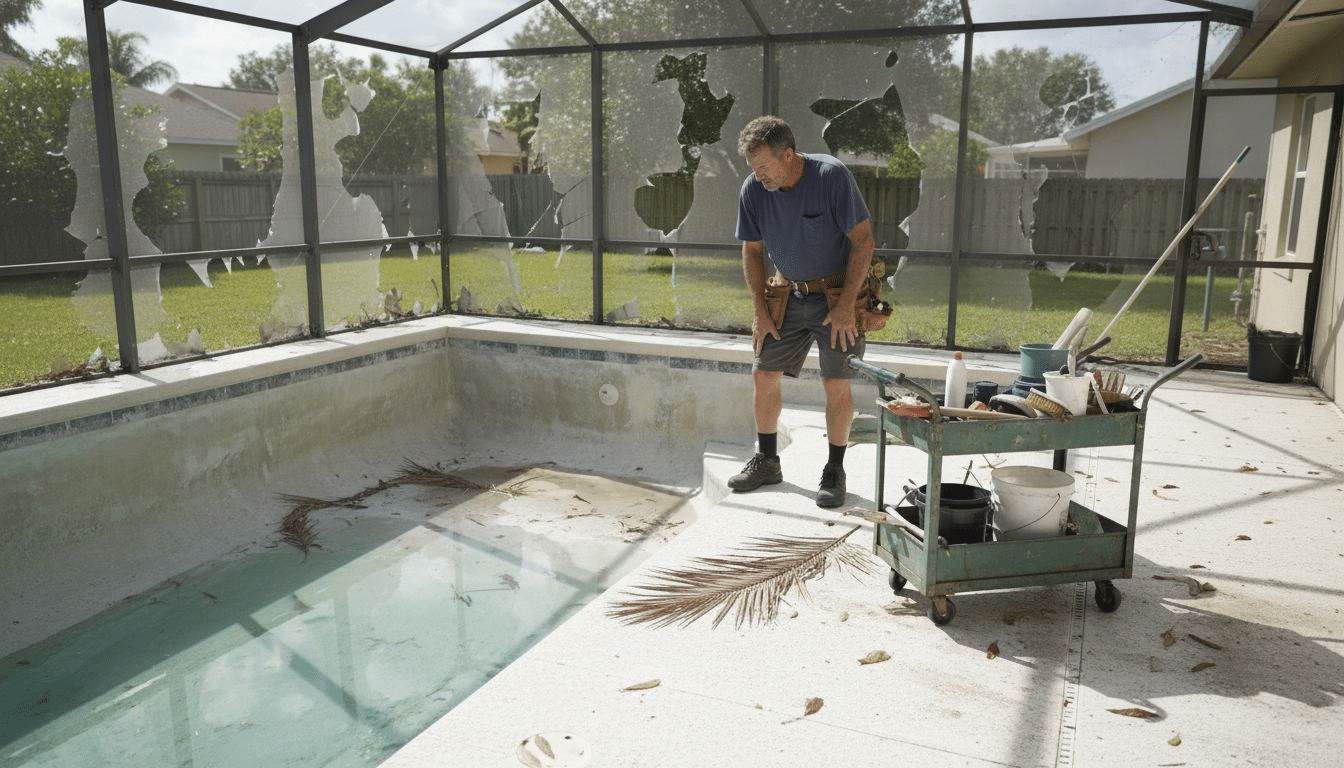
A sunny afternoon in Florida can make your backyard pool irresistible, but Orlando and Jacksonville homeowners know that the local weather is tough on pool surfaces. Between constant humidity, scorching UV rays, and frequent storms, even the most beautiful pool finish can wear out quickly. Understanding how weather affects pool resurfacing is the key to maintaining both the longevity and appearance of your investment, so you can enjoy safe, inviting waters year after year.
Table of Contents
- What Is Pool Resurfacing and Why It Matters
- Florida Weather Patterns and Pool Surface Wear
- How Climate Influences Material Choices
- Timing Pool Resurfacing for Optimal Results
- Mistakes to Avoid During Weather Extremes
Key Takeaways
| Point | Details |
|---|---|
| Importance of Resurfacing | Resurfacing rejuvenates pool surfaces, preventing leaks and structural damage while extending lifespan and ensuring safety. |
| Timing Matters | Optimal resurfacing should occur late fall through early spring to avoid humidity and storm risks that impede proper curing. |
| Material Selection | Choose UV-resistant and durable materials tailored for Florida’s climate to maximize longevity and performance. |
| Proactive Maintenance | Regular inspections and timely resurfacing can prevent costly repairs and ensure a safe swimming environment for families. |
What Is Pool Resurfacing and Why It Matters
Pool resurfacing is the process of applying a new interior surface to your existing pool structure. Over time, the original surface—whether plaster, tile, or other material—deteriorates from constant water exposure, temperature swings, and chemical treatments. Resurfacing renews that worn surface to restore functionality and appearance.
Your pool’s interior surface does more than look good. It creates a water-tight seal that prevents leaks, maintains structural integrity, and ensures safe swimming conditions. When the surface breaks down, water can seep into the surrounding structure, leading to expensive damage that’s far costlier to repair than resurfacing itself.
Resurfacing goes beyond mere aesthetics. A fresh surface improves water quality management by eliminating porous areas where algae and bacteria hide. It also provides a smooth, slip-resistant finish that enhances swimmer safety—especially important for families with children.
Here’s what pool resurfacing accomplishes:
- Prevents costly water leaks and structural damage
- Restores the pool’s visual appeal with updated colors and textures
- Extends your pool’s lifespan by 10-15 years or more
- Improves water circulation and chemical balance
- Provides a safer, more comfortable swimming surface
Florida homeowners face unique challenges. The state’s intense sun, saltwater intrusions near coastal areas, and constant humidity accelerate surface degradation compared to other regions. Your pool’s surface endures more stress here, making timely resurfacing a practical investment rather than a luxury upgrade.
The complex demands of Florida’s climate make regular surface maintenance critical. Without it, minor cracks expand into major structural problems within months, not years. Understanding why resurfacing matters helps you make informed decisions about protecting your investment.
Resurfacing is also an opportunity to upgrade your pool’s look and function. New finishes, updated colors, and improved surface textures transform how your pool feels and performs. Many Orlando and Jacksonville homeowners use resurfacing projects to modernize aging pools without the expense of rebuilding from scratch.
Resurfacing isn’t just about fixing problems—it’s about preventing them before they become expensive disasters.
You’re not simply patching holes when you resurface. You’re renewing your pool’s foundation for the next decade of use. This proactive approach saves money, extends pool life, and keeps your family’s swimming safe and enjoyable.
Pro tip: Don’t wait for visible leaks or rough patches to appear. Schedule a professional pool inspection every 3-5 years to catch surface wear early, when resurfacing becomes a preventive measure rather than an emergency repair.
Florida Weather Patterns and Pool Surface Wear
Florida’s climate is relentless on pool surfaces. The state’s subtropical to tropical weather creates a perfect storm of conditions that accelerate deterioration far faster than pools in other regions. If you own a pool in Orlando or Jacksonville, understanding these weather patterns helps you anticipate damage and plan resurfacing before problems become expensive.
The culprit is multifaceted. Intense sunlight and heat break down pool finishes through constant UV exposure and thermal stress. Your pool surface expands and contracts daily as temperatures swing, creating microscopic cracks that expand into visible damage over months.
Humidity compounds the problem. Florida’s moisture-laden air keeps your pool environment perpetually damp, even when the pool isn’t in use. This constant wetness promotes algae growth and accelerates chemical degradation of the surface finish.
Here’s what Florida weather does to your pool:
- UV radiation fades and weakens surface finishes
- Thermal expansion creates stress cracks in plaster and coating
- High humidity accelerates algae and mold colonization
- Heavy rainfall introduces chemical imbalances and surface erosion
- Hurricane exposure causes direct physical damage and saltwater intrusion
Rainfall is particularly aggressive. Florida’s frequent thunderstorms and seasonal heavy rains add fresh water that dilutes your pool’s chemical balance, while wind-driven rain can damage unsealed cracks and weak areas. This cycle repeats constantly during summer months.
Hurricane season magnifies everything. From May through October, tropical weather patterns bring intense storms that can physically damage pool structures and expose surfaces to saltwater spray in coastal areas. Saltwater accelerates surface deterioration exponentially, eating through protective coatings and causing rapid corrosion.
Even mild winters create problems. While Florida lacks freezing temperatures that crack pools in northern states, the temperature fluctuations between 50-degree winter nights and 80-degree days still cause expansion stress that weakens surfaces over time.
Florida’s climate doesn’t just age pool surfaces—it accelerates the process by 40-50% compared to temperate regions.
Your Orlando or Jacksonville pool faces weather stresses that pools in other states simply don’t encounter. This reality makes proactive resurfacing schedules essential rather than optional.
Pro tip: Schedule resurfacing before hurricane season begins in May, not after. This timing protects your newly resurfaced pool from storm damage and gives the finish time to cure properly before intense UV exposure peaks in summer.
How Climate Influences Material Choices
Not all pool surface materials perform equally in Florida’s climate. When you choose a resurfacing material, you’re essentially betting on how well it will withstand years of relentless sun, moisture, and temperature swings. The wrong choice means premature failure and expensive repairs.
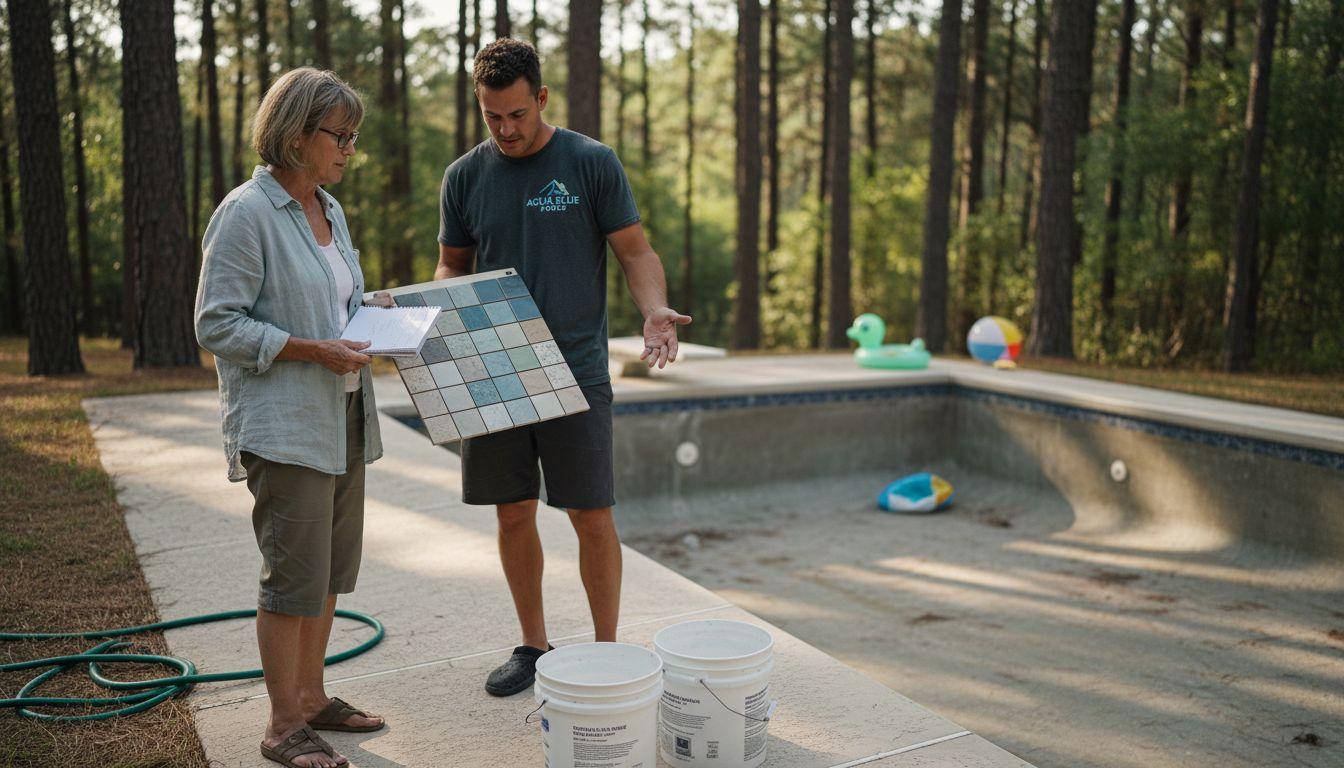
Florida’s heat and humidity demand materials with superior UV resistance. Materials exposed to intense solar radiation must maintain structural integrity and color stability over decades. Plaster alone doesn’t cut it anymore—modern finishes need built-in protection against breakdown from prolonged sun exposure.
Durability is non-negotiable. Materials must resist chemical degradation from chlorine, saltwater exposure, and pH fluctuations. In Florida, you’re not just fighting pool chemistry—you’re fighting environmental stressors that accelerate deterioration.
Water efficiency matters too. Durable pool surface materials reduce evaporation while withstanding moisture stress and temperature changes. In Florida’s humid climate, this distinction affects both your water bills and maintenance frequency.
Here’s what material selection should consider:
- UV-resistant coatings that maintain color and integrity under intense sun
- Chemical-resistant finishes that survive chlorine and saltwater exposure
- Thermally stable materials that handle daily temperature swings without cracking
- Low-maintenance surfaces suited to Florida’s high humidity and algae growth
- Saltwater-tolerant options for coastal homeowners in Jacksonville
Pebble finishes, for example, offer superior durability in Florida compared to standard plaster. The aggregate composition resists UV fade, provides better traction safety, and tolerates chemical stress better than traditional plaster surfaces.
Tile and stone surfaces work well too, but require proper installation with quality sealants rated for Florida’s climate. Poor sealant choices fail quickly under thermal expansion stress.
Your material choice determines whether your pool lasts 7 years or 15 years in Florida’s climate.
A professional pool contractor understands which materials perform best in your specific location. Coastal Jacksonville pools face different challenges than inland Orlando properties, and material selection should reflect these regional differences.
Pro tip: Ask your resurfacing contractor specifically how your chosen material performs in Florida’s heat, humidity, and saltwater exposure. Request references from homeowners with similar pools in your area who’ve had the material installed 5+ years ago—their feedback reveals real-world performance better than any marketing claim.
Here’s a comparison of common pool surface materials and their performance in Florida’s challenging climate:
| Material Type | Sun/UV Resistance | Chemical Tolerance | Longevity in Florida |
|---|---|---|---|
| Plaster | Moderate | Susceptible to salt/chlorine | 7-10 years |
| Pebble Finish | High | Very good | 12-15 years |
| Ceramic Tile | Excellent | Excellent | 15+ years |
| Stone | High | Good with sealant | 10-15 years |
Timing Pool Resurfacing for Optimal Results
Timing is everything when it comes to pool resurfacing. Schedule it wrong, and Florida’s weather sabotages your new finish before it fully cures. Schedule it right, and your resurfaced pool performs beautifully for 10-15 years.
The worst time to resurface is during Florida’s wet season. From June through September, humidity spikes and rainfall becomes frequent and intense. These conditions prevent proper curing and adhesion of resurfacing materials, compromising the durability of your investment.
Hurricane season compounds the problem. Seasonal weather patterns from May through October create moisture interference and physical storm risks. Newly applied finishes are especially vulnerable to damage during this unpredictable period.
The optimal window is clear: late fall through early spring. October through April offers the conditions your new surface needs to cure properly and bond securely.
Here’s why this timing matters:
- Lower humidity allows materials to cure without moisture trapping
- Moderate temperatures prevent thermal expansion stress during curing
- Minimal rainfall eliminates water interference with adhesion
- No hurricane threats protects fresh finishes from storm damage
- Stable weather patterns ensure consistent curing conditions
December through February represents the goldilocks window. Temperatures hover between 60-75 degrees Fahrenheit—cool enough to slow evaporation but warm enough for proper material curing. Humidity drops significantly compared to summer months.
January and February are particularly ideal. You’re past holiday disruptions, well ahead of spring rains, and nowhere near hurricane season. Your pool contractor can typically complete resurfacing with minimal weather delays.
Avoid scheduling resurfacing in July, August, or September. The combination of heat, humidity, and thunderstorms creates worst-case conditions. Your new finish won’t cure properly, and tropical storms could damage work in progress.
Your resurfacing timeline determines whether your pool surface thrives or fails—choose the season wisely.
Communicate with your contractor about your regional differences. Coastal Jacksonville may have slightly different weather patterns than inland Orlando, but both benefit from the same late fall to early spring window.
Pro tip: Book your resurfacing project in September for a November or December start date—this gives contractors adequate scheduling availability and ensures your pool is finished before the worst winter weather or spring rains arrive.
Use this table to plan the best time for pool resurfacing based on Florida’s weather patterns:
| Month | Weather Risk | Resurfacing Suitability |
|---|---|---|
| January–February | Low rain, cooler temps | Ideal |
| March–April | Mild, dry | Very good |
| May–June | Rising humidity, storms | Risky |
| July–September | High humidity, hurricanes | Poor |
| October–December | Cooler, stable weather | Excellent |
Mistakes to Avoid During Weather Extremes
Weather extremes during resurfacing create costly mistakes that damage your pool before you even use it. Most homeowners don’t realize how vulnerable fresh finishes are during curing, and one weather event can ruin months of planning and thousands of dollars.
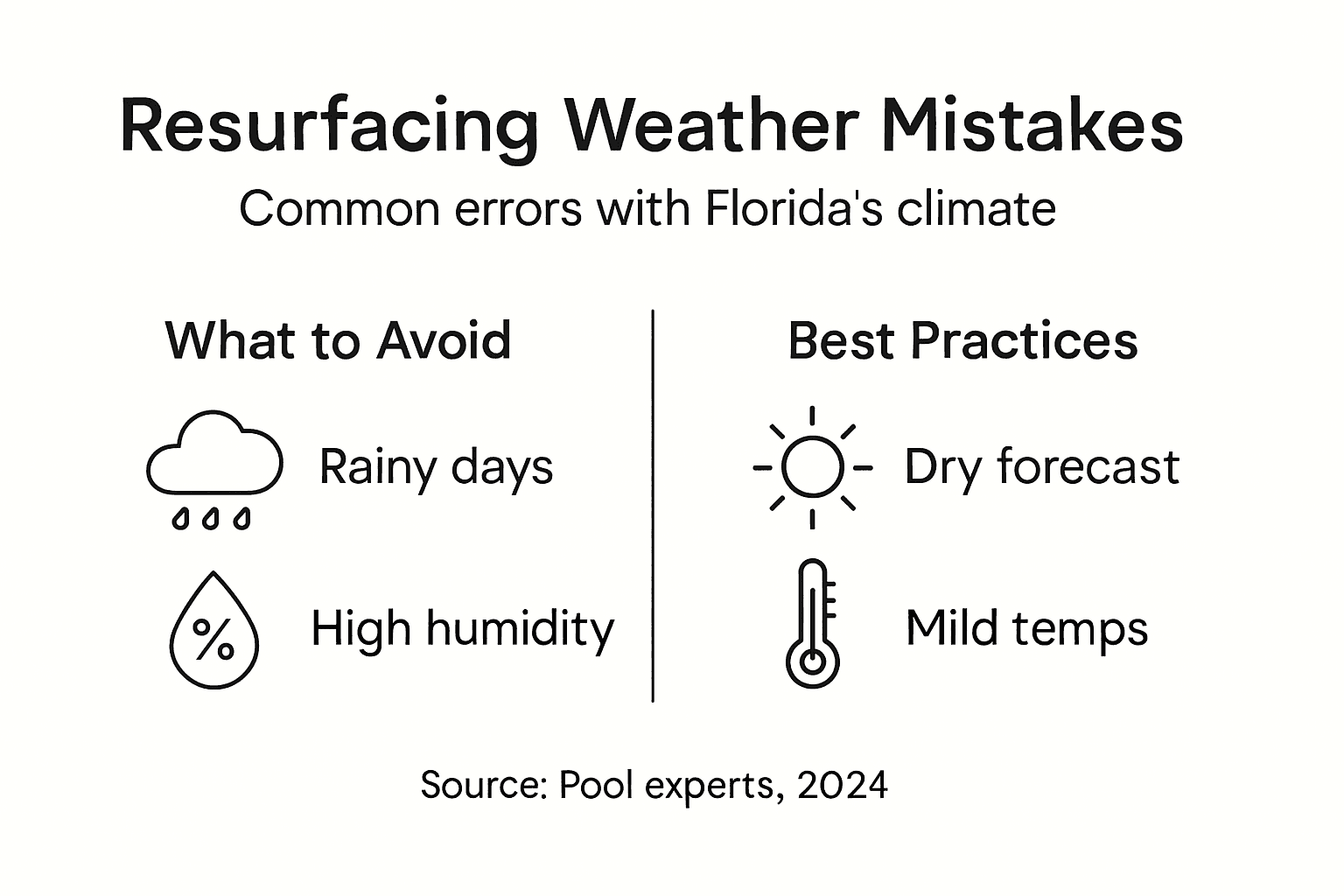
The biggest mistake is scheduling during rain or extreme humidity. Water interferes with material adhesion and causes peeling, cracking, and surface failure. Improper curing from weather exposure compromises the entire installation, turning a new surface into a problem surface within months.
Heat extremes cause their own damage. During Florida’s scorching summers, intense UV and temperatures above 95 degrees accelerate evaporation and thermal expansion. Materials cure too quickly or unevenly, creating weak spots and surface imperfections.
Ignoring water chemistry before resurfacing is another critical error. If your pool water has imbalanced chemicals or high acidity, the new finish faces chemical attack immediately. This problem isn’t cosmetic—it degrades the surface structurally.
Common resurfacing mistakes include:
- Resurfacing during rain prevents adhesion and causes peeling
- Skipping water chemistry balancing creates immediate chemical degradation
- Rushing the curing period compromises surface durability and longevity
- Ignoring electrical system checks risks safety hazards from corrosion damage
- Failing to protect equipment in cold weather causes freeze damage to pipes
Electrical safety gets overlooked too. During extreme weather or resurfacing work, pool electrical systems are vulnerable to corrosion and deterioration in wet, salt-laden environments. A resurfacing project is the perfect time to inspect bonding, grounding, and wiring before weather damage becomes a shock hazard.
Surface preparation failures amplify weather damage. Inadequate cleaning or prep work means the new finish has poor adhesion and fails faster under thermal stress and moisture exposure.
Don’t drain your pool then leave it empty during a rainstorm. Water saturation underneath the new surface causes bubbling and delamination. Similarly, never start a resurfacing project if rain is forecasted within 48 hours.
One weather mistake during resurfacing can turn a 10-year investment into a 3-year headache.
Timing coordination with your contractor is non-negotiable. They should monitor weather forecasts and delay work if conditions aren’t optimal.
Pro tip: Before scheduling resurfacing, ask your contractor for a detailed curing timeline and weather contingency plan—they should commit to postponing work if rain or extreme temperatures arrive, not rushing to meet deadlines and compromising your finish quality.
Protect Your Florida Pool with Expert Resurfacing Solutions
Florida’s intense sun and unpredictable weather patterns create unique challenges for pool owners. The constant UV exposure, humidity, and seasonal storms demand a resurfacing approach that not only restores your pool’s beauty but also delivers long-lasting durability and weather resistance. If you want to prevent costly repairs and extend your pool’s life by up to 15 years, addressing these climate-driven issues with the right materials and timing is critical.

Take control of your pool’s future today with Classic Marcite, the trusted leader in Orlando and Jacksonville pool resurfacing since 1988. We specialize in premium finishes like Pebble Tec® designed to withstand Florida’s toughest conditions while enhancing safety and aesthetics. Don’t wait for cracks, algae, or storm damage to compromise your investment. Schedule your free estimate now and discover how expert resurfacing can transform your pool into a durable, beautiful oasis that thrives in Florida’s climate. Get started here at Classic Marcite and protect your pool with proven craftsmanship and industry-leading materials.
Frequently Asked Questions
What is pool resurfacing?
Pool resurfacing is the process of applying a new interior surface to an existing pool structure to restore its functionality and appearance, extending its lifespan and preventing leaks or structural damage.
How does Florida’s climate affect pool surfaces?
Florida’s intense sun, high humidity, and temperature fluctuations accelerate the deterioration of pool surfaces, causing materials to break down more quickly compared to pools in milder climates.
When is the best time to schedule pool resurfacing in Florida?
The optimal time to schedule pool resurfacing is from late fall to early spring (October through April) when humidity levels are lower and weather conditions allow for proper curing of the materials.
What materials are best for pool resurfacing in Florida’s climate?
Materials that offer UV resistance, chemical tolerance, and thermal stability are best suited for Florida’s climate. Options like pebble finishes and ceramic tiles tend to perform better than standard plaster due to their durability against environmental stressors.
Recommended
- Pool Resurfacing Timeline: What Florida Owners Need
- Pool Resurfacing Updates 2025: Florida Homeowner Impact
- Pool Replastering Vs Resurfacing – Key Impacts For Florida Homes
- Role Of Resurfacing In Pool Safety: Florida Insights
- Pool Refinishing Windermere FL
- Pool Renovation Winter Park FL
- Swimming Pool Remodeling The Villages FL