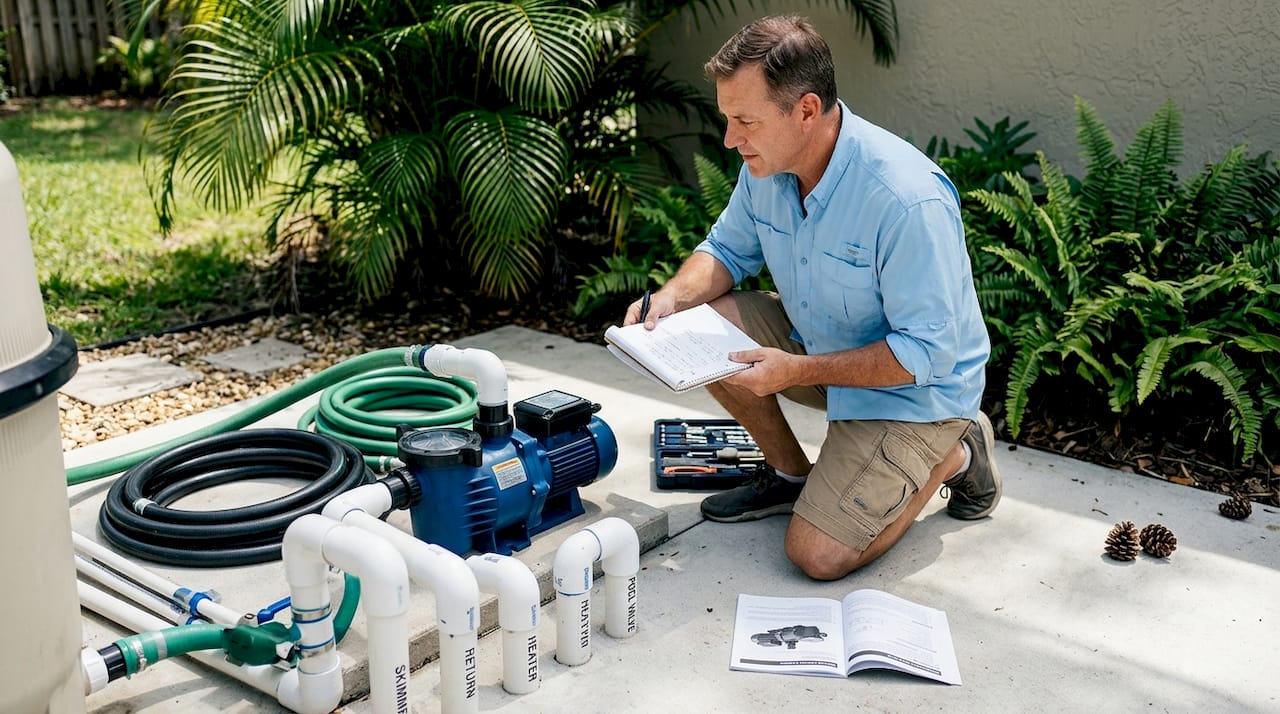
TL;DR:
- Outdated pool equipment in Florida causes high energy costs, noise, and inefficient heating, but upgrades can significantly improve performance and lifespan. Proper assessment, permits, and code-compliant components, especially variable-speed pumps, are essential steps in a phased upgrade process, with professional help recommended for inspections and installation. Incremental upgrades allow pool functionality during renovations, saving costs, reducing downtime, and ensuring compliance with local regulations and safety standards.
Your pool is running your electric bill into the ground, the pump sounds like a freight train, and the water never quite gets warm enough. These are not random bad luck — they are the predictable results of outdated equipment working too hard in Florida’s year-round swim season. Following clear pool equipment upgrade steps can cut your energy costs by half, eliminate the noise, and add years to your pool’s lifespan. If you are an Orlando or Jacksonville homeowner weighing whether to repair or replace, this guide walks you through every phase, decision, and detail.
Table of Contents
- Understanding your current pool equipment and upgrade prerequisites
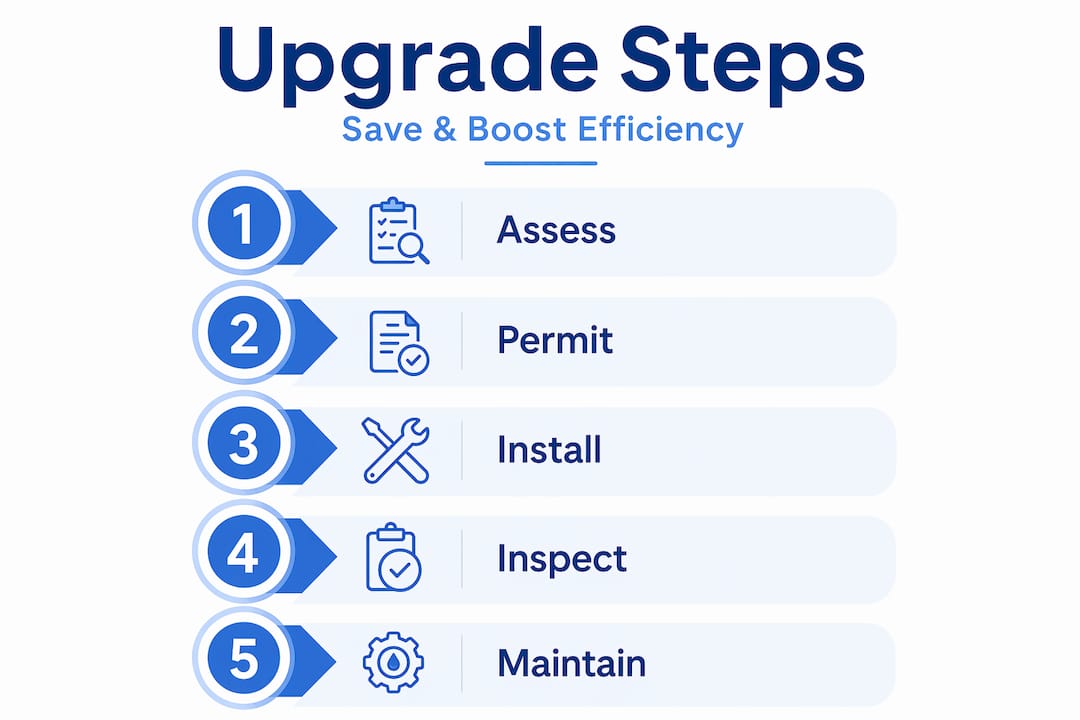
- Step-by-step process for upgrading your pool equipment
- Choosing the right equipment and avoiding common upgrade pitfalls
- Integrating smart automation and energy-efficient upgrades
- Final steps: inspection, testing, and maintenance after upgrade
- Why incremental upgrades win over full replacements for Florida homeowners
- Professional pool equipment upgrades and resurfacing services in Orlando and Jacksonville
- Frequently asked questions
Key Takeaways
| Point | Details |
|---|---|
| Assess before upgrade | Start by thoroughly inspecting your current pool equipment and documenting its condition. |
| Follow phased process | Upgrade through a clearly defined sequence: assess, permit, procure parts, install, and inspect. |
| Prioritize efficiency | Upgrade older pumps first to variable-speed models for the biggest energy and cost savings. |
| Ensure compliance | Meet local codes including permits, wiring standards, and safety features like VGB drain covers. |
| Maintain records | Keep detailed logs of all upgrades, inspections, and equipment data for future service and resale value. |
Understanding your current pool equipment and upgrade prerequisites
Before you order a single part, you need an honest picture of what you have. Skipping this step is how homeowners end up buying the wrong pump size or failing inspection because the electrical panel was not brought up to code first.
What to assess before upgrading pool equipment:
- Check pressure gauge readings on your filter. Normal operating pressure is typically 8 to 15 PSI. Readings 10 PSI above your clean baseline signal a clogged or failing filter.
- Look for error codes on your existing automation panel if you have one. These logs often point directly to the failing component.
- Inspect equipment pad wiring. Note every wire color and connection before touching anything. Take photos from multiple angles.
- Look for corrosion on your heater’s heat exchanger and bypass valve. In Florida’s humid climate, corrosion moves faster than most homeowners expect.
- Check your pump motor’s amperage draw against its nameplate rating. Anything drawing significantly over the rated amps means the motor is failing.
Florida adds a layer of regulatory requirements that many homeowners overlook. Seminole County requires a 5-phase process including a formal assessment and permit phase for pool equipment upgrades. That means electrical changes, gas heater replacements, and automation installs are not DIY-and-done projects. You need permits, and in many cases a licensed contractor to pull them.
Florida-specific compliance checkpoints:
| Requirement | Details |
|---|---|
| Variable-speed pump mandate | Florida law requires variable-speed pumps on new installs and replacements |
| VGB drain cover compliance | All pool drains must meet Virginia Graeme Baker Act safety standards |
| Electrical permits | Required for any new wiring, panel additions, or GFCI upgrades |
| Gas permits | Required for all gas heater installations and replacements |
| Florida Building Code | Equipment must meet current FBC standards before final inspection approval |
Pro Tip: Create a dedicated equipment folder, either physical or cloud-based, with photos of your pad, wiring diagrams, and model numbers for every component. Your contractor and inspector will thank you, and it speeds up every future service call.
Use our pool equipment upgrade checklist to make sure you have covered every item before the work begins.
Step-by-step process for upgrading your pool equipment
With preparation complete, here is how the actual upgrade unfolds from start to finish.
Phase 1: Initial assessment and diagnostics
Document everything. Take pressure readings, photograph the equipment pad from every angle, and note the make, model, and installation year of each component. If your pump motor trips the breaker or runs above rated amperage, flag it for replacement. If your filter PSI spikes more than 10 over baseline within a week of cleaning, the media is spent.
Phase 2: Obtain permits
Contact your county building department before ordering equipment. Electrical changes, gas heater swaps, and new automation panels all require permits in Florida. Filing early prevents delays because permit turnaround times vary by county.
Phase 3: Order code-compliant components
Every pump replacement must be a variable-speed model. Variable-speed pumps save 50 to 80 percent on electricity with a payback period of 12 to 18 months for Florida homeowners who use their pools year-round. That is not a marginal improvement — it is a fundamental shift in operating cost.
Phase 4: Safe removal and installation
- Lock out power at the breaker AND the disconnect box. Tape the breaker and post a warning sign.
- Take a final photo of all wiring before disconnecting anything.
- Remove old equipment and inspect the pad for damage, cracking, or corrosion.
- Install new equipment using unions on all plumbing connections. Unions let you remove equipment for future service without cutting pipe.
- Reconnect wiring exactly as documented. Use wire nuts rated for outdoor use.
- Restore power slowly and check for any tripped breakers or fault codes before running the system.
Phase 5: Final inspection and documentation
Schedule your inspection before using the pool if permits are required. Once signed off, file all paperwork with your equipment folder.
| Upgrade phase | Key action | Common mistake to avoid |
|---|---|---|
| Assessment | Document all components and readings | Skipping documentation |
| Permits | Apply before ordering equipment | Ordering non-compliant parts |
| Component selection | Variable-speed pump required by code | Buying single-speed motors |
| Installation | Lock out power, use unions | Skipping lockout, hard-piping connections |
| Inspection | Schedule before pool use | Running pool before sign-off |
Pro Tip: Always install unions on both sides of your new pump. A five-dollar union now saves you a plumber’s bill and pipe cutting costs every time that pump needs service in the future.
Learn how to replace pool equipment the right way with our step-by-step homeowner guide.
Choosing the right equipment and avoiding common upgrade pitfalls
Before anything gets installed, the components themselves need to be right for your pool’s size, your local climate, and Florida’s code requirements.
Pump selection:
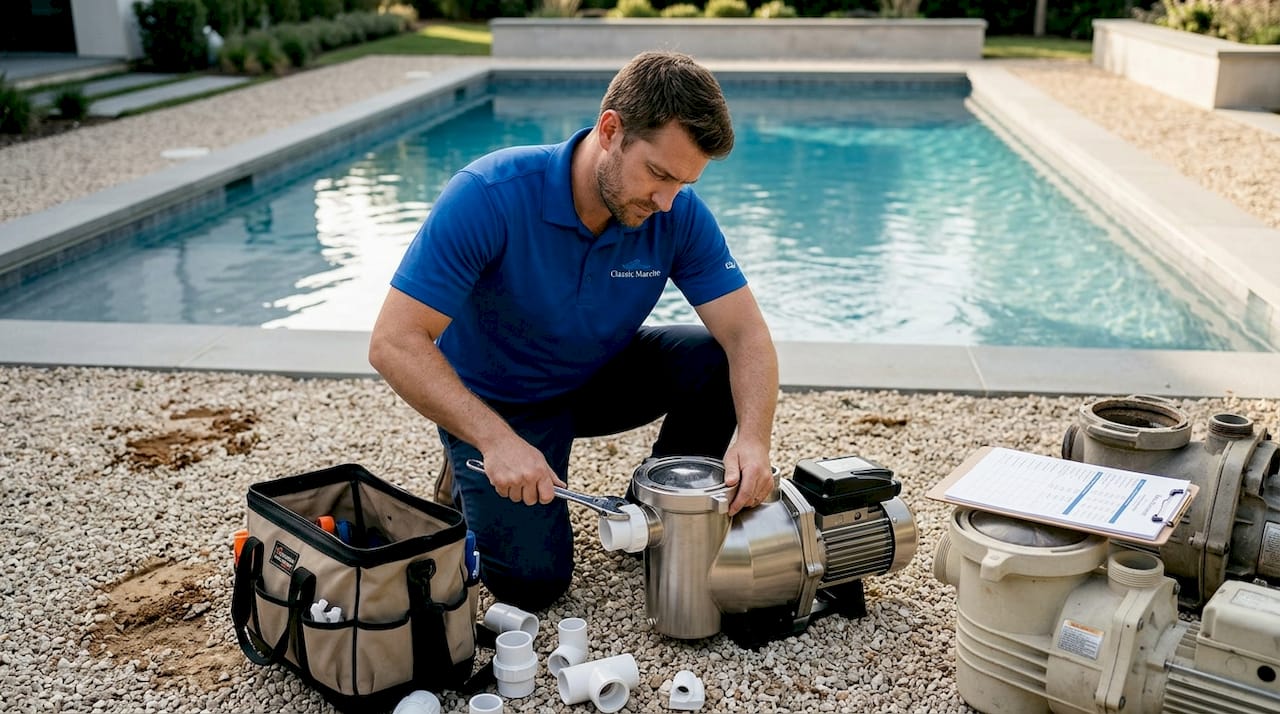
Upgrade the pump first if it is older than seven years or has required more than one repair. It is the highest-energy consumer on your pad, and a variable-speed motor running at lower RPMs for filtration cycles will immediately reduce your electric bill and run quietly enough that you can hold a conversation next to it.
Heater sizing:
Florida homeowners often undersize heaters assuming the climate does warmer baseline water. A heat pump heater that is too small runs continuously without reaching set temperature, wearing out its compressor years early. Size to 1 BTU per hour for every pound of water in the pool at minimum, or let a licensed contractor calculate it for your specific volume.
Installation best practices:
- Use adjustable equipment bases so a variable-speed pump can be positioned to match existing plumbing without major cuts
- Photograph all wiring before disconnecting to ensure correct reinstallation
- Replace gate valves with ball valves during the upgrade — gate valves crack over time in Florida’s heat
- Verify every drain cover meets VGB standards before closing out the job
“Repair is cost-effective if the repair cost is under 40 percent of the price of new equipment and the system is less than five years old. Replace non-compliant motors to meet variable-speed mandates regardless of age.”
This is a useful rule of thumb that keeps you from throwing good money at equipment that is close to the end of its useful life anyway. A pump that passes the 40 percent threshold today will likely need another repair in 18 months.
Explore more ways to maximize performance and value with your equipment selections.
Integrating smart automation and energy-efficient upgrades
After selecting equipment, adding automation and energy-efficient technology turns a functional pool into one that practically runs itself.
Variable-speed pump benefits beyond energy savings:
Running at low RPMs for daily filtration is quieter than a conversation. High RPM is available on demand for vacuuming or water features. The speed variability also extends filter media life because lower flow rates give debris more time to get caught.
Heater options for Florida pools:
- Heat pump heaters work best in Florida’s mild winters. They move heat from the air into the water rather than generating it, making them three to five times more efficient than gas heaters in temperatures above 50°F.
- Gas heaters heat pools faster and work in any air temperature, making them better for occasional use or for homeowners who want to heat quickly after a cold snap.
- Solar heaters add zero operating cost but require roof space and take longer to raise water temperature significantly.
Steps to set up pool automation:
- Choose an automation system that integrates with your pump, heater, and lighting brands.
- Have a licensed electrician wire the control panel to the equipment pad.
- Program filtration schedules to run during off-peak electricity hours, typically late night to early morning.
- Set heater to maintain a base temperature rather than heating from cold every session.
- Connect the app or remote to your home Wi-Fi and test all functions before closing out the job.
Smart pool automation allows you to remotely adjust pump speed, heater settings, and lighting, improving convenience and lowering energy use. For Jacksonville and Orlando homeowners who may heat their pools through October and again by March, that remote control is genuinely valuable day to day.
LED lighting:
Replacing incandescent pool lights with LEDs cuts lighting energy use by roughly 75 percent and offers color-changing capability that transforms the pool’s look at night. The bulbs last far longer in Florida’s heat than traditional incandescent options. Explore your options for smart pool equipment upgrades that add real visual impact.
Final steps: inspection, testing, and maintenance after upgrade
Completing the upgrade requires careful verification and ongoing attention to protect everything you just invested in.
Post-upgrade inspection and testing checklist:
- Schedule required inspections with your local AHJ (authority having jurisdiction) before using the pool.
- Test all plumbing connections under full operating pressure for at least 30 minutes. Mark any fittings showing moisture.
- Verify GFCI protection is functioning on all electrical outlets near the pool.
- Run the automation system through one full programmed cycle and confirm every component responds correctly.
- Check VGB-compliant drain covers are secured and undamaged after installation work.
“Final inspection by the local AHJ is required; keep documentation and log all replacements for future reference.”
That log is more useful than most homeowners realize. When you sell the home, it demonstrates compliance. When you call for service, the technician knows exactly what is installed and when. When a warranty claim arises, the installation date is on record.
Ongoing maintenance to protect your investment:
- Clean filter media or backwash according to manufacturer schedule, not just when pressure spikes
- Lubricate pump lid O-rings with silicone-based lubricant every six months
- Inspect heater heat exchanger annually for corrosion, especially in saltwater pools
- Check automation software for firmware updates every year
Pro Tip: Set a calendar reminder for the same date each year to review your equipment log and schedule preventive maintenance. Catching a worn O-ring or corroded contact in the off-season is far cheaper than an emergency repair in July.
Dive deeper into energy-efficient pool upgrades that keep your operating costs low year after year.
Why incremental upgrades win over full replacements for Florida homeowners
There is a tendency among homeowners to think of a pool equipment upgrade as an all-or-nothing project. Either you replace everything at once or you are just patching a failing system. That framing is wrong, and it costs people money.
Repairing solid equipment while upgrading inefficient parts incrementally is often the smarter path. A heater with three good years left does not need to come out the same week you replace your pump. A filter running at normal pressure is not broken just because it is six years old.
The practical case for phased upgrades comes down to three things. First, your pool stays functional during the process. Full equipment replacements require shutting the system down for days. Phased upgrades mean the pool is usable between jobs. Second, you spread the investment across budget cycles. A variable-speed pump this season, automation next season, and a new heater when your current one actually needs it. Third, you get to learn the new system before adding the next layer. Installing automation on top of an existing pump before you understand how the pump’s RPM settings work is a recipe for a misconfigured, frustrating system.
Florida’s climate also demands right-sizing at each phase. Oversizing a heat pump heater to handle every cold event just means higher upfront cost for a scenario that rarely occurs. Adding solar supplemental heating later, after you have the automation in place to manage it, is smarter than trying to integrate everything in one rushed job.
The pump upgrade genuinely deserves to go first. It produces the biggest single change in operating cost and noise level. Every other piece of equipment benefits from a properly sized, variable-speed pump running consistent, optimized flow. Starting there gives you an immediate win and a strong foundation.
Explore cost-saving pool renovation tips to plan your phased approach thoughtfully.
Professional pool equipment upgrades and resurfacing services in Orlando and Jacksonville
You now have a clear picture of every pool equipment upgrade step from assessment through final inspection. When it is time to move from plan to action, working with licensed professionals who know Florida’s code requirements eliminates the risk of failed inspections, incorrectly sized equipment, and wiring mistakes that void warranties.

Classic Marcite has resurfaced more than 100,000 pools across Central Florida since 1988 and brings that same depth of experience to equipment upgrades and full pool renovations. Whether you need a single pump replaced or a complete backyard transformation, our certified technicians handle sizing, programming, permit coordination, and final inspection support. Pairing an equipment upgrade with a pool resurfacing in Winter Park or pool resurfacing in Maitland gives your pool both a functional and visual overhaul at the same time. Learn more about what goes into pool resurfacing in Florida and contact us for a free estimate.
Frequently asked questions
What are the first steps before upgrading pool equipment in Florida?
Start by assessing your current equipment’s condition, documenting pressure readings, model numbers, and wiring, then confirm local permit requirements. Seminole County requires a formal assessment and permit determination phase before any equipment upgrade work begins.
How much can I save by upgrading to a variable-speed pump in Florida?
Variable-speed pumps reduce electricity costs by 50 to 80 percent, with a typical payback period of just 12 to 18 months thanks to Florida’s year-round pool use.
Do I need a permit to replace my pool equipment?
Yes, permits are required for electrical changes, gas heater replacements, and automation panel installations. Seminole County requires homeowners to submit scope of work and obtain permits before upgrades involving electrical or gas systems.
Can I upgrade some pool equipment now and repair others later?
Absolutely. Repairing stable equipment while upgrading inefficient or non-compliant components in phases reduces downtime, spreads costs, and keeps your pool functional throughout the process.
What maintenance is important after upgrading my pool equipment?
Test regularly for leaks and electrical faults, keep a log of all installed equipment with dates, and schedule periodic inspections to stay compliant and catch problems before they become expensive failures.