Most American homeowners in Orlando and Jacksonville underestimate how much pool resurfacing goes beyond simple aesthetics. Nearly 60 percent of pool surface failures are linked to hidden structural issues rather than wear and tear. Addressing misconceptions and choosing the right resurfacing method can make the difference between a pool that is just attractive and one that lasts for decades. This guide breaks down the essential details about pool resurfacing for durable, beautiful results.
Table of Contents
- Pool Resurfacing Basics And Misconceptions
- Popular Resurfacing Materials And Finishes
- How The Resurfacing Process Works
- Costs, Timelines, And Maintenance Needs
- Avoiding Common Pool Resurfacing Mistakes
Key Takeaways
| Point | Details |
|---|---|
| Importance of Professional Resurfacing | Pool resurfacing is essential for maintaining structural integrity and safety, not just for aesthetic improvements. Consulting with professional specialists is crucial for optimal results. |
| Material Selection Matters | Different resurfacing materials offer various benefits; choosing the right one depends on factors like climate and pool conditions. Homeowners should seek expert advice when selecting materials. |
| Proper Maintenance is Key | Regular maintenance is vital for extending the lifespan of a resurfaced pool and can significantly reduce long-term costs. Homeowners should follow a comprehensive maintenance plan tailored to their surface material. |
| Avoid DIY Errors | Attempting DIY resurfacing can lead to costly errors, including uneven surfaces and compliance issues. Always hire licensed professionals to ensure compliance with local regulations and high-quality work. |
Pool resurfacing basics and misconceptions
Pool resurfacing represents far more than a simple cosmetic upgrade – it’s a critical maintenance strategy that directly impacts your swimming pool’s structural integrity, safety, and long-term performance. Homeowners often misunderstand this process, believing it’s just about creating a fresh appearance. However, professional pool resurfacing involves complex technical considerations that go beyond visual improvements.
The International Swimming Pool and Spa Code highlights critical standards that guide proper pool resurfacing, emphasizing that this process involves comprehensive structural evaluation. Common misconceptions include thinking any contractor can effectively resurface a pool or that surface damage is purely aesthetic. In reality, pool resurfacing addresses underlying structural issues, prevents water leakage, and ensures the pool meets safety regulations.
Understanding pool resurfacing requires recognizing its multifaceted nature. Different pool materials – like plaster, aggregate, or tile – demand specific resurfacing techniques. Factors such as pool age, existing surface condition, climate exposure, and water chemistry all influence the resurfacing approach. Professional pool specialists assess these variables to recommend the most appropriate resurfacing method, which might involve complete surface replacement or targeted repairs.
Pro tip: Before scheduling pool resurfacing, request a comprehensive diagnostic assessment that includes detailed surface evaluation, structural integrity testing, and a customized restoration plan tailored to your specific pool conditions.
Popular resurfacing materials and finishes
Pool resurfacing materials have evolved significantly, offering homeowners a diverse range of options that balance aesthetic appeal, durability, and performance. Pool water efficiency considerations play a crucial role in selecting the right surface, with each material presenting unique advantages and potential drawbacks for Orlando and Jacksonville area pools.
Traditional pool finishes include plaster, which remains a popular and cost-effective option. More advanced materials like aggregate finishes combine plaster with small pebbles or quartz, creating a more textured and visually appealing surface. These aggregate finishes not only enhance visual appeal but also improve slip resistance and durability. Specialized options such as Pebble Tec® provide superior longevity, with surfaces that can withstand Florida’s intense sunlight and humidity while maintaining their aesthetic quality.
Modern pool resurfacing technologies offer increasingly sophisticated solutions. Quartz-based finishes provide exceptional durability and color retention, while glass bead surfaces offer a luxurious, reflective appearance that can dramatically transform a pool’s look. Energy-efficient pool surface technologies now consider not just aesthetic appeal, but also factors like heat retention, water conservation, and long-term maintenance requirements. Homeowners can select from materials that range from economical plaster to high-end ceramic and glass-based finishes, each offering different levels of performance and visual impact.
Pro tip: Consult with a professional pool resurfacing specialist who can assess your specific pool conditions, climate exposure, and aesthetic preferences to recommend the most suitable material for your unique needs.
Here’s a quick comparison of popular pool resurfacing materials and their key characteristics:
| Material Type | Visual Appeal | Durability | Maintenance Needs |
|---|---|---|---|
| Plaster | Simple and classic | Moderate | Regular cleaning required |
| Aggregate Finish | Textured and stylish | High | Occasional deep cleaning |
| Pebble Tec® | Natural and upscale | Exceptional | Minimal, annual inspection |
| Quartz-Based | Colorful and bright | Very high | Light, chemical balance |
| Glass Bead | Shimmering and unique | High | Careful cleaning needed |
How the resurfacing process works
Pool resurfacing is a meticulous, multi-step process that requires professional expertise and careful execution. Pool resurfacing procedural requirements outline a comprehensive approach that ensures both aesthetic excellence and structural integrity for swimming pools in Orlando and Jacksonville.
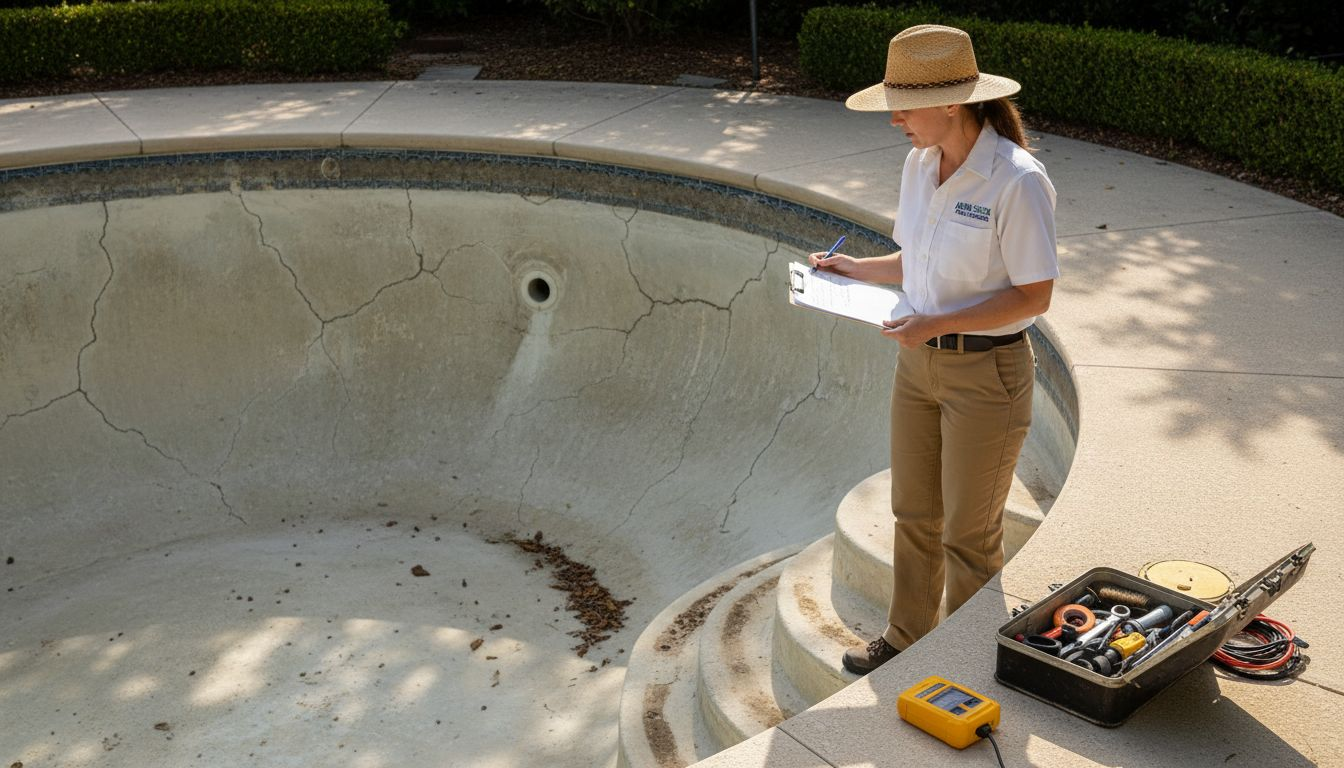
The initial stage involves comprehensive pool assessment, where specialists conduct detailed inspections to identify surface damage, structural weaknesses, and potential underlying issues. Surface preparation is critical and involves multiple key steps: draining the pool completely, removing the existing surface through sandblasting or chipping, and thoroughly cleaning the exposed substrate. Technicians carefully examine the pool shell for cracks, chips, or structural irregularities that might compromise the new surface’s performance.
Once the preparation is complete, the actual resurfacing begins with precise material application. Skilled technicians apply the chosen finish – whether plaster, aggregate, or specialized coatings – using specialized techniques that ensure even distribution, proper bonding, and minimal imperfections. The application process requires expert timing, precise environmental conditions, and specialized tools to create a smooth, durable surface that can withstand Florida’s challenging climate. Swimming pool renovation guidelines emphasize the importance of professional application techniques that guarantee long-term performance and aesthetic quality.
Pro tip: Request a detailed written assessment and timeline from your pool resurfacing professional, ensuring they outline each specific stage of the process and potential variables that might impact the project’s completion.
Costs, timelines, and maintenance needs
Pool resurfacing represents a significant investment for homeowners, with costs and timelines varying widely based on multiple factors. Pool water efficiency strategies demonstrate that strategic resurfacing can actually reduce long-term expenses by improving overall pool performance and reducing ongoing maintenance requirements.
Typical pool resurfacing projects in Orlando and Jacksonville range from $5,000 to $15,000, depending on pool size, selected materials, and existing surface condition. Project timelines typically span 3-7 days, with most residential pools completed within one week. Factors influencing cost include pool dimensions, chosen finish (plaster, aggregate, specialized coatings), surface preparation complexity, and any necessary structural repairs. Homeowners should budget not just for immediate resurfacing expenses, but also for potential future maintenance and potential incremental improvements.
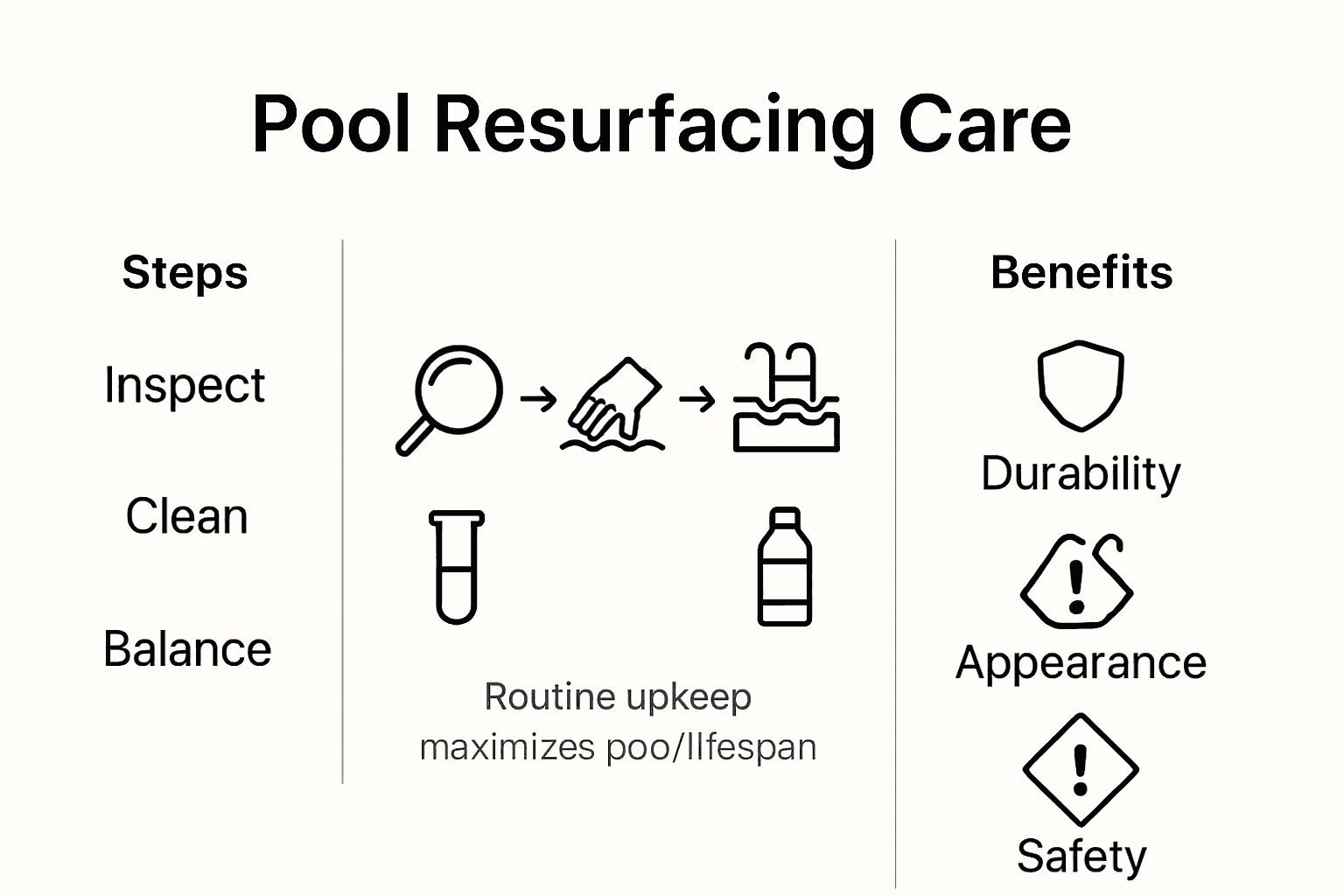
Ongoing maintenance is crucial for extending the lifespan of a newly resurfaced pool. Efficient swimming pool operational guidelines recommend regular chemical balance checks, periodic cleaning, and annual professional inspections to prevent premature surface degradation. Maintenance costs typically range from $500 to $1,500 annually, depending on pool usage, local environmental conditions, and specific surface material. Proper maintenance can extend a pool surface’s lifespan from 10 to 20 years, significantly reducing long-term renovation expenses.
Pro tip: Request a comprehensive maintenance plan from your pool resurfacing professional, including specific care instructions tailored to your chosen surface material and local climate conditions.
Avoiding common pool resurfacing mistakes
Pool resurfacing can quickly become complicated without proper planning and expertise. Pool chemical safety guidelines reveal that many homeowners unknowingly make critical errors during the resurfacing process that can compromise both pool performance and personal safety.
One of the most significant mistakes is attempting DIY resurfacing without professional training. Improper surface preparation can lead to premature material failure, uneven finishes, and costly repairs. Common errors include inadequate surface cleaning, incorrect material mixing, poor application techniques, and neglecting critical environmental conditions like temperature and humidity. Some homeowners underestimate the precision required in surface preparation, believing that basic cleaning and patching are sufficient for a successful resurfacing project.
Regulatory compliance represents another critical area where pool owners frequently make mistakes. Pool resurfacing procedural checklists highlight the importance of understanding local building codes, obtaining necessary permits, and ensuring that all materials and techniques meet specific safety standards. Overlooking these requirements can result in potential fines, safety hazards, and the need for expensive corrections. Pool owners should always work with licensed professionals who understand local regulations and can navigate complex technical requirements.
The table below summarizes common pool resurfacing mistakes and their consequences to help homeowners avoid costly errors:
| Mistake Type | Typical Cause | Negative Consequence |
|---|---|---|
| DIY resurfacing attempt | Lack of proper training | Uneven surface, material failure |
| Poor surface preparation | Inadequate cleaning | Peeling, short lifespan |
| Incorrect material choice | Ignoring climate needs | Discoloration, cracking |
| Regulations overlooked | Missed permits/code | Fines, unsafe pool conditions |
Pro tip: Request detailed documentation of materials, processes, and compliance certifications from your pool resurfacing professional to ensure a comprehensive and legally compliant renovation.
Enhance Your Pool’s Durability and Style with Expert Resurfacing
The article highlights common challenges like surface damage, structural issues, and selecting the right materials to ensure lasting pool performance. If you face uneven surfaces, fading finishes, or worry about costly repairs, it is crucial to partner with experienced specialists who understand the complexities of pool resurfacing technology and Florida’s unique climate demands. At Classic Marcite, we excel at using premium finishes such as Pebble Tec® to deliver superior durability and visual appeal, aligning perfectly with the advanced materials and professional techniques discussed.

Ready to transform your pool with trusted craftsmanship? Visit Classic Marcite to explore our full range of pool renovation and resurfacing services in Orlando and Jacksonville. Get your free estimate today and benefit from decades of industry leadership, expert advice, and guaranteed quality. Don’t let surface deterioration or improper resurfacing diminish your pool’s value and safety. Act now to secure a vibrant, long-lasting swimming environment with Classic Marcite’s proven solutions.
Frequently Asked Questions
What is the purpose of pool resurfacing?
Pool resurfacing is a crucial maintenance process that not only enhances the visual appeal of a pool but also addresses structural issues, maintains safety standards, prevents water leakage, and ensures long-term performance.
How often should a pool be resurfaced?
Typically, a pool should be resurfaced every 10 to 20 years depending on the material used, environmental exposure, and maintenance regimen. Regular inspections can help determine the best timing for resurfacing.
What materials are commonly used for pool resurfacing?
Common materials for pool resurfacing include plaster, aggregate finishes, Pebble Tec®, quartz-based finishes, and glass bead surfaces. Each material offers unique advantages in terms of durability, appearance, and maintenance needs.
Can I do pool resurfacing myself?
It is generally not advisable to attempt DIY pool resurfacing, as improper preparation and application can lead to material failure and safety hazards. Hiring a professional ensures compliance with regulations and uses the correct techniques for a long-lasting finish.