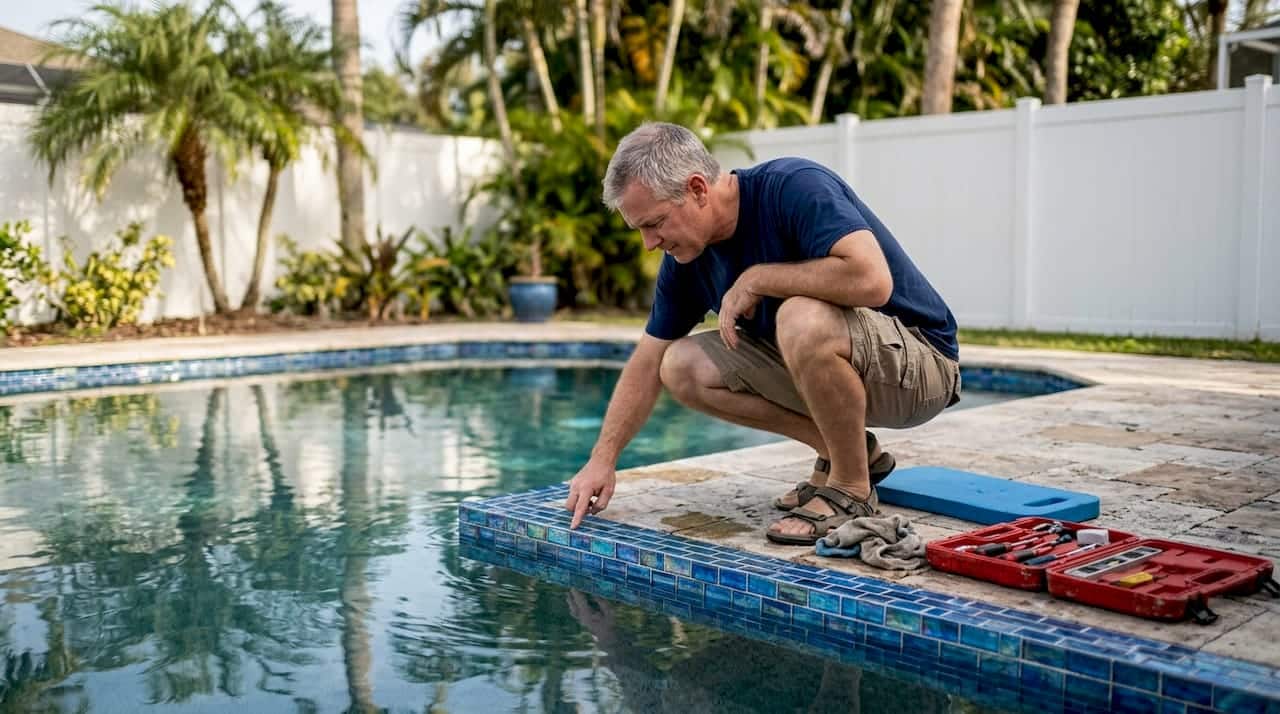
A single cracked pool tile might seem like a minor cosmetic issue, but loose or damaged tiles can quietly trigger structural problems that cost far more than a simple fix. For homeowners in Orlando and Jacksonville, where heat, humidity, and hard water work against pool surfaces year-round, ignoring tile issues is a gamble with serious financial consequences. This guide walks you through why upgrades matter, which materials hold up best in Florida’s climate, what happens when repairs are delayed, and how to decide between patching and full replacement.
Table of Contents
- What makes pool tile upgrades necessary?
- Understanding your pool tile options: Materials compared
- Hidden risks of delaying a pool tile upgrade
- Repair or replace? Making the right call for your pool
- Protecting your investment: Maintenance tips for lasting tiles
- Ready to upgrade? Take the next step with Florida’s tile experts
- Frequently asked questions
Key Takeaways
| Point | Details |
|---|---|
| Upgrades prevent costly repairs | Replacing old or damaged pool tiles early avoids major structural issues and saves thousands in repairs. |
| Modern tiles boost home value | New tiles can increase Florida property value by 5–15% and dramatically enhance visual appeal. |
| Porcelain offers top durability | Porcelain tiles are the best choice for Florida pools, outlasting ceramic in challenging climate conditions. |
| Smart maintenance extends life | Proper pH, specialized materials, and periodic resealing mean your upgraded tiles last longer and perform better. |
What makes pool tile upgrades necessary?
Most homeowners think about pool tiles only when something looks obviously wrong. But the real triggers for an upgrade go well beyond appearance. There are several clear signs that your pool tiles need attention:
- Visible cracks or chips along the waterline or floor
- Staining that won’t clean off, even with professional chemicals
- Loose or hollow-sounding tiles when tapped
- Outdated design that drags down your home’s curb appeal
- Frequent algae buildup in porous or damaged grout lines
Structurally, damaged tiles open the door to water intrusion. Water seeps behind the tile layer, reaches the bond beam (the structural concrete ring at the top of your pool), and begins corroding the steel rebar inside. That process is slow and invisible until it becomes expensive. Preventing water intrusion from damaged tiles avoids $10,000 or more in structural repairs.
“Cracked, stained, or loose tiles are a leading indicator of deeper problems” and addressing them early can reduce cleaning time by up to 80% with the right pool tile upgrades.
Beyond structure, there’s real value in modernizing. Updated tiles give your pool a fresh look, match current design trends, and make weekly cleaning faster. If you’re weighing whether it’s time to act, reviewing the reasons to renovate your pool or understanding why professionals recommend renovating aging pools can help you frame the decision clearly.
Understanding your pool tile options: Materials compared
With the reasons established, you’ll need to know your material choices. Not all tiles perform equally in Florida’s climate, and picking the wrong one means replacing it sooner than expected.
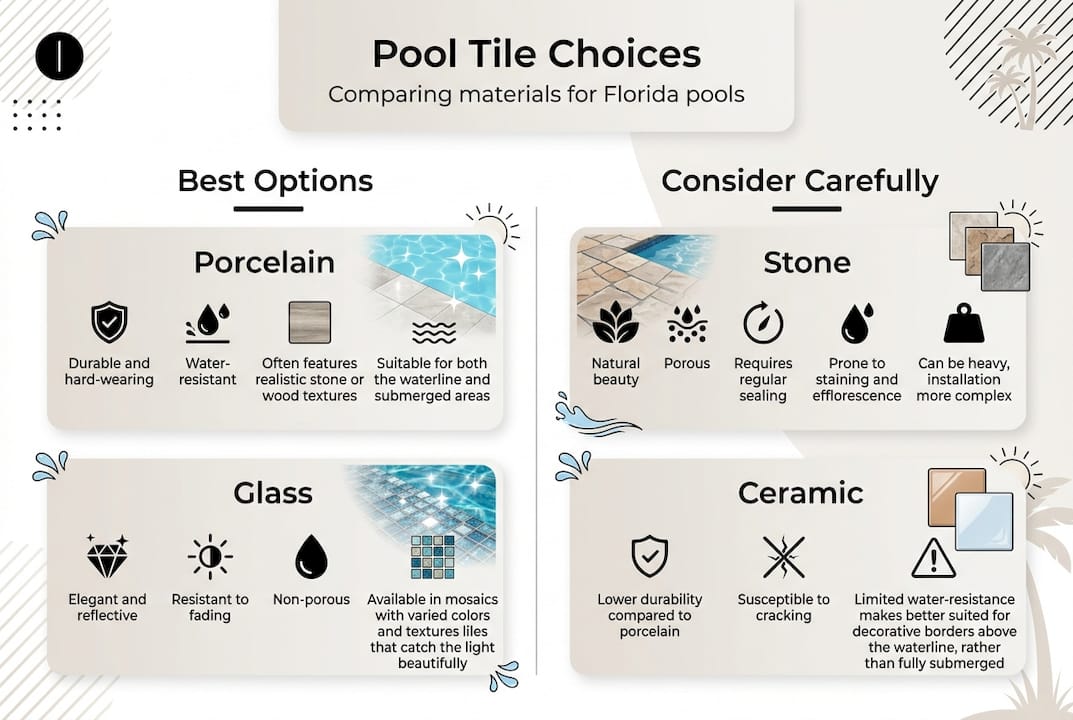
| Material | Durability | Water absorption | Cost range | Best for |
|---|---|---|---|---|
| Porcelain | Very high | Less than 0.5% | $$$ | Long-term Florida use |
| Ceramic | Moderate | 3–7% | $$ | Budget renovations |
| Glass | High | Very low | $$$$ | Luxury aesthetics |
| Natural stone | Variable | Moderate | $$$$ | Unique visual appeal |
Porcelain tiles absorb less than 0.5% water, which makes them far more resistant to Florida’s freeze-thaw cycles (yes, even Central Florida gets occasional cold snaps), chemical exposure, and UV fading. Ceramic tiles are cheaper upfront but absorb significantly more water, which leads to cracking and staining faster in humid conditions.
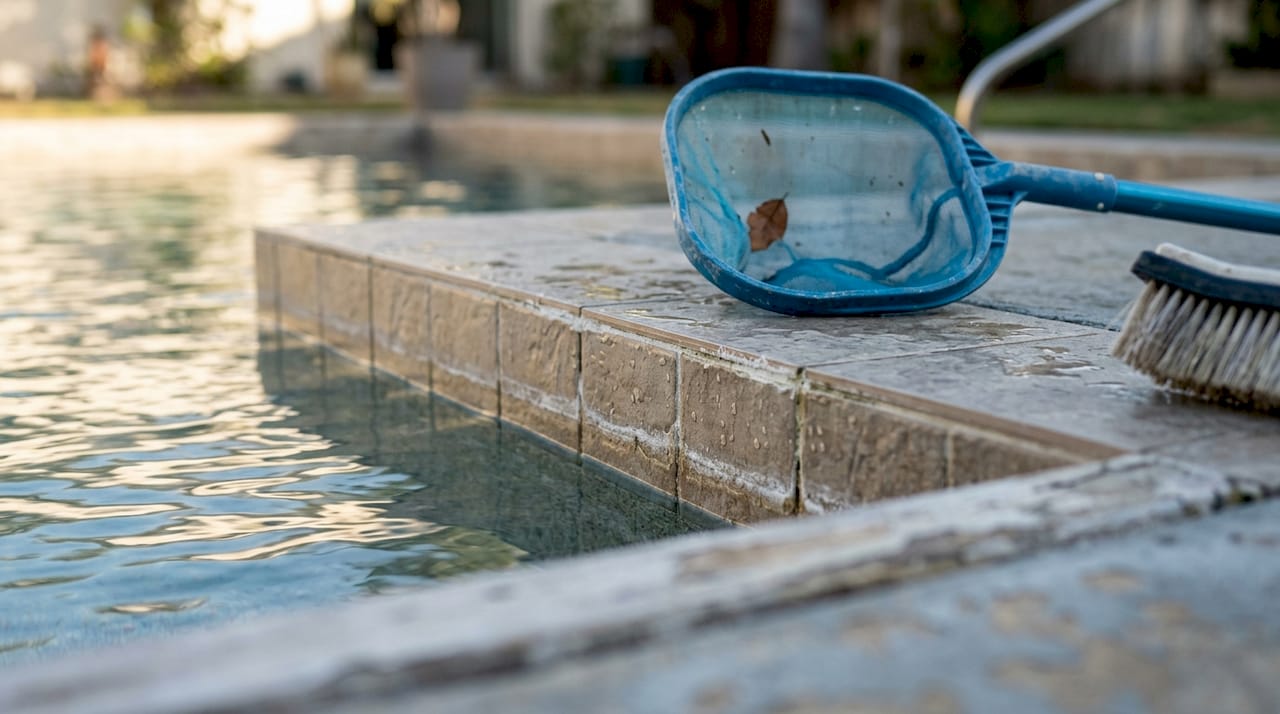
Glass tiles are a popular luxury choice. They reflect light beautifully, resist algae, and give pools a high-end resort look. The tradeoff is cost and the need for a skilled installer. Improper installation of glass tiles leads to cracking from thermal expansion, which is a real concern in Florida summers.
Pro Tip: Always ask your installer about waterproof grout and proper joint spacing. Tight joints with non-flexible grout crack under Florida’s heat cycles. A small gap filled with pool-grade sealant absorbs movement and extends tile life significantly.
For a visual sense of what different finishes look like in real Florida pools, browsing examples of popular tile finishes gives you a practical starting point before committing to a material.
Hidden risks of delaying a pool tile upgrade
If you’re still debating the urgency, consider what can go wrong if issues are left unchecked. The damage sequence in a neglected pool follows a predictable pattern:
- Surface cracks appear in grout or tile faces
- Water penetrates behind the tile layer
- Bond beam concrete begins to absorb moisture and weaken
- Rebar inside the bond beam corrodes, expanding and cracking the concrete further
- Pool shell shifts or cracks, requiring full structural repair
Each step in that sequence multiplies your repair bill. Widespread tile failure can push repair costs above $10,000 once bond beam and rebar damage are involved. Compare that to catching the problem early, when a targeted tile replacement might cost a fraction of that.
Delaying tile repairs is like ignoring a slow roof leak. The water damage compounds quietly until the ceiling falls.
There’s also a property value angle. Regular upgrades and repairs can boost your home value by 5 to 15% in Florida, where pools are a major selling point. A pool with cracked, stained tiles signals deferred maintenance to buyers and appraisers alike.
For a deeper look at why surface condition matters beyond aesthetics, the guide on upgrading pool surfaces for durability covers the safety and structural angles in detail. If energy costs are also a concern, exploring energy-efficient pool upgrades shows how a full renovation can reduce operating costs at the same time.
Repair or replace? Making the right call for your pool
You recognize the risks. Now here’s how to decide your best next steps and avoid common pitfalls.
The “tap test” is your first diagnostic tool. Tap each tile with a coin or screwdriver handle. A hollow sound means the tile has lost its bond to the substrate. Solid tiles sound dense. If you find isolated hollow tiles above the waterline, a DIY repair may be appropriate. If the hollow sound is widespread or tiles are underwater, stop and call a professional.
Here’s a clear breakdown of when each approach makes sense:
- DIY repair is reasonable when: 1 to 3 tiles are affected, all are above the waterline, the pool is less than 5 years old, and the surrounding grout is intact
- Professional repair is needed when: tiles are underwater, cracks run through grout lines across multiple tiles, or the coping (the cap around the pool edge) shows movement
- Full replacement is the right call when: tiles are 10 or more years old, chemical staining is widespread, or the bond beam shows visible damage
DIY repair is typically safe for only 1 to 3 above-water tiles; older tiles or underwater cracks require a professional to avoid making the problem worse.
Pro Tip: Never use standard household grout or adhesive for pool tile repairs. Pool-grade epoxy adhesive and waterproof grout are non-negotiable. The wrong materials fail within one season in Florida’s water chemistry.
For step-by-step guidance, the DIY pool tile repair guide covers safe techniques for minor fixes. If you want to understand the full scope of what professional repair involves, what is pool tile repair breaks it down clearly. Homeowners in Central Florida can also find region-specific advice in the pool tile repair guide for Orlando and Jacksonville.
Protecting your investment: Maintenance tips for lasting tiles
Once your tiles are upgraded, smart maintenance ensures your investment endures and keeps your pool safe and beautiful. The good news is that most of what protects tiles is already part of good pool ownership.
Here are the key maintenance habits that extend tile life:
- Test and balance water chemistry weekly. Maintain pH between 7.2 and 7.6 to prevent acid etching or calcium scaling on tile surfaces.
- Brush tile lines weekly with a nylon brush. Avoid metal brushes, which scratch tile glazing and create microscopic entry points for algae.
- Inspect grout lines every season. Look for hairline cracks, discoloration, or soft spots that indicate water infiltration.
- Reseal expansion joints every 5 years using pool-grade waterproof sealant. This is one of the most overlooked maintenance steps.
- Avoid abrasive cleaners or acidic products not rated for pool use. They strip grout and dull tile finishes faster than Florida’s sun ever could.
- Schedule a professional inspection annually, especially after a harsh winter or heavy storm season.
Consistent water chemistry is the single biggest factor in tile longevity. Calcium hardness that’s too high leaves white scale deposits. pH that’s too low etches the tile surface and weakens grout. Both problems accelerate the need for repairs or replacement.
For a full checklist of what to do after a resurfacing project, the guide on pool maintenance after resurfacing is a practical resource. You can also find ongoing care strategies in the article on how to maintain your pool surface for long-term results.
Ready to upgrade? Take the next step with Florida’s tile experts
Classic Marcite has resurfaced over 100,000 pools across Florida since 1988, and we know exactly what Orlando and Jacksonville pools face season after season. Whether you’re dealing with a few cracked tiles or planning a full renovation, getting a professional assessment is the fastest way to understand your options and protect your investment.

We offer free estimates and a full portfolio of completed projects so you can see real results before committing. If you’re focused on boosting durability and looks, our resurfacing team can walk you through every option. Not sure which finish is right for your pool? The guide to choosing the best pool finish covers all the major options side by side. And if a full remodel is on your radar, our pool remodeling guide outlines every step of the process from planning to completion.
Frequently asked questions
How long do modern pool tiles last in Florida?
With proper installation and maintenance, upgraded porcelain or glass tiles can last 10 to 20 years in Florida’s climate. Porcelain’s durability and fade resistance make it the top-performing option for long-term use in the region.
What’s the average cost for upgrading pool tiles?
Expect to pay $25 to $50 per linear foot for waterline tile, with full retiling averaging around $15,000 for a standard Florida pool. Costs vary based on tile material, pool size, and the extent of any underlying repairs needed.
Are there visual benefits to new pool tiles besides durability?
Absolutely. Upgraded tiles modernize your pool’s appearance, hide resurfacing seams, and can add 5 to 8% to home value in Florida’s competitive real estate market.
How do I know if I should repair tiles or fully replace them?
Repair small, isolated above-water issues yourself if the pool is under 5 years old. Replace when cracks are widespread, coping shifts, or tiles are over 10 years old and showing chemical wear.
What maintenance helps pool tiles last the longest?
Keep pH balanced between 7.2 and 7.6, reseal grout joints every 5 years, and use only pool-grade materials for any repairs or touch-ups.