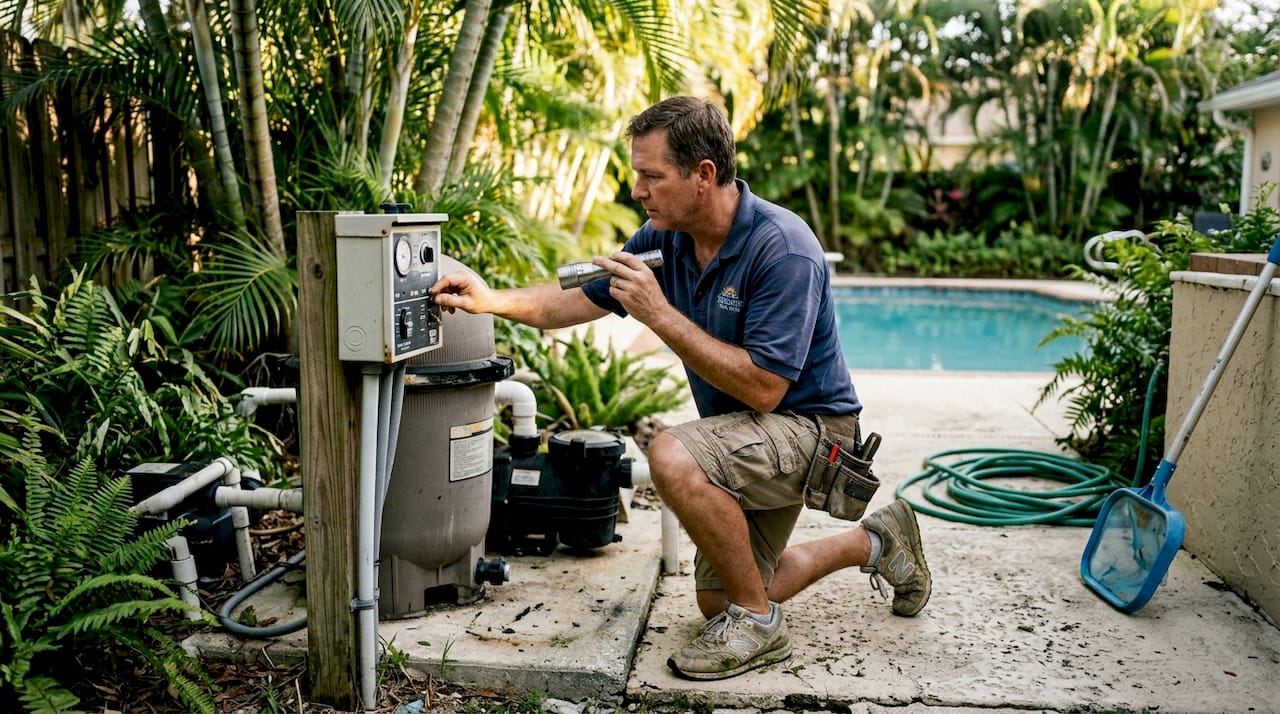
Most Florida pool owners assume their current equipment is fine until something breaks. This reactive mindset costs you more in repairs, energy bills, and missed opportunities to extend your pool’s life. Upgrading pool equipment enhances durability against Florida’s harsh climate conditions while improving efficiency and aesthetics. Whether you manage a residential pool or oversee commercial properties, strategic equipment upgrades deliver measurable returns through reduced maintenance, lower utility costs, and enhanced user experience. This guide reveals how smart upgrade choices transform your pool into a more valuable, efficient asset.
Table of Contents
- Key takeaways
- Why upgrading pool equipment matters for Florida pools
- Types of pool equipment upgrades and their benefits
- Choosing the right upgrades: factors and considerations
- Maintaining upgrades for maximum value and performance
- Explore professional pool services for your upgrade needs
- Frequently asked questions
Key Takeaways
| Point | Details |
|---|---|
| Climate durability | Upgrading pool equipment strengthens durability against Florida sun, humidity, and storms, reducing premature failures and costly repairs. |
| Energy savings | Variable speed pumps can save up to 87 percent on energy costs compared with older single speed models. |
| Cleaner water | Upgraded filtration and sanitization reduce chemicals and improve water clarity for safer, more comfortable swimming. |
| Aesthetic value | LED lighting and automated covers enhance appearance and safety while boosting curb appeal and property value. |
Why upgrading pool equipment matters for Florida pools
Florida’s relentless sun, high humidity, and seasonal storms create the perfect storm for pool equipment deterioration. Your pumps, filters, and automation systems face conditions that accelerate wear far beyond what manufacturers design for in moderate climates. Upgrading pool equipment enhances durability against Florida’s harsh climate conditions, protecting your investment from premature failure.
Equipment upgrades strengthen your pool’s infrastructure in ways surface treatments alone cannot. When you pair modern pumps with quality resurfacing, you create a system that resists both mechanical stress and environmental damage. This integrated approach extends the lifespan of every component, from the pool shell to the circulation system.
Energy efficiency represents the most immediate financial benefit. Variable-speed pumps consume dramatically less electricity than older single-speed models, cutting your monthly utility costs while maintaining superior water circulation. Modern filtration systems require fewer chemicals to achieve crystal-clear water, reducing both your chemical budget and environmental impact.
Water quality improvements directly affect user safety and comfort. Upgraded sanitization systems maintain consistent chlorine levels without the harsh spikes that irritate skin and eyes. Advanced filtration captures finer particles, creating water so clear you can count tiles at the deep end.
Pro Tip: Schedule equipment assessments during Florida’s dry season (November through April) when you can evaluate performance without weather interference affecting readings.
“The difference between maintaining old equipment and upgrading is like choosing between patching a leaky roof repeatedly or installing impact-resistant shingles. One solves today’s problem; the other prevents tomorrow’s disasters.” – Pool renovation specialist
Aesthetic upgrades transform pools from functional assets into backyard showcases. LED lighting systems create ambiance while consuming fraction of the energy traditional bulbs require. Automated covers protect water quality and enhance safety, all while presenting a sleek, modern appearance that appeals to potential buyers.
Exploring reasons to renovate your pool reveals how equipment upgrades complement surface improvements for maximum impact.
Types of pool equipment upgrades and their benefits
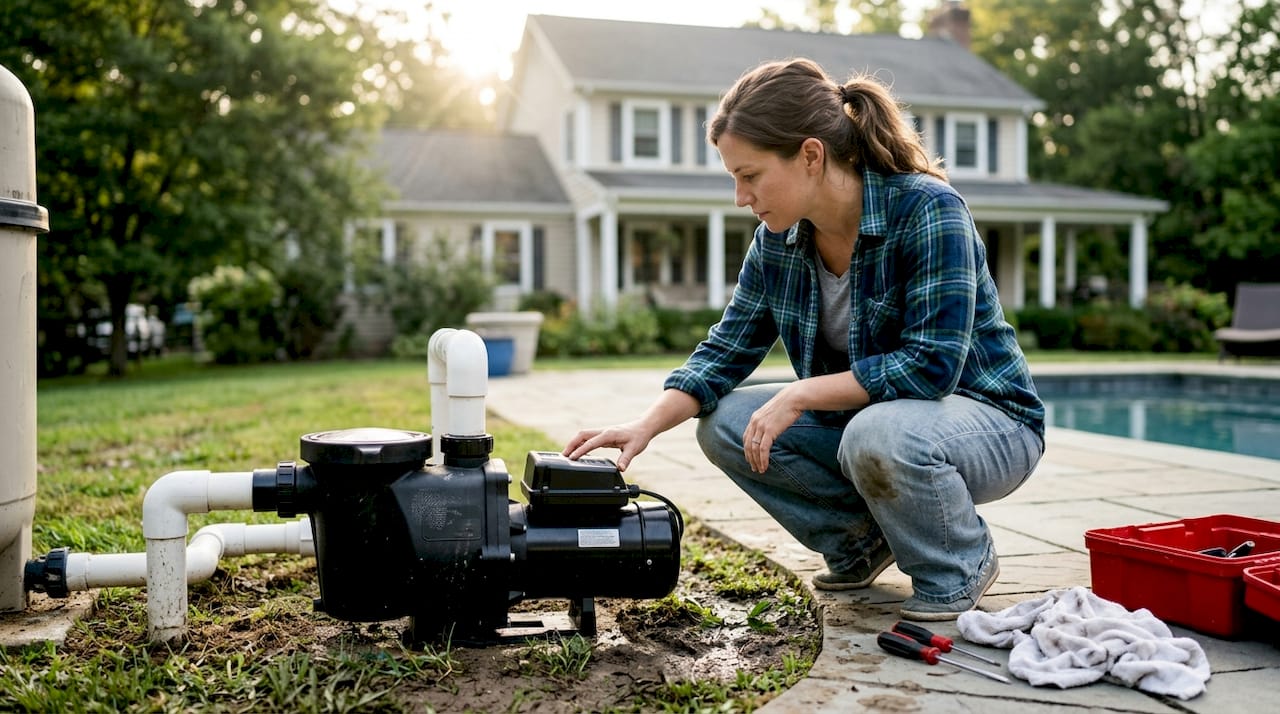
Variable-speed pumps represent the single most impactful upgrade for energy savings. Unlike single-speed models that run at full power constantly, variable-speed pumps adjust output to match actual demand. This flexibility means lower speeds during filtration cycles and higher speeds only when needed for cleaning or water features. Energy-efficient upgrades can save pool owners up to 87% on energy costs, with variable-speed pumps delivering the largest portion of those savings.
| Equipment Type | Energy Impact | Maintenance Reduction | Lifespan Extension |
|---|---|---|---|
| Variable-speed pump | 65-87% savings | 40% fewer service calls | 8-12 years vs 4-6 |
| Cartridge filter | 20% less energy | 60% less cleaning | 3-5 years vs 1-2 |
| Salt chlorinator | 15% reduction | 75% less chemical handling | 5-7 years |
| Automation system | 25% savings | 50% fewer manual adjustments | 10-15 years |
Filtration system upgrades improve water clarity while reducing chemical dependency. Cartridge filters trap particles as small as 10 microns, compared to 20-25 microns for traditional sand filters. This finer filtration means clearer water with fewer chemicals needed to maintain balance. The reduced backwashing requirement also conserves thousands of gallons of water annually.
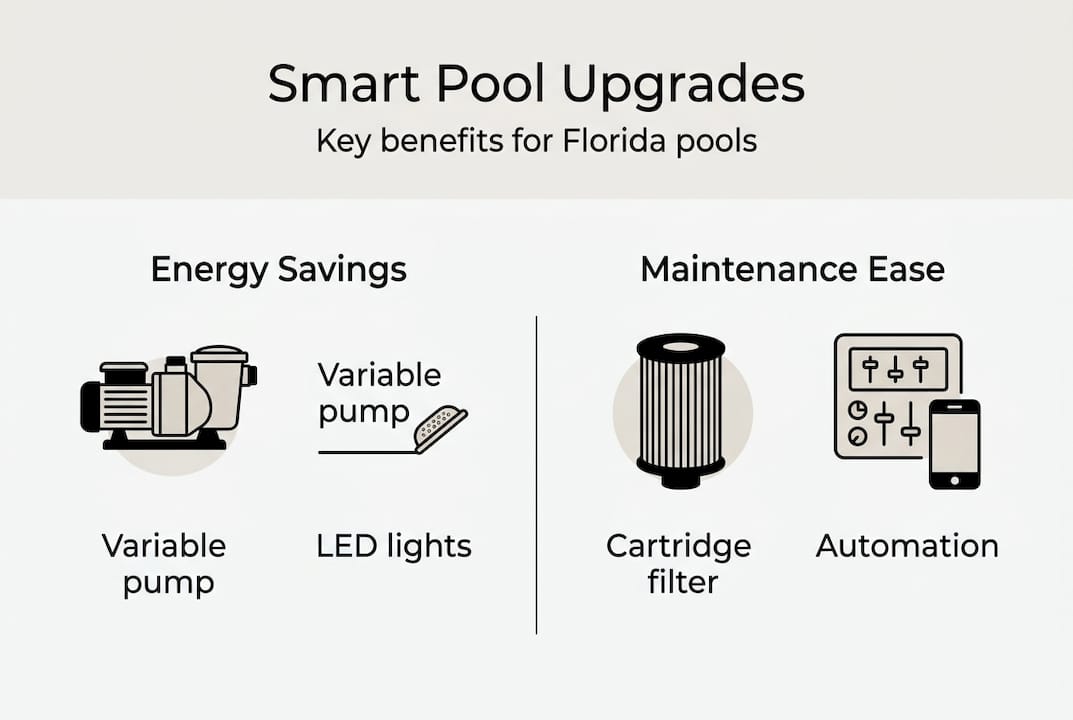
Automation systems bring smartphone-level convenience to pool management. Modern controllers let you adjust temperature, schedule filtration cycles, and activate features from anywhere. Beyond convenience, automation optimizes energy use by running equipment during off-peak hours and adjusting cycles based on actual pool usage patterns.
Heating upgrades make year-round pool use practical and affordable. Heat pumps extract warmth from ambient air, delivering four units of heat for every unit of electricity consumed. Solar heating systems offer even better economics in sunny Florida, with zero operating costs after installation. Gas heaters remain ideal for rapid heating when you need the pool ready quickly.
Pro Tip: Combine heating upgrades with automated covers to reduce heat loss by 70% overnight, maximizing your heating system’s efficiency.
LED lighting upgrades deliver dramatic aesthetic improvements while slashing electricity consumption. Modern LED systems produce vibrant colors, last 10 times longer than incandescent bulbs, and consume 80% less energy. Fiber optic options eliminate electrical hazards entirely while creating stunning visual effects.
Safety device upgrades protect users and ensure regulatory compliance:
- Automatic pool covers prevent unauthorized access and reduce chemical evaporation
- Upgraded drain covers meet current anti-entrapment standards
- Motion-sensor alarms detect unexpected water entry
- GFCI protection on all electrical components prevents shock hazards
Exploring commercial pool upgrade ideas provides additional options for property managers overseeing multiple facilities.
Choosing the right upgrades: factors and considerations
Assessing your pool’s current condition determines which upgrades deliver maximum value. Pools older than 15 years typically benefit from comprehensive equipment replacement, while newer installations might only need targeted improvements. Size matters too. Larger pools require more powerful pumps and filtration capacity, making efficiency upgrades even more cost-effective.
- Calculate your current energy consumption by reviewing 12 months of utility bills
- Identify equipment approaching end-of-life based on manufacturer specifications
- Prioritize upgrades that address immediate safety or compliance issues
- Evaluate which improvements offer fastest payback through reduced operating costs
- Plan for future needs by choosing systems with expansion capability
Energy savings versus upfront cost requires careful analysis. A variable-speed pump might cost $1,200 compared to $400 for a single-speed replacement, but the $800 difference typically pays back within 18-24 months through lower electricity bills. After payback, you enjoy pure savings for the pump’s remaining 8-10 year lifespan.
Properly chosen equipment upgrades can extend pool life and reduce repair frequency by addressing root causes rather than symptoms.
| Upgrade Decision Factor | Weight | Evaluation Criteria |
|---|---|---|
| Climate compatibility | High | Designed for Florida humidity and heat |
| Energy efficiency rating | High | ENERGY STAR certification or equivalent |
| Integration capability | Medium | Works with existing systems |
| Warranty coverage | Medium | Minimum 3-5 year manufacturer warranty |
| Service availability | Medium | Local technicians trained on equipment |
Matching equipment to Florida’s climate prevents premature failure. Pumps and motors need totally enclosed fan-cooled (TEFC) designs to resist moisture intrusion. Control systems require weatherproof enclosures rated for outdoor installation. Heaters should include corrosion-resistant heat exchangers designed for high-humidity environments.
Compatibility with existing systems saves installation costs and prevents integration headaches. Before purchasing new equipment, verify:
- Electrical requirements match your current service capacity
- Plumbing connections align with existing pipe sizes and configurations
- Control systems communicate with other pool automation
- Physical dimensions fit available equipment pad space
Future-proofing your investment means choosing systems with upgrade paths. Select automation controllers with unused zones for adding features later. Install pumps with capacity slightly above current needs to accommodate future water features. Choose filtration systems that accept capacity increases through additional cartridges or media.
Understanding pool renovation components helps you see how equipment upgrades fit within broader improvement strategies.
Maintaining upgrades for maximum value and performance
Establishing regular maintenance schedules protects your equipment investment from day one. Variable-speed pumps need basket cleaning every two weeks during heavy use, monthly during lighter seasons. Cartridge filters require quarterly cleaning, with complete cartridge replacement every 2-3 years depending on usage. Salt chlorinator cells need inspection and acid cleaning every three months to prevent calcium buildup that reduces efficiency.
Monitoring equipment performance catches small issues before they become expensive failures. Check pump pressure gauges weekly. A 10 PSI increase above normal signals filter cleaning needs. Listen for unusual sounds from pumps or motors, which often indicate bearing wear or debris obstruction. Track energy consumption monthly. Sudden increases suggest equipment working harder than necessary, pointing to maintenance needs.
Manufacturer guidelines provide specific service intervals that preserve warranty coverage. Most warranties require professional service at designated intervals, typically annually for major components. Keep detailed service records including dates, work performed, and parts replaced. These records prove invaluable for warranty claims and help service technicians diagnose recurring issues.
Pro Tip: Create a digital maintenance log using smartphone photos of equipment readings, service stickers, and any unusual conditions you observe between professional visits.
Electrical and automation system updates ensure safety and optimal performance. Inspect GFCI outlets monthly by pressing test and reset buttons. Replace any outlets that fail to trip immediately. Update automation system software when manufacturers release patches, as these often include efficiency improvements and bug fixes. Consider annual electrical inspections by licensed electricians to verify all connections remain tight and corrosion-free.
Routine maintenance prevents breakdowns and costly repairs while maximizing efficiency through early detection and correction of performance issues.
Budget planning for periodic upgrades keeps your pool competitive as technology evolves. Set aside 1-2% of your pool’s value annually for equipment replacement and upgrades. This fund ensures you can adopt new efficiency technologies as they become available rather than waiting for complete equipment failure. Technology advances rapidly in pool equipment, with new products offering improved efficiency every 3-5 years.
Maintaining relationships with qualified service providers simplifies ongoing care:
- Establish annual service contracts for comprehensive equipment checks
- Use certified technicians for warranty-covered repairs
- Request training on basic troubleshooting to handle minor issues yourself
- Build rapport with local equipment suppliers for faster parts access
Accessing professional pool repair service when issues exceed your expertise prevents minor problems from escalating into major failures.
Explore professional pool services for your upgrade needs
Navigating equipment upgrade decisions becomes simpler with expert guidance tailored to Florida’s unique requirements. Classic Marcite combines decades of pool renovation experience with deep understanding of how equipment choices affect long-term performance and durability.

Their specialized pool resurfacing services integrate seamlessly with equipment upgrades, creating comprehensive solutions that address both surface and system improvements. When you coordinate resurfacing with equipment modernization, you maximize value by completing disruptive work in a single project phase.
Professional pool renovation in Maitland and throughout Central Florida includes detailed assessments of your current equipment condition and recommendations for upgrades that deliver measurable returns. Their team evaluates your specific usage patterns, climate exposure, and budget constraints to develop customized upgrade plans.
Energy-efficient pool upgrades represent a core focus, with proven strategies that reduce operating costs while enhancing performance. Classic Marcite’s experience with over 100,000 pool projects provides insights into which equipment combinations deliver optimal results in Florida’s demanding environment.
Frequently asked questions
What are the most cost-effective pool equipment upgrades?
Variable-speed pumps deliver the highest return on investment, typically paying for themselves within two years through energy savings of up to 87%. LED lighting upgrades follow closely, reducing lighting costs by 80% while lasting 10 times longer than traditional bulbs. Salt chlorination systems eliminate ongoing chemical purchases while reducing maintenance time. Automation systems optimize all equipment operation, multiplying savings across your entire pool system.
How do pool equipment upgrades impact energy consumption?
Energy-efficient pumps can reduce energy consumption by up to 87% compared to traditional single-speed models by matching output to actual demand rather than running at full power constantly. Automation controls optimize run times based on actual needs, eliminating wasted operation during low-demand periods. Heat pumps deliver four times more heating energy than the electricity they consume. Combined, these upgrades can cut total pool operating costs by 60-70% annually.
What maintenance is required after upgrading pool equipment?
Regular inspections every two weeks during swimming season catch issues early, focusing on basket cleaning, pressure gauge readings, and visual checks for leaks or corrosion. Routine cleaning and timely servicing keeps upgrades performing optimally by preventing buildup that reduces efficiency. Follow manufacturer maintenance schedules precisely to preserve warranty coverage, typically requiring professional service annually. Monitor performance metrics like energy consumption and water clarity to detect degradation before it becomes critical.
Can equipment upgrades increase my pool’s property value?
Modern equipment upgrades improve pool appeal and can raise home market value by demonstrating reduced future maintenance costs to potential buyers. Energy-efficient systems particularly attract buyers concerned about ongoing operating expenses. Automated controls and safety features appeal to families prioritizing convenience and child safety. Appraisers recognize equipment age and efficiency when evaluating pool contributions to property value, with modern systems adding 3-5% more value than outdated equipment.