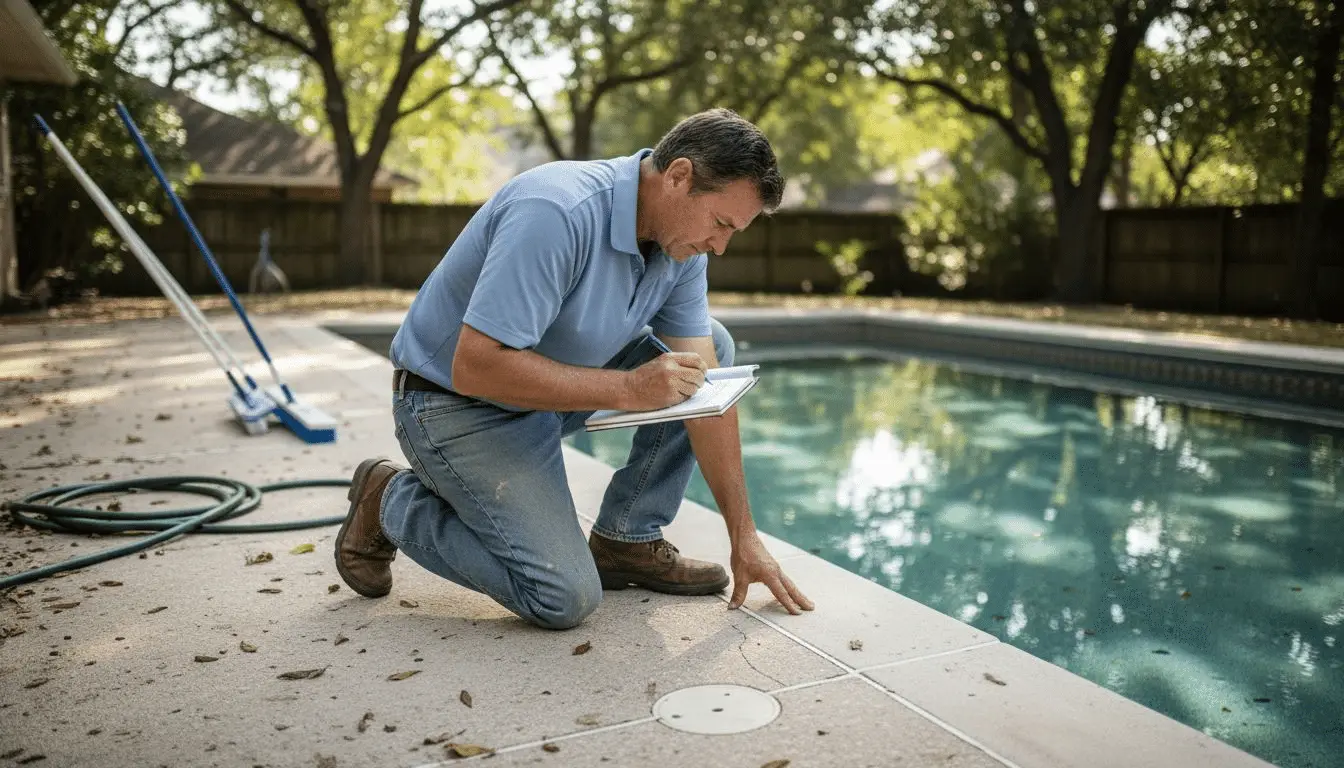
Nobody wants to discover hidden damage or costly repairs after jumping into their backyard oasis. For Orlando and Jacksonville homeowners, regular pool care means more than just crystal clear water. Spotting surface damage early and keeping your Pebble Tec® free from debris extends its life and protects your investment. You’ll find clear steps for monitoring, cleaning, and caring for your pool—all focused on preventing the kind of surprises that turn into expensive renovations. Make comprehensive visual inspections part of your routine to catch small issues before they grow.
Table of Contents
- Step 1: Inspect For Surface Damage And Debris
- Step 2: Clean Thoroughly With Safe Techniques
- Step 3: Balance Water Chemistry For Protection
- Step 4: Apply Surface Treatments And Sealants
- Step 5: Check Results And Schedule Regular Upkeep
Quick Overview
| Key Insight | Explanation |
|---|---|
| 1. Regular Inspections Prevent Damage | Inspect your pool surface and surroundings weekly to identify small issues before they escalate into costly repairs. |
| 2. Use Safe Cleaning Techniques | Clean the pool with soft brushes and approved chemicals to maintain your Pebble Tec® surface without damage. |
| 3. Maintain Balanced Water Chemistry | Test water chemistry at least twice a week to prevent surface deterioration and keep the pool safe for swimmers. |
| 4. Apply Sealants for Protection | Use high-quality sealants on your Pebble Tec® surface to protect against UV damage and extend its lifespan. |
| 5. Schedule Regular Maintenance Checks | Establish a maintenance routine to monitor pool condition and plan seasonal upkeep to prevent emergencies. |
Step 1: Inspect for surface damage and debris
Before jumping into the water, take time to visually examine your entire pool surface and surrounding area. This inspection protects against injury and identifies problems early before they become costly repairs. You’re looking for visible damage, debris, and anything that could affect how your Pebble Tec® surface functions.
Start by looking at the pool surface itself. Walk around the perimeter and scan the entire waterline, walls, and floor for these common issues:
- Cracks or chips in the Pebble Tec® finish
- Stains that suggest algae growth or chemical imbalance
- Areas where pebbles are missing or the base material shows through
- Rough patches that feel uncomfortable to touch
- Discolored spots indicating potential structural problems
Next, check for debris both in the water and around the deck. Leaves, branches, dirt, and other particles accumulate quickly in Florida’s climate and can trap moisture against your pool surface. Remove any visible debris using a skimmer net or by hand.
Performing comprehensive visual inspections of all pool areas helps identify damage or debris before they cause problems. Look at areas where water meets the deck, corners, steps, and any equipment intake or return lines for blockages.
Pay special attention to the area around your pool equipment. Debris near pumps, filters, and plumbing connections can reduce water circulation and lead to stagnant areas where your Pebble Tec® surface deteriorates faster.
Catching surface damage early means preventing small cracks from turning into hundred-dollar repairs down the road.
If you notice cracks wider than a hairline, areas where the pebble finish is deteriorating, or staining that doesn’t wash away with a brush, document it with photos. This creates a record of the pool’s condition over time and helps you understand if damage is growing.
Once you’ve completed your visual inspection and removed visible debris, you’re ready to address any findings with targeted cleaning or repairs. Small issues caught now prevent them from becoming major problems that require professional resurfacing.
Compare the main types of pool surface issues and their typical solutions:
| Problem Type | Signs Observed | Typical Solution |
|---|---|---|
| Cracks, Chips | Visible fractures or chips | Patch or resurface area |
| Stains | Discolored spots, green hues | Brush, chemical treatment |
| Rough Patches | Uncomfortable surface | Gentle sanding, resurfacing |
| Debris Buildup | Leaves, dirt, floating matter | Skim, vacuum, brush away |
| Missing Pebbles | Exposed base material | Professional repair needed |
Pro tip: Schedule your inspection during daylight hours and clean your pool regularly to catch new damage quickly—debris sitting on your Pebble Tec® surface can trap moisture and weaken the finish over weeks, so remove it within a day or two of spotting it.
Step 2: Clean thoroughly with safe techniques
Proper cleaning removes algae, dirt, and contaminants without damaging your Pebble Tec® surface. The key is using the right approach and chemicals that protect your investment while keeping the water safe for swimmers. Your cleaning method depends on what you’re dealing with, from light surface debris to stubborn algae buildup.
Start with physical cleaning methods before reaching for chemicals. Use a pool brush with soft bristles to gently scrub the walls and floor, working in circular motions to avoid scratching the pebbles. A skimmer net removes floating debris daily, while a pool vacuum handles settled particles on the floor.
When you need chemical assistance, follow these safe practices:
- Use only pool-approved chemicals designed for Pebble Tec® surfaces
- Follow manufacturer dosing instructions exactly, never exceed recommended amounts
- Add chemicals during cooler times like early morning or evening
- Wear protective equipment including gloves and eye protection when handling chemicals
- Store chemicals in a cool, dry location away from direct sunlight
Safe handling and storage of pool chemicals prevents damage to your pool surface and protects your family. Always read product labels completely and ensure proper ventilation when using any chemicals around your pool area.
For routine maintenance, brush your pool surfaces 2 to 3 times weekly and run your circulation system regularly to prevent stagnation. This consistent approach keeps algae from taking hold and reduces your need for aggressive chemical treatments that can wear down your Pebble Tec® finish.
Gentle, consistent cleaning beats occasional heavy-handed scrubbing when protecting your pool surface.
If you discover green water or heavy algae growth, don’t panic. Start with brushing combined with gradual chemical adjustment rather than shocking your system all at once. Aggressive treatments can damage the pebble finish and cost you hundreds in repairs.
Regular water circulation keeps your entire pool healthy. Make sure your pump and filter are running daily to move water continuously and prevent dead zones where algae thrives.
Pro tip: Test your water chemistry weekly and keep a log of pH, chlorine, and alkalinity levels—this helps you spot imbalances early and adjust gradually instead of playing catch-up with harsh chemicals later.
Step 3: Balance water chemistry for protection
Balanced water chemistry is your Pebble Tec® surface’s best defense against deterioration, corrosion, and staining. When your pH, alkalinity, and chlorine levels are correct, your pool stays clean, safe, and your surface lasts longer. Think of chemistry as the invisible shield protecting your investment.
Start by testing your water at least twice weekly using a reliable test kit. You need to check four critical parameters:
Here’s a quick reference for optimal pool water chemistry parameters and the risks of imbalance:
| Parameter | Ideal Range | If Too Low | If Too High |
|---|---|---|---|
| pH | 7.2 – 7.6 | Etching, eye irritation | Scaling, cloudy water |
| Alkalinity | 80 – 120 ppm | pH swings, surface damage | Stubborn high pH |
| Chlorine | 1 – 3 ppm | Algae growth, unsafe water | Surface bleaching, odor |
| Calcium Hardness | 200 – 400 ppm | Corrosion, pitting | Scaling, cloudy water |
- pH level should stay between 7.2 and 7.6
- Alkalinity should be between 80 and 120 parts per million
- Chlorine should remain between 1 and 3 parts per million
- Calcium hardness should be between 200 and 400 parts per million
Maintaining proper pH and alkalinity prevents scaling and corrosion that damage your pool surface and equipment. When pH drifts too high or too low, your Pebble Tec® becomes vulnerable to etching and pitting that can require expensive repairs.
If your pH is too high, add a pH decreaser. If it’s too low, use a pH increaser. Make small adjustments and retest after 24 hours rather than overcompensating. This gradual approach prevents swings that stress your surface.
Chlorine keeps algae and bacteria under control. Low chlorine allows green algae to bloom, while excessive chlorine can bleach and deteriorate your pebble finish. Test daily during hot Florida summers when chlorine burns off faster.
Consistent weekly testing catches problems before they damage your surface or require shocking your pool.
Alkalinity acts as a buffer that stabilizes pH. If alkalinity is too low, your pH swings wildly. If it’s too high, pH becomes stubborn to adjust. Getting this right makes managing everything else easier.
If your water turns green or cloudy, don’t rush to shock it. Test first, identify the specific imbalance, and address it systematically. Most problems respond better to gradual adjustment than aggressive chemical dumps.
Keep detailed records of all test results and chemical additions. This history helps you spot patterns and understand your pool’s unique chemistry needs.
Pro tip: Invest in a digital test kit or use test strips consistently at the same time each day—this removes guesswork and helps you catch imbalances within hours rather than days when they’re easier and cheaper to fix.
Step 4: Apply surface treatments and sealants
Surface treatments and sealants create a protective barrier on your Pebble Tec® finish, defending against UV damage, chemical erosion, and weather exposure. A quality sealant extends your pool’s life by years and reduces the frequency of deeper maintenance. This step is where prevention pays dividends.
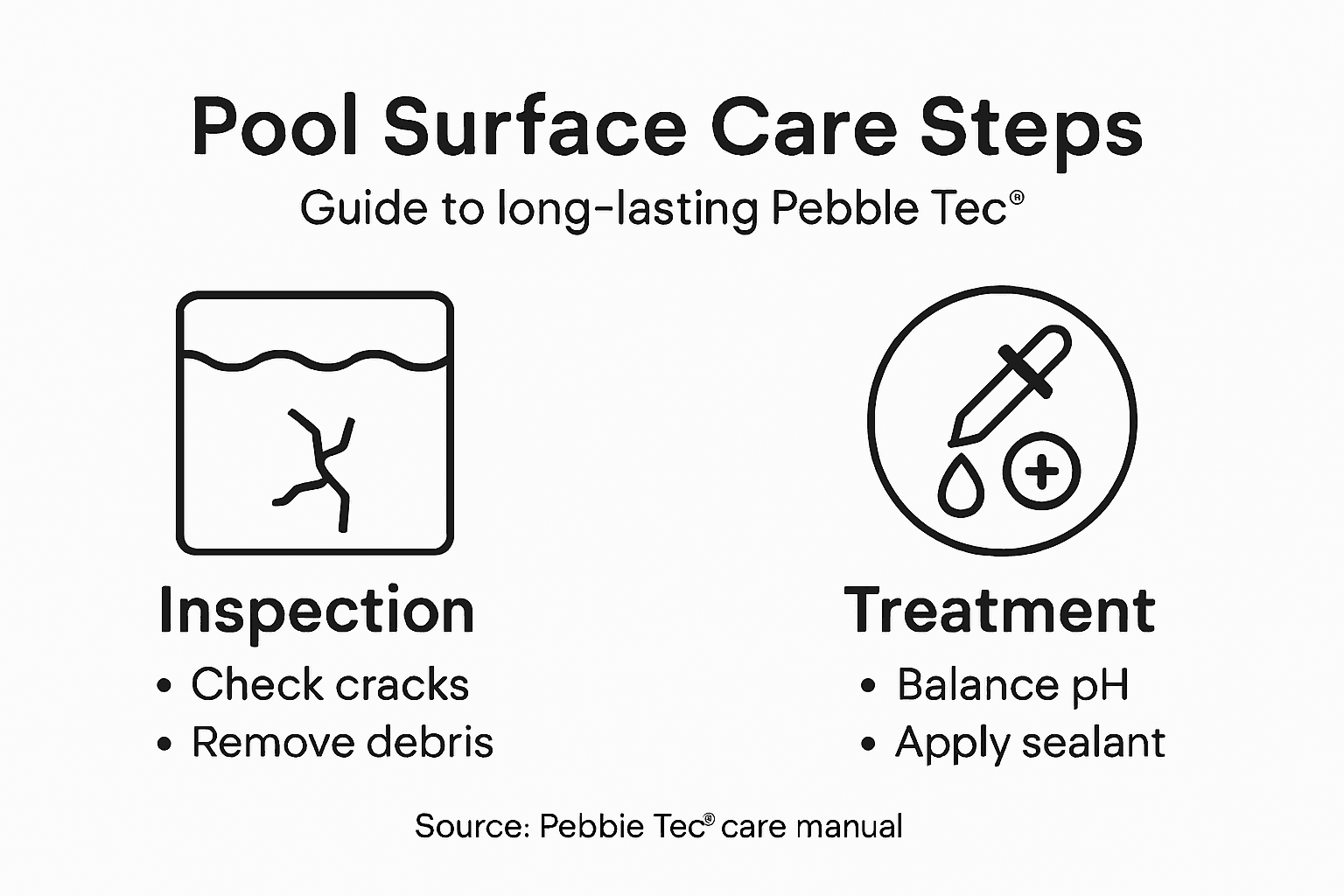
Before applying any treatment, prepare your surface thoroughly. Your Pebble Tec® must be completely clean, dry, and free of algae or mineral deposits. Use a pool brush to scrub the entire surface, then let it air dry for at least 24 hours in dry weather.
When selecting a sealant, choose products specifically designed for pool surfaces. NSF-certified sealants meet rigorous health and safety standards and provide reliable protection without introducing harmful substances into your water. Check the label to confirm it’s compatible with Pebble Tec® finishes.
Follow the manufacturer’s application instructions exactly. Most sealants require:
- Clean, dry surface at proper temperature (typically 50 to 85 degrees Fahrenheit)
- Even application using a brush, roller, or sprayer as recommended
- Proper curing time before allowing water contact, often 48 to 72 hours
- No heavy use of the pool during the curing period
Apply treatments in thin, even coats rather than one thick application. Multiple thin layers bond better and cure more uniformly than a single heavy coat. Work methodically around the entire pool, paying special attention to stairs, corners, and transitions where water collects.
Proper surface preparation makes sealants work harder and last longer, saving you money on reapplication.
During curing, keep the pool empty and protected from rain. Even light water exposure before full curing undermines the sealant’s effectiveness. Check the weather forecast and choose application days with stable, dry conditions.
Most quality sealants last 3 to 5 years depending on sun exposure and chemical demand in your area. Plan reapplication accordingly to maintain continuous protection of your Pebble Tec® surface.
Pro tip: Apply sealant in early spring or fall when temperatures are stable and humidity is lower—these conditions promote even curing, and you’ll maximize protection through the heavy-use summer and winter months ahead.
Step 5: Check results and schedule regular upkeep
Regular monitoring and scheduled maintenance transform one-time efforts into lasting results. By checking your pool’s condition weekly and planning ahead for seasonal upkeep, you prevent small problems from becoming expensive emergencies. Consistency matters more than intensity when protecting your Pebble Tec® investment.
Start by establishing a weekly inspection routine. Every 7 days, spend 15 minutes checking these key areas:
- Water clarity and color changes indicating chemistry problems
- Surface condition for new cracks, stains, or rough patches
- Equipment function including pump, filter, and circulation
- Chemical balance using your test kit for pH and chlorine
- Debris accumulation around the pool deck and equipment
Document everything in a simple log or phone notes. Recording date, observations, and actions taken creates a valuable history showing your pool’s patterns and needs over time.
Routine maintenance schedules and daily inspections help identify problems early before they compromise your pool surface or water quality. This proactive approach catches issues within days rather than weeks when fixes are simpler and less costly.
Beyond weekly checks, plan seasonal maintenance. Spring requires deep cleaning and filter inspection after winter dormancy. Summer demands more frequent chemical adjustments due to heat and heavy use. Fall calls for debris removal and equipment servicing before winter.
A 15-minute weekly inspection prevents hundred-dollar problems that develop silently between major maintenance sessions.
Schedule professional inspections annually. A trained technician can spot structural issues you might miss and verify that all systems function optimally. This investment in expert eyes catches problems early and documents your pool’s condition for resale purposes.
Create a maintenance calendar marking recurring tasks. Note when your sealant needs reapplication, when filters require professional cleaning, and when equipment servicing is due. Many problems become predictable once you track them over a year.
If you notice concerning changes, don’t delay addressing them. A small crack noticed today is easier and cheaper to repair than one that spreads for three months.
Pro tip: Set phone reminders for weekly pool checks on the same day each week—this habit removes the guesswork from maintenance and ensures nothing slips through the cracks during busy months.
Protect and Restore Your Pool Surface with Expert Care
Maintaining your Pebble Tec® pool surface against cracks, stains, and chemical damage requires both vigilant care and professional expertise. At Classic Marcite, we understand the challenges you face keeping your pool beautiful and durable in Florida’s unique climate. From balancing water chemistry to applying protective sealants, the right materials and techniques make all the difference in long-lasting results.

Don’t let early signs of surface damage or chemical imbalance cost you more down the line. Trust the largest Pebble Tec® applicator in Central Florida to deliver expert pool resurfacing, remodeling, and specialized repairs tailored to your needs. Visit Classic Marcite today for a free estimate and discover how our craftsmanship revitalizes pools across Orlando and Jacksonville. Experience professional care that protects your investment and keeps your pool inviting year round.
Frequently Asked Questions
How can I identify surface damage on my pool?
To identify surface damage on your pool, visually inspect the entire surface, including walls, waterline, and floor. Look for cracks, chips, stains, and rough patches, and document any significant findings with photos for future reference.
What cleaning methods are safe for Pebble Tec® surfaces?
Use a pool brush with soft bristles to gently scrub your Pebble Tec® surfaces, and employ a skimmer net to remove floating debris. Regularly vacuum settled particles from the bottom to maintain a clean pool surface without causing damage.
How often should I test and balance my pool water chemistry?
Test your pool water chemistry at least twice a week to ensure optimal pH, alkalinity, chlorine, and calcium hardness levels. Adjust any imbalances gradually to protect your Pebble Tec® surface from corrosion and deterioration.
When should I apply sealants to my pool surface?
Apply sealants to your Pebble Tec® surface every 3 to 5 years, or sooner if you notice signs of wear. Ensure the surface is clean and dry before application, and avoid water exposure during the curing period for maximum effectiveness.
What regular maintenance tasks should I schedule for my pool surface?
Establish a weekly routine that includes checking water clarity, surface condition, and chemical balance. Consider scheduling seasonal maintenance tasks like deep cleaning and equipment inspections to ensure long-lasting results for your Pebble Tec® surface.
How can I prevent algae growth in my pool?
Prevent algae growth by maintaining proper water circulation and regularly testing your water chemistry, especially during hot months. Brush the surfaces 2 to 3 times a week and adjust chemical levels gradually to keep your pool clean and balanced.
Recommended
- Pool Maintenance After Resurfacing: Essential Steps For Longevity
- Why Pools Need Resurfacing And When To Act
- What Is Pool Plaster And Why It Matters
- 7 Best Pool Resurfacing Materials For Long-Lasting Results
- Natural Stone Decor: Elevate Interiors with Luxury Materials – Marmorique
- Pool Refinishing Windermere FL
- Pool Renovation Winter Park FL
- Swimming Pool Remodeling The Villages FL
