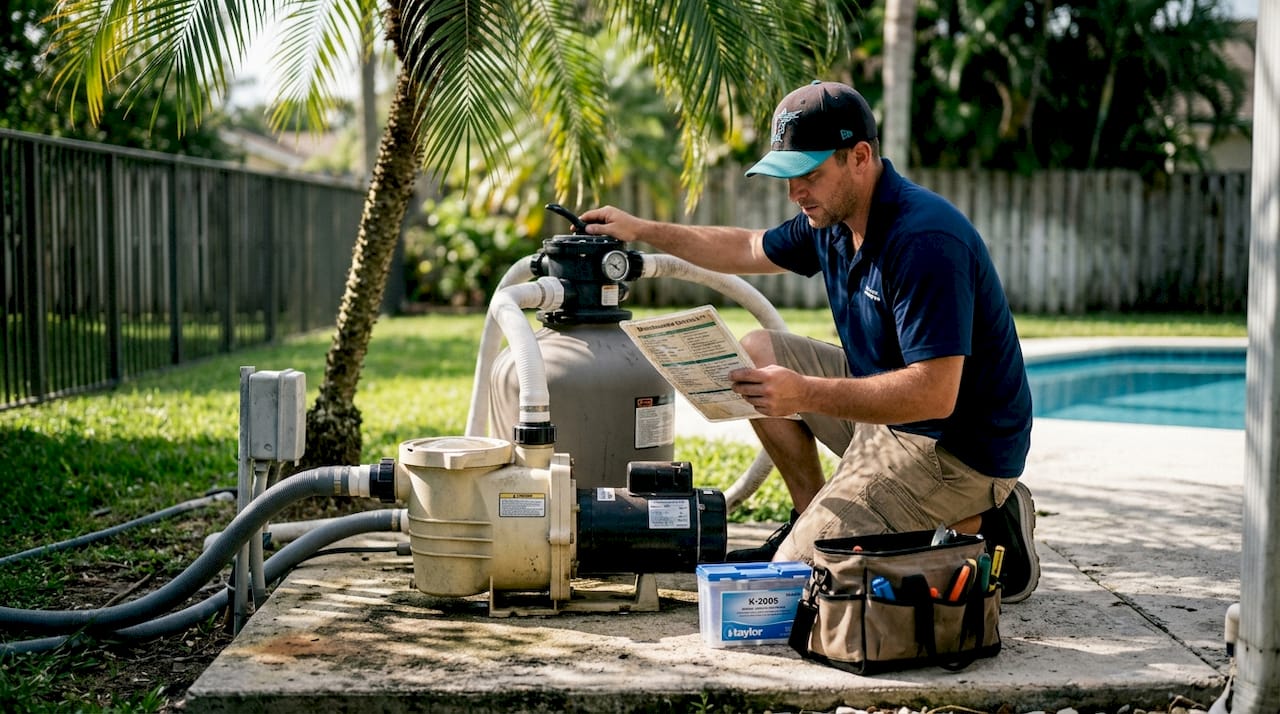
Swapping out outdated pool gear is not just routine maintenance. It is one of the fastest ways to change how your pool feels, performs, and looks every single day. Florida homeowners in Orlando and Jacksonville deal with intense sun, heavy rain, and year-round pool use, which puts serious stress on equipment that was designed for milder conditions. Most pool owners underestimate how much equipment quality shapes daily enjoyment, monthly energy bills, and long-term property value. This article breaks down the core equipment roles, highlights the smartest modern options, and helps you decide when to repair, replace, or upgrade.
Table of Contents
- Why pool equipment matters for your Florida property
- Core pool equipment: What every Florida pool needs
- Repair, replace, or upgrade: Making smart decisions
- Smart upgrades: Choosing features for efficiency, comfort, and style
- Legal and safety essentials for pool equipment in Florida
- Ready to upgrade your pool? Classic Marcite helps Florida pool owners transform with confidence
- Frequently asked questions
Key Takeaways
| Point | Details |
|---|---|
| Modern upgrades matter | Upgrading core equipment can drastically reduce costs and enhance pool enjoyment in Florida. |
| Repair vs. replace logic | Replace when costs approach half of new or when equipment nears three-quarters of its lifespan. |
| Legal steps required | Permits are mandatory for electrical or gas work—professional help avoids pitfalls and ensures compliance. |
| Best upgrades for Florida | Variable speed pumps, automation, and solar/heat pump combos deliver top efficiency and value in Florida’s climate. |
Why pool equipment matters for your Florida property
Your pool is only as good as the system running it. Pumps move water through filters and sanitizers. Heaters extend your swim season. Automation controls everything from run times to lighting. Each piece affects how clean, comfortable, and cost-effective your pool is on any given day.
Florida’s climate makes equipment quality even more critical. The heat accelerates chemical consumption. UV exposure degrades seals and plastics faster than in northern states. Heavy summer rain dilutes water chemistry constantly. Equipment that works fine in Ohio may struggle and fail within a few seasons here.
Here is what modern equipment improvements can do for your pool:
- Reduce monthly energy bills by running pumps at lower speeds
- Extend water clarity with more efficient filtration cycles
- Improve safety with automated shutoffs and code-compliant wiring
- Boost curb appeal with color-changing LED lighting
- Add convenience through smartphone-controlled automation
“Equipment upgrades drive efficiency and lower operating costs in hot climates, making them a smart long-term investment for Florida pool owners.”
Investing in energy-efficient upgrades pays off faster in Florida than almost anywhere else in the country. And understanding the importance of routine repairs alongside upgrades keeps your system running at its best between major investments.
Core pool equipment: What every Florida pool needs
Every pool system has a few non-negotiable components. Knowing what each one does, and what modern versions offer, helps you make smarter decisions when something breaks or underperforms.
| Equipment | Main function | Common upgrade | Florida-specific benefit |
|---|---|---|---|
| Pump | Circulates water | Variable speed pump | Cuts energy use by up to 70% |
| Filter | Removes debris and particles | Cartridge or DE filter | Handles heavy pollen and debris load |
| Heater | Warms pool water | Heat pump or solar | Low operating cost in sunny climate |
| Sanitizer | Kills bacteria and algae | Salt chlorine generator | Reduces chemical handling in heat |
| Automation | Controls all systems | Smart hub with app control | Manages run times remotely |
| Lighting | Illuminates pool at night | Color LED system | Energy-efficient, long-lasting |
Variable speed pumps provide major energy savings, especially in Florida’s climate, where pumps often run longer hours to maintain water quality. Running a pump at lower speeds for longer periods uses far less electricity than blasting it at full speed for short bursts.
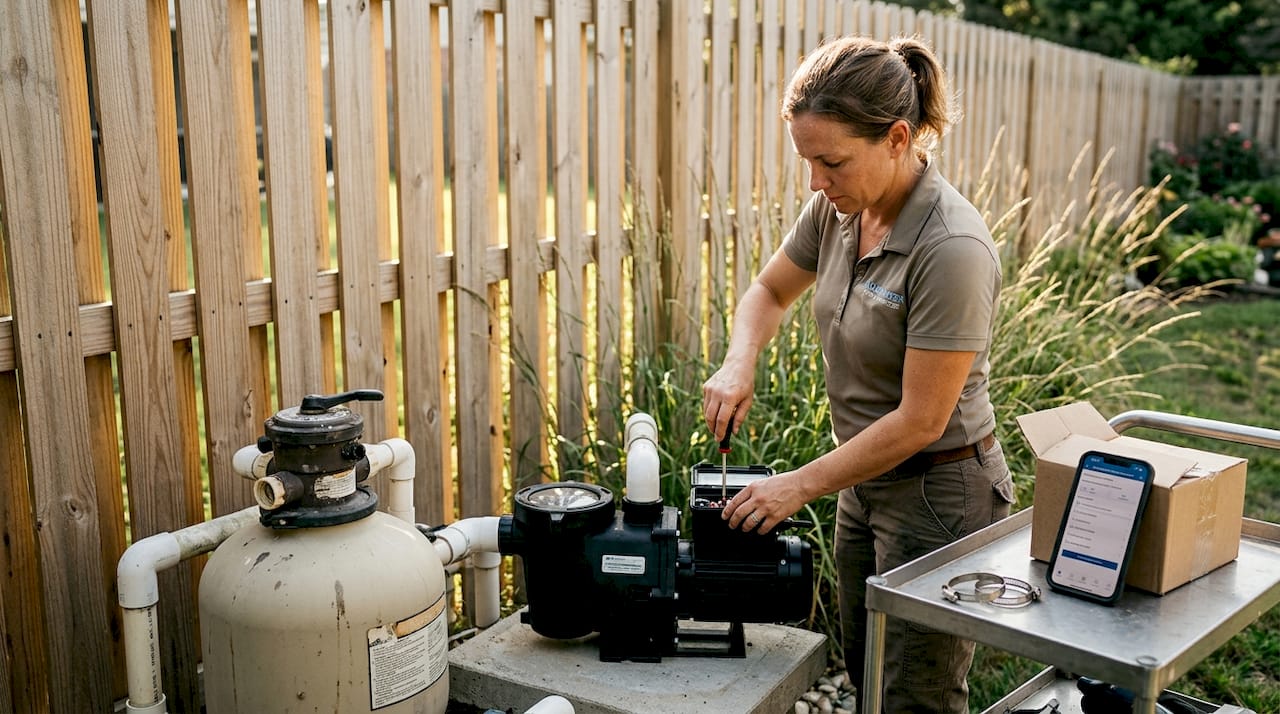
Pro Tip: Listen for grinding, rattling, or high-pitched whining from your pump motor. These sounds often signal bearing failure or cavitation, and catching them early can save you from a full motor replacement.
New technology has also changed what pool ownership looks like day to day. Here is what modern systems now offer:
- Remote monitoring and control via smartphone apps
- Automated chemical dosing based on real-time water readings
- Energy usage tracking so you can spot inefficiencies
- Scheduled run times that adjust based on electricity rate periods
Exploring smart upgrades and getting professional insights before purchasing can help you avoid buying equipment that does not match your pool’s size or usage patterns.
Repair, replace, or upgrade: Making smart decisions
Once you understand your equipment, the next question is what to do when something goes wrong or starts underperforming. The answer is not always obvious, and making the wrong call can cost you more in the long run.
Here is a side-by-side look at your three main options:
| Option | Typical cost | Downtime | Lifespan benefit |
|---|---|---|---|
| Repair | Low to moderate | 1 to 3 days | Extends life by 1 to 3 years |
| Replace | Moderate to high | 1 to 5 days | Full new lifespan (8 to 15 years) |
| Upgrade | Moderate to high | 2 to 7 days | New lifespan plus efficiency gains |
Use this decision framework when evaluating your equipment:
- Check the age. If the equipment is past 75% of its expected lifespan, replacement almost always makes more financial sense than repair.
- Compare repair cost to replacement cost. Experts favor replacement once repair costs reach 50% of the price of new equipment.
- Evaluate efficiency. Older single-speed pumps and gas heaters cost significantly more to run than modern alternatives.
- Consider your timeline. If you plan to sell within two to three years, upgrades that improve energy efficiency and aesthetics can increase your home’s appeal.
- Factor in Florida conditions. Heat, humidity, and UV exposure shorten equipment life here, so adjust your expectations accordingly.
“The right time to invest in new technology is before your old equipment fails completely. Reactive replacement costs more and leaves your pool out of service longer.”
Pro Tip: Keep a simple log of every repair, its cost, and the date. When repair costs start adding up to more than half the price of a new unit within a single year, that log makes the replacement decision easy to justify.
Looking at real-world repair examples can help you benchmark what is normal. And if your pool has been out of service, reviewing the steps for reopening pools safely is a smart move before diving back in.
Smart upgrades: Choosing features for efficiency, comfort, and style
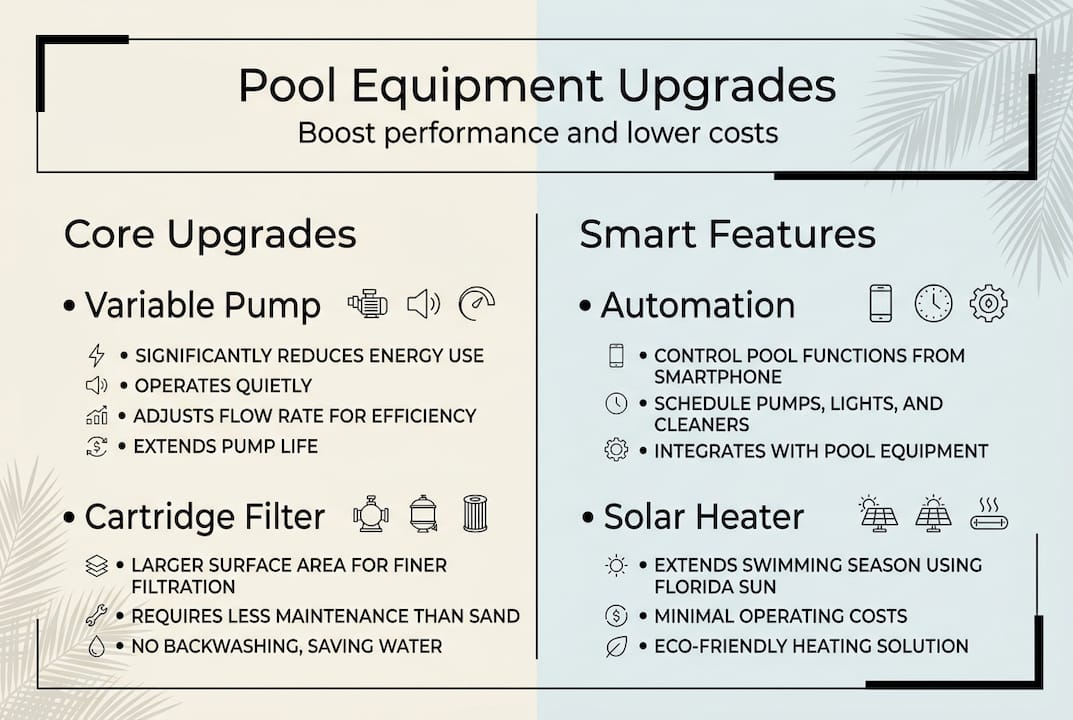
Not all upgrades deliver equal value. Some are nice to have. Others genuinely transform how your pool performs and what it costs to run. Here are the top five upgrades that make the biggest difference for Florida pools:
- Variable speed pump: Cuts energy use dramatically compared to single-speed models, often saving hundreds of dollars per year
- Automation system: Controls pump schedules, lighting, heating, and sanitization from one app
- LED lighting: Uses up to 75% less energy than incandescent pool lights and lasts far longer
- Salt chlorine generator: Produces chlorine automatically from salt, reducing chemical purchases and handling
- Solar or heat pump heater: Uses Florida’s abundant sunshine to heat water at a fraction of gas heater costs
Automation integrates pool equipment for optimal efficiency, and solar and heat pump systems are the best choice for eco-friendly heating in Florida’s sunny climate. A well-programmed automation system can choose the most efficient run times, balance features automatically, and alert you when something is off.
Pro Tip: Pairing a solar heater with a heat pump backup gives you the best of both worlds. Solar handles most of the heating load for free, and the heat pump kicks in on cloudy days. This combo can cut heating bills by 50% or more compared to gas alone.
For more ways to cut costs, explore efficient upgrades and look into chlorine-reducing tech that works well in Florida’s warm water temperatures.
Legal and safety essentials for pool equipment in Florida
Before you purchase any new equipment or start installation, you need to understand Florida’s permitting and safety requirements. Skipping this step can result in fines, failed inspections, or voided warranties.
Here is what typically requires a permit in Florida:
- New electrical wiring or panel upgrades for pool equipment
- Gas line connections for heaters
- New automation system installations tied to electrical systems
- Replacing a pool heater with a different fuel type
- Adding or relocating pool lighting circuits
Permits are required for electrical and gas pool work per Florida Statute 489, and professional installation is the safest path to code compliance and warranty protection.
“DIY electrical or gas work on pool equipment is one of the most common ways homeowners void manufacturer warranties and create liability issues during home sales.”
Professional installers know local code requirements in Orlando and Jacksonville, pull the right permits, and ensure inspections are completed correctly. This protects you legally and keeps your equipment warranty intact.
For residential pool projects of any scale, working with licensed contractors is the standard. And if you are weighing the value of professional help, reading about the benefits of hiring professionals can make that decision clearer.
Ready to upgrade your pool? Classic Marcite helps Florida pool owners transform with confidence
Knowing what your pool needs is one thing. Getting it done right is another. Classic Marcite has been serving Orlando and Jacksonville homeowners since 1988, with over 100,000 pools resurfaced and a full range of equipment upgrade and remodeling services.

Whether you are planning a full Orlando pool remodeling project or starting with the basics of resurfacing basics, our team handles everything from equipment selection to code-compliant installation. Use our remodeling guide to see what a complete transformation looks like, then contact us for a free assessment. We make sure your investment is protected, your equipment is matched to your pool’s needs, and your finished result is something you will actually enjoy every day.
Frequently asked questions
What pool equipment upgrade saves the most money in Florida?
Switching to a variable speed pump often delivers the biggest savings, cutting energy costs by as much as 70% compared to older single-speed models.
Are permits required for new pool heaters and automation in Florida?
Yes, Florida requires permits for electrical or gas pool equipment installations to ensure safety and code compliance under Florida Statute 489.
How do I know if my pool equipment should be replaced instead of repaired?
Experts recommend replacing equipment once repair costs reach 50% of new equipment price or when the unit is past about 75% of its expected lifespan.
Which pool equipment should be prioritized for upgrades in older Florida pools?
Pumps, filters, and automation systems usually provide the best performance and energy improvements when upgraded first, especially in pools that are more than ten years old.