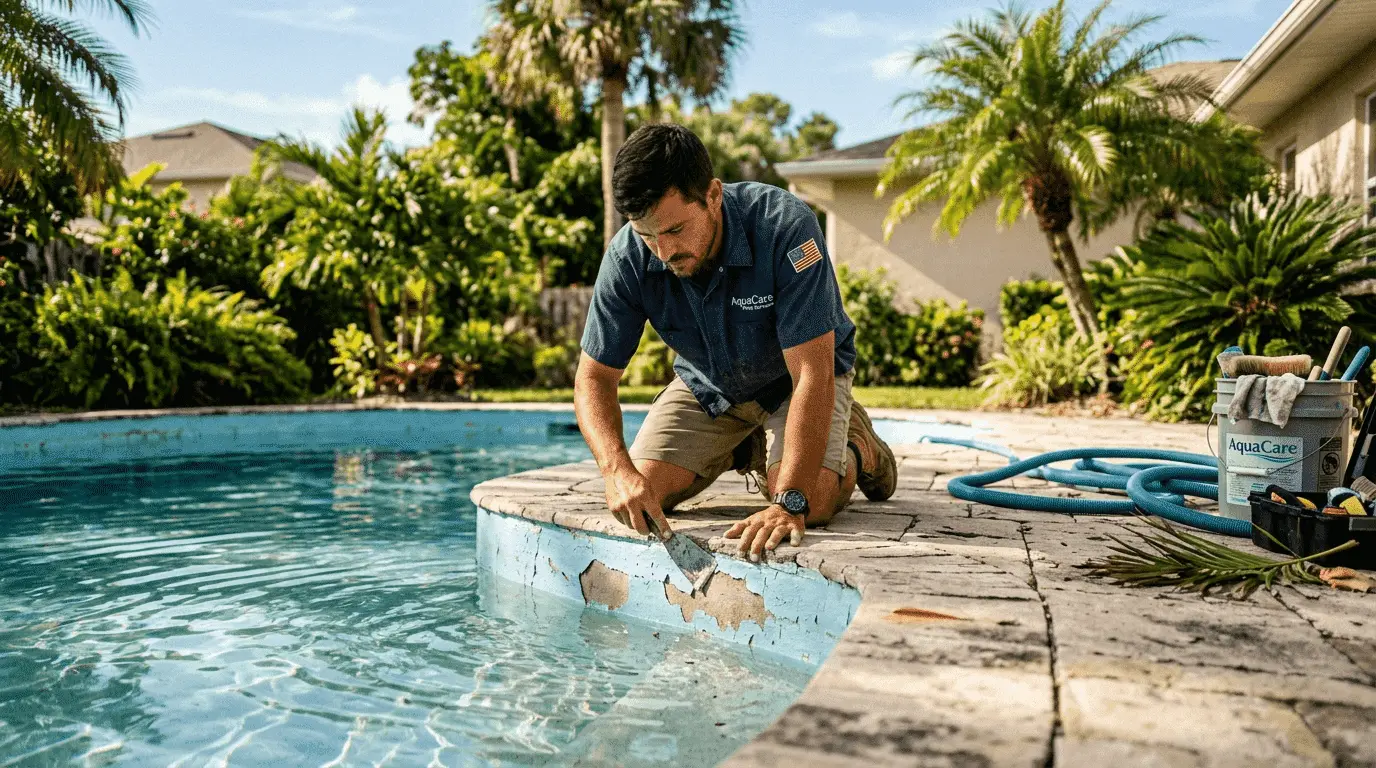
You notice flaking plaster in your pool and assume it’s simply old age. While time plays a role, most Florida homeowners discover that chemical imbalance and poor installation trigger premature peeling long before a finish should fail. Understanding the real culprits behind surface degradation helps you prevent costly repairs and extend your pool’s life. This guide walks you through the science of finish failure, Florida’s unique environmental challenges, and proven solutions to restore and protect your investment.
Table of Contents
- How Water Chemistry Causes Pool Finish Peeling
- Installation Errors And Startup Practices Leading To Bond Failure
- Florida’s Environmental Factors Accelerating Pool Finish Degradation
- Maintenance And Repair Solutions For Peeling Pool Finishes
- Restore Your Pool Finish With Expert Resurfacing In Florida
Key takeaways
| Point | Details |
|---|---|
| Chemical imbalance damages surfaces | Low pH and calcium cause etching while high levels create scaling and spalling. |
| Installation errors cause bond failure | Poor surface prep and improper startup lead to delamination in aggregate finishes. |
| Florida conditions accelerate degradation | Hard water, heat, UV exposure, and metals shorten finish lifespan significantly. |
| Maintain balanced water chemistry | Keep pH at 7.2 to 7.6, alkalinity 80 to 120 ppm, and calcium 200 to 400 ppm. |
| Full resurfacing beats spot repairs | Peeling over 20 to 30 percent of surface area requires complete refinishing. |
How water chemistry causes pool finish peeling
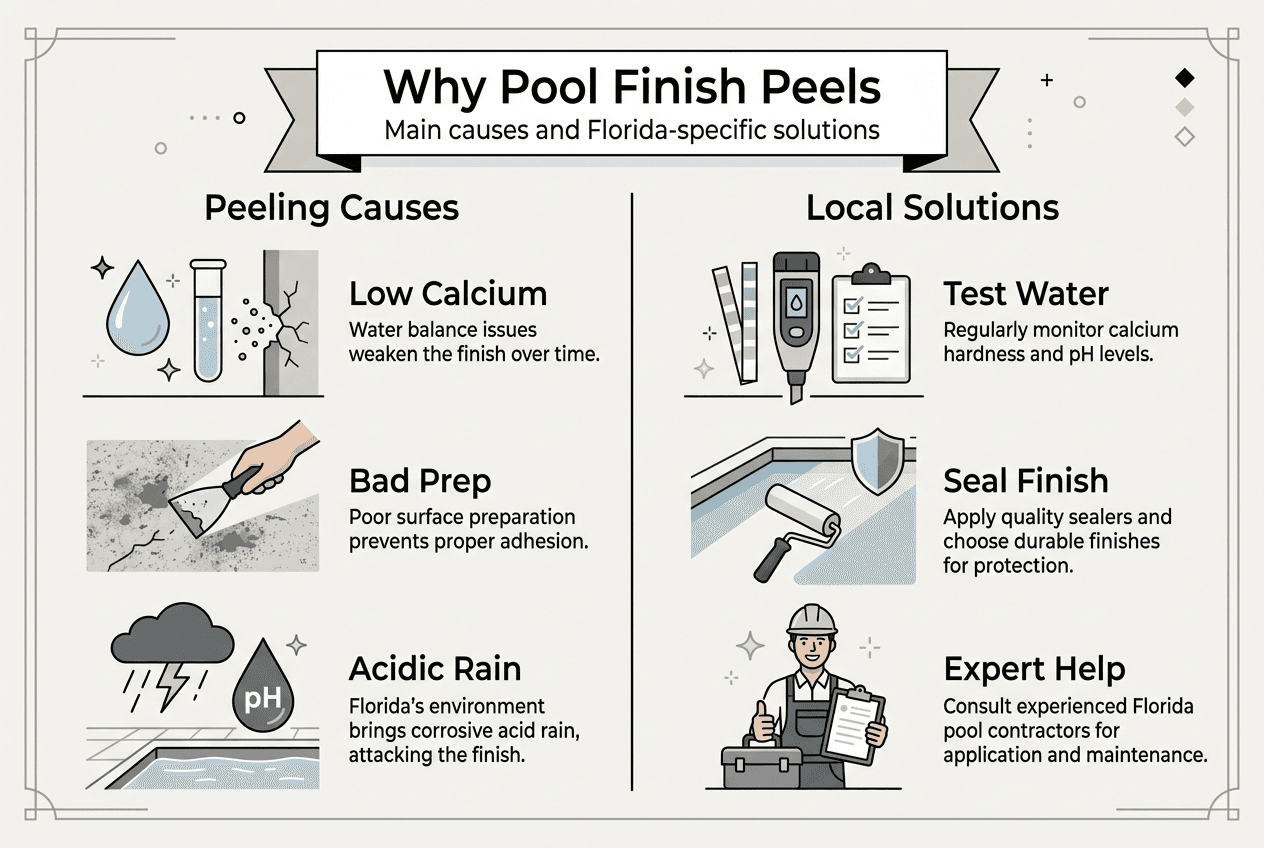
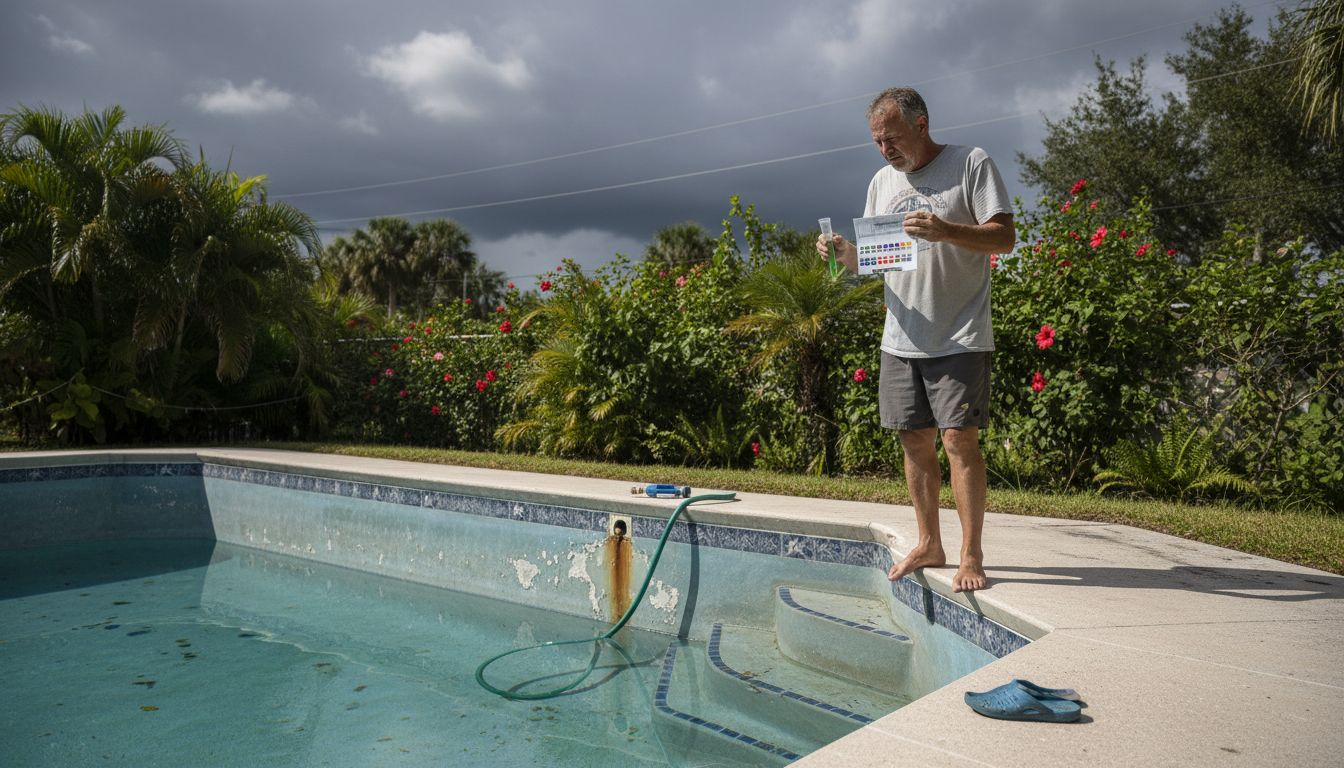
Water chemistry directly controls whether your pool finish stays intact or begins breaking down. The Langelier Saturation Index measures water’s tendency to dissolve or deposit calcium, and an imbalanced LSI attacks plaster surfaces through etching or scaling. When pH drops below 7.2 and calcium falls under 150 ppm, aggressive water etches plaster, creating rough patches that eventually peel. Conversely, high pH above 7.8 combined with excessive calcium forms nodules that push the finish away from the shell, causing spalling damage.
Maintaining ideal ranges prevents these chemical reactions from weakening your surface. You need pH between 7.2 and 7.6, total alkalinity from 80 to 120 ppm, and calcium hardness at 200 to 400 ppm for balanced water that neither attacks nor deposits minerals. Testing weekly during the first month after resurfacing catches problems before they cause permanent damage.
Follow these steps to test and adjust your water chemistry safely:
- Use a reliable test kit or digital meter to measure pH, alkalinity, and calcium levels every three to five days.
- Add muriatic acid in small doses to lower pH, or sodium carbonate to raise it gradually.
- Adjust alkalinity first, then pH, since alkalinity acts as a buffer affecting pH stability.
- Increase calcium hardness with calcium chloride if levels fall below 200 ppm.
- Retest after each adjustment and wait four hours before swimming to allow chemicals to distribute.
Pro Tip: Test your water immediately after heavy rain in Florida, as downpours dilute chemicals and drop calcium levels quickly, creating aggressive conditions that etch fresh finishes.
Understanding how to maintain pool surface chemistry gives you control over finish longevity. Regular monitoring becomes second nature once you see how small adjustments prevent thousands in repair costs. Chemical balance isn’t optional maintenance, it’s the foundation of surface preservation.
Installation errors and startup practices leading to bond failure
Even perfect water chemistry can’t save a finish applied incorrectly. Poor surface preparation before resurfacing creates weak spots where the new material fails to bond with the underlying shell. Installers who skip acid washing, leave dust or oils on the surface, or apply finish in extreme heat set the stage for delamination within months.
The 28 day startup period after resurfacing determines whether your finish develops a strong chemical bond or begins separating. Improper startup causes bond failure, especially in aggregate finishes like Diamond Brite that require precise curing conditions. Filling the pool too quickly, adding chemicals too soon, or allowing the surface to dry during filling interrupts the hydration process that creates durability.
Common installer errors that compromise bonding include:
- Applying finish over contaminated surfaces without proper cleaning
- Working in temperatures above 95°F or below 40°F
- Mixing plaster with incorrect water ratios
- Rushing application without adequate troweling
- Failing to keep the surface continuously wet during initial curing
Follow these startup steps to avoid peeling in newly finished pools:
- Begin filling immediately after application and maintain continuous water flow.
- Brush the entire surface twice daily for the first two weeks to remove plaster dust.
- Wait 28 days before adding salt, heating water, or using automatic cleaners.
- Keep pH between 7.2 and 7.6 and avoid shocking during the first month.
- Test water every other day and make only small chemical adjustments.
Pro Tip: Hire only certified installers with documented Florida experience, as regional water chemistry and climate require specialized knowledge that prevents common application mistakes.
Aggregate finishes prove more sensitive to preparation errors because the pebbles or quartz rely on the cement matrix for adhesion. Any weakness in that matrix allows water to penetrate behind the finish, lifting it away from the shell. Learning how to prep pool for resurfacing helps you verify your contractor follows proper protocols. Understanding pool maintenance after resurfacing ensures you protect your investment during the critical first month.
Florida’s environmental factors accelerating pool finish degradation
Florida’s climate creates the perfect storm for finish deterioration. Hard water with naturally high calcium content combines with intense heat, humidity, and UV exposure to age surfaces faster than in most regions. Plaster lasts 7 to 12 years in Florida conditions, while quartz aggregate extends that to 12 to 20 years, significantly shorter than the same materials in cooler climates.
| Finish Type | Florida Lifespan | Key Degradation Factor |
|---|---|---|
| Standard Plaster | 7 to 12 years | Calcium scaling and UV damage |
| Quartz Aggregate | 12 to 20 years | Heat cycling and chemical stress |
| Pebble Finishes | 15 to 25 years | Hard water deposits |
| Polished Aggregate | 18 to 25 years | Humidity and organic growth |
Environmental factors that worsen peeling include:
- Intense UV rays breaking down cement binders in the finish
- Daily temperature swings causing expansion and contraction stress
- High humidity promoting algae growth that penetrates surface pores
- Hard water depositing calcium that creates rough, flaking patches
- Seasonal storms diluting chemistry and shocking surfaces with pH swings
Metals in Florida’s groundwater add another layer of damage. Iron and copper from well water or old plumbing cause staining that penetrates deep into the finish, weakening the cement matrix and accelerating surface failure. These metallic stains don’t just look bad, they chemically react with chlorine to create compounds that eat away at plaster.
“Florida pool finishes face triple the environmental stress of northern pools due to year-round heat, hard water averaging 300 to 500 ppm calcium, and UV intensity that degrades cement binders 40 percent faster than moderate climates.”
Sequestering metals before they oxidize prevents this penetrating damage. Adding a metal sequestrant when filling or after heavy rain keeps iron and copper dissolved in water rather than depositing on surfaces. This simple step extends finish life by years in areas with high metal content.
Choosing the right pool finish types florida guide for your specific water source and sun exposure makes a measurable difference. Understanding weather impact pool resurfacing timing helps you schedule work during optimal conditions. Florida’s environment demands proactive material selection and maintenance, not reactive repairs after damage appears.
Maintenance and repair solutions for peeling pool finishes
Once peeling begins, you face a critical decision between spot repair and complete resurfacing. The extent of damage determines which approach makes financial sense and delivers lasting results. Spot repairs fail when peeling exceeds 20 to 30 percent of the surface because underlying issues continue spreading beyond patched areas.
| Solution | Best For | Typical Cost | Longevity |
| — | — | — |
| Spot Repair | Under 20% damage, isolated areas | $500 to $2,000 | 2 to 5 years |
| Full Resurfacing | Over 30% damage, widespread issues | $5,000 to $10,000 | 10 to 20 years |
| Preventive Maintenance | New or recently surfaced pools | $100 to $300 yearly | Extends life 30 to 50% |
Maintain ideal water balance after repairs with this checklist:
- Test pH, alkalinity, and calcium three times weekly for the first month.
- Brush all surfaces twice weekly to prevent calcium deposits and algae.
- Run your pump eight to twelve hours daily to ensure proper circulation.
- Balance water before adding chlorine to avoid chemical reactions that damage finishes.
- Schedule professional water analysis quarterly to catch subtle imbalances.
- Keep detailed records of all chemical additions and test results.
Pro Tip: Conduct a structural inspection before committing to resurfacing, as hidden shell cracks or plumbing leaks cause recurring peeling no matter how perfect your new finish.
Patching small areas works only when the surrounding finish remains firmly bonded and the cause of peeling has been eliminated. If water chemistry caused the damage, you must correct those conditions before repair or the problem returns within months. Similarly, if poor installation created the failure, spot fixes won’t address the underlying bond weakness.
Regular professional maintenance visits catch problems early when solutions cost hundreds instead of thousands. A trained technician spots subtle signs of chemical imbalance or beginning delamination that homeowners miss. They adjust chemistry precisely and recommend interventions before minor issues become major failures.
Learning to maintain pool finish durability through consistent care prevents most peeling. Understanding the difference in pool replastering vs resurfacing helps you choose the right restoration method. Prevention through balanced chemistry and proper maintenance always costs less than reactive repairs after damage spreads.
Restore your pool finish with expert resurfacing in Florida
When peeling progresses beyond spot repair, professional resurfacing restores both beauty and function to your pool. Classic Marcite brings over 35 years of Florida-specific expertise to every project, understanding how Orlando and Jacksonville’s unique water chemistry and climate affect finish performance. Our team has resurfaced more than 100,000 pools across Central Florida, making us the region’s largest Pebble Tec applicator with proven solutions for every surface challenge.

We serve homeowners throughout The Villages, Winter Park, and surrounding communities with comprehensive inspection, quality materials, and lasting results. Our certified installers follow strict protocols for surface preparation and startup, eliminating the installation errors that cause premature failure. We also offer complete pool repair service Orlando for structural issues that must be addressed before resurfacing.
Pro Tip: Early intervention when you first notice peeling prevents the need for costly shell repairs that become necessary once water penetrates behind failing finishes.
Schedule a free consultation to assess your pool’s condition and explore finish options that match your budget and aesthetic preferences. Our team provides transparent pricing, realistic timelines, and expert guidance on maintaining your new surface for maximum longevity.
FAQ
How can I tell if my pool finish peeling needs spot repair or full resurfacing?
Spot repair works only when damage covers less than 20 to 30 percent of your pool’s surface and remains isolated to specific areas. Beyond that threshold, underlying issues have typically spread throughout the finish, making patches a temporary fix that fails within months. Always inspect for structural cracks or bond failure before deciding, as these problems require full resurfacing regardless of visible damage extent.
What water chemistry levels should I maintain to prevent peeling?
Maintain pH between 7.2 and 7.6, total alkalinity from 80 to 120 ppm, and calcium hardness at 200 to 400 ppm for balanced water that protects your finish. Test these parameters at least weekly, more frequently after heavy rain or high bather loads that throw chemistry off balance. Regular testing catches problems before aggressive water etches your surface or scaling deposits weaken the cement matrix.
Why is proper startup important after resurfacing?
The 28 day startup period allows your new finish to cure and develop a strong chemical bond with the pool shell through controlled hydration. Rushing this process by adding chemicals too soon, heating water prematurely, or letting surfaces dry during filling interrupts bonding and causes delamination. Improper startup ranks among the top three causes of premature peeling in Florida pools, making patience during this phase critical for long-term durability.
How do metals like iron and copper affect my pool finish?
Metals cause brown, green, or black staining that penetrates deep into the finish rather than sitting on the surface. These stains chemically react with chlorine to form compounds that break down cement binders, accelerating surface failure and peeling. Use metal sequestering agents when filling your pool or after detecting metals in your water to keep iron and copper dissolved rather than depositing on and damaging your finish.
