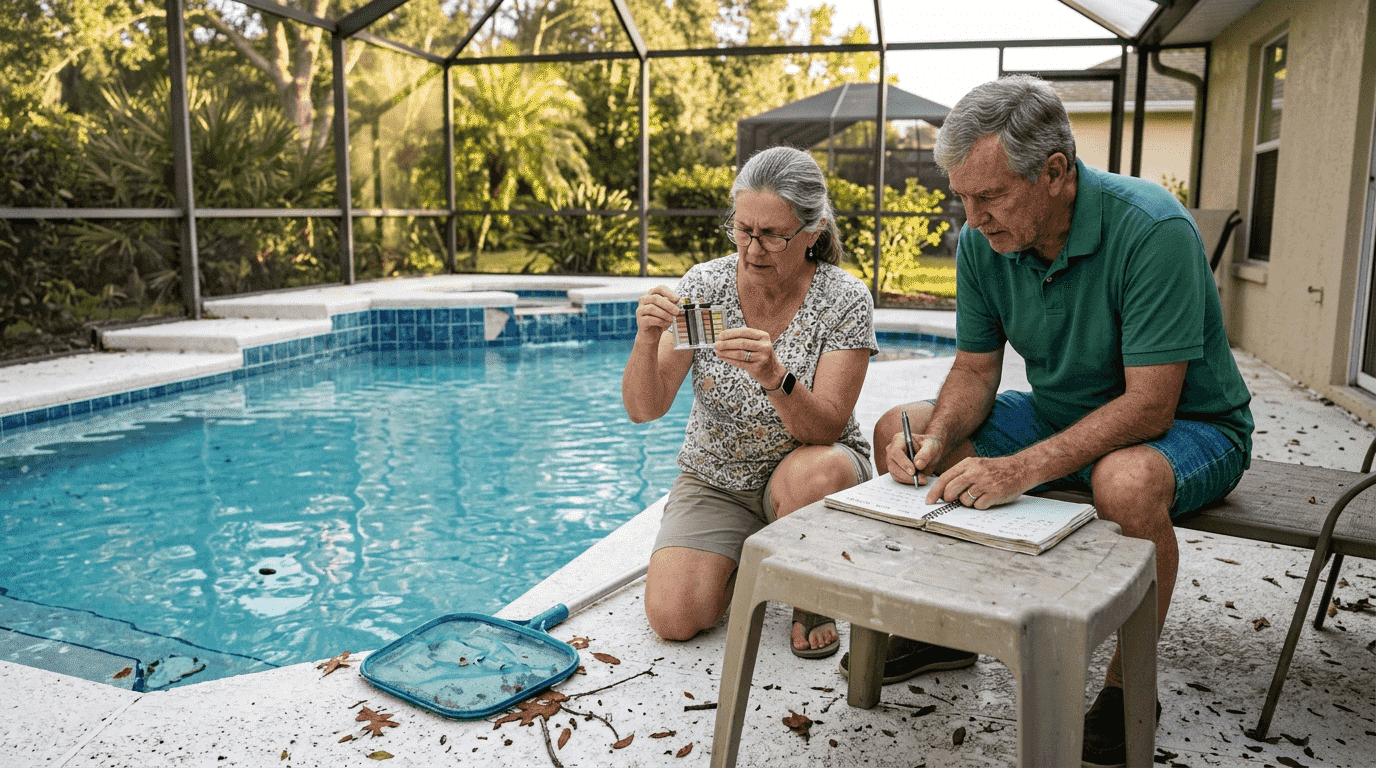
Pool finishes deteriorate faster than you think, especially in Florida’s humid heat. Cracks, stains, and rough patches appear when pool owners skip routine care or misjudge water chemistry. You can prevent costly resurfacing and keep your pool looking pristine by following proven maintenance steps tailored to Orlando and Jacksonville’s unique climate challenges. This guide walks you through essential water chemistry management, weekly cleaning tasks, and common troubleshooting fixes to extend your pool finish’s lifespan well into 2026 and beyond.
Table of Contents
- Understanding Your Pool Finish And The Importance Of Water Chemistry
- Essential Weekly Maintenance Tasks: Brushing, Skimming, And Cleaning
- Managing Pool Chemistry In Florida’s Humid Climate
- Common Mistakes And Troubleshooting Pool Finish Issues
- Protect Your Investment With Professional Pool Resurfacing
- FAQ
Key takeaways
| Point | Details |
|---|---|
| Balanced water chemistry protects finishes | Maintaining proper pH, alkalinity, and calcium hardness prevents erosion, scaling, and staining that shorten pool finish life. |
| Weekly brushing removes algae and debris | Brushing pool walls and floors two to three times weekly stops algae buildup and surface damage before they start. |
| Post-storm cleanup prevents finish damage | Clearing debris and restoring chemical balance immediately after heavy rains keeps your pool finish intact and clean. |
| Regular testing catches chemistry shifts early | Testing water twice weekly in Florida’s humid climate helps you adjust chemicals before imbalances harm the finish. |
Understanding your pool finish and the importance of water chemistry
Pool finishes vary widely across Florida homes. Plaster, pebble, marcite, and tile each have distinct textures and durability profiles. Popular pool finishes in Florida homes include smooth plaster for affordability, pebble surfaces for longevity, and marcite for a classic look. Your finish type determines how you approach maintenance. Pebble finishes resist algae better than plaster, while marcite requires careful pH management to avoid etching.
Water chemistry directly impacts how long your pool finish lasts. Proper water chemistry is crucial for maintaining pool finish longevity, as imbalances in pH, alkalinity, and calcium hardness can lead to erosion, scaling, and staining of the pool surface. Think of your pool water as a delicate ecosystem. When pH drifts too high, calcium deposits form white scale on your finish. When pH drops too low, acidic water etches plaster and marcite, creating rough spots that harbor algae.
Key water chemistry parameters include:
- pH measures acidity or alkalinity on a scale from zero to fourteen
- Total alkalinity buffers pH swings and stabilizes water chemistry
- Calcium hardness prevents water from leaching minerals out of your pool finish
- Chlorine sanitizes water and kills bacteria without damaging surfaces when balanced
Ideal ranges keep your finish safe. Aim for pH between 7.2 and 7.6, total alkalinity between 80 and 120 parts per million, and calcium hardness between 200 and 400 parts per million. Straying outside these ranges accelerates finish damage. Low calcium hardness causes water to pull calcium from plaster, creating pits and rough texture. High alkalinity makes pH harder to adjust, leading to persistent scaling.
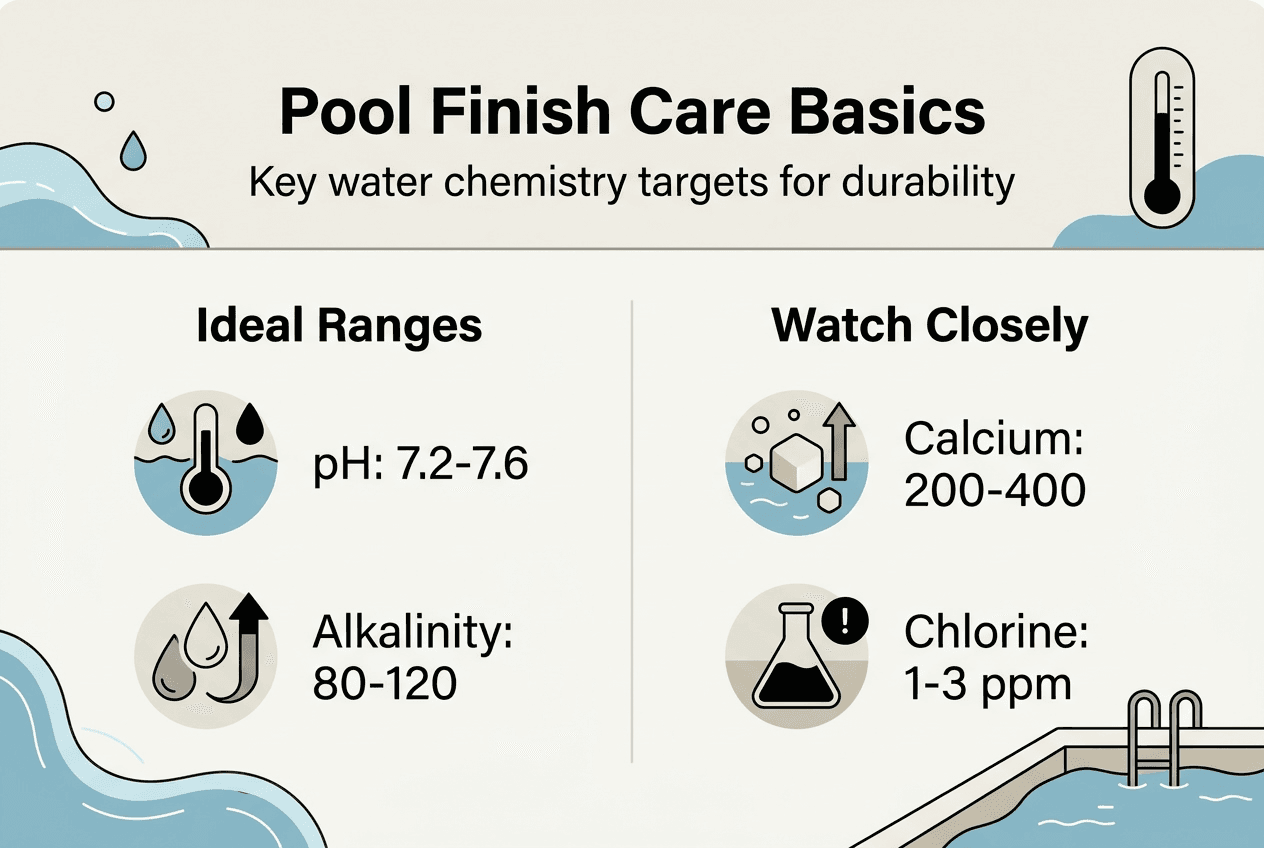
Holistic water chemistry balance matters more than isolated adjustments. Changing one parameter affects others. Raising pH without checking alkalinity can trigger cloudiness and scale. Lowering chlorine without monitoring cyanuric acid leaves your pool vulnerable to algae blooms that stain finishes. Test all parameters together and adjust gradually to maintain harmony.
Essential weekly maintenance tasks: brushing, skimming, and cleaning
Physical cleaning protects your pool finish as much as chemical balance does. Weekly tasks prevent debris and algae from embedding into the surface, which saves you from aggressive scrubbing that wears down finishes over time. Your routine should include skimming debris, brushing walls and floors, and cleaning the waterline.
Regular brushing of pool surfaces prevents algae growth and extends the life of the pool finish. Brush your pool walls, steps, and floor at least twice weekly. Use a nylon bristle brush for plaster and marcite finishes to avoid scratching. Pebble finishes tolerate stiffer brushes, but nylon still works well. Focus on shaded areas and corners where algae thrive. Brushing dislodges spores before they attach and multiply, keeping your finish smooth and clean.
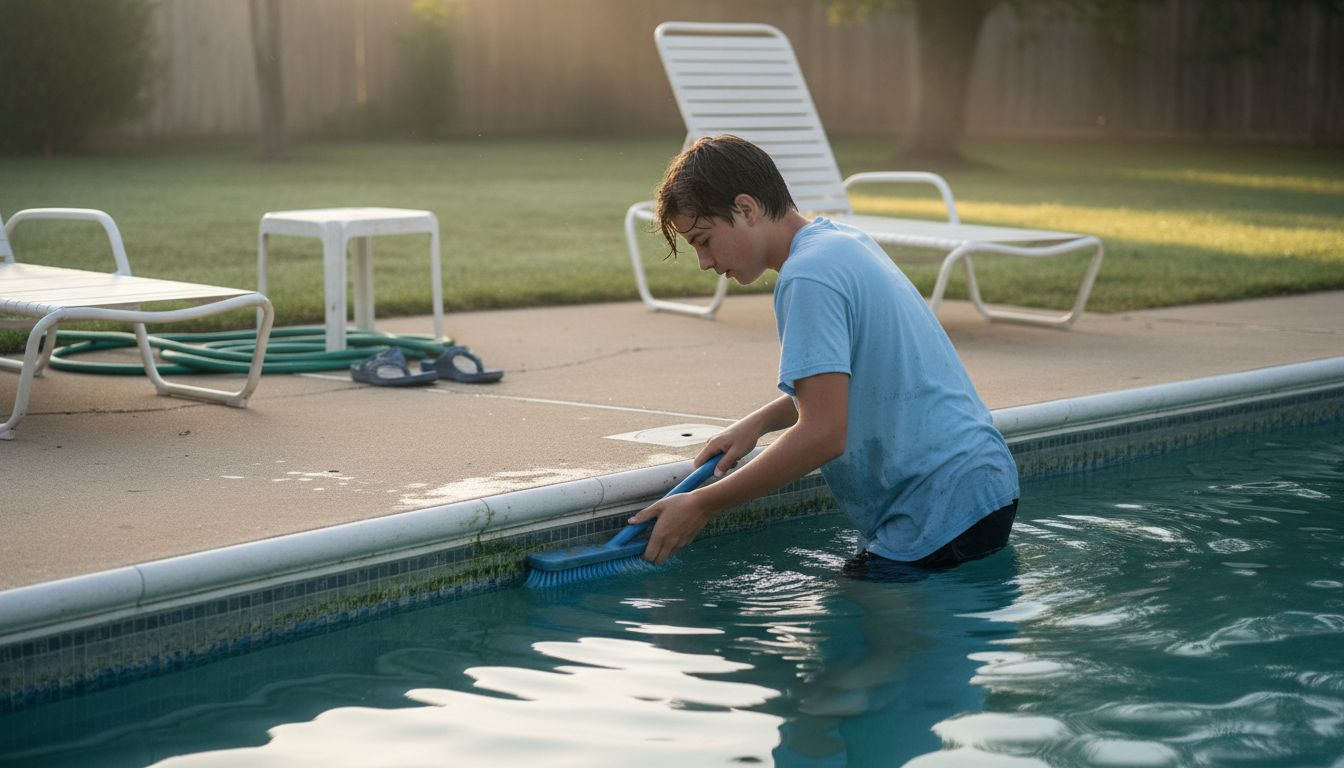
Skimming removes floating debris like leaves, insects, and pollen. Skim daily, ideally at dawn when debris settles overnight. A clean surface prevents organic matter from sinking and decomposing on your pool floor, which stains finishes and feeds algae. Use a fine mesh skimmer net to catch smaller particles that coarse nets miss.
Cleaning the waterline prevents stubborn stains from oils, sunscreen, and mineral deposits. Oils from swimmers and airborne pollutants create a grimy ring at the waterline that etches into finishes if left untreated. Scrub the waterline weekly with a waterline cleaner or a soft brush and mild detergent. For tile finishes, a non-abrasive tile cleaner removes buildup without damaging grout. Maintaining your pool surface effectively requires consistent waterline care to avoid permanent discoloration.
Pro Tip: During high debris periods like spring pollen season or after storms, increase brushing to three times weekly. Extra brushing keeps algae from gaining a foothold and reduces the chemical load needed to sanitize your pool. Following post-resurfacing pool maintenance guidelines also helps new finishes cure properly. Preparing your pool for resurfacing starts with establishing strong maintenance habits now.
Managing pool chemistry in Florida’s humid climate
Florida’s humidity and intense sun create unique challenges for pool chemistry. In humid heat, your chemistry can shift fast, making frequent testing and adjustments essential. Ultraviolet rays deplete chlorine faster, while afternoon thunderstorms dilute chemicals and introduce contaminants. You need a proactive approach to keep your pool finish safe.
Key chemical parameters and ideal ranges:
| Parameter | Ideal Range | Effect on Pool Finish |
|---|---|---|
| pH | 7.2 to 7.6 | Low pH etches plaster; high pH causes scaling |
| Total Alkalinity | 80 to 120 ppm | Buffers pH; prevents swings that damage finishes |
| Calcium Hardness | 200 to 400 ppm | Low levels leach calcium from plaster; high levels cause deposits |
| Free Chlorine | 1 to 3 ppm | Sanitizes without bleaching or weakening finish when balanced |
| Cyanuric Acid | 30 to 50 ppm | Protects chlorine from UV; excess reduces chlorine effectiveness |
Follow these numbered steps to manage pool chemistry effectively:
- Test water twice weekly using test strips or a liquid test kit for accurate readings.
- Adjust pH first if it drifts outside the 7.2 to 7.6 range using pH increaser or decreaser.
- Balance total alkalinity next to stabilize pH and prevent future swings.
- Check calcium hardness monthly and adjust with calcium chloride or partial water replacement.
- Shock your pool weekly or after heavy use to oxidize contaminants and restore chlorine levels.
- Retest water 24 hours after adjustments to confirm chemistry is stable.
Post-rain maintenance is critical in Florida. Heavy rains dilute chlorine, lower pH, and introduce debris that feeds algae. Test your water immediately after a storm and restore chemical balance within 24 hours. Add chlorine to bring levels back to 1 to 3 parts per million and adjust pH if it dropped below 7.2. Skim debris promptly to prevent organic matter from staining your finish.
Use algaecides and non-metal chemicals to prevent buildup. Metal-based algaecides can stain plaster and marcite finishes, especially in hard water. Choose quaternary ammonium or polyquat algaecides that prevent algae without leaving residue. Correct water chemistry can extend the lifespan of pool finishes by several years and reduce costly repairs.
Pro Tip: Check chlorine levels every other day during summer when UV exposure peaks. Sunlight breaks down chlorine faster in Florida than in northern states, so you may need to add chlorine more frequently to maintain sanitizer levels. Cutting chlorine use in Florida pools involves balancing cyanuric acid to protect chlorine from UV degradation without over-stabilizing.
Common mistakes and troubleshooting pool finish issues
Pool owners make predictable mistakes that damage finishes and shorten their lifespan. Recognizing these errors helps you avoid costly repairs and keeps your pool looking great. Over-chlorination, neglecting brushing, and ignoring post-storm cleanup top the list of common pitfalls.
Over-chlorination harms pool finishes more than you might expect. Using excessive chlorine to combat algae is common but damages pool finishes, as balanced chemistry and regular cleaning work better. High chlorine concentrations bleach colored plaster and pebble finishes, fade marcite, and weaken surface integrity over time. Shocking your pool weekly with the correct dosage prevents algae without overdosing chlorine. If you face persistent algae, check your pH and alkalinity first before adding more sanitizer.
Neglecting brushing allows algae to colonize your pool finish. Once algae embed into plaster or marcite, you need aggressive scrubbing or acid washing to remove them, both of which wear down the finish. Brushing twice weekly prevents this cycle and keeps your surface smooth. Focus on areas with poor circulation like steps, corners, and behind ladders where algae thrive.
Ignoring post-storm cleanup invites algae growth and finish damage. Debris from storms introduces organic matter, tannins, and phosphates that feed algae and stain finishes. Clear leaves and branches within hours of a storm, then test and adjust your water chemistry. Restoring chlorine and pH quickly stops algae before they spread.
PH imbalance causes etching or scaling depending on the direction of the drift. Low pH etches plaster and marcite, creating rough patches that trap dirt and algae. High pH causes calcium carbonate to precipitate out of solution, forming white scale on your finish. Test pH twice weekly and adjust gradually using small doses of pH increaser or muriatic acid to avoid overcorrection.
Troubleshooting quick fixes and preventive habits:
- If you see white scale, lower pH to 7.2 and brush affected areas to loosen deposits.
- For rough patches or etching, raise pH to 7.4 and check calcium hardness to prevent further leaching.
- Green or black algae spots signal low chlorine or poor circulation; shock the pool and brush thoroughly.
- Cloudy water indicates imbalanced alkalinity or inadequate filtration; test alkalinity and run your filter longer.
- Stains from metals or organic matter require specialized stain removers; avoid metal-based chemicals on plaster finishes.
Never use excessive chlorine as a quick fix for algae. Balanced chemistry and consistent brushing protect your pool finish far better than shocking repeatedly, which weakens surfaces and fades colors over time.
Avoiding pool maintenance mistakes starts with understanding how each parameter affects your finish and committing to regular testing and adjustments.
Protect your investment with professional pool resurfacing
Even with excellent maintenance, pool finishes eventually wear out. Resurfacing resets your pool’s appearance and extends its life by decades. Professional resurfacing replaces damaged plaster, marcite, or pebble surfaces with fresh, durable finishes that resist staining and algae better than aged materials.

Pool resurfacing basics in Florida involve draining your pool, removing the old finish, repairing structural issues, and applying a new surface. This process restores your pool’s beauty and protects the underlying shell from water damage. Tailored services in Orlando and Jacksonville address local climate challenges like humidity and UV exposure, ensuring your new finish lasts. Pool resurfacing services in The Villages and pool renovation in Jacksonville offer expert inspections and custom solutions for aging pools. Contact professionals to assess your pool’s condition and recommend the best resurfacing timeline for lasting durability.
FAQ
How often should I test my pool water to protect the finish?
Test your pool water at least twice weekly in Florida’s humid climate. Humidity and sun exposure cause chemistry to shift faster than in cooler regions. After heavy rains or high pool use, test within 24 hours to catch imbalances before they damage your finish.
Can I use high chlorine levels to fix algae without damaging the pool finish?
Excessive chlorine harms pool finishes by bleaching colors and weakening surface integrity. Balanced chemistry and regular brushing work better for algae control. Shock your pool weekly with the correct dosage instead of over-chlorinating, which protects your finish while keeping water sanitized.
What is the best way to clean the waterline to prevent staining?
Use a waterline cleaner or soft scrub brush weekly to remove oils and mineral deposits. Scrub gently to avoid scratching plaster or marcite finishes. Prompt cleaning prevents buildup from hardening into permanent stains that require aggressive treatments.
When should I consider professional pool resurfacing?
Cracks, rough patches, and discoloration indicate your pool finish needs resurfacing. These signs show the surface is no longer protecting the underlying structure. Professional inspection confirms the best timing and helps you choose a durable finish that suits your pool’s use and Florida’s climate.