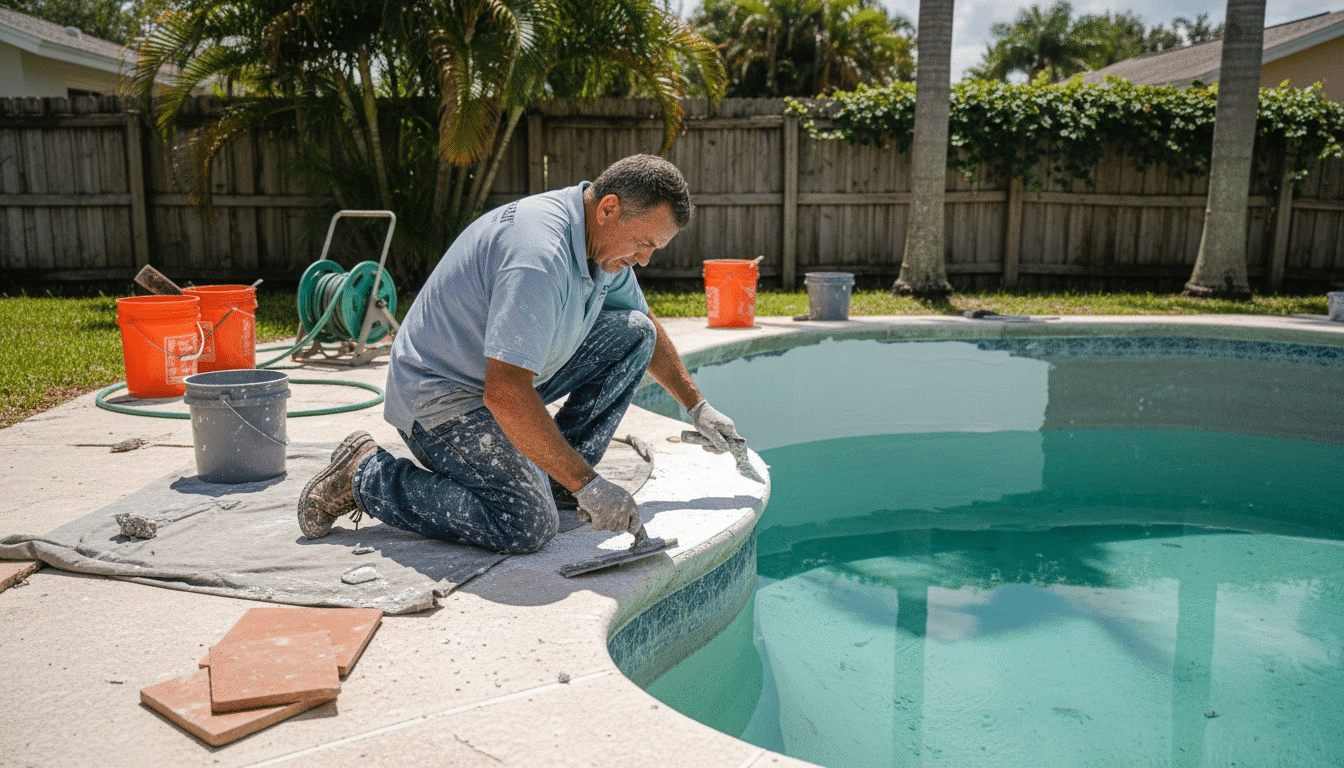
Choosing between pool replastering and resurfacing can be a real challenge for homeowners in Orlando and Jacksonville. Florida’s intense sunlight and humidity put extra pressure on backyard pools, making upkeep more than just a cosmetic decision. Understanding the true difference between pool replastering and resurfacing helps you protect your investment and achieve the style you want. This guide clears up the confusion so you can confidently decide what works best for your home, budget, and pool maintenance goals.
Table of Contents
- Defining Pool Replastering And Resurfacing
- Popular Pool Surface Materials And Methods
- How Each Process Works Step-By-Step
- Longevity, Durability, And Aesthetic Impact
- Comparing Costs, Risks, And Common Mistakes
- Choosing The Best Option For Your Florida Pool
Key Takeaways
| Point | Details |
|---|---|
| Understanding Differences | Pool replastering applies a new layer of plaster, while resurfacing can use various materials for comprehensive renovation. |
| Cost Implications | Replastering typically costs $5,000 – $10,000, whereas resurfacing can range from $10,000 to $15,000+. |
| Material Selection | Choose materials based on durability, aesthetics, and local climate, with advanced options offering improved features. |
| Professional Consultation | Always consult experts for assessment and recommendations tailored to your pool’s specific needs and conditions. |
Defining Pool Replastering and Resurfacing
Pool maintenance in Florida requires understanding the nuanced differences between pool replastering and resurfacing, two critical processes that preserve your swimming pool’s structural integrity and aesthetic appeal. While often used interchangeably, these techniques have distinct characteristics that homeowners should comprehend before making renovation decisions.
Pool replastering specifically refers to the process of applying a new plaster layer over an existing pool shell. This technique involves carefully removing damaged areas, preparing the substrate, and installing a fresh plaster finish. Replastering maintains the pool’s foundational structure while providing several key benefits:
- Restores the pool’s smooth interior surface
- Prevents water loss and potential structural damage
- Improves overall pool appearance
- Reduces risk of algae growth
- Customizable color and finish options
Pool resurfacing, by contrast, represents a broader renovation approach that may incorporate alternative materials beyond traditional plaster. Regulatory agencies approve various resurfacing techniques designed to create a smooth, waterproof surface capable of withstanding extensive cleaning and usage.
The primary difference lies in the materials and extent of renovation. Replastering typically works within the existing plaster framework, while resurfacing can involve more comprehensive material replacements. Pool owners must consider factors like budget, desired aesthetic, and long-term maintenance when choosing between these approaches.
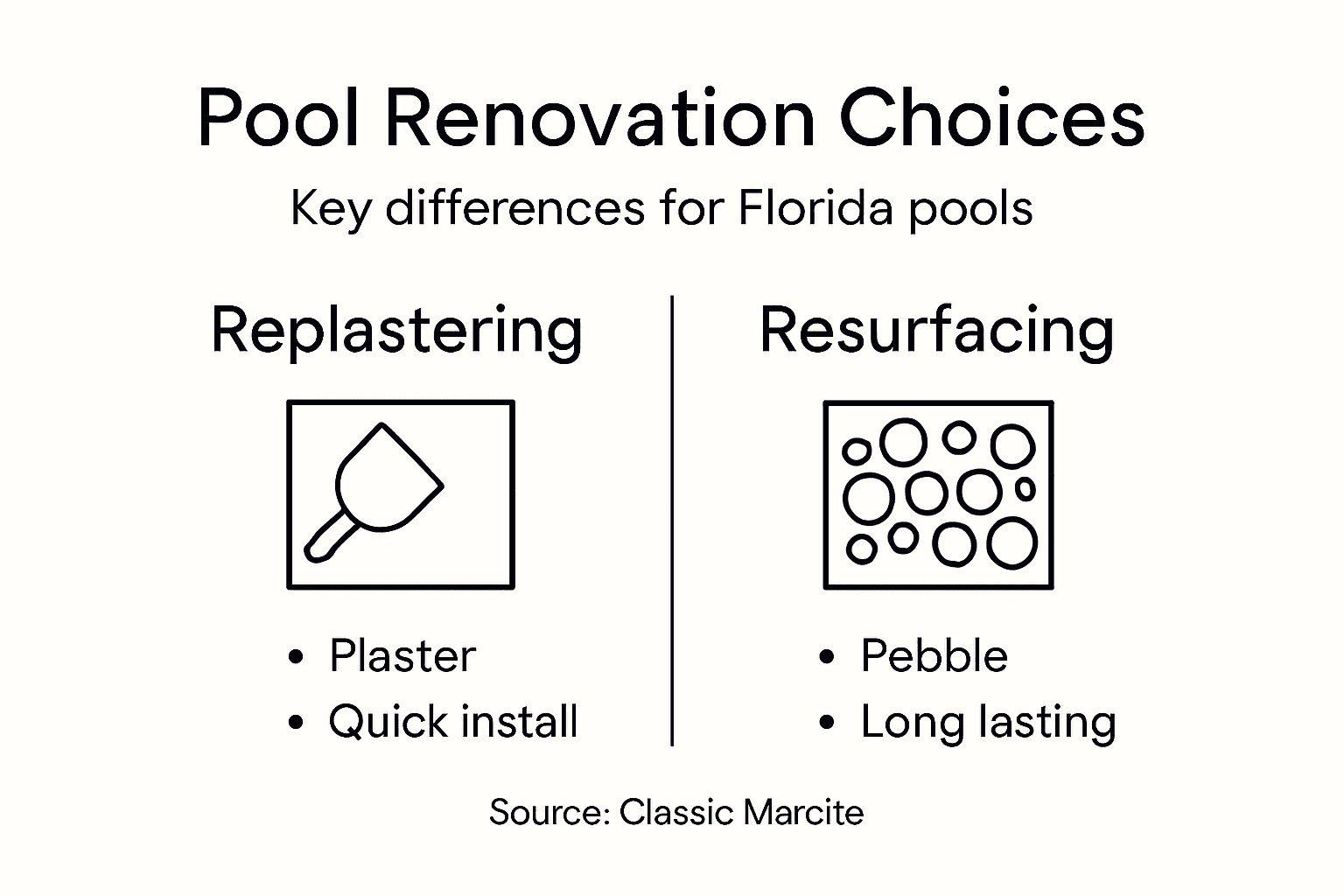
Here’s a quick comparison of pool replastering versus resurfacing, highlighting key differences for Florida homeowners:
| Aspect | Replastering | Resurfacing |
|---|---|---|
| Materials Used | New plaster only | Plaster, pebble, quartz, epoxy |
| Scope of Renovation | Surface renewal | Can involve full material change |
| Typical Cost Range | $5,000 – $10,000 | $10,000 – $15,000+ |
| Durability | 7-10 years with maintenance | Up to 15 years, material dependent |
| Visual Options | Limited colors, smooth finish | Broad color range, textured look |
| Regulatory Impact | Lower; follows plaster codes | Higher; may require extra approvals |
Pro tip: Before deciding between replastering and resurfacing, consult a professional who can assess your specific pool’s condition and recommend the most cost-effective solution.
Popular Pool Surface Materials and Methods
Florida pool owners have several sophisticated options for surface materials, each offering unique characteristics and benefits. American National Standards outline specific requirements for pool surface materials to ensure durability, safety, and aesthetic appeal.
The most common pool surface materials include:
- Traditional White Plaster: Classic, affordable option with smooth finish
- Pebble Surfaces: Provides textured, natural appearance with enhanced durability
- Quartz Surfaces: Offers color variety and increased resistance to chemicals
- Aggregate Finishes: Combines cement with decorative stones for unique visual effects
- Epoxy-based Coatings: Provides superior chemical and stain resistance
Each material has specific application techniques that impact longevity and performance. Substrate preparation plays a critical role in ensuring proper adhesion and preventing future issues. Professional installers must carefully manage mixing ratios, application temperatures, and curing times to achieve optimal results.
Advanced surface materials now offer enhanced features like improved slip resistance, color consistency, and longer-lasting finishes. Homeowners can select materials that not only protect their pool’s structure but also complement their landscape design and aesthetic preferences.
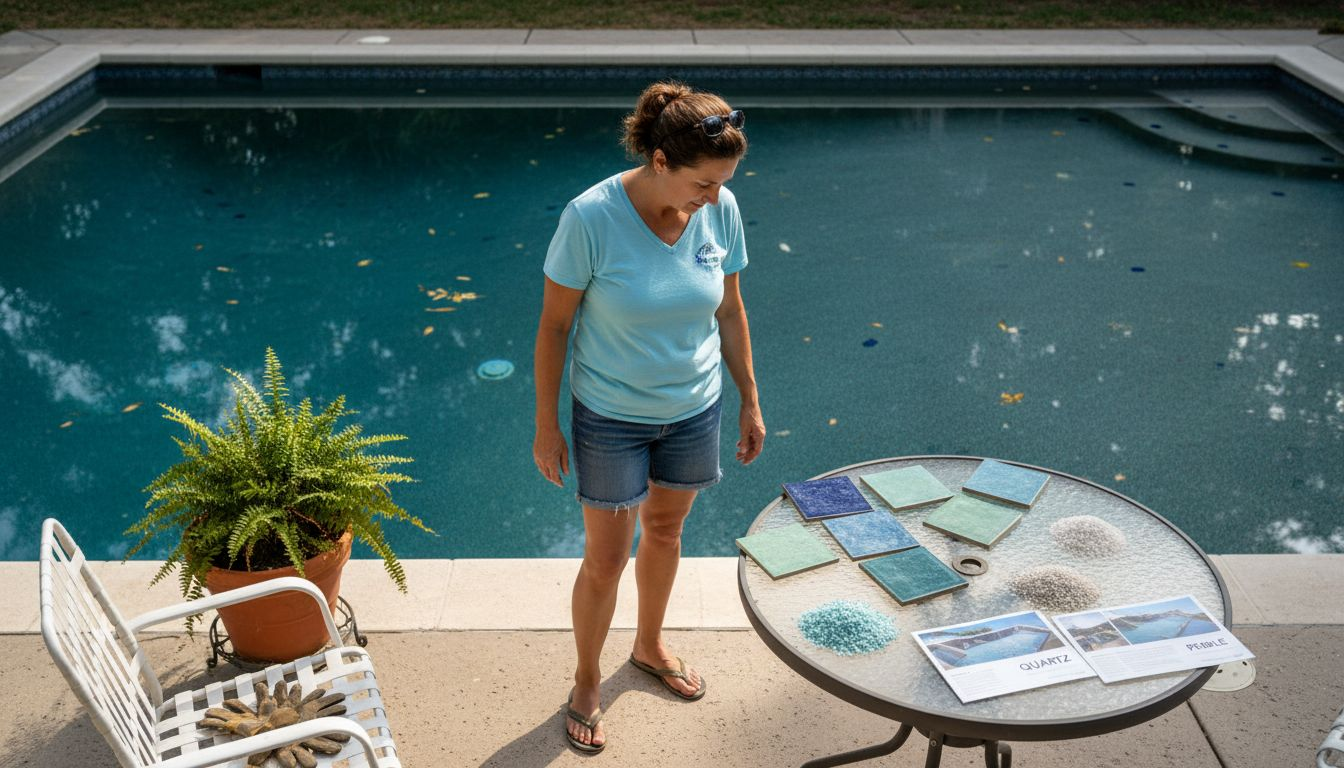
Below is a summary of popular pool surface materials and their main properties:
| Material Type | Durability | Maintenance Needs | Visual Appeal |
|---|---|---|---|
| White Plaster | Moderate | Frequent cleaning | Classic, simple |
| Pebble Finish | Very high | Low | Natural, highly textured |
| Quartz Aggregate | High | Moderate | Colorful, sparkly |
| Epoxy-based Coating | Very high | Minimal | Smooth, glossy |
Pro tip: Consider consulting a professional who can assess your specific pool environment and recommend the most suitable surface material for Florida’s unique climate conditions.
How Each Process Works Step-By-Step
Pool replastering and resurfacing involve complex, multi-step processes that require precise technical expertise. Detailed replastering procedures demand careful planning and execution to ensure a successful pool renovation.
For pool replastering, the standard process typically includes:
- Complete pool drainage
- Thorough surface inspection
- Removal of existing damaged plaster
- Surface preparation and crack repair
- Application of bonding agent
- New plaster mixing and application
- Surface leveling and smoothing
- Curing and initial finishing
Resurfacing techniques differ slightly, offering more comprehensive renovation options. Professional installers must submit detailed plans and obtain necessary approvals before beginning work. Building code compliance requires careful attention to safety features like depth markers, handrails, and specific material specifications.
Environmental factors play a significant role in the replastering and resurfacing processes. Temperature, humidity, and curing conditions directly impact the quality and longevity of the pool’s new surface. Professionals must carefully manage these variables to ensure optimal results, with curing times ranging from several days to weeks depending on specific material and environmental conditions.
Pro tip: Always request a detailed written plan from your pool renovation professional that outlines each specific step of the replastering or resurfacing process, including expected timelines and potential challenges.
Longevity, Durability, and Aesthetic Impact
Pool surface treatments are more than just cosmetic upgrades – they represent critical investments in your pool’s long-term performance and visual appeal. Pool finishes must meet rigorous requirements for durability, safety, and aesthetic quality.
Key factors influencing pool surface longevity include:
- Material quality and composition
- Professional installation techniques
- Chemical balance and maintenance
- Exposure to environmental stressors
- Frequency of use and cleaning practices
Aesthetic considerations play a significant role in surface selection. Modern pool finishes offer a range of colors and textures, from classic white to sophisticated aggregate designs. Homeowners can choose surfaces that not only protect their pool but also enhance their outdoor living space’s visual harmony.
The durability of pool surfaces directly correlates with proper installation and ongoing maintenance. High-quality materials applied by skilled professionals can extend a pool’s functional life by 10-15 years, reducing long-term renovation costs. Environmental factors like Florida’s intense sunlight and humidity require careful material selection to prevent premature degradation.
Pro tip: Request material samples and performance warranties before finalizing your pool surface renovation to ensure long-lasting aesthetic and functional results.
Comparing Costs, Risks, and Common Mistakes
Pool replastering represents a significant investment for Florida homeowners, with costs and risks that demand careful consideration. Pool replastering costs vary widely based on multiple critical factors that directly impact the project’s success and long-term value.
Common mistakes in pool resurfacing include:
- Inadequate surface preparation
- Ignoring underlying structural issues
- Poor plaster mixing techniques
- Insufficient curing time
- Disregarding weather conditions
- Choosing unqualified contractors
Cost considerations range dramatically depending on pool size, selected materials, and local labor rates. Traditional white plaster remains the most affordable option, typically ranging from $5,000 to $10,000 for an average-sized pool. More advanced surfaces like quartz or pebble finishes can increase costs to $15,000 or more, but often provide superior durability and aesthetic appeal.
Understanding potential risks is crucial for making informed decisions. Improper installation can lead to premature surface degradation, requiring expensive repairs or complete resurfacing. Homeowners should prioritize professional expertise and comprehensive material selection over short-term cost savings to ensure long-lasting pool performance.
Pro tip: Always request detailed written quotes that include material specifications, labor costs, and warranty information to avoid unexpected expenses during your pool renovation project.
Choosing the Best Option for Your Florida Pool
Selecting the ideal pool renovation approach requires careful consideration of Florida’s unique environmental challenges and local regulatory requirements. The decision between replastering and resurfacing depends on multiple critical factors specific to your pool’s condition and your long-term maintenance goals.
Key decision factors include:
- Current pool surface condition
- Budget constraints
- Desired aesthetic outcome
- Long-term durability requirements
- Specific environmental stress factors
- Maintenance capabilities
Pool renovation strategies must balance aesthetic preferences with practical considerations. Traditional white plaster offers an affordable baseline, while advanced materials like pebble or quartz finishes provide enhanced durability and visual complexity. Homeowners should evaluate their specific needs against potential material performance in Florida’s challenging climate.
Professional assessment becomes crucial in making an informed decision. Experienced pool renovation experts can conduct comprehensive evaluations that identify underlying structural issues, recommend appropriate materials, and provide cost-effective solutions tailored to your specific pool environment. Factors like sun exposure, humidity levels, and potential chemical interactions play significant roles in determining the most suitable renovation approach.
Pro tip: Schedule a professional pool inspection before making any renovation decisions to understand your pool’s unique requirements and potential long-term performance.
Transform Your Florida Pool with Expert Resurfacing Solutions
Choosing between pool replastering and resurfacing can be overwhelming given the specific needs mentioned in the article such as durability, aesthetic impact, and longevity under Florida’s unique climate. Classic Marcite understands these challenges and offers specialized pool resurfacing services using premium materials like Pebble Tec® to deliver long-lasting, weather-resistant, and visually stunning finishes tailored to your pool’s exact condition. Their expertise addresses common pain points including preventing premature surface degradation, enhancing slip resistance, and ensuring your pool remains a beautiful retreat for years.
Whether you want to upgrade your existing plaster or explore advanced resurfacing options that align with your aesthetic goals and budget, Classic Marcite has you covered. Discover how their comprehensive services—covering interior finishes, remodeling, and repairs—can help you avoid common installation pitfalls and maximize your investment.
Ready to revitalize your pool with trusted craftsmanship? Visit Classic Marcite to explore expert solutions.

Don’t wait for costly repairs or fading surfaces to ruin your pool experience. Contact Classic Marcite today for a free estimate and let the largest Pebble Tec® applicator in Central Florida transform your pool surface with unmatched quality and care. Learn more about their full range of services at Classic Marcite and take the first step toward your perfect pool renovation.
Frequently Asked Questions
What is the difference between pool replastering and resurfacing?
Pool replastering involves applying a new layer of plaster over the existing pool shell, focusing primarily on the surface renewal. In contrast, resurfacing may involve alternative materials and a more comprehensive renovation of the pool’s surface, including full material changes.
How long does a replastering or resurfacing project typically last?
Replastering typically lasts 7-10 years with proper maintenance, while resurfacing can last up to 15 years or more, depending on the materials used and maintenance practices.
What are the most common materials used for pool resurfacing?
Common materials for pool resurfacing include traditional white plaster, pebble surfaces, quartz finishes, aggregate finishes, and epoxy-based coatings. Each material offers different durability and aesthetic options.
How can I determine if my pool needs replastering or resurfacing?
Assess your pool’s surface condition for signs of wear, cracks, or discoloration. Consulting a professional can help identify underlying structural issues and recommend whether replastering or resurfacing is the most suitable option.
Recommended
- Benefits Of Pool Replastering For Florida Homes
- Pool Resurfacing Timeline: What Florida Owners Need
- Pool Resurfacing Updates 2025: Florida Homeowner Impact
- DIY Pool Remodeling Guide For Stunning Results
- Pool Refinishing Windermere FL
- Pool Renovation Winter Park FL
- Swimming Pool Remodeling The Villages FL