TL;DR:
- Florida’s climate causes rapid coping damage due to sandy soil, UV exposure, and moisture.
- Proper repair requires flexible, UV-resistant materials and adherence to local building codes.
- Extensive or structural damage should be addressed by professionals to ensure longevity and safety.
Cracked or shifting pool coping is more than an eyesore. Left alone, it exposes the bond beam underneath to water intrusion, accelerates structural damage, and creates slip hazards around your pool deck. In Florida’s intense heat, heavy rainfall, and sandy soil conditions, coping damage moves fast. This guide walks you through everything you need for a solid, lasting pool coping repair — from spotting the problem early to choosing the right materials for Orlando and Jacksonville’s climate, and knowing exactly when to call in a professional.
Table of Contents
- Understanding pool coping and common issues in Florida
- What you need: Tools, materials, and prep checklist
- Step-by-step pool coping repair process
- Avoiding common pitfalls and troubleshooting
- What to expect: Results and maintenance tips
- The overlooked truth: Why most Florida coping repairs fail early
- Need expert coping repair or a pool upgrade?
- Frequently asked questions
Key Takeaways
| Point | Details |
|---|---|
| Local conditions matter | Orlando and Jacksonville’s sandy soils and UV exposure require Florida-specific coping materials and techniques. |
| Follow a proven repair process | Accurate step-by-step repairs, including inspection and proper curing, prevent repeat failures. |
| Avoid common DIY pitfalls | Missing bond beam issues or rushing the cure leads to wasted time and money. |
| Routine maintenance extends lifespan | Regular inspection and cleaning help your coping last for years in Florida’s climate. |
| Professional help for large jobs | Expert contractors are recommended for major damage, tricky soils, or code compliance needs. |
Understanding pool coping and common issues in Florida
Pool coping is the cap material installed along the top edge of your pool shell, bridging the pool wall and the surrounding deck. It serves three important functions: protecting the bond beam from water damage, providing a safe, finished edge for swimmers to grip, and giving your pool a clean visual border. Materials range from natural stone and brick to precast concrete and travertine, each responding differently to Florida’s conditions.
Here’s what makes Florida uniquely hard on pool coping:
- Sandy soils: Central Florida’s loose, sandy ground shifts with moisture changes, causing coping stones to settle unevenly or separate from the shell.
- UV and thermal stress: Year-round sun exposure and daily temperature swings cause materials to expand and contract, leading to hairline cracks that grow over time.
- Heavy rainfall: Florida’s wet season drives water beneath improperly sealed coping, eroding the mortar bed and accelerating deterioration.
- High humidity: Persistent moisture promotes mold and efflorescence (white mineral deposits) on stone and concrete coping.
| Damage type | Common cause | Risk level |
|---|---|---|
| Hairline cracks | Thermal expansion | Moderate |
| Settlement gaps | Sandy soil movement | High |
| Loose stones | Mortar failure | High |
| Efflorescence | Moisture intrusion | Low to moderate |
On the compliance side, Florida homeowners must understand the Florida Building Code requirements before starting repairs. As noted by Pool Coping Repair for Central Florida, sandy soils cause settlement in Orlando and Central Florida, repairs must comply with FBC Chapter 4, permits are required for structural repairs or replacing more than three coping units, and cosmetic repairs covering less than 20% of the total coping area generally do not require a permit.
Ignoring coping damage does not just risk your pool structure — it can reduce your property value and trigger liability concerns if someone is injured near loose or uneven coping edges.
Before you reach for a chisel, review your summer pool preparation tips and check the current maintenance tips for pool surfaces to build a fuller picture of your pool’s condition.
Now that you know why coping is critical, let’s see what you’ll need before starting your pool repair.
What you need: Tools, materials, and prep checklist
Getting the right materials before you start saves time and prevents mid-project mistakes. Florida’s climate demands products built for heat, UV exposure, and moisture — not generic hardware store options.
Materials checklist:
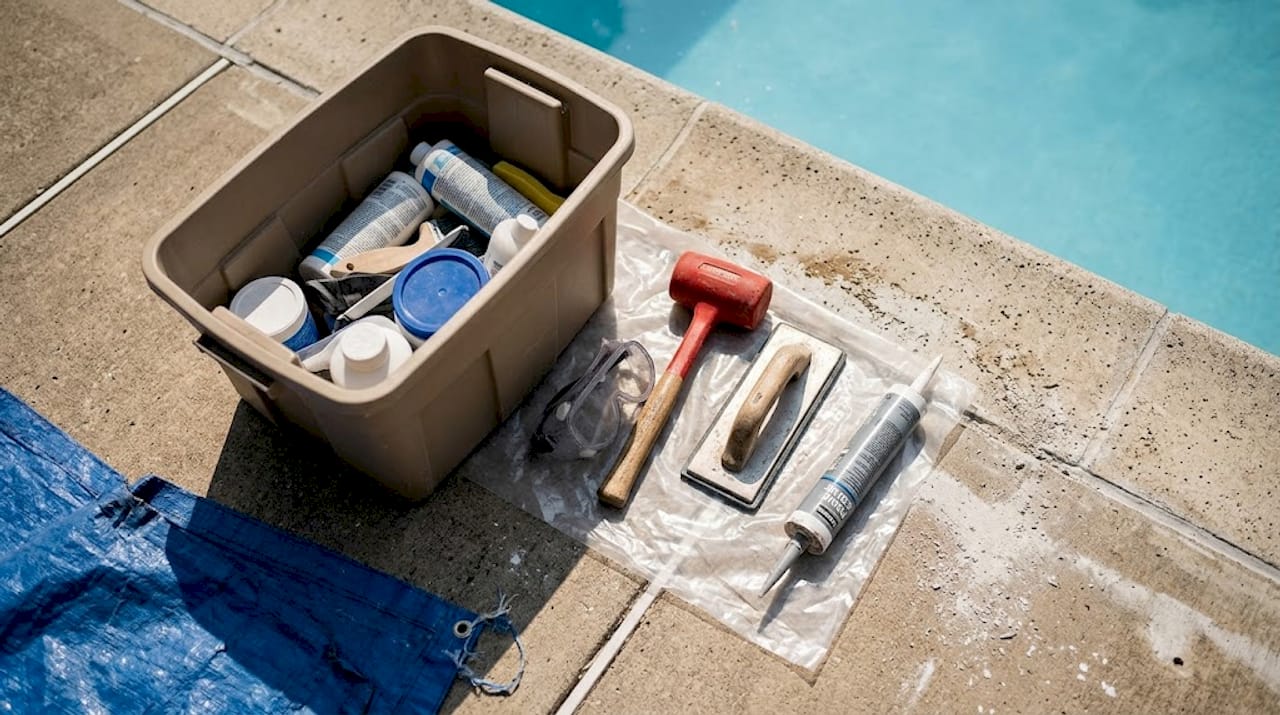
- Polymer-modified mortar (flexible enough for thermal movement)
- Bonding agent (for bonding new mortar to existing concrete)
- UV- and heat-resistant pool coping sealant
- Replacement coping stones or precast units matching existing style
- Non-sanded or sanded grout (depending on joint width)
- Flexible joint filler for cracks over 1/8 inch
Tools you’ll need:
- Cold chisel and hammer or electric demolition hammer
- Angle grinder with a masonry blade
- Margin trowel and notched trowel
- Rubber mallet
- Level and tape measure
- Safety glasses, gloves, and knee pads
- Plastic sheeting to protect the pool water
| Product type | Florida-suitable option | Why it matters |
|---|---|---|
| Mortar | Polymer-modified mix | Handles thermal movement without cracking |
| Sealant | UV-resistant pool sealant | Resists sun breakdown in year-round heat |
| Joint filler | Flexible polyurethane | Accommodates sandy soil settlement |
| Grout | Epoxy-based or sanded | Moisture and mold resistant |
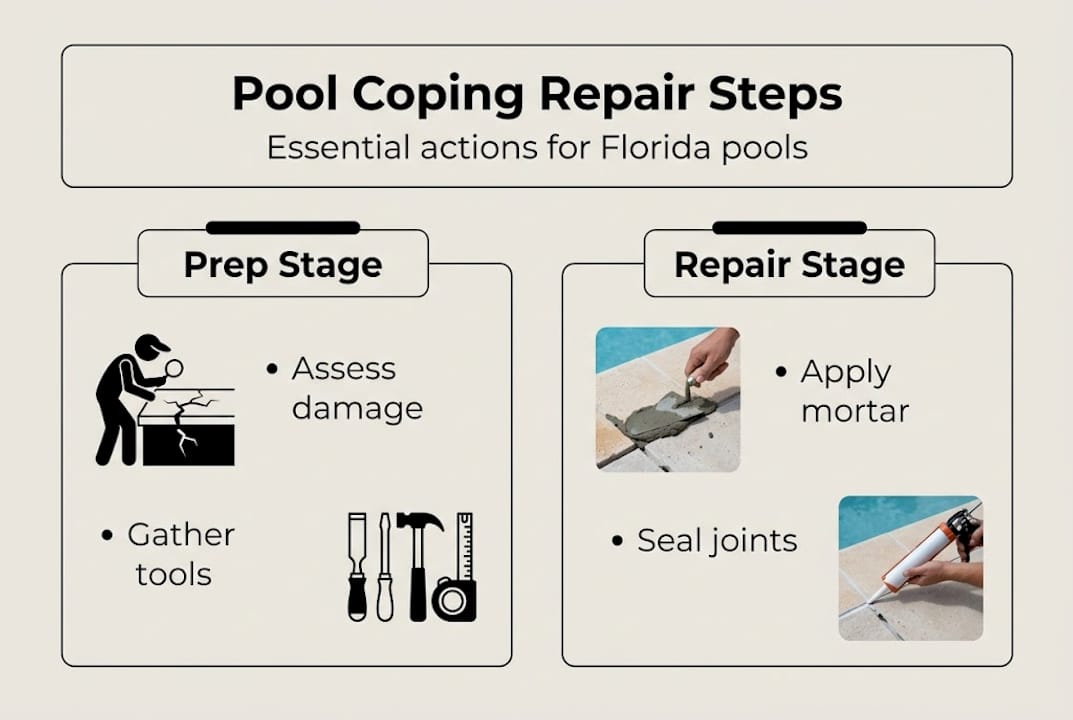
Prep steps matter as much as the repair itself. Cover the pool with plastic sheeting before demolition begins to keep debris out of the water. Check for visible settlement or cracks in the bond beam. If the structure beneath looks compromised, stop and consult a professional before proceeding.
As Pool Coping Repair for Central Florida outlines, the repair process starts with a thorough damage assessment using both a visual inspection and a tap test to identify hollow sections before any materials are removed.
Review the current pool deck maintenance tips to ensure the surrounding deck is also in good shape before you begin.
Pro Tip: Choose a UV-resistant sealant rated for continuous outdoor use in hot climates. Standard exterior sealants break down within one season under Florida sun, meaning you’d be doing the job all over again by next year.
With your materials and workspace ready, follow this step-by-step plan for a safe, professional-quality repair.
Step-by-step pool coping repair process
Following each step in order makes the difference between a repair that lasts five years and one that fails in five months.
- Inspect thoroughly. Walk the entire coping perimeter and tap each stone with a rubber mallet. A hollow sound signals the mortar beneath has failed. Mark every problem area with tape before removal begins.
- Remove damaged coping. Use a cold chisel and hammer to carefully lift loose or cracked stones. Work from the outside edge inward to avoid damaging the bond beam. An angle grinder can cut through hardened mortar joints.
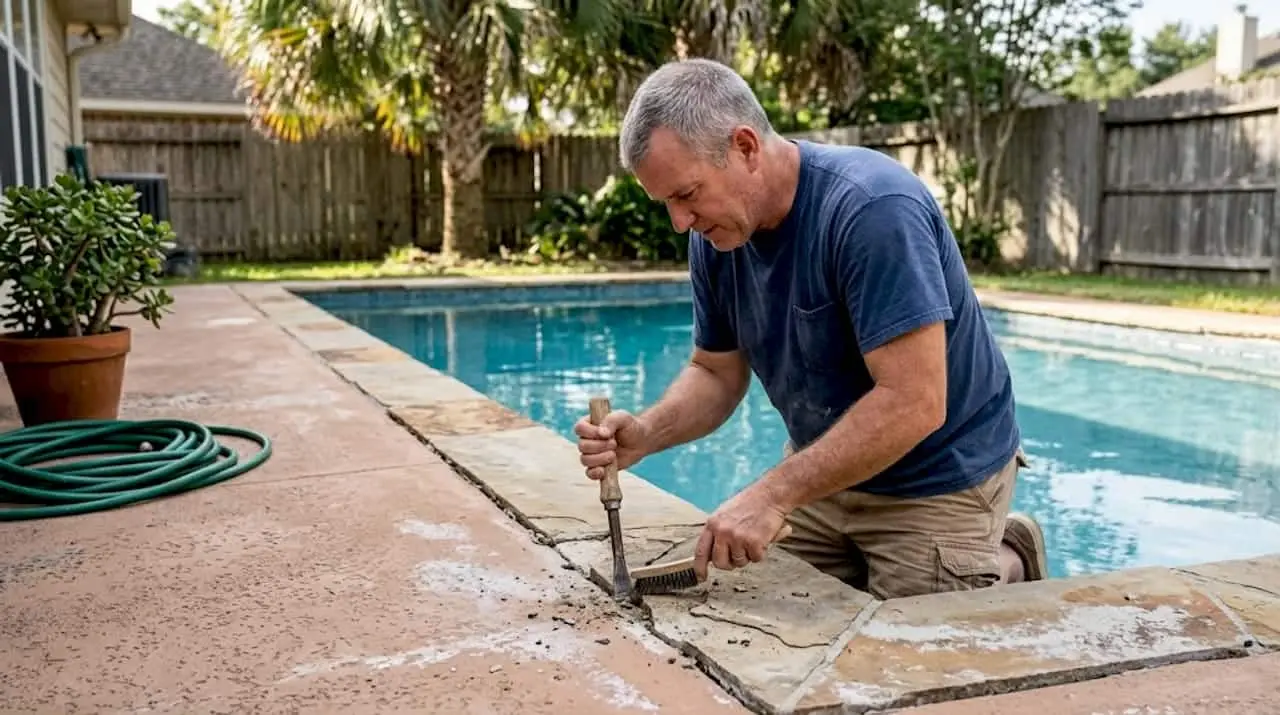
- Clean and prep the bond beam. Remove all old mortar residue with a chisel and wire brush. The bond beam surface must be clean, structurally sound, and free of loose material. If you see cracks in the concrete beam itself, fill them with hydraulic cement before proceeding.
- Apply bonding agent. Brush a bonding agent onto the bond beam surface. This dramatically improves adhesion between old concrete and new mortar, especially important in Florida’s high-moisture environment.
- Set new coping. Mix polymer-modified mortar to a firm, workable consistency. Apply a uniform mortar bed, press each coping stone firmly into place, and use a level to confirm a consistent slope away from the pool (for proper drainage).
- Grout the joints. Once the mortar bed has set (typically 24 hours), pack the joints with appropriate grout. Tool the joints smooth and clean excess grout from the stone surfaces promptly.
- Seal and cure. Apply a UV-resistant sealant after grout has fully cured. Allow at least 72 hours before exposing the coping to pool water or foot traffic.
| Stage | Time required | Key watch point |
|---|---|---|
| Mortar set | 24 hours | Check level before grout |
| Grout cure | 24 to 48 hours | Keep dry and shaded |
| Sealant cure | 72+ hours | No water or traffic |
Pro Tip: In Florida’s heat, mortar can dry too fast on the surface while staying wet underneath, creating a weak bond. Work in shaded conditions or during cooler morning hours and mist the bond beam lightly before applying mortar.
For context on when repairs cross into full resurfacing territory, compare routine pool repairs versus larger work, and review pool replastering vs resurfacing to understand your full range of options.
Sticking closely to each step is key, but what about the mistakes even seasoned DIYers miss?
Avoiding common pitfalls and troubleshooting
Even careful homeowners run into problems. Knowing where repairs go wrong helps you avoid repeating the same mistakes.
- Skipping the tap test: Setting new coping over a failing mortar bed guarantees the same problem returns within months. Always test every stone before deciding what to replace.
- Using the wrong mortar: Standard Portland cement mortar without polymer additives becomes brittle under Florida’s thermal cycling. It cracks faster than the original material it replaced.
- Rushing the cure: Pool owners eager to get back in the water often skip or shorten curing times. Mortar that hasn’t fully cured will weaken immediately upon water contact.
- Ignoring joint width: Narrow joints look clean, but wider joints (over 1/8 inch) need flexible polyurethane filler, not standard grout, to handle soil movement without cracking again.
Florida pools face no freeze-thaw cycles, but thermal and UV stress are significant factors. Cantilever coping cracks exceeding 1/8 inch should be routed out and filled with a flexible compound before sealing, not simply caulked over.
Soil heave and settlement are the hidden drivers behind many repeat coping failures in Orlando and Jacksonville. If stones keep shifting after repair, the issue is below the coping, not in the material itself. That’s a job for a structural professional.
Pro Tip: Use flexible joint fillers rated for pool environments on any crack wider than 1/8 inch. Rigid fillers bridge the gap visually but fail quickly when the ground moves underneath.
For a wider look at protecting your investment, explore cost-saving pool renovation tips and review common pool repair examples to see how coping fits into the bigger repair picture.
With pitfalls in mind, you’ll want to know exactly what a successful outcome looks like.
What to expect: Results and maintenance tips
A properly completed coping repair should be flush, level, and visually consistent with surrounding materials. No rocking, no visible gaps, and no hollow sounds when tapped.
Signs of a successful repair:
- All stones are firmly set with no movement when pressed
- Joints are fully packed and tooled smoothly
- Sealant is evenly applied with no missed sections
- Drainage slope directs water away from the pool edge
- No discoloration or efflorescence reappears within 30 days
For long-term performance, build a simple maintenance routine:
- Inspect coping every three to four months for new cracks or movement
- Clean with a pH-neutral cleaner to avoid sealant breakdown
- Reseal every one to two years, depending on sun exposure
- Trim back landscaping that directs irrigation water toward the coping edge
Florida’s statewide Florida Building Code applies in both Orlando and Jacksonville, so the same repair standards govern both markets regardless of county.
For balanced water chemistry that protects your coping and pool finish over time, check out these chlorine reduction tips. And if coping repair sparks a broader renovation idea, browse pool remodeling ideas for inspiration on what’s possible.
When repairs are extensive, involve the bond beam, or require permits, calling a licensed professional protects both your investment and your family’s safety.
The overlooked truth: Why most Florida coping repairs fail early
Most coping repair guides are written for a general national audience, and that’s exactly why they fail Florida homeowners. Advice built around freeze-thaw cycles, stable soils, and predictable seasons simply does not apply here.
We’ve seen it repeatedly across Orlando and Jacksonville: homeowners follow generic repair instructions carefully, use standard materials, and end up with the same cracked or shifted coping within 18 months. The culprit is almost always sandy soil movement combined with UV material breakdown, two factors that Florida-specific guidance addresses directly and that generic national content ignores entirely.
Code compliance matters just as much. Skipping permits for structural repairs or replacing more than three coping units creates legal exposure when you sell your home or file an insurance claim.
The practical truth: choosing flexible, UV-stable materials and understanding your soil conditions is more important than any specific application technique. Florida is not a forgiving environment for shortcuts. See how pool finish types for Florida also reflect this climate-first approach to material selection.
Need expert coping repair or a pool upgrade?
If your coping damage is extensive, involves structural concerns, or you simply want it done right the first time, Classic Marcite has been serving Orlando and Jacksonville homeowners since 1988 — with over 100,000 pools resurfaced across Central and North Florida.

Beyond coping repair, we offer full pool resurfacing benefits and expert pool tile repair in Orlando and Jacksonville that transform aging pools into durable, beautiful outdoor spaces. Whether you need a targeted repair or a complete renovation, the team at Classic Marcite is ready to help. Contact us today for a free estimate and get Florida-specific expertise working for your pool.
Frequently asked questions
How do I know my pool coping needs repair?
Common signs include shifting stones, visible cracks wider than 1/8 inch, or a hollow sound when you tap the coping surface. Any of these signals it’s time to act before the damage spreads.
Do I need a permit to repair pool coping in Florida?
Permits are required for structural repairs, replacing more than three coping units, or when repairs cover more than 20% of the area. Always check with your local building department before starting.
How long should pool coping mortar cure before pool use?
Allow at least 72 hours of curing for grout and mortar before exposing the repaired coping to water or heavy foot traffic. Rushing this step causes premature failure.
What type of sealant is best for Florida pool coping?
Use a UV- and heat-resistant sealant specifically formulated for pool environments. Standard exterior sealants break down quickly under Florida’s year-round sun exposure.
Can I do simple coping repairs myself, or should I call a pro?
Minor repairs covering less than 20% of the area can be handled DIY with the right materials, but soil movement, structural damage, or large-scale repairs require a licensed professional.
