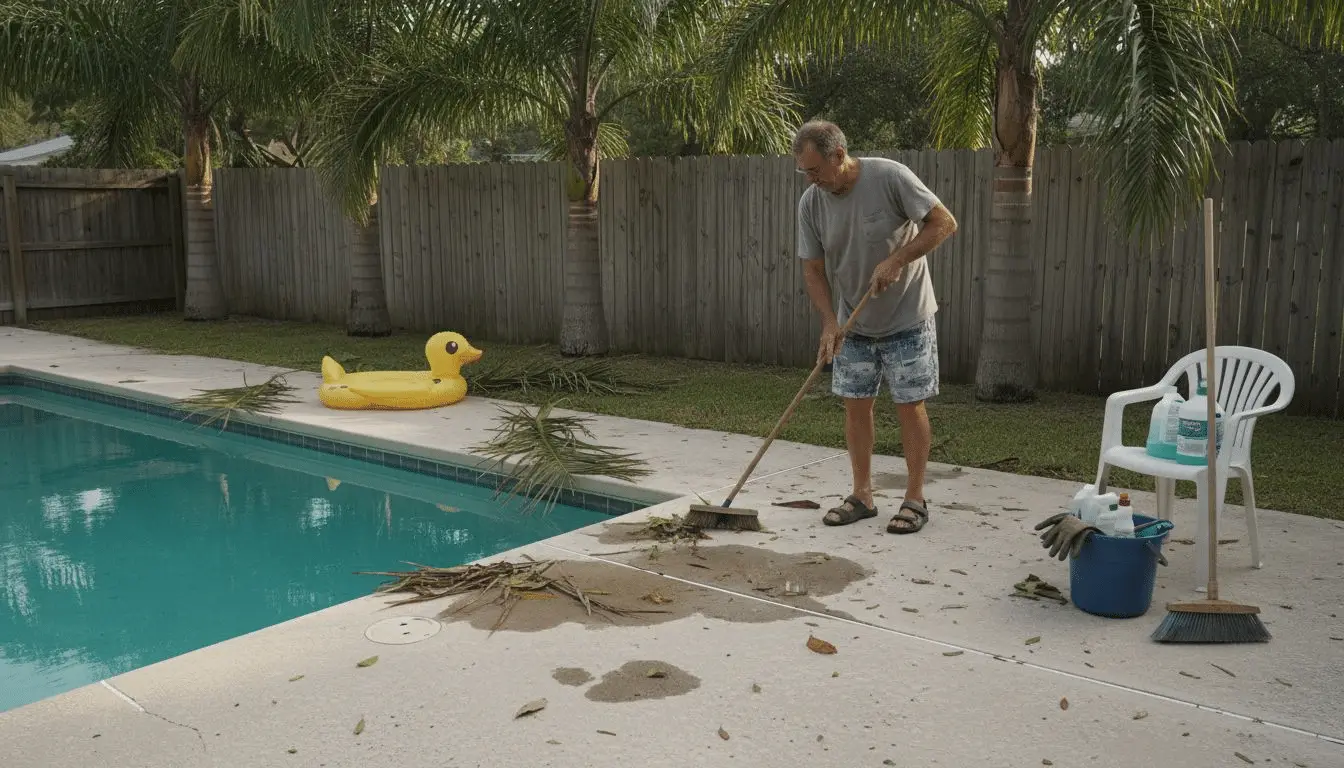
Pool decks in Florida face constant threats from humidity, rain, debris, and the relentless heat. Keeping your deck strong and safe isn’t just about looks—it’s about preventing hidden damage, safety hazards, and expensive repairs. Without regular care, you risk issues like slippery surfaces, mold growth, water damage, and cracks that can worsen fast in the Florida climate.
This guide will show you actionable steps to protect your pool deck from common problems and keep it looking good year-round. You’ll discover how to prevent buildup, protect against moisture, and spot early warning signs before they turn into costly headaches. Each tip is designed to help you make smarter decisions and avoid the painful surprises many Florida homeowners face.
Get ready for practical advice you can use right away. These strategies will give your deck longer life, safer footing, and peace of mind every time you step outside.
Table of Contents
- 1. Sweep And Clean Regularly To Prevent Buildup
- 2. Seal Deck Surfaces To Guard Against Moisture
- 3. Repair Cracks And Chips Early To Avoid Damage
- 4. Check For Mold And Mildew And Clean Promptly
- 5. Inspect Drainage Systems For Proper Water Flow
- 6. Use Slip-Resistant Finishes To Enhance Safety
Quick Overview
| Key Insight | Detailed Explanation |
|---|---|
| 1. Sweep and clean frequently | Regular sweeping helps prevent moisture buildup, algae growth, and extends your pool deck’s life significantly. Aim for at least twice a week in high-humidity periods. |
| 2. Seal your deck for protection | A quality sealant prevents water from penetrating your pool deck, which can lead to costly structural damage and keeps the surface easy to clean. Reseal every 2-3 years. |
| 3. Repair cracks immediately | Small cracks can lead to significant damage if ignored. Early repair costs less and prevents water infiltration, which can deteriorate the deck further. |
| 4. Monitor for mold and mildew | Conduct regular inspections for mold and mildew, especially in shaded areas. Prompt cleaning can prevent health hazards and maintain a safe environment. |
| 5. Ensure proper drainage systems | Inspect drainage regularly to avoid water pooling, which can lead to structural damage and mold growth. Address any issues immediately to protect your pool deck. |
1. Sweep and Clean Regularly to Prevent Buildup
Your pool deck is the first line of defense against damage. Regular sweeping and cleaning prevent dirt, debris, and algae from accumulating into stubborn, costly problems.
Dirt and leaves don’t just look unsightly—they trap moisture. Moisture creates the perfect environment for algae growth and accelerates deterioration of your deck surface. What starts as a minor aesthetic issue can become a structural problem within months in Florida’s humid climate.
Why Regular Cleaning Matters in Florida
Florida’s environment presents unique challenges for pool decks. The combination of intense heat, constant moisture, and organic debris creates ideal conditions for algae blooms and mold growth. Regular cleaning standards for public pools emphasize this necessity, and the same principle applies to residential decks.
Algae not only discolors your deck but also creates slip hazards that pose safety risks to your family. Debris sitting on wet surfaces accelerates chemical breakdown of your pool deck material, whether you have marcite, pebble finish, or concrete.
Sweeping and cleaning your pool deck regularly prevents algae accumulation and extends your deck’s lifespan significantly.
What You Should Remove Regularly
Don’t limit your focus to visible debris. Here’s what builds up on Florida pool decks:
- Leaves and pine needles that trap moisture
- Pollen and dust that stain the surface
- Algae growth in shaded areas
- Bird droppings and insect debris
- Sand and dirt tracked from landscaping
- Organic material that feeds mold and mildew
All of these contribute to surface deterioration if left unaddressed. Even fine dust creates a film that holds water against your deck.
How Often Should You Sweep?
Aim for at least twice weekly during high pollen season and humid months. In Orlando and Jacksonville, where rainfall is frequent, you may need to increase frequency after storms.
Wet conditions after rain create the fastest algae growth. A quick sweep within 24 hours of rainfall prevents moisture from sitting and creating breeding grounds for algae. Heavy storms that deposit debris require immediate attention.
During fall months when trees shed heavily, daily sweeping prevents organic material from decomposing on your deck surface.
The Deep Clean Process
Beyond sweeping, schedule monthly deep cleaning sessions. Use a low-pressure approach to avoid damaging your deck finish. Here’s what works:
- Sweep thoroughly first to remove loose debris
- Rinse with a garden hose to loosen stubborn dirt
- Use a soft brush on areas where algae appears
- Avoid pressure washers on finished decks—they can strip protective layers
If you have more comprehensive maintenance needs, professional cleaning helps restore appearance while preserving your deck’s integrity.
Connect Cleaning to Larger Maintenance
Regular sweeping reveals early warning signs of problems. You’ll notice cracks, discoloration, or surface deterioration before they become major issues. This preventive approach saves thousands in repairs down the road.
Clean decks also allow you to apply protective sealants more effectively when needed. Sealer doesn’t adhere well to dirty surfaces, reducing its protective benefits.
Pro tip: Keep a lightweight deck brush near your pool entrance and sweep immediately after storms or windy days—catching debris early prevents it from setting into stubborn stains that require aggressive cleaning later.
2. Seal Deck Surfaces to Guard Against Moisture
Moisture is the enemy of pool decks in Florida. A quality sealant acts as a protective barrier, preventing water from penetrating your deck surface and causing costly damage.
Without proper sealing, water infiltrates below the surface. This moisture creates an environment where mold, mildew, and algae thrive. Over time, water damage weakens the structural integrity of your deck, leading to cracks, deterioration, and expensive repairs.
Why Sealing Matters in Florida’s Climate
Florida’s humid environment makes sealing non-negotiable. Rain, morning dew, and splash water constantly expose your deck to moisture. Protecting pool decks requires sealing to prevent water infiltration that causes structural problems.
Without a sealant, water seeps into tiny pores in your deck material. Once inside, it creates the perfect breeding ground for mold and mildew growth. This leads to discoloration, slippery surfaces, and health hazards for your family.
Sealing your pool deck is one of the most cost-effective ways to extend its lifespan and prevent moisture-related damage.
What Sealing Actually Does
A quality sealant creates an invisible protective layer on your deck surface. Here’s how it protects your investment:
- Blocks water penetration into the deck material
- Reduces algae and mold growth by preventing moisture retention
- Protects against UV damage and color fading
- Makes cleaning easier by preventing stain absorption
- Extends the life of your deck by years
- Maintains the aesthetic appeal of your pool area
The sealant works by filling microscopic pores in your deck surface, creating a water-resistant barrier without changing the appearance or texture of your deck.
When Should You Seal Your Deck?
Timing matters for seal effectiveness. New or newly resurfaced decks should be sealed within the first year of installation. Existing decks benefit from resealing every 2 to 3 years in Florida’s climate, depending on foot traffic and weather exposure.
Inspect your deck annually. If water beads on the surface after a rain, your seal is still protecting you. When water absorbs into the deck rather than beading, it’s time to reseal.
Don’t wait until damage appears. By then, moisture has already infiltrated below the surface, requiring more extensive repairs. Preventive sealing costs far less than fixing water damage.
Professional vs. DIY Sealing
While some homeowners apply sealant themselves, professional application ensures complete coverage and proper product selection. Deck sealing for lasting protection requires understanding which products work best for your specific deck material.
Professionals know how to prepare surfaces correctly, apply appropriate products, and ensure even coverage that lasts longer. They also select sealants designed specifically for Florida’s extreme humidity and UV exposure.
Pro tip: Seal your pool deck in early spring or fall when temperatures are moderate—extreme heat can cause sealant to cure improperly, reducing its protective effectiveness and lifespan.
3. Repair Cracks and Chips Early to Avoid Damage
Small cracks and chips seem harmless at first. But ignoring them turns minor cosmetic issues into structural problems that cost thousands to fix.
Cracks are entry points for water. Once water seeps beneath the surface, it expands during freeze-thaw cycles and accelerates deterioration. What starts as a hairline crack can become a major structural failure within months in Florida’s environment.
The Real Cost of Waiting
Delaying repairs is expensive. A small chip costs $50 to $200 to repair today. That same damage left untreated becomes a structural crack requiring deck replacement costing $5,000 to $15,000.
Water infiltration through cracks creates additional problems below the surface. It weakens the structural integrity of your pool deck and creates conditions for mold and mildew growth. The longer you wait, the more extensive the damage becomes.
Early crack repair prevents water infiltration and saves you from facing expensive structural repairs down the road.
How Cracks Form in Florida Decks
Florida’s climate creates unique stressors on pool decks. Temperature fluctuations cause expansion and contraction. Humidity and moisture accelerate deterioration of materials. Here’s what causes most cracks:
- UV exposure that breaks down surface materials
- Ground shifting and settling beneath the deck
- Heavy foot traffic creating stress points
- Water infiltration and freeze-thaw cycles
- Age and material fatigue over time
- Tree roots pushing against the foundation
Understanding what causes damage helps you recognize when repair is urgent versus routine maintenance.
Spotting Problems Before They Spread
Inspect your deck quarterly for signs of damage. Look for hairline cracks, surface chips, and areas where the finish is separating. Early detection of pool deck cracking prevents small problems from becoming major structural issues.
Pay special attention to areas with high foot traffic and places that stay wet longer. Shaded areas where water pools are particularly vulnerable to crack development and algae growth.
When to Call a Professional
Small surface chips can sometimes be handled with patching compound. But structural cracks, cracks wider than 1/8 inch, or cracks near the pool edge require professional evaluation. DIY pool crack repair works for minor damage, but extensive cracking demands expertise.
Professionals can determine whether cracks indicate deeper structural problems. They use appropriate repair materials and techniques that match your deck finish and ensure repairs last.
Don’t guess whether a crack is serious. Professional assessment costs far less than emergency repairs after a crack causes collapse or water damage.
Pro tip: After heavy rains or during humid months, inspect your pool deck for new cracks that may have formed from moisture expansion and ground movement—catching these early prevents them from becoming structural problems.
4. Check for Mold and Mildew and Clean Promptly
Mold and mildew don’t just look unsightly—they pose genuine health risks to your family. Florida’s warm, humid climate creates the perfect breeding ground for these harmful growths on pool decks.
These organisms thrive in damp environments and spread quickly once established. Left unchecked, mold and mildew cause discoloration, slippery surfaces, and respiratory issues for people with allergies or asthma. Regular inspections and prompt cleaning are your best defense.
Why Florida Pools Are Mold Magnets
Florida’s climate is uniquely suited for mold and mildew growth. Constant moisture, warm temperatures, and humidity create ideal conditions year-round. Your pool deck never fully dries, especially in shaded areas where water tends to pool and linger.
Florida’s warm and humid climate promotes mold growth on outdoor surfaces like pool decks. Mold spores float through the air and land on your deck constantly. Without regular cleaning, they colonize and spread rapidly across the surface.
The problem intensifies after heavy rains when moisture accumulates. Areas near landscaping or trees are particularly vulnerable because water drains slowly and organic debris feeds mold growth.
Regular inspection and prompt cleaning are the most effective ways to prevent mold and mildew from establishing on your pool deck.
Recognizing Mold and Mildew on Your Deck
Spot the problem early by knowing what to look for. Mold and mildew appear as dark spots, streaks, or patches on your deck surface. Here’s what distinguishes them:
- Dark brown, black, or greenish patches or streaks
- Fuzzy or slimy appearance on the surface
- Musty odor near affected areas
- Slippery texture that creates safety hazards
- Growth concentrated in shaded or damp areas
- Discoloration that spreads over weeks
Be especially vigilant in corners, under deck furniture, and near landscaping where water collects and air circulation is poor.
Your Cleaning Strategy
Prompt action stops mold before it spreads. Consistent cleaning routines prevent mold and mildew accumulation more effectively than treating advanced infestations.
Use appropriate antimicrobial cleaners specifically designed for pool decks. Avoid pressure washing, which can damage your deck finish and drive moisture deeper into the surface. Instead, use a soft brush with gentle scrubbing and a suitable cleaning product.
For minor mold, a diluted bleach solution works effectively. For stubborn growth or extensive coverage, professional cleaning ensures complete removal without damaging your deck surface.
Inspect weekly during humid months. Clean affected areas immediately when you spot mold or mildew. This prevents spread and maintains a safe, healthy pool environment for your family.
Pro tip: Improve air circulation around your pool deck by trimming back overhanging branches and removing nearby plants that trap moisture—better airflow reduces humidity levels and slows mold and mildew growth significantly.
5. Inspect Drainage Systems for Proper Water Flow
Poor drainage is a silent killer of pool decks. Water that doesn’t flow away from your deck sits and accumulates, causing structural damage, mold growth, and safety hazards.
Your pool deck’s drainage system is designed to direct water away from the surface and prevent pooling. When drainage fails, water seeps into cracks and beneath the surface, accelerating deterioration and creating expensive problems.
Why Drainage Matters More Than You Think
Water always finds a way down. If your drainage system isn’t working properly, that water takes the path of least resistance through your deck structure. Over time, this weakens the foundation and creates conditions for mold, algae, and structural failure.
Proper drainage system design prevents water accumulation around pool decks and structures. Without effective drainage, water pools in low spots and creates slip hazards for swimmers and guests. This violates safety codes and puts your family at risk.
Florida’s heavy rainfall makes drainage critical. During the wet season, inches of rain fall in short periods. Your drainage system must handle this volume without creating standing water on your deck.
A well-functioning drainage system is the foundation of a durable, safe pool deck that resists water damage and deterioration.
Common Drainage Problems in Florida
Identify what’s going wrong with your system. These issues plague Florida pool decks:
- Clogged drains filled with leaves and debris
- Settling that creates low spots where water pools
- Cracked or separated drain pipes allowing water to escape sideways
- Inadequate slope directing water toward the pool instead of away
- Missing or damaged drain covers
- Algae growth blocking water flow through drain openings
- Landscaping that directs runoff toward the deck
Any of these problems can sabotage even a well-built drainage system.
Inspecting Your Drainage System
Check your drainage after heavy rain when water flow is obvious. Walk around your pool deck and look for standing water or wet areas that stay damp longer than others.
Clear debris from drain openings and gutters. Remove leaves, dirt, and organic material that clogs flow. Check that water flows away from your deck rather than pooling near the foundation.
Listen for gurgling sounds or slow drainage. These indicate blockages. Water should flow quickly away from the deck surface, not linger or back up.
When to Call a Professional
If water consistently pools in certain areas after rain, your drainage system needs professional evaluation. Improper grading or damaged pipes may require excavation and repair to fix properly.
Professionals can assess whether your current system is adequate or if improvements are needed. Florida’s water management standards ensure drainage systems meet safety requirements.
Pro tip: After heavy rains, inspect your pool deck for standing water and note where puddles form—these problem areas reveal drainage issues before they cause structural damage, allowing you to address them promptly.
6. Use Slip-Resistant Finishes to Enhance Safety
Slip and fall accidents around pools are preventable tragedies. A slip-resistant finish on your pool deck dramatically reduces injury risk and protects your family and guests.
Wet surfaces are inherently slippery, but the right finish makes a dramatic difference. A properly textured surface provides grip even when covered in water, giving swimmers confidence as they move between the pool and deck.
The Safety Imperative
Floridian pool decks are constantly wet. After swimming, rain, or morning dew, your deck becomes a slipping hazard in seconds. Children and elderly guests are especially vulnerable to serious injuries from falls on hard surfaces.
Florida Building Code requires slip-resistant finishes on pool decks to minimize accidents. These finishes must meet specific safety standards that measure how well they grip wet surfaces. This isn’t optional—it’s a legal requirement designed to protect everyone using your pool.
A single slip can result in broken bones, head injuries, or worse. The cost of an injury far exceeds the investment in a slip-resistant finish.
A slip-resistant finish isn’t just about comfort—it’s about protecting your family from serious injuries and meeting legal safety requirements.
How Slip-Resistant Finishes Work
These surfaces use texture to create friction between feet and the deck. The rougher the surface, the better the grip. Materials like pebble finish, textured coating, or specialized paint provide this texture naturally.
The texture works by creating tiny points of contact that resist sliding. When your foot contacts the surface, thousands of microscopic peaks catch and hold, preventing slipping even on wet surfaces.
Types of Slip-Resistant Finishes
Different finishes offer varying levels of grip and durability. Choose the one that fits your needs:
- Pebble finishes provide excellent grip and are highly durable for Florida conditions
- Brushed concrete offers moderate slip resistance at lower cost
- Textured coatings add grip to existing surfaces without replacement
- Anti-slip paint gives modest improvement and is easiest to apply
- Aggregate additives mixed into sealers create texture and protect simultaneously
Pebble finishes like Pebble Tec offer superior performance and longevity, making them ideal for Florida pools where durability matters.
Installation and Maintenance
New deck construction should include slip-resistant finishes from the start. If your current deck lacks adequate grip, pool deck coating options can upgrade your safety without complete replacement.
Maintain slip resistance by keeping your deck clean. Algae and dirt reduce surface grip. Regular sweeping and cleaning preserve the textured finish’s effectiveness over time.
Inspect your deck annually. If the surface feels smoother or slicker than before, it may be time to recoat or reseal to restore slip resistance.
Pro tip: After resurfacing or applying new finishes, wait the full curing time before allowing swimming—usually 48 to 72 hours—so the slip-resistant texture fully develops and bonds to the deck surface.
Below is a comprehensive table summarizing the key maintenance practices for pool decks in Florida as discussed throughout the article.
| Section | Main Points | Recommendations |
|---|---|---|
| Regular Cleaning | Regular sweeping and cleaning prevent buildup of debris and algae. | Perform sweeping at least twice a week, more frequently during high debris seasons. Conduct thorough cleaning monthly. |
| Importance of Sealing | Sealing prevents moisture penetration and extends the deck’s lifespan. | Apply a seal every 2–3 years, using professionals for best results. |
| Crack Repairs | Promptly address cracks and chips to prevent water infiltration and structural damage. | Conduct quarterly inspections and repair minor cracks immediately. Consult specialists for wider or deeper cracks. |
| Combat Mold and Mildew | Mold and mildew pose safety and aesthetic risks if left unattended. | Clean promptly using appropriate solutions, such as diluted bleach or professional cleaning as needed. |
| Drainage Maintenance | Proper water drainage prevents structural damage and mold growth. | Regularly inspect drainage systems for blockages or issues, especially after heavy rain. Repair major problems with professional help. |
| Slip-Resistant Finishes | Slip-resistant surfaces prevent accidents on wet decks. | Apply textured finishes or anti-slip coatings and maintain them regularly to ensure effectiveness. |
Keep Your Florida Pool Deck Safe and Stunning with Expert Care
Florida pool decks face relentless challenges from moisture, cracking, algae, and safety concerns. The article’s maintenance tips highlight how crucial regular cleaning, sealing, crack repair, and slip-resistant finishes are to protect your investment and your family’s wellbeing. At Classic Marcite, we understand these pain points deeply. With over 100,000 pools resurfaced since 1988, including specialized work with Pebble Tec4 surfaces, we offer durable solutions that stand up to Florida’s heat, humidity, and heavy rain.

Don’t wait for cracks to worsen or algae to create hazardous slippery surfaces. Transform your pool deck with expert resurfacing, sealing, and repairs that enhance safety, reduce maintenance headaches, and extend your deck’s life. Visit Classic Marcite today to explore our services, review our portfolio, and claim your free estimate. Protect your pool deck now and enjoy peace of mind in every Florida season.
Frequently Asked Questions
How often should I clean my pool deck in Florida?
Regularly clean your pool deck at least twice a week, especially during high pollen season and humid months. This helps prevent moisture buildup that can lead to algae growth and surface deterioration.
What should I do to prevent cracking in my pool deck?
To prevent cracking, inspect your pool deck quarterly for any small cracks or chips and repair them immediately. Taking early action can save you from costly structural repairs later on.
How can I tell if my pool deck needs sealing?
Your pool deck should be resealed every 2 to 3 years, or when water no longer beads on the surface. Conduct a simple water test: if water absorbs quickly into the deck rather than beading, it’s time to reseal.
What are the signs of mold and mildew on my pool deck?
Mold and mildew appear as dark spots or patches on your deck surface and often have a musty odor. Inspect your deck frequently, especially in shaded areas, and clean any affected spots promptly to maintain a healthy environment.
How can I improve drainage around my pool deck?
To enhance drainage, regularly check for clogged drains and remove any debris blocking them. Ensure that water flows away from your deck after heavy rain to prevent pooling and structural damage.
What type of slip-resistant finish should I use for my pool deck?
Choose a slip-resistant finish that provides a textured surface, such as a pebble finish or textured coating. These options enhance grip and safety, especially in wet conditions, making your pool area safer for everyone.
Recommended
- 7 Essential Pool Deck Renovation Tips For Florida Homes
- Pool Deck Cracking: How It Impacts Florida Homes
- Why Deck Resurfacing Matters For Florida Pools
- Why Update Pool Decking: Safety, Style, And Value
- Pool Refinishing Windermere FL
- Pool Renovation Winter Park FL
- Swimming Pool Remodeling The Villages FL
