TL;DR:
- Florida pools require frequent inspection, deep cleaning, and chemical balancing due to climate stress.
- Leak detection and storm prep are essential to prevent costly damage and contamination.
- Upgrading equipment and resurfacing enhances durability, safety, and energy efficiency for year-round pools.
Florida summers hit hard. Between the relentless heat, afternoon thunderstorms, and constant pool traffic, your pool takes a beating that homeowners in cooler states simply never face. Orlando and Jacksonville pools stay in use nearly year-round, which means wear accumulates faster, chemistry shifts more often, and small problems grow into expensive ones before you realize it. This guide walks you through the exact steps to get your pool ready for peak season, from inspection and water chemistry to storm prep and smart upgrades, so you can spend the summer swimming instead of troubleshooting.
Table of Contents
- Assess pool condition: Inspection and deep cleaning essentials
- Balance water chemistry: Testing, adjusting, and safety
- Check for leaks and prevent damage from storms
- Enhance your pool: Upgrades, renovations, and preventive maintenance
- Why Florida pools demand special attention in summer
- Renovate or maintain your pool with local Florida experts
- Frequently asked questions
Key Takeaways
| Point | Details |
|---|---|
| Frequent cleaning | Weekly cleaning is essential in Florida summers due to high debris from storms and foliage. |
| Balanced chemistry | Test and adjust water chemistry weekly to prevent rapid algae growth or equipment damage. |
| Early leak detection | Simple at-home tests and inspections help avoid costly mid-summer repairs. |
| Storm prep matters | Proper hurricane preparation prevents long-term damage to pools and surrounding property. |
| Renovate smartly | Plan upgrades and preventive maintenance before heavy use for a safer, more beautiful pool season. |
Assess pool condition: Inspection and deep cleaning essentials
Every solid summer prep starts with a full inspection and a thorough cleaning. You cannot fix what you have not found, and you cannot treat water that is already full of debris. Start from the top and work your way down.
Begin with skimming the surface to remove leaves, insects, and anything else floating around. Then brush the walls and floor before vacuuming. Empty skimmer baskets and pump strainer baskets completely. This order matters because brushing loosens buildup and sends it toward the drain, where the vacuum picks it up.
Choosing the right brush is critical. Use a soft nylon brush on vinyl liners, fiberglass surfaces, and tile. Use a stiff wire brush on plaster or concrete surfaces. Using the wrong brush scratches surfaces and accelerates wear.
While you clean, look closely at the walls, floor, and tile line. You are checking for:
- Calcium buildup (white, chalky deposits along the waterline)
- Staining from metals, algae, or organic matter
- Cracks or chips in the plaster or finish
- Loose, missing, or cracked tiles
- Signs of leaks around fittings and returns
Florida’s summer pool preparation advice makes it clear: wind, rain, and foliage increase debris, requiring more frequent deep cleaning than in other states. That frequency goes up even more after storms or windy stretches.
Pro Tip: Do this inspection at the start of the season, not after you notice a problem. Early cleaning reveals surface damage, staining, and wear while repairs are still minor. Check out our guides on cleaning pool surfaces and cleaning pool decks for step-by-step Florida-specific methods.
| Surface type | Brush type | Notes |
|---|---|---|
| Plaster / concrete | Stiff wire brush | Handles tough calcium deposits |
| Vinyl liner | Soft nylon brush | Prevents tears and scratches |
| Fiberglass | Soft nylon brush | Protects gel coat finish |
| Tile | Soft nylon or tile brush | Use tile cleaner for calcium |
Balance water chemistry: Testing, adjusting, and safety
A clean pool with bad chemistry is still a problem. Unbalanced water irritates skin and eyes, damages equipment, clouds the water, and creates the perfect environment for algae. Florida’s heat and storms make chemistry drift fast, so you need a consistent testing routine.
Test these four parameters every week during summer:
- pH (ideal range: 7.4 to 7.6)
- Free chlorine (ideal range: 1.0 to 3.0 ppm)
- Total alkalinity (ideal range: 80 to 120 ppm)
- Calcium hardness (ideal range: 200 to 400 ppm)
After a heavy rainstorm, test again immediately. Rain dilutes chlorine and shifts pH downward. High temperatures speed up chlorine loss. Both happen constantly in Florida summers, which is why chemistry shifts rapidly from heat, rain, and sun, making proactive balancing essential.
When adjusting chemicals, always add them to the water slowly, never dump a full container in at once. Add one chemical at a time and wait at least 15 minutes before adding another. Store all chemicals in a cool, dry place, clearly labeled and away from children.
Safety note: Pool chemical injuries lead to 4,500 emergency room visits annually in the United States. Most happen from mixing chemicals incorrectly or improper storage.
Pro Tip: If you want to cut costs without sacrificing safety, learn how to reduce chlorine use through better circulation timing, stabilizer management, and alternative sanitizers.
After every storm, shock the pool with a chlorine treatment to kill anything the rain brought in. Run the pump for at least 8 hours after shocking to circulate the treatment evenly.
Check for leaks and prevent damage from storms
With chemistry under control, structural integrity and storm preparedness become your next focus. A slow leak can waste thousands of gallons of water and cause serious damage to the surrounding deck and soil before you even notice it.
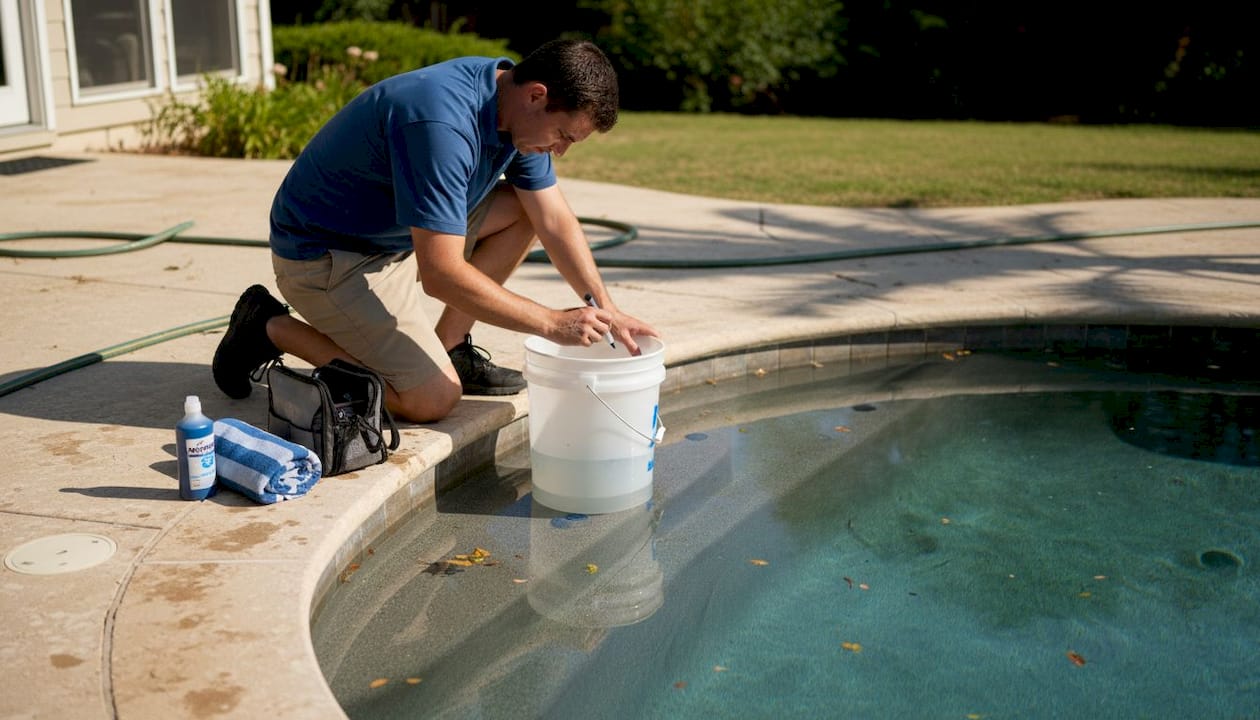
Two simple tests help you detect leaks before they become expensive:
Bucket test: Fill a bucket with pool water and place it on a pool step. Mark the water level inside the bucket and on the pool wall. After 24 hours, compare the two levels. If the pool lost more water than the bucket (which accounts for evaporation), you likely have a leak.
Dye test: Turn off the pump and let the water go still. Hold a small amount of dye (available at pool supply stores) near a suspected crack or fitting. If the dye gets pulled toward the surface, water is escaping there.
You can also detect leaks early by inspecting surfaces for cracks, stains, and calcium buildup during your regular cleaning routine.
| Method | Cost | Best for |
|---|---|---|
| Bucket test | Free | General water loss detection |
| Dye test | Under $10 | Pinpointing specific leak locations |
| Professional leak detection | $150 to $400 | Hidden or complex leaks |
For storm prep, follow these steps before a hurricane or major storm:
- Add extra chlorine to prevent contamination from storm debris
- Remove all loose items from the pool deck (chairs, toys, umbrellas)
- Do not drain the pool before a hurricane. An empty pool can float out of the ground due to hydrostatic pressure
- Do not cover the pool with a standard cover during a hurricane. Wind can turn it into a sail
Pro Tip: A small crack found now costs far less to fix than a structural repair after a season of neglect. Read our full guide on fixing pool leaks and review surface maintenance tips to keep your finish in top shape.
Enhance your pool: Upgrades, renovations, and preventive maintenance
Once your pool is safe and structurally sound, summer is the perfect time to think about improvements that add real value. Upgrades are not just cosmetic. The right changes improve energy efficiency, safety, and long-term durability.
Here are four high-impact upgrades worth considering:
- Resurfacing: If your plaster is rough, stained, or peeling, resurfacing with a premium finish like Pebble Tec® dramatically improves appearance and extends the pool’s life by 10 to 20 years.
- Energy-efficient equipment: Variable-speed pumps can cut energy costs by up to 70% compared to single-speed models. New pool heaters and LED lighting also reduce operating costs significantly.
- Automation systems: Smart pool controllers let you manage pumps, lights, and chemical feeders from your phone, reducing manual maintenance time.
- Safety covers and fencing: Florida law requires specific barriers around pools. Upgrading to a compliant, high-quality safety cover or fence protects both your family and your liability.
“Proactive spring and summer prep, including renovation, prevents algae and equipment failure in Florida pools and protects your investment for years to come.”
Proactive renovation also prevents algae and equipment failure during peak season. Scheduling work in late spring gives contractors time to finish before heavy summer use begins.
Pro Tip: Plan renovations for late spring or early fall when demand for pool contractors is lower. You may get faster scheduling and better pricing. Our guides on maintaining pool finish and renovation tips cover cost-saving strategies specific to Florida homeowners.
Why Florida pools demand special attention in summer
Most pool maintenance checklists are written for northern states where pools open in May and close in September. That model does not apply here. In Orlando and Jacksonville, pools run year-round, which means wear, chemical demand, and maintenance needs never stop.
Florida’s summer thunderstorms do not just bring rain. They bring debris, bacteria, pH disruption, and sometimes structural stress from wind and pressure changes. The subtropical flora around most Florida homes drops leaves, pollen, and organic matter into pools constantly. That organic load feeds algae fast when chemistry slips even slightly.
Ignoring Florida-specific guidance and following generic advice leads to algae blooms, surface erosion, and repair bills that dwarf the cost of proper prevention. We have seen it happen repeatedly over more than 35 years in this business. The homeowners who stay ahead of maintenance spend far less over time than those who react to problems.
Adopting Florida pool maintenance strategies built around local climate realities is not optional. It is the difference between a pool that stays beautiful for decades and one that needs major work every few years.
Renovate or maintain your pool with local Florida experts
If this checklist revealed issues you are not sure how to handle, or if your pool is simply overdue for a refresh, Classic Marcite is ready to help. Since 1988, we have resurfaced over 100,000 pools across Orlando, Jacksonville, and beyond.

We specialize in professional pool remodeling and are the largest Pebble Tec® applicator in Central Florida. Whether you need a full resurfacing, tile repair, deck work, or equipment upgrades, our team understands the specific demands of Florida’s climate. Homeowners in Jacksonville can also take advantage of our dedicated pool renovation Jacksonville services. Contact us today for a free estimate and get your pool summer-ready before the heat peaks.
Frequently asked questions
How often should I clean my pool during Florida summer?
Clean your pool at least once a week, and increase that to two or three times per week after storms or heavy use. Florida’s wind, rain, and foliage push far more debris into pools than most other states.
What water chemistry levels should I check for summer pool prep?
Test pH, free chlorine, total alkalinity, and calcium hardness every week. Florida’s chemistry shifts rapidly from heat, rain, and sun, making weekly testing the minimum standard during summer.
How can I detect a leak in my pool before summer?
Run the bucket test and the dye test to check for water loss and pinpoint leak locations. Also inspect for cracks, stains, and calcium buildup during your regular cleaning.
What should I do to prepare my pool for a Florida hurricane?
Add extra chlorine, remove all loose deck items, and never drain or cover the pool before a hurricane. Draining before a storm risks the pool shell floating out of the ground due to hydrostatic pressure.