TL;DR:
- Florida’s climate demands durable pool finishes like pebble or quartz for long-lasting performance.
- Proper surface preparation and contractor verification are essential to ensure a successful resurfacing.
- Higher-quality finishes require higher initial investment but better withstand Florida’s harsh conditions.
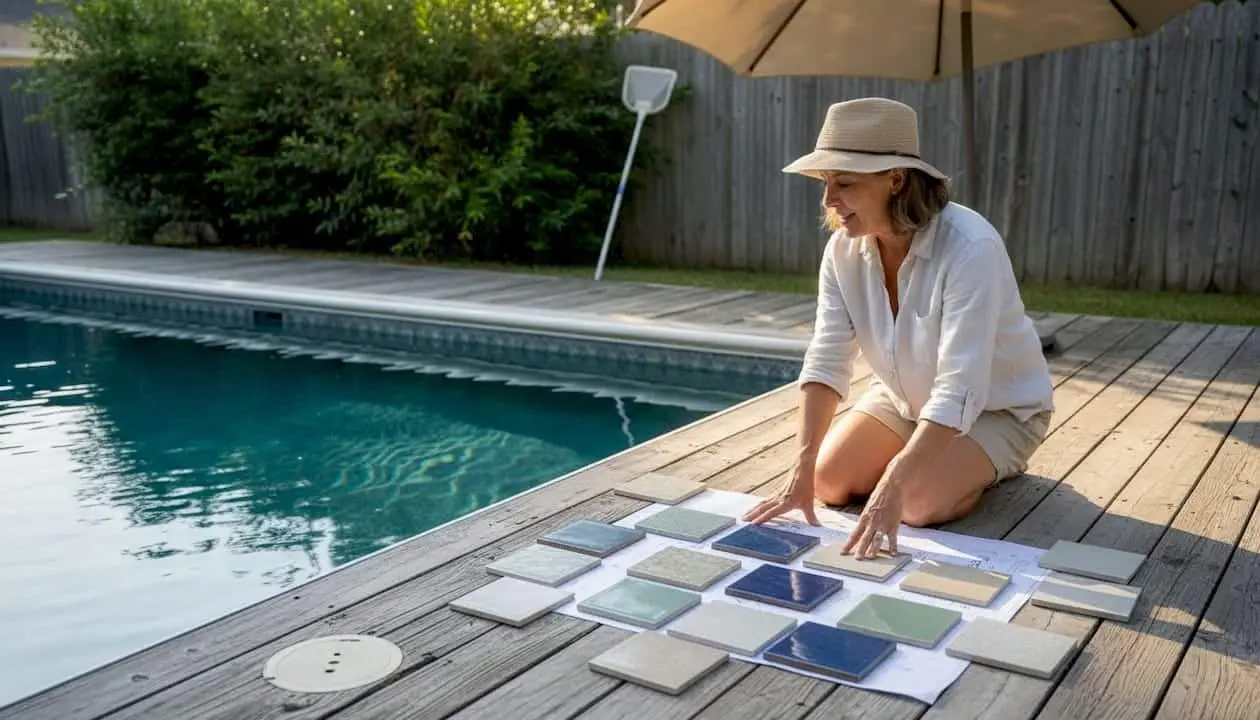
Picking the right pool finish feels simple until you’re standing in front of a dozen samples, a stack of quotes, and a contractor who’s already told you three different things. For homeowners in Orlando and Jacksonville, the pressure is real. Florida’s heat, humidity, and intense UV exposure mean a wrong choice doesn’t just look bad — it fails fast. This guide cuts through the noise. You’ll learn which finishes actually hold up in Florida’s climate, what to do before the first trowel hits the shell, and how to avoid the costly mistakes that send homeowners back to square one within just a few years.
Table of Contents
- Understanding your pool finish options
- Preparing for your pool resurfacing project
- Making your selection: What matters most
- Avoiding common pitfalls and mistakes
- Our perspective: What most homeowners get wrong about pool finishes
- Enhance your pool with professional support
- Frequently asked questions
Key Takeaways
| Point | Details |
|---|---|
| Finish type matters | Choosing the right pool finish impacts both appearance and how long your pool lasts. |
| Preparation is crucial | Careful planning and site prep are essential for a finish that stands up to Florida weather. |
| Prioritize your needs | Consider your budget, maintenance preferences, and how your family uses the pool. |
| Avoid common mistakes | Sidestep frequent pitfalls like ignoring climate or skimping on surface prep to prevent costly repairs. |
Understanding your pool finish options
Not all pool finishes are created equal, and the differences go well beyond color. Each material has its own feel underfoot, its own lifespan, and its own price tag. Before you commit, it’s worth knowing what you’re actually choosing between. You can browse examples of pool finishes to see how each option looks in real Florida pools.
Plaster is the most common starting point. It’s smooth, affordable, and easy to apply. Standard white plaster gives pools that classic bright-blue look. The downside is that it’s the least durable option. In Florida’s chemically demanding water, plaster can stain, etch, and roughen within seven to ten years.
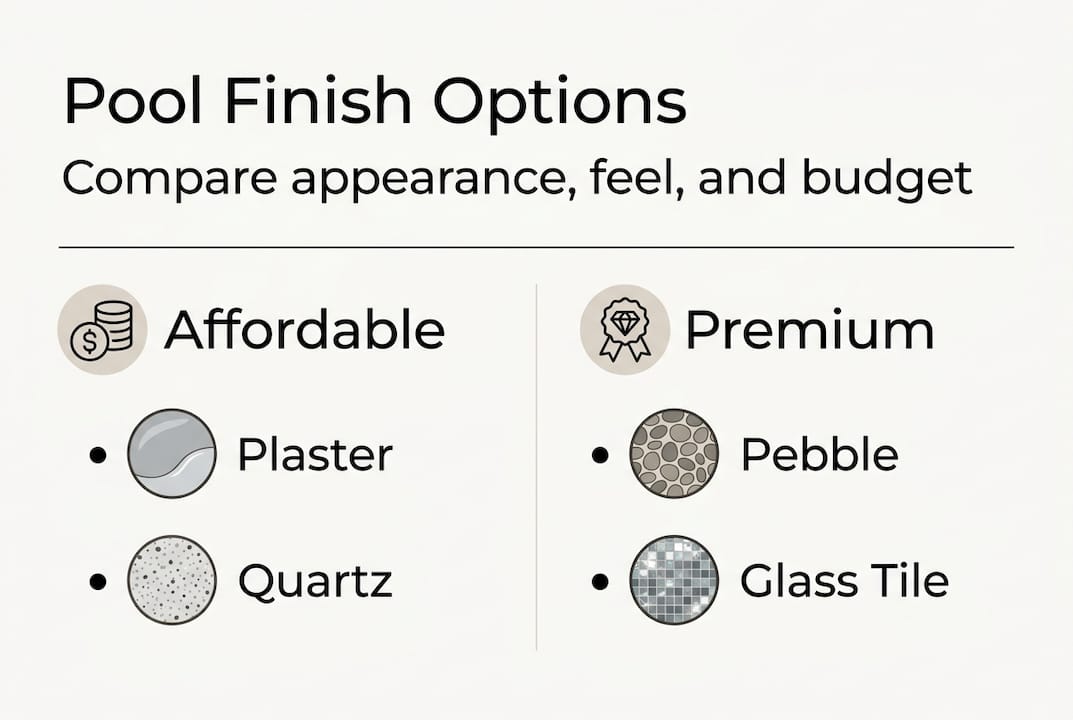
Quartz finishes blend white cement with quartz aggregate (small crushed stone particles). They’re harder than plain plaster, resist staining better, and come in a wider range of colors. They sit comfortably in the mid-range for both cost and lifespan.
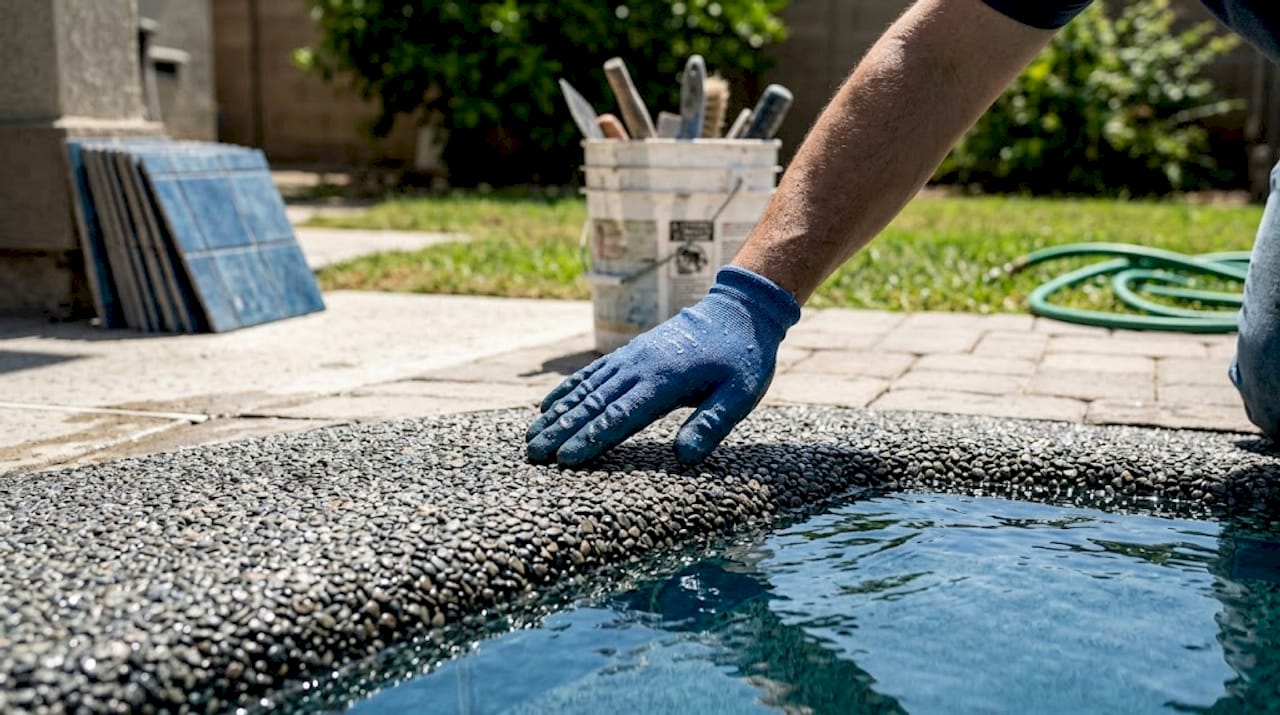
Pebble finishes, like Pebble Tec®, are the premium tier. They use small natural pebbles set in cement, creating a textured, natural look. Pebble Tec can last up to 25 years with proper maintenance, making it one of the best long-term investments for Florida pools. The texture is slightly rougher underfoot but significantly more durable.
Glass tile finishes offer the most striking visual impact. They’re fully customizable and extremely durable. However, they’re also the most expensive and require skilled installation.
For a full breakdown of how each finish performs, the pool finish types explained guide covers the details in depth.
| Finish type | Avg. cost per sq ft | Lifespan | Appearance | Maintenance level |
|---|---|---|---|---|
| White plaster | $4 to $6 | 7 to 10 years | Classic, bright | High |
| Quartz aggregate | $7 to $10 | 12 to 17 years | Smooth, varied color | Medium |
| Pebble (Pebble Tec®) | $10 to $18 | Up to 25 years | Natural, textured | Low to medium |
| Glass tile | $20 to $30+ | 25+ years | High-end, custom | Low |
Key factors to weigh when reviewing these options:
- Climate compatibility: Florida’s UV rays and warm water accelerate surface wear on softer finishes.
- Feel underfoot: Pebble finishes are rougher but safer. Plaster is smooth but can become abrasive as it ages.
- Color retention: Darker quartz and pebble blends hold color longer than white plaster.
- Resale value: Premium finishes often increase perceived home value in Florida’s competitive real estate market.
Preparing for your pool resurfacing project
With a clear understanding of finish options, preparation is the foundation for a flawless, long-lasting result. Rushing this phase is one of the most common reasons a new finish fails early. Proper preparation is the key to a long-lasting pool finish, and skipping steps here costs far more to fix later.
Before any new material goes on, the existing surface must be thoroughly assessed. That means checking the shell for cracks, checking plumbing for leaks, and making sure the old finish is fully removed. A new coat applied over a damaged or dirty surface will peel, bubble, or crack within months.
Here’s a step-by-step preparation sequence to follow:
- Drain the pool completely and allow the shell to dry for at least 24 to 48 hours.
- Inspect the shell for cracks, chips, or hollow spots. Mark every problem area for repair.
- Check plumbing and fittings to confirm there are no active leaks before resurfacing begins.
- Remove the old finish using acid washing or mechanical chipping, depending on the material.
- Repair structural issues including cracks, spalling (flaking), and damaged tile lines.
- Clean and rinse the surface to remove all dust, debris, and chemical residue.
- Confirm contractor scope in writing, including materials, timeline, and warranty terms.
Use the full pool renovation checklist to make sure nothing gets missed.
| Item | Purpose |
|---|---|
| Acid wash solution | Removes old stains and residue from shell |
| Pressure washer | Cleans surface before new finish application |
| Hydraulic cement | Patches cracks in the shell |
| Bonding agent | Helps new finish adhere to existing surface |
| Pool coping tape | Protects tile edges during application |
Pro Tip: Get at least three quotes from licensed contractors and ask each one specifically about their surface prep process. A contractor who skips or rushes prep is a red flag, regardless of price.
Making your selection: What matters most
With prep work done, the next step is to match your personal priorities with the right finish. This is where a lot of homeowners get stuck because they try to optimize for everything at once. The smarter move is to rank what matters most to your household.
White plaster is typically the most cost-effective, while glass tile and premium pebble finishes cost more but offer significantly greater durability. Knowing where you fall on that spectrum shapes every other decision.
Here are the key questions to ask yourself before committing:
- What is your realistic budget? Factor in not just installation but maintenance costs over five to ten years.
- How long do you plan to stay in the home? A premium finish makes more sense if you’re staying long-term.
- Who uses the pool most? Kids and pets create more wear and demand a tougher, slip-resistant surface.
- How much time can you dedicate to maintenance? Plaster requires more frequent chemical balancing than pebble finishes.
- What look do you want? A natural lagoon feel calls for pebble. A sleek modern pool leans toward quartz or tile.
Safety also matters more than most homeowners realize. Slip resistance is a real concern, especially in households with young children or older adults. Pebble finishes naturally provide better grip. Smooth plaster, especially when algae starts to grow, becomes genuinely slippery.
Pro Tip: Think about how your family actually uses the pool. Heavy weekend use with kids and pets calls for a finish that handles impact and chemical fluctuation. A decorative pool that rarely gets used can afford a more delicate, high-end surface.
If you need help figuring out what fits your finances, it helps to budget your pool renovation before you start talking to contractors. Going in with a number in mind keeps the conversation focused.
Avoiding common pitfalls and mistakes
Even with the best intentions, certain missteps can undermine all your effort and investment. Florida pools face specific challenges that homeowners in cooler climates simply don’t deal with, and that changes what counts as a mistake.
Here are the five most common errors and how to avoid them:
- Ignoring climate factors. Choosing the wrong finish for your climate can reduce its lifespan significantly. Florida’s heat and UV intensity degrade softer finishes faster than manufacturers’ general estimates suggest.
- Skipping contractor reference checks. A low bid from an unverified contractor is rarely a bargain. Ask for references, check licenses, and look for reviews specific to your area.
- Rushing surface preparation. As covered above, this is the single biggest technical mistake. No finish performs well on a compromised surface.
- Neglecting warranty terms. Not all warranties are equal. Some cover materials only, not labor. Read the fine print before signing.
- Choosing by price alone. The cheapest finish installed poorly will cost more over five years than a quality finish installed correctly the first time.
Florida’s combination of high humidity, warm water temperatures, and intense sunlight creates one of the most demanding environments for pool finishes in the country. Water chemistry imbalances, which are more common in warm climates, accelerate surface erosion on plaster and low-grade quartz finishes. Staying on top of pH, alkalinity, and calcium hardness isn’t optional here. It’s what separates a finish that lasts seven years from one that lasts fifteen.
Once your new finish is in place, the work isn’t over. Learning how to maintain your pool finish properly is what protects your investment long after the contractor leaves.
Our perspective: What most homeowners get wrong about pool finishes
After resurfacing more than 100,000 pools across Florida since 1988, we’ve seen one pattern repeat itself more than any other: homeowners focus almost entirely on the upfront cost and almost not at all on the ten-year picture.
A finish that saves you $2,000 today but needs replacing in seven years instead of twenty costs you far more in the long run. That math is straightforward, but it rarely feels real until you’re draining the pool again and writing another check.
Florida’s climate magnifies every material weakness. A finish that performs adequately in Arizona or Georgia can fail here within a few seasons. That’s not a scare tactic. It’s what we see in the field, consistently.
The other mistake is waiting until something is visibly wrong before calling a specialist. By then, the damage is often structural, not just cosmetic. The smarter move is to consult a professional before you choose a finish, not after it starts peeling. Understanding Pebble Tec lifespans and how Florida conditions affect each material is the kind of knowledge that saves you real money over time.
Enhance your pool with professional support
Getting the right finish starts with the right guidance. At Classic Marcite, we’ve been helping Orlando and Jacksonville homeowners make confident, informed decisions since 1988, and we back every project with the expertise that comes from resurfacing over 100,000 pools.

Whether you’re exploring Florida pool resurfacing basics, learning more about what Pebble Tec is and why it outperforms other finishes in Florida’s climate, or ready to move forward with a pool renovation in Jacksonville, we’re here to help you every step of the way. Reach out for a free estimate and see what a professionally finished pool can look like for your home.
Frequently asked questions
What is the longest-lasting pool finish for Florida pools?
Pebble finishes, such as Pebble Tec®, can last up to 25 years with proper maintenance in Florida’s demanding climate, making them the top choice for longevity.
How do I know when my pool finish needs to be replaced?
Look for roughness, visible staining, surface cracks, or recurring water chemistry problems. These are the clearest signs that physical deterioration has reached the point where resurfacing is the right call.
Which pool finish is most budget-friendly?
Standard white plaster is usually most budget-friendly, with lower upfront installation costs, though it requires more frequent maintenance than premium finishes.
How should I maintain my new pool finish?
Test your water chemistry at least weekly, brush the pool surface regularly, and keep pH and alkalinity balanced. Consistent maintenance impacts durability more than almost any other factor.
