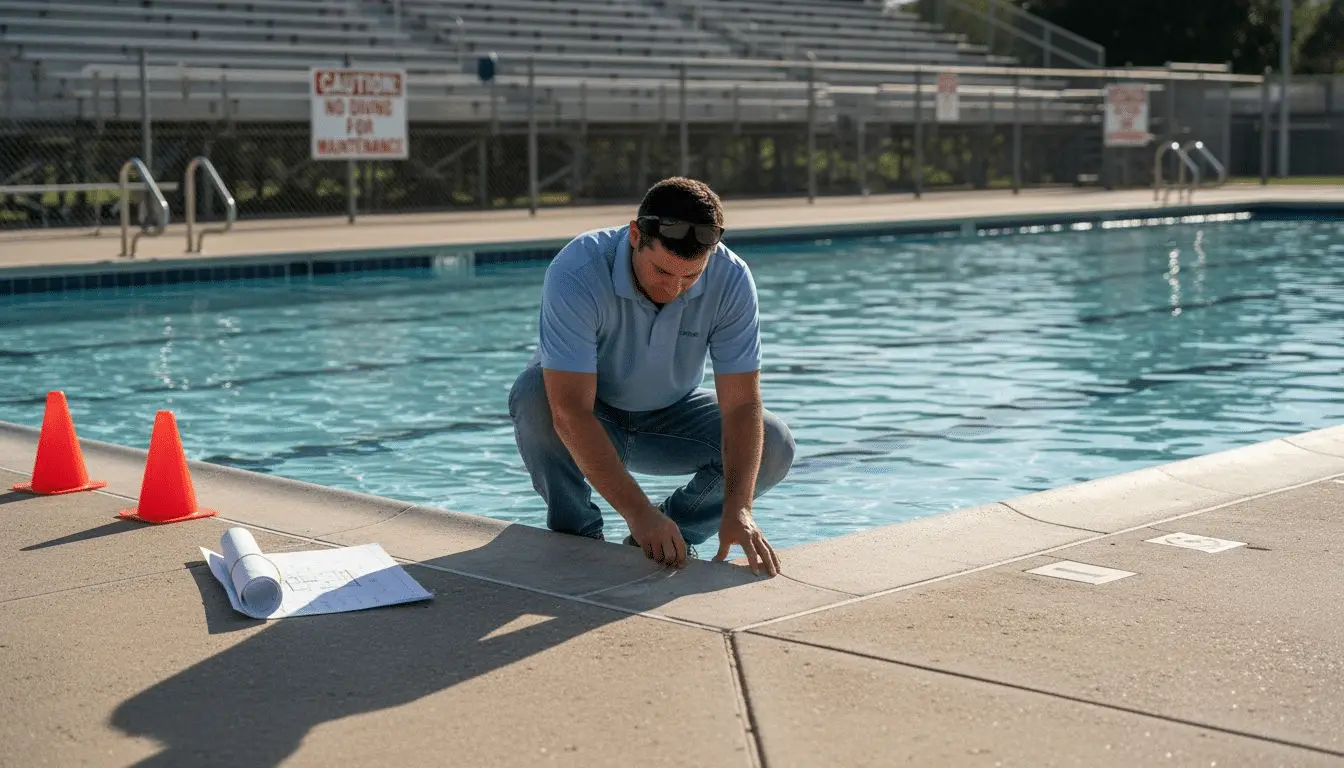
Most American commercial pools in Orlando and Jacksonville face relentless wear from thousands of guests each season. For property managers and hotel owners, choosing the right pool finish is not just about style—it directly impacts safety, maintenance costs, and guest satisfaction. With over 80 percent of high-traffic facilities reporting surface damage within five years, this guide explains how to select finishes that deliver lasting durability and sophisticated visual appeal for busy environments.
Table of Contents
- Defining Commercial Pool Finish Options
- Popular Pool Finish Types Explained
- Appearance, Texture, And Performance Factors
- Maintenance, Lifespan, And Cost Considerations
- Comparing Finishes For High-Traffic Use
- Mistakes To Avoid In Finish Selection
Key Takeaways
| Point | Details |
|---|---|
| Finish Selection is Critical | Choosing the right pool finish impacts durability, maintenance, and user experience. Analyze aesthetic goals alongside functional requirements. |
| Evaluate Environmental Factors | Consider local climate and usage intensity to ensure material compatibility and longevity. Perform site-specific assessments before finalizing choices. |
| Balance Costs and Lifespan | Opt for finishes that may have higher upfront costs but offer reduced maintenance and longer lifespans for better long-term economic benefits. |
| Avoid Common Mistakes | Ensure thorough preparation and avoid prioritizing low cost over quality to prevent costly failures and maintenance challenges in the future. |
Defining Commercial Pool Finish Options
Commercial pool finishes represent critical design elements that determine both aesthetic appeal and long-term performance for high-traffic aquatic environments. These specialized surfaces must meet rigorous standards established by international swimming pool design regulations, which outline comprehensive requirements for durability, safety, and maintenance in public settings.
Pool finishes can be categorized into several primary types, each offering unique characteristics and performance profiles. The main categories include plaster finishes, aggregate surfaces, tile overlays, and specialized coatings. Commercial property managers must carefully evaluate these options based on factors like traffic volume, environmental conditions, maintenance requirements, and aesthetic goals. Plaster remains a traditional choice, providing a smooth, classic appearance, while aggregate surfaces like pebble finishes offer enhanced textural complexity and improved slip resistance.
The selection process for commercial pool finishes involves comprehensive considerations beyond mere visual appeal. According to recommended standards for swimming pool design, critical evaluation metrics include chemical resistance, long-term durability, maintenance complexity, surface smoothness, and compliance with public health regulations. Property managers must also factor in climate-specific challenges, particularly in regions like Florida with intense sunlight, high humidity, and significant temperature variations that can stress pool surface materials.
Pro Tip: Pool Surface Assessment: Before selecting a commercial pool finish, conduct a comprehensive site-specific evaluation that includes traffic patterns, maintenance capabilities, budget constraints, and anticipated environmental stressors to ensure optimal long-term performance and aesthetic quality.
Popular Pool Finish Types Explained
Commercial pool finishes encompass a diverse range of materials designed to meet the demanding requirements of high-traffic aquatic environments. Swimming pool construction guidelines highlight the critical importance of selecting finishes that balance aesthetic appeal, durability, and functional performance for commercial settings.
The primary pool finish types can be categorized into four main categories, each with distinct characteristics:
- Plaster Finishes: Traditional white or colored plaster provides a smooth, classic surface. It offers an economical option but requires more frequent maintenance and is more susceptible to staining and wear.
- Aggregate Surfaces: These finishes incorporate small stones or pebbles, creating a textured surface with enhanced durability. Exposed aggregate and polished aggregate finishes provide improved slip resistance and a more sophisticated appearance.
- Tile Finishes: Ceramic, glass, or porcelain tiles offer exceptional durability and design flexibility. They create visually striking surfaces and are particularly resistant to chemical interactions and long-term wear.
- Specialized Coatings: Advanced epoxy and polymer-based coatings provide superior protection, offering unique benefits like enhanced chemical resistance and customized aesthetic options.
Sport facility design guidance emphasizes the importance of matching pool finishes to specific environmental conditions. Commercial property managers must consider factors such as anticipated usage intensity, local climate challenges, maintenance capabilities, and budget constraints when selecting the most appropriate surface treatment.
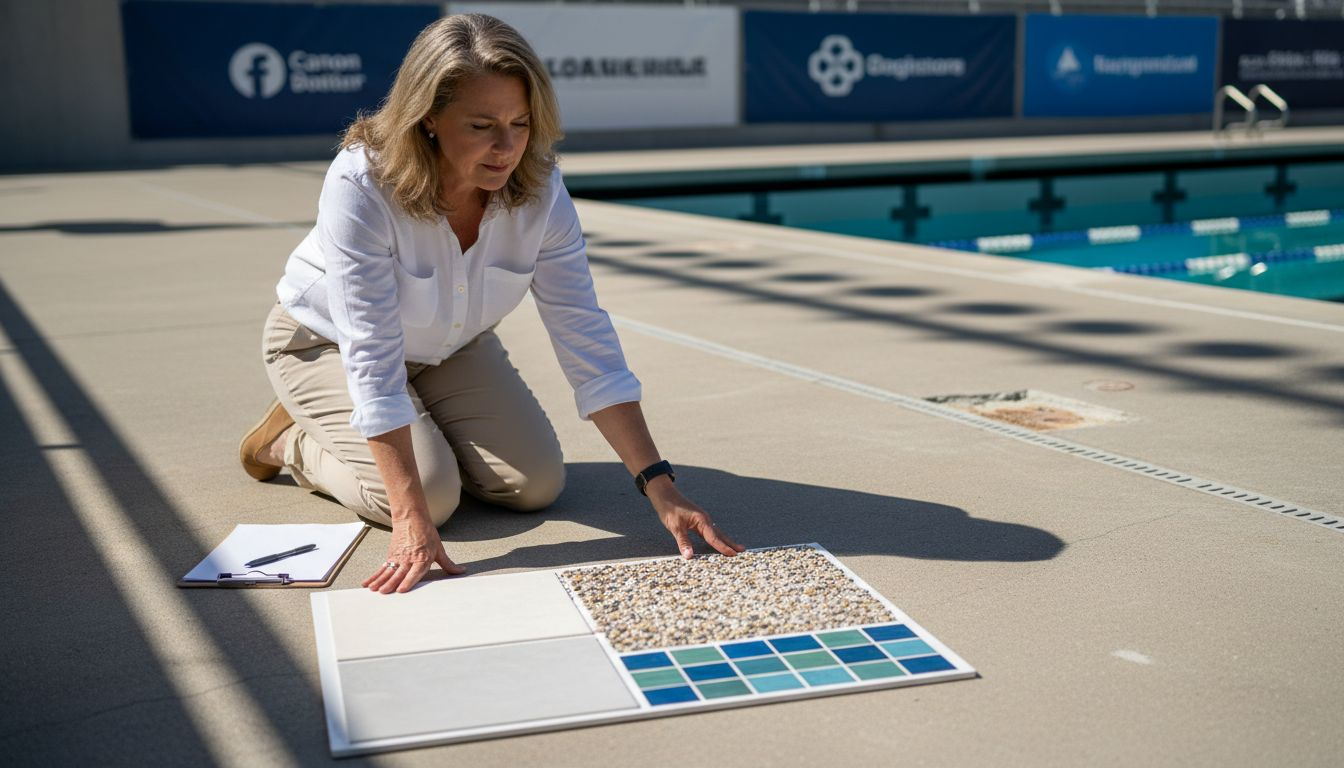
Pro Tip: Material Matching: Always conduct a comprehensive site-specific assessment that evaluates traffic patterns, environmental stressors, and maintenance resources before selecting a pool finish to ensure optimal long-term performance and aesthetic quality.
Appearance, Texture, and Performance Factors
Commercial pool finishes represent a sophisticated intersection of aesthetic design and functional engineering, where every visual and tactile element plays a critical role in overall performance. Surface engineering principles reveal that appearance is not merely cosmetic but directly influences safety, durability, and user experience in aquatic environments.
The visual and textural characteristics of pool finishes can be analyzed through several key dimensions:
- Color Dynamics: Pool finishes offer a spectrum of color options, from classic white to sophisticated earth tones. Precast surface design guidelines demonstrate how color selection impacts visual perception, heat absorption, and overall aesthetic integration with surrounding architectural elements.
- Texture Considerations: Surface texture directly correlates with slip resistance and user comfort. Smooth finishes like polished plaster provide a sleek appearance, while aggregate surfaces with embedded stones create a more complex tactile experience that enhances grip and visual interest.
- Performance Metrics: Beyond aesthetic appeal, pool finishes must withstand significant environmental stressors. Factors like chemical resistance, UV exposure tolerance, impact durability, and maintenance requirements become critical evaluation criteria for commercial pool managers.
Ultimately, the selection of a pool finish represents a nuanced balance between visual design, safety requirements, and long-term performance expectations. Commercial property managers must evaluate these multidimensional factors holistically, understanding that each surface choice carries profound implications for user experience, maintenance costs, and overall facility aesthetics.
Pro Tip: Surface Selection Strategy: Conduct comprehensive mockup testing of potential pool finishes under simulated use conditions, evaluating not just initial appearance but projected performance across multiple environmental and usage scenarios.
Maintenance, Lifespan, and Cost Considerations
Commercial pool finishes represent a significant financial investment that extends far beyond initial installation costs. Construction cost estimation strategies reveal that property managers must consider comprehensive lifecycle expenses, including routine maintenance, potential repairs, and eventual replacement when selecting pool surface materials.
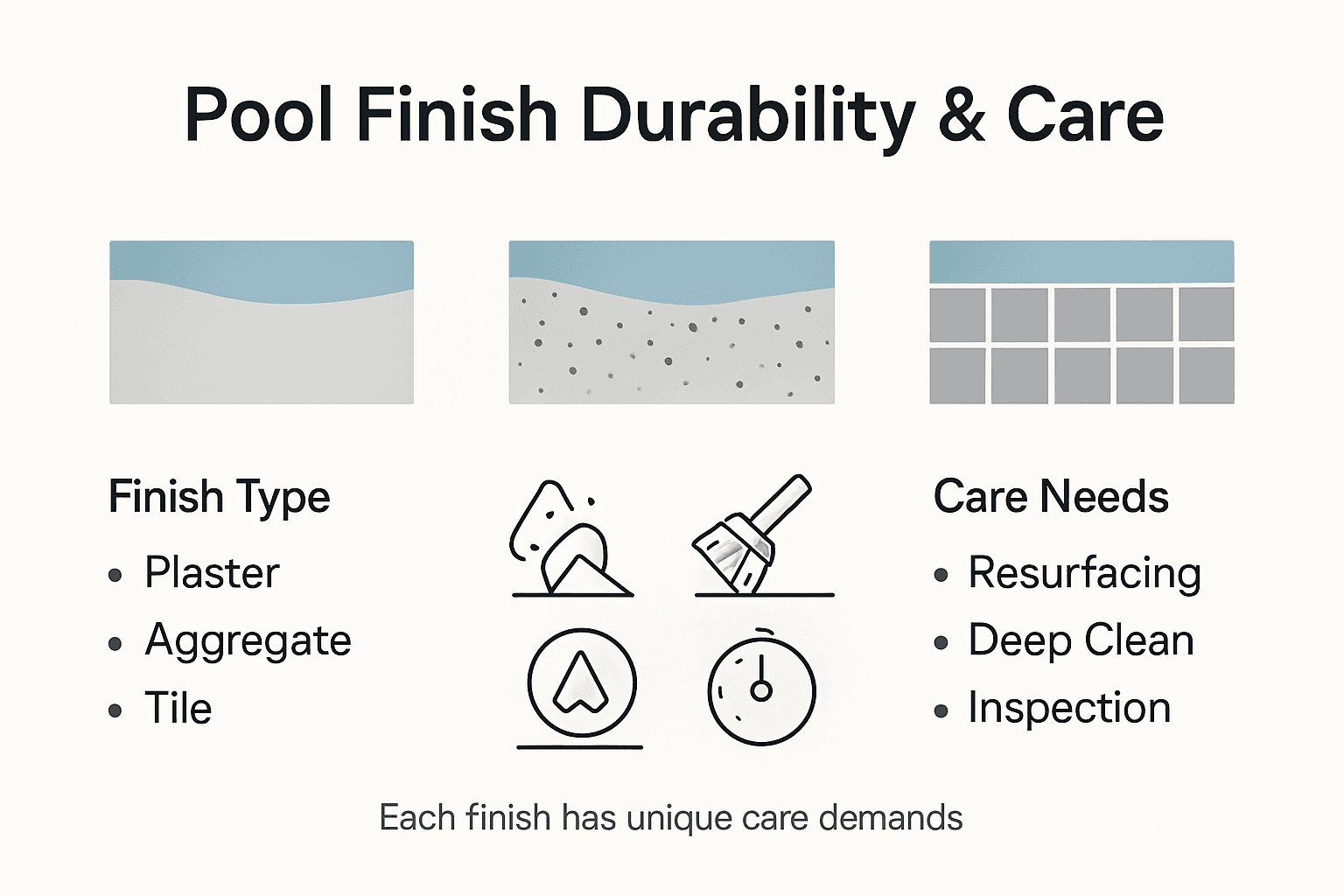
The maintenance requirements for different pool finishes vary dramatically, creating substantial long-term cost implications:
Here is a consolidated comparison of commercial pool finish types across major factors:
| Finish Type | Key Maintenance Demand | Typical Lifespan | Typical Installed Cost |
|---|---|---|---|
| Plaster | Frequent resurfacing | 5-7 years | Lowest initial price |
| Aggregate | Stable, moderate upkeep | 10-15 years | Higher upfront cost |
| Tile | Intensive grout care | 15+ years | Highest cost per sq ft |
| Specialized Coating | Minimal if premium grade | Up to 10 years | Mid-high investment |
- Plaster Finishes: Typically require resurfacing every 5-7 years, with annual maintenance costs ranging from $500-$2,000 depending on usage and environmental conditions.
- Aggregate Surfaces: Offer extended lifespan of 10-15 years with more stable maintenance expenses, though initial installation costs are higher.
- Tile Finishes: Provide exceptional durability but demand precise professional maintenance to prevent grout deterioration and potential tile displacement.
- Specialized Coatings: Present variable maintenance needs, with some advanced formulations offering 10-year warranties and reduced ongoing care requirements.
Integrated asset management frameworks recommend developing systematic maintenance strategies that balance preventive care with reactive repair approaches. Commercial property managers must analyze not just upfront expenses but projected long-term costs, understanding that cheaper initial installations may result in significantly higher lifetime expenditures.
Financial planning for pool finishes should incorporate multiple cost dimensions, including material expenses, labor costs for installation and maintenance, anticipated repair frequency, and potential downtime during renovation periods. Sophisticated property managers recognize that investing in higher-quality finishes often yields substantial long-term economic benefits through reduced maintenance requirements and extended service life.
Pro Tip: Lifecycle Budgeting: Develop a comprehensive 10-year financial model that calculates total ownership costs, including installation, routine maintenance, potential repairs, and eventual replacement, rather than focusing solely on initial purchase price.
Comparing Finishes for High-Traffic Use
Commercial pools experiencing intense daily usage demand extraordinarily resilient surface treatments that can withstand continuous human interaction, chemical exposure, and environmental challenges. Swimming pool design standards emphasize the critical importance of selecting finishes that maintain structural integrity and aesthetic appeal under extreme operational conditions.
A comprehensive comparative analysis reveals distinct performance characteristics for different pool finish types:
- Plaster Finishes:
- Pros: Low initial cost, smooth appearance
- Cons: Shorter lifespan (5-7 years), more susceptible to staining and wear
- Best for: Lower-traffic environments with moderate usage
- Aggregate Surfaces:
- Pros: Superior durability, enhanced slip resistance, longer lifespan (10-15 years)
- Cons: Higher initial installation costs, potentially rougher texture
- Best for: High-traffic commercial pools, aquatic centers, resort environments
- Tile Finishes:
- Pros: Exceptional chemical resistance, highly customizable aesthetics
- Cons: Expensive installation, potential grout maintenance issues
- Best for: Luxury facilities, pools requiring intricate design elements
- Specialized Coatings:
- Pros: Advanced chemical protection, minimal maintenance requirements
- Cons: Limited color/texture options, potentially higher upfront costs
- Best for: Commercial pools with challenging environmental conditions
Sport facility design guidance recommends evaluating multiple performance metrics beyond initial appearance. Commercial property managers must consider factors like traffic volume, chemical exposure, sunlight intensity, and maintenance capabilities when selecting pool finishes for high-use environments.
Ultimately, the most successful pool finish selection balances immediate aesthetic requirements with long-term performance expectations. Sophisticated facility managers understand that initial investment in superior materials can significantly reduce lifecycle maintenance costs and minimize operational disruptions.
Pro Tip: Performance Evaluation: Conduct comprehensive material testing under simulated high-traffic conditions, including chemical exposure and mechanical stress assessments, before making a final surface selection for commercial pool environments.
Mistakes to Avoid in Finish Selection
Selecting the wrong pool finish can lead to catastrophic and expensive consequences for commercial facilities. Swimming pool plastering guidelines highlight critical errors that can compromise pool surface integrity and dramatically increase long-term maintenance costs.
The most common mistakes in pool finish selection include:
The following table summarizes common selection pitfalls and their practical consequences:
| Mistake Made | Likely Result | Preventive Action |
|---|---|---|
| Ignoring local climate needs | Premature surface failure | Assess site-specific risks |
| Prioritizing lowest cost | Increased lifetime expenses | Calculate long-term costs |
| Using residential-grade finishes | Ineffective in high-traffic use | Specify commercial materials |
| Skipping surface prep | Adhesion and durability issues | Enforce strict prep standards |
- Ignoring Environmental Compatibility:
- Selecting finishes without considering local climate conditions
- Overlooking chemical interaction potential with pool treatments
- Failing to account for UV exposure and temperature fluctuations
- Prioritizing Initial Cost Over Long-Term Performance:
- Choosing the cheapest option without evaluating lifecycle expenses
- Underestimating maintenance requirements for budget-friendly materials
- Neglecting potential repair and replacement costs
- Mismatching Finish to Usage Intensity:
- Using residential-grade finishes in high-traffic commercial environments
- Overlooking slip resistance requirements for public spaces
- Selecting aesthetically pleasing but functionally inappropriate surfaces
- Inadequate Surface Preparation:
- Skipping critical surface preparation steps before installation
- Ignoring existing substrate conditions
- Failing to address potential structural issues before finish application
Sport facility design recommendations emphasize the importance of comprehensive evaluation beyond superficial appearance. Commercial property managers must conduct thorough assessments that consider usage patterns, environmental challenges, maintenance capabilities, and long-term performance expectations.
Successful pool finish selection requires a holistic approach that balances aesthetic requirements, functional performance, and economic considerations. Sophisticated facility managers understand that seemingly minor selection errors can result in significant financial and operational challenges down the line.
Pro Tip: Comprehensive Evaluation: Develop a detailed decision matrix that scores potential pool finishes across multiple criteria, including initial cost, expected lifespan, maintenance requirements, safety features, and aesthetic compatibility with your specific facility environment.
Enhance Your Commercial Pool with Expert Resurfacing Solutions
Choosing the right commercial pool finish is a critical decision that impacts durability, safety, and long-term maintenance costs. If concerns like premature surface failure, high upkeep demands, or lack of aesthetic appeal sound familiar from the challenges detailed above, Classic Marcite offers proven resurfacing expertise to transform your pool. Our deep experience with premium options like Pebble Tec® ensures enhanced slip resistance, chemical resistance, and exceptional weather durability—perfect for Florida’s harsh conditions.

Don’t let costly mistakes undermine your investment. Trust Classic Marcite, the largest Pebble Tec® applicator in Central Florida, to deliver lasting beauty and performance tailored to high-traffic commercial environments. Explore our comprehensive services including pool resurfacing and remodeling to elevate your facility’s appearance and safety standards. Take the first step toward a more resilient pool surface by requesting a free estimate today at Classic Marcite. To learn more about how we address high-traffic pool finish challenges, visit our pool resurfacing services pages now.
Frequently Asked Questions
What are the main types of commercial pool finishes?
Commercial pool finishes generally fall into four main categories: plaster finishes, aggregate surfaces, tile finishes, and specialized coatings. Each type offers unique characteristics tailored for durability and aesthetic appeal in high-traffic environments.
How do maintenance requirements vary among different pool finish types?
Maintenance demands differ significantly among pool finishes. Plaster finishes require frequent resurfacing (every 5-7 years), while aggregate surfaces last longer (10-15 years) with moderate upkeep. Tile finishes need intensive grout care but can last over 15 years, and specialized coatings often require minimal maintenance depending on the quality of the material.
What factors should I consider for pool finishes in high-traffic environments?
When selecting pool finishes for high-traffic areas, consider factors such as slip resistance, chemical interaction with pool treatments, durability under continuous use, and maintenance requirements. It’s essential to choose materials that can withstand heavy usage and environmental stressors while ensuring user safety.
How do different pool finishes impact the aesthetic quality of my facility?
The choice of pool finish significantly affects the visual and tactile experience. Plaster finishes provide a classic smooth look, while aggregate surfaces add textural complexity. Tile finishes can offer vibrant colors and patterns, and specialized coatings come in various customized aesthetic options, allowing for greater design flexibility.
