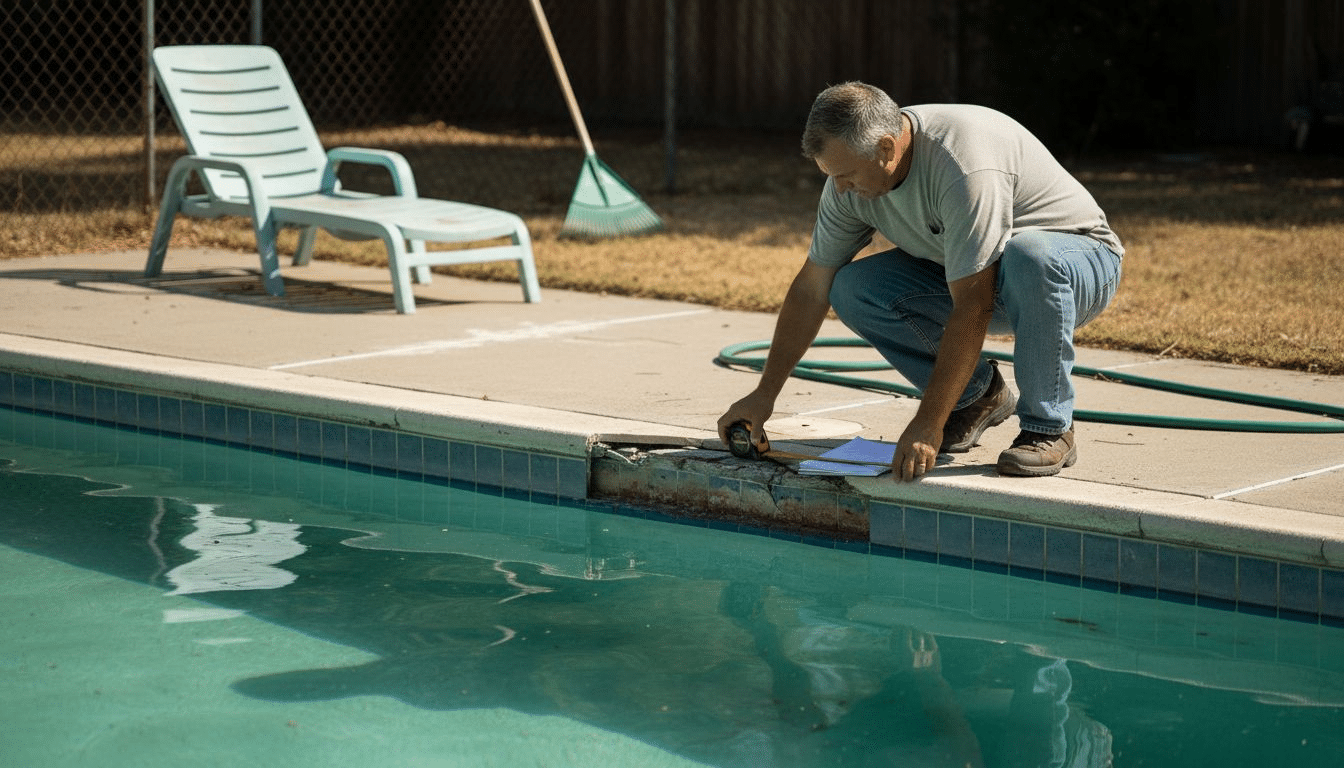
Facing cracked plaster or faded tiles every time you step into your backyard can be discouraging for Orlando and Jacksonville homeowners dreaming of a stylish, durable pool upgrade. Choosing the right renovation plan makes a clear difference in cost, safety, and lasting value. This guide gives you budget-friendly renovation strategies to help you transform your pool using trusted assessment methods, smart material choices, and expert contractor selection—without sacrificing quality or style.
Table of Contents
- Step 1: Assess Your Pool’s Current Condition
- Step 2: Determine Renovation Priorities and Scope
- Step 3: Research Pool Resurfacing Materials and Options
- Step 4: Compare Estimates and Set a Realistic Budget
- Step 5: Verify Contractor Credentials and Finalize Choices
Quick Summary
| Essential Insight | Explanation |
|---|---|
| 1. Assess Pool Condition Thoroughly | Conduct a detailed evaluation to identify necessary repairs and enhancements, which prevents future unexpected costs. |
| 2. Prioritize Renovation Projects Strategically | Focus on essential upgrades that maximize value and safety, considering both immediate needs and long-term benefits. |
| 3. Research Resurfacing Materials Carefully | Choose the right material based on lifespan, maintenance, and compatibility with pool chemicals for optimal performance. |
| 4. Compare Quotes for Budget Accuracy | Gather multiple estimates, analyze costs, and ensure budget includes contingency funds for unplanned expenses. |
| 5. Verify Contractor Credentials Diligently | Confirm licenses, insurance, and references to ensure professional work and protect your renovation investment. |
Step 1: Assess Your Pool’s Current Condition
Understanding your pool’s existing condition is the critical first step in planning a renovation budget that maximizes value and prevents unnecessary expenses. By conducting a thorough initial assessment, you’ll pinpoint exactly what needs repair, replacement, or enhancement.
A comprehensive pool condition evaluation involves multiple strategic components. Facilities condition assessment methodology recommends examining several key areas:
- Structural integrity: Check for cracks, chips, or surface degradation
- Water circulation system: Evaluate pump, filter, and plumbing performance
- Tile and decking: Inspect for wear, loose tiles, or uneven surfaces
- Safety features: Review fencing, drainage, and potential hazard zones
- Material condition: Assess current surface finish and potential resurfacing needs
To conduct a precise assessment, consider both visual inspection and professional evaluation techniques. Pool safety standards recommend documenting each observed issue with detailed notes and photographs. This documentation serves two critical purposes: tracking renovation needs and creating a comprehensive budget framework.
A methodical assessment now can save thousands in unexpected repair costs later.
Pro tip: Take clear, well-lit photographs of every potential problem area to create a comprehensive renovation roadmap and help professionals provide accurate estimates.
Step 2: Determine Renovation Priorities and Scope
After assessing your pool’s current condition, the next critical step is strategically determining which renovation priorities will deliver the most value for your investment. Swimming pool renovation priorities require careful consideration of both immediate needs and long-term performance goals.
To effectively prioritize your pool renovation, evaluate each potential improvement through a strategic lens that considers multiple factors:
- Structural repairs: Address any critical damage that compromises pool integrity
- Safety enhancements: Upgrade features that protect swimmers and meet current regulations
- Aesthetic improvements: Consider updates that increase visual appeal and property value
- Energy efficiency: Explore upgrades to pumps, filters, and circulation systems
- Functional modifications: Assess potential changes that improve pool usability
Prioritizing renovations isn’t just about fixing what’s broken – it’s about creating sustainable aquatic environments that meet your specific needs. Start by ranking potential projects based on urgency, budget impact, and long-term benefits. This approach helps you make informed decisions that maximize both immediate functionality and future value.
Smart renovation priorities transform a dated pool into a stunning, efficient backyard centerpiece.
Pro tip: Create a detailed spreadsheet ranking renovation options by cost, urgency, and potential return on investment to visualize your priorities more effectively.

Step 3: Research Pool Resurfacing Materials and Options
Selecting the right pool resurfacing material is crucial for achieving a long-lasting, visually appealing renovation that fits your budget and performance requirements. Pool resurfacing material standards provide essential guidelines for making an informed decision.
Your research should explore multiple material options, each with unique characteristics and benefits:
- Plaster: Traditional, cost-effective option with smooth finish
- Aggregate finishes: Offers enhanced durability and textural variety
- Pebble surfaces: Provides superior longevity and natural aesthetic
- Fiberglass: Low-maintenance alternative with quick installation
- Quartz-based materials: Combines durability with aesthetic appeal
Beyond material selection, consider critical chemical compatibility factors that impact long-term performance. Different surfaces interact uniquely with pool chemicals, affecting maintenance requirements and overall lifespan. Evaluate each material’s resistance to chemical treatments, potential staining, and ability to maintain water quality.
Here’s a quick overview of popular pool resurfacing materials and their performance characteristics:
| Material Type | Average Lifespan | Surface Texture | Maintenance Level |
|---|---|---|---|
| Plaster | 7-10 years | Smooth | Moderate, frequent care |
| Aggregate Finish | 10-15 years | Textured, slip-resistant | Moderate, stain prevention |
| Pebble Surface | 15-20 years | Natural, rough | Low, resists algae |
| Fiberglass | 10-15 years | Smooth | Low, easy cleaning |
| Quartz-Based | 12-20 years | Glossy or textured | Low, durable surface |
The right resurfacing material transforms your pool from functional to extraordinary.
Pro tip: Request material samples and conduct side-by-side comparisons to assess texture, color retention, and maintenance requirements before making a final selection.
Step 4: Compare Estimates and Set a Realistic Budget
Navigating pool renovation costs requires a strategic approach to comparing estimates and establishing a budget that balances quality with financial constraints. Swimming pool renovation cost strategies provide critical insights into creating a comprehensive financial plan.
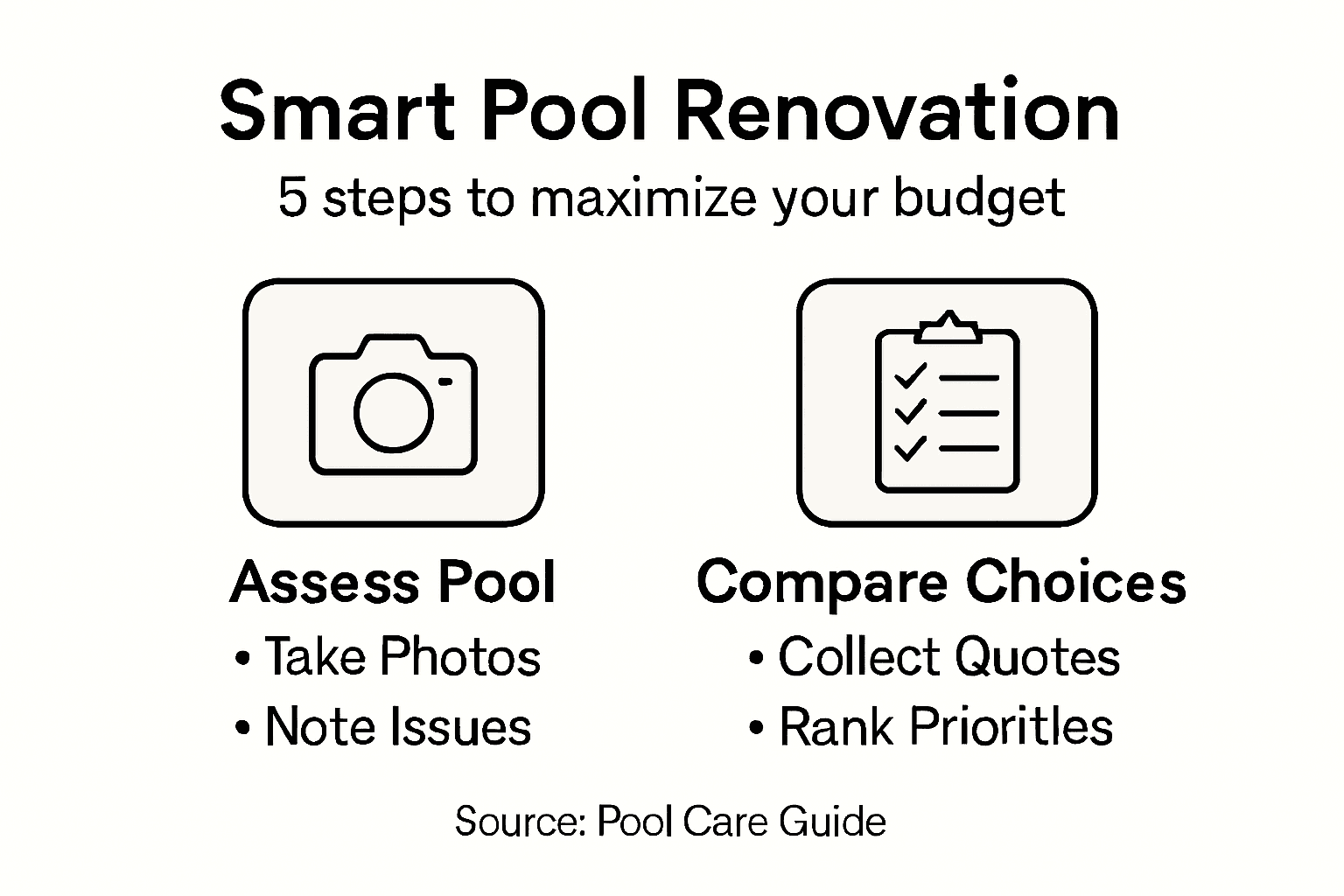
To effectively compare estimates and set a realistic budget, consider these key steps:
- Request multiple quotes: Obtain 3-5 detailed estimates from reputable contractors
- Break down cost components: Analyze individual line items for materials, labor, and additional services
- Consider long-term value: Evaluate lifecycle costs beyond initial renovation expense
- Factor in regional pricing: Understand local market rates for pool renovation
- Build in contingency funds: Allocate 10-15% extra for unexpected expenses
Understanding comprehensive pool renovation pricing involves more than just comparing initial quotes. Dive deep into each estimate’s details, examining the quality of proposed materials, scope of work, and potential hidden costs that could impact your overall budget.
A thorough estimate comparison is your financial blueprint for a successful pool renovation.
Pro tip: Create a detailed spreadsheet comparing estimates side by side, highlighting not just total cost but specific inclusions, warranties, and potential long-term savings.
Step 5: Verify Contractor Credentials and Finalize Choices
Selecting the right pool renovation contractor requires thorough due diligence to protect your investment and ensure professional, high-quality work. Contractor license verification provides a crucial first step in assessing a contractor’s legitimacy and professional standing.
To comprehensively evaluate potential contractors, focus on these critical verification steps:
- Check professional licenses: Confirm current state licensing status
- Verify insurance coverage: Ensure comprehensive general liability and worker’s compensation
- Review professional certifications: Examine industry-recognized credentials and specialized training
- Investigate past performance: Request and contact references from recent projects
- Examine online reputation: Review customer ratings, testimonials, and complaint histories
Beyond basic credentials, dig deeper by requesting detailed portfolios, discussing specific pool renovation experiences, and understanding their approach to your unique project. A reputable contractor will welcome transparency and provide comprehensive documentation of their professional qualifications.
Explore key criteria to score and compare pool renovation contractors effectively:
| Contractor Criteria | Why It Matters | What to Request |
|---|---|---|
| State License | Legitimacy, compliance | License number, proof |
| Insurance Coverage | Financial protection | Current insurance policy |
| Relevant Certifications | Quality, specialized skills | Certificate copies |
| References & Portfolio | Track record, reliability | Project photos, contacts |
| Online Reputation | Customer satisfaction | Ratings, review summaries |
Thorough contractor verification is your shield against potential renovation nightmares.
Pro tip: Create a standardized checklist with all verification requirements and score each contractor objectively to make a data-driven final selection.
Maximize Your Pool Renovation Budget with Expert Resurfacing Solutions
Planning a pool renovation can feel overwhelming when you face challenges like budgeting wisely, selecting the right resurfacing materials, and prioritizing repairs. This article highlights common pain points such as assessing structural integrity, choosing durable finishes like Pebble Tec®, and verifying contractor quality to avoid costly surprises. If you want to transform your aging pool into a beautiful and long-lasting backyard centerpiece while staying within your budget limits, professional guidance and proven results matter.
Classic Marcite has been a trusted leader since 1988, resurfacing over 100,000 pools with exceptional craftsmanship and high-quality materials known for their durability and aesthetic appeal. Whether you need expert pool resurfacing, remodeling, tile or deck repairs, or energy-efficient upgrades, our team in Orlando and Jacksonville understands how to balance renovation priorities and costs for maximum value and lasting satisfaction.

Take control of your pool renovation today by partnering with experts who specialize in durable and stunning finishes like Pebble Tec®. Visit Classic Marcite to explore our pool resurfacing options and discover how we turn your renovation budget into an investment that pays off season after season. Don’t wait for costly repairs—get your free estimate now and make your pool the centerpiece of your home again.
Frequently Asked Questions
How do I assess my pool’s condition before budgeting for renovation?
To assess your pool’s condition, conduct a thorough inspection to identify issues such as structural damage, worn tiles, or outdated safety features. Document your findings with detailed notes and photographs to create a clear picture of necessary repairs and improvements.
What factors should I consider when determining renovation priorities for my pool?
When determining renovation priorities, evaluate the urgency of repairs, potential safety enhancements, aesthetic updates, and energy efficiency upgrades. Rank these factors based on their importance and potential return on investment to guide your decisions.
How can I choose the right resurfacing material for my pool renovation?
To choose the right resurfacing material, research options like plaster, aggregate finishes, or fiberglass, considering each material’s durability, maintenance requirements, and aesthetic appeal. Request samples to compare textures and visual styles before making your final selection.
What steps should I follow to compare renovation estimates effectively?
To compare renovation estimates effectively, request multiple quotes from contractors and break down each estimate into detailed components, such as materials and labor. Evaluate the long-term value of each option by considering factors like durability and potential maintenance costs.
How do I verify a contractor’s credentials before proceeding with my renovation?
To verify a contractor’s credentials, check their professional license, insurance coverage, and relevant certifications. Request references from past projects and review their online reputation to ensure they have a track record of quality work.
What budget should I set for unexpected expenses during my pool renovation?
It’s wise to allocate an additional 10-15% of your total renovation budget for unexpected expenses. This contingency fund can help cover unforeseen costs that may arise during the renovation process.
Recommended
- Why Renovate Your Pool: Boost Beauty And Value
- Why Renovate Aging Pools For Florida Homeowners
- 7 Steps To A Complete Pool Renovation Checklist For Homeowners
- Sustainability In Pool Renovation: Eco-Friendly Benefits
- Planificare buget renovare: Ghid complet pentru rezultate sigure
- Pool Refinishing Windermere FL
- Pool Renovation Winter Park FL
- Swimming Pool Remodeling The Villages FL