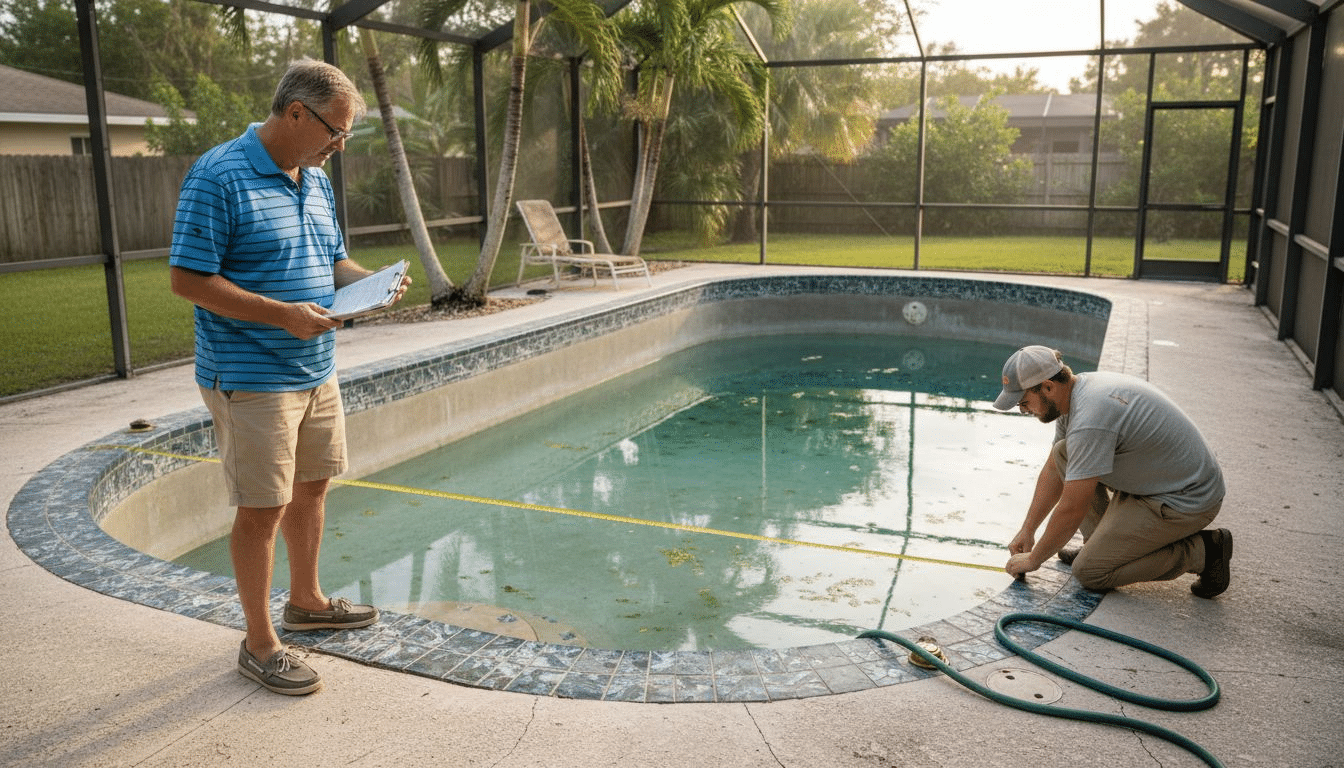
Pool renovation can quickly turn from a dream upgrade into a confusing puzzle for Orlando and Jacksonville homeowners. With every decision from size and material to labor rates and local Florida regulations shaping your final cost, even small choices matter. Understanding what drives pool renovation cost empowers you to extend your pool’s life, maximize beauty, and avoid expensive surprises as you transform your backyard oasis.
Table of Contents
- What Drives Pool Renovation Cost?
- Types of Pool Renovation Projects
- Material Choices and Their Long-Term Impact
- Labor and Local Market Rates in Florida
- Permits, Repairs, and Potential Hidden Costs
- Upgrades, Features, and Mistakes to Avoid
Key Takeaways
| Point | Details |
|---|---|
| Understand Cost Drivers | Key factors affecting pool renovation costs include pool type, structural condition, material choices, labor rates, and hidden repair needs. |
| Prioritize Repairs Over Aesthetics | Address structural and safety upgrades before focusing on cosmetic changes to ensure long-term durability and compliance. |
| Budget for Hidden Costs | Always allocate an extra 15 to 20 percent in your budget for unexpected expenses that may arise during renovations. |
| Select Durable Materials | Choose materials with proven longevity in Florida’s climate to minimize future maintenance costs and extend the life of your renovation. |
What Drives Pool Renovation Cost?
Pool renovation costs in Orlando and Jacksonville don’t follow a single formula, which is exactly why understanding the key drivers matters before you get quotes. Your final bill depends on a combination of factors that range from the obvious (your pool’s size) to the less obvious (local labor rates and what’s hiding beneath your deck). Most homeowners underestimate how much these variables can shift their budget in either direction.
The foundation of your renovation cost starts with pool type and structural condition. Concrete pools, which are common in Florida homes, typically cost more to renovate than vinyl pools due to their durability and the complexity of resurfacing. The pool renovation process involves assessing what’s actually failing. If your pool has structural issues like cracks, settling, or deteriorating surfaces, those problems drive up costs significantly. Your pool’s age matters too. A 20-year-old pool probably needs more extensive work than a 10-year-old one, and that gets reflected in your estimate.
Material and feature choices represent the biggest variable once your pool’s basic condition is established. Concrete pools prove durable but expensive because the resurfacing process demands quality materials and skilled labor. Adding or upgrading features like heating systems, LED lighting, new decking, and spa additions all layer onto your base cost. Size matters too, but it’s not the only thing. A larger pool with simpler needs might cost less than a smaller pool with multiple upgrades and complex structural repairs. Labor costs in Central Florida vary based on market rates and the contractor’s expertise with specific materials and techniques.
Other cost drivers include permits, excavation needs, and local regulations. Florida’s unique climate and soil conditions sometimes require additional preparation work. Heating systems, which many Florida pool owners want for winter months, add significant expense but increase your pool’s usability year-round. Decking options, whether you’re replacing tiles or upgrading to new materials, contribute meaningfully to your total investment.
Pro tip: Request detailed breakdowns from contractors showing material costs, labor rates, and scope specifics rather than just a lump sum, so you understand exactly where your renovation budget goes and can make informed decisions about priorities.
Types of Pool Renovation Projects
Not all pool renovations look the same. Orlando and Jacksonville homeowners tackle renovation projects ranging from simple cosmetic updates to complete structural overhauls, and understanding which type matches your situation helps you budget correctly and set realistic expectations. Some projects fix problems you can see, while others address issues hiding beneath the surface that affect your pool’s safety and longevity.
Resurfacing projects are the most common renovation type in Florida. Your pool’s interior surface deteriorates over time from exposure to sun, chemicals, and constant water contact. Whether your pool has plaster, aggregate, or tile finishes, resurfacing breathes new life into the structure while addressing minor structural concerns. This work involves draining the pool, repairing any underlying damage, and applying new surface material. Many homeowners combine resurfacing with aesthetic upgrades like color changes or pattern selections that completely transform their pool’s appearance.
Equipment and efficiency upgrades represent another major category that many Florida homeowners prioritize. Aging pumps, filters, and heating systems drain your wallet through higher energy bills and frequent repairs. Upgrading to modern, energy-efficient equipment reduces operational costs substantially. Beyond energy savings, water-efficient equipment upgrades like variable-speed pumps and pool covers minimize evaporation and chemical waste, which matter in Florida’s climate. LED lighting upgrades fall into this category too, offering both aesthetic benefits and long-term energy savings compared to older halogen systems.
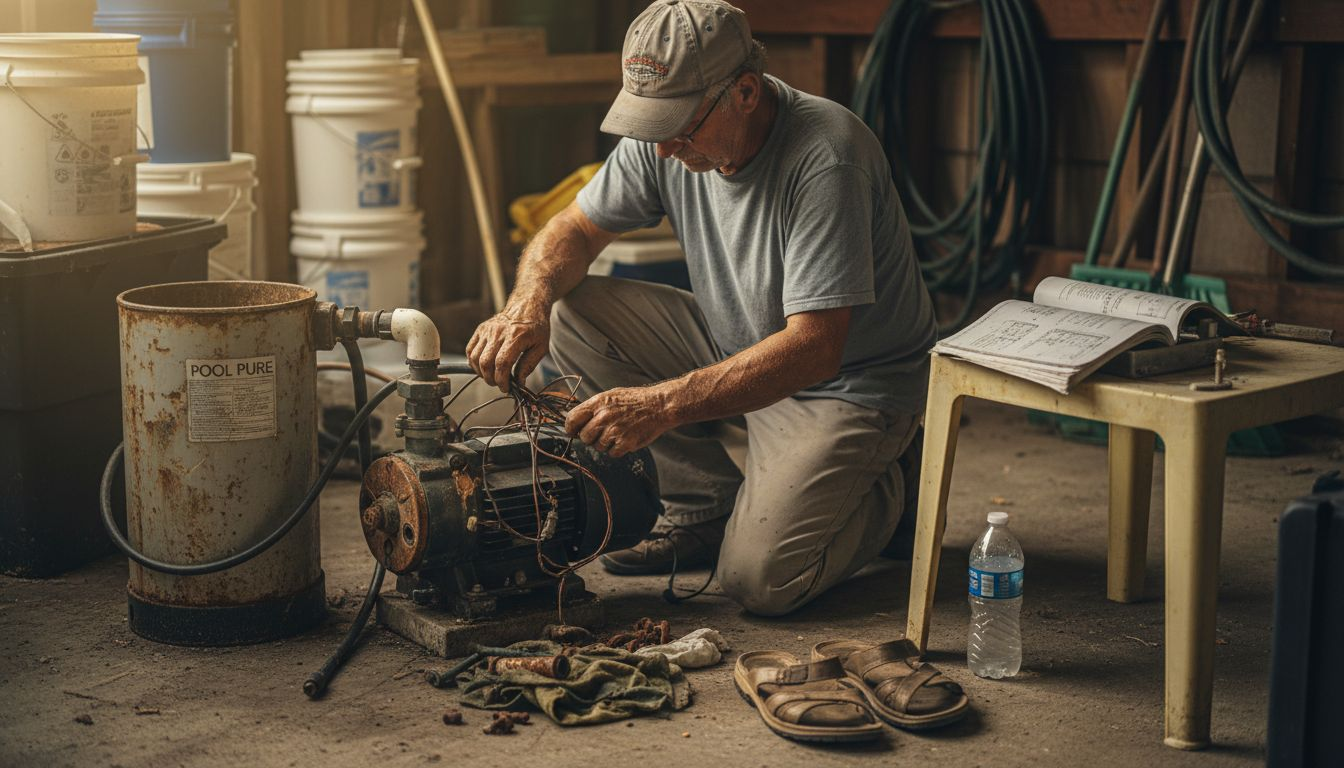
Structural repairs and remodeling address serious issues that threaten your pool’s integrity. Cracks in concrete, deteriorating tile work, settling pools, or compromised decking all require professional intervention. These projects might involve partial or complete deck reconstruction, coping repairs, or addressing underlying foundation problems. Combination projects blend multiple renovation types. You might tackle resurfacing while simultaneously upgrading your heating system and replacing damaged decking. These comprehensive renovations make sense financially and logistically since the pool is already drained and work crews are on-site.
Pro tip: Prioritize resurfacing and structural repairs before cosmetic upgrades, since addressing underlying damage first prevents costly problems later and ensures your renovation investment lasts decades.
Material Choices and Their Long-Term Impact
The materials you select during pool renovation don’t just affect what you pay upfront. They shape your maintenance costs, durability, safety, and even how much water and chemicals your pool consumes over the next decade or more. A cheaper material that requires constant repair work ends up costing far more than a premium option that lasts for years with minimal intervention.
Different resurfacing materials come with distinct long-term profiles. Plaster finishes offer affordability but typically last 5 to 10 years before needing attention, making them a short-term solution. Aggregate finishes like pebble surfaces cost more initially but often last 15 to 20 years, reducing your total cost of ownership significantly. Tile work provides durability and aesthetic flexibility but demands skilled installation and precise maintenance to prevent grout deterioration in Florida’s humid climate. The material you choose influences how often you’ll drain the pool, how many chemical adjustments you’ll make, and whether your pool surfaces will develop cracks or discoloration from our intense sun exposure.
Water efficiency and maintenance are material considerations many Florida homeowners overlook. Darker aggregate finishes absorb more heat, potentially reducing your heating costs but also increasing evaporation. Lighter finishes reflect heat better. Material durability standards guide decisions about structural integrity and long-term maintenance needs, helping you understand which materials withstand Florida’s chlorine-heavy water chemistry and salt air conditions. Your choice of deck materials matters equally. Concrete decks are affordable but crack easily and absorb heat. Pavers and stone offer better durability and aesthetics, though they cost more.
Cover materials represent another critical choice affecting your pool’s longevity. Safety cover material specifications backed by ASTM standards not only protect swimmers but also conserve water and reduce chemical consumption by minimizing evaporation and contamination. Quality covers reduce your pool’s water loss by up to 95 percent during off season months. When evaluating materials, ask contractors about durability in Florida’s UV-intensive environment, maintenance requirements, and expected lifespan. Spending extra on superior materials often means 3 to 5 fewer years before the next renovation becomes necessary.
Here’s a quick comparison of common pool resurfacing materials and their maintenance impact:
| Material Type | Typical Lifespan | Maintenance Needs | Relative Upfront Cost |
|---|---|---|---|
| Plaster | 5-10 years | Frequent patching | Lowest |
| Aggregate | 15-20 years | Occasional cleaning | Moderate |
| Tile | 20+ years | Grout care required | Highest |
Selecting the right upgrades can enhance efficiency and safety while minimizing regret:
| Upgrade Type | Benefit for Homeowners | Potential Long-Term Issue |
|---|---|---|
| Variable-speed pump | Reduces energy costs | Higher initial investment |
| LED pool lights | Lower power use, longevity | Needs compatible wiring |
| Salt-chlorine system | Gentler water, less odor | Metal corrosion risk |
| Safety covers | Limits evaporation, safer | Must meet ASTM standards |
Pro tip: Choose materials with proven durability records in Florida’s climate rather than the cheapest option, since the long-term maintenance savings and extended lifespans typically offset higher initial costs within 5 to 7 years.
Labor and Local Market Rates in Florida
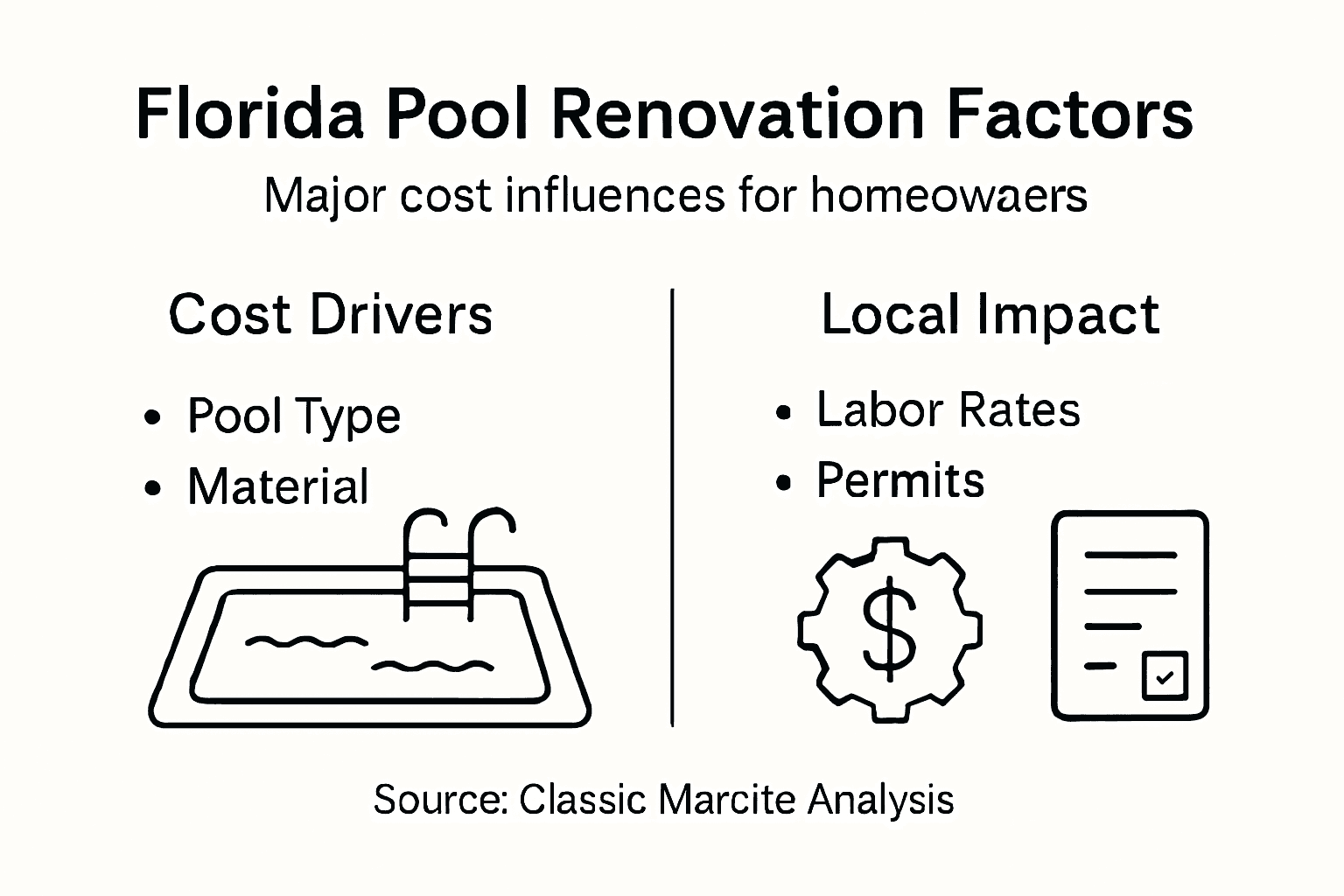
Labor costs often represent 40 to 60 percent of your total pool renovation budget, making them the single largest expense after materials. In Orlando and Jacksonville, what you pay for skilled technicians varies significantly based on market demand, contractor experience, and project complexity. Understanding these dynamics helps you evaluate quotes realistically and avoid getting blindsided by labor charges.
Florida’s pool renovation labor market operates under unique pressures. Seasonal demand spikes during fall and winter when homeowners want pools ready for cooler months, driving rates higher during peak periods. Summer work typically costs less since fewer homeowners schedule renovations during the hottest months. Beyond seasonality, construction labor costs depend on project complexity and local market factors, which directly apply to pool work. A straightforward resurfacing project requires less specialized labor than structural repairs involving concrete cutting or foundation work. Contractors with extensive experience using premium materials like Pebble Tec command higher rates than those working with basic plaster, but their expertise often prevents costly mistakes that could force expensive rework.
Regulatory compliance adds another layer to labor costs in Florida. Health codes and permitting requirements mandate inspections and adherence to specific standards that impact how much time contractors spend on your project. Permits require applications, inspections during work, and final sign-offs. A contractor unfamiliar with local Jacksonville or Orlando requirements might underestimate the time needed, creating scheduling delays and cost overruns. Experienced local contractors build these compliance hours into their estimates accurately.
When comparing labor quotes, look beyond the hourly rate. Ask about crew size, timeline, and whether the price includes permit coordination and inspections. A contractor charging $85 per hour who completes your project in three weeks costs less overall than someone charging $65 per hour but taking six weeks. Request references from recent Orlando or Jacksonville projects similar to yours. Labor quality matters enormously. Rushed work or inexperienced crews often create problems that require expensive fixes down the road, ultimately making the cheapest option your most costly decision.
Pro tip: Get at least three detailed quotes that break down labor costs separately from materials, and verify that contractors are licensed, insured, and familiar with current Florida permit requirements before making your decision.
Permits, Repairs, and Potential Hidden Costs
Every Florida pool renovation requires permits, but most homeowners underestimate the costs and complications involved. Permits aren’t just bureaucratic formalities, and they’re not cheap. Orlando and Jacksonville building departments charge permit fees ranging from a few hundred dollars to over a thousand depending on project scope. Beyond the permit fee itself, inspections during construction and final approvals add time and expense. What makes permits truly expensive, however, is what inspectors often discover once your pool is drained and exposed.
Hidden repair costs emerge constantly during renovations because problems aren’t visible until contractors actually start working. That small crack you could see from the deck might indicate much larger structural damage underneath the plaster. Corroded plumbing or electrical lines discovered during work must be replaced to meet current building codes, even if they weren’t part of your original plan. Florida Building Code compliance mandates these upgrades, and inspectors won’t sign off on your project without them. Foundation settlement, deteriorated concrete, and compromised pool shells all cost extra to repair. One client discovered their pool had shifted three inches during renovation, requiring substantial foundation work they hadn’t budgeted for.
Common hidden expenses include updated electrical systems, enhanced drainage requirements, and mandatory equipment replacements. Older pools often have outdated or inadequate drainage systems that new codes require you to improve. Permits trigger inspections that identify safety issues, forcing expensive corrections before approval. Health and building department inspections examine deck stability, coping condition, chemical handling systems, and circulation equipment. Non-compliant elements must be remedied. Storm surge elevation requirements in some Florida locations might mandate that your pool deck be raised to meet flood resilience standards.
The smartest approach involves budgeting an extra 15 to 20 percent beyond your estimate for unexpected discoveries. Ask your contractor upfront about common hidden costs they encounter in your specific area. Request that your contract include a contingency clause allowing for unforeseen repairs within a defined scope and budget range. Get everything in writing so surprises don’t become disputes. Experienced contractors familiar with Jacksonville and Orlando properties anticipate many hidden issues, but even they sometimes find surprises once excavation begins.
Pro tip: Budget at least 15 to 20 percent above your contractor’s estimate for hidden costs, and ask for written documentation of any changes before work proceeds beyond the initial scope.
Upgrades, Features, and Mistakes to Avoid
Not every upgrade makes sense for your situation, and some choices that seem appealing actually create long-term problems. Orlando and Jacksonville homeowners often spend money on features they rarely use while skipping practical upgrades that would genuinely improve their pool’s function and durability. Understanding which upgrades deliver real value and which are money sinks separates smart renovation decisions from costly mistakes.
Smart upgrades focus on efficiency and safety. Energy-efficient variable-speed pumps reduce electricity consumption by up to 75 percent compared to single-speed models, paying for themselves within a few years through lower utility bills. LED lighting systems cost more upfront but last far longer and consume minimal energy. Automated chemical control systems and pH monitors reduce guesswork and chemical waste. Salt-chlorine generators offer gentler water chemistry that feels better on skin and eyes. Safety upgrades like grab rails, improved deck drainage, and non-slip surfaces aren’t glamorous, but safety features compliant with Florida codes protect your family and prevent liability issues. Quality pool covers minimize evaporation and debris, cutting maintenance time significantly.
Mistakes to avoid often stem from chasing aesthetics over function. Infinity edges and waterfalls look stunning but cost substantial money to maintain and repair in Florida’s climate. Elaborate tile mosaics require expert installation and careful maintenance to prevent grout failure from humidity and chemical exposure. Heated pools sound luxurious until you see the electric bill, and heating systems demand regular maintenance that many owners neglect. Spa attachments built into pool decks create drainage problems and complicate resurfacing when your pool eventually needs updates. Choosing trendy colors or finishes that don’t suit Florida’s intense sun causes fading and discoloration. Adding features “just in case” wastes money on equipment you’ll never use.
The biggest mistake is underestimating how climate affects your choices. Florida’s saltwater air corrodes metal components rapidly, heat accelerates material degradation, and intense UV radiation fades colors and degrades plastics. Exotic features designed for cooler climates often fail here. Another critical error involves overlooking maintenance accessibility. If you can’t easily reach equipment for cleaning and repairs, you’ll either pay for expensive service calls or watch your pool deteriorate. Skipping necessary structural repairs to fund cosmetic upgrades creates problems that compound over time, eventually forcing expensive emergency repairs.
Pro tip: Prioritize upgrades that reduce energy use and maintenance time, ensure structural integrity and safety compliance, and suit Florida’s climate before considering aesthetic features that require constant upkeep.
Take Control of Your Florida Pool Renovation Costs with Expert Solutions
Understanding the many factors that influence pool renovation costs in Florida is vital to making smart decisions for your home. From choosing the right resurfacing materials to navigating permits and hidden repairs, these challenges can feel overwhelming. If you want durable, beautiful results that stand the test of Florida’s climate and save you money in the long run, careful planning and expert craftsmanship make all the difference.
Classic Marcite specializes in addressing exactly these concerns, offering trusted pool renovation and resurfacing services in Orlando and Jacksonville. With over 100,000 pools revamped using premium materials like Pebble Tec®, they transform your investment into a long-lasting oasis. Whether you need comprehensive structural repairs or energy-efficient equipment upgrades, their skilled team guides you through every step with transparency and professionalism.

Ready to elevate your pool while managing costs confidently? Visit Classic Marcite today to explore their full range of services including pool resurfacing, remodeling, and repairs. Request your free estimate now and turn your Florida pool renovation into a worry-free success.
Frequently Asked Questions
What are the primary factors that influence pool renovation costs?
The primary factors include pool type and structural condition, material and feature choices, local labor rates, permits, excavation needs, and local regulations.
How do different pool types affect renovation costs?
Concrete pools generally cost more to renovate than vinyl pools due to their durability and the complexity involved in resurfacing. Structural issues in older pools can also increase costs significantly.
What are the most common types of pool renovation projects?
Common renovation projects include resurfacing, equipment and efficiency upgrades, structural repairs, and remodeling. Combination projects that address multiple aspects at once are also popular among homeowners.
How can I prepare for unexpected costs during a pool renovation?
Budgeting an extra 15 to 20 percent beyond the initial estimate can help cover hidden costs. Consulting with contractors about common hidden expenses in your specific area is also advisable.
Recommended
- Why Renovate Your Pool: Boost Beauty And Value
- Pool Renovation Process: Transforming Florida Pools
- Sustainability In Pool Renovation: Eco-Friendly Benefits
- Pool Renovation Windermere, FL | Classic Marcite
- Pool Refinishing Windermere FL
- Pool Renovation Winter Park FL
- Swimming Pool Remodeling The Villages FL