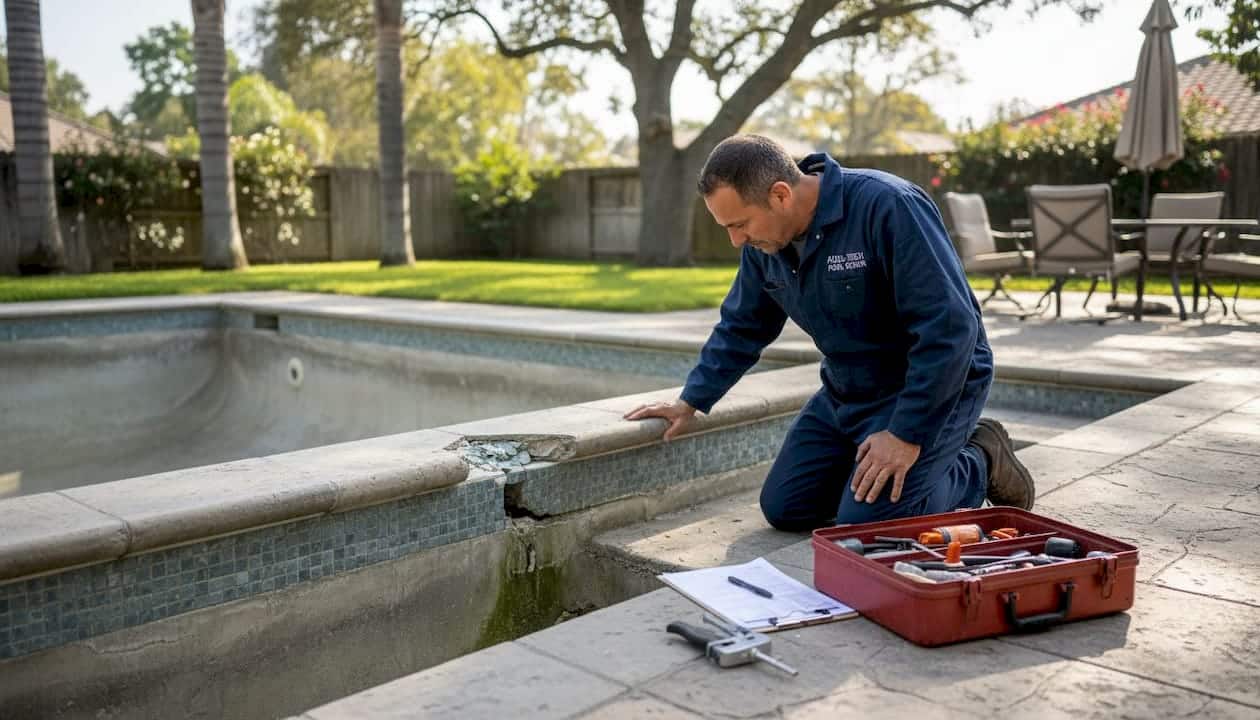
A small crack in your pool shell might seem harmless, but structural cracks cause water loss exceeding a quarter inch per day and can lead to catastrophic shell failure costing tens of thousands to rebuild. Many Florida homeowners mistake dangerous structural damage for simple cosmetic wear, delaying repairs until the problem becomes exponentially more expensive. This guide walks you through identifying true structural threats, understanding what causes them in Orlando and Jacksonville’s unique soil conditions, exploring proven repair methods, navigating Florida’s permit requirements, and budgeting realistic costs and timelines so you can protect your investment before a fixable crack becomes a total reconstruction.
Table of Contents
- Structural cracks vs. cosmetic cracks: Key differences
- Common causes of structural cracks in Florida pools
- Professional pool crack repair methods explained
- Florida rules: Code, permits, and who should repair your pool
- Costs, timelines, and what to expect from repairs
- Professional help for lasting pool repairs in Florida
- Frequently asked questions
Key Takeaways
| Point | Details |
|---|---|
| Structural vs cosmetic cracks | Only cracks through the pool shell threaten your pool’s integrity and cause serious water loss. |
| Repair method matters | Epoxy, polyurethane, staples, and cement each fit different crack types and movement behaviors. |
| Florida legal requirements | Repairs to a structural crack must follow Florida code and use licensed contractors for full protection. |
| Invest in root cause fixes | Addressing soil and drainage issues prevents recurrent cracks and costly repeat repairs. |
| Professional help pays off | Expert repairs last 10-30 years and safeguard your home or property’s investment. |
Structural cracks vs. cosmetic cracks: Key differences
Having highlighted the dangers of ignoring cracks, let’s make sure you can tell which cracks truly threaten your pool’s structure. The difference between a structural crack and a cosmetic one determines whether you face a few hundred dollars in surface patching or several thousand in emergency shell repair. Structural cracks extend through the full six to eight inch thick pool shell and cause significant water loss, while cosmetic cracks remain shallow surface blemishes that don’t compromise the pool’s integrity.
Structural cracks typically run deeper than a quarter inch, often spanning the entire shell thickness. They frequently appear at stress points like steps, benches, or where the deep end meets the shallow end. You’ll notice your water level dropping faster than normal evaporation rates, sometimes losing an inch or more overnight. The crack edges may show displacement, meaning one side sits higher than the other, and you might see soil or sand washing into the pool through the gap.
Cosmetic cracks, by contrast, stay confined to the plaster or surface finish layer. They’re usually hairline thin, don’t widen over time, and cause no measurable water loss. These surface cracks often result from normal plaster shrinkage during curing or minor settling that doesn’t affect the underlying shell. While they may look unsightly, they pose no immediate structural threat.
Key indicators of structural damage:
- Water level drops more than one inch per week beyond normal evaporation
- Crack width exceeds one eighth inch or continues widening
- Visible separation or offset between crack edges
- Cracks located at shell joints, beam connections, or equipment penetrations
- Soil, sand, or groundwater seeping into the pool
Misdiagnosing a structural crack as cosmetic leads homeowners to apply surface patches that fail within months, wasting money while the underlying damage worsens. One Orlando property manager learned this the hard way when a “simple crack” ignored for two seasons turned into a $40,000 shell reconstruction after the bond beam separated from the pool wall.
| Feature | Cosmetic Crack | Structural Crack |
|---|---|---|
| Depth | Surface only, less than 1/8 inch | Extends through shell, often full thickness |
| Water Loss | None measurable | More than 1/4 inch per day |
| Width | Hairline, stable | 1/8 inch or wider, may grow |
| Location | Random surface pattern | Stress points, joints, corners |
| Risk Level | Low, aesthetic only | High, threatens shell integrity |
| Repair Urgency | Can wait for resurfacing | Immediate professional attention |
“The most expensive mistake Florida pool owners make is treating a structural crack like a cosmetic one. By the time they realize the shell is compromised, the repair cost has tripled.”
Understanding why pool plaster cracks in Florida’s climate helps you distinguish between normal surface wear and serious structural movement. Review common pool repair examples to see how professionals identify and address each crack type differently.
Common causes of structural cracks in Florida pools
Now that you know how to spot a serious crack, understanding its cause gives you the power to choose the right repair and avoid recurrence. Florida’s geology creates a perfect storm for pool shell movement, particularly in Central and Northeast regions where Orlando and Jacksonville sit atop challenging soil conditions.
Karst and expansive clay soils, high water tables, and shifting sand are root causes of structural movement in Florida pools. Karst topography, common throughout Central Florida, features underground limestone that dissolves over time, creating voids and sinkholes that cause sudden ground settlement. When the soil beneath your pool shifts or collapses even slightly, the rigid concrete shell cracks under the stress.
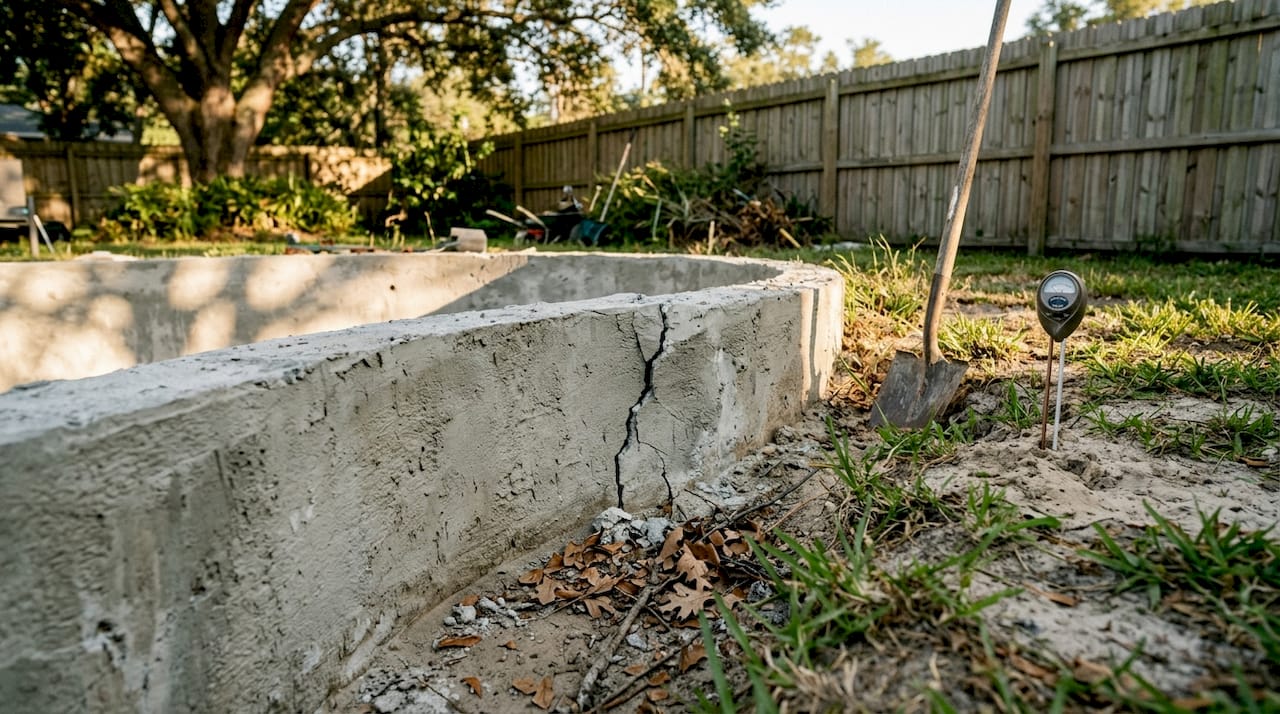
Expansive clay soils compound the problem by swelling when wet and shrinking during dry periods. This constant expansion and contraction cycle pushes against pool walls during rainy season and pulls away during drought, creating repetitive stress that eventually fractures the shell. Sandy soils, prevalent in coastal Jacksonville, offer poor load-bearing capacity and wash away easily, allowing pools to settle unevenly.
High water tables add another layer of complexity. During Florida’s wet season, groundwater pressure builds beneath pool shells, sometimes lifting them slightly or pushing laterally against walls. When the water table drops in dry months, the support disappears and the shell settles back down. This seasonal up and down movement fatigues the concrete, opening cracks at weak points.
Environmental factors accelerating crack formation:
- Heavy rainfall saturating soil and increasing hydrostatic pressure
- Drought conditions causing soil shrinkage and loss of support
- Tree roots growing beneath or against pool shells
- Poor drainage directing water toward pool foundations
- Inadequate compaction during original pool construction
- Nearby construction or excavation disturbing soil stability
Simply patching the visible crack without addressing the underlying soil movement guarantees the crack will reopen. A Jacksonville homeowner spent $2,000 on epoxy injection only to see the same crack reappear six months later because the clay soil beneath the pool continued its expansion cycle. The second repair included soil stabilization and proper drainage, finally solving the problem permanently.
Pro Tip: Before authorizing any structural crack repair, insist on a geotechnical assessment of your pool’s foundation. Spending $500 on soil testing now can save you $5,000 in repeated failed repairs later.
“In my 30 years repairing Florida pools, I’ve never seen a structural crack that wasn’t ultimately caused by soil or water table issues. Fix the ground problem first, or you’re just putting a Band-Aid on a broken bone.”
Learn more about Florida pool crack causes and how local conditions affect long-term pool integrity.
Professional pool crack repair methods explained
With the cause in mind, let’s explore how experts permanently fix different crack types using specialized techniques. Professional contractors deploy five primary repair technologies, each engineered for specific crack characteristics and movement patterns.
Epoxy injection, polyurethane foam, staple or carbon fiber stitching, hydraulic cement, and shell reconstruction are standard repair options, each best for specific situations. Choosing the wrong method wastes money and leaves your pool vulnerable to continued damage.
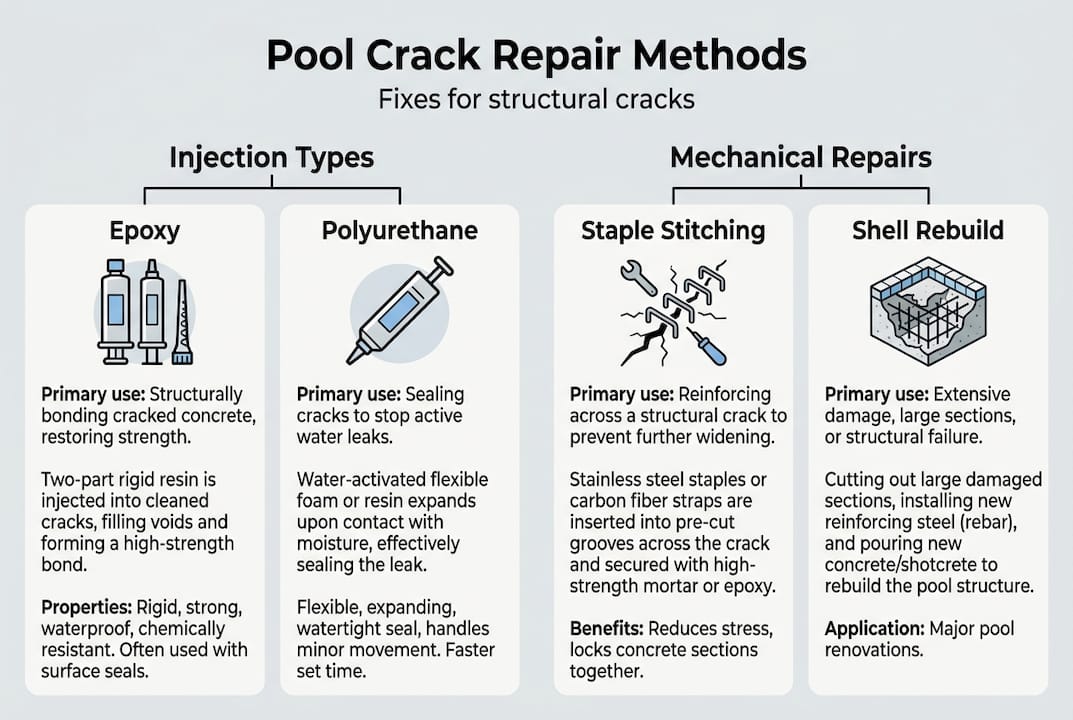
Epoxy injection works best for stable cracks that have stopped moving. Contractors drill entry ports along the crack, then pump two-part epoxy resin under pressure to fill the entire crack depth. The epoxy bonds stronger than the surrounding concrete, creating a watertight seal. This method excels for cracks caused by one-time settlement events but fails if ongoing soil movement continues stressing the shell.
Polyurethane foam injection handles active cracks better than epoxy because the foam remains slightly flexible after curing. The expanding foam fills voids behind the shell while sealing the crack itself. This technique works well when soil has washed out from behind the pool wall, as the foam stabilizes the area while accommodating minor continued movement.
Staple or carbon fiber stitching mechanically reinforces cracks by installing metal staples or carbon fiber strips across the crack line. Contractors cut slots perpendicular to the crack, embed the reinforcement, then seal everything with epoxy or hydraulic cement. This method prevents crack widening and handles areas subject to ongoing stress, like beam connections or step joints.
Hydraulic cement provides a quick, economical fix for minor cracks in low-stress areas. The cement expands slightly as it cures, creating a tight seal. However, it lacks the bonding strength of epoxy and the flexibility of polyurethane, making it suitable only for stable, non-critical cracks.
Shell reconstruction becomes necessary when cracks are too extensive, the concrete has deteriorated, or repeated repairs have failed. This involves removing and replacing entire shell sections, addressing underlying soil issues, and rebuilding with proper reinforcement. It’s the most expensive option but sometimes the only permanent solution.
| Repair Method | Best For | Strength | Flexibility | Cost Range | Longevity |
|---|---|---|---|---|---|
| Epoxy Injection | Stable cracks, no movement | Excellent | Rigid | $3,000-$8,000 | 15-30 years |
| Polyurethane Foam | Active cracks, void filling | Good | Moderate | $2,500-$6,000 | 10-20 years |
| Staple Stitching | High-stress areas | Excellent | Low | $4,000-$10,000 | 20-30 years |
| Hydraulic Cement | Minor stable cracks | Moderate | Rigid | $300-$1,200 | 5-10 years |
| Shell Reconstruction | Extensive damage | Excellent | N/A | $15,000-$50,000 | 30+ years |
What to expect during professional repair:
- Assessment phase: Contractor drains the pool, cleans the crack, and performs dye testing to map the full crack extent
- Preparation: Surface grinding, drilling injection ports, and setting up containment for resin overflow
- Repair execution: Injecting material under controlled pressure, monitoring fill progress, allowing proper cure time
- Finishing: Grinding flush, applying surface patch, acid washing to blend repair area
- Monitoring period: Refilling slowly while watching for leaks, waiting 30 days before resurfacing
Pro Tip: Many structural cracks require combination repairs. A crack at a beam connection might need staple stitching for reinforcement plus epoxy injection for waterproofing. Trust contractors who recommend multi-method approaches over those pushing a single solution for every problem.
Explore our DIY crack repair guide for surface-level fixes you can handle yourself, and review examples of professional repair to understand when to call experts. For deeper technical comparison, this repair methods analysis breaks down each approach’s engineering principles.
Florida rules: Code, permits, and who should repair your pool
Armed with repair options, it’s vital to follow state laws because official rules protect your investment. Florida’s building codes and contractor licensing requirements exist specifically to prevent shoddy repairs that fail prematurely or create safety hazards.
Pools in Florida require CPC (Certified Pool Contractor) or CGC (Certified General Contractor) licensed contractors and often need permits for structural repairs under Florida Building Code Chapter 454. Any repair involving the pool shell, bond beam, or structural components falls under these regulations. Surface plaster patching might not require permits, but anything affecting the shell’s integrity does.
Hiring unlicensed workers or skipping permits creates serious problems. Your homeowner’s insurance may deny future claims related to the pool if they discover unpermitted structural work. When selling your property, title companies can flag unpermitted pool modifications, delaying or killing the sale. Some buyers walk away entirely rather than assume liability for unknown repair quality.
Legal requirements for major pool structural repairs:
- Licensed contractor with active CPC or CGC certification
- Building permit obtained before work begins
- Engineered repair plan for cracks exceeding certain severity thresholds
- Inspection by local building department upon completion
- Proper hydrostatic valve installation if required by local code
- Soil testing and stabilization documentation when addressing foundation issues
Florida’s high water table makes hydrostatic relief valves critical in many areas. These valves prevent groundwater pressure from lifting your pool shell out of the ground during periods when the pool is drained for repairs. Local codes in Orlando and Jacksonville often mandate these valves, and inspectors will fail your repair if they’re missing.
“I’ve seen homeowners lose tens of thousands in property value because they hired their neighbor’s cousin to ‘fix’ a structural crack for cash. The repair failed, the insurance company refused coverage, and the next buyer’s inspector found the unpermitted work. Don’t let saving a few hundred dollars cost you the entire pool.”
Reputable contractors provide written warranties covering both materials and workmanship, typically ranging from one to five years depending on repair type. This warranty becomes worthless if the contractor lacks proper licensing and insurance. Always verify license status through Florida’s Department of Business and Professional Regulation website before signing any contract.
Understand why hiring licensed pool contractors matters for legal protection and quality assurance. Review contractor certifications to know what credentials to look for. Learn how routine pool repairs done correctly prevent major structural problems.
Costs, timelines, and what to expect from repairs
Finally, let’s cover what you’ll really pay, how long you’ll wait, and how to keep your pool in use for years to come. Structural crack repair costs vary dramatically based on crack severity, repair method, and whether underlying soil issues need correction.
Professional crack repairs range from $3,000 to $8,000 for typical structural cracks, minor surface repairs cost $300 to $1,200, bond beam repairs run $4,000 to $6,000, and complete resurfacing reaches $6,000 to $30,000 depending on pool size and finish material. These ranges reflect Central and Northeast Florida market rates as of 2026.
Breaking down costs by repair type helps you budget accurately. Epoxy injection for a single structural crack averages $3,500 to $5,000 including assessment, materials, and finishing. Adding staple stitching for reinforcement pushes costs to $6,000 to $8,000. Polyurethane foam injection typically costs slightly less at $2,500 to $4,500. If soil stabilization is required, add another $2,000 to $5,000 for grouting or underpinning work.
Timelines depend on repair complexity and weather conditions. Simple epoxy injection takes three to five days from draining to refilling. More involved repairs requiring soil work, multiple crack treatment, or extensive stitching can stretch to two weeks. Florida’s rainy season complicates scheduling since contractors need dry conditions for proper curing.
Typical repair timeline:
- Day 1-2: Drain pool, clean and assess cracks, prepare surfaces
- Day 3-5: Execute primary repair (injection, stitching, etc.)
- Day 6-7: Allow curing, apply surface finishing
- Day 8-10: Slow refill while monitoring for leaks
- Week 2-4: Observation period before final resurfacing if needed
Proper structural crack repair can last 10 to 30 years if the root cause is fixed. Repairs that only address the crack itself without correcting soil or drainage problems typically fail within two to five years. This is why comprehensive assessment matters more than choosing the cheapest bid.
After repair completion, monitor your pool carefully during the first year. Check water levels weekly to catch any new leaks early. Watch the repair area for signs of movement or new cracking. Most failures occur within the first six months if the repair was inadequate or the underlying cause persists.
Returning to swimming requires patience. Most repairs need at least 48 to 72 hours of curing before refilling begins. Once refilled, wait another 24 to 48 hours before adding chemicals and starting filtration. Some contractors recommend waiting a full week before swimming to ensure complete cure and proper water chemistry balance.
Maximizing repair longevity:
- Address all soil and drainage issues before repairing cracks
- Install proper hydrostatic valves to manage groundwater pressure
- Maintain consistent water levels to minimize shell stress
- Keep trees and large shrubs at least 10 feet from pool perimeter
- Schedule annual inspections to catch new cracks early
Investing in comprehensive repair now prevents exponentially higher costs later. A $5,000 repair today beats a $40,000 shell reconstruction in three years. Quality repairs that fix root causes can extend your pool’s lifespan by decades, protecting your property value and ensuring years of enjoyment.
When you’re ready to reopen your pool after repairs, follow this detailed safety guide to ensure proper startup procedures.
Professional help for lasting pool repairs in Florida
Armed with a clear plan, it’s time to connect with Central and Northeast Florida’s local experts who fix structural cracks right the first time. Understanding crack types, causes, and repair methods empowers you to make informed decisions, but executing those repairs requires specialized equipment, materials, and expertise that only licensed professionals possess.
We’ve spent over three decades perfecting structural crack repair techniques specifically for Orlando and Jacksonville’s challenging soil conditions. Our team holds all required state certifications and maintains relationships with local building departments to streamline permitting. Every repair begins with comprehensive assessment including soil analysis, hydrostatic testing, and engineered solutions that address root causes, not just visible symptoms.

Our pool repair service covers everything from minor surface cracks to complete shell reconstruction, always backed by written warranties and full code compliance. When repairs require resurfacing, we offer premium finishes including Pebble Tec that transform your pool while sealing repairs permanently. Explore pool resurfacing basics to understand how quality finishes protect repaired shells.
For Jacksonville area homeowners, our pool renovation services combine structural repairs with aesthetic upgrades, turning necessary maintenance into an opportunity to create the pool you’ve always wanted. We handle permits, inspections, and all technical details so you can focus on enjoying the results.
Contact us today for a comprehensive pool assessment. We’ll identify all structural issues, explain repair options in plain language, provide detailed cost estimates, and create a timeline that works for your schedule. Don’t wait until a repairable crack becomes a catastrophic failure.
Frequently asked questions
How can I tell if my pool crack is structural or just cosmetic?
Structural cracks in pools extend through the full shell thickness and cause noticeable water loss, while cosmetic cracks remain surface-only without affecting pool performance. Check for water level drops exceeding normal evaporation and crack depth beyond one eighth inch.
Can I repair a structural pool crack myself?
Major structural cracks require professional assessment, permits, and specialized repair methods. Florida law requires licensed contractors and permits for structural repairs, though DIY may work for minor surface cracks.
What causes cracks to keep coming back even after repair?
If soil conditions, water table fluctuations, or drainage problems go unfixed, cracks can recur even after professional repair. Karst and expansive clay soils plus high water tables are primary root causes in Florida that must be addressed for permanent solutions.
How long will my pool be out of use during a structural crack repair?
Repairs typically take three days to two weeks depending on severity and weather conditions. Professional repair processes include monitoring periods and may require 30 days of observation before final resurfacing.
Does insurance cover structural pool crack repair in Florida?
Insurance may cover repairs if the cause is storm, tree, or accident related but usually excludes soil movement or wear and tear. Review your policy’s specific exclusions and maintain documentation of all professional repairs to support future claims.