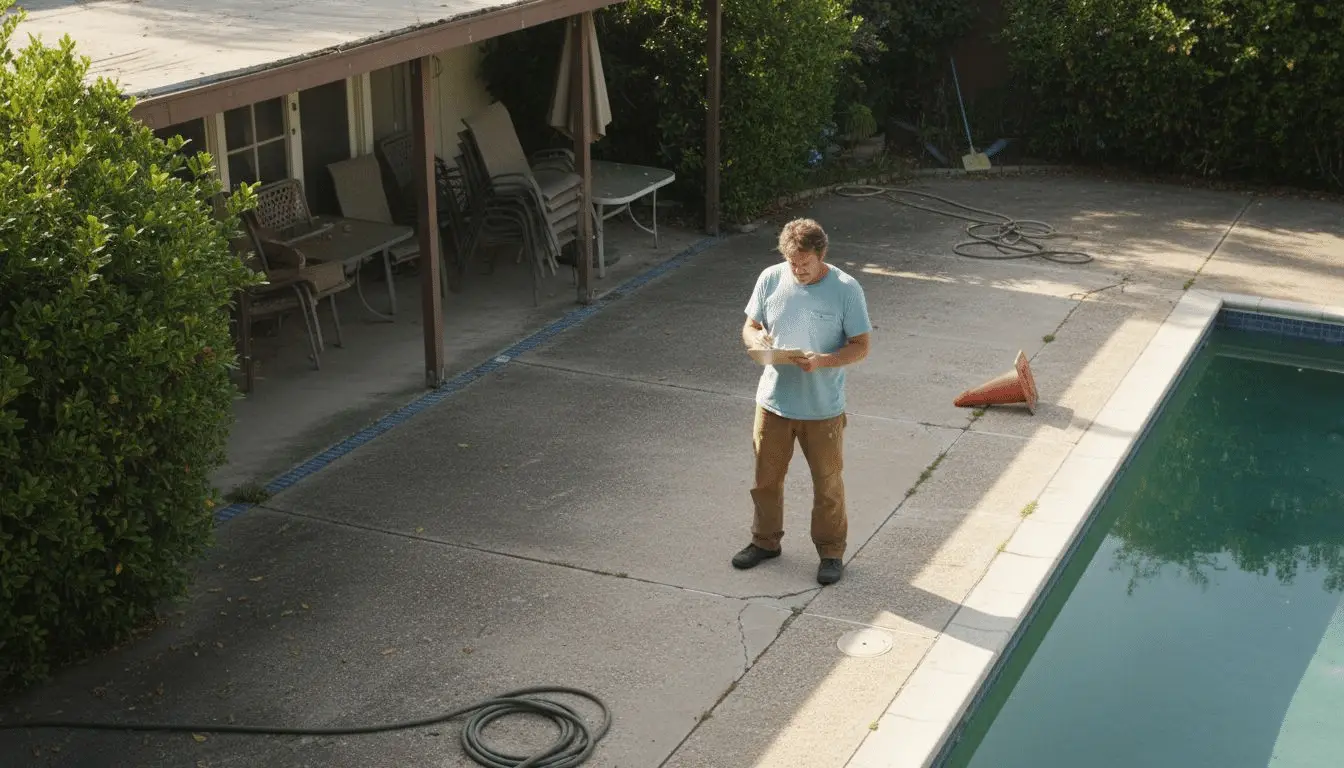
Over 60 percent of American homeowners with a pool experience concrete cracks or surface damage each year. Recognizing and fixing these issues quickly can prevent expensive structural repairs and keep your outdoor space safe for everyone. By following proven steps, you can restore your pool deck’s appearance and stability without unnecessary hassle or delay.
Table of Contents
- Step 1: Assess Pool Deck Condition and Damage
- Step 2: Prepare the Surface for Repair
- Step 3: Repair Cracks and Damaged Areas
- Step 4: Apply Resurfacing Materials
- Step 5: Inspect and Verify Quality of Repairs
Quick Summary
| Key Point | Explanation |
|---|---|
| 1. Inspect for Damage Thoroughly | Conduct a detailed visual assessment to identify cracks, spalling, and discoloration on your pool deck. Document all findings for effective repairs. |
| 2. Prepare Surface Properly | Clean the deck surface using a pressure washer, removing all debris and sealants to ensure good adhesion for new materials. |
| 3. Repair Cracks Effectively | Categorize cracks by size and depth; use appropriate materials like epoxy for hairline cracks and reinforcement for structural damage. |
| 4. Apply Resurfacing Materials Carefully | Choose the right concrete overlay, mix it according to specifications, and apply evenly to achieve a durable and visually appealing finish. |
| 5. Conduct a Thorough Final Inspection | Assess the repaired areas for smoothness and drainage functionality, documenting any irregularities to ensure quality and safety. |
Step 1: Assess Pool Deck Condition and Damage
Effective pool deck repair starts with a thorough inspection that identifies underlying structural issues and potential damage zones. Your goal is to understand the complete health of the concrete surface and its surrounding environment.
Begin by conducting a comprehensive visual assessment of your pool deck. Look for telltale signs of damage such as surface cracks, spalling concrete, and discoloration. Structural evaluations reveal critical insights into potential concrete deficiencies, which could compromise the deck’s integrity if left unaddressed. Pay close attention to areas with visible wear including edges near pool boundaries, high traffic zones, and sections exposed to significant moisture or temperature fluctuations.
Make sure to document each observed issue systematically. Take clear photographs from multiple angles and measure crack lengths and widths. Note the location of each defect and categorize them based on severity: hairline cracks, structural cracks, surface spalling, or deep concrete deterioration. This detailed documentation will help you or a professional determine the most appropriate repair strategy.
Here’s a practical summary of common pool deck defects and their typical causes:
| Type of Defect | Typical Cause | Area Most Affected |
|---|---|---|
| Hairline cracks | Concrete shrinkage or minor movement | Across larger surfaces |
| Structural cracks | Soil movement or lack of reinforcement | Near expansion joints |
| Surface spalling | Freeze-thaw cycles, salt exposure | Edge and top surfaces |
| Deep deterioration | Water infiltration and poor drainage | Areas with standing water |
Pro Tip: Use a bright flashlight and examine the deck surface during different times of day to reveal subtle imperfections that might be missed during a standard daytime inspection.
Step 2: Prepare the Surface for Repair
Preparing your pool deck surface is a critical phase that determines the success of your repair project. Your primary goal is to create an optimal foundation that ensures strong adhesion and long lasting results.
Begin the preparation process by thoroughly cleaning the entire deck surface. Comprehensive surface preparation involves sandblasting concrete to remove foreign matter and achieve a rough texture for mechanical bonding. Use a pressure washer with a minimum 3000 PSI rating to eliminate dirt, debris, and loose concrete particles. Pay special attention to removing any existing sealants, paint, or previous repair materials that might interfere with new coating adhesion.

After cleaning, inspect the surface for remaining cracks or imperfections. Use a wire brush to clean crack edges and remove any loose material. Select an appropriate concrete repair compound compatible with your specific deck material. Apply the compound carefully using a trowel, ensuring you fill cracks completely and create a smooth, even surface. Allow sufficient time for the repair materials to cure according to manufacturer recommendations.
Pro Tip: Work in small sections and maintain a consistent temperature between 50 and 85 degrees Fahrenheit during surface preparation to optimize repair material performance.
Step 3: Repair Cracks and Damaged Areas
Repairing pool deck cracks requires precision and understanding of the underlying structural issues. Your objective is to restore the deck’s integrity and prevent further damage through targeted repair techniques.
Systematic assessment of concrete damage helps identify the root causes of structural deterioration. Begin by categorizing cracks based on their width and depth. Hairline cracks under 1/8 inch typically require flexible epoxy injection, while wider structural cracks may need more comprehensive reinforcement. For narrow cracks, use a low viscosity epoxy that can penetrate deeply and create a strong seal. Inject the material carefully using specialized equipment, ensuring complete fill from bottom to top.
For more significant damage areas, consider additional reinforcement techniques. Forensic analysis reveals that concrete cracks often stem from issues like shrinkage, inadequate reinforcement, and differential movement. When dealing with larger cracks or spalling concrete, you might need to install additional rebar or use carbon fiber reinforcement strips to stabilize the surface. Apply repair mortar in layers, allowing each layer to cure properly before adding the next. Smooth the surface using a trowel to ensure an even finish that blends seamlessly with the existing deck.
Pro Tip: Always wear protective gear like safety glasses and gloves when working with concrete repair materials, and mix compounds in small batches to prevent premature hardening.
Step 4: Apply Resurfacing Materials
Applying resurfacing materials is a critical step that transforms your pool deck’s appearance and functionality. Your goal is to create a smooth, durable surface that withstands weather conditions and provides aesthetic appeal.
Comprehensive pool deck resurfacing involves selecting the right materials and applying them with precision. Start by choosing a high quality concrete overlay or resurfacing compound compatible with your existing deck surface. Mix the material according to manufacturer specifications, ensuring consistent texture and proper viscosity. Use a long handled squeegee or specialized trowel to spread the resurfacing material evenly across the prepared surface. Work in small sections to maintain control and achieve a uniform application.
Once the base layer is applied, consider additional customization options to enhance your deck’s appearance. You can incorporate color hardeners, decorative stamps, or textured finishes that complement your outdoor space. Carefully blend the new surface with existing concrete edges, creating a seamless transition. Allow sufficient curing time between layers, and avoid foot traffic or water exposure during the initial drying period. Proper application techniques address surface deterioration and create a durable, attractive pool deck finish.
The following table summarizes common repair materials and their ideal uses for pool deck restoration:
| Repair Material | Best For | Key Benefit |
|---|---|---|
| Flexible epoxy injection | Hairline cracks | Penetrates and seals cracks |
| Reinforcement rebar | Structural cracks | Adds structural strength |
| Repair mortar | Surface spalling | Restores surface smoothness |
| Concrete overlay compound | Full resurfacing | Enhances appearance/durability |

Pro Tip: Work during moderate temperatures between 55 and 75 degrees Fahrenheit to ensure optimal material performance and prevent premature drying or uneven application.
Step 5: Inspect and Verify Quality of Repairs
The final stage of pool deck repair involves a comprehensive evaluation to ensure your restoration work meets professional standards. Your objective is to meticulously examine every repaired section and confirm structural integrity and aesthetic quality.
Utilize a detailed inspection checklist that covers all critical aspects of deck condition and safety. Begin by performing a visual assessment in bright daylight, looking for any uneven surfaces, color variations, or remaining imperfections. Run your hand carefully across the repaired areas to check for smooth transitions and detect any subtle irregularities. Pay special attention to the edges where new and existing surfaces meet, ensuring a seamless blend without visible seams or level differences.
Conduct a comprehensive functional test by walking across the entire repaired surface. Apply moderate pressure to check for any signs of weakness or movement. Check for proper drainage by observing how water flows across the deck during light water application. Look for any signs of bubbling, cracking, or separation that might indicate inadequate repair or material incompatibility. Take multiple photographs from different angles to document the repair work and create a visual record for future reference.
Pro Tip: Perform your final inspection during different times of day and under varying light conditions to reveal any subtle imperfections that might be missed in a single assessment.
Restore Your Pool Deck with Trusted Expertise and Lasting Results
Facing cracked, damaged, or deteriorating pool decks can be frustrating and overwhelming. The detailed steps in the “Pool Deck Repair Process: Step-by-Step Guide for Success” reveal the importance of thorough assessment, precise crack repair, surface preparation, and professional resurfacing to ensure durability and beauty. If you’re ready to move beyond temporary fixes and want a pool deck that stands the test of Florida’s weather and frequent use, expert help is critical.
At Classic Marcite, we understand these challenges deeply. With over 30 years and 100,000 pools resurfaced across Orlando and Jacksonville, our team specializes in pool deck revitalization using premium materials like Pebble Tec®. Our proven process aligns perfectly with the steps needed for strong crack repair, proper surface preparation, and superior finishing that your pool deck deserves.

Ready to give your pool deck a stunning, long-lasting makeover? Visit Classic Marcite to explore how our expert pool resurfacing and deck repair services can restore your outdoor space. Don’t wait until minor cracks turn into costly problems. Contact us today for a free estimate and experience craftsmanship that turns your pool deck into a durable and inviting oasis. Start your journey now by learning more about pool resurfacing solutions designed just for you.
Frequently Asked Questions
How do I assess the condition of my pool deck before repairing it?
To assess your pool deck’s condition, conduct a thorough visual inspection for signs of damage like cracks, spalling, and discoloration. Document the issues by taking photographs and measuring the severity of each defect to determine the best repair approach.
What materials do I need to prepare the surface of my pool deck for repair?
You will need a pressure washer, cleaning solution, and a wire brush to clean the surface. Additionally, have a compatible concrete repair compound ready to fill in any cracks and smooth the surface for effective adhesion.
How do I repair cracks and damaged areas on my pool deck?
To repair cracks, categorize them by width and depth, then use methods like epoxy injection for hairline cracks or reinforcement techniques for larger cracks. Apply the repair material carefully, ensuring that it fills the cracks completely and cures correctly according to the manufacturer’s instructions.
What steps should I follow to apply resurfacing materials on my pool deck?
To apply resurfacing materials, first mix the chosen overlay or resurfacing compound according to the instructions. Spread the material evenly using a long-handled squeegee and consider adding decorative elements for aesthetic appeal.
How can I verify the quality of my pool deck repairs?
You can verify repair quality by conducting a comprehensive visual inspection for smoothness and color uniformity, followed by a functional test by walking across the surface. Ensure that water drains properly and there are no signs of bubbling or cracking; documenting the final assessment with photographs is also helpful.
