
Most homeowners in Orlando and Jacksonville assume that owning a pool means spending every weekend testing water, adjusting chemicals, and babysitting equipment. That assumption is outdated. Pool automation technology has quietly transformed what it means to own a pool, turning a labor-intensive routine into something you can manage from your phone in under a minute. In this guide, you’ll learn exactly how automation systems work, what they save you, and how to choose the right setup for your Florida pool. Whether you’re starting fresh or upgrading an existing pool, the information here will help you make a smarter decision.
Table of Contents
- What is pool automation and how does it work?
- Top benefits of pool automation for homeowners
- Comparing manual vs. automated pool management
- Practical tips for choosing and implementing pool automation
- Our take: Why smart pool automation is a game-changer in Florida
- Ready to transform your pool? Classic Marcite can help
- Frequently asked questions
Key Takeaways
| Point | Details |
|---|---|
| Major time savings | Pool automation cuts ordinary maintenance and lets you enjoy your pool more. |
| Lower operating costs | Smart scheduling and efficient equipment can reduce energy bills by up to 70 percent. |
| Better water quality | Automated chemical monitoring means your pool stays clean and safe with less work. |
| Easy upgrades | Most pools can add automation features with phased or all-at-once upgrades. |
What is pool automation and how does it work?
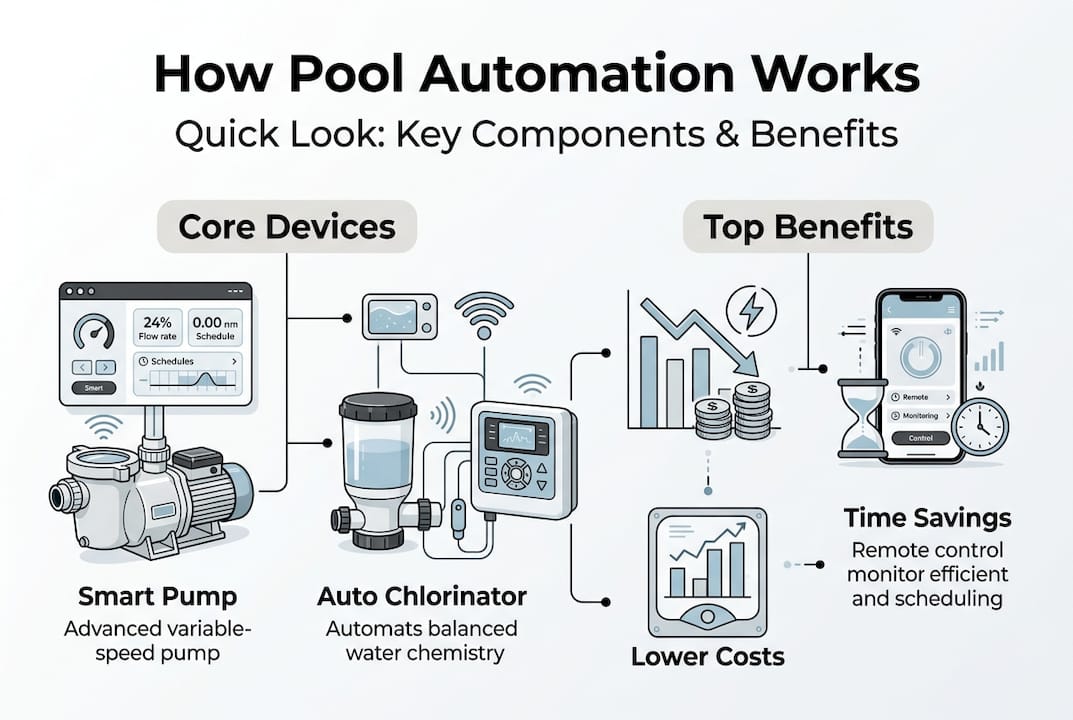
Pool automation refers to any system that controls pool functions electronically, either on a schedule or through remote commands. Instead of manually flipping switches, adding chemicals by hand, or adjusting heaters yourself, an automated system handles those tasks based on your preferences and real-time data from sensors.
The core components of a modern pool automation system include:
- Pumps and filtration controllers: These run your circulation system on a set schedule, often using variable-speed pumps that adjust power output based on demand.
- Chemical dosing systems: Sensors monitor pH, chlorine, and alkalinity levels, then automatically dispense the right chemicals to keep water balanced.
- Lighting controls: LED pool lights can be programmed for color, brightness, and timing through an app.
- Heater and temperature management: Automation keeps your pool at a consistent temperature without manual adjustments.
- Smart home integration: Most modern systems connect to platforms like Amazon Alexa, Google Home, or dedicated apps, giving you full control from anywhere.
Here’s a quick breakdown of common automation components and what they do:
| Component | Function | Control method |
|---|---|---|
| Variable-speed pump | Adjusts flow rate for efficiency | App or timer |
| Chemical feeder | Doses pH and chlorine automatically | Sensor-triggered |
| LED lighting | Sets ambiance and safety lighting | App or schedule |
| Pool heater | Maintains target water temperature | App or thermostat |
| Robotic cleaner | Cleans floor and walls on schedule | Timer or remote |
You can explore residential pool automation examples to see how these systems look in real Florida pools. For homeowners already thinking about upgrading pool equipment, automation is a natural next step. For a broader overview, more on pool automation systems covers the technical side in detail.
Top benefits of pool automation for homeowners
With a clear idea of what pool automation is, let’s explore the biggest advantages it brings to your everyday life.
The most immediate benefit is convenience. You can turn on your pool lights, start the heater before you get home, or check chemical levels without stepping outside. That kind of control matters, especially during Florida’s unpredictable summer storms when you need to shut down equipment fast.
Here are the key benefits automation delivers:
- Remote operation: Control everything from your smartphone, whether you’re at work or on vacation.
- Consistent water quality: Automated chemical systems react to real-time sensor data, keeping your water balanced without guesswork.
- Lower energy bills: Automated systems can save pool owners up to 70% on operational costs by optimizing pumps and heating schedules.
- Extended equipment life: Running pumps and heaters only when needed reduces wear significantly.
- Storm and weather response: Florida-specific automation settings let you pre-program shutdowns or adjustments based on weather alerts.
For Orlando and Jacksonville homeowners, the climate factor is real. Intense UV exposure, heavy rain seasons, and temperature swings mean your pool chemistry shifts faster than in cooler states. Automation responds to those shifts in real time, which energy-saving automation confirms reduces both chemical waste and equipment strain.
The professional pool service benefits are also amplified when your pool is already automated. Technicians spend less time on basic adjustments and more time on meaningful maintenance.
Stat callout: Pairing a variable-speed pump with an automated schedule is one of the highest-ROI upgrades available to pool owners in Florida, with energy savings often covering the cost of the system within two years.
Pro Tip: Combine your variable-speed pump with a time-of-use energy schedule. Run the pump during off-peak electricity hours, typically late night or early morning, to stack energy savings on top of automation efficiency.
Comparing manual vs. automated pool management
Understanding the benefits is helpful, but let’s see how pool automation stacks up against traditional maintenance.
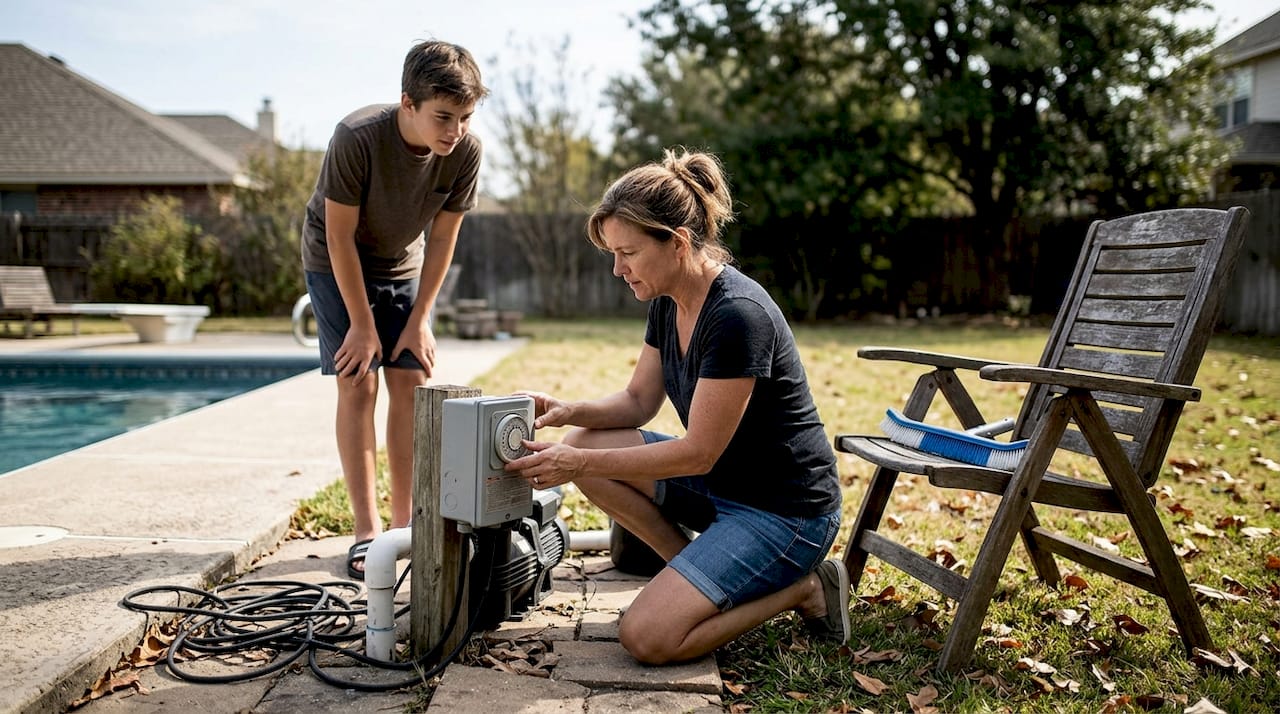
Manual pool care involves a predictable but time-consuming routine. You test water chemistry two to three times per week, add chemicals by hand, clean filters, backwash the system, and manually adjust timers for pumps and heaters. For a typical Florida pool, that’s roughly four to six hours of active maintenance per week during peak season.
“Pool automation systems can cut maintenance time by half or more, freeing up weekends for relaxation.”
Here’s how the two approaches compare directly:
| Factor | Manual management | Automated system |
|---|---|---|
| Weekly time investment | 4 to 6 hours | Under 1 hour |
| Chemical accuracy | Human error possible | Sensor-driven precision |
| Energy cost | Higher, fixed schedules | Lower, demand-based |
| Equipment wear | Higher from overuse | Lower from smart cycling |
| Consistency | Variable | Consistent |
Automation simplifies or eliminates these common manual tasks:
- Manual water testing and chemical addition
- Adjusting pump run times seasonally
- Turning lights and heaters on and off
- Monitoring for equipment faults or leaks
- Scheduling cleanings and backwash cycles
For more on manual versus automated pool care, the contrast in long-term costs is especially clear. Homeowners who invest in smart pool equipment upgrades consistently report fewer service calls and lower repair bills over time. Staying on top of routine pool repairs also becomes easier when your system alerts you to problems before they escalate.
Practical tips for choosing and implementing pool automation
After seeing the dramatic difference automation can make, here’s how you can choose and roll out the right solutions for your pool.
Start by assessing your current setup. Older pools with outdated pumps, single-speed motors, or analog timers will need some equipment updates before full automation is possible. Newer pools are often automation-ready with minor additions.
Here’s how to sort your priorities:
Must-have features:
- Variable-speed pump with scheduling capability
- Automated chemical dosing or monitoring system
- Remote access via app or control panel
Nice-to-have features:
- Programmable LED lighting
- Automated pool cover control
- Weather-triggered system adjustments
- Voice assistant integration
Automated equipment upgrades can be phased in for flexibility and cost control, which means you don’t have to automate everything at once. Start with the components that deliver the most immediate value, then expand.
When selecting an installer, ask these questions:
- Do you have experience with Florida pool systems specifically?
- What brands do you install and support?
- Is remote monitoring included or an add-on?
- What does the warranty cover?
For homeowners considering a full upgrade, exploring remodeling options for pool automation can help you bundle automation with other improvements for better overall value. Also review pool automation safety tips before installation to ensure your setup meets local safety standards.
Pro Tip: Start with pump and chemical automation first. These two systems deliver the fastest payback and the most noticeable reduction in weekly effort. Add lighting and heater controls in a second phase once you’re comfortable with the platform.
Our take: Why smart pool automation is a game-changer in Florida
After working with pool owners across Orlando and Jacksonville for decades, we’ve seen a clear pattern. Homeowners who hesitate on automation usually cite two concerns: cost and complexity. Both are largely myths at this point.
Modern automation systems are more affordable than ever, and the real-world benefits of pool automation show up fast in lower utility bills and fewer service visits. Florida’s climate makes automation especially valuable. You’re dealing with intense sun, heavy rain, algae-friendly heat, and rapid chemistry shifts. A manual approach simply can’t keep up with those conditions as reliably as a sensor-driven system can.
The long-term energy savings alone often justify the investment within two years. But beyond the numbers, automation changes how you relate to your pool. It stops being a chore and starts being an asset. In Orlando and Jacksonville, where outdoor living is a year-round reality, that shift in experience is genuinely significant. Automation is no longer a luxury upgrade. It’s becoming the baseline expectation for well-maintained pools in this region.
Ready to transform your pool? Classic Marcite can help
If you’re ready to get more out of your pool with less effort, Classic Marcite is here to help you take the next step. With over 35 years of experience and more than 100,000 pools resurfaced across Florida, we understand what it takes to build a pool that performs beautifully and runs efficiently.

We pair pool resurfacing basics with modern equipment upgrades so your pool looks great and runs smart. Explore our pool remodeling services to see how we bundle surface work with automation-ready improvements. You can also browse our completed residential pool projects for real examples from homeowners just like you. Contact us today for a no-obligation consultation and find out what your pool could look like with the right upgrades in place.
Frequently asked questions
How much does it cost to automate an inground pool in Florida?
The cost to automate an inground pool in Florida typically ranges from $1,500 to $5,000, depending on the features and system complexity you choose.
Can I add pool automation to my existing pool?
Most existing pools can be upgraded with automation systems, though older equipment may need compatible replacements. Existing pools can be retrofitted with modern automation without a full rebuild.
Do pool automation systems really save energy?
Yes. Automated scheduling and variable-speed pumps can cut energy usage by up to 70% compared to running equipment manually on fixed schedules.
Are pool automation systems hard to use?
Not at all. Modern pool automation uses intuitive apps and control panels that most homeowners can learn in under an hour, with no technical background required.
What features should I automate first for the best impact?
Start with your pump and chemical controls. These two systems offer the most immediate savings and maintenance relief, as pumps and chemical automation consistently deliver the highest value for homeowners.
Recommended
- Energy-efficient Pool Upgrades: Save 87% On Costs In 2026
- Pool Maintenance In Florida: Cut Chlorine Use By 2.5x
- 7 Cost-Saving Pool Renovation Tips For Florida Homeowners
- Pool Equipment Upgrades: Maximize Performance And Value
- Nachhaltige Automatisierung: Effizienz ohne Kompromisse – EcomTask
- Pool Resurfacing The Villages FL
