TL;DR:
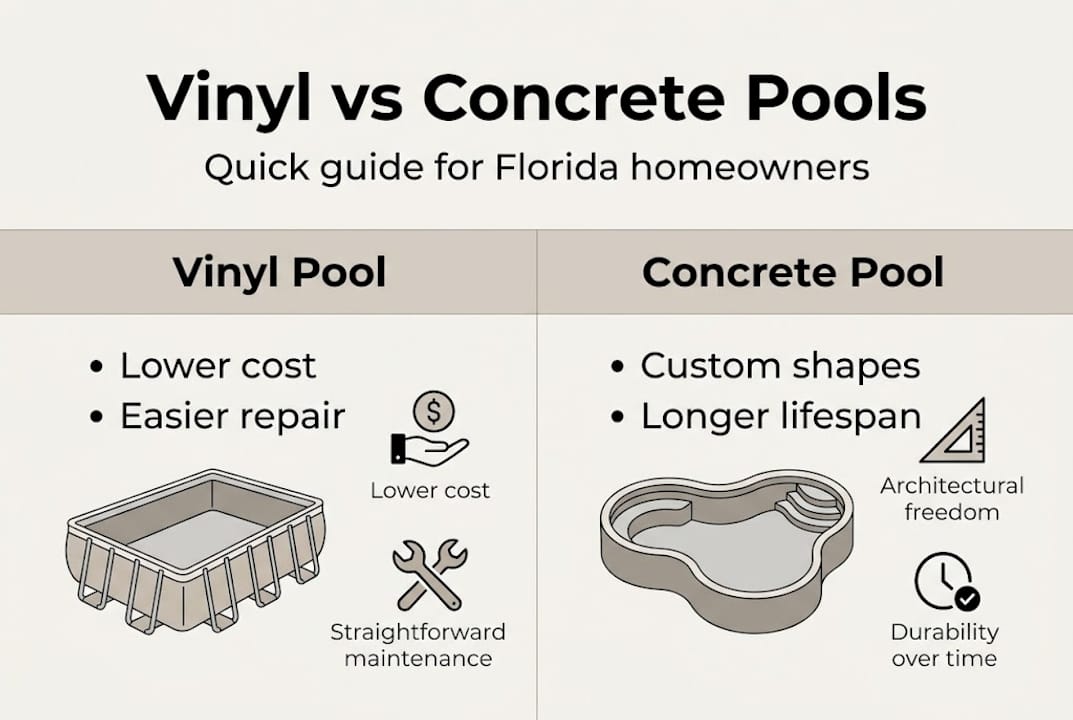
- Vinyl pools have lower initial costs but require liner replacements every 7-10 years.
- Concrete pools last longer and offer greater design flexibility but come with higher upfront and maintenance costs.
- Proper maintenance and local climate understanding are crucial regardless of pool material choice.
Most Orlando and Jacksonville homeowners assume that once a pool is in the ground, the material it’s made from is just a technical detail. It isn’t. The choice between vinyl and concrete affects how much you spend over the next decade, how often you’re calling a contractor, and whether your backyard looks like a resort or a rental. Florida’s intense sun, seasonal storms, and shifting soil make these differences even more pronounced. This article breaks down what each pool type actually involves, how they compare on durability, aesthetics, and cost, and what matters most when you’re planning a renovation.
Table of Contents
- Understanding vinyl and concrete pools
- Comparing durability, maintenance, and lifespan
- Aesthetics and customization options
- Costs, value, and renovation considerations in Florida
- The overlooked reality: Why context matters more than material
- Ready to renovate? Get expert help choosing your perfect pool
- Frequently asked questions
Key Takeaways
| Point | Details |
|---|---|
| Material choice matters | Vinyl and concrete offer distinct pros and cons for durability, cost, and style. |
| Concrete lasts longer | Concrete pools have longer lifespans and higher customization options, but require resurfacing. |
| Vinyl is budget-friendly | Vinyl pools cost less upfront and are easier to repair but require new liners every decade. |
| Local factors are key | Florida’s climate, property value, and owner lifestyle should guide your pool renovation decision. |
Understanding vinyl and concrete pools
Before comparing the two, it helps to understand what makes each one distinct at the construction level. A vinyl pool uses a flexible liner stretched over a custom-built frame, typically made from steel, aluminum, or polymer panels. The liner itself is a thick sheet of vinyl, usually 20 to 30 millimeters, that forms the waterproof surface you swim in. Vinyl-lined pools use a flexible liner stretched over a custom frame, while concrete pools are built on-site using rebar and concrete.
Concrete pools are an entirely different construction process. Workers install a steel rebar skeleton, then apply concrete using either shotcrete (sprayed dry mix) or gunite (sprayed wet mix). Once cured, the shell is finished with plaster, tile, pebble aggregate, or other surface materials. This process takes longer, but the result is a permanent, rigid structure that can be shaped into almost any form.
Here’s a quick comparison of the basic features:
- Installation time: Vinyl pools typically take 1 to 3 weeks; concrete pools take 3 to 12 weeks
- Initial cost: Vinyl pools are generally less expensive upfront; concrete pools carry a higher starting price
- Structure: Vinyl is flexible and frame-supported; concrete is a rigid, monolithic shell
- Shape options: Vinyl is limited to manufacturer molds; concrete can be fully custom
- Surface feel: Vinyl is smooth; concrete surfaces vary by finish
One common misconception is that all in-ground pools are concrete. Many homes in Central Florida actually have vinyl-lined pools, especially in neighborhoods built during the 1980s and 1990s when vinyl was a popular cost-saving option. Understanding this distinction matters because it directly affects what pool surface upgrades are available to you and what renovation costs to expect down the road.
Comparing durability, maintenance, and lifespan
Living with a pool in Florida means dealing with UV exposure, heavy rainfall, and ground movement year-round. How each pool type holds up under those conditions is where the real differences emerge.
| Feature | Vinyl pool | Concrete pool |
|---|---|---|
| Typical lifespan | 20+ years (structure) | 25+ years |
| Surface replacement | Every 7-10 years | Every 10-15 years |
| Resistance to algae | Moderate (liner can harbor algae at seams) | Lower (porous surface needs more chemical treatment) |
| Susceptibility to damage | Tears, punctures | Cracks, staining |
| Chemical sensitivity | High (harsh chemicals degrade liner) | Moderate |
Concrete pools last 25+ years but require resurfacing every 10-15 years; vinyl liners last around 7-10 years before needing replacement.
For vinyl pools, routine upkeep includes:
- Inspecting the liner regularly for tears or lifting at the seams
- Balancing pH carefully to avoid liner degradation
- Brushing walls weekly to prevent algae growth at seams
- Budgeting for a full liner replacement roughly every decade
For concrete pools, routine upkeep includes:
- Brushing the surface 2 to 3 times per week due to porosity
- Monitoring for cracks, especially after Florida’s rainy season
- Acid washing every 3 to 5 years to remove staining
- Scheduling resurfacing before the surface becomes rough or pitted
Pro Tip: Plan your resurfacing or liner replacement budget before you need it. Waiting until a liner tears or a concrete surface becomes unsafe almost always costs more because emergency scheduling and deferred damage add up fast. Knowing your pool’s age and material puts you in control of the timeline. Staying ahead of maintenance after resurfacing also extends the life of your investment significantly.
For busy Florida homeowners, concrete pools can feel like more work week to week, but the longer surface lifespan means fewer major renovation events. Vinyl pools are easier to manage chemically but demand more frequent replacement cycles. Knowing how to approach maintaining pool surfaces for your specific material is the starting point for keeping costs predictable.
Aesthetics and customization options
Your pool is a visual centerpiece. The material you choose determines how much creative control you have over its final appearance.
| Feature | Vinyl pool | Concrete pool |
|---|---|---|
| Shape flexibility | Limited to pre-set molds | Fully custom |
| Color options | Wide range of liner patterns | Plaster, pebble, tile, aggregate |
| Texture | Smooth | Varies by finish |
| Tile accents | Limited | Extensive |
| Finish upgrades | Liner replacement only | Multiple resurfacing options |
Concrete pools can be custom-shaped to suit unique spaces and offer a wider variety of finishes than vinyl liners. That flexibility is a major reason why higher-end homes in Orlando and Jacksonville tend to favor concrete.
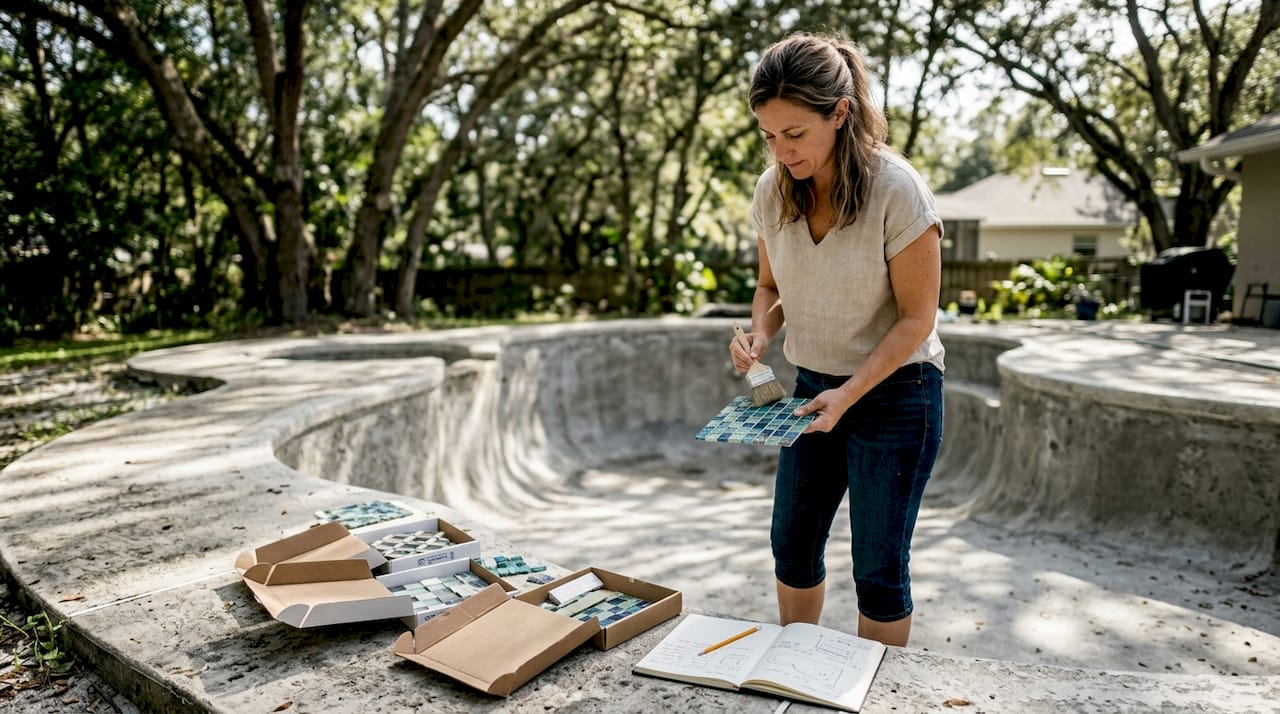
For vinyl pools, customization comes primarily through liner patterns. You can choose from hundreds of designs, including tile-look prints, solid colors, and geometric patterns. The look is clean and consistent, but it’s a printed surface, not a true material finish. Over time, liner colors can fade under Florida’s UV intensity.
Here’s what customization really means in practice:
- Concrete pools can incorporate vanishing edges, beach entries, tanning ledges, and irregular shapes that vinyl simply can’t replicate
- Finish choices like Pebble Tec® aggregate, glass tile, or colored plaster give concrete pools a high-end look that holds up over time
- Vinyl liners work well for standard rectangular or kidney shapes and suit homeowners who prioritize a clean, budget-friendly aesthetic
- Resale impact is real: buyers in Florida recognize the difference, and a well-finished concrete pool with quality pool interior finishes typically adds more perceived value
If you want to see how these finishes translate in real homes, browsing examples of pool finishes on actual Florida properties gives you a much clearer picture than reading specs alone. The most popular looks in Orlando and Jacksonville right now lean toward natural pebble aggregates and dark plaster finishes that create a resort-style depth of color.
Costs, value, and renovation considerations in Florida
Numbers matter. Here’s a realistic breakdown of what each pool type costs to own over time in Florida.
- Installation cost: Vinyl pools typically run $35,000 to $65,000 installed; concrete pools range from $50,000 to $100,000 or more depending on size and finish
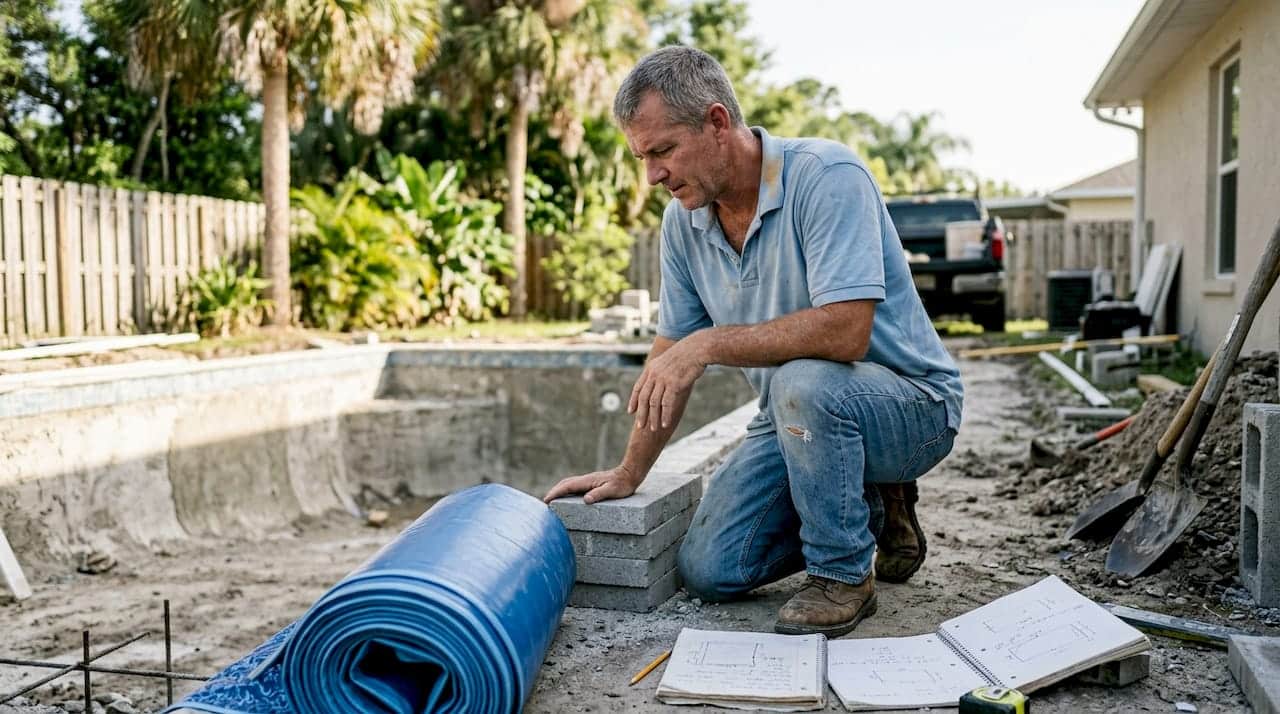
- Liner replacement: A full vinyl liner replacement costs $4,000 to $10,000 every 7 to 10 years
- Concrete resurfacing: Resurfacing a concrete pool runs $10,000 to $25,000 depending on finish material, but it’s needed less frequently
- Chemical costs: Concrete pools typically require more chemicals due to their porous surface, adding $50 to $100 per month in ongoing costs
- Energy and equipment: Both types use similar equipment, but concrete pools with rough surfaces can stress pumps more over time
Vinyl pools are typically less expensive upfront but may require more frequent renovations than concrete pools, which generally add more long-term value. That gap matters when you’re thinking about resale.
Florida buyers are pool-savvy. In Orlando and Jacksonville markets, a concrete pool with a quality finish is often viewed as a premium feature, while a vinyl pool with an aging liner can actually create hesitation during a home sale. The reasons for pool renovation that drive the most return on investment tend to involve surface upgrades, not just repairs.
Pro Tip: If you’re planning to sell within five years, a concrete pool resurfacing with a premium finish like Pebble Tec® often returns more value than the cost of the renovation itself. Buyers notice the difference immediately.
Florida-specific factors to weigh:
- Ground shifting from sandy soil can stress vinyl liners and crack concrete differently
- Hurricane season means your pool surface needs to handle debris impact and chemical fluctuations
- Year-round use accelerates wear on both types compared to northern climates
The overlooked reality: Why context matters more than material
After working on over 100,000 pools across Central Florida and beyond, we’ve seen homeowners make the same mistake repeatedly. They spend weeks debating vinyl versus concrete when the real question is: what does your specific situation actually demand?
A retired couple in a shaded Orlando backyard with low bather load has completely different needs than a family in Jacksonville with three kids using the pool daily from March through November. The “better” material depends on your usage patterns, your tolerance for maintenance, your renovation budget, and how long you plan to stay in the home.
We’ve also seen homeowners choose vinyl to save money upfront, then spend more over 15 years in liner replacements and repairs than they would have on a concrete pool built right the first time. The reverse happens too: someone installs a high-end concrete pool they never properly maintain, and the surface degrades faster than a well-kept vinyl liner would.
The honest truth is that pool longevity maintenance habits and local climate knowledge matter as much as material choice. A well-maintained vinyl pool will outperform a neglected concrete one every time. Context, not just specs, drives real-world results.
Ready to renovate? Get expert help choosing your perfect pool
Choosing between vinyl and concrete is easier when you have someone who knows Florida pools walking you through the decision based on your actual yard, budget, and goals.

At Classic Marcite, we’ve been resurfacing and renovating pools in Central Florida since 1988, and we bring that same expertise to every project. Whether you’re exploring Florida pool resurfacing basics for the first time or you’re ready to schedule a full renovation, our team can help you make the right call. We serve homeowners across the region, including pool resurfacing in The Villages and full Jacksonville pool renovation services. Contact us for a free estimate and get a clear picture of what your pool renovation actually involves.
Frequently asked questions
Which pool type lasts longer in Florida, vinyl or concrete?
Concrete pools typically last much longer, often exceeding 25 years with proper care, while vinyl liners generally need replacement every 7 to 10 years. The concrete shell itself can outlast multiple liner cycles.
Are vinyl pools cheaper to install than concrete pools?
Vinyl pools are usually less expensive to install initially compared to concrete pools, but the total cost of ownership over 15 to 20 years often narrows that gap considerably.
How customizable are concrete pools compared to vinyl?
Concrete pools offer greater customization in shape, size, and finish than vinyl pools, which are largely limited to pre-manufactured liner patterns and standard frame shapes.
What type of pool is easier to repair in Florida?
Vinyl pool liner repairs are typically quicker and less costly for minor damage, while concrete repairs are less frequent but more substantial when they do occur.