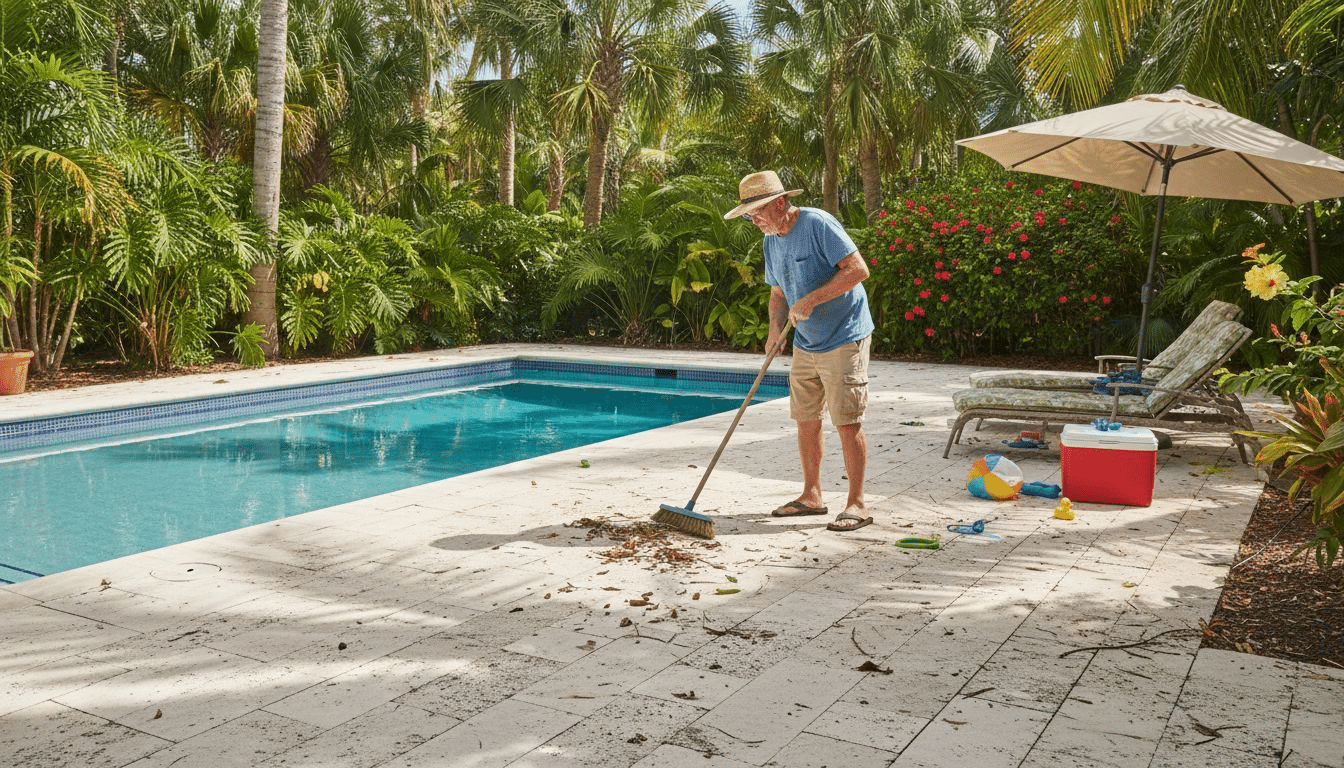
Modernizing your Florida pool area sounds straightforward until improper preparation and material choices trigger costly failures that plague one in five resurfacing projects. Florida’s intense UV rays, humidity spikes, and sudden storms demand specialized materials and precise timing that generic approaches simply can’t deliver. This guide walks you through every critical step, from surface preparation and material selection to deck upgrades and timeline planning, so you achieve a durable, beautiful pool area that lasts for decades.
Table of Contents
- Prerequisites And Preparation For Pool Modernization
- Choosing The Right Resurfacing Materials For Florida Pools
- Upgrading Pool Decks And Surroundings
- Timeline And Cost Expectations For Florida Pool Modernizations
- Common Mistakes And Troubleshooting In Pool Modernization
- Expected Outcomes And Maintenance For Long-Term Pool Beauty And Durability
- Modernize Your Florida Pool With Classic Marcite
- Frequently Asked Questions About Modernizing Florida Pools
Key Takeaways
| Point | Details |
|——-|———||
| Surface prep reduces failures | Proper preparation cuts pool surface failure rates from 20% to under 5%. |
| Pebble Tec® durability | Pebble Tec® finishes last 10 to 15 years in Florida’s UV and humidity conditions. |
| Drainage and deck upgrades | Proper grading and stamped concrete reduce cracking by 40% in heat-exposed areas. |
| Project timeline | Typical modernization takes 7 to 10 days, with humidity extending curing by 1 to 2 days. |
| UV sealant benefits | Applying UV-resistant sealants extends finish lifespan by 20 to 30% against sun damage. |
Prerequisites and Preparation for Pool Modernization
Before you commit to resurfacing, invest time in thorough preparation that addresses Florida’s unique climate challenges. Water chemistry must be tested and balanced before any new finish is applied to ensure proper adhesion and prevent premature peeling. Old pool finishes need complete removal, not just a patch job, because any remnants will compromise the bond of your new surface.
Structural cracks require immediate repair before resurfacing begins. Ignoring these issues invites water infiltration that expands cracks and causes future damage. Timing your project during dry, moderate weather windows is equally important, as Florida’s humidity and afternoon thunderstorms can disrupt curing processes and extend timelines unexpectedly.
Pro Tip: Schedule your modernization between late fall and early spring to avoid the summer rainy season and extreme heat, which can interfere with material curing and prolong your project by days.
When you select a quality pool contractor, verify their experience with Florida-specific challenges like humidity management and UV protection. Quality surface preparation is the single most powerful step you can take, reducing failure rates from 20% down to under 5%. Ask contractors about their surface prep protocols and how they plan around Florida weather windows to protect your investment.
Essential prep checklist includes:
- Test and adjust water chemistry to optimal pH and alkalinity levels
- Remove all old plaster, paint, or pebble finishes down to bare gunite
- Inspect and repair all visible cracks, hollow spots, and structural weaknesses
- Clean pool surfaces thoroughly to remove oils, algae, and mineral deposits
- Confirm weather forecasts for at least 7 consecutive dry days
Choosing the Right Resurfacing Materials for Florida Pools
Material selection defines how well your pool withstands Florida’s relentless sun and moisture over the coming decade. Pebble Tec® offers 10 to 15 years durability in Florida conditions, far exceeding traditional plaster that typically lasts only 5 to 7 years before staining and peeling become visible. The embedded pebbles create a textured surface that resists algae growth and hides minor imperfections better than smooth plaster.
Traditional plaster costs less upfront but requires more frequent replacement and maintenance in Florida’s climate. You’ll face staining from minerals, peeling from UV exposure, and roughness from chemical imbalances much sooner than with aggregate finishes. Professional application matters enormously, as over 95% success rates depend on experienced crews who understand proper mixing ratios, application techniques, and curing management specific to humid environments.
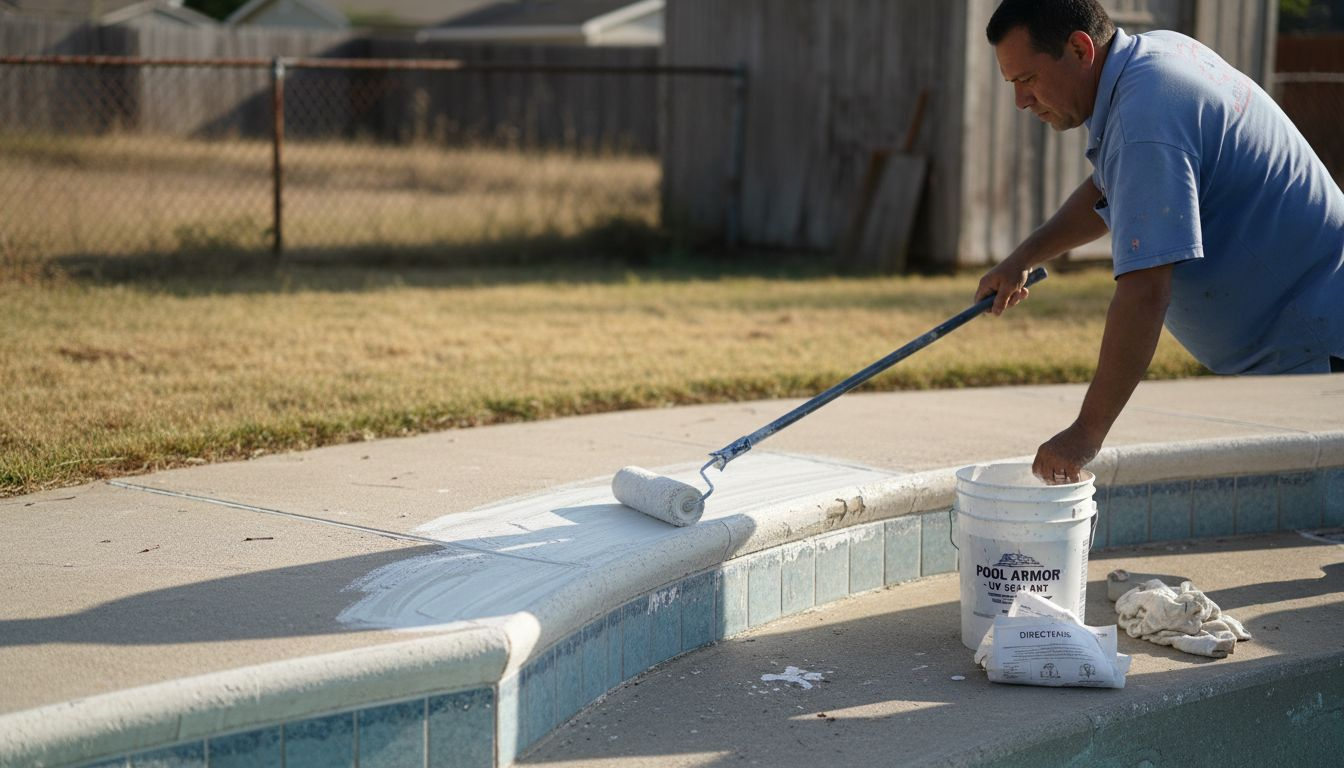
UV-resistant sealants extend finish lifespan by 20 to 30% by protecting against color fading and surface degradation caused by Florida’s intense sunlight. These protective layers add minimal cost compared to early resurfacing due to sun damage. When evaluating options, calculate total cost of ownership over 15 years rather than just initial installation price.
| Material Type | Lifespan in Florida | UV Resistance | Cost Range | Best For |
|---|---|---|---|---|
| Pebble Tec® | 10 to 15 years | Excellent | $$ to $$$ | Long-term durability and aesthetics |
| Traditional Plaster | 5 to 7 years | Fair | $ | Budget-conscious, short-term solutions |
| Quartz Aggregate | 8 to 12 years | Very Good | $$ | Balance of cost and performance |
| Glass Bead Finish | 8 to 10 years | Good | $$$ | Luxury appearance with reflective qualities |
Pro Tip: Request material samples and visit completed projects in your area to see how finishes age under real Florida conditions before making your final choice.
Explore the best resurfacing materials available for Florida pools and review latest resurfacing trends that incorporate advanced UV protection and climate-resistant formulations. Understanding resurfacing project durations helps you plan around family schedules and seasonal weather patterns.
Key material considerations:
- Aggregate finishes like Pebble Tec® provide superior longevity in UV-heavy climates
- Plaster works for tight budgets but requires replacement twice as often
- UV sealants are non-negotiable for preserving color and surface integrity
- Professional installation ensures proper adhesion and minimizes failure risk
Upgrading Pool Decks and Surroundings
Your pool surface may look stunning, but cracked, dated decking undermines the entire modernization effort. Concrete decks frequently crack in Florida due to heat expansion cycles that stress rigid surfaces throughout long summer months. Switching to stamped concrete or interlocking pavers reduces cracking by 40% while adding visual interest through patterns, colors, and textures that complement your new pool finish.
Proper grading and drainage prevent standing water that accelerates deck deterioration and creates safety hazards. Water should flow away from the pool area at a minimum slope of 1% to 2%, directing runoff to designated drainage points. Installing French drains or channel drains around high-traffic areas provides additional protection during Florida’s heavy afternoon downpours.
Adding water features like fountains, bubblers, or spillover spas enhances aesthetics and increases property value by an estimated 30% to 40%. LED lighting systems that highlight water features and illuminate pool perimeters extend usability into evening hours while improving safety. These upgrades transform functional pool areas into resort-style outdoor living spaces that justify the modernization investment.
Pro Tip: Choose cool-deck coatings or light-colored pavers that reflect rather than absorb heat, keeping deck surfaces comfortable for bare feet even during peak summer temperatures.
Learn more about deck resurfacing importance for Florida pool longevity and review the complete pool deck repair process to understand what quality work looks like.
Deck upgrade essentials:
- Stamped concrete or pavers outperform plain concrete in Florida heat
- Minimum 1% to 2% slope ensures proper water drainage away from pool
- Cool-deck coatings or light colors reduce surface temperatures significantly
- Integrated lighting and water features boost aesthetics and property value
- Professional installation prevents future settling and cracking issues
Timeline and Cost Expectations for Florida Pool Modernizations
Realistic timeline planning prevents frustration and allows you to coordinate family activities around your pool renovation. Pool resurfacing projects usually take 7 to 10 days including surface preparation, application, and curing time. Florida’s humidity can extend curing by 1 to 2 additional days, especially during summer months when moisture levels remain elevated throughout the day and night.
Surface preparation consumes 1 to 2 days depending on your pool’s condition and size. Applying new finishes takes 1 to 2 days for most residential pools. Curing requires 5 to 7 days before you can fill and balance the pool, with longer times needed in humid conditions. Plan for at least 10 to 14 days total from start to swim-ready status to accommodate weather delays and proper curing.
Resurfacing costs range from $5,000 to $15,000 depending on materials selected and pool size. Premium Pebble Tec® finishes sit at the higher end but deliver superior longevity. Including deck resurfacing, coping replacement, tile work, and feature additions can double total project costs to $10,000 to $30,000. However, comprehensive modernizations deliver the most dramatic transformations and best return on investment.
| Project Phase | Timeline | Cost Range | Notes |
|---|---|---|---|
| Surface Prep | 1 to 2 days | Included in resurfacing | Removal, cleaning, crack repair |
| Pool Resurfacing | 1 to 2 days | $5,000 to $15,000 | Material choice drives cost |
| Curing Period | 5 to 7 days | None | Extends in high humidity |
| Deck Resurfacing | 2 to 3 days | $3,000 to $10,000 | Depends on material and area |
| Feature Additions | 1 to 3 days | $2,000 to $8,000 | Lighting, water features, tile |
Budget an additional 10% to 15% for unexpected repairs discovered during surface prep, such as hidden structural damage or outdated plumbing that needs replacement. Understanding the pool resurfacing timeline specific to Florida conditions and reviewing detailed pool renovation costs helps you plan financially and logistically.
Timeline and cost factors:
- Total project typically spans 7 to 10 days with optimal weather
- High humidity extends curing time by 1 to 2 days in summer months
- Basic resurfacing starts at $5,000 while full modernizations reach $30,000
- Premium materials cost more initially but reduce replacement frequency
- Reserve 10% to 15% contingency budget for unforeseen repairs
Common Mistakes and Troubleshooting in Pool Modernization
Avoiding preventable errors saves you thousands in repairs and ensures your modernization investment delivers full value. Inadequate surface prep leads to 20% failure rates, making rushed or incomplete preparation the most expensive mistake homeowners make. Every square inch of old finish must be removed, and every crack properly filled and sealed before new materials are applied.
Ignoring drainage causes 30% of pool deck damages as standing water seeps into concrete, causing spalling, cracking, and premature failure. Proper grading and drainage systems are not optional extras but essential infrastructure that protects your entire investment. Skipping this step to save a few hundred dollars often leads to deck replacement costs exceeding several thousand dollars within just a few years.
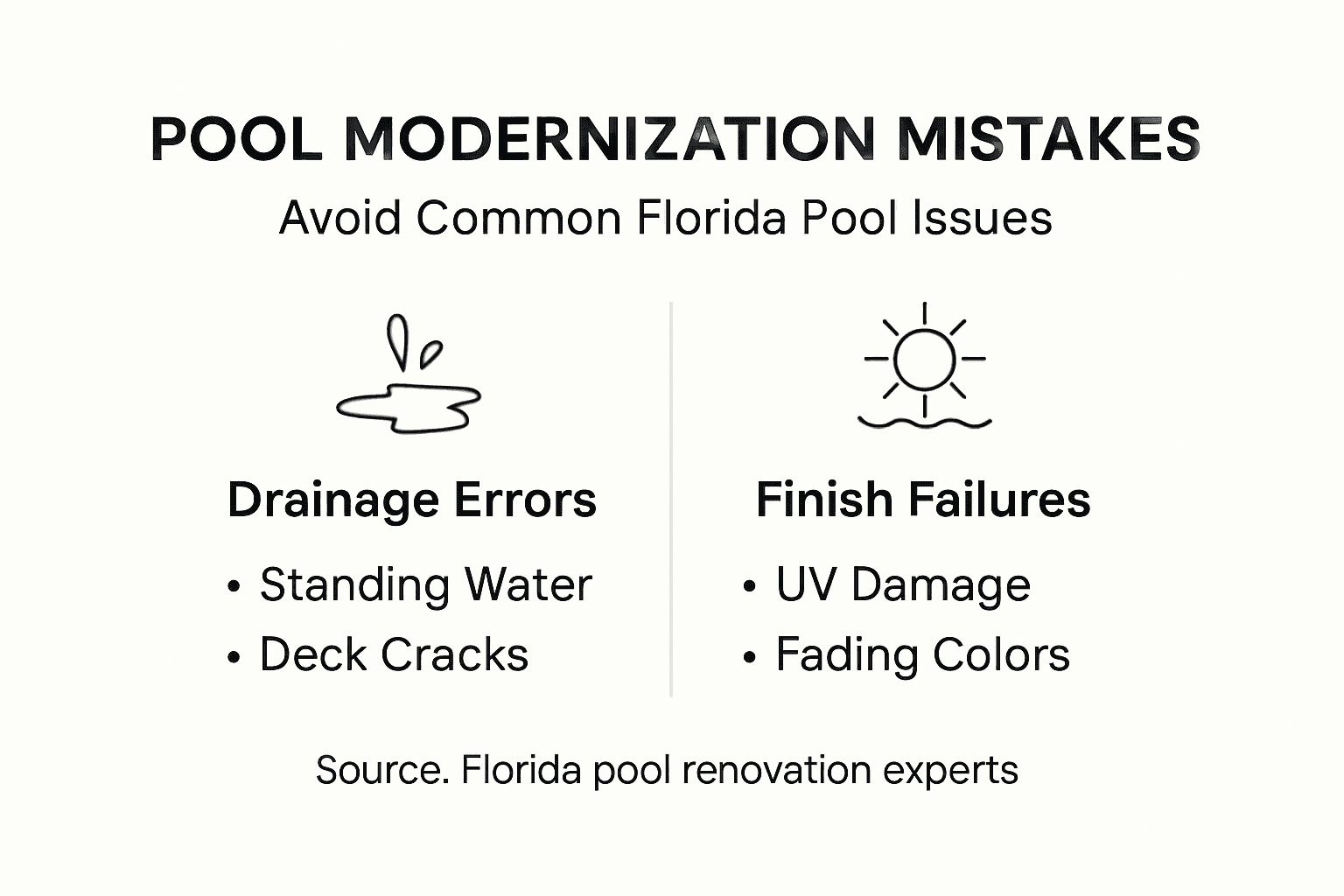
Using finishes without adequate UV protection shortens pool surface life by up to 30% in Florida’s intense sunlight. The sun’s rays degrade color pigments and weaken surface bonds over time. Skipping UV sealants reduces finish lifespan significantly, forcing premature resurfacing that could have been avoided with proper protective coatings.
Rushing the curing process in humid weather produces weak bonds that crack and peel within months. Patience during curing ensures chemical reactions complete properly and surfaces achieve maximum strength. Attempting to fill the pool early or exposing fresh finishes to rain compromises the entire project.
Frequent modernization mistakes:
- Skipping thorough surface preparation to save time or money
- Neglecting proper drainage and grading around pool decks
- Choosing non-UV resistant finishes to reduce upfront costs
- Rushing curing periods without accounting for Florida humidity
- Failing to repair structural cracks before applying new surfaces
- Hiring inexperienced contractors unfamiliar with Florida climate challenges
Understand how pool safety through resurfacing addresses slip hazards and structural integrity. Compare replastering vs resurfacing options to choose the approach that matches your pool’s condition and your long-term goals.
Expected Outcomes and Maintenance for Long-Term Pool Beauty and Durability
Successful pool modernization delivers visible improvements and functional benefits that last for years when you maintain your investment properly. Professional Pebble Tec® application achieves over 95% success rates in lasting finish quality, meaning you should see no peeling, cracking, or discoloration for at least a decade. The surface remains smooth yet textured enough to resist algae while providing comfortable footing.
Applying UV sealants improves durability and color retention by up to 30%, keeping your pool looking vibrant through years of sun exposure. You’ll notice consistent color across the entire surface without the fading and blotchy appearance that plague unprotected finishes. Regular maintenance including proper chemical balance, weekly brushing, and periodic resealing extends both finish and deck life significantly beyond manufacturer estimates.
Modern lighting systems and water features improve homeowner satisfaction by 30% to 40% according to industry surveys, transforming pools from simple recreational spaces into true outdoor living areas. Evening swims become more enjoyable and safer with proper illumination. The visual appeal of moving water and strategic lighting adds ambiance that increases both usage and property value.
Pro Tip: Establish a maintenance schedule immediately after modernization completion, including weekly water testing, monthly deep cleaning, and annual professional inspections to catch small issues before they become expensive problems.
Review the complete step-by-step pool remodeling guide to understand the full scope of modernization projects and expected outcomes at each stage.
Signs of successful modernization:
- Smooth, consistent finish with no peeling or delamination
- Vibrant colors that resist fading through multiple seasons
- Crack-free decking with proper drainage and no standing water
- Enhanced safety through slip-resistant surfaces and proper lighting
- Increased property value and homeowner satisfaction with outdoor space
Modernize Your Florida Pool with Classic Marcite
Transforming your pool area from dated to durable requires expertise that understands Florida’s unique climate challenges. Classic Marcite brings over three decades of experience and more than 100,000 successfully resurfaced pools to your modernization project. We specialize in pool resurfacing solutions using premium materials designed specifically for Florida’s heat, humidity, and UV intensity.

Our team applies Pebble Tec benefits for Florida pools with precision techniques that achieve industry-leading success rates. From initial assessment through final curing, we manage every detail including deck upgrades, lighting installations, and water feature additions that transform ordinary pools into resort-quality outdoor spaces. Partner with Central Florida’s largest Pebble Tec® applicator to secure your pool’s long-term beauty and function. Explore our complete pool remodeling guide and contact us today for your free estimate.
Frequently Asked Questions About Modernizing Florida Pools
When is the best time to resurface my Florida pool?
Late fall through early spring offers the most reliable weather windows for pool resurfacing in Florida. You’ll avoid summer’s daily thunderstorms and extreme heat that extend curing times and complicate scheduling. Dry conditions and moderate temperatures between November and April provide ideal environments for materials to cure properly.
Why are UV sealants important for Florida pool finishes?
Florida receives some of the nation’s most intense UV radiation year-round, which degrades pool finish colors and weakens surface bonds over time. UV sealants create protective barriers that extend finish lifespan by 20% to 30% while maintaining vibrant colors. Skipping this protection forces premature resurfacing and higher long-term costs.
How do I select a qualified pool contractor in Florida?
Verify contractor licensing, insurance, and specific experience with Florida climate challenges including humidity management and UV protection. Request references from recent projects and visit completed pools to assess finish quality after several years of use. Experienced contractors should explain their surface prep protocols and weather contingency plans in detail.
What maintenance does a newly resurfaced pool require?
Test and balance water chemistry weekly for the first month, then bi-weekly thereafter to prevent finish damage from chemical imbalances. Brush the entire pool surface weekly to prevent algae buildup and maintain texture. Schedule annual professional inspections to identify and address minor issues before they require major repairs.
Can I add features like lighting during pool resurfacing?
Pool modernization provides the perfect opportunity to add LED lighting, water features, and upgraded equipment since crews already have access to plumbing and electrical systems. Coordinating these additions during resurfacing saves money compared to separate projects later. Discuss feature integration during your initial planning to ensure proper infrastructure installation.