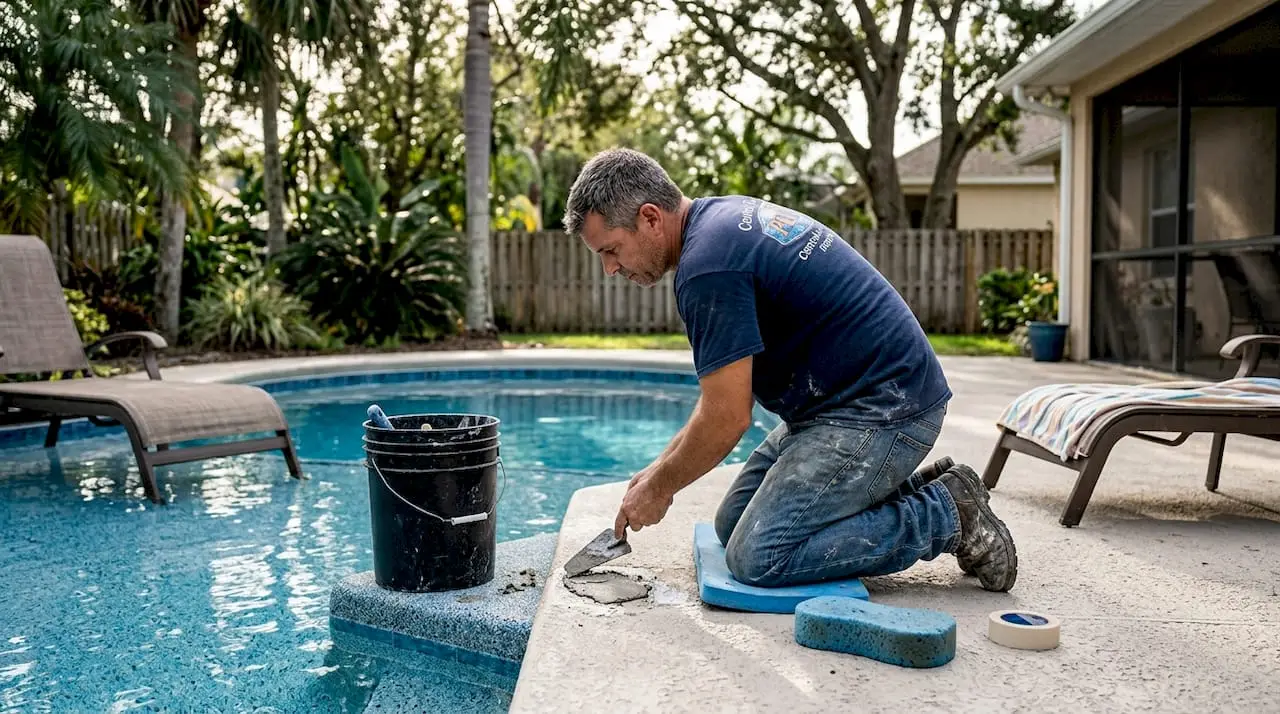
Many Central Florida homeowners believe DIY pool resurfacing saves money and delivers similar results to professional work. This misconception leads to premature finish failures, safety hazards, and costly repairs within months. Florida’s intense UV exposure, high humidity, and unique soil conditions demand specialized preparation techniques and premium materials that only licensed professionals can properly apply. Professional resurfacing ensures your pool withstands 233 sunny days annually while maintaining beauty and structural integrity. Understanding the critical differences between amateur attempts and expert craftsmanship helps you make informed decisions that protect your investment for decades.
Table of Contents
- Key takeaways
- Expert preparation and surface repair methods
- Choosing the right finish for Florida pools: durability and aesthetics
- Risks of DIY resurfacing versus benefits of licensed professionals
- Regulatory compliance and added value benefits of professional resurfacing
- Enhance your Central Florida pool with professional resurfacing
- Frequently asked questions
Key Takeaways
| Point | Details |
|---|---|
| Expert surface prep | Professional resurfacing starts with thorough surface cleaning and structural repairs to ensure a durable bond and prevent finish failure. |
| Industrial equipment advantage | Licensed contractors use high pressure hydroblasting and epoxy repairs that DIY methods cannot replicate, ensuring substrate readiness. |
| DIY risks in Florida | DIY attempts often neglect structural issues and use inadequate cleaning, leading to premature failures and safety hazards. |
| Finish durability in Florida sun | Pebble finishes last 20 to 25 years while plaster lasts 7 to 12 years due to UV resistance and material makeup. |
Expert preparation and surface repair methods
Professional pool resurfacing begins with thorough surface preparation that determines finish longevity. Licensed contractors use hydroblasting equipment exceeding 10,000 PSI to remove old plaster, calcium deposits, and algae stains completely. This aggressive cleaning exposes the underlying gunite or concrete shell, revealing structural issues invisible to untrained eyes. Hydroblasting reaches into pores and crevices where chemical treatments fail, creating the clean substrate essential for proper bonding.
Structural assessment follows cleaning. Professionals identify and repair cracks wider than 1/8 inch using specialized epoxy compounds formulated for underwater environments. These repairs address not just surface damage but underlying movement in the pool shell caused by soil settling or hydrostatic pressure. Ignoring these structural issues leads to delamination, where new finish separates from the shell within months. Preparing your pool for resurfacing requires understanding these technical steps that DIY approaches typically skip.
Acid etching completes the preparation phase. Contractors apply muriatic acid solutions that chemically roughen the surface, creating microscopic texture for mechanical bonding. This step requires precise timing and neutralization to avoid damaging the substrate. The etched surface accepts new finish material uniformly, preventing weak spots that bubble or crack under pressure.
DIY attempts fail primarily during preparation. Homeowners lack access to industrial hydroblasting equipment and typically rely on pressure washers delivering 2,000 to 3,000 PSI. This inadequate force leaves contaminants that prevent proper adhesion. Without structural repair expertise, DIY workers apply new finish over compromised shells. The result appears acceptable initially but deteriorates rapidly as underlying problems manifest.
Pro Tip: Professional preparation takes 2 to 3 days before any finish application begins. If a contractor offers same day surface prep and finishing, their shortcuts will compromise your pool’s longevity and your investment.
Key preparation advantages professionals provide:
- Industrial equipment removes 100% of old material and contaminants
- Structural engineers assess and repair foundation issues
- Chemical treatments properly neutralize and balance surface pH
- Quality control inspections verify readiness before finish application
- Weather monitoring ensures optimal temperature and humidity during curing
Choosing the right finish for Florida pools: durability and aesthetics
Finish selection dramatically impacts how your pool performs under Central Florida’s environmental stress. Pebble aggregate finishes last 20 to 25 years compared to traditional plaster’s 7 to 12 year lifespan. This durability difference stems from material composition and UV resistance. Florida receives 233 sunny days annually, exposing pool surfaces to intense ultraviolet radiation that degrades inferior finishes. Professional contractors understand these local factors and recommend materials engineered for subtropical climates.
| Finish type | Lifespan (years) | Cost range | UV resistance | Texture | Best for |
|---|---|---|---|---|---|
| Standard plaster | 7-12 | $4,000-$6,500 | Moderate | Smooth | Budget-conscious owners |
| Quartz aggregate | 12-18 | $6,000-$9,000 | High | Semi-smooth | Balance of cost and durability |
| Pebble aggregate | 20-25 | $8,000-$12,000 | Excellent | Textured | Premium longevity |
| Glass bead | 15-20 | $10,000-$15,000 | Superior | Smooth | Luxury aesthetics |
Pebble finishes incorporate natural stones sealed in polymer-modified cement. These materials resist chemical imbalance, algae growth, and staining better than plaster. The textured surface provides slip resistance while feeling comfortable underfoot. Color options range from Caribbean blue to earth tones, allowing customization that complements your landscape. Professionals apply pebble finishes in consistent thickness, ensuring uniform appearance and preventing thin spots that fail prematurely.
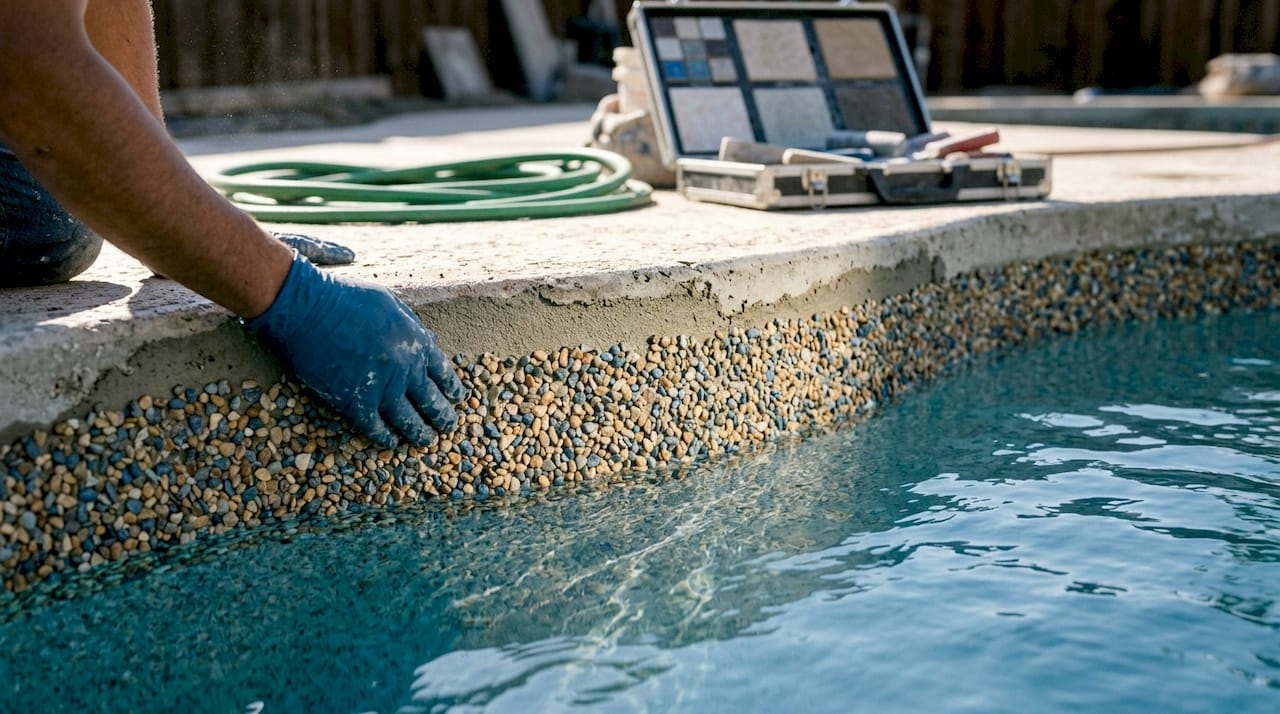
Quartz finishes offer middle-ground performance. Crushed quartz crystals mixed with white cement create surfaces harder than plaster but smoother than pebble. This option suits homeowners seeking enhanced durability without the higher cost of premium materials. Understanding pool finish types for Florida homes helps you match material properties to your usage patterns and maintenance preferences.
Aesthetic considerations extend beyond color. Finish texture affects how light refracts through water, creating visual depth and sparkle. Darker finishes produce deeper blue water tones, while lighter materials reflect more sunlight for brighter appearance. Professionals evaluate your pool’s orientation, surrounding vegetation, and lighting to recommend finishes that maximize visual appeal throughout the day.
Pro Tip: Request samples of finish materials applied to test boards. View these samples underwater in different lighting conditions to accurately preview how colors will appear in your completed pool.
Material quality separates professional from DIY results:
- Commercial-grade materials meet ANSI/APSP standards for pool finishes
- Factory-mixed compounds ensure consistent ratios and performance
- UV stabilizers protect colors from fading under intense sunlight
- Polymer additives increase flexibility and crack resistance
- Professional application techniques eliminate air pockets and weak spots
Selecting the best pool resurfacing materials requires balancing initial investment against long-term value. Premium finishes cost more upfront but deliver lower lifetime ownership costs through extended replacement intervals and reduced maintenance.
Risks of DIY resurfacing versus benefits of licensed professionals
DIY pool resurfacing exposes homeowners to significant safety hazards and financial risks. Muriatic acid used in surface preparation causes severe chemical burns and respiratory damage without proper protective equipment and ventilation. Hydroblasting equipment generates pressures that can injure operators or damage pool structures when mishandled. These dangers explain why professional contractors carry liability insurance and workers compensation coverage that protect homeowners from accident-related claims.
Finish quality suffers dramatically in amateur applications. Proper plaster or aggregate application requires maintaining specific temperatures between 50°F and 85°F with humidity below 80%. Florida’s climate makes timing critical. Professionals monitor weather forecasts and schedule work during optimal conditions. DIY workers often proceed regardless of environmental factors, resulting in finishes that cure improperly and develop surface defects like crazing, cracking, or discoloration.
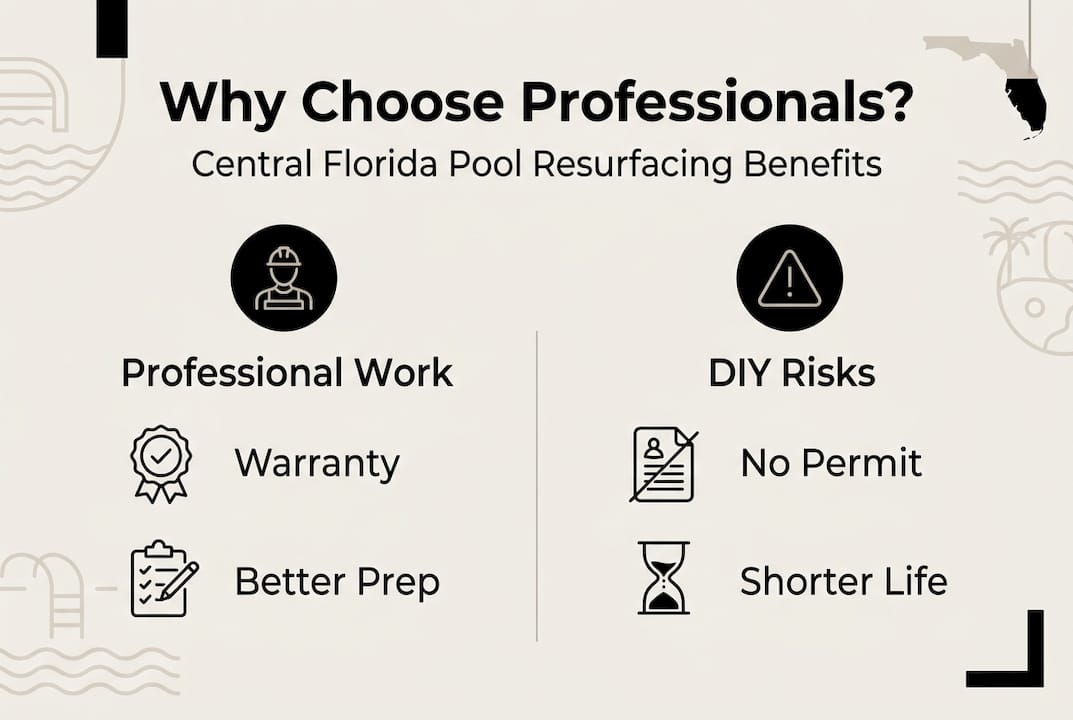
Material costs for DIY projects range from $1,000 to $2,500 but lack any warranty protection. When finishes fail within months, homeowners pay again for professional correction. This correction costs more than initial professional work because contractors must remove failed material before starting fresh. Professional resurfacing costs $4,000 to $10,000 but includes minimum 3-year warranties covering defects and workmanship. This guarantee protects your investment and provides recourse if problems develop.
Licensing requirements exist for valid reasons. Florida requires pool contractors to hold Certified Pool Contractor (CPC) licenses issued by the Department of Business and Professional Regulation. These licenses verify technical knowledge, financial responsibility, and insurance coverage. Licensed professionals complete continuing education on updated building codes, safety standards, and application techniques. Hiring licensed pool contractors in Florida ensures accountability and legal compliance that DIY work cannot provide.
Common DIY failures include:
- Delamination from inadequate surface preparation within 6 to 12 months
- Uneven thickness creating weak spots and premature deterioration
- Color inconsistency from improper mixing or application timing
- Rough texture from incorrect troweling techniques causing skin abrasion
- Structural damage from skipped repairs leading to shell compromise
- Building code violations resulting in fines and mandatory corrections
Peace of mind represents the intangible benefit professionals deliver. You avoid the physical labor of draining, cleaning, and resurfacing a pool over multiple days. Professional crews complete projects efficiently while you maintain your regular schedule. Post-installation support includes water chemistry guidance and maintenance recommendations that maximize finish lifespan. Understanding DIY pool crack repair risks reveals how seemingly simple tasks require specialized knowledge and equipment.
Regulatory compliance and added value benefits of professional resurfacing
Professional pool resurfacing navigates complex regulatory requirements that protect homeowners and communities. Florida law mandates permits for pool renovation work exceeding $2,500 in value. These permits trigger inspections verifying compliance with structural, plumbing, and electrical codes. Licensed contractors handle permit applications, inspection scheduling, and code compliance documentation. DIY workers who skip permitting face stop-work orders, fines up to $5,000, and mandatory removal of unpermitted work.
Hydrostatic relief valves prevent catastrophic pool damage during draining. Professional contractors install and test these valves before removing water. Florida’s high water table creates upward pressure that can lift empty pools from the ground, cracking shells and destroying surrounding decks. Hydrostatic valves release groundwater pressure safely, protecting your investment. This technical requirement demonstrates why professional expertise matters beyond surface aesthetics.
| Compliance area | Professional approach | DIY risk |
|---|---|---|
| Licensing | CPC license verified by Florida DBPR | Unlicensed work violates state law |
| Permits | Obtained before work begins, inspections scheduled | Unpermitted work requires removal and fines |
| Insurance | Liability and workers comp protect homeowners | Accidents create homeowner liability |
| Hydrostatic relief | Valves tested before draining pool | Pool popping causes $20,000+ damage |
| Code compliance | Work meets current building standards | Violations discovered during home sales |
Property value impact justifies professional resurfacing costs. Well-maintained pools increase home values 5 to 8% in Central Florida’s competitive real estate market. Buyers recognize quality finishes and professional workmanship during inspections. Conversely, poorly executed DIY resurfacing raises red flags about overall property maintenance. Real estate agents report that homes with amateur pool work sit on market longer and sell for less than comparable properties with professional renovations.
Warranty transferability adds value during home sales. Professional resurfacing warranties typically transfer to new owners, providing assurance that attracts buyers and supports asking prices. This transferability demonstrates the contractor’s confidence in their work and materials. DIY projects offer no such protection, leaving buyers to assume risk of hidden defects or premature failures.
Pro Tip: Request copies of all permits, inspection reports, and warranty documents when resurfacing completes. Store these with your home records to provide documentation for insurance claims, future contractors, and potential buyers.
Verifying pool contractor certifications in Florida takes minutes online through DBPR’s license search tool. This simple step confirms your contractor holds active licensing, maintains required insurance, and carries no disciplinary actions. Professional credentials protect you legally and financially while ensuring work quality that preserves your property investment.
Enhance your Central Florida pool with professional resurfacing
Your pool deserves the expertise and quality materials that only licensed professionals provide. Classic Marcite has resurfaced over 100,000 pools since 1988, making us Central Florida’s most experienced pool renovation specialists. We understand how Florida’s climate challenges pool surfaces and apply proven techniques that deliver decades of beauty and performance.

Our team uses premium Pebble Tec® finishes engineered specifically for subtropical conditions. Every project includes thorough structural assessment, proper permitting, and comprehensive warranties that protect your investment. Whether you’re in The Villages, Winter Park, or surrounding communities, we deliver professional results that enhance your outdoor living space. Discover pool resurfacing basics and schedule your free estimate today to transform your pool with confidence.
Frequently asked questions
How long does professional pool resurfacing last in Central Florida?
Professional resurfacing longevity depends on finish material and maintenance. Pebble aggregate finishes last 20 to 25 years under Florida’s intense UV exposure, while standard plaster typically requires replacement after 7 to 12 years. Proper water chemistry maintenance and regular cleaning extend these lifespans significantly. Professional application ensures uniform thickness and proper curing that maximize durability regardless of material choice.
What warranty coverage do professional pool contractors provide?
Licensed contractors provide minimum 3-year warranties covering material defects and workmanship issues. Premium finishes like Pebble Tec® often include manufacturer warranties extending 10 years or more for specific defects. Warranty terms require following recommended maintenance procedures and water chemistry guidelines. These warranties transfer to new homeowners, adding value during property sales.
How much does professional pool resurfacing cost compared to DIY?
Professional resurfacing costs $4,000 to $12,000 depending on pool size and finish material. DIY materials cost $1,000 to $2,500 but lack warranty protection and often fail within 2 years. Correcting failed DIY work costs more than initial professional service because contractors must remove defective material first. Professional work delivers lower lifetime costs through extended durability and warranty protection.
Can I resurface my pool during Florida’s rainy season?
Professional contractors schedule resurfacing during optimal weather windows regardless of season. Modern materials and application techniques allow work during brief dry periods between storms. Contractors monitor forecasts closely and adjust schedules to ensure proper curing conditions. DIY workers lack this flexibility and often proceed in poor conditions, compromising finish quality and longevity.
What maintenance does a newly resurfaced pool require?
Newly resurfaced pools require 28 days of startup procedures including gradual chemical balancing and brushing. Professionals provide detailed instructions for this critical curing period. Long-term maintenance involves weekly water testing, proper chemical balance, and regular brushing to prevent staining. Professional contractors offer ongoing support and answer questions throughout your pool’s lifespan, ensuring you protect your resurfacing investment.
