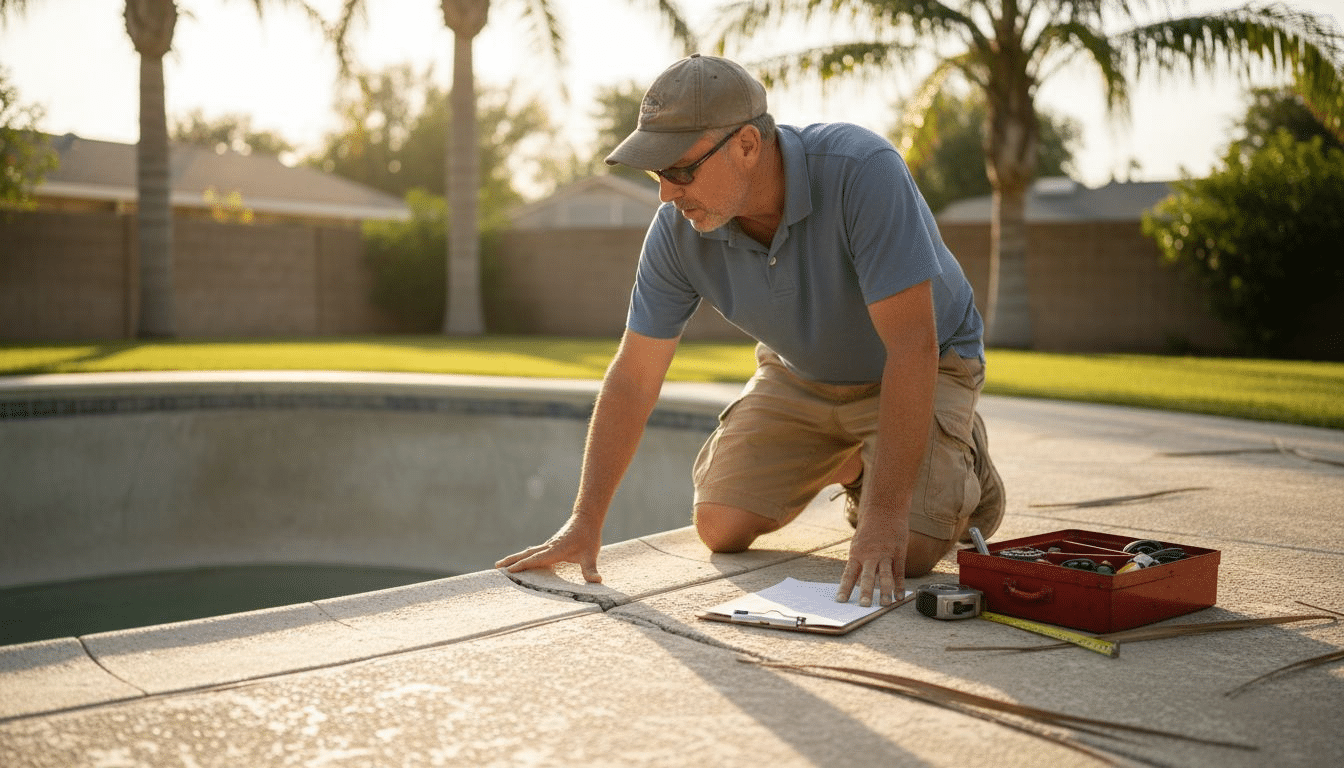
Most American homeowners in Orlando and Jacksonville face ongoing challenges when trying to maintain pool beauty and durability. Harsh Florida weather and regular use often lead to surface damage, costly repairs, and outdated features. By focusing on systematic damage assessments and choosing high-quality finishes, you can protect your pool’s value while controlling expenses. This guide spotlights practical solutions and expert insights to help you make smart choices for a resilient and stylish backyard retreat.
Table of Contents
- 1. Assessing Surface Damage And Resurfacing Needs
- 2. Choosing High-Quality Interior Finishes
- 3. Upgrading Waterline Tiles For Modern Appeal
- 4. Repairing Or Replacing Pool Decking
- 5. Evaluating And Updating Pool Equipment
- 6. Enhancing Safety Features And Accessibility
- 7. Adding Custom Lighting And Water Features
Quick Summary
| Takeaway | Explanation |
|---|---|
| 1. Regular Surface Assessments Are Essential | Conduct thorough yearly evaluations to catch minor pool surface issues before they become major structural concerns. |
| 2. Choose Durable, High-Quality Interior Finishes | Select interior finishes that withstand water chemistry and temperature changes while enhancing the pool’s visual appeal. |
| 3. Prioritize Safety Modifications for Your Pool | Implement physical barriers and accessibility enhancements to ensure a safe swimming environment for all users. |
| 4. Upgrade to Efficient Pool Equipment | Assess and upgrade old pool equipment to improve energy efficiency and overall performance, potentially saving on maintenance costs. |
| 5. Enhance Aesthetic with Custom Lighting and Water Features | Invest in strategic lighting and water features that transform your pool into an inviting and visually stunning outdoor space. |
1. Assessing Surface Damage and Resurfacing Needs
When it comes to pool maintenance, surface damage can quickly transform a beautiful backyard oasis into a potential repair nightmare. Understanding how to assess surface damage is crucial for protecting your pool’s structural integrity and aesthetic appeal.
Pool surfaces endure constant exposure to chemicals, weather fluctuations, and regular use, which can lead to gradual degradation. Recognizing early signs of wear helps homeowners prevent more extensive and expensive repairs. Systematic damage assessment involves carefully examining multiple aspects of your pool’s surface for specific indicators of potential problems.
Key surface damage indicators include:
Visual Signs
• Visible cracks or fissures
• Discoloration or staining
• Rough or uneven texture
• Chipping or flaking material
Structural Indicators
• Expanding surface imperfections
• Water absorption into pool walls
• Decreased surface smoothness
• Increased porosity
Professional pool inspectors recommend conducting a comprehensive evaluation at least once per year. This allows you to catch minor issues before they escalate into major structural concerns that could require complete pool replacement.
When assessing damage, pay special attention to areas experiencing high stress such as steps, corners, and edges. These regions often show wear more quickly and can indicate underlying problems with your pool’s surface.
Pro tip: Keep a detailed photographic record of your pool’s surface condition during each inspection to track changes and create a visual timeline of potential deterioration.
2. Choosing High-Quality Interior Finishes
Selecting the right interior finish for your pool is more than a cosmetic decision it is a critical investment in your pool’s longevity and performance. Your choice impacts everything from aesthetic appeal to durability and maintenance requirements.
Pool interior finishes represent the critical barrier between water and underlying structure. Sustainable material selection involves understanding how different materials respond to water chemistry, temperature fluctuations, and constant usage.
Key Considerations for Pool Interior Finishes
Material Performance
• Resistance to chemical interactions
• Durability under constant water exposure
• Ability to withstand temperature variations
• Smooth surface preventing algae growth
Aesthetic Options
• Pebble finishes
• Quartz surfaces
• Plaster variants
• Specialized ceramic coatings
Florida pool environments demand finishes that can withstand intense sunlight, high humidity, and frequent use. Homeowners should prioritize materials that offer both visual appeal and exceptional structural integrity.
Professional pool renovation experts recommend selecting finishes that provide a balance between performance and aesthetic preferences. Some modern finishes now incorporate advanced technologies that enhance stain resistance and reduce maintenance requirements.
Pro tip: Always request material samples and conduct thorough research on each finish’s performance history before making a final selection.
3. Upgrading Waterline Tiles for Modern Appeal
Waterline tiles represent the visual gateway between your pool’s surface and surrounding environment transforming an ordinary swimming area into a stunning backyard feature. These decorative elements not only enhance aesthetic appeal but also serve critical functional purposes for pool maintenance and design.
Swimming pool design standards have evolved significantly in recent years, providing homeowners with more sophisticated options for waterline tile selection. Modern waterline tiles offer remarkable benefits beyond traditional decorative purposes.
Key Considerations for Waterline Tile Upgrades
Design Elements
• Contemporary color palettes
• Textural variety
• Unique geometric patterns
• Complementary architectural styles
Functional Benefits
• Chemical resistance
• Easier cleaning surfaces
• Enhanced durability
• Reduced stain absorption
When selecting waterline tiles, consider materials that withstand Florida’s intense sunlight and frequent humidity. Ceramic and porcelain tiles remain popular choices due to their resilience and design flexibility. Glass tiles offer a luxurious alternative with exceptional visual depth and modern aesthetic appeal.
Color selection plays a crucial role in transforming your pool’s overall appearance. Neutral tones create sophisticated elegance while bold colors can make dramatic visual statements. Professional designers recommend selecting tiles that harmonize with your existing landscape and home exterior.
Pro tip: Request tile samples and view them under different lighting conditions to ensure they complement your pool environment perfectly.
4. Repairing or Replacing Pool Decking
Pool decking serves as more than just a functional surface it is a critical aesthetic and structural component that dramatically influences your outdoor living space. Understanding when and how to repair or replace your pool deck can prevent costly long term damage and enhance your property’s overall value.
Pool deck construction standards have evolved significantly to address safety and durability concerns. Modern decking materials and techniques offer homeowners unprecedented options for creating resilient and attractive pool surroundings.
Signs You Need Pool Deck Renovation
Structural Indicators
• Significant cracking
• Uneven surface areas
• Shifting or settling concrete
• Water drainage problems
• Widespread staining
Material Options
• Stamped concrete
• Natural stone
• Concrete pavers
• Travertine tiles
• Textured acrylic surfaces
Florida’s harsh climate demands specialized decking solutions that can withstand intense sunlight, humidity, and frequent temperature fluctuations. Professional pool renovation experts recommend selecting materials specifically engineered for subtropical environments.
Consider factors beyond aesthetics such as slip resistance, heat reflection, and maintenance requirements. Some modern decking materials offer advanced features like UV protection and enhanced durability that traditional options cannot match.
Pro tip: Always request material samples and examine them under direct sunlight to truly understand how they will perform in your specific outdoor environment.
5. Evaluating and Updating Pool Equipment
Pool equipment represents the technological heartbeat of your swimming environment determining water quality, energy efficiency, and overall performance. Modern pool renovation goes far beyond aesthetic improvements and requires strategic assessment of mechanical systems.
Pool operation standards emphasize the critical role of comprehensive equipment evaluation. Homeowners should understand that outdated or inefficient equipment can significantly increase maintenance costs and reduce swimming experience quality.
Critical Equipment Assessment Categories
Mechanical Systems
• Pool pumps
• Filtration systems
• Heating units
• Circulation mechanisms
• Automated control panels
Performance Evaluation Factors
• Energy consumption rates
• Operational efficiency
• Maintenance requirements
• Compatibility with modern technologies
• Repair versus replacement costs
Florida’s unique climate demands specialized pool equipment that can withstand high temperatures, humidity, and intense sunlight. Energy efficient variable speed pumps and intelligent control systems can reduce operational costs by up to 70 percent compared to traditional equipment.
Professional pool technicians recommend conducting a comprehensive equipment audit every five to seven years. This proactive approach helps identify potential performance issues before they become expensive repairs.
Pro tip: Request an energy efficiency assessment from a professional to understand potential savings from modern pool equipment upgrades.
6. Enhancing Safety Features and Accessibility
Pool safety goes beyond simple recreational enjoyment it represents a critical responsibility for every homeowner. Creating a secure and accessible swimming environment protects families and ensures inclusive enjoyment for all users.
Home pool safety guidelines emphasize comprehensive approaches to minimizing risks and creating welcoming spaces for swimmers of all abilities.
Essential Safety Modifications
Physical Barriers
• Childproof fencing
• Self closing gates
• Automatic pool alarms
• Non slip surface treatments
• Perimeter lighting
Accessibility Enhancements
• Pool lift installations
• Graduated entry ramps
• Handrail systems
• Textured walking surfaces
• Color contrast markers
Modern pool renovations prioritize creating environments that accommodate diverse user needs. This includes considerations for individuals with mobility challenges mobility limited range of motion or age related physical restrictions.
Professional designers recommend multi layered safety approaches that combine physical barriers technological monitoring and intentional design elements. Strategic lighting placement visibility markers and intuitive entry points can dramatically improve overall pool safety.
Pro tip: Consult a certified pool safety inspector to conduct a comprehensive assessment of your current pool environment and identify potential improvement areas.
7. Adding Custom Lighting and Water Features
Transforming your pool from a simple swimming area to an enchanting outdoor environment requires strategic lighting and water feature design. These elements not only enhance aesthetic appeal but also create immersive experiences that dramatically elevate your backyard atmosphere.
Electrical safety standards underscore the critical importance of professional installation when integrating lighting and water features. Proper electrical integration ensures both visual beauty and operational safety.
Lighting Design Options
Illumination Styles
• Underwater LED lights
• Perimeter landscape lighting
• Color changing systems
• Fiber optic accent lights
• Motion activated security lighting
Water Feature Categories
• Cascading waterfalls
• Decorative fountain jets
• Bubbler installations
• Laminar flow systems
• Misting features
Modern pool renovations leverage advanced technologies that allow seamless integration of lighting and water elements. Smart systems now enable homeowners to control color intensity temperature and flow patterns through smartphone applications.
Professional designers recommend creating layered lighting experiences that highlight architectural pool features while providing functional illumination. Strategically placed lights can transform your pool into a stunning nighttime visual centerpiece.
Pro tip: Consult with a professional pool designer who specializes in custom lighting and water features to create a cohesive design that complements your specific outdoor environment.
Below is a comprehensive table summarizing the strategies and considerations for pool maintenance and renovation as discussed throughout the article.
| Topic | Details | Key Considerations |
|---|---|---|
| Surface Damage Assessment | Regularly inspect for cracks, discoloration, and surface roughness as well as examining stress points such as corners and steps. | Perform annual inspections to prevent extensive repairs. |
| Interior Finish Selection | Choose finishes like plaster, quartz, or ceramic ensuring durability and resistance to chemical or environmental interactions. | Request samples to select the most suitable option. |
| Waterline Tile Upgrades | Install modern, durable tiles with chemical resistance and appealing designs that complement pool surroundings. | Verify tile performance in high-humidity conditions. |
| Pool Deck Maintenance | Address issues such as cracking, drainage, and surface unevenness while considering materials like stone, stamped concrete, or textured acrylic. | Evaluate durability under sunlight and frequent use. |
| Equipment Modernization | Update essential systems like pumps and heaters with energy-efficient, technologically advanced options. | Conduct an evaluation every five to seven years. |
| Safety Enhancements | Improve pool safety using fencing, alarms, and accessibility features like ramps or handrails. | Implement designs to meet diverse user needs. |
| Lighting and Features | Install advanced lighting solutions and water features to enhance aesthetic appeal and outdoor ambiance. | Consult professionals to ensure optimal integration. |
Please refer to the table for an overview of essential aspects to consider when maintaining, renovating, and enhancing your pool environment.
Upgrade Your Pool with Expert Renovation Tailored for Florida Homes
If you have noticed surface cracks, outdated finishes, or inefficient equipment in your pool you know how urgent addressing these issues can be. The challenges discussed in 7 Key Components of Pool Renovation highlight common pain points like surface damage, the need for durable interior finishes, waterline tile upgrades, and energy efficient equipment that can save you time and money. These problems affect not only your pool’s beauty but also its safety and long term durability.
At Classic Marcite we specialize in professional pool resurfacing and renovation services designed specifically for homeowners in Florida’s demanding climate. With more than 30 years of experience and over 100,000 pools transformed including comprehensive repairs for tiles, decks, and equipment upgrades we deliver solutions that combine craftsmanship with proven materials like Pebble Tec®. Our expert team understands how to enhance pool aesthetics while improving structural integrity and energy efficiency so you can enjoy your backyard oasis without worry.
Looking to revitalize your pool with trusted professionals who know Florida pools inside and out Explore our full range of services at Classic Marcite pool renovation.

Take the first step toward a safer, more beautiful, and energy-efficient pool today Contact Classic Marcite for your free consultation and discover how our expert renovations turn your pool problems into lasting solutions.
Frequently Asked Questions
How can I assess surface damage in my pool?
To assess surface damage in your pool, look for visible cracks, discoloration, or rough textures. Conduct a thorough examination at least once a year to catch minor issues that could become costly repairs.
What should I consider when choosing pool interior finishes?
When selecting pool interior finishes, prioritize material performance, such as resistance to chemicals and durability under constant water exposure. Choose finishes that balance aesthetic appeal and structural integrity, and always request samples for thorough evaluation.
How do I know if my pool decking needs renovation?
Watch for significant cracking, uneven surfaces, or water drainage issues to determine if your pool decking requires renovation. Inspect your deck regularly and consider materials that handle sunlight and humidity effectively to prevent long-term damage.
What factors should I evaluate for pool equipment upgrades?
When evaluating pool equipment, focus on its energy consumption rates, operational efficiency, and maintenance requirements. Schedule an equipment audit every five to seven years to identify potential upgrades and savings opportunities.
What safety features should I add during my pool renovation?
To enhance safety, consider installing childproof fencing, self-closing gates, and non-slip surface treatments. Assess your pool environment comprehensively to identify unique modifications that will create a secure and inclusive space for all users.
How can I effectively integrate lighting and water features in my pool design?
To integrate lighting and water features effectively, consider various illumination styles and types of water features, like waterfalls or fountain jets. Collaborate with a professional designer to create a cohesive aesthetic that enhances your outdoor environment.