TL;DR:
- Commercial pools should be resurfaced every 10 to 15 years, but high-traffic pools may need it sooner.
- Proper maintenance of water chemistry and scheduling during off-season months extend surface lifespan and improve curing outcomes.
Commercial pool resurfacing frequency refers to how often a commercial pool requires a new interior surface to maintain safety, functionality, and appearance. The standard industry recommendation calls for resurfacing every 10–15 years, though high-traffic pools need resurfacing every 5 years or less. This commercial pool resurfacing frequency guide covers material-specific timelines, warning signs, project scheduling, and maintenance practices that directly affect how long your surface lasts. Surface material, bather load, water chemistry, and climate all determine where your pool falls within that range. Getting the schedule right protects guests, reduces liability, and avoids the far higher cost of structural repairs.
1. How often should commercial pool surfaces be resurfaced?
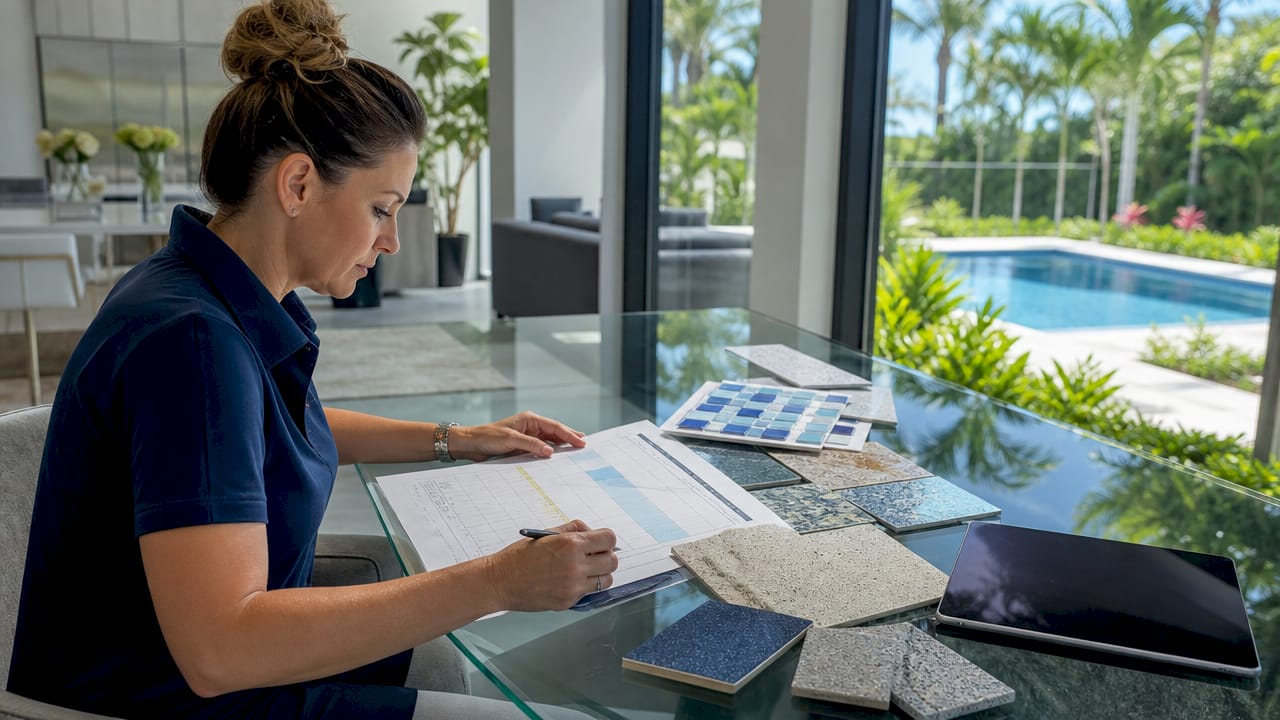
The answer depends almost entirely on what your pool is finished with. Pool resurfacing materials carry different lifespans: standard plaster lasts 7–10 years, colored plaster 10–15 years, aggregate finishes 15–20 years, and glass beads or polished aggregate 20–25 years. Choosing the right material at the outset is the single most consequential decision in your pool resurfacing schedule.
Here is a direct comparison of the most common commercial pool finish options by lifespan, relative cost, and surface texture:
| Surface Type | Typical Lifespan | Relative Cost | Texture |
|---|---|---|---|
| Standard white plaster | 7–10 years | Lowest | Smooth |
| Colored plaster | 10–15 years | Low to moderate | Smooth |
| Quartz aggregate | 15–20 years | Moderate | Slightly textured |
| Pebble Tec® aggregate | 15–20 years | Moderate to high | Textured |
| Glass tile | 25+ years | Highest | Smooth, reflective |
Standard plaster costs the least upfront but demands the most frequent replacement. Premium finishes like Pebble Tec® can cost up to $10 per square foot, while standard commercial jobs range from $5,000 to $20,000 and large concrete pools can reach $30,000. The higher initial investment in aggregate or tile finishes typically pays off over a 20-year horizon for busy resort or hotel pools.
Pro Tip: Match your surface material to your bather load. A resort pool with daily heavy use will wear standard plaster in 5–7 years. Specify Pebble Tec® or quartz aggregate from the start to cut your long-term resurfacing frequency in half.
2. What signs tell you a commercial pool needs resurfacing now?
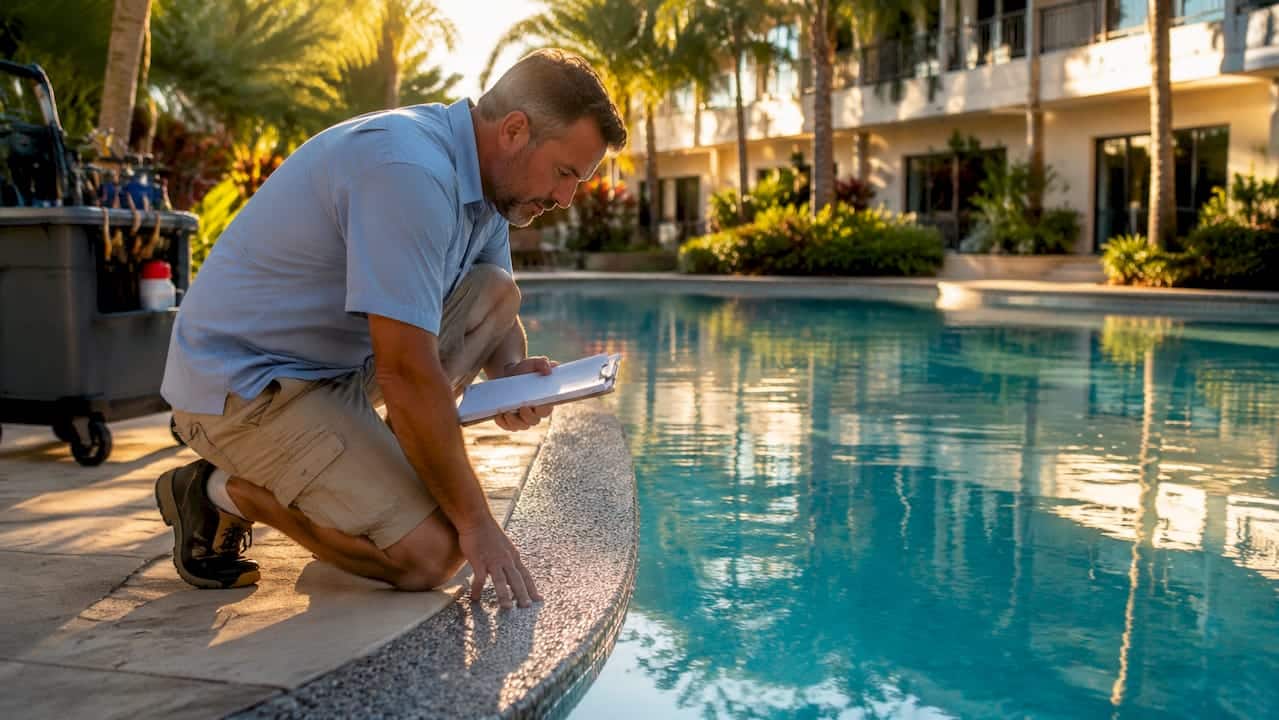
Visual and structural indicators are the most reliable triggers for resurfacing outside of a fixed schedule. Cracks, surface roughness that scratches swimmers, visible delamination, and widespread fading all signal that the surface has reached the end of its functional life. Waiting past these signs creates safety hazards and accelerates structural damage to the shell itself.
Professional inspections every 24 months catch early-stage delamination before it becomes a costly structural repair. Inspections matter even when the surface looks intact, because subsurface bond failures are invisible until they expand. Skipping inspections is the fastest way to turn a planned resurfacing project into an emergency one.
Common causes that accelerate surface wear include:
- Unbalanced water chemistry. Chronically low pH strips calcium from plaster surfaces faster than any physical wear.
- Freeze-thaw cycles. Water trapped in micro-cracks expands and fractures the finish from within.
- High bather load. Sunscreen, body oils, and physical abrasion degrade surface integrity over time.
- Inadequate surface preparation during prior resurfacing. Most premature finish failures trace back to poor prep work, not the material itself.
- Algae and staining. Persistent biological growth etches plaster and signals chemistry problems that shorten surface life.
Pro Tip: Document surface condition with dated photographs at every inspection. A visual record makes it far easier to justify resurfacing budgets to ownership and to track how quickly wear is progressing.
3. How long does a commercial pool resurfacing project take?
A standard commercial pool resurfacing project runs 14–28 days from start to finish. That window accounts for draining, surface preparation, application, curing, and refilling. High-performance renders require a mandatory 7-day curing period before the pool can be refilled, and water chemistry management continues for weeks after that.
The full project sequence follows these stages:
- Drain the pool completely. Full drainage is required for proper surface access and preparation.
- Prepare the existing surface. Crews chip, sandblast, or acid-wash the old finish to create a clean bond surface.
- Apply the new finish. Material is applied in layers according to manufacturer specifications.
- Begin the curing period. The surface cures for a minimum of 7 days before refilling begins.
- Refill and balance water chemistry. Filling takes 24–48 hours; chemistry balancing follows immediately.
- Post-fill brushing. Daily brushing for the first two weeks removes plaster dust and prevents spotting.
One critical rule governs the post-resurfacing period: automatic cleaners must not be used for 28 days after resurfacing. Wheel tracks from robotic vacuums cause permanent defects in curing plaster. This is a non-negotiable aftercare requirement, not a suggestion.
Review the full pool resurfacing timeline for Florida to build an accurate project schedule before committing to a start date.
4. When is the best time to schedule commercial pool resurfacing?
Off-season scheduling is the most effective way to minimize operational disruption. Low-occupancy periods reduce downtime impact and align with the curing conditions that produce the best long-term results. For Florida properties, the window from october through february offers lower humidity and stable temperatures that support proper curing.
Stable temperatures and low humidity produce optimal curing conditions and minimize surface defects. Resurfacing during peak summer heat in Florida risks rapid moisture loss from fresh plaster, which causes cracking and weakens the bond. Scheduling in cooler months protects the investment and reduces the chance of warranty callbacks.
Resort and hotel operators should align their pool resurfacing schedule with their lowest occupancy period. A pool closed for three weeks in january costs far less in lost revenue than the same closure in july. Coordinating with your contractor six months in advance secures preferred scheduling slots and allows time for material procurement.
5. What maintenance practices extend commercial pool surface lifespan?
Water chemistry is the single most powerful variable in pool surface lifespan. Poor water chemistry reduces surface life by 20–30%, making it a more significant factor than the material itself. Facility managers who treat chemistry as a daily discipline consistently get more years from every surface.
The Langelier Saturation Index, or LSI, measures whether pool water is corrosive or scale-forming. Maintaining LSI between -0.3 and +0.3 can effectively double the lifespan of plaster or aggregate finishes compared to poorly balanced water. That single metric, tracked consistently, is worth more than any premium material upgrade.
A practical commercial pool maintenance schedule includes:
- Daily checks: Test pH, chlorine, and alkalinity every morning before the pool opens.
- Weekly checks: Test calcium hardness, cyanuric acid, and total dissolved solids.
- Brushing: Brush all surfaces twice weekly to prevent algae adhesion and calcium buildup.
- Post-resurfacing brushing: Brush daily for the first two weeks after a new finish is applied.
- Water chemistry during curing: Monitor chemistry daily for the first 28 days. Improper hydration during curing weakens plaster and causes cracking.
For a complete maintenance protocol, the Classicmarcite guide on how to maintain pool surface covers chemical management and cleaning routines in detail. Proper maintenance can extend surface lifespans by 20–30%, which translates directly into fewer resurfacing cycles over the life of the facility.
Key takeaways
The most effective commercial pool resurfacing schedule combines material selection, biennial inspections, balanced water chemistry, and off-season project timing to maximize surface lifespan and minimize total cost.
| Point | Details |
|---|---|
| Resurfacing frequency by material | Standard plaster lasts 7–10 years; aggregate finishes last 15–20 years; glass tile exceeds 25 years. |
| Water chemistry is the top variable | Maintaining LSI between -0.3 and +0.3 can double surface lifespan compared to unbalanced water. |
| Inspect every 24 months | Professional inspections catch delamination early and prevent costly structural repairs. |
| Schedule in the off-season | Low-humidity, low-occupancy periods produce better curing results and lower revenue loss. |
| No automatic cleaners for 28 days | Robotic vacuums cause permanent wheel-track defects in curing plaster after resurfacing. |
What I’ve learned managing commercial pool resurfacing schedules
The most common mistake I see from facility managers is treating resurfacing as a reactive expense rather than a planned capital item. A pool that gets resurfaced on schedule costs a fraction of one that is run to failure. Structural shell repairs, emergency closures, and liability exposure from rough surfaces all carry costs that dwarf the price of a timely resurfacing project.
Material selection matters, but it is not the whole story. I have seen Pebble Tec® finishes fail in eight years because the water chemistry was never properly managed, and I have seen standard plaster hold up for twelve years on a well-maintained resort pool. The chemistry discipline your team maintains every single day determines more about surface longevity than the material specified at installation.
My practical recommendation: build a five-year capital plan that includes a scheduled inspection at year two, a condition assessment at year five, and a resurfacing budget line at the material’s expected end of life. Collaborate with an experienced contractor early. Contractors who specialize in commercial work, like Classicmarcite, can assess your specific surface condition and give you a realistic timeline rather than a generic estimate. That relationship, built before you are in crisis mode, is what separates proactive facility management from expensive emergency repairs.
— Classicmarcite
Plan your next commercial pool resurfacing project with Classicmarcite
Classic Marcite has resurfaced over 100,000 pools since 1988, serving commercial properties, resorts, hotels, and theme parks across Orlando and Jacksonville, Florida. The company offers the full range of surface options, from standard plaster to Pebble Tec® aggregate finishes, and holds the distinction of being the largest Pebble Tec® applicator in Central Florida.

Whether you are planning a scheduled resurfacing or responding to surface wear, Classicmarcite’s team can assess your pool’s condition and recommend the right material and timing for your facility. Their commercial pool resurfacing services in The Villages and surrounding Central Florida communities are available for consultation and free project estimates. Contact Classicmarcite to align your next project with the optimal scheduling window and protect your surface investment for the long term.
FAQ
How often should a commercial pool be resurfaced?
Most commercial pools need resurfacing every 10–15 years, but high-traffic facilities may require it every 5 years. The exact interval depends on surface material, bather load, and water chemistry management.
What is the longest-lasting commercial pool surface?
Glass tile exceeds 25 years of service life, making it the most durable option. Aggregate finishes like Pebble Tec® offer 15–20 years and represent the best balance of durability and cost for most commercial properties.
Can good maintenance delay the need for resurfacing?
Yes. Proper maintenance, particularly keeping the Langelier Saturation Index between -0.3 and +0.3, can extend surface lifespan by 20–30% compared to poorly managed water chemistry.
What is the best time of year to resurface a commercial pool?
Off-season months with stable temperatures and low humidity produce the best curing conditions. For Florida properties, october through february is the preferred window for commercial pool resurfacing projects.
Why can’t I use an automatic cleaner after resurfacing?
Automatic and robotic pool cleaners must stay out of the pool for 28 days after resurfacing. Their wheels leave permanent track marks in curing plaster, causing surface defects that cannot be repaired without full re-application.