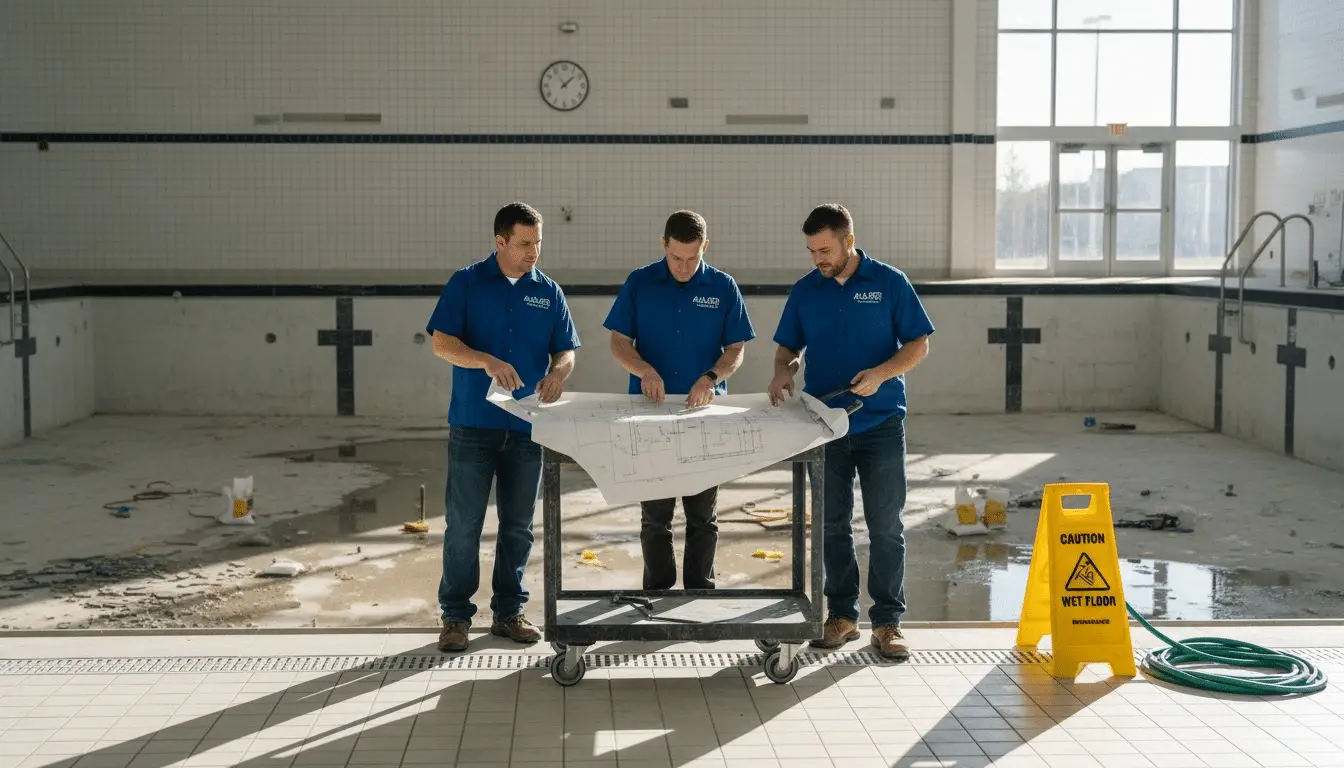
Most American commercial property managers in Orlando and Jacksonville face a big decision when renovating an aging pool. With more than 60 percent of property value tied to visual appeal and guest experience, a neglected pool can undermine your asset’s earning power. Efficient pool renovation workflows deliver safer facilities, lower long term costs, and reinforce your property’s competitive standing. This guide provides a clear roadmap so you can optimize results without costly missteps.
Table of Contents
- Step 1: Assess Current Pool Conditions And Needs
- Step 2: Develop A Detailed Renovation Plan
- Step 3: Prepare The Pool Area And Materials
- Step 4: Execute Surface And Equipment Upgrades
- Step 5: Conduct Quality Checks And Final Walkthrough
Quick Summary
| Key Point | Explanation |
|---|---|
| 1. Assess Pool Conditions Thoroughly | Conduct a systematic evaluation of structural integrity and water quality to identify renovation needs. |
| 2. Develop a Comprehensive Renovation Plan | Organize assessment findings into categories and prioritize based on safety and budget considerations. |
| 3. Prepare Work Area and Materials | Establish a well-organized site, ensuring all necessary materials and equipment are ready for use. |
| 4. Execute Upgrades with Precision | Carefully implement surface renovations and equipment upgrades, ensuring compliance with industry standards. |
| 5. Conduct Detailed Quality Checks | Perform thorough inspections post-renovation to ensure all components meet specifications and safety regulations. |
Step 1: Assess current pool conditions and needs
Commercial pool renovation begins with a comprehensive evaluation of existing infrastructure and performance requirements. Property managers must conduct a thorough systematic assessment of current pool conditions to determine precise renovation needs and priorities.
The assessment process involves multiple critical components. Start by performing a visual inspection that examines structural integrity, surface quality, and potential damage zones. Look for signs of wear such as cracks, discoloration, surface roughness, or uneven textures that might indicate underlying issues. Measure water chemistry parameters including pH levels, chlorine concentration, and mineral content to understand potential degradation factors. Document equipment functionality by checking pump systems, filtration mechanisms, heating elements, and electrical connections for potential replacement or repair requirements.
Engaging a professional pool inspection team can provide deeper insights into hidden problems and recommend targeted renovation strategies. These experts utilize advanced diagnostic tools to evaluate structural soundness, detect potential leaks, and assess overall system performance beyond surface observations.
Pro tip: Photograph each problem area during your initial assessment to create a comprehensive renovation planning document that helps communicate specific repair needs to contractors.
Step 2: Develop a detailed renovation plan
After assessing your commercial pool conditions, the next critical phase involves creating a comprehensive renovation strategy that transforms your initial findings into actionable improvements. Developing a detailed plan requires systematically translating your inspection results into specific renovation recommendations that address structural, aesthetic, and functional requirements.
Begin by organizing your assessment findings into clear categories such as structural repairs, surface refinishing, equipment upgrades, and aesthetic enhancements. Prioritize these elements based on safety concerns, potential performance improvements, and budget constraints. When designing your renovation blueprint, reference recommended swimming pool design standards to ensure your plan meets professional compliance requirements. Include precise measurements, material specifications, and expected timelines for each renovation component. Consider potential disruption to pool operations and develop a phased approach that minimizes downtime for your commercial facility.
Here is a summary of typical commercial pool renovation categories and their business impact:
| Renovation Category | Description | Business Impact |
|---|---|---|
| Structural Repairs | Fixes cracks, leaks, or weaknesses | Prevents safety issues, preserves asset value |
| Surface Refinishing | Applies new pool surface finishes | Improves appearance, minimizes maintenance |
| Equipment Upgrades | Replaces pumps and filtration units | Enhances energy efficiency, lowers costs |
| Aesthetic Enhancements | Adds lighting or design features | Boosts customer satisfaction, attracts guests |
Consult with professional pool renovation specialists who can provide expert insights and validate your proposed plan. These professionals can offer technical recommendations, suggest cost effective solutions, and help refine your renovation strategy to maximize long term performance and durability.
Pro tip: Create a visual renovation roadmap with color coded sections indicating priority levels and estimated completion times to help stakeholders quickly understand the proposed improvements.
Step 3: Prepare the pool area and materials
Preparing the pool area and materials is a critical phase that sets the foundation for a successful renovation project. Your goal is to create a carefully organized workspace that enables efficient and precise renovation work while protecting the surrounding environment.
Begin by establishing a comprehensive staging area that accommodates all necessary equipment and materials. Clear the pool deck completely and create designated zones for different renovation activities. Pool site preparation standards recommend establishing secure perimeters and protecting adjacent surfaces from potential damage. Gather all required renovation materials in advance including resurfacing compounds, repair tools, safety equipment, and protective coverings. Ensure proper ventilation and lighting in the work area and set up temporary storage solutions that keep materials organized and protected from environmental conditions.
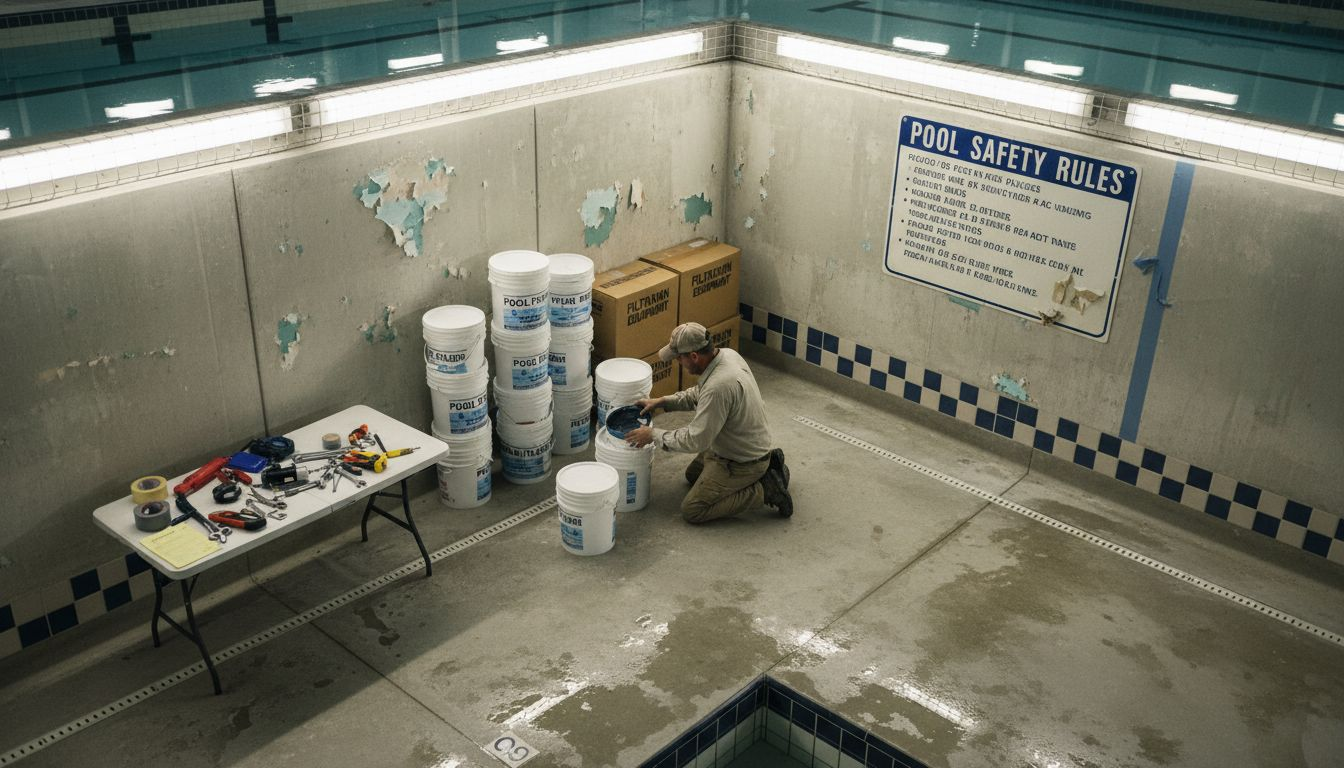
Carefully inspect and prepare all renovation materials before beginning work. Check each product for compatibility with your specific pool surface and verify that you have the correct quantities based on your detailed renovation plan. Remove any existing loose materials, clean surfaces thoroughly, and create a smooth foundation for new applications. Consider weather conditions and plan your material preparation to account for temperature and humidity requirements that might impact application and curing processes.
Pro tip: Create a detailed material inventory checklist and conduct a pre renovation equipment and material audit to prevent unexpected delays during the renovation process.
Step 4: Execute surface and equipment upgrades
Executing surface and equipment upgrades represents the most transformative phase of your commercial pool renovation project. This critical stage will dramatically improve your pool’s functionality, aesthetic appeal, and overall performance by systematically implementing the improvements identified in your earlier planning stages.
Begin by addressing surface refinishing with precision and care. Professional aquatic facility installation standards recommend carefully preparing surfaces before applying new materials. Remove existing damaged surfaces completely, ensuring a clean and stable foundation for new applications. For concrete pools, this might involve shotcrete application or specialized resurfacing techniques. Carefully apply new surface materials using manufacturer recommended methods, paying close attention to temperature, humidity, and curing requirements. Simultaneously, focus on equipment upgrades that enhance operational efficiency. Replace outdated filtration systems, upgrade circulation pumps, and install modern heating elements that improve energy performance and reduce long term operational costs.
Professional renovation teams should coordinate equipment installations carefully, ensuring each component integrates seamlessly with existing pool infrastructure. Conduct thorough testing of new surfaces and equipment immediately after installation to verify proper function and identify any potential issues. Verify that all upgrades meet current safety standards and municipal regulations for commercial pool facilities.
Pro tip: Document every upgrade with detailed photographs and manufacturer specifications to support future maintenance and potential warranty claims.
Step 5: Conduct quality checks and final walkthrough
The final stage of your commercial pool renovation involves comprehensive quality verification to ensure every aspect of the project meets professional standards and client expectations. This critical phase transforms your carefully planned renovation from a technical project into a fully realized, high performance aquatic facility.
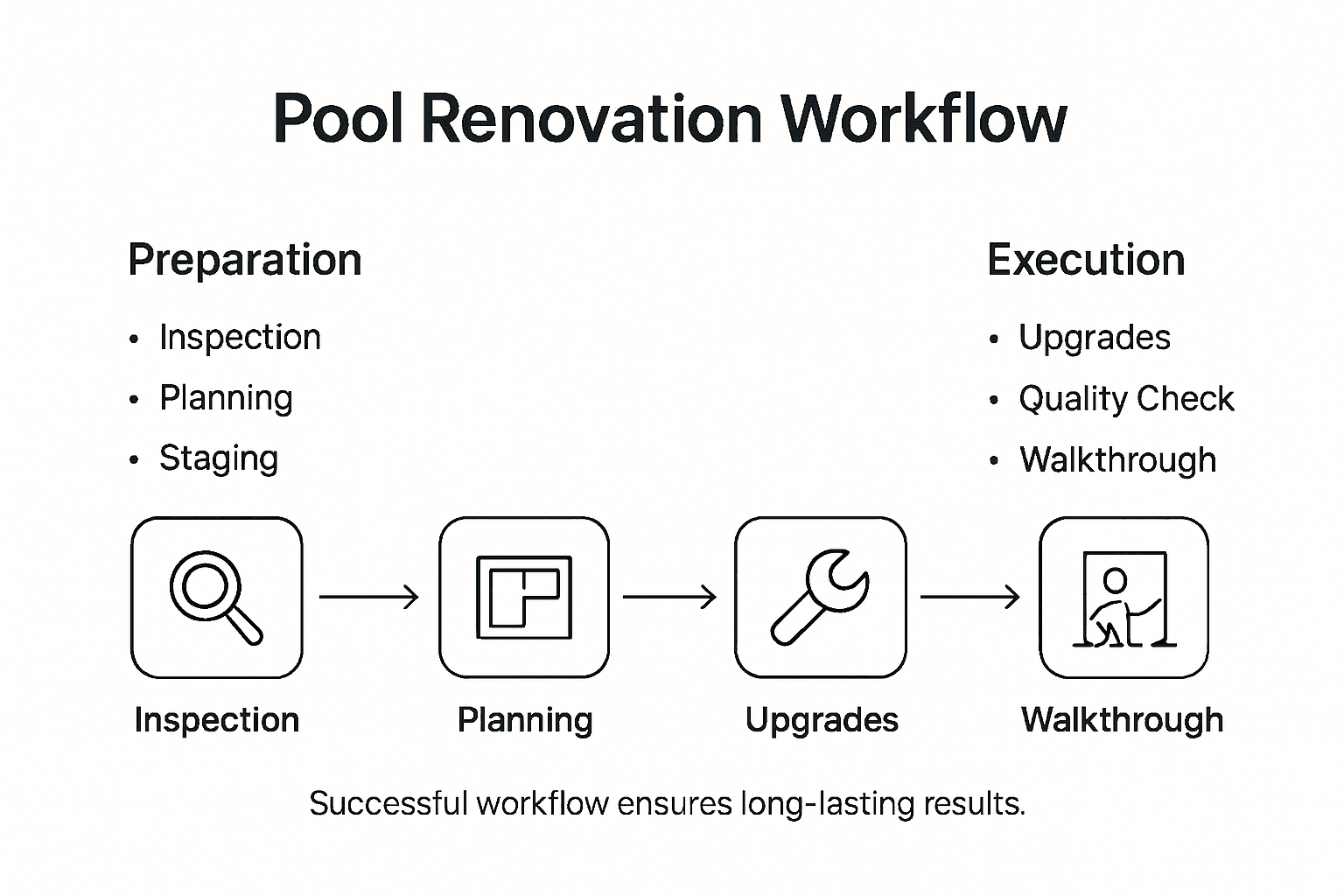
Construction and renovation quality assurance protocols recommend a systematic and thorough inspection process. Begin by methodically reviewing each renovated component against your original project specifications. Test all new equipment thoroughly checking electrical connections, water circulation systems, filtration performance, and heating elements. Verify surface finishes for uniform texture, proper curing, and aesthetic consistency. Measure water chemistry parameters to confirm optimal balance and confirm that all new installations comply with local commercial pool safety regulations.
Involve key stakeholders in the final walkthrough to validate the renovation outcomes. This includes property management representatives, facility maintenance staff, and potentially independent quality assurance professionals. Document every inspection finding meticulously, creating a comprehensive record that captures both successful upgrades and any areas requiring minor adjustments. Pay special attention to functional details such as surface smoothness, equipment responsiveness, water clarity, and overall system integration.
This table compares pre- and post-renovation pool conditions:
| Condition Aspect | Before Renovation | After Renovation |
|---|---|---|
| Surface Quality | Rough, cracked, discolored | Smooth, uniform, visually appealing |
| Equipment Performance | Outdated or inconsistent | Efficient, reliable, up-to-date |
| Safety Compliance | May fail local standards | Meets all required regulations |
| Water Chemistry | Unbalanced, hard to maintain | Optimized, easier to manage |
Pro tip: Create a detailed photographic and video documentation portfolio during the final walkthrough to provide a definitive record of the completed renovation project.
Transform Your Commercial Pool Renovation Into Lasting Success
Renovating a commercial pool comes with challenges like structural repairs, surface refinishing, and equipment upgrades to meet safety and performance standards. The detailed workflow explores pain points from assessing current pool conditions to executing upgrades and final quality checks. If you want to avoid costly delays, ensure compliance, and enhance your pool’s durability and visual appeal, partnering with an experienced specialist is vital.
Classic Marcite, the leader in pool resurfacing and renovation in Orlando and Jacksonville, Florida, offers proven solutions that align perfectly with your renovation goals. With over 100,000 pools resurfaced since 1988, including commercial projects, they bring industry-leading craftsmanship and premium materials like Pebble Tec® to strengthen surfaces and upgrade your pool’s functionality. Their expert team supports every stage from initial evaluation through final quality assurance so you can trust the results and reduce downtime.

Ready to elevate your commercial pool with expert resurfacing and remodeling? Visit Classic Marcite to explore how their comprehensive pool renovation services can bring your vision to life today. Don’t wait to create a safer, more efficient, and visually stunning pool facility that exceeds expectations and delights guests. Request a free estimate now to get started on your renovation journey with trusted professionals.
Frequently Asked Questions
What are the first steps in the commercial pool renovation workflow?
Assessing current pool conditions and needs is the first step. Conduct a thorough visual inspection and measure water chemistry parameters to identify precise renovation priorities.
How do I create a comprehensive renovation plan for my commercial pool?
Develop a detailed renovation plan by organizing assessment findings into categories such as structural repairs and equipment upgrades. Prioritize these elements based on safety and budget, then create a phased approach to minimize disruption.
What should I include when preparing the pool area and materials for renovation?
Establish a staging area for equipment and materials, clear the pool deck, and implement protection measures for surrounding areas. Prepare a detailed material inventory to ensure you have everything needed before starting the renovation.
How can I ensure the quality of the upgrades during the renovation?
Conduct thorough quality checks by testing all new equipment and verifying surface finishes after installation. Document any findings to create a comprehensive record and address any minor adjustments prior to final approval.
What should I do during the final walkthrough of the renovated pool?
Involve key stakeholders in the final walkthrough to validate renovation outcomes. Inspect each renovated component against original specifications and document findings to ensure all upgrades meet local safety regulations.
