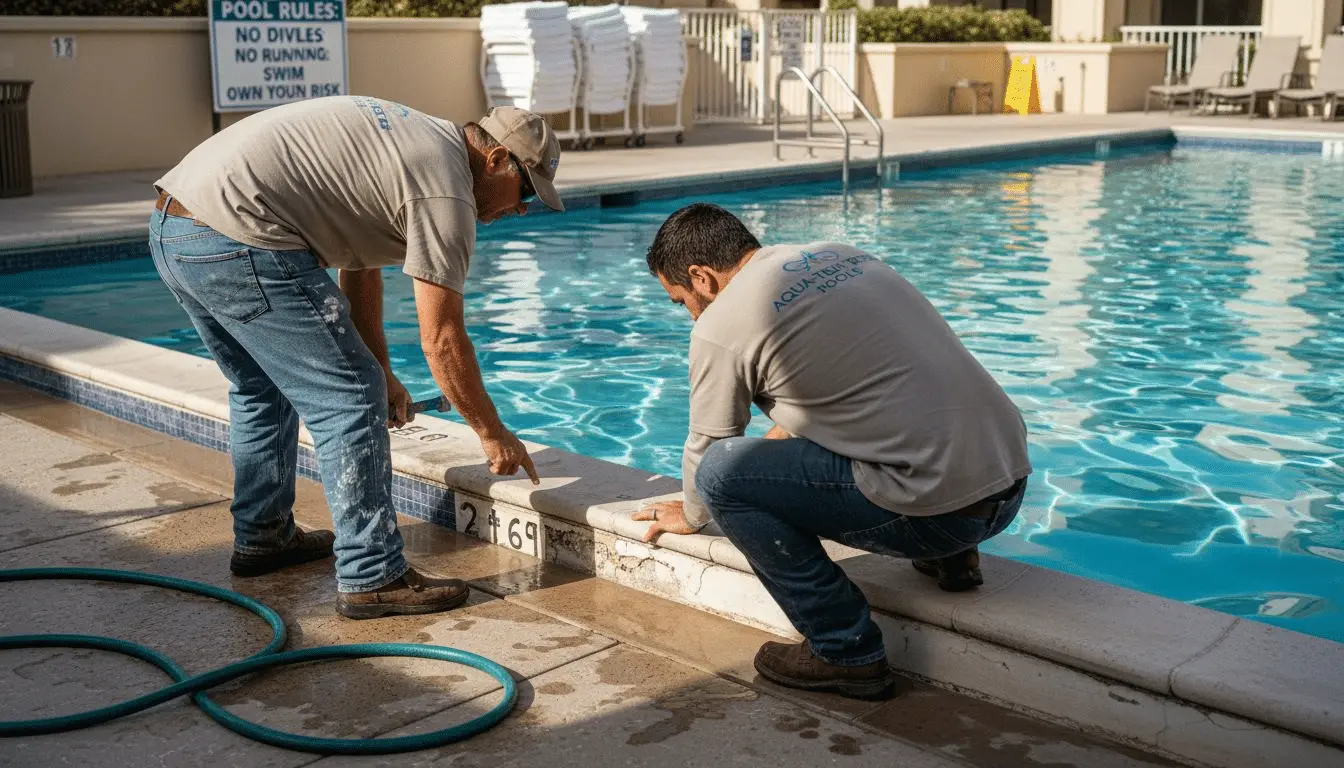
Peeling surfaces and visible cracks in pool areas can quickly turn away guests and raise safety concerns for commercial properties across Orlando and Jacksonville. For property managers and hotel owners, maintaining a visually appealing and safe swimming environment is more than just aesthetics—it directly influences guest satisfaction and protects your investment. By understanding the value of pool resurfacing as a long-term solution, you can proactively avoid expensive structural repairs while showcasing your commitment to quality and compliance with Florida standards.
Table of Contents
- Defining Commercial Pool Resurfacing and Its Purpose
- Surface Options and Material Longevity Explained
- Resurfacing Process: Steps and Timeframes
- Legal and Safety Requirements for Florida Pools
- Cost, ROI, and Common Pitfalls for Properties
Key Takeaways
| Point | Details |
|---|---|
| Importance of Resurfacing | Commercial pool resurfacing is essential for maintaining structural integrity, safety, and aesthetics in high-traffic environments. |
| Material Selection | Choose advanced materials for enhanced durability and minimal maintenance, balancing functionality with aesthetics. |
| Regulatory Compliance | Adhere to stringent safety regulations and standards to ensure public health and avoid legal liabilities. |
| Cost Management | Implement a detailed maintenance budget to facilitate regular resurfacing and mitigate unexpected costs. |
Defining Commercial Pool Resurfacing and Its Purpose
Commercial pool resurfacing represents a critical maintenance strategy for property managers seeking to preserve their aquatic facilities’ structural integrity, aesthetic appeal, and safety standards. Unlike residential pool renovations, commercial pool resurfacing addresses complex challenges specific to high-traffic environments like hotels, resorts, community centers, and theme parks.
At its core, pool resurfacing involves systematically replacing or repairing the existing interior pool surface to restore its functionality and appearance. Comprehensive maintenance standards dictate that these renovations must meet rigorous safety and performance requirements. This process involves multiple critical steps, including surface preparation, damage assessment, material selection, and precise application techniques that ensure long-term durability.
The primary purposes of commercial pool resurfacing extend beyond mere cosmetic improvements. These renovations serve crucial functional objectives: preventing structural deterioration, eliminating potential safety hazards, maintaining water quality, and extending the pool’s operational lifespan. By addressing surface cracks, chemical imbalances, and wear patterns, property managers can prevent more expensive repairs and potential liability issues associated with pool infrastructure failures.
Pro tip: Schedule comprehensive pool surface assessments annually to identify potential resurfacing needs before minor issues escalate into costly structural problems.
Surface Options and Material Longevity Explained
Commercial pool resurfacing encompasses a diverse range of surface materials, each offering unique performance characteristics and longevity for high-traffic aquatic environments. Property managers must carefully evaluate material options to ensure optimal durability, aesthetic appeal, and long-term cost-effectiveness.
Traditional surface materials like plaster have evolved, with modern alternatives providing enhanced resilience. Concrete resurfacing systems now incorporate advanced overlays that resist damage from salt, pool chemicals, UV exposure, and extreme temperature fluctuations. These innovative materials can withstand harsh operational conditions while maintaining structural integrity and visual appeal. Some advanced systems even allow for decorative finishes like stamping, enabling property managers to simultaneously address functional and aesthetic requirements.
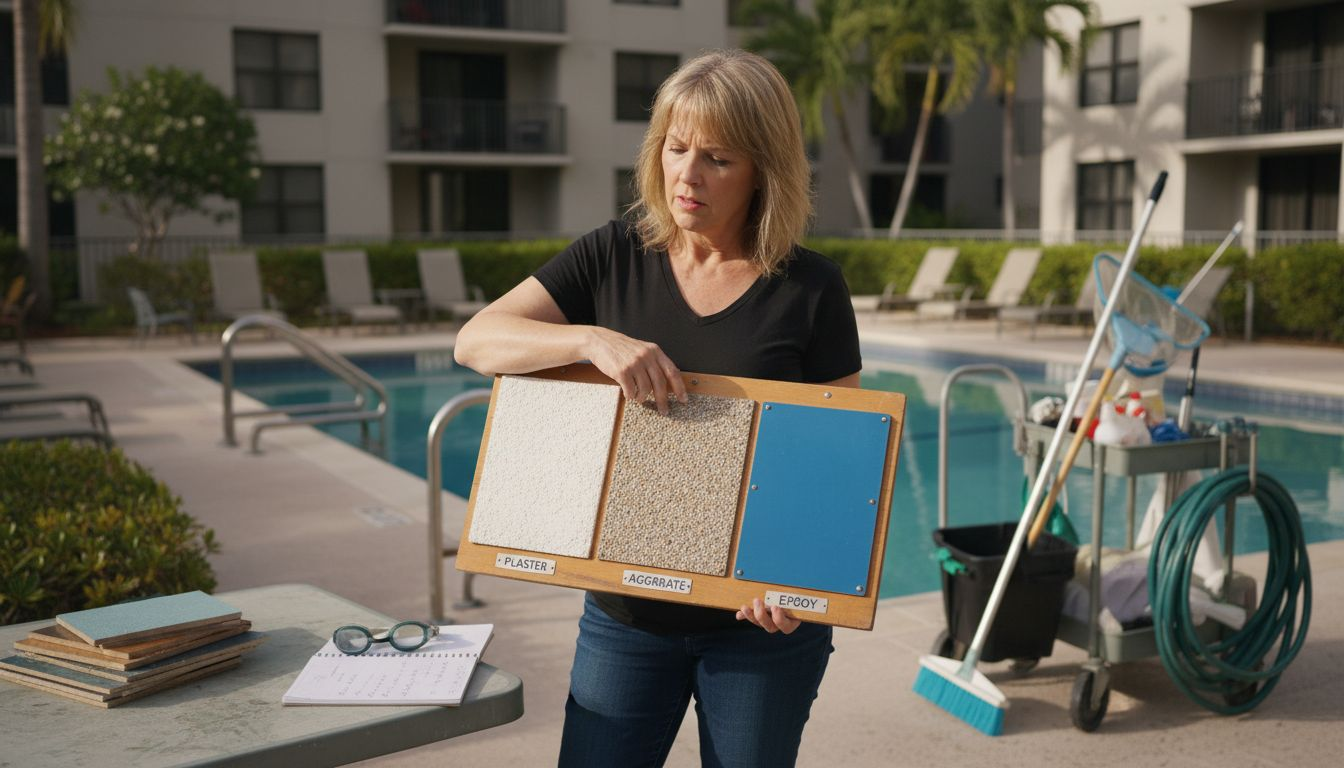
Specialized materials such as aggregate finishes and epoxy-based coatings have gained prominence in commercial pool environments. These sophisticated surfaces offer superior resistance to chemical degradation, reduced maintenance requirements, and extended service life. For instance, perlite-based foundations provide exceptional heat retention and create a smooth, durable base that significantly prolongs pool liner performance. Advanced materials like these represent a strategic investment, transforming pool surfaces from simple functional spaces into robust, long-lasting aquatic assets.
Pro tip: Consult with professional pool renovation specialists to determine the most appropriate surface material based on your specific environmental conditions and usage patterns.
Here’s a quick overview comparing key commercial pool resurfacing materials and their performance characteristics:
| Material Type | Durability | Maintenance Needs | Impact on Appearance |
|---|---|---|---|
| Plaster | Moderate | High, frequent checks | Basic, clean look |
| Advanced Overlays | High | Low, minimal upkeep | Decorative options |
| Aggregate Finish | Very High | Low, rare repairs | Unique, textured |
| Epoxy Coating | Very High | Low, resistant to chemicals | Glossy, modern |
Resurfacing Process: Steps and Timeframes
Commercial pool resurfacing is a complex, multi-stage process that requires meticulous planning and execution to ensure optimal results. Regulatory compliance guidelines mandate specific protocols that professional contractors must follow to guarantee safety and quality throughout the renovation.
The comprehensive resurfacing process typically involves several critical stages. Initial preparation includes thorough pool drainage, comprehensive surface inspection, and detailed damage assessment. Technicians carefully remove existing surface materials, addressing structural imperfections, cracks, and potential underlying issues. This preparatory phase is crucial for ensuring a smooth, stable foundation for the new surface application. Next, the pool surface undergoes precise grinding and smoothing to create an ideal substrate for the new finish, which might involve specialized techniques depending on the selected material type.
Timeframes for commercial pool resurfacing can vary significantly based on pool size, complexity, and selected materials. Smaller pools might require 3-5 days, while larger commercial facilities could demand 1-2 weeks of complete renovation time. The application process itself involves multiple layers: primer coating, surface material installation, detailed finishing, and comprehensive curing. Each stage requires precise environmental conditions and specialized technical expertise to achieve optimal results. Modern resurfacing techniques have dramatically reduced downtime, allowing commercial facilities to minimize operational interruptions.
Pro tip: Schedule pool resurfacing during off-peak seasons to minimize business disruption and take advantage of potentially lower contractor rates.
Legal and Safety Requirements for Florida Pools
Florida’s commercial pool regulations represent a comprehensive framework designed to ensure public safety, health standards, and operational excellence. Commercial pool requirements mandate rigorous protocols that property managers and pool operators must meticulously follow to maintain compliance and protect public welfare.
The legal landscape for pool safety encompasses multiple critical components. Commercial facilities must submit detailed construction plans approved by licensed professionals, demonstrating full adherence to the Florida Building Code. These plans require extensive documentation, including site-specific pool layout designs, structural specifications, and evidence of meeting public health standards. Operational permits from county health departments are mandatory, with inspectors conducting thorough assessments to verify safety infrastructure, water quality management, and potential risk mitigation strategies.
Safety regulations extend beyond initial construction, requiring ongoing compliance and proactive risk management. Mandatory safety features include comprehensive barrier systems, emergency equipment, slip-resistant surfaces, and clearly marked depth indicators. While some regulations originate from residential safety statutes, they significantly influence commercial pool requirements. Pool operators must implement robust supervision protocols, maintain precise chemical balance, ensure proper drainage, and develop emergency response plans. Failure to comply can result in substantial financial penalties, potential facility closure, and significant legal liability.
Pro tip: Schedule quarterly internal safety audits to proactively identify and address potential regulatory compliance issues before official inspections.
Cost, ROI, and Common Pitfalls for Properties
Commercial pool resurfacing represents a strategic investment with significant long-term financial implications for property managers. Swimming pool industry statistics reveal that concrete pools typically maintain structural integrity for 50+ years, with strategic resurfacing every 10-15 years ensuring optimal performance and value retention.
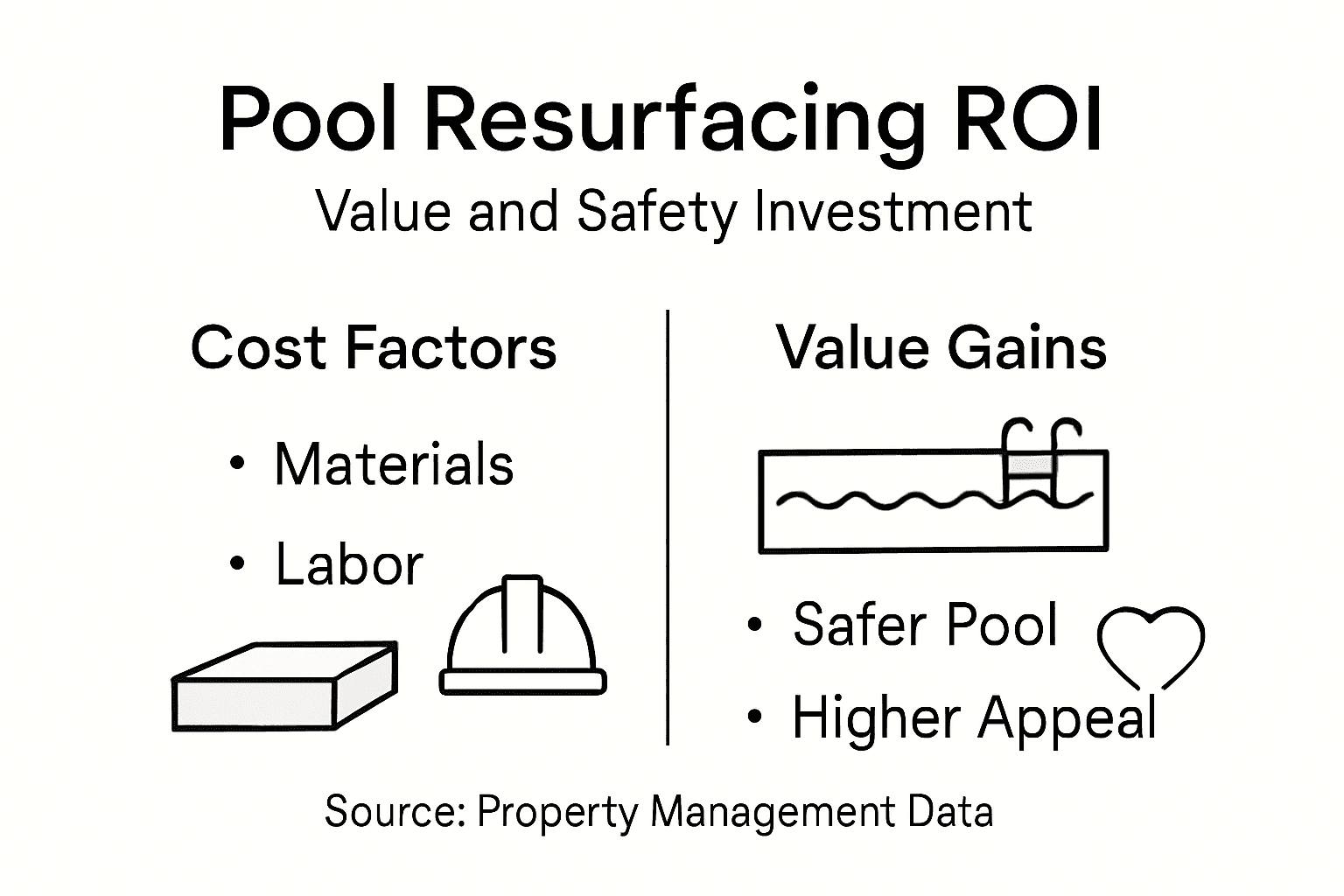
The financial landscape of pool resurfacing involves careful cost-benefit analysis. Typical resurfacing projects range from $10,000 to $20,000, with costs varying based on pool size, selected materials, and complexity of renovation. Return on investment (ROI) extends beyond immediate aesthetic improvements, encompassing critical factors like enhanced property value, reduced long-term maintenance expenses, improved guest satisfaction, and prevention of more expensive structural repairs. Commercial properties can expect increased marketability and potential rental or usage rate improvements through well-maintained aquatic facilities.
Potential pitfalls in pool resurfacing can significantly impact financial outcomes and operational efficiency. Common mistakes include selecting low-durability materials, neglecting proper surface preparation, underestimating project complexity, and delaying necessary renovations. Property managers must conduct comprehensive assessments, obtain multiple professional quotes, and develop detailed project scopes that account for potential unexpected challenges. Proactive maintenance and strategic planning are crucial in transforming pool resurfacing from a potential financial burden into a value-adding property enhancement.
Below is a summary of common pitfalls in commercial pool resurfacing and their long-term business impacts:
| Pitfall | Typical Cause | Consequence for Property |
|---|---|---|
| Choosing poor materials | Cost-cutting choices | Frequent repairs needed |
| Inadequate surface prep | Rushed project schedule | Shortened surface life |
| Underestimating complexity | Lack of expert consultation | Project delays, overruns |
| Delaying renovations | Deferring maintenance | Higher liability risk |
Pro tip: Develop a multi-year pool maintenance budget that includes regular resurfacing allocations to smooth out unexpected financial pressures and maintain consistent facility quality.
Elevate Your Commercial Pool’s Value and Safety with Expert Resurfacing Solutions
Commercial pool resurfacing is more than just a facelift. It is a vital step toward restoring structural integrity, enhancing safety, and extending the life of your aquatic asset. If you are managing a hotel, resort, community center, or theme park in Florida, you understand the challenges of high-traffic environments and the importance of durable, weather-resistant surface materials. At Classic Marcite, we specialize in transforming pools using premium finishes like Pebble Tec® that resist chemical damage and UV exposure, ensuring your pool remains both beautiful and compliant with Florida’s strict safety requirements.

Ready to prevent expensive repairs and boost your property’s appeal? Discover how our expert resurfacing, remodeling, and repair services can deliver the longevity and aesthetic upgrade you need. Visit Classic Marcite for a free estimate and explore how our proven craftsmanship can safeguard your investment and impress your guests. Don’t wait until minor issues become costly problems. Act now to experience the industry’s trusted leader in pool renovation and elevate your commercial pool’s performance today!
Frequently Asked Questions
What is commercial pool resurfacing?
Commercial pool resurfacing is the process of replacing or repairing the existing interior surface of a pool to restore its function, appearance, and safety, particularly in high-traffic environments such as hotels and community centers.
How often should commercial pools be resurfaced?
Commercial pools generally require resurfacing every 10 to 15 years, depending on factors like usage, materials, and maintenance practices to ensure optimal performance and safety.
What are the benefits of using advanced materials for pool resurfacing?
Advanced resurfacing materials, such as aggregate finishes and epoxy coatings, offer superior durability, reduced maintenance requirements, and enhanced resistance to chemical degradation, ensuring a longer-lasting and more attractive pool surface.
What are the common pitfalls to avoid during the pool resurfacing process?
Common pitfalls include choosing low-durability materials, inadequate surface preparation, underestimating project complexity, and delaying necessary renovations, which can lead to increased repair costs and operational disruptions.
