
TL;DR:
- Pool permits are essential in Florida to ensure safety, code compliance, and legal protection for property owners. Skipping permits can lead to hefty fines, demolition orders, insurance denials, and increased retrofit costs. Proper permitting involves detailed plans, inspections, and addressing flood and environmental regulations from the start.
Pool permits are legally required authorizations that confirm your pool meets all construction, safety, and electrical codes to protect you, your property, and your guests. In Florida, the importance of pool permits goes beyond paperwork. Skipping them exposes you to fines, insurance denials, and forced demolition. Whether you are building a new pool or renovating an existing one, understanding what permits require and why they exist is the first step toward a project that protects your investment and your family.
Why the importance of pool permits cannot be ignored
A pool permit is a formal approval from your local building department confirming that your pool design meets all applicable codes. Pool permits are required for all in-ground pools and above-ground pools deeper than 24 inches. That threshold exists because water at that depth poses a real drowning risk, especially for children.
A typical permit package covers four separate subpermits: building, electrical, plumbing, and fence or barrier. Each one addresses a distinct safety concern. The electrical subpermit, for example, enforces NEC Article 680, which governs bonding and grounding around water to prevent electrocution. The fence subpermit enforces barrier standards that reduce unsupervised access by young children.
Permit packages typically cost $1,000 to $5,000 depending on location and pool complexity. That cost is modest compared to the liability and legal exposure that comes with skipping the process entirely.
What safety and legal protections do pool permits provide?
Pool permits enforce the specific safety standards that prevent the most serious pool accidents. Florida Building Code requires barriers that limit unsupervised access. Gates must be self-closing and self-latching. No climbable objects can be placed within reach of the fence. These requirements exist because drowning is the leading cause of accidental death in children under five in Florida.
Electrical safety is equally critical. NEC Article 680 mandates bonding and grounding for all electrical equipment near water, including lights, pumps, and heaters. A permitted pool receives an electrical inspection that verifies these connections are correct. An unpermitted pool has no such verification.
Unpermitted pools can lead to complete insurance claim denials if injuries occur on the property. That means a guest injured in your pool could result in a lawsuit with zero insurance coverage. The financial exposure from a single incident far exceeds the cost of any permit.
Key protections pool permits provide:
- Drowning prevention: Barrier and fencing requirements reduce unsupervised child access
- Electrocution prevention: NEC 680 electrical inspections verify bonding and grounding
- Insurance coverage: Permitted pools maintain valid homeowner liability coverage
- Code compliance: Florida Building Code inspections catch structural and plumbing defects before they become dangerous
- Legal standing: A permitted pool has documented authorization that protects you in any legal dispute
Pro Tip: Contact your homeowner’s insurance provider before breaking ground. Confirm in writing that your policy covers pool construction and that the permit process satisfies their requirements. Some insurers require proof of final inspection before extending liability coverage.
What does the Florida pool permitting process involve?

Florida pool construction must comply with the Florida Building Code, and plans must be digitally sealed by a registered architect or engineer. That requirement applies statewide, though local jurisdictions like Hillsborough County, Orange County, and Duval County each add their own amendments. You cannot simply download a generic plan and submit it.
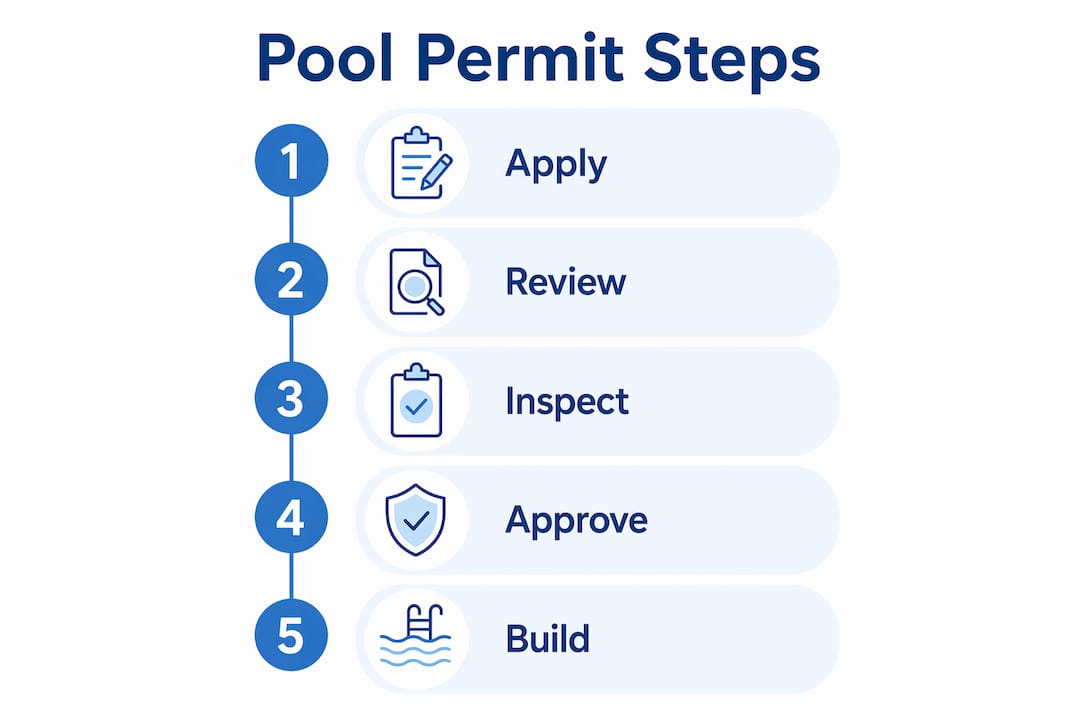
The typical permitting process in Florida follows these steps:
- Hire a licensed contractor or engineer to prepare site-specific plans showing pool dimensions, setbacks, drainage, and barrier locations
- Submit permit applications for building, electrical, plumbing, and fence subpermits simultaneously to avoid sequential delays
- Await plan review, which typically takes 4–8 weeks depending on the jurisdiction and workload
- Receive permit approval and begin construction with approved plans on site at all times
- Pass 6–8 inspections at defined construction milestones, including footing, steel, plumbing rough-in, electrical bonding, barrier, and final
- Obtain certificate of completion before filling the pool or allowing any use
Here is a summary of the key permit components and what each covers:
| Permit type | What it covers |
|---|---|
| Building permit | Structural design, setbacks, soil conditions, and pool shell |
| Electrical permit | NEC 680 bonding, grounding, lighting, and equipment wiring |
| Plumbing permit | Drain lines, circulation systems, and backflow prevention |
| Fence/barrier permit | Gate hardware, fence height, and non-climbable zone compliance |
The most common cause of permit delays is pool barrier noncompliance. Gates that fail the self-close and self-latch test trigger re-inspection fees and add weeks to your timeline. Address barrier details in your initial plans, not as an afterthought.
Pro Tip: Consult your local building department before finalizing your pool design. Ask specifically about setback distances, barrier requirements, and drainage rules. This single conversation can prevent costly re-engineering later.
What are the risks of building a pool without permits in Florida?
Building or renovating a pool without proper permits in Florida carries serious legal and financial consequences. Penalties range from $500 to over $10,000 depending on the jurisdiction and severity of the violation. In some cases, the county can order you to demolish the pool entirely at your own expense.
The financial risks extend well beyond fines:
- Retroactive permit costs: Retroactive permits cost two to three times more than original permits and may require partial demolition to inspect concealed structural and electrical elements
- Insurance denials: Liability claims related to unpermitted pools can be entirely denied, leaving you personally responsible for injury costs
- Property sale complications: Home inspectors flag unpermitted pools as a red flag. Buyers can demand price reductions, require retroactive permitting, or walk away from the deal
- Personal liability: Without a permitted and inspected pool, you have no documented proof that your pool met safety codes at the time of construction
- Lender issues: Mortgage lenders and title companies increasingly require permit verification for all structures on a property
“An unpermitted pool is not just a code violation. It is an undisclosed liability that follows the property through every future sale, insurance renewal, and legal dispute until it is resolved.”
The retroactive permitting process is particularly painful. Inspectors cannot verify what is buried in the ground without seeing it. That means cutting into decking, exposing plumbing, and uncovering electrical conduit. Homeowners who tried to save money by skipping permits often spend far more correcting the problem years later. The pool inspections process in Florida exists precisely to catch these issues before they become expensive problems.
How do pool permits connect to flood zones and tree removal rules?
Pool permits in Florida trigger a set of connected regulations that many homeowners do not anticipate. If your property sits in a Special Flood Hazard Area (SFHA), your pool design must meet additional engineering standards. Pools in flood hazard areas require engineer certifications per ASCE 24-14, which governs flood load resilience for structures. That means your pool engineer must specifically account for hydrostatic uplift, flood velocity, and debris impact in the design.
Tree removal is another trigger that surprises property owners. Trees over 12 inches in diameter require a separate tree removal permit in many Florida jurisdictions. Environmentally sensitive areas impose even stricter rules. Ignoring this requirement causes project shutdowns and fines that are entirely separate from your pool permit violations.
| Regulatory trigger | When it applies | Key requirement |
|---|---|---|
| Flood zone design standards | Property in a FEMA-designated SFHA | Engineer certification per ASCE 24-14 |
| Tree removal permit | Trees over 12 inches trunk diameter | Separate permit from environmental or planning department |
| Setback variances | Pool closer than standard distance to property line | Variance application and neighbor notification |
| Environmental overlay | Wetlands, protected species habitat nearby | Additional review by state or county environmental agency |
The practical lesson is clear. A pool project in Florida is rarely just a pool permit. Your contractor and engineer need to review the full site conditions before submitting any applications. Discovering a flood zone or protected tree after construction begins stops the project and adds weeks of delay. Experienced contractors who work regularly with Florida commercial pool compliance requirements understand how to identify these triggers early.
Key Takeaways
Pool permits are not optional in Florida. They are the legal and safety foundation that protects your property, your guests, and your financial investment from the first day of construction through every future sale.
| Point | Details |
|---|---|
| Permits are legally required | All pools deeper than 24 inches require building, electrical, plumbing, and fence permits. |
| Safety codes prevent accidents | NEC 680 electrical standards and barrier requirements directly reduce drowning and electrocution risks. |
| Unpermitted pools cost far more | Retroactive permits cost two to three times more and may require partial demolition for inspection. |
| Insurance depends on permits | Liability claims on unpermitted pools can be fully denied, leaving homeowners personally exposed. |
| Ancillary rules apply in Florida | Flood zones and tree removal regulations trigger additional requirements that must be addressed upfront. |
The real cost of cutting corners on pool permits
Working in the Florida pool industry for decades gives you a clear view of where projects go wrong. The homeowners who struggle most are not the ones who faced complex engineering challenges. They are the ones who believed permits were optional or that their contractor would handle everything without their involvement.
The permit process is not bureaucratic friction. It is the mechanism that forces every party, the contractor, the engineer, and the homeowner, to agree on a design that meets safety standards before a single shovel hits the ground. When that process is skipped, the problems do not disappear. They get buried under concrete and resurface years later during a home sale or after an accident.
The most common mistake I see is homeowners hiring the cheapest contractor without verifying that the contractor pulls permits in their name. In Florida, permits must be pulled by a licensed contractor. If your contractor suggests working without permits to save time or money, that is a clear signal to find someone else. Engaging experienced local contractors who understand pool permit requirements and have established relationships with local building departments is the single most effective way to keep your project on track.
Investing in permits is investing in the legal standing, safety record, and resale value of your property. No shortcut is worth the exposure.
— Classicmarcite
Pool renovation and resurfacing services in Florida
Classic Marcite has resurfaced over 100,000 pools across Florida since 1988, working with homeowners, property managers, resorts, and commercial operators who need work done right the first time.

Whether you are planning a full renovation or a surface refresh, Classicmarcite serves communities across Central Florida including The Villages, Winter Park, and Maitland. As the largest Pebble Tec® applicator in Central Florida, Classicmarcite brings the materials knowledge and code familiarity to help your renovation meet current Florida Building Code standards. Contact Classicmarcite for a free estimate and get your pool project started with a team that knows Florida’s permitting requirements inside and out.
FAQ
Do I need a pool permit in Florida for all pools?
Yes. All in-ground pools and above-ground pools deeper than 24 inches require permits in Florida, including separate subpermits for building, electrical, plumbing, and fencing.
How long does the Florida pool permit process take?
The plan review phase typically takes 4–8 weeks, and construction requires passing 6–8 inspections before the pool can be used.
What happens if I build a pool without a permit in Florida?
Penalties range from $500 to over $10,000, and authorities can order demolition. Retroactive permits cost two to three times more than original permits and may require partial demolition for inspection.
Will an unpermitted pool affect my homeowner’s insurance?
Yes. Insurance providers can deny liability claims entirely for injuries that occur in an unpermitted pool, leaving the homeowner personally responsible for all costs.
Does a pool permit in Florida cover flood zone requirements?
Not automatically. If your property is in a Special Flood Hazard Area, your engineer must provide additional certifications per ASCE 24-14 as part of the permit submission.