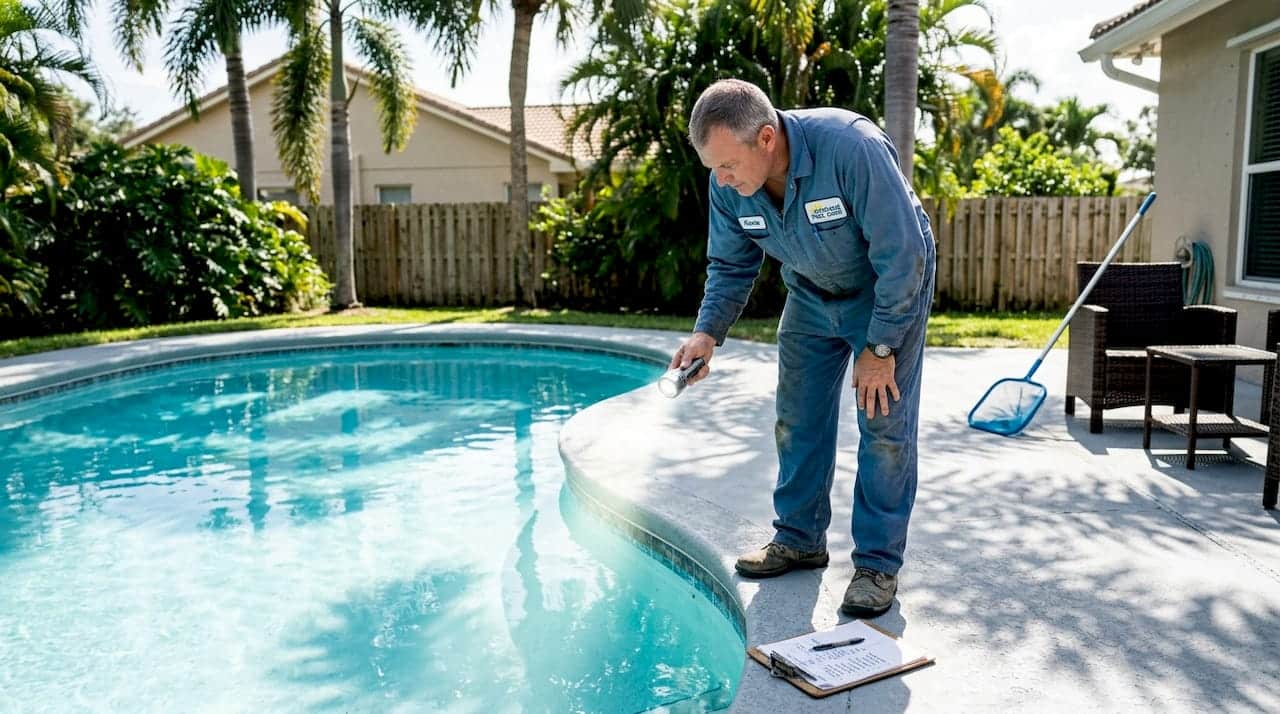
Many Florida homeowners believe their pool finish is permanently waterproof once installed. This misconception leads to neglected maintenance and costly repairs. Pool finishes like plaster provide primary waterproofing, but Florida’s harsh climate accelerates degradation through UV exposure, humidity, and hard water. Without proper sealing during application and ongoing maintenance, surfaces develop etching, scaling, and structural damage. This guide explains why sealing matters, how Florida’s environment impacts pool longevity, and what steps protect your investment. Understanding these factors helps you maintain a beautiful, durable pool for years.
Table of Contents
- Understanding Pool Finishes And Their Sealing Role
- How Florida’s Climate Accelerates Pool Finish Degradation
- Sealing Nuances, Resurfacing, And Waterproofing Options For Florida Pools
- Practical Sealing And Maintenance Tips For Long-Lasting Florida Pool Finishes
- Protect Your Florida Pool With Expert Sealing And Resurfacing
- Frequently Asked Questions
Key takeaways
| Point | Details |
|---|---|
| Primary waterproofing | Pool finishes like plaster act as the main seal preventing water absorption into concrete shells. |
| Climate acceleration | Florida’s UV, humidity, and hard water cause faster finish breakdown, scaling, and etching. |
| Chemistry balance | Maintaining LSI-balanced water prevents aggressive corrosion or calcium scaling damage. |
| Full resurfacing preferred | Partial repairs create stress points and aesthetic issues; complete replastering ensures uniform protection. |
| Secondary sealing | Properly sealed joints and penetrations with specialized caulks add extra waterproofing layers. |
Understanding pool finishes and their sealing role
Your pool’s finish serves as the first line of defense against water damage. Pool finishes like plaster provide primary waterproofing for the concrete shell, protecting it from water absorption, chemical leaching, and microbial growth. This barrier prevents moisture from penetrating the structural concrete, which could cause cracks, spalling, and expensive repairs.
The finish accomplishes several critical functions simultaneously. It creates a smooth, attractive surface for swimmers while blocking harmful chemicals from leaching into pool water. The dense, properly cured finish also prevents algae and bacteria from colonizing porous concrete. Without this protective layer, your pool structure would rapidly deteriorate from constant water exposure.
Different finish materials offer varying levels of protection and longevity:
- Standard white plaster provides 7 to 12 years of service in Florida conditions
- Quartz aggregate finishes extend lifespan to 10 to 15 years with enhanced durability
- Pebble finishes offer 15 to 20 years or more with superior resistance to chemicals and staining
- Colored plasters add aesthetic appeal while maintaining similar protective properties
Proper sealing happens primarily during finish application and curing, not through topical sealers. The installation process involves troweling the material to create a dense, smooth surface that naturally resists water penetration. Professional applicators ensure proper thickness, consistent coverage, and correct curing conditions. These factors determine how effectively your finish seals the pool structure.
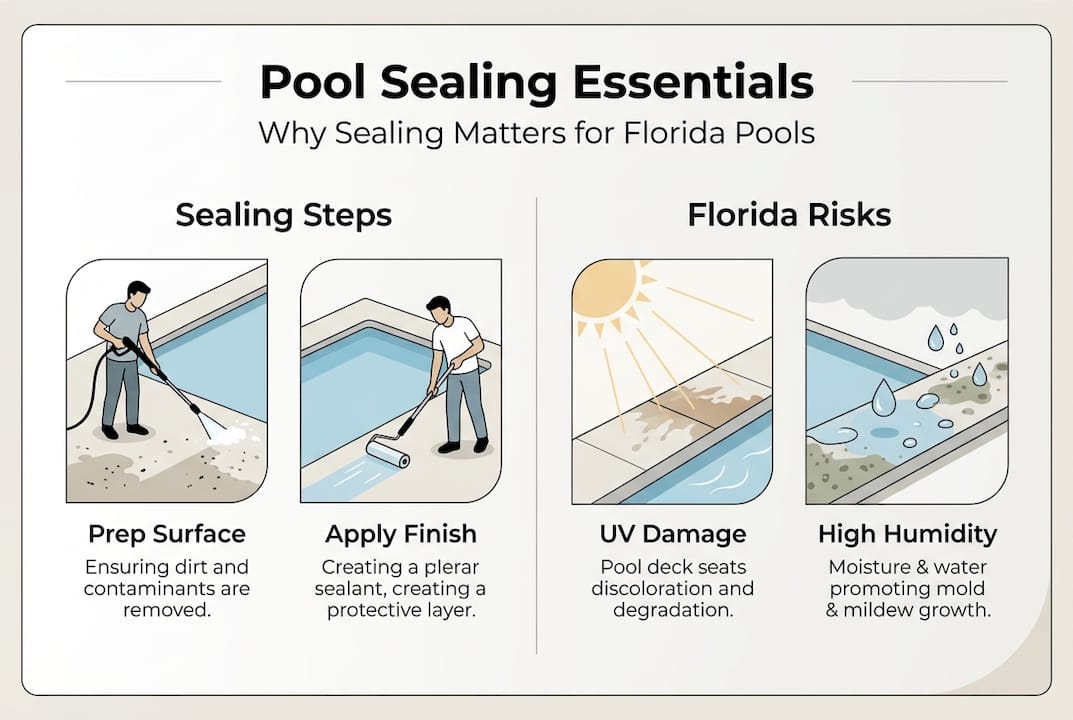
The curing period is critical for developing maximum sealing properties. During the first 28 days, the finish chemically hardens and densifies. Rushing this process or applying improper water chemistry during startup compromises the seal. Following manufacturer guidelines for pool replastering benefits ensures your finish achieves its full protective potential.
Pro Tip: Schedule professional application during mild weather to optimize curing conditions and maximize your finish’s sealing effectiveness from day one.
How Florida’s climate accelerates pool finish degradation
Florida’s environment creates unique challenges for pool finishes that homeowners in other regions rarely face. High UV exposure, humidity, and hard water cause faster degradation, leading to etching, scaling, roughness, and staining without proper maintenance. These factors work together to break down even high-quality finishes years before their expected lifespan.
Intense UV radiation damages the finish surface through photochemical reactions. Sunlight breaks down chemical bonds in plaster and aggregate materials, causing color fading and surface weakening. This process accelerates in Florida’s subtropical climate where pools receive year-round sun exposure. The weakened surface becomes more vulnerable to chemical attack and physical wear.
Humidity and temperature fluctuations create additional stress. Florida’s moisture-laden air promotes calcium carbonate precipitation on pool surfaces. When combined with hard water containing high mineral content, this leads to unsightly scaling that roughens the finish texture. The scale deposits provide footholds for algae growth and make cleaning more difficult.
Water chemistry imbalances cause the most preventable damage. Florida pools face high calcium hardness causing scaling and low pH causing etching, requiring LSI-balanced water to avoid aggressive or scaling conditions. The Langelier Saturation Index calculates whether your water will deposit scale, remain balanced, or become corrosive.
| Climate Factor | Effect on Finish | Prevention Strategy |
|---|---|---|
| High UV exposure | Color fading, surface weakening | Use UV-resistant finishes, maintain proper chemistry |
| Hard water | Calcium scaling, rough texture | Balance calcium hardness, monitor LSI |
| Low pH water | Etching, surface dissolution | Regular pH testing, proper alkalinity |
| High humidity | Accelerated chemical reactions | Consistent water circulation, balanced chemistry |
Common degradation signs include:
- Rough patches where smooth finish has etched away
- White or gray calcium deposits forming scale patterns
- Discoloration from mineral staining or algae growth
- Small cracks developing in weakened surface areas
- Loss of aggregate exposure in pebble finishes
Typical plaster lifespan in Florida ranges from 7 to 12 years, significantly shorter than the 15 to 20 years possible in milder climates. Aggregate and pebble finishes last longer due to their denser composition and superior chemical resistance. However, even these premium materials require diligent maintaining pool finishes to reach their potential lifespan.
Pro Tip: Test your pool water weekly during summer and bi-weekly in winter, adjusting chemistry immediately when LSI moves outside the balanced range of negative 0.3 to positive 0.3.
Sealing nuances, resurfacing, and waterproofing options for Florida pools
Many homeowners misunderstand how pool sealing actually works. The primary seal comes from the finish itself during application and curing, not from topical sealers applied afterward. This distinction matters because it affects your maintenance approach and resurfacing decisions. Understanding these nuances helps you make informed choices about protecting your pool investment.
Resurfacing over existing leaks fails because you must verify no structural issues exist first, and partial resurfacing risks seam stress. Applying new finish over a leaking pool wastes money and creates bigger problems. Water escaping through cracks continues damaging the shell structure underneath the new surface. Professional contractors always conduct leak detection and structural repairs before resurfacing.
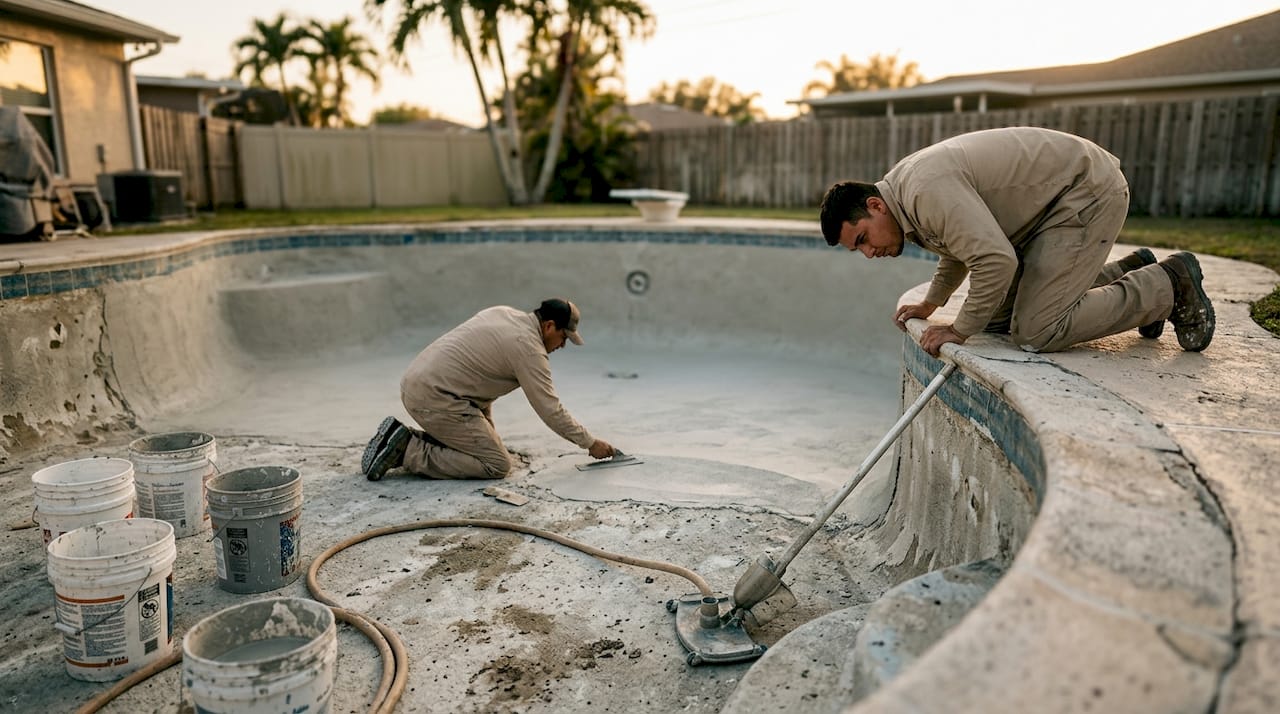
Partial resurfacing creates additional complications. The seam where old and new finishes meet becomes a weak point prone to cracking and delamination. Temperature changes cause different expansion rates between aged and fresh materials. Aesthetically, matching the color and texture of weathered finish proves nearly impossible. Full replastering provides uniform protection and appearance.
Different waterproofing approaches offer varying benefits. Some professionals advocate membranes and PVC liners over plaster for true waterproofing with zero permeability, versus traditional cementitious finishes which remain slightly porous. Reinforced PVC membranes create an impermeable barrier independent of the concrete shell. However, they require different installation methods and aesthetic considerations.
| Waterproofing Method | Permeability | Lifespan | Best Application |
|---|---|---|---|
| Plaster finish | Low porosity when properly cured | 7-12 years Florida | Traditional pools, cost-effective |
| Aggregate finish | Very low porosity, dense structure | 10-15 years Florida | Enhanced durability, moderate budget |
| Pebble finish | Minimal porosity, superior density | 15-20+ years Florida | Premium longevity, high-end pools |
| PVC membrane | Zero permeability, complete seal | 15-25 years | Leak-prone shells, commercial pools |
Secondary waterproofing involves sealing joints, penetrations, and coping. These areas where different materials meet create potential leak paths. Pool-grade silicones and polyurethanes seal these vulnerable spots, adding protection beyond the primary finish. Proper joint sealing prevents water from reaching the concrete shell through expansion gaps and equipment openings.
Steps to ensure successful sealing and resurfacing:
- Conduct thorough leak detection using pressure testing or dye methods before any resurfacing work
- Repair all structural cracks, hollow spots, and damaged concrete in the shell
- Seal expansion joints, light niches, skimmer openings, and return fittings with appropriate caulks
- Apply new finish following manufacturer specifications for thickness and application technique
- Maintain strict water chemistry during the 28-day curing period to develop maximum density
- Continue balanced LSI water chemistry throughout the finish lifespan
Full pool replastering is essential when finishes show widespread damage or when structural repairs are needed. Attempting to save money with partial repairs often costs more in the long run through premature failure and repeated work.
Choosing between traditional finishes and membrane systems depends on your specific situation. Pools with recurring leak problems benefit from impermeable membranes. Structurally sound pools gain adequate protection from quality cementitious finishes at lower cost. Consider pool surface upgrades that match your budget and performance requirements.
Pro Tip: Always hire contractors who perform leak detection and structural assessment before quoting resurfacing work, as this indicates they understand proper sequencing and won’t resurface over hidden problems.
Practical sealing and maintenance tips for long-lasting Florida pool finishes
Protecting your pool finish requires consistent attention to water chemistry and proactive maintenance. Florida homeowners should prioritize balanced LSI water chemistry post-resurfacing with the 28-day startup period and inspect annually for cracks or scaling. These practices prevent most finish problems and extend lifespan significantly beyond average expectations.
The startup period after new finish application determines long-term durability. During the first four weeks, the finish continues curing and hardening. Aggressive water chemistry during this critical window etches the surface before it fully densifies. Follow these startup guidelines:
- Keep pH between 7.2 and 7.6 with daily testing for the first week
- Maintain total alkalinity at 80 to 120 ppm to buffer pH swings
- Avoid adding calcium chloride or high-calcium shock products
- Brush the entire pool surface daily to remove plaster dust
- Run circulation system continuously for optimal water movement
Ongoing water balance prevents the most common finish damage. Test your water at least weekly, adjusting chemicals to maintain LSI between negative 0.3 and positive 0.3. This balanced range prevents both etching from aggressive water and scaling from supersaturated water. Invest in a quality test kit or use professional testing services monthly.
Annual inspections catch problems early when repairs cost less. Walk around your pool examining the finish for these warning signs:
- Small cracks or spiderweb patterns indicating stress or movement
- Rough patches where acid etching has dissolved the surface
- Gray or white calcium scale deposits building up
- Discolored areas from metal staining or algae penetration
- Exposed aggregate or pebbles in textured finishes
Joint and penetration sealing provides secondary waterproofing. Seal joints, coping, and penetrations with pool-grade silicones or polyurethanes for added protection, remembering the primary sealing is the finish itself. Inspect caulked areas annually, replacing any that show cracking or separation. This simple maintenance prevents water from reaching the concrete shell through gaps.
Avoid practices that damage finishes prematurely:
- Never drain your pool without professional guidance, as groundwater pressure can crack empty shells
- Don’t use harsh acid washes more than once every five years
- Avoid automatic pool cleaners with aggressive brushes on new finishes
- Never allow pool water to remain unbalanced for extended periods
- Don’t ignore small cracks, as they expand and allow water penetration
Professional maintenance services provide expertise many homeowners lack. Pool chemistry involves complex interactions between pH, alkalinity, calcium hardness, temperature, and total dissolved solids. Professionals understand these relationships and adjust multiple parameters simultaneously for optimal balance. They also spot early damage signs that untrained eyes miss.
Regular professional inspections complement your own monitoring. Schedule annual assessments with qualified pool contractors who examine structural integrity, equipment function, and finish condition. They identify problems requiring immediate attention versus issues to monitor. This proactive approach prevents emergency repairs and extends pool finish maintenance intervals.
Pro Tip: Keep a detailed log of water test results, chemical additions, and any finish changes you observe, as this history helps professionals diagnose problems and recommend optimal treatment strategies.
Protect your Florida pool with expert sealing and resurfacing
Your pool represents a significant investment deserving professional care. Classic Marcite specializes in pool resurfacing and sealing solutions designed specifically for Florida’s challenging climate. With over 100,000 pools resurfaced since 1988, we understand the unique demands Florida pools face and how to maximize finish longevity.

Our team provides comprehensive pool resurfacing basics consultation to determine the best finish for your specific situation. We emphasize full replastering over partial repairs because we’ve seen how seam failures waste homeowner money. Our application process follows strict curing protocols that develop maximum density and sealing properties. We serve Orlando, Jacksonville, The Villages, and surrounding areas with premium Pebble Tec® finishes and traditional plaster options.
Whether you need routine maintenance guidance or complete pool remodeling services, our experienced team ensures your pool receives proper care. Contact us today for a free assessment and discover how professional sealing and resurfacing protects your pool investment for decades.
Frequently asked questions
What causes pool finish damage in Florida?
Florida’s intense UV radiation, high humidity, and hard water create harsh conditions for pool finishes. UV exposure breaks down surface materials causing fading and weakening. Unbalanced water chemistry leads to etching from low pH or scaling from high calcium levels. These factors combine to degrade finishes faster than in milder climates.
How does balanced water chemistry prevent finish damage?
Balanced water chemistry maintains LSI between negative 0.3 and positive 0.3, preventing both aggressive corrosion and calcium scaling. Proper pH, alkalinity, and calcium hardness levels protect the finish from dissolving or accumulating deposits. Regular testing and adjustment extend finish life significantly beyond typical expectations.
Do pool finishes need topical sealers after application?
No, topical sealers are not commonly used on pool finishes. The primary sealing occurs during finish application and the 28-day curing process when materials densify and harden. Properly applied and cured finishes provide adequate waterproofing without additional topical products. Secondary sealing focuses on joints and penetrations, not the finish surface itself.
Can you repair only damaged sections of pool finish?
Full pool replastering is usually necessary for severe damage or widespread deterioration. Partial repairs create seams where old and new materials meet, leading to stress cracks and aesthetic mismatches. The different expansion rates and color variations make partial resurfacing a temporary solution that often fails prematurely.
How often should Florida pool owners inspect their finishes?
Annual professional inspections catch early damage when repairs cost less and prevent bigger problems. Homeowners should visually examine their pool monthly for cracks, scaling, rough patches, or discoloration. Weekly water testing during summer and bi-weekly testing in winter maintains the chemistry balance that protects finishes from accelerated degradation.