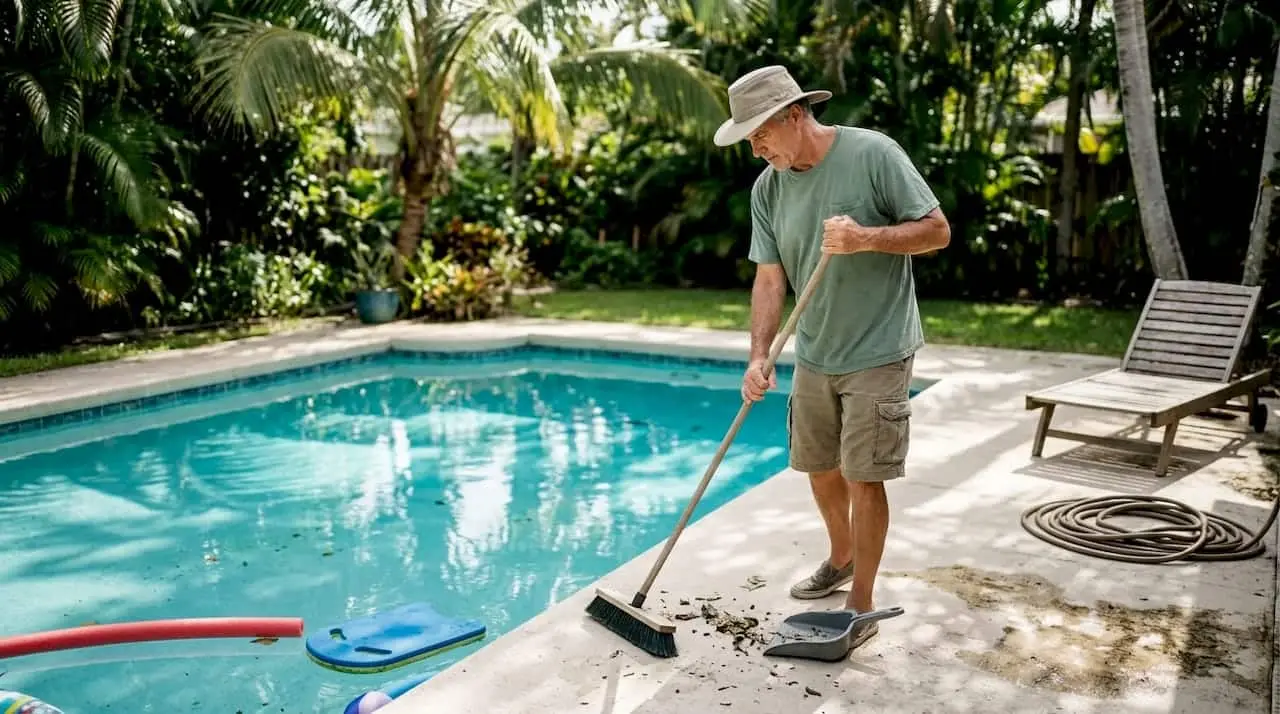
Florida’s humid climate creates the perfect breeding ground for algae, mold, and stubborn buildup on pool decks, turning what should be a relaxing outdoor space into a slippery safety hazard. Between frequent afternoon storms and intense UV exposure, your deck faces constant assault from the elements. This guide delivers practical, Florida-specific strategies to keep your pool deck clean, safe, and visually appealing throughout the year. You’ll learn material-specific cleaning techniques, proper preparation steps, and maintenance schedules that work with our challenging subtropical weather.
Table of Contents
- Understanding Your Pool Deck Material And Its Specific Cleaning Needs
- Preparing Your Pool Deck For Cleaning: Tools And Safety Tips
- Step-By-Step Cleaning Process For Florida Pool Decks
- Post-Cleaning Care: Sealing And Maintenance Routines To Protect Your Pool Deck
- Keep Your Pool Deck Flawless With Classic Marcite Services
Key takeaways
| Point | Details |
|---|---|
| Material matters | Concrete, pavers, and natural stone each require specific cleaning products and techniques to avoid damage. |
| Soft washing wins | Low-pressure washing under 500 PSI safely removes Florida’s persistent algae and mold without harming surfaces. |
| Frequency is critical | Weekly sweeping plus deep cleaning every 3-4 months prevents dangerous buildup in humid conditions. |
| Sealing protects investment | Regular sealing after cleaning blocks moisture penetration and extends your deck’s lifespan significantly. |
| Safety comes first | Removing slippery algae and mold through consistent cleaning prevents falls and injuries around the pool. |
Understanding your pool deck material and its specific cleaning needs
Identifying your pool deck material is the foundation of effective maintenance. Florida homeowners typically have concrete, pavers, or natural stone surfaces surrounding their pools. Each material responds differently to cleaning methods and products, so using the wrong approach can cause permanent damage or void warranties.
Concrete decks are the most common and forgiving option. They tolerate mild soap and occasional pressure washing but require resealing after any pressure wash since the process strips protective coatings. Unsealed concrete absorbs pool chemicals, sunscreen oils, and moisture, leading to staining and deterioration. A simple routine of weekly sweeping and monthly washing with pH-neutral cleaner keeps concrete looking fresh between deep cleans.
Paver decks demand more attention to joint integrity. The individual stones shift slightly over time, and pressure from hoses should be applied biweekly to prevent sand loss between pavers. Regular sweeping removes debris before it settles into joints. After cleaning, inspect joints and add polymeric sand where needed. Reseal pavers every 2-3 years to maintain color vibrancy and protect against Florida’s intense sun.
Natural stone surfaces like travertine require the gentlest approach. These porous materials demand pH-neutral cleaners and soft washing techniques exclusively. Acidic products etch the surface, creating dull spots and rough texture. Travertine’s natural holes trap dirt and algae, so consistent maintenance prevents buildup that becomes difficult to remove. Seal natural stone every 1-3 years depending on traffic and exposure.
Pro Tip: Take a photo of your deck installation paperwork or ask your pool builder what material you have. Knowing the exact product helps you find manufacturer-specific care instructions that protect your investment.
Material-appropriate care directly impacts longevity. A concrete deck might last 30 years with proper maintenance, while neglected natural stone can deteriorate within a decade. Understanding these differences helps you make informed decisions about cleaning frequency and product selection. For additional guidance on maintaining various deck types, explore maintenance tips for pool decks florida specific to our regional challenges.
Preparing your pool deck for cleaning: tools and safety tips
Proper preparation prevents damage to your deck, landscaping, and pool equipment while ensuring your safety during the cleaning process. Rushing into cleaning without gathering the right tools or protecting surrounding areas creates more problems than it solves.
Start by completely clearing the deck area. Remove all furniture, planters, pool toys, and decorative items. This gives you unrestricted access to every square foot and prevents items from becoming cleaning obstacles or getting damaged by water and cleaning solutions. Check for loose pavers or cracked concrete that need repair before cleaning, as water pressure can worsen existing damage.
Essential tools and materials:
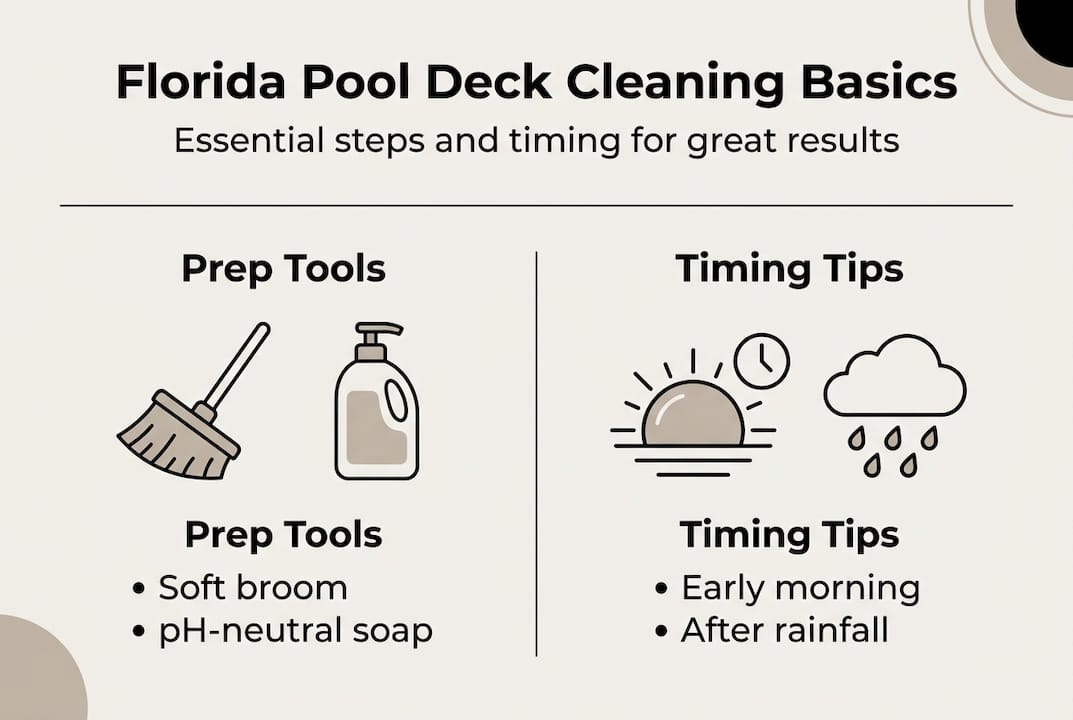
- Stiff-bristled push broom for general sweeping
- Soft-bristled scrub brush for gentle agitation
- Garden hose with adjustable nozzle
- Soft wash equipment or pressure washer (adjustable to under 500 PSI)
- Appropriate cleaning solution based on deck material
- 5-gallon bucket for mixing solutions
- Protective eyewear and chemical-resistant gloves
- Non-slip rubber boots or shoes
| Deck Material | Recommended Cleaner | Avoid |
| — | — |
| Concrete | Oxygen bleach solution or mild alkaline cleaner | Chlorine bleach, muriatic acid |
| Pavers | pH-neutral paver cleaner | Acidic cleaners, harsh degreasers |
| Natural Stone | Stone-specific pH-neutral cleaner | Any acidic products, vinegar |
Safety measures protect both you and your property. Cover or thoroughly wet nearby plants before applying any cleaning solution, as runoff can damage sensitive vegetation. Move pool equipment like pumps and heaters away from the work area or cover them with plastic sheeting. Wear protective gear throughout the entire process, not just when handling concentrated cleaners.
Pro Tip: Always test your chosen cleaning product on a small, hidden area of the deck first. Wait 24 hours to check for discoloration, etching, or other adverse reactions before proceeding with the full cleaning.
Timing matters in Florida’s climate. Schedule cleaning for early morning when temperatures are cooler and the deck is shaded. Hot surfaces cause cleaning solutions to evaporate too quickly, reducing effectiveness and potentially leaving residue. Avoid cleaning right before predicted rain, which can wash away sealers before they cure. For environmentally safe pool deck cleaning options that protect Florida’s waterways, choose biodegradable products that break down naturally.
Step-by-step cleaning process for Florida pool decks
Executing the cleaning process correctly ensures thorough results without damaging your deck surface. Florida’s humidity accelerates algae and mold growth, making systematic cleaning essential for safety and appearance.
Complete cleaning sequence:
- Remove all furniture, decorations, and loose items from the deck area
- Sweep the entire surface thoroughly using a stiff push broom to eliminate loose dirt, leaves, and debris
- Pre-treat visible stains, oil spots, or heavy algae growth with appropriate cleaner applied directly to problem areas
- Allow pre-treatment to sit for 10-15 minutes without letting it dry completely
- Choose your cleaning method based on material sensitivity
- Apply cleaning solution evenly across the deck surface, working in manageable sections
- Scrub gently with a soft brush, following the grain or pattern of your deck material
- Rinse thoroughly with a garden hose or low-pressure washer, ensuring no cleaner residue remains
- Allow the deck to dry completely before replacing furniture or allowing foot traffic
Cleaning method selection makes the difference between effective maintenance and surface damage. Soft washing under 500 PSI is preferred for Florida pool decks because it safely removes algae and mold at the root level without blasting away protective sealers or surface texture. The chemical action does the work, not mechanical force. Pressure washing concrete might seem faster, but it often strips sealers and creates an uneven surface texture that traps more dirt.
Soft wash versus pressure wash comparison:
| Method | PSI Range | Best For | Florida Benefits |
|---|---|---|---|
| Soft Wash | 100-500 PSI | All materials | Kills algae roots, preserves sealers, gentle on surfaces |
| Pressure Wash | 1500-3000 PSI | Unsealed concrete only | Fast debris removal but strips protection |
Frequency recommendations account for our challenging climate. Weekly sweeping and rinsing combined with deep cleaning twice yearly works for moderate climates, but Florida’s humidity demands adjustment. Plan deep cleaning every 3-4 months, increasing frequency if you notice algae returning quickly or if your deck stays shaded most of the day. High pool usage also accelerates dirt accumulation.
Pro Tip: Clean your pool deck right after you’ve shocked your pool. The timing works perfectly since you’re already in maintenance mode, and you’ll want to keep people off both the deck and out of the pool for several hours anyway.
Product selection impacts results significantly. Avoid chlorine bleach entirely, as it damages sealers, discolors surfaces, and harms surrounding vegetation. Acidic cleaners like muriatic acid etch natural stone and can pit concrete. Oxygen bleach solutions work effectively on organic stains and algae while remaining safe for most deck materials when properly diluted.
Regular cleaning isn’t just about appearance. Algae and mold create dangerously slippery surfaces that cause falls and injuries. In Florida’s humid environment, these organisms can establish visible colonies within two weeks of your last cleaning.
For comprehensive guidance on maintaining your entire pool area, review pool deck renovation tips florida homes to understand how cleaning fits into overall deck care strategy.
Post-cleaning care: sealing and maintenance routines to protect your pool deck
Sealing your pool deck after cleaning provides the protective barrier that keeps Florida’s harsh elements from degrading your surface. Without proper sealing, all your cleaning effort yields only temporary results as moisture, chemicals, and UV rays immediately begin breaking down the material.
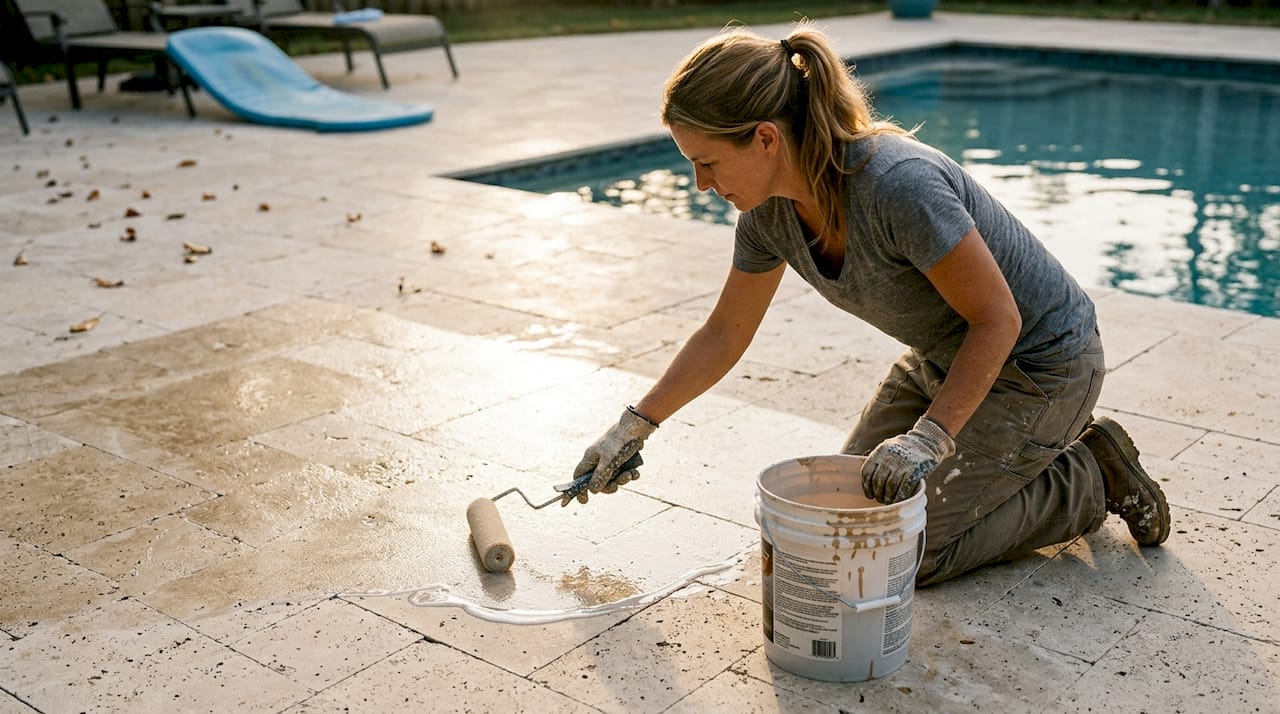
Sealing creates a protective layer that repels water, prevents stain penetration, and blocks UV damage that causes fading and surface deterioration. For concrete decks, sealing after each pressure wash is essential because the cleaning process removes existing sealer along with dirt. Waiting to reseal leaves your deck vulnerable to immediate damage from the next rainstorm or pool session.
Material-specific sealing schedules:
- Concrete decks: Immediately after pressure washing, then annually for maintenance
- Travertine and natural stone: Every 1-3 years depending on traffic and exposure
- Paver decks: Every 2-3 years after thorough cleaning and joint re-sanding
Timing sealer application correctly ensures proper adhesion and curing. Apply sealer only after the deck has dried completely, typically 24-48 hours after cleaning in Florida’s humidity. Check the weather forecast and choose a period with at least 24 hours of dry conditions predicted. Morning application allows the sealer to cure before evening dew forms.
Ongoing maintenance between deep cleanings preserves your deck’s condition and extends time between major cleaning sessions. Weekly sweeping and biweekly rinsing remove debris before it breaks down into stains or provides nutrients for algae growth. This simple routine takes 15 minutes but prevents hours of scrubbing later.
Basic maintenance schedule:
- Daily: Quick visual inspection for spills or debris after pool use
- Weekly: Thorough sweeping with stiff broom, spot-clean any visible stains immediately
- Biweekly: Rinse entire deck with garden hose to remove accumulated dust and pollen
- Monthly: Inspect for cracks, loose pavers, or areas where sealer has worn thin
- Quarterly: Deep clean using appropriate method for your deck material
- Annually: Professional inspection and resealing as needed
Pro Tip: Schedule your major deep cleaning and sealing just before Florida’s rainy season starts in late May. This timing gives your freshly sealed deck maximum protection during the months of heaviest moisture exposure.
Address minor damage promptly to prevent escalation. Small cracks in concrete spread rapidly when water freezes during occasional cold snaps or when roots from nearby plants exploit the opening. Fill cracks before cleaning to avoid forcing water deeper into the substrate. Loose pavers should be reset and releveled before cleaning washes away the remaining base material.
Adjust your maintenance intensity based on specific conditions around your pool. Decks under heavy tree cover need more frequent algae treatment. South-facing decks exposed to full sun require more aggressive UV protection through quality sealers. High-traffic areas near pool entries wear faster and need spot resealing between full applications. For detailed guidance on protecting your investment, consult how to seal pool deck lasting protection for Florida-specific recommendations.
Keep your pool deck flawless with Classic Marcite services
While regular cleaning maintains your pool deck’s appearance, sometimes surfaces need professional restoration to address deep staining, structural issues, or worn finishes that DIY methods can’t resolve. Classic Marcite brings over 35 years of pool renovation expertise to Central Florida homeowners, specializing in transforming tired pool areas into stunning outdoor spaces.

Our team understands the unique challenges Florida’s climate presents for pool deck surfaces. We’ve resurfaced over 100,000 pools and their surrounding decks, giving us unmatched insight into which materials and finishes withstand our subtropical weather best. Whether you’re dealing with cracked concrete that needs complete replacement or natural stone that’s lost its luster despite regular cleaning, we provide solutions that last. Explore our specialized pool resurfacing The Villages FL and pool deck resurfacing Orlando FL services to see how professional restoration complements your maintenance routine. For ongoing care guidance, our comprehensive pool deck sealing guide helps you protect your investment between professional services.
FAQ
What is the safest cleaning method for sensitive pool deck materials?
Soft washing under 500 PSI using pH-neutral cleaners is the safest approach for delicate materials like travertine, stamped concrete, or decorative pavers. This method relies on chemical action rather than mechanical force to remove algae and stains. Avoid pressure washing sensitive surfaces entirely, as the high PSI can etch natural stone, remove stamped patterns, or dislodge pavers from their base.
How often should I deep clean my pool deck in Florida?
Deep clean your Florida pool deck every 3-4 months due to our humid climate that accelerates algae and mold growth. Homes in heavily shaded areas or regions with frequent afternoon storms may need cleaning every 2-3 months. Supplement deep cleaning with weekly sweeping and biweekly rinsing to maintain appearance and safety between major cleaning sessions.
Can I use bleach to clean my pool deck?
Avoid chlorine bleach on pool decks as it damages protective sealers, discolors surfaces, and harms nearby plants and grass. Chlorine bleach also creates toxic fumes when mixed with other cleaning products. Instead, use oxygen bleach or specialized deck cleaners formulated for your specific material. These alternatives effectively remove stains and kill organic growth without the harmful side effects.
What maintenance protects pool decks from Florida’s mold and algae?
Weekly sweeping removes organic debris before it decomposes and feeds mold spores, while biweekly rinsing washes away algae before colonies establish. Apply eco-friendly soft washing treatments every 3-4 months to kill mold and algae at the root level rather than just removing surface growth. Proper sealing after cleaning blocks moisture penetration that allows these organisms to thrive beneath the surface.
