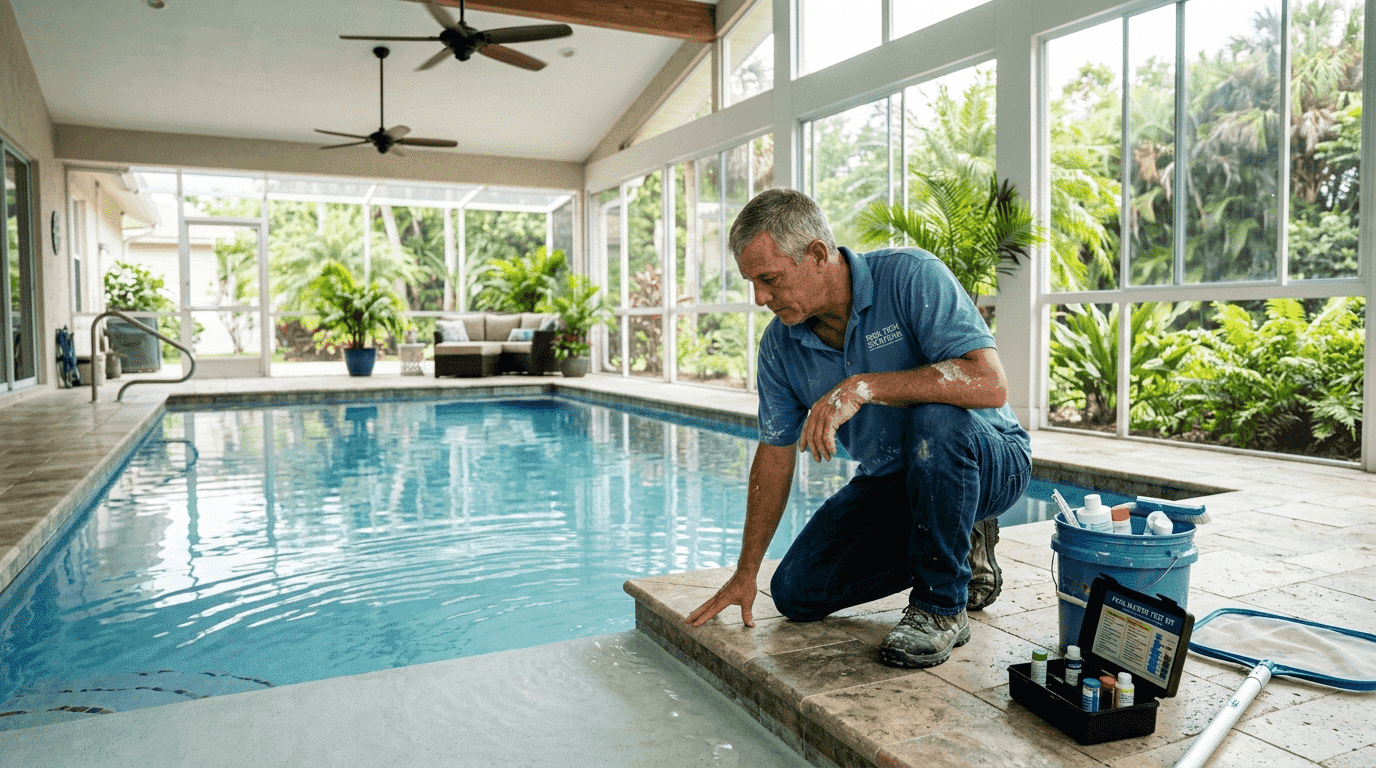
Most homeowners think pool finishes are just about color and texture, but they’re actually the first line of defense against water damage, chemical erosion, and structural decay. For Florida indoor pools, where humidity and consistent use create unique challenges, choosing the right interior finish becomes even more critical. The finish you select determines how long your pool lasts, how much maintenance you’ll face, and whether your investment appreciates or deteriorates. This guide breaks down everything you need to know about interior pool finishes, from understanding their protective role to selecting and maintaining the best option for your Florida indoor pool.
Table of Contents
- Why Interior Pool Finishes Matter For Florida Indoor Pools
- Common Types Of Interior Pool Finishes And Their Benefits
- How To Choose The Best Interior Finish For Your Florida Indoor Pool
- Maintaining And Enhancing Your Pool Finish For Lasting Beauty And Durability
- Enhance Your Florida Indoor Pool With Expert Pool Resurfacing
- Frequently Asked Questions
Key takeaways
| Point | Details |
|---|---|
| Protection first | Pool finishes shield concrete from water damage and chemical corrosion, extending structural lifespan |
| Durability varies | Plaster lasts 7-10 years while pebble finishes can last up to 25 years with proper care |
| Maintenance matters | Different finishes require varying levels of upkeep, affecting long-term costs and effort |
| Florida factors | Indoor humidity and consistent chemical exposure make finish selection crucial for Florida pools |
| Value enhancement | Quality finishes improve pool aesthetics, safety, and resale value for your property |
Why interior pool finishes matter for Florida indoor pools
Your pool’s interior finish does far more than make the water look inviting. It serves as a waterproof barrier that prevents moisture from penetrating the concrete shell, which would otherwise lead to cracks, spalling, and expensive structural repairs. Without a proper finish, the alkaline cement in your pool’s structure would react with pool chemicals, creating surface deterioration and rough patches that harbor algae.
Pool interior finishes influence both aesthetics and longevity of swimming pools, making them a critical investment rather than a cosmetic choice. In Florida’s humid indoor environments, where pools face constant moisture exposure even when not in use, the protective qualities of your finish become even more important. The right finish creates a smooth, non-porous surface that resists staining, reduces chemical absorption, and maintains water quality with less effort.
Beyond protection, finishes define your pool’s entire aesthetic. The color affects how the water appears, ranging from deep blues to tropical greens or crystal clear depending on your choice. Texture influences how the pool feels underfoot, with smoother finishes offering comfort while textured options provide better slip resistance for safety.
Pro Tip: Florida’s indoor pools benefit most from finishes with natural texture that provide grip without being abrasive, since year-round use means more foot traffic than outdoor pools in seasonal climates.
Key benefits of quality pool finishes include:
- Chemical resistance that reduces surface degradation from chlorine and pH fluctuations
- Stain prevention that keeps your pool looking new longer
- Easier cleaning since smooth, non-porous surfaces don’t trap dirt and algae
- Improved safety through slip-resistant textures
- Enhanced water circulation as smooth finishes reduce friction
The humid Florida climate makes finish selection particularly crucial. Indoor pools in the state face unique challenges from consistent moisture in the air, which can accelerate deterioration of lower-quality finishes. Choosing a durable, moisture-resistant finish protects your investment and reduces the frequency of costly resurfacing projects.
Common types of interior pool finishes and their benefits
Understanding your finish options helps you make an informed decision that balances aesthetics, durability, and maintenance requirements. Each type offers distinct advantages depending on your priorities and budget.
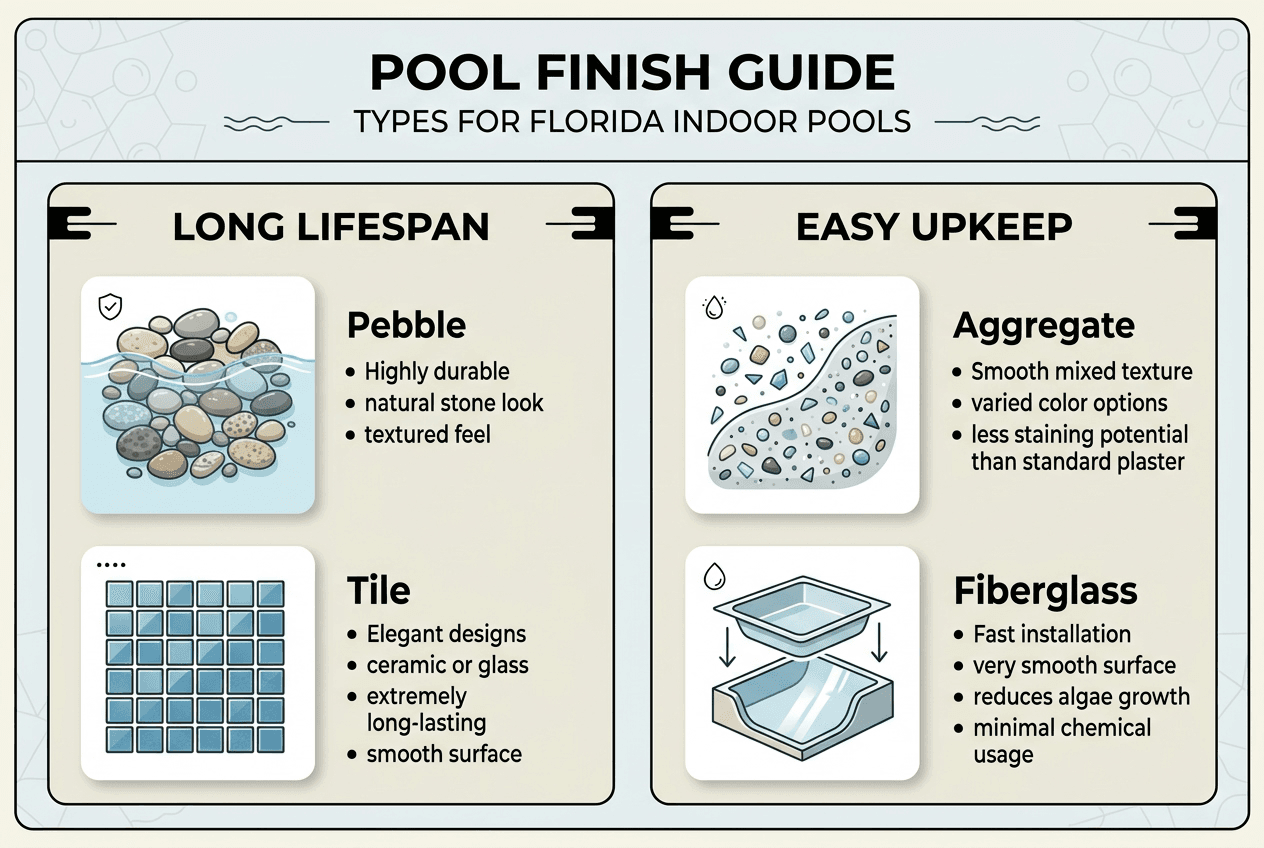
Plaster remains the most traditional and affordable option. This mixture of white cement, marble dust, and water creates a smooth, bright finish that’s been used for decades. While plaster costs less upfront, it typically lasts only 7-10 years and requires more frequent maintenance. The surface can become rough over time and is more susceptible to staining from metals and organic materials. However, for budget-conscious homeowners who don’t mind periodic resurfacing, plaster provides a classic look at an accessible price point.
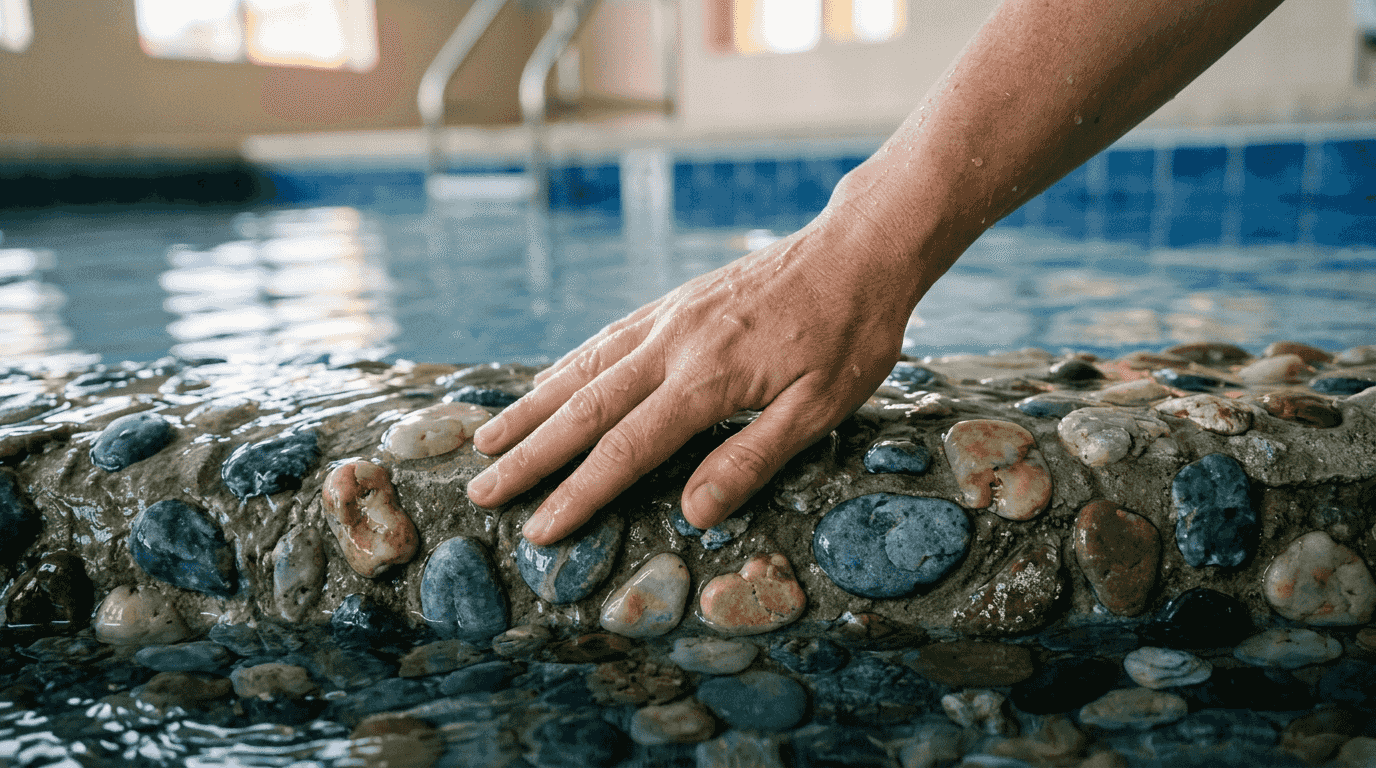
Pebble finishes represent a significant upgrade in durability and aesthetics. Made from small, smooth pebbles mixed with cement, these finishes create natural-looking pools with exceptional longevity. Different pool finish types offer varied performance characteristics, with pebble options lasting up to 25 years when properly maintained. The textured surface provides excellent slip resistance, and the natural stone colors resist fading better than plaster. Pebble finishes also hide water chemistry issues better, as slight discoloration blends into the varied stone colors.
Aggregate finishes combine crushed quartz, granite, or glass beads with polymer-modified cement. These create stunning visual effects with sparkle and depth while offering durability between plaster and pebble options. The smooth yet textured surface resists algae growth and feels comfortable underfoot. Many popular pool finish examples showcase aggregate finishes in Florida homes due to their balance of beauty and performance.
Tile finishes offer the ultimate in luxury and longevity. Ceramic or glass tiles create stunning designs and can last 20+ years with minimal maintenance. Tiles resist chemicals exceptionally well and never need resurfacing, only occasional grout repair. However, the higher cost and potential for individual tile damage make this option less common for entire pool interiors, though many homeowners use tile for waterlines and accent features.
Fiberglass provides a smooth, non-porous surface that inhibits algae growth and requires minimal chemical use. While typically used for pre-formed pool shells, fiberglass coatings can be applied to existing concrete pools. These finishes last 20+ years and need very little maintenance, though repair costs can be higher if damage occurs.
| Finish Type | Lifespan | Maintenance Level | Cost Range | Best For |
|---|---|---|---|---|
| Plaster | 7-10 years | High | Lowest | Budget-conscious, traditional aesthetics |
| Pebble | 20-25 years | Low | Medium-High | Durability, natural look, low maintenance |
| Aggregate | 12-15 years | Medium | Medium | Balance of beauty and performance |
| Tile | 20+ years | Low | Highest | Luxury, custom designs, minimal upkeep |
| Fiberglass | 20+ years | Very Low | High | Algae resistance, chemical sensitivity |
Pro Tip: For Florida indoor pools with consistent use, prioritize finishes that resist chemical damage over those optimized for UV resistance, since sun exposure isn’t a factor but chemical balance fluctuations are common.
How to choose the best interior finish for your Florida indoor pool
Selecting the right finish requires evaluating several factors specific to your situation. Start by assessing how you use your pool. High-traffic pools with frequent swimmers, especially those with children, benefit from more durable finishes like pebble or aggregate that withstand wear better. Pools used primarily for relaxation or exercise can work well with smoother finishes that feel more comfortable.
Consider Florida’s indoor environment carefully. Unlike outdoor pools that face sun damage, indoor pools in Florida deal with consistent humidity that can affect finish longevity. The enclosed environment also means chemical vapors don’t dissipate as quickly, potentially accelerating chemical-related finish degradation. Choose finishes known for chemical resistance and moisture tolerance.
Budget plays a crucial role, but think long-term. While plaster costs less initially, you’ll likely resurface twice in the timeframe a single pebble finish lasts. Calculate total cost of ownership including maintenance and resurfacing frequency. Homeowners gain significant advantages from choosing quality finishes that reduce lifetime costs despite higher upfront investment.
Follow this decision-making process:
- Determine your budget range including both installation and projected maintenance costs over 15-20 years
- Identify your primary priorities whether durability, aesthetics, maintenance ease, or safety features
- Evaluate pool usage patterns including frequency, number of users, and typical activities
- Consider your maintenance commitment and whether you prefer hands-on care or minimal involvement
- Research finish samples in person since photos don’t capture texture and true color appearance
- Consult with experienced pool professionals who understand Florida’s specific indoor pool challenges
Safety should never be overlooked. Slip resistance becomes critical for indoor pools since wet floors around the pool create hazards. Textured finishes provide better grip, reducing accident risk. However, ensure the texture isn’t so rough it causes discomfort or abrasions, especially for children who spend extended time in the pool.
Aesthetic preferences matter too. Consider how the finish color affects water appearance and how it complements your indoor pool area’s design. Lighter finishes make pools appear larger and brighter, while darker options create dramatic, resort-style ambiance. Visit pools with different finishes if possible to see how they look in real-world conditions rather than relying solely on samples.
Pro Tip: Request references from pool professionals and visit completed projects with finishes you’re considering, paying attention to how they’ve aged and asking homeowners about their maintenance experience.
Maintaining and enhancing your pool finish for lasting beauty and durability
Proper maintenance extends your finish’s lifespan significantly and prevents premature deterioration. The foundation of finish care is maintaining proper water chemistry. pH levels between 7.4-7.6 and alkalinity between 80-120 ppm protect against both acidic etching and alkaline scaling. Test water at least twice weekly and adjust chemicals promptly when levels drift.
Chlorine levels should stay between 1-3 ppm for most finishes, though some materials tolerate slightly higher concentrations. Excessive chlorine accelerates finish breakdown, while insufficient levels allow algae growth that stains and damages surfaces. Calcium hardness between 200-400 ppm prevents both corrosive water that etches finishes and scaling that creates rough deposits.
Pool maintenance after resurfacing requires specific attention to water chemistry and cleaning methods that vary by finish type. New finishes need special care during the first 28 days as they cure, with specific brushing requirements and chemical restrictions depending on the material.
Cleaning methods differ by finish type:
- Plaster requires gentle brushing with nylon bristles at least twice weekly to prevent buildup
- Pebble finishes need less frequent brushing but benefit from occasional acid washing for deep cleaning
- Aggregate finishes should be brushed weekly with appropriate tools that won’t damage the surface
- Tile can handle more aggressive cleaning but needs grout inspection and sealing periodically
Address problems immediately when you notice them. Small cracks can be repaired before they expand into major structural issues. Stains often respond to treatment when fresh but become permanent if ignored. Discoloration might indicate water chemistry problems that need correction to prevent further damage.
| Maintenance Task | Plaster | Pebble | Aggregate | Tile |
|---|---|---|---|---|
| Brushing frequency | 2-3x weekly | Weekly | Weekly | As needed |
| Acid wash interval | Every 3-5 years | Every 5-7 years | Every 4-6 years | Not required |
| Chemical sensitivity | High | Low | Medium | Very Low |
| Stain susceptibility | High | Low | Medium | Very Low |
Schedule professional inspections annually to catch issues early. Experienced technicians spot problems homeowners miss, like subtle surface degradation or developing weak spots. They can recommend preventive treatments that avoid costly emergency repairs.
Eco-friendly pool chemicals protect both your finish and the environment. Mineral systems, saltwater chlorinators, and enzyme-based cleaners reduce harsh chemical exposure that degrades finishes over time. These alternatives often extend finish life while creating a more pleasant swimming experience with less chemical smell and irritation.
Pro Tip: Keep detailed records of water chemistry readings, chemical additions, and maintenance activities to identify patterns that might indicate problems before they become visible on your pool finish.
Enhance your Florida indoor pool with expert pool resurfacing

When your pool finish shows signs of wear or you’re ready to upgrade to a more durable option, professional resurfacing transforms your pool’s appearance and performance. Expert application ensures proper surface preparation, material mixing, and curing that directly impact finish longevity. Attempting DIY resurfacing often leads to premature failure and costs more in the long run than hiring experienced professionals from the start.
Classic Marcite specializes in pool resurfacing in Winter Park, FL and surrounding areas, bringing over three decades of experience to every project. Our team has resurfaced more than 100,000 pools, making us the largest Pebble Tec applicator in Central Florida. We understand the unique challenges Florida indoor pools face and recommend finishes that perform exceptionally in humid, enclosed environments.
Whether you’re in The Villages, FL or anywhere in Central Florida, our experts provide customized solutions that match your aesthetic preferences, durability requirements, and budget. We’ll guide you through pool resurfacing basics and help you select the ideal finish for your specific situation, ensuring your investment delivers lasting beauty and performance.
Frequently asked questions
What is the typical lifespan of common pool finishes?
Plaster finishes generally last 7-10 years with proper maintenance, making them the shortest-lived option but also the most affordable initially. Pebble finishes offer exceptional durability, lasting 20-25 years when water chemistry is properly maintained and appropriate cleaning methods are used. Aggregate finishes fall in the middle range at 12-15 years, while tile and fiberglass options can exceed 20 years with minimal maintenance beyond routine cleaning. Actual lifespan depends heavily on water chemistry consistency, usage patterns, and maintenance quality.
How often should I maintain or resurface my indoor pool finish?
Routine maintenance should occur continuously, with water chemistry testing at least twice weekly and brushing frequency depending on your finish type. Professional inspections annually help identify developing issues before they require major repairs. Resurfacing intervals vary by material, with plaster needing renewal every 7-10 years, pebble finishes every 20-25 years, and aggregate options every 12-15 years. Signs you need resurfacing include rough texture, visible cracks, persistent staining that won’t respond to treatment, or difficulty maintaining proper water chemistry.
Are there eco-friendly pool finish options suitable for Florida indoor pools?
Several sustainable finish options work well for Florida indoor pools. Recycled glass aggregate finishes incorporate post-consumer glass, reducing environmental impact while creating stunning visual effects. Natural pebble finishes use minimally processed stone, avoiding synthetic materials and chemical additives. These options pair well with eco-friendly maintenance approaches using sustainable pool materials that reduce chemical use and environmental footprint. Benefits include lower chemical requirements, reduced water waste, and healthier swimming environments with fewer irritants. Many eco-friendly finishes also offer excellent durability, making them cost-effective long-term choices.
Can I change my pool finish color when resurfacing?
Absolutely, resurfacing provides the perfect opportunity to completely transform your pool’s appearance by changing finish color, texture, or material type. You’re not limited to matching your existing finish and can upgrade from plaster to pebble, change from light to dark colors, or add decorative elements like glass beads or colored aggregates. Professional pool resurfacing companies offer extensive color palettes and finish samples to help you visualize how different options will look in your specific indoor environment. Consider how lighting affects color appearance, as indoor pools may look different than outdoor samples depending on your lighting setup.