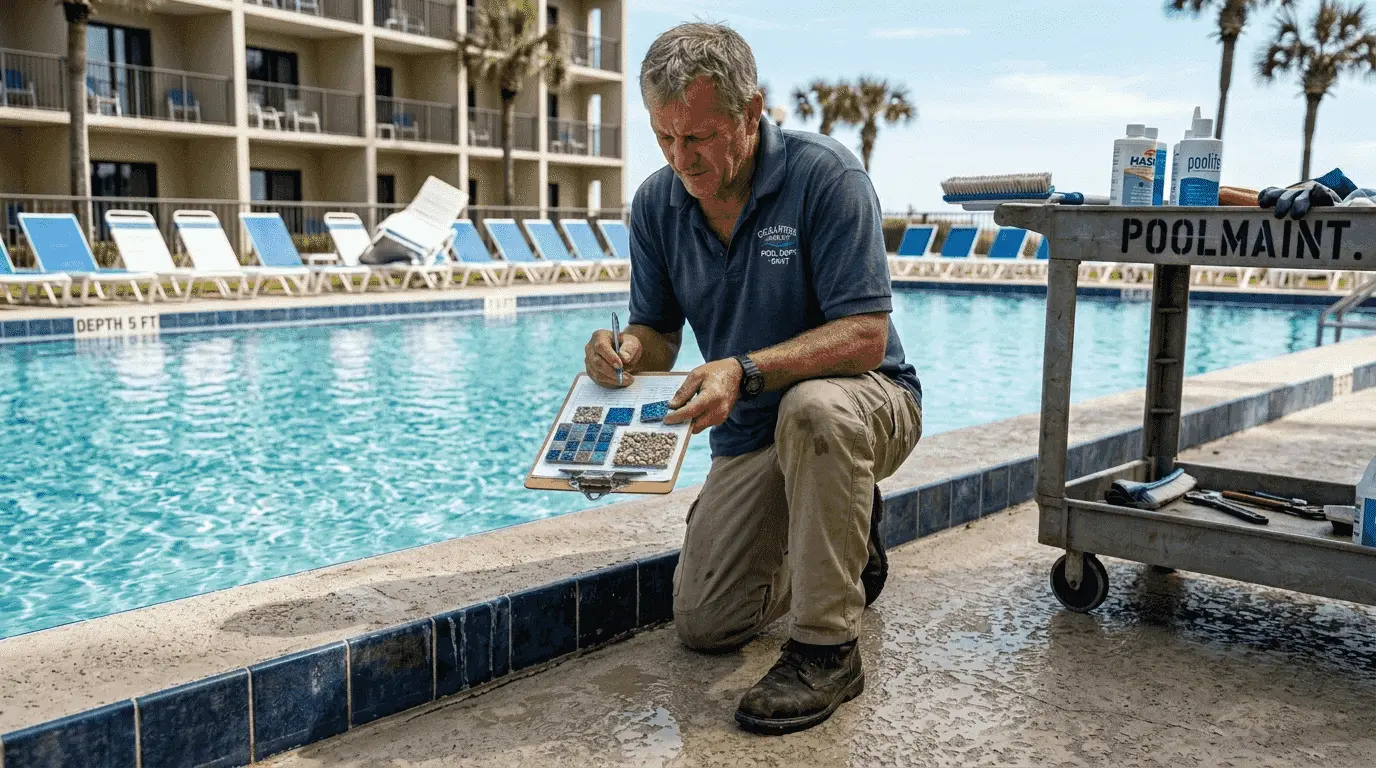
Choosing the right pool surface for your Florida commercial property can feel overwhelming when you need to balance durability, guest safety, and visual impact. Heavy daily use, intense UV exposure, and chemical treatments demand surfaces that withstand years of stress while maintaining their appeal. This guide walks you through essential selection criteria and explores the top commercial pool surface types, complete with pros and cons, to help you make a confident, informed decision that protects your investment and delights your guests.
Table of Contents
- Key Criteria For Choosing Commercial Pool Surfaces
- Popular Commercial Pool Surface Types Explained
- Comparing Commercial Pool Surfaces: Durability, Cost, And Maintenance
- Choosing The Right Commercial Pool Surface For Your Property
- Enhance Your Commercial Pool With Expert Resurfacing In Florida
- Frequently Asked Questions
Key takeaways
| Point | Details |
|---|---|
| Durability varies widely | Plaster lasts 5-10 years while pebble finishes can exceed 25 years in commercial settings. |
| Safety features are non-negotiable | Slip resistance, clear depth markers, and uniform texture prevent accidents and ensure compliance. |
| Maintenance impacts budgets | Frequent resurfacing and cleaning for plaster versus low upkeep for fiberglass affect long-term costs. |
| Aesthetics drive guest satisfaction | Surface color, texture, and finish quality directly influence property image and booking appeal. |
| Total cost includes lifespan | Upfront savings on cheaper surfaces often disappear when factoring in replacement and maintenance expenses. |
Key criteria for choosing commercial pool surfaces
Selecting a commercial pool surface requires evaluating five critical factors that determine long-term performance and value. Durability tops the list because Florida’s climate and heavy usage patterns accelerate wear. Surfaces must resist UV degradation, chemical exposure, and constant foot traffic without cracking or fading. Pool resurfacing is a critical safety intervention that prevents hazards, making material resilience essential for commercial properties.
Safety compliance cannot be compromised. Your surface must provide adequate slip resistance, especially in wet areas where guests move quickly. Professional resurfacing techniques incorporate design elements like uniform texture and slip-resistant treatments to meet ADA standards and reduce liability. Clear depth markers, smooth transitions, and consistent texture prevent accidents that damage your reputation and trigger lawsuits.
Maintenance frequency directly impacts your operational budget and guest experience. Some surfaces demand weekly acid washing, frequent replastering, and constant monitoring, while others require minimal intervention. Calculate the true cost by factoring in labor hours, chemical treatments, and downtime for repairs. A surface that looks pristine with less effort keeps your pool operational and your staff focused on guest service rather than constant upkeep.
Aesthetic flexibility shapes guest perception and property differentiation. Color options, texture variations, and finish quality create the ambiance that attracts bookings and positive reviews. Modern surfaces offer custom color blends, natural stone appearances, and reflective qualities that transform ordinary pools into stunning focal points. Your choice signals whether your property prioritizes luxury, family fun, or athletic performance.
Total cost analysis extends beyond installation. Cheap surfaces that require replacement every five years often cost more than premium finishes lasting two decades. Factor in resurfacing frequency, maintenance supplies, water chemistry adjustments, and guest satisfaction scores. Understanding commercial pool resurfacing value and safety helps you evaluate true return on investment rather than just upfront expenses.
Pro Tip: Create a weighted scoring matrix for each criterion based on your property type. A high-traffic resort pool might score durability at 40%, safety at 30%, aesthetics at 20%, and maintenance at 10%, while a boutique hotel might reverse aesthetics and durability weights.
Popular commercial pool surface types explained
Plaster finishes have dominated pool construction since the 1960s and remain popular for budget-conscious projects. This classic surface combines white cement, marble dust, and water to create a smooth, waterproof shell. Plaster finishes typically last 5-10 years depending on maintenance quality and usage intensity. The material offers a clean, traditional appearance that appeals to properties seeking simplicity without customization demands.
Cost effectiveness makes plaster attractive for initial installations. Plaster finishes are relatively affordable, with costs around $5,000 for standard residential pools, though commercial applications run higher due to size and complexity. However, this surface requires diligent chemical balancing to prevent etching, staining, and rough texture development. Frequent acid washing and eventual resurfacing add recurring expenses that diminish the upfront savings over time.
Pebble finishes revolutionized commercial pool aesthetics by embedding natural river stones or manufactured aggregates into a cement matrix. This creates a textured, visually striking surface that mimics natural bodies of water. Durability stands out as the primary advantage, with properly installed pebble surfaces lasting 15 to 25 years in demanding commercial environments. The texture provides excellent slip resistance, and the varied colors hide minor staining that would mar plaster pools.
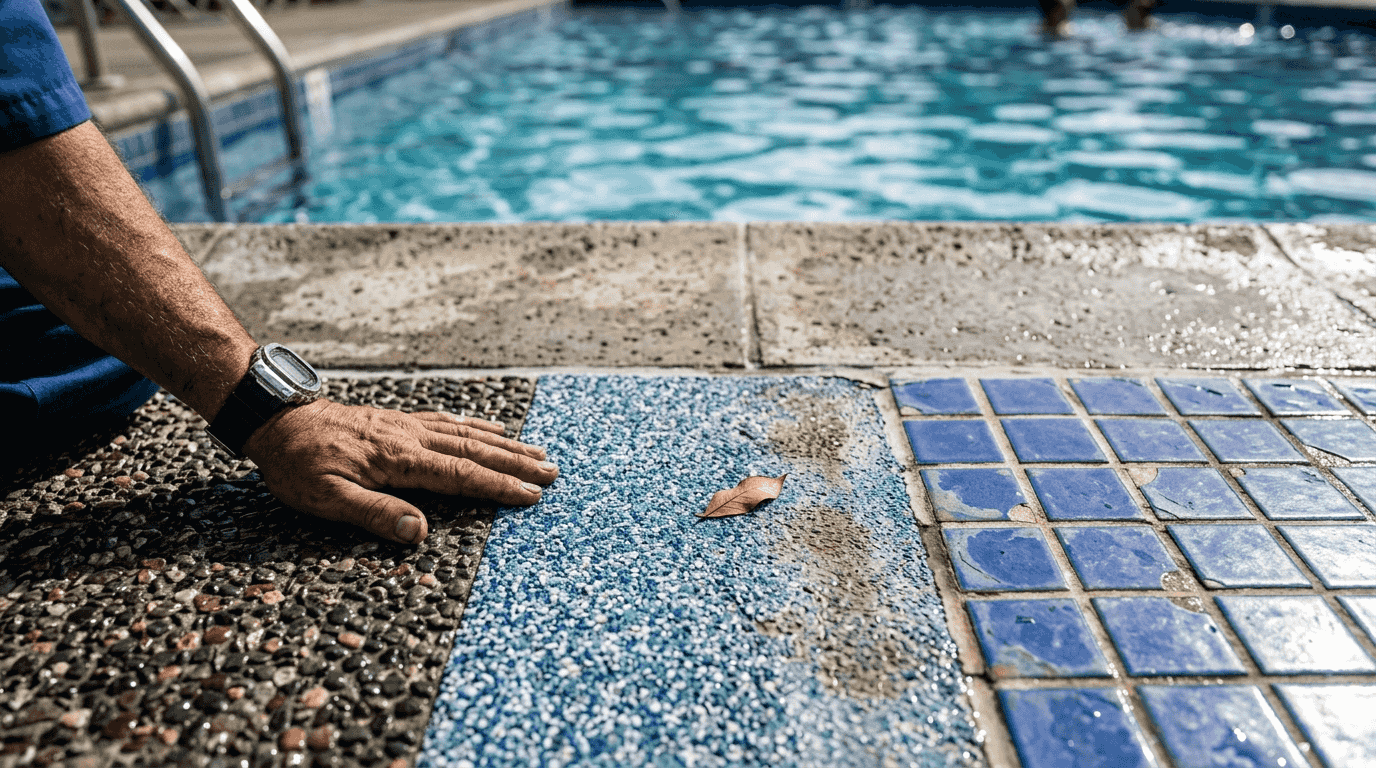
Quartz finishes blend crushed quartz crystals with polymer-modified cement for enhanced chemical resistance and a smoother feel than traditional pebble. The reflective crystals create shimmering effects that elevate aesthetic appeal while maintaining the durability benefits of aggregate finishes. This option suits properties wanting a refined look without sacrificing longevity. Maintenance remains straightforward, requiring standard chemical balancing and periodic brushing to prevent algae in textured areas.
Tile installations offer unmatched customization and durability, with properly maintained tile lasting 20 to 50 years. Porcelain, ceramic, or glass tiles create intricate designs, logos, and color schemes impossible with other materials. However, tile demands higher upfront investment for materials and skilled labor. Grout lines require regular cleaning and occasional regrouting to prevent leaks and maintain appearance. The smooth surface provides excellent aesthetics but may need slip-resistant treatments in high-traffic areas.
Fiberglass shells provide a pre-manufactured alternative that arrives as a single molded piece. Installation happens quickly, minimizing downtime and disruption. The gel coat surface resists algae growth and requires minimal chemical treatment, reducing long-term maintenance costs. Limitations include restricted shape options, potential for surface crazing over time, and difficulty matching existing pool dimensions. This option works best for new construction rather than renovation projects.
Pro Tip: Request samples of each surface type and expose them to your actual pool water chemistry for 30 days. This reveals how materials respond to your specific conditions before committing to a full installation.
Comparing commercial pool surfaces: durability, cost, and maintenance
A side-by-side comparison clarifies the trade-offs between popular commercial pool surfaces. This table summarizes key performance metrics to support your decision-making process:
| Surface Type | Lifespan | Cost Range | Maintenance Level | Safety Features |
|---|---|---|---|---|
| Plaster | 5-10 years | $5,000-$10,000 | High (weekly balancing, frequent acid wash) | Moderate slip resistance, smooth texture |
| Pebble | 15-25 years | $10,000-$20,000 | Moderate (standard balancing, occasional brushing) | Excellent slip resistance, natural texture |
| Quartz | 12-20 years | $8,000-$18,000 | Moderate (standard balancing, periodic brushing) | Good slip resistance, smoother than pebble |
| Tile | 20-50 years | $15,000-$40,000+ | Moderate to high (grout cleaning, regrouting) | Variable (depends on tile type and treatment) |
| Fiberglass | 15-30 years | $12,000-$25,000 | Low (minimal chemical needs, simple cleaning) | Good (smooth surface may need treatment) |
Durability differences become stark when you calculate replacement frequency. Plaster finishes typically last 5-10 years, dependent on environmental factors like water chemistry and usage intensity. A resort pool resurfaced every seven years faces four to five renovation cycles over 30 years, compared to just one or two for pebble or tile installations. Each resurfacing event means pool closure, guest inconvenience, and revenue loss that compounds the material cost difference.
Maintenance complexity varies significantly across surface types. Plaster demands precise pH and alkalinity control to prevent etching and staining. Weekly testing, frequent adjustments, and professional acid washing every few years consume staff time and chemical budgets. Fiberglass and pebble surfaces tolerate wider chemistry ranges and resist algae growth, reducing daily intervention. However, pebble textures trap debris that requires thorough brushing, while tile grout lines need targeted cleaning to prevent discoloration.
Safety performance depends on texture, finish quality, and installation precision. Pebble surfaces naturally provide slip resistance through their textured profile, making them ideal for pool decks and shallow areas where guests walk frequently. Smooth plaster and tile may require additional treatments or textured inserts in critical zones. Uniform installation prevents trip hazards and ensures consistent depth marker visibility, regardless of surface material.
Cost analysis must account for total ownership expenses rather than installation price alone. A $5,000 plaster job repeated four times over 20 years totals $20,000 plus downtime costs, potentially exceeding a single $15,000 pebble installation lasting the same period. Understanding pool resurfacing materials durability helps you model these scenarios accurately for your property’s usage patterns and budget constraints.
Choosing the right commercial pool surface for your property
High-traffic properties like resorts, water parks, and apartment complexes benefit most from durable finishes that withstand constant use. Pebble and quartz surfaces deliver the longevity needed to avoid frequent renovations that disrupt operations and frustrate guests. The initial premium pays dividends through reduced maintenance calls, fewer guest complaints about rough surfaces, and extended intervals between major capital expenditures. Properties hosting 200 or more daily swimmers should prioritize surfaces rated for 15 years or longer.
Budget-conscious projects might start with plaster but must plan for accelerated replacement cycles. This approach works when you anticipate property upgrades or repositioning within five to seven years. Allocate reserves for the inevitable resurfacing and factor downtime into your operational calendar. Some managers use plaster as a placeholder while building capital for premium surfaces, accepting higher short-term maintenance in exchange for preserving cash flow. However, this strategy fails if you underestimate the true cost of frequent interventions.
Safety features and ADA compliance should never be sacrificed for cost savings. Slip-resistant surfaces, clearly marked depths, and smooth transitions prevent injuries that trigger lawsuits and damage your reputation. Insurance premiums often reflect your safety investments, and a single accident can erase years of cost-cutting gains. Commercial pool renovation can boost bookings, tenant satisfaction, and property value when executed with safety as the foundation. Invest in professional installation that meets or exceeds local codes and industry standards.
Well-chosen aesthetics enhance guest experience and differentiate your property from competitors. A stunning pebble finish in custom colors creates Instagram moments that drive organic marketing. Tile installations featuring your logo or unique patterns reinforce brand identity and justify premium room rates. Color psychology matters too: blues and greens evoke calm and cleanliness, while earth tones create natural resort vibes. Survey your target demographic and align surface choices with their expectations and preferences.
Regular maintenance and timely renovation preserve your investment and prevent small issues from becoming expensive emergencies. Establish a proactive schedule for chemical testing, surface inspection, and professional assessments. Catching cracks, stains, or texture degradation early allows targeted repairs rather than full resurfacing. Explore commercial pool renovation workflow strategies that minimize downtime and maximize surface lifespan through preventive care.
Pro Tip: Interview three commercial property managers in your area who recently completed pool renovations. Ask about unexpected costs, guest feedback, and what they would change. Real-world insights often reveal considerations that specification sheets miss.
“The best commercial pool surface is the one that aligns your durability needs, safety requirements, aesthetic goals, and budget realities into a cohesive strategy that serves guests and protects your bottom line for years to come.”
Understanding renovating resort pools Florida best practices ensures your surface choice integrates with broader property goals and local market dynamics.
Enhance your commercial pool with expert resurfacing in Florida
Selecting the right commercial pool surface sets the foundation, but professional installation determines whether you achieve the durability, safety, and beauty you expect. Classic Marcite brings over three decades of specialized experience to Florida commercial properties, transforming pools into assets that boost bookings and guest satisfaction. Our expertise with commercial pool finish options ensures you get tailored solutions that match your property type, usage patterns, and aesthetic vision.

We specialize in durable surfaces that withstand Florida’s intense climate and heavy commercial use while maintaining stunning visual appeal. Our team understands local regulations, ADA compliance requirements, and the unique challenges of resort, hotel, and apartment pool environments. From initial consultation through final inspection, we minimize disruption to your operations and deliver results that exceed industry standards. Explore comprehensive pool resurfacing basics Florida guidance or discover our proven track record with pool resurfacing The Villages FL projects. Contact Classic Marcite today to discuss how the right surface choice can elevate your property value and guest experience.
Frequently asked questions
What are the most durable commercial pool surfaces for Florida?
Pebble and quartz finishes offer the best durability for Florida commercial pools, typically lasting 15 to 25 years under heavy use. These aggregate surfaces resist UV damage, chemical exposure, and constant foot traffic better than traditional plaster. Tile installations can exceed 20 years but require higher upfront investment and ongoing grout maintenance.
How often do commercial pool surfaces need resurfacing?
Resurfacing frequency depends on surface type and usage intensity. Plaster surfaces typically need replacement every 5 to 10 years, while pebble and quartz finishes last 15 to 25 years. High-traffic resort pools may require more frequent attention than apartment complex pools with moderate use. Regular maintenance extends surface life regardless of material choice.
What safety features should commercial pool surfaces include?
Commercial pool surfaces must provide adequate slip resistance, especially in shallow areas and around steps. Clear depth markers, uniform texture without sharp edges, and consistent color that enhances visibility are essential. Professional installation should incorporate ADA-compliant features and meet local safety codes to reduce liability and protect guests.
How do I choose between plaster and pebble for my commercial pool?
Choose plaster if you need lower upfront costs and plan property upgrades within five to seven years. Select pebble if you want long-term durability, reduced maintenance, and enhanced aesthetics that justify higher initial investment. Consider your property type, daily swimmer count, and total ownership costs over 15 to 20 years when making this decision.
What maintenance do commercial pool surfaces require?
Plaster demands weekly chemical balancing, periodic acid washing, and vigilant monitoring to prevent etching and staining. Pebble and quartz need standard chemical maintenance plus occasional brushing to remove debris from textured areas. Tile requires grout cleaning and periodic regrouting to maintain appearance and prevent leaks. Fiberglass offers the lowest maintenance with simple cleaning and minimal chemical adjustments.
Can I customize the appearance of commercial pool surfaces?
Yes, modern pool surfaces offer extensive customization options. Pebble and quartz finishes come in dozens of color blends that create unique visual effects. Tile installations allow unlimited design possibilities including logos, patterns, and custom color schemes. Even plaster now offers tinted options beyond traditional white, though color choices remain more limited than aggregate or tile surfaces.
