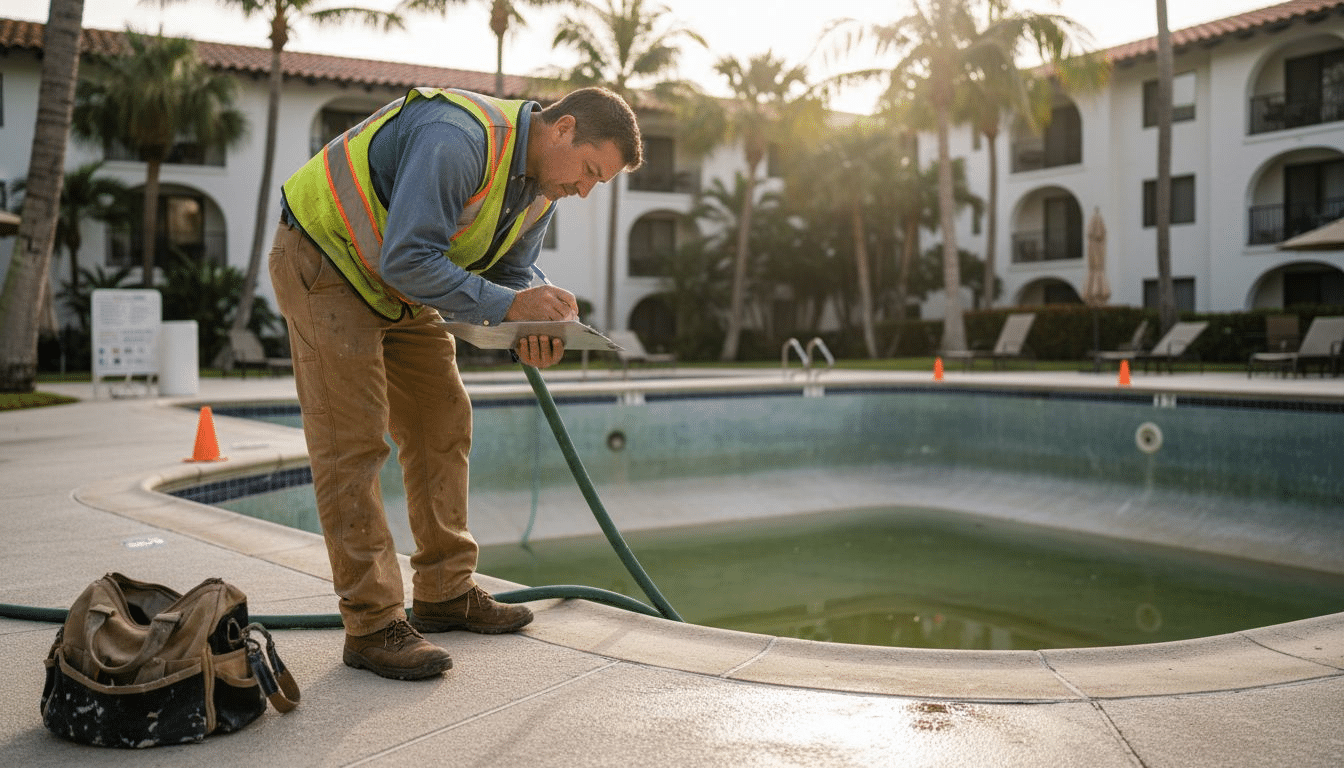
A tired pool can quickly drag down a guest’s first impression at any Orlando or Jacksonville resort. For property managers aiming to protect asset value and attract high-end bookings, ignoring underlying structural or mechanical issues is risky. Resort pool renovation involves more than surface updates—it is a multi-phase process that tackles everything from foundation repairs to the installation of modern filtration and water treatment systems. Discover how strategic upgrades and thoughtful finish choices shape guest experiences, enhance safety, and ensure long-term resilience in Florida’s challenging climate.
Table of Contents
- What Renovating Resort Pools Involves
- Popular Resort Pool Surface Finishes
- Key Steps In The Pool Renovation Process
- Safety Regulations And Florida Compliance
- Budgeting, Timing, And Avoiding Pitfalls
- Latest Trends Transforming Resort Pools
Key Takeaways
| Point | Details |
|---|---|
| Comprehensive Assessment is Crucial | Begin renovations with a detailed structural evaluation to identify issues before they escalate, ensuring effective planning and budgeting. |
| Modernization Improves Safety and Efficiency | Upgrading mechanical systems and chemical treatment can enhance water quality, reduce operational costs, and align with compliance regulations. |
| Sustainability is Expected | Incorporating eco-friendly features and technologies into renovations is essential for attracting environmentally conscious guests. |
| Guest Experience is Central | Focus on aesthetics and comfort in design choices, as these greatly influence guest satisfaction and property appeal. |
What Renovating Resort Pools Involves
Resort pool renovation is far more complex than simply refreshing the water or applying a fresh coat of paint. When you’re managing a mid to high-end property in Orlando or Jacksonville, your pool is a central attraction that directly impacts guest satisfaction and your bottom line. A proper renovation addresses multiple interconnected systems and structural elements that work together to create a safe, visually stunning, and durable asset.
The process begins with a thorough structural assessment. Your contractor evaluates the pool’s foundation, walls, and floor for cracks, deterioration, or structural movement. In Florida’s humid climate, concrete pools experience accelerated wear from constant water exposure, freeze-thaw cycles (yes, they happen here), and chemical reactions in the soil. Identifying these issues early prevents catastrophic failures later.
Surface refinishing represents one of the most visible aspects of renovation. Your current surface, whether plaster, exposed aggregate, or something else, will be stripped away and replaced with modern, durable materials like high-quality pool finishes that resist algae growth, staining, and UV damage. This isn’t just cosmetic. The right surface finish extends your pool’s operational life by 15 to 20 years.
Mechanical and circulation system upgrades are critical. Industry standards for pool renovations require updating pumps, filters, and pipes to handle current water treatment technologies. Many older resort pools operate on outdated equipment that consumes excessive energy and fails to maintain proper water quality. Modern variable-speed pumps, high-efficiency sand filters, and advanced circulation designs significantly reduce operating costs while improving water clarity and hygiene.
Chemical treatment systems demand modernization too. Contemporary resort operations require automated dosing systems, advanced UV or saltwater sanitization options, and real-time monitoring systems that track pH, alkalinity, and sanitizer levels continuously. Guests expect crystal-clear water, and outdated chemical systems simply cannot deliver consistent results.
Accessibility and safety features round out comprehensive renovations. ADA-compliant entry systems, non-slip decking materials, updated drain safety covers (per Virginia Graeme Baker Act requirements), and improved lighting around the pool deck protect guests and shield your property from liability. These upgrades also enhance the overall guest experience and photos that appear on booking sites.
This table highlights renovation upgrades and their impact on guest experience and property value:
| Upgrade Type | Guest Benefit | Operational Impact | Compliance Influence |
|---|---|---|---|
| Circulation System | Clearer, safer water | Lower energy costs | Meets water quality codes |
| Modern Surface Finish | Enhanced comfort, slip safety | Fewer repairs needed | Easier ongoing inspections |
| ADA/Safety Features | Accessible for all guests | Reduced liability risk | Mandatory in Florida resorts |
| Smart Chemical Dosing | Consistent water purity | Staff efficiency gains | Supports sanitation standards |
Pro tip: Start your renovation planning with a detailed condition assessment from a professional contractor who understands Florida’s unique pool challenges, allowing you to budget accurately and prioritize work based on actual structural needs rather than aesthetic preferences alone.
Popular Resort Pool Surface Finishes
Your choice of pool surface finish is one of the most important decisions in a resort renovation project. It affects everything from how your pool looks in guest photos to how often maintenance crews need to address repairs and staining. The right finish can enhance your property’s appeal while dramatically reducing long-term maintenance costs.
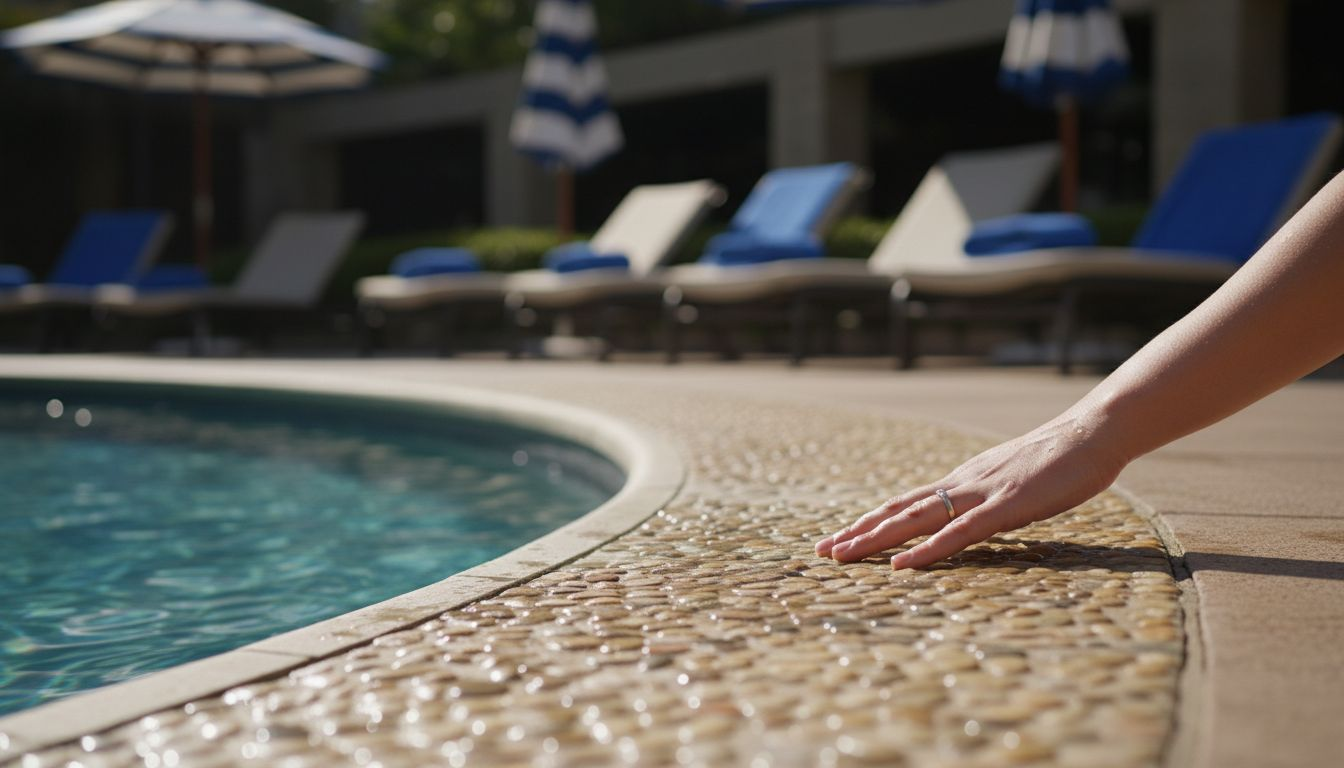
Pebble finishes have become the gold standard for upscale resort pools. These finishes use aggregated stone particles bonded to the pool shell, creating a natural, textured surface that feels pleasant underfoot and resists algae growth exceptionally well. The pebbled texture also provides superior slip resistance compared to smooth plaster, making it safer for guests. Pebble finishes typically last 10 to 15 years and maintain their color and appearance far better than traditional plaster, which means fewer drain-and-refill cycles for cosmetic reasons.
Ceramic tile and porcelain options offer vibrant design possibilities and exceptional durability. Tiles allow you to create custom mosaics, border patterns, and branded designs that make your resort pool instantly recognizable on social media. The non-porous surface prevents water absorption and algae penetration, and tiles resist staining from sunscreen and minerals. However, tile requires more frequent maintenance to prevent grout deterioration in Florida’s humid climate, and individual tile replacement can become costly over time.
Aggregate finishes like quartz or crushed glass provide similar benefits to pebble but with different aesthetic qualities. These materials offer customizable surface finishes that match your resort’s design theme while maintaining durability and slip resistance. Quartz finishes, in particular, create a sparkling appearance that photographs beautifully and appeals to luxury resort guests.
Plaster remains a viable option for budget conscious renovations, though it requires more frequent reapplication and exhibits greater susceptibility to staining and algae buildup than aggregate finishes. Modern colored plaster can look attractive initially, but Florida’s sun and mineral-heavy water accelerate its deterioration.
When selecting your finish, consider guest safety, climate resilience, maintenance demands, and your property’s design aesthetic. Surface finish selection impacts durability and safety directly, so prioritize slip resistance and material longevity over initial cost savings.
Here’s a breakdown of popular pool surface finishes and their unique advantages for resort properties:
| Finish Type | Guest Appeal | Maintenance Needs | Typical Lifespan |
|---|---|---|---|
| Pebble | Upscale, natural look | Low, algae resistant | 10–15 years |
| Ceramic/Porcelain | Custom designs, vibrant | Grout attention required | 15+ years |
| Quartz Aggregate | Sparkling, luxury feel | Minimal, stain resistant | 12–20 years |
| Plaster | Economical, classic | High, prone to stains | 5–10 years |
Pro tip: Request samples of any finish you’re considering and observe them in direct Florida sunlight for at least a week, as UV exposure dramatically affects how colors appear once the renovation is complete.
Key Steps in the Pool Renovation Process
A successful resort pool renovation follows a logical sequence of steps that moves from assessment through completion. Understanding this process helps you anticipate timelines, budget accurately, and avoid costly mistakes. Think of it like a roadmap that keeps your project on track and ensures nothing gets overlooked.
Step 1: Comprehensive inspection and assessment. Before any work begins, a qualified contractor evaluates the pool’s structural integrity, existing surface condition, mechanical systems, and compliance issues. They document cracks, corrosion, leaks, and code violations. This inspection determines the scope of work needed and identifies hidden problems that could derail your timeline if discovered mid-renovation.
Step 2: Design and planning. Your contractor develops a detailed renovation plan that addresses identified issues, incorporates your aesthetic goals, and specifies materials and systems. This phase includes budget estimation, timeline development, and coordination with local permitting authorities. Rushing through planning leads to change orders and unexpected expenses later.
Step 3: Permitting and approvals. Florida requires specific permits for pool renovations, particularly when work involves structural changes, mechanical upgrades, or electrical modifications. Pool safety compliance and code requirements must be verified before construction begins. Your contractor should handle these submissions, but stay involved in the process.
Step 4: Pool draining and surface preparation. The pool is drained completely, and the existing surface is stripped away through grinding, acid washing, or other removal methods. This step reveals any structural damage that wasn’t visible when the pool held water and prepares the substrate for new finishes.
Step 5: Structural repairs and system installation. Concrete cracks are sealed, damaged areas are patched, and mechanical systems like pumps, filters, and circulation pipes are installed or upgraded. This is where the invisible infrastructure gets modernized, directly affecting operational efficiency and water quality for years to come.
Step 6: Resurfacing and finishing. Your chosen surface finish is applied according to manufacturer specifications. Whether pebble, tile, or aggregate, proper application during optimal weather conditions ensures durability and appearance. This is the most visible transformation.
Step 7: Testing and commissioning. Pool circulation systems, water treatment, and safety features are tested thoroughly before reopening. Water chemistry is balanced, drain safety covers are verified, and all equipment operates correctly. This step prevents guest complaints and safety issues.
Pro tip: Schedule your renovation during your resort’s lowest occupancy season and maintain clear communication with your contractor about daily progress, so you can address any emerging issues immediately rather than discovering them at project completion.
Safety Regulations and Florida Compliance
Florida’s regulatory environment for resort pools is strict, and for good reason. Failing to comply with state requirements exposes your property to fines, liability lawsuits, and operational shutdowns. When you renovate your pool, compliance isn’t optional—it’s built into every decision from design through reopening.
The Florida Department of Health sets the baseline requirements for all public and resort pools. Your renovated pool must meet water quality and sanitation standards established in Florida Administrative Code Chapter 64E-9. This means specific chlorine or sanitizer levels, pH ranges, alkalinity, and cyanuric acid concentrations must be maintained continuously. Regular testing and documentation are not suggestions—they’re mandatory, and your staff needs training on proper procedures.
Drain safety represents one of the most critical compliance areas. Federal law now requires anti-entrapment drain covers on all pools, mandating that your renovation includes modern drain protection systems. A single drain failure could cause a tragic drowning, and you could face substantial liability even if the incident wasn’t directly your fault.
Structural and barrier requirements under Florida Building Code Chapter 45 specify how your pool must be designed and protected. Fencing, gate latches, and surrounding barriers must meet precise specifications. If your resort pool is accessible to children or the general public, these requirements become even more stringent. Your contractor must understand these codes intimately, or you risk having to tear out newly completed work to achieve compliance.
Electrical grounding and equipment safety demand professional installation. Improper grounding around water creates electrocution hazards. Your pool area requires ground fault circuit interrupter (GFCI) protection on all outlets within specific distances from the water. During renovation, this infrastructure gets upgraded or installed fresh.
Permitting approval before renovation begins is non-negotiable. The Florida Department of Health and your local building department review renovation plans to ensure they meet code. This process takes time, so start early and don’t skip it hoping to expedite the project.
Pro tip: Hire your contractor with verified credentials and Florida pool construction experience, then request copies of all final inspection sign-offs and permits before paying final invoices—these documents prove your pool meets state requirements and protect you from liability.
Budgeting, Timing, and Avoiding Pitfalls
Pool renovations rarely come in under budget or ahead of schedule. The difference between disaster and success often comes down to realistic planning from the start. Property managers who understand common pitfalls and build in proper contingencies protect themselves from nasty surprises.
Accurate cost estimation requires detailed line-item budgeting. Don’t just estimate surface refinishing and assume you know the total. Your budget must include structural repairs, mechanical system upgrades, electrical work, permits, inspections, labor, contingency funds, and temporary closure costs. Many resort owners make the mistake of focusing only on the visible surface work while ignoring the expensive infrastructure beneath it. That’s where your real costs hide.
Contingency planning is non-negotiable. Once your contractor opens the pool and begins surface removal, hidden problems emerge. Concrete deterioration extends deeper than expected. Plumbing requires replacement. Rust-corroded equipment needs upgrading. A proper contingency reserve of 15 to 25 percent of your estimated project cost protects you from these inevitable discoveries. Detailed upfront cost estimation prevents budget overruns, but only if you account for uncertainty.
Timing your renovation requires strategic thinking beyond just choosing an off-season month. Factor in permit approval timelines, which typically require 2 to 4 weeks in Florida. Weather matters too. Florida’s summer monsoon season brings heavy rain that interferes with surface application and concrete curing. Plan renovations for late fall or early spring when conditions are optimal.
Scope creep kills schedules and budgets. Once work begins, the temptation to add upgrades or make changes is strong. That request to upgrade lighting or add water features may seem minor, but it delays completion and inflates costs. Establish your scope of work in writing before the project starts and stick to it.
Transparent communication with your contractor prevents misunderstandings. Weekly progress meetings, documented change orders, and clear expectations about daily schedules keep everyone aligned. Phased project management with realistic timelines reduces conflict and keeps projects moving forward.
Pro tip: Get three written estimates from qualified contractors before deciding, ensuring each covers identical scope, materials, and timelines, then add your own 20 percent contingency buffer to the lowest bid to create a realistic total project budget.
Latest Trends Transforming Resort Pools
Resort pools are evolving rapidly as guests demand more than basic amenities. They want wellness benefits, sustainability, and seamless technology integration. Staying current with these trends positions your property as modern and competitive in an increasingly sophisticated hospitality market.
Sustainability has moved from nice-to-have to expected. Guests now scrutinize resort environmental practices, and pool operations consume significant energy and water. Modern renovations increasingly incorporate saltwater systems instead of traditional chlorine, reducing chemical expenses and environmental impact. Energy-efficient heat pumps, solar heating systems, and smart controls that optimize pump runtime lower operational costs while appealing to environmentally conscious travelers. These upgrades often qualify for rebates or tax incentives that offset initial investment.
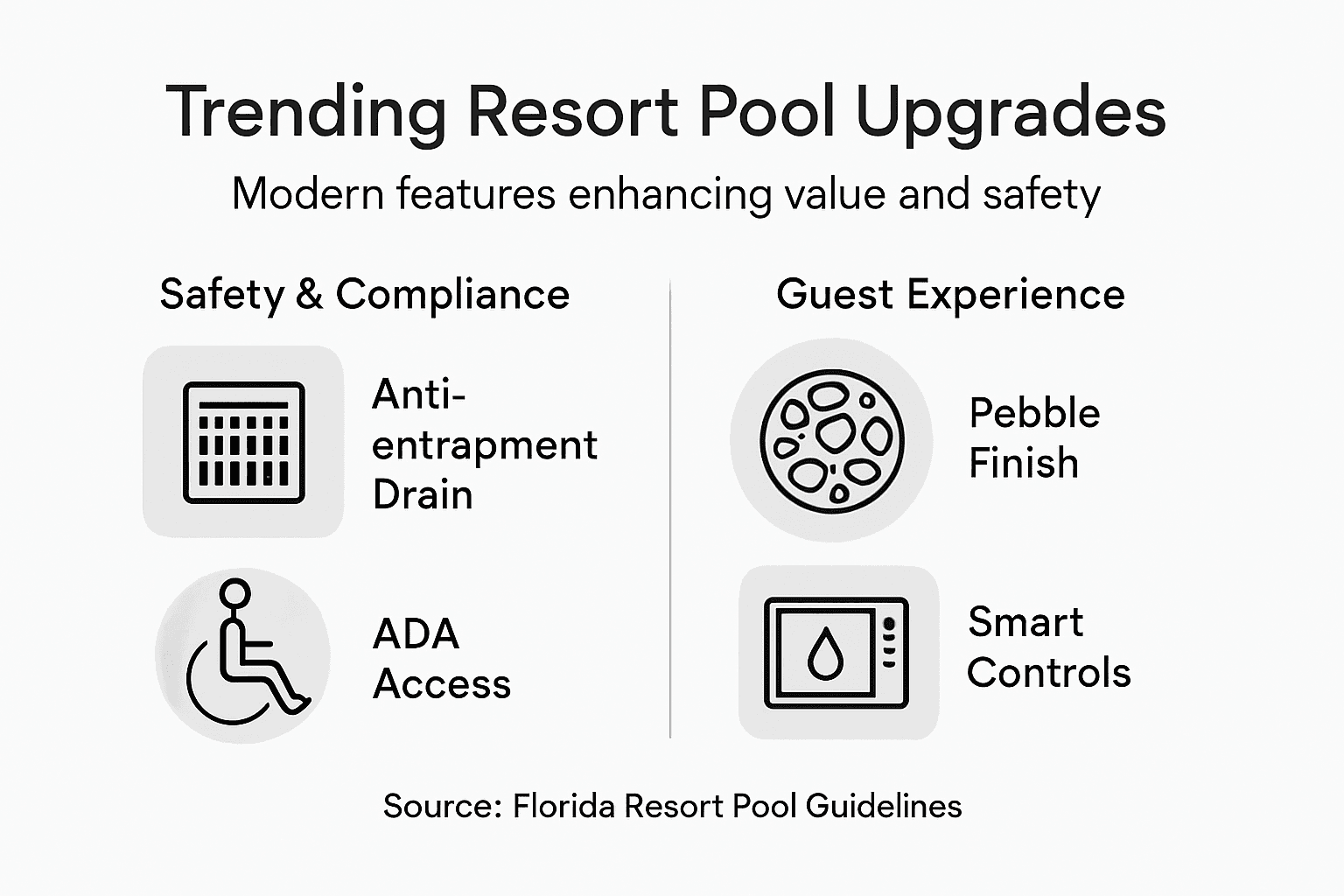
Smart water quality monitoring represents a game-changing upgrade. Real-time monitoring systems track pH, chlorine, alkalinity, and other parameters continuously, alerting staff immediately to imbalances. This prevents algae blooms, maintains consistent water clarity, and reduces the need for manual testing. Guests notice crystal-clear water, and your maintenance team spends less time troubleshooting water chemistry problems.
Wellness-oriented design is reshaping pool experiences. Resorts are adding therapeutic features like hydrotherapy jets and mineral water elements that appeal to health-conscious guests. Some properties incorporate wellness zones with temperature-controlled sections or salt water options that offer perceived health benefits. These additions justify premium pricing and attract guests seeking wellness retreats alongside traditional vacation experiences.
Digital integration streamlines guest convenience. Mobile apps now control pool access, reserve loungers, and display real-time water temperature and amenity status. Digital keys reduce friction at entry points, and guests appreciate the personalized experience. Technology-enabled features enhance operational efficiency and guest satisfaction simultaneously.
Immersive poolside environments blend luxury with experience. Resorts invest in ambient lighting, sound systems, and sophisticated design that creates Instagram-worthy settings. Your renovated pool becomes a destination unto itself, not just a water feature. High-quality finishes like pebble or aggregate surfaces photograph beautifully and complement upscale landscaping and architectural elements.
Pro tip: When renovating, build in infrastructure for future technology upgrades like smart controls and monitoring systems, even if you don’t install them immediately, so you can add them without disruptive future work.
Elevate Your Resort Pool with Expert Renovation Solutions
Renovating resort pools demands more than a simple surface update. Issues like structural integrity, advanced circulation systems, and compliance with Florida safety regulations require trusted expertise and premium materials. Classic Marcite has been transforming pools across Orlando and Jacksonville since 1988, specializing in durable, visually stunning finishes like Pebble Tec® that enhance safety, guest experience, and property value. With over 100,000 pools resurfaced, we understand the importance of combining beauty with long-term performance in Florida’s unique climate.

Ready to bring new life to your resort pool with craftsmanship that meets modern safety standards and lasting quality? Visit Classic Marcite to explore our comprehensive pool resurfacing and remodeling services. Discover how our expert team can help you achieve the perfect surface finish and system upgrades your guests deserve. Contact us today for a free estimate and start your renovation journey with confidence.
Frequently Asked Questions
What is involved in the pool renovation process for resorts?
The pool renovation process begins with a comprehensive structural assessment, followed by design planning, permitting, surface preparation, mechanical system upgrades, resurfacing, and testing. This ensures safety, compliance, and a visually appealing outcome for the pool area.
Why is selecting the right pool surface finish important for resorts?
Choosing the right pool surface finish impacts the pool’s appearance, safety, and maintenance needs. Options like pebble finishes provide durability and slip resistance, while tile offers vibrant design possibilities. An ideal finish enhances guest satisfaction while minimizing long-term care costs.
How can resort pool renovations improve guest safety and compliance?
Renovations can enhance guest safety by incorporating ADA-compliant entry systems, non-slip decking, and updated drain safety covers. Compliance with safety regulations, such as the Virginia Graeme Baker Act, prevents liability and ensures a secure environment for all guests.
What trends are shaping the future of resort pool renovations?
Current trends include sustainability practices like saltwater systems, smart water quality monitoring, wellness-oriented designs with therapeutic features, and digital integration for guest convenience. These upgrades enhance guest experiences and improve operational efficiencies.
Recommended
- Why Renovate Your Pool: Boost Beauty And Value
- 7 Smart Commercial Pool Upgrade Ideas For Florida Owners
- DIY Pool Remodeling Guide For Stunning Results
- Sustainability In Pool Renovation: Eco-Friendly Benefits
- Pool Refinishing Windermere FL
- Pool Renovation Winter Park FL
- Swimming Pool Remodeling The Villages FL