Many homeowners believe chlorine alone keeps pools clean and safe. Yet in Florida’s hot, humid climate, algae can multiply rapidly, increasing chlorine demand by up to 2.5 times. Without balanced chemistry, routine cleaning, and proactive equipment care, you face escalating costs, surface damage, and health risks. This guide shows you how to preserve your pool’s appearance, safety, and longevity through effective maintenance tailored to Florida’s unique challenges.
Table of Contents
- Introduction To Pool Maintenance In Florida’s Climate
- Water Chemistry And Pool Longevity
- Routine Cleaning And Biological Growth Control
- Pump And Filter Maintenance For Water Quality
- Safety And Regulations In Pool Maintenance
- Common Misconceptions In Pool Maintenance
- Professional Pool Maintenance Vs DIY
- Resurfacing As A Complement To Maintenance
- Conclusion: Maximizing Your Pool’s Lifespan Through Maintenance
- Enhance Your Pool’s Durability With Classic Marcite Resurfacing
Key Takeaways
| Point | Details |
|---|---|
| Balanced water chemistry protects pool surfaces and enhances chlorine effectiveness | Proper pH, alkalinity, and hardness prevent corrosion and staining |
| Routine cleaning and filter upkeep prevent algae and costly damage | Daily debris removal and weekly brushing disrupt algae before colonies form |
| Proper pump operation maintains water clarity critical for safety | Running filtration during all pool use hours continuously removes contaminants |
| Professional maintenance reduces errors and extends pool lifespan | Certified operators ensure chemical balance and early detection of wear |
| Resurfacing complements regular care to boost durability | Advanced finishes resist Florida weather and chemical stress better than plaster alone |
Introduction to Pool Maintenance in Florida’s Climate
Florida’s year-round heat and humidity create a perfect breeding ground for algae. High temperatures accelerate chemical degradation, forcing you to adjust treatments more often than homeowners in cooler climates. Pool maintenance in tropical conditions demands vigilance because algae can bloom overnight, turning crystal-clear water murky within hours.
Heavy rainfall and abundant organic debris add another layer of complexity. Leaves, pollen, and dust constantly fall into your pool, feeding algae and clogging filtration systems. Summer thunderstorms dilute your carefully balanced chemicals, requiring immediate retesting and adjustment. Ignoring these environmental factors accelerates surface wear, leading to costly repairs you could have prevented with proactive care.
Understanding these unique challenges helps you tailor your maintenance schedule to Florida’s demands. You might need to test water chemistry twice weekly during summer versus once weekly in winter. Regular monitoring prevents small problems from becoming expensive disasters. Pairing routine upkeep with maintenance tips for Florida pool decks protects your entire pool area from weather damage.
Proper maintenance preserves not just aesthetics but also structural integrity. Neglected pools develop surface pitting, tile damage, and equipment failures that reduce property value. By recognizing how Florida’s climate affects your pool, you can implement targeted strategies that save money and extend your pool’s lifespan. Consider why renovate aging pools when preventive care reduces the need for major overhauls.
Pro Tip: Keep a maintenance log tracking chemical levels, weather conditions, and cleaning tasks. Patterns emerge over time, helping you predict when adjustments are needed before problems appear.
Key environmental factors affecting Florida pools:
- Year-round warmth accelerates algae growth and chemical breakdown
- Heavy rainfall dilutes sanitizers and introduces contaminants
- High humidity increases evaporation, concentrating chemicals
- Abundant organic debris clogs filters and feeds algae colonies
- UV exposure degrades chlorine faster than in northern states
Water Chemistry and Pool Longevity
Balanced water chemistry forms the foundation of effective pool care. Maintaining pool pH between 7.2 and 7.6 optimizes chlorine disinfection while preventing surface damage. Outside this range, chlorine loses effectiveness, forcing you to add more chemicals without achieving clean water. Low pH causes corrosion that etches plaster and damages metal components. High pH creates scaling that clouds water and clogs equipment.
Alkalinity acts as a pH buffer, preventing wild swings that stress your pool surfaces. Keeping alkalinity between 80-120 ppm and calcium hardness between 200-350 ppm protects against etching and scaling. Low alkalinity allows pH to fluctuate erratically, making chemical balancing nearly impossible. Low calcium causes plaster to dissolve into the water, shortening your pool’s lifespan.
High calcium levels create the opposite problem. Scale deposits form on surfaces, tile lines, and inside pipes, restricting water flow and requiring expensive cleaning. Proper chemical testing catches these imbalances before visible damage occurs. Investing in reliable test strips or a digital tester pays for itself by preventing surface repairs. Regular testing also helps you maintain pool surface finishes in pristine condition.
Test your water chemistry at least twice weekly during active swimming seasons. After heavy rain or pool parties, retest immediately because these events dramatically alter chemical balance. Keep a supply of pH adjusters, alkalinity increasers, and calcium hardness boosters on hand for quick corrections. Waiting days to fix imbalances allows damage to progress, costing you more in the long run.
Pro Tip: Test water in the morning before the sun affects chlorine levels. Mid-afternoon readings can be misleadingly high due to UV activation.
Critical water chemistry parameters:
- pH: 7.2-7.6 for optimal chlorine effectiveness
- Total Alkalinity: 80-120 ppm to stabilize pH
- Calcium Hardness: 200-350 ppm to prevent surface damage
- Free Chlorine: 1-3 ppm for sanitation
- Cyanuric Acid: 30-50 ppm to protect chlorine from sunlight
| Parameter | Ideal Range | Problem if Low | Problem if High |
|---|---|---|---|
| pH | 7.2-7.6 | Corrosion, eye irritation | Scaling, cloudy water |
| Alkalinity | 80-120 ppm | pH instability | Cloudy water, scaling |
| Calcium | 200-350 ppm | Plaster etching | Scale deposits |
| Chlorine | 1-3 ppm | Algae, bacteria | Bleaching, irritation |
For more guidance on pool chemical balance guidelines, consult professional resources that address Florida’s specific conditions.
Routine Cleaning and Biological Growth Control
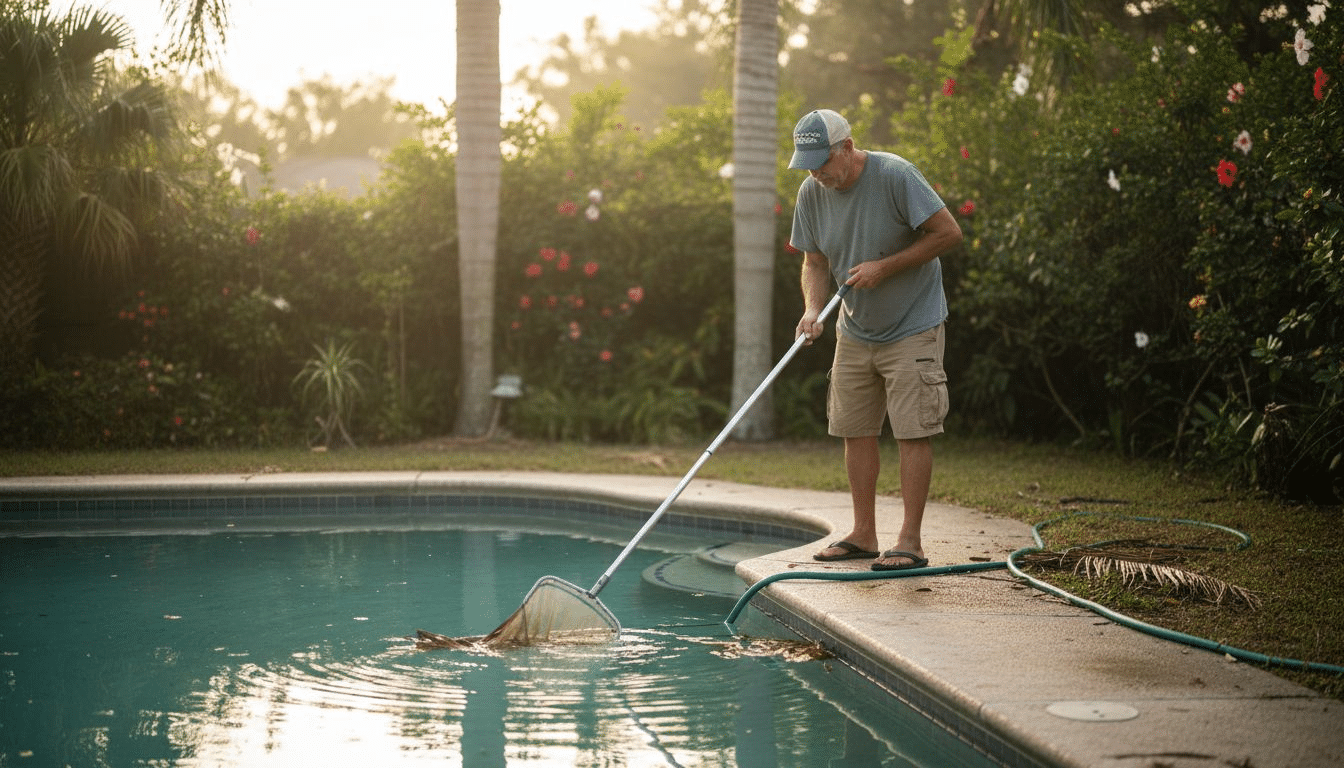
Daily removal of debris and weekly brushing prevent algae growth before colonies establish themselves. Leaves and pollen don’t just look unsightly. They decompose, releasing phosphates that feed algae and increase your chlorine demand. Skimming your pool each morning takes five minutes but saves hours of scrubbing later.
Weekly brushing disrupts algae trying to attach to pool surfaces. Focus on shaded areas, steps, and corners where circulation is weakest and algae thrives. Even with proper chemistry, algae spores constantly enter your pool through rain, wind, and swimmers. Brushing mechanically removes these spores before they multiply into visible blooms. Neglecting this simple task allows algae to gain a foothold that requires shock treatment to eliminate.
Filter maintenance directly impacts your ability to control biological growth. Clean cartridge filters monthly or backwash sand and DE filters when pressure rises 8-10 psi above baseline. Clogged filters cannot capture algae spores, bacteria, or fine debris, forcing your pump to work harder while water quality declines. Regular filter cleaning extends equipment life and maintains the crystal-clear water Florida pool owners expect.
High phosphate levels can increase chlorine demand by up to 2.5 times due to accelerated algae growth. Testing for phosphates quarterly helps you understand why chlorine seems to disappear faster than normal. Phosphate removers are inexpensive compared to constantly adding extra chlorine. Controlling phosphates at the source reduces chemical costs and simplifies maintenance throughout the season.
Algae growth can increase chlorine demand by 2.5x, turning routine maintenance into a costly chemical battle.
Consistent cleaning habits prevent problems that compromise post-resurfacing pool maintenance efforts. A newly resurfaced pool deserves protection from the start.
Pro Tip: Brush your pool before adding chemicals. This distributes them more evenly and prevents localized chemical concentration that can stain surfaces.
Effective cleaning schedule for Florida pools:
- Daily: Skim surface debris and empty skimmer baskets
- Weekly: Brush walls, steps, and floors thoroughly
- Weekly: Vacuum pool floor or run automatic cleaner
- Monthly: Clean filter cartridges or backwash media filters
- Monthly: Inspect and clean pump baskets
For detailed cleaning schedules and algae control strategies, refer to professional pool operation guidelines.
Pump and Filter Maintenance for Water Quality
Proper operation of recirculation and filtration systems is critical for keeping water clean and preserving pool surfaces. Your pump circulates water through the filter, removing contaminants before they settle on surfaces or create cloudy conditions. Running your filtration system during all pool use hours ensures continuous cleaning, preventing debris accumulation that leads to algae and staining.
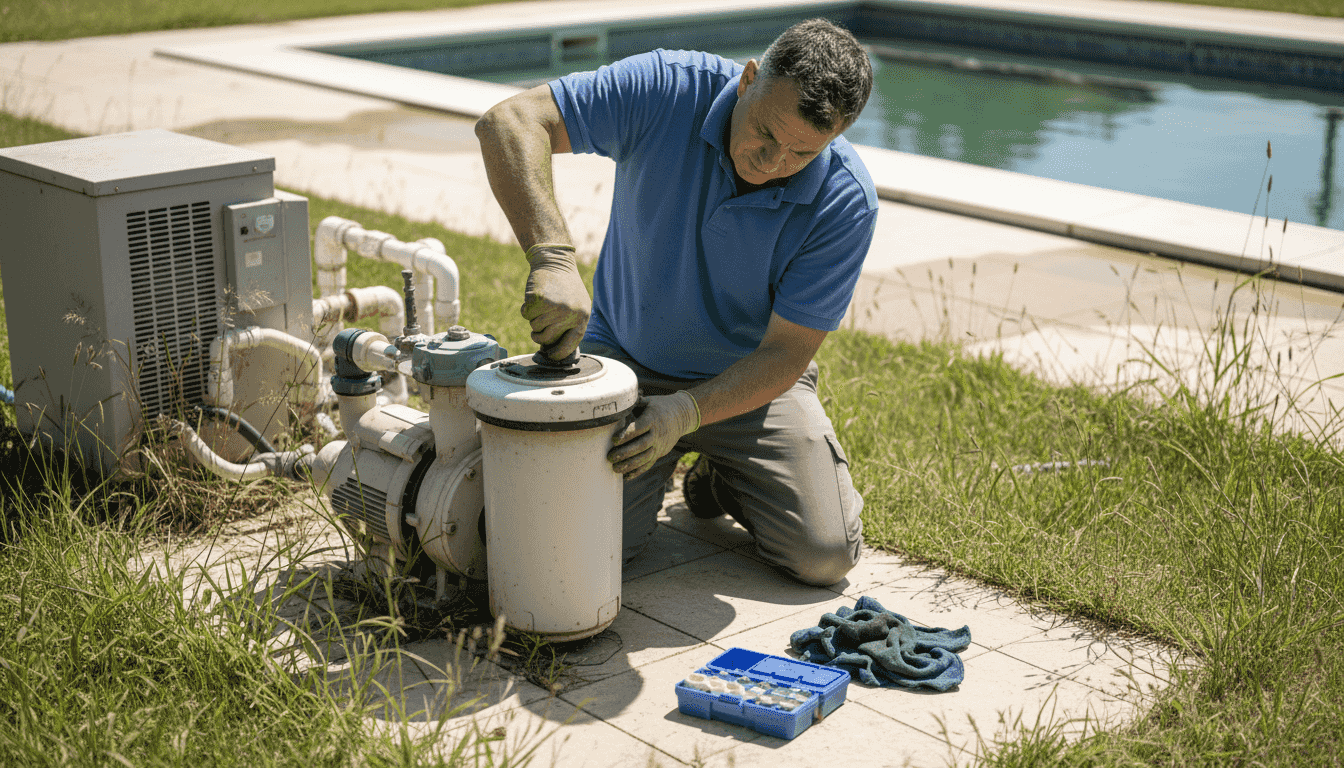
Most Florida pools benefit from running pumps 8-12 hours daily, with longer cycles during peak summer heat. Variable-speed pumps let you adjust flow rates for different tasks. High speed during swimming hours maximizes filtration efficiency. Lower overnight speeds save energy while maintaining circulation. Undersized run times allow debris to settle, requiring more frequent manual cleaning and chemical adjustments.
Regularly inspect pump baskets and filter media to catch problems early. Hair, leaves, and small debris accumulate in pump baskets, restricting flow and forcing motors to strain. Empty baskets weekly during heavy use periods. Check filter pressure gauges to identify when cleaning is needed. Rising pressure indicates trapped debris reducing filter effectiveness, even if water still looks clear.
Well-maintained pumps prevent the debris accumulation that accelerates algae growth and surface staining. A struggling pump cannot turnover your entire pool volume frequently enough to maintain water quality. This creates dead zones where algae colonizes undisturbed. Proper equipment care extends the life of pumps, heaters, and sanitizers, reducing repair costs significantly over time.
Pro Tip: Monitor your pump’s pressure gauge weekly. When pressure rises 8-10 psi above the clean baseline, it’s time to clean or backwash your filter regardless of the calendar schedule.
Before investing in major renovations, ensure your equipment is ready by learning how to prep pool for resurfacing. Proper preparation protects new surfaces from the start.
Essential pump and filter maintenance tasks:
- Run filtration during all swimming hours for active contaminant removal
- Empty pump baskets weekly to prevent flow restriction
- Clean cartridge filters monthly or when pressure rises significantly
- Backwash sand/DE filters when pressure increases 8-10 psi
- Inspect o-rings and seals quarterly for leaks
For comprehensive pump and filtration maintenance guidance, consult industry resources that address equipment longevity.
Safety and Regulations in Pool Maintenance
Clear water visibility is mandatory to ensure swimmer safety by preventing slips and detecting hazards. Florida regulations require you to see the main drain from the pool deck. Cloudy water obscures depth perception, submerged objects, and swimmers in distress. Maintaining proper chemical balance and filtration isn’t just about aesthetics; it’s a legal requirement that protects lives.
Pool drains must meet safety standards established by the Virginia Graeme Baker Safety Act, which mandates anti-entrapment drain covers. Regular inspection ensures covers remain securely fastened and undamaged. Missing or broken drain covers create suction hazards that can trap swimmers underwater. Include drain inspections in your monthly maintenance routine to catch problems before accidents occur.
Clear visibility of pool main drain from deck is mandatory for safe use and compliance with Florida pool regulations.
Improper chemical handling risks release of toxic gases and poses health hazards to users. Never mix different pool chemicals, especially chlorine and acid. Store chemicals in cool, dry locations away from direct sunlight and combustible materials. Keep acids and bases separated to prevent accidental contact that produces dangerous fumes. Reading manufacturer labels prevents mistakes that endanger your family and neighbors.
Proper maintenance minimizes injury risks from slips, falls, and water quality hazards. Algae-covered surfaces become slippery, increasing fall risk around pool edges and steps. Unbalanced water causes skin irritation, eye burning, and respiratory problems for swimmers. Regular testing and adjustment keep water comfortable and safe for extended swimming sessions. These precautions protect you from liability issues if guests are injured at your pool.
Key safety considerations for Florida pool owners:
- Maintain clear water visibility to the main drain at all times
- Inspect anti-entrapment drain covers monthly for damage
- Store chemicals separately in cool, dry, well-ventilated areas
- Never mix different pool chemicals together
- Post emergency contact information and safety rules visibly
For detailed pool safety guidance, review resources from health departments specializing in aquatic facility safety.
Common Misconceptions in Pool Maintenance
Chlorine alone does not ensure pool cleanliness; balanced chemicals are crucial to prevent corrosion and algae. Many homeowners dump chlorine into their pools whenever water looks cloudy, assuming more sanitizer solves every problem. Without proper pH and alkalinity, that chlorine wastes away in hours, doing little to kill bacteria or prevent algae. You end up spending more on chemicals while achieving worse results.
Chlorine effectiveness depends on balanced pH and chemical levels, not just high chlorine concentration alone.
Regular maintenance beats infrequent shock treatments for pool health. Some owners neglect their pools for weeks, then shock heavily to clear green water. This approach stresses pool surfaces, bleaches liners, and costs more than consistent daily care. Shocking has its place after storms or heavy use, but it shouldn’t replace routine chemical balancing and cleaning. Steady maintenance prevents problems rather than constantly fighting crises.
Resurfacing doesn’t remove the need for routine chemical and cleaning care. A beautiful new finish from pool resurfacing benefits still requires proper water chemistry to last its full lifespan. Neglecting maintenance after resurfacing leads to the same staining, etching, and algae problems that plagued your old surface. Think of resurfacing as a fresh start that deserves protection through diligent care.
DIY maintenance often misses critical chemical balances, risking damage. Home test kits can be inaccurate if stored improperly or past expiration dates. Misreading test results leads to over or under-treatment that harms pool surfaces and wastes money. While DIY saves on labor costs, mistakes often cost more in repairs than professional service would have. Knowing your limits prevents expensive errors.
Four critical misconceptions about pool maintenance:
- High chlorine levels alone guarantee clean, safe water regardless of pH
- Shocking the pool occasionally replaces the need for daily maintenance routines
- New resurfacing eliminates the need for careful chemical balancing
- DIY testing and treatment is always more cost-effective than professional service
For more information on pool maintenance misconceptions, consult resources that explain the science behind proper chemical balance.
Professional Pool Maintenance vs DIY
DIY maintenance can be cost-effective but often results in chemical imbalances homeowners don’t recognize until damage appears. You might save $100-200 monthly on service fees, but a single mistake causing surface etching or equipment failure costs thousands to repair. Home testing relies on your ability to interpret results correctly and adjust chemicals precisely. Without training, you might chase symptoms rather than addressing root causes.
Certified operators reduce costly maintenance errors and improve pool safety and longevity. Professional technicians test more parameters than most homeowners, including phosphates, metals, and total dissolved solids. They spot early warning signs of equipment failure, surface wear, and chemical trends that predict future problems. Their expertise ensures regulatory compliance, protecting you from fines and liability issues if someone is injured in your pool.
Professionals can identify early signs of wear requiring resurfacing or repair before small issues become emergencies. A trained eye notices subtle discoloration, texture changes, and drainage problems that indicate surface failure. Catching these problems early allows planned repairs during convenient times rather than emergency calls during peak swimming season. Their experience with professional versus DIY pool care helps you make informed decisions about when to act.
Pro Tip: Combine consistent DIY monitoring with annual professional inspections to maximize pool health while controlling costs. This hybrid approach catches problems early without the expense of weekly service calls.
| Aspect | DIY Maintenance | Professional Service |
|---|---|---|
| Cost | $50-100/month for chemicals | $150-300/month for weekly service |
| Expertise | Limited to owner knowledge | Certified, trained technicians |
| Equipment | Basic test kit, manual tools | Professional-grade testing, commercial equipment |
| Problem Detection | Reactive, after issues appear | Proactive, catches early warning signs |
| Compliance | Owner responsibility for regulations | Service ensures code compliance |
| Time Required | 3-5 hours weekly | Minimal owner involvement |
For information on benefits of professional pool operators, review resources from health departments that certify aquatic facility managers.
Resurfacing as a Complement to Maintenance
Resurfacing repairs wear, cracks, and chemical damage to maintain smooth, safe surfaces. Over 7-10 years, even well-maintained pools develop surface deterioration from constant chemical exposure and Florida’s intense UV radiation. Rough patches harbor algae that resist brushing and create uncomfortable swimming conditions. Small cracks expand with temperature changes, eventually allowing water to reach the pool shell and cause structural damage.
Pebble Tec® resurfacing improves surface durability and weather resistance, complementing routine pool maintenance. Advanced finishes like Pebble Tec resist chemical stress better than traditional plaster, reducing etching and staining even if water chemistry drifts slightly off balance. The textured surface provides better traction, improving safety around steps and entries. These benefits extend your pool’s functional life while reducing ongoing maintenance challenges.
Without resurfacing, surface degradation accelerates despite regular maintenance. You’ll notice increasing chemical consumption as rough surfaces harbor algae more readily. Stains become permanent as porous surfaces absorb minerals and organic materials. Eventually, structural problems develop that require far more expensive repairs than timely resurfacing. Viewing resurfacing as preventive maintenance rather than a cosmetic upgrade protects your investment.
Periodically resurface every 7-10 years depending on use and condition. High-traffic pools with daily use may need attention sooner, while vacation home pools last longer between resurfacing. Watch for warning signs like persistent roughness, frequent staining despite balanced chemistry, and visible cracks. Learning when to resurface your pool prevents emergency repairs during peak season.
Regular upkeep paired with resurfacing maximizes pool longevity and aesthetics. Think of maintenance and resurfacing as partners protecting your pool investment. Daily care preserves surfaces between resurfacing cycles. Quality resurfacing provides a clean slate that responds better to your maintenance efforts. Together, they ensure decades of enjoyable, safe swimming. Understanding resurfacing and pool safety helps you appreciate how these elements work together.
Key benefits of combining maintenance with resurfacing:
- Resurfacing addresses accumulated damage that maintenance alone cannot fix
- Quality finishes resist Florida weather and chemical stress more effectively
- Smooth surfaces are easier to clean and require less chemical intervention
- Regular maintenance extends time between necessary resurfacing projects
- Combined approach delivers lowest long-term cost of pool ownership
For details on how resurfacing enhances surface durability, explore options that suit Florida’s demanding conditions.
Conclusion: Maximizing Your Pool’s Lifespan Through Maintenance
Consistent chemical balancing, cleaning, and equipment care prevent the costly repairs that plague neglected pools. You’ve learned how Florida’s climate demands proactive strategies tailored to heat, humidity, and heavy rainfall. Balanced water chemistry optimizes chlorine effectiveness while protecting surfaces from corrosion and scaling. Daily debris removal and weekly brushing disrupt algae before colonies establish, reducing chemical costs by up to 2.5x.
Understanding these unique challenges enables you to implement targeted maintenance schedules rather than generic advice. Test water chemistry twice weekly during active seasons. Run filtration during all pool use hours. Inspect equipment monthly to catch problems before failures occur. These habits preserve not just aesthetics but also structural integrity and safety compliance.
Professional resurfacing is a valuable investment alongside routine upkeep. Advanced finishes resist Florida’s demanding conditions better than aging plaster, reducing maintenance challenges for years. Combining quality resurfacing with diligent daily care delivers the lowest long-term ownership costs. Prioritize safety by adhering to regulations on water clarity, drain covers, and chemical handling. Effective maintenance preserves pool beauty, usability, and your peace of mind for decades.
Enhance Your Pool’s Durability with Classic Marcite Resurfacing
While consistent maintenance protects your pool daily, professional resurfacing provides the foundation for long-term durability. Classic Marcite has transformed over 100,000 Florida pools since 1988, combining expert craftsmanship with materials engineered to withstand our demanding climate. Our Pebble Tec resurfacing options deliver superior resistance to chemical stress, UV damage, and algae colonization compared to traditional plaster.

As Central Florida’s largest Pebble Tec applicator, we understand exactly how local conditions affect pool surfaces. Our team tailors solutions to your specific maintenance challenges, whether you’re fighting persistent staining or planning preventive resurfacing before problems escalate. Discover more about pool resurfacing basics and how quality finishes complement your care routine. For homeowners in Central Florida, our Orlando pool resurfacing services provide convenient, expert solutions. Schedule a consultation today to protect your pool investment for years to come.
FAQ
What is the ideal pH range for pool water and why?
Ideal pool pH is between 7.2 and 7.6 to optimize chlorine effectiveness and prevent damage. Maintaining pH in this range maximizes disinfectant efficiency, killing bacteria and algae faster while protecting pool surfaces. pH outside this range causes corrosion at low levels or scaling at high levels, both damaging to plaster and equipment.
How often should I clean my pool and its equipment?
Daily debris removal and weekly brushing prevent algae and surface deterioration. Skim surface debris and empty skimmer baskets daily to remove organic material before it decomposes. Clean filters and pump baskets monthly to maintain proper water flow and filtration efficiency, extending equipment life.
What are the benefits of professional pool maintenance versus DIY?
Certified professionals reduce errors, maintain balanced water chemistry, and ensure safety compliance. Professionals provide expertise that prevents costly chemical imbalances homeowners often miss with basic test kits. They also stay current on safety regulations and recommended maintenance practices, protecting you from liability and expensive repairs.
How does resurfacing extend my pool’s life and fit into maintenance?
Resurfacing repairs surface wear, improves durability, and helps maintain water quality. It seals cracks and worn areas, preventing further damage to the underlying pool structure. Regular resurfacing every 7-10 years supports your chemical and cleaning maintenance by providing smooth surfaces that resist algae and require fewer chemicals to stay clean.