TL;DR:
- Pool chipping involves the flaking or peeling of a pool’s interior finish due to bond failure or surface deterioration. It is primarily caused by aggressive water chemistry, environmental factors, and aging, requiring full chip-out and resurfacing for long-term repair. Using proper surface prep, precise repair techniques, and durable finishes like Pebble Tec® can prevent and extend the lifespan of a pool surface.
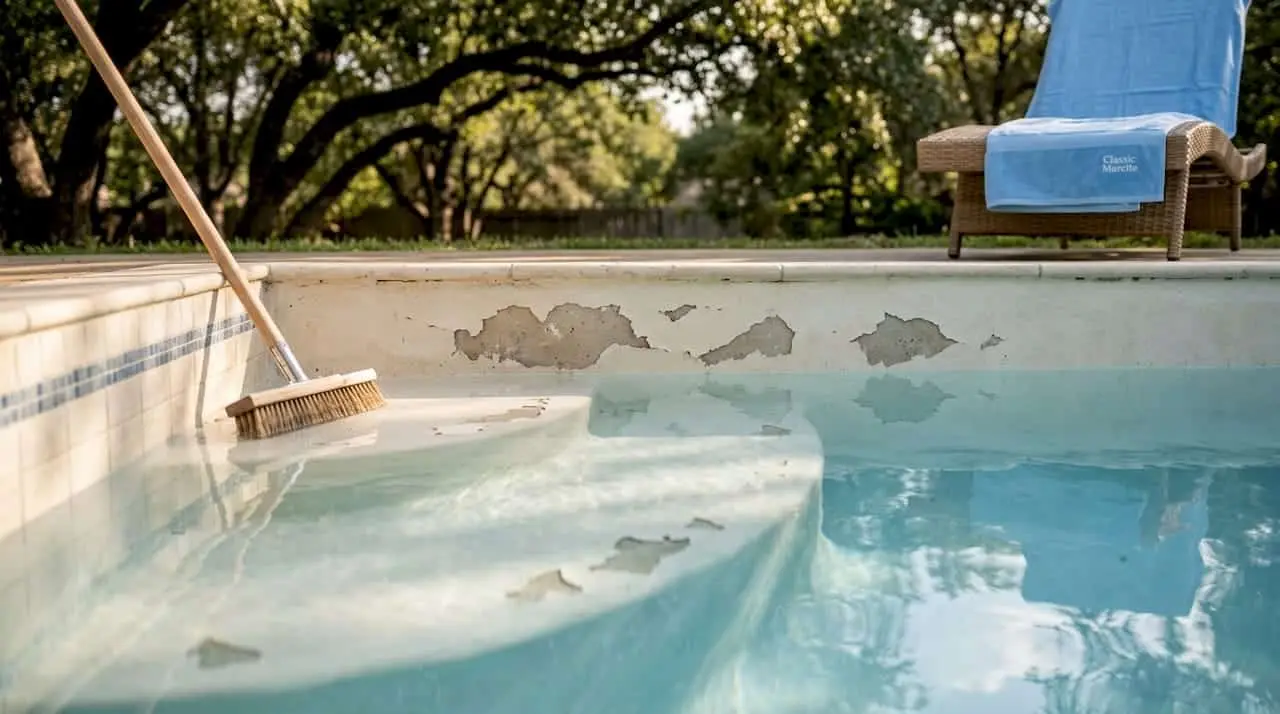
Pool chipping is defined as the visible flaking, peeling, or spalling of a pool’s interior plaster or finish, where the surface bond breaks down and exposes the rough substrate beneath. The industry terms for this condition include spalling and delamination, depending on whether the failure is surface-level or a deeper bond separation. For homeowners in Florida and across the Sun Belt, where pools face year-round chemical exposure and temperature swings, pool surface damage is one of the most common and costly maintenance issues. Understanding pool chipping explained in full, from its root causes to the best repair methods, gives you the knowledge to act before a minor flaw becomes a full replaster job.
What is pool chipping and why does it happen?
Pool chipping refers to plaster or finish surface failure where the interior finish flakes, chips, or peels away from the pool shell. The visible symptoms include rough spots underfoot, lifted or peeling areas along the walls and floor, and hollow-sounding zones when you tap the surface. These hollow sounds are the clearest early warning sign that the bond between the plaster and the shell has already started to fail. Left unaddressed, chipping spreads and creates sharp edges that cut swimmers’ feet and accelerate water loss through micro-cracks.
The condition affects both aesthetics and function. A chipped pool surface looks neglected, reduces property value, and makes routine cleaning harder because debris collects in the pitted areas. For property managers running resort or hotel pools, visible chipping signals deferred maintenance to guests and can trigger liability concerns if swimmers are injured on rough surfaces.
What causes pool chipping: chemical and environmental factors
The leading cause of pool chipping is aggressive water chemistry that etches and dissolves the cementitious material in plaster finishes. When pH drops below 7.2, calcium hardness falls below 200 ppm, or total alkalinity drops below 80 ppm, the water becomes chemically hungry and pulls minerals directly out of the plaster surface. This process is called etching, and it leaves the finish rough, porous, and structurally weakened. Over time, etched plaster loses its protective density and begins to chip.
Several specific factors accelerate this process:
- Low pH and low alkalinity. Water below pH 7.2 is corrosive to plaster. Low alkalinity makes pH unstable, so even brief dips into aggressive ranges cause cumulative damage.
- Low calcium hardness. Soft water with insufficient calcium pulls calcium carbonate directly from the plaster to satisfy its chemical demand.
- Fluctuating chemistry. Inconsistent testing and dosing create cycles of aggressive and scaling water, both of which stress the finish.
- Structural movement. Ground settlement, hydrostatic pressure from groundwater after heavy rain, and thermal expansion all create micro-cracks that allow water infiltration behind the shell.
- Natural aging. Standard white plaster has a typical lifespan of 7 to 12 years. Beyond that window, even well-maintained surfaces become brittle and prone to chipping.
- Improper maintenance. Skipping startup chemistry protocols after replastering causes immediate and irreversible surface damage during the most vulnerable period.
Pro Tip: Test your pool water at least twice per week during summer in Florida. Heat accelerates chemical consumption, and a single week of low pH can etch fresh plaster enough to shorten its lifespan by years.
Environmental factors matter as much as chemistry. Hidden moisture pressure behind the pool shell from groundwater after heavy rain pushes against the plaster from behind, breaking the bond even when the pool water chemistry is perfect. Florida’s frequent heavy rainfall makes this a particularly relevant concern for in-ground pools in low-lying areas.
What is the difference between a chip and delamination?
Delamination is a bond failure, a separation between the plaster layer and the pool shell, and it demands a completely different repair approach than a simple surface chip. A chip is localized material loss at the surface. Delamination means the plaster is still physically present but no longer bonded to the substrate beneath it. Patching a delaminated area without addressing the bond failure produces a repair that fails within months.
You can identify delamination using a simple tap test. Walk the pool perimeter with a metal rod or coin and tap the surface systematically. A solid, bonded surface produces a dense thud. A delaminated zone produces a hollow, drum-like sound. The difference is unmistakable once you have heard it.
Key signs that distinguish delamination from simple chipping:
- Hollow sounds when tapping the surface with a coin or rod
- Cracks radiating outward from a central point, often in a spider-web pattern
- Large flakes lifting away rather than small isolated chips
- Bubbling or doming of the plaster surface, visible as slight raised areas
Pro Tip: Mark delaminated zones with a grease pencil before draining the pool. The hollow areas are easier to hear when the pool is full, but harder to see once it is drained. Mapping them in advance saves time during the chip-out phase.
Poor surface preparation or inadequate bond coats on old plaster are the primary causes of delamination in repaired pools. Dusty, slick, or painted surfaces prevent strong adhesion, so any new plaster applied over them will eventually separate. This is why professional chip-out and surface prep are non-negotiable before any new finish goes down.
What are the best pool chipping techniques and removal methods?
Pool chipping techniques for removing damaged plaster fall into three main categories: pneumatic chiseling, sandblasting, and hydro-jetting. Each method has specific applications, cost profiles, and risk levels that affect which one is right for a given job.
| Method | Best For | Key Advantage | Key Risk |
|---|---|---|---|
| Pneumatic chiseling | Localized chip-out, tight areas | Low equipment cost, precise control | Can damage shell if pointed tips are used |
| Sandblasting | Full pool chip-out, even removal | Uniform surface profile, superior adhesion prep | Less widely available, higher cost |
| Hydro-jetting | Removing loose or delaminated plaster | No mechanical impact on shell | Requires specialized equipment and operator skill |
Sandblasting is the preferred method for full chip-out plaster removal because it creates a consistent surface profile that maximizes adhesion for the new finish. The limitation is availability. Few contractors own sandblasting equipment, which means it is often subcontracted and adds to project timelines. Hydro-jetting is gaining traction as an alternative because it removes weak plaster without mechanical impact on the shell, reducing the risk of substrate damage.
For pneumatic chiseling, the tool choice matters significantly. Using flat chisels rather than pointed tips during chip-out prevents excessive gouging of the pool shell and reduces the risk of creating new structural problems. Pointed chisels concentrate force and can crack the gunite or shotcrete substrate, which then requires additional repair before resurfacing. Flat chisels spread the impact and peel plaster away more cleanly.
The goal of any chip-out method is complete removal of all weak, delaminated, or contaminated plaster. Leaving compromised material behind and plastering over it is the single most common cause of premature finish failure. A new finish applied to a properly chipped and prepped surface will bond correctly and deliver its full expected lifespan.
How to repair and prevent pool chipping
Repair options range from temporary spot patches to full chip-out and resurfacing, and the right choice depends on the extent and type of damage.
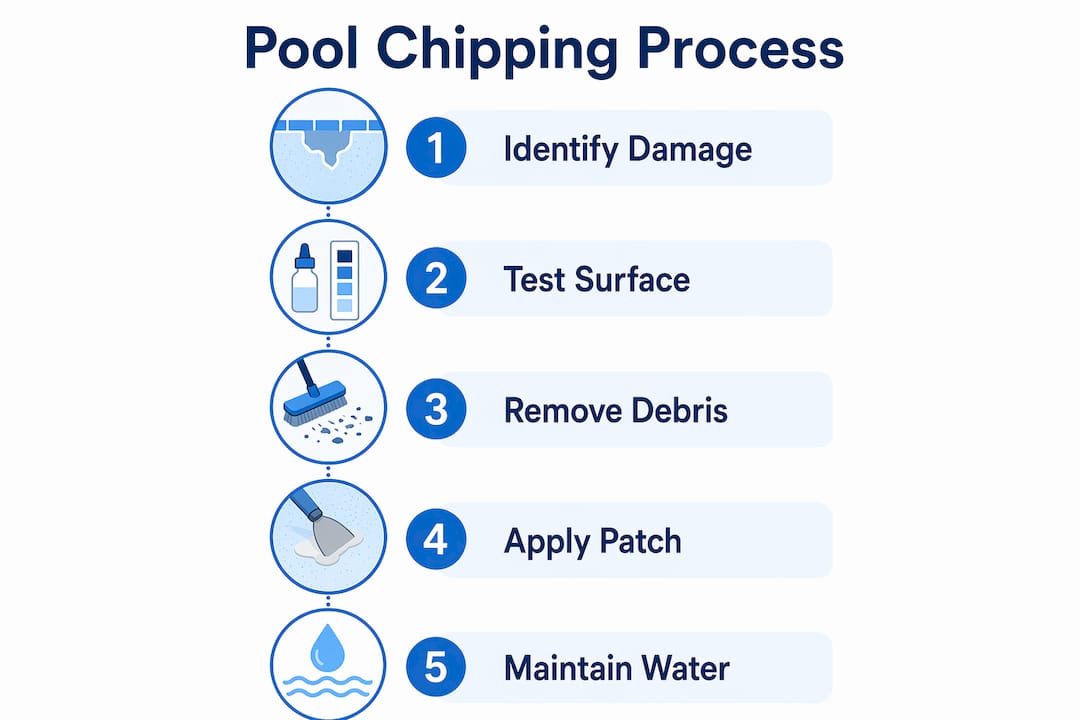
- Assess the damage type first. Use the tap test to map all delaminated zones. If delamination covers more than 20 to 30 percent of the surface, spot patching is not a cost-effective solution. Full resurfacing delivers better long-term value.
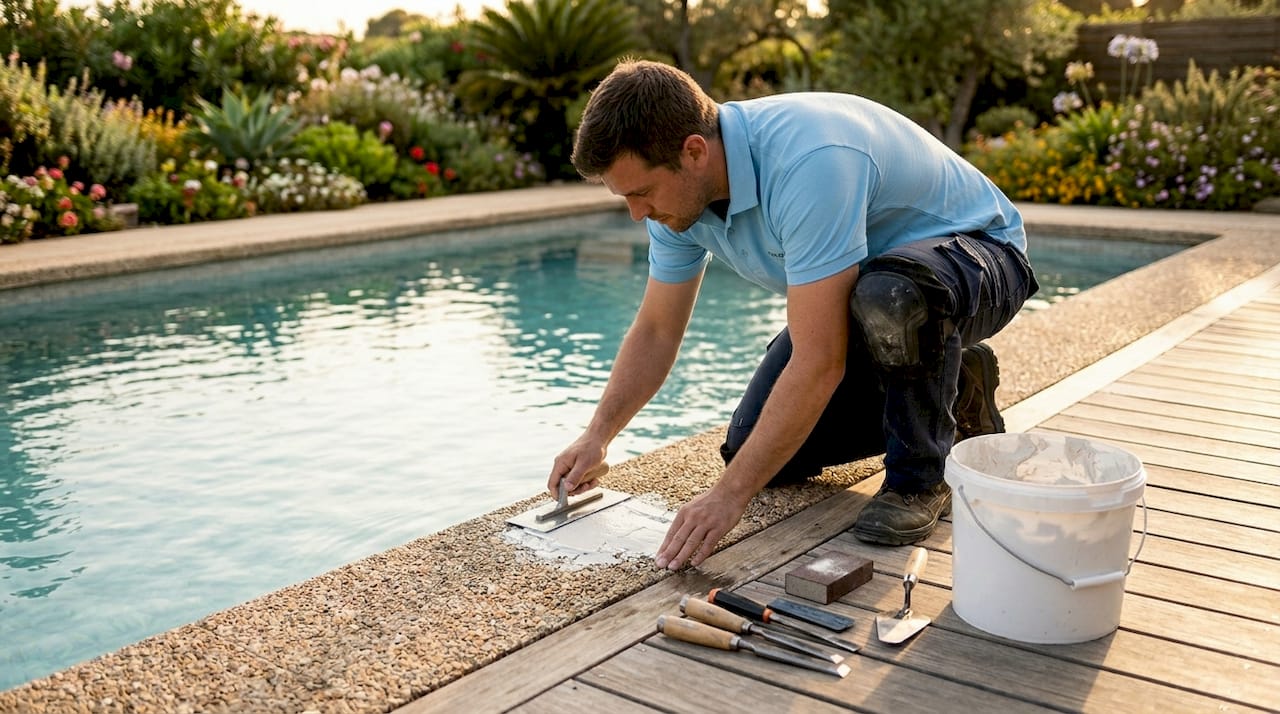
- Apply temporary patches for isolated chips. Pool plaster patch compounds like those from Quikrete or hydraulic cement can fill small isolated chips and buy time until a full resurface is scheduled. These patches are not permanent and will not match the surrounding finish color over time.
- Schedule full chip-out and replastering for widespread damage. Permanent repair requires full chip-out and replastering or resurfacing the entire pool interior. Sandblasting the old finish, cleaning the substrate, and applying a new finish layer is the only method that addresses bond failures at their source.
- Balance water chemistry immediately after replastering. Fresh plaster requires tight pH and LSI control during its first 30 days. Etching occurs if pH drops below 7.2 or the Langelier Saturation Index goes negative. Scaling happens above pH 7.8. Both conditions cause irreversible surface damage during the startup window.
- Establish a regular testing and dosing schedule. Test pH, alkalinity, calcium hardness, and cyanuric acid at least twice per week. Use a digital test kit like the Taylor K-2006 or submit monthly samples to a pool supply lab for full analysis.
- Schedule annual professional inspections. A trained technician can identify early-stage delamination and chemistry imbalances before they become structural problems. Catching issues at the chip stage costs far less than addressing full delamination.
Pro Tip: After replastering, brush the pool surface twice daily for the first two weeks. This removes plaster dust, prevents calcium nodule formation, and helps the finish cure evenly. Skipping this step is one of the most common causes of premature surface roughness.
Repeated spot repairs without full chip-out create a recurring cycle of chipping and peeling because the underlying bond failures are never resolved. The patch material bonds to compromised plaster, not to the shell, and eventually fails along the same fault lines. Full chip-out breaks this cycle permanently.
For ongoing prevention, maintaining pool finish durability requires consistent water balance, prompt attention to any visible surface changes, and understanding that pool finishes have finite lifespans regardless of how well they are maintained.
Comparing pool finish materials for durability and chip resistance
Full chip-out and resurfacing extends pool longevity and provides a smoother surface, but the finish material you choose determines how long the new surface lasts and how much maintenance it requires.
| Finish Type | Expected Lifespan | Chip Resistance | Maintenance Level | Relative Cost |
|---|---|---|---|---|
| Standard white plaster | 7 to 12 years | Low | High | Lowest |
| Quartz aggregate | 12 to 15 years | Medium-high | Medium | Moderate |
| Pebble Tec® or pebble aggregate | 15 to 25 years | Highest | Low to medium | Higher |
| Glass tile | 25 or more years | Highest | Low | Highest |
Standard white plaster remains the most affordable option but requires the most diligent water chemistry management to reach its expected lifespan. Quartz aggregate finishes like SGM Jewels of the Sea or Pebble Tec® Quartz add crushed quartz to the plaster mix, which increases surface hardness and resistance to chemical etching. Pebble aggregate finishes, including Pebble Tec® and Pebble Sheen, are the most chip-resistant options available for residential pools and carry the longest warranties in the industry. For commercial properties like resorts and hotels, the higher upfront cost of pebble finishes is offset by reduced replastering frequency and lower long-term maintenance costs. Classicmarcite is the largest Pebble Tec® applicator in Central Florida, which means their crews apply this finish daily and have the technique dialed in at a level that most general contractors cannot match.
Key takeaways
Pool chipping is a preventable and repairable condition, but only when the root cause, whether chemistry, bond failure, or age, is correctly identified and fully addressed before any new finish is applied.
| Point | Details |
|---|---|
| Define the damage type | Use the tap test to distinguish surface chips from delamination before choosing a repair method. |
| Chemistry is the primary cause | Low pH, low calcium hardness, and low alkalinity etch plaster and accelerate chipping over time. |
| Spot patches have limits | Temporary patches fail if underlying bond issues are not resolved through full chip-out. |
| Sandblasting outperforms chiseling | Sandblasting creates a superior surface profile for new finish adhesion but requires specialized contractors. |
| Pebble finishes last longest | Pebble Tec® and quartz aggregate finishes resist chipping far longer than standard white plaster. |
Why I always recommend starting with a tap test
After working with pools across Florida for years, the single most consistent mistake I see homeowners and even some contractors make is treating pool chipping as a cosmetic problem. They patch the visible chips, refill the pool, and consider the job done. Six months later, the same areas are chipping again, often worse than before.
The tap test changes everything. It takes five minutes and tells you whether you are dealing with a surface issue or a structural bond failure. Those are two completely different problems with two completely different price tags. A surface chip on a well-bonded plaster finish can be patched and monitored. Delamination covering 40 percent of the floor means you are replastering, period.
Water chemistry discipline is the other half of the equation. I have seen brand-new plaster surfaces develop rough, chalky textures within 60 days of installation because the startup chemistry was not managed correctly. The plaster startup window is the most critical period in a finish’s entire lifespan, and most homeowners do not know it exists. Investing in a quality finish like Pebble Tec® and then ignoring chemistry is like buying a new car and skipping oil changes. The material can only do so much if the environment works against it.
My honest recommendation: get a professional inspection before you spend a dollar on patches. Know what you are actually dealing with. Then make the repair decision from a position of information, not guesswork.
— Classicmarcite
Fix pool chipping with professional resurfacing
When pool chipping has progressed beyond what a patch can address, Classicmarcite delivers complete chip-out and resurfacing services backed by over 35 years of experience and more than 100,000 pools resurfaced across Florida.

Classicmarcite’s crews specialize in thorough surface preparation, including sandblasting and full delamination removal, before applying premium finishes like Pebble Tec®, quartz aggregate, and standard plaster. As the largest Pebble Tec® applicator in Central Florida, Classic Marcite brings material expertise and installation precision that general contractors cannot replicate. Whether you manage a single residential pool or a commercial property with multiple pools, explore professional pool resurfacing options or contact Classicmarcite directly for a free estimate and inspection through their resurfacing services page.
FAQ
What is pool chipping in simple terms?
Pool chipping is when a pool’s interior plaster or finish begins to flake, peel, or break away from the surface. It is caused by chemical imbalances, bond failures, or natural aging of the finish material.
How do I know if my pool has delamination or just chips?
Tap the surface with a coin or metal rod. A hollow, drum-like sound indicates delamination, where the plaster has separated from the shell. A solid thud means the plaster is still bonded and you are likely dealing with surface chips only.
Can I patch pool chipping myself?
Small, isolated chips can be temporarily filled with hydraulic cement or a pool plaster patch compound. However, spot patching is a stop-gap and will not resolve underlying bond failures. Widespread chipping or delamination requires professional chip-out and resurfacing.
What pool finish lasts the longest and resists chipping best?
Pebble aggregate finishes like Pebble Tec® offer the highest chip resistance and the longest lifespan, typically 15 to 25 years. Standard white plaster lasts 7 to 12 years and requires more rigorous chemistry management to reach that range.
How does water chemistry cause pool chipping?
Water outside balanced ranges dissolves cementitious material from the plaster surface through a process called etching. Low pH, low calcium hardness, and low alkalinity are the three most common chemistry conditions that accelerate plaster deterioration and chipping.
