TL;DR:
- Pool resurfacing restores a pool’s interior surface, sealing early damage to extend its lifespan and maintain appeal.
- Timely resurfacing, especially before 30% degradation, can add 8 to 15 years of functional life at a significantly lower cost than full replacement.
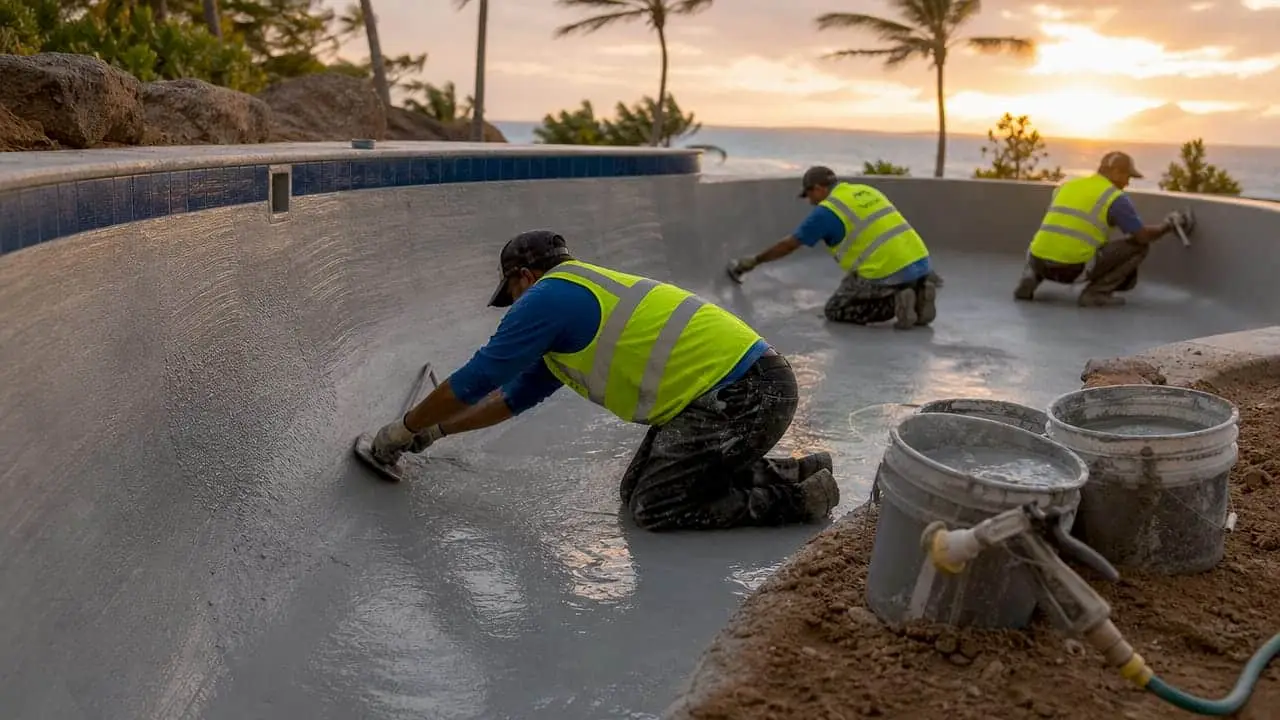
Pool resurfacing is defined as the renewal of a pool’s interior surface layer to restore structural integrity, extend usable life, and maintain visual appeal. The role of resurfacing in longevity is direct: it seals early surface damage before water intrusion reaches the shell, preventing the kind of deep structural failure that forces full reconstruction. For homeowners and property managers in Florida, where UV exposure, chemical demand, and year-round use accelerate surface wear, resurfacing is not a cosmetic upgrade. It is the primary maintenance strategy that separates a pool lasting 10 years from one lasting 30.
How does resurfacing affect the aging and longevity of pools?
Pool surfaces age through a predictable sequence. First, the finish loses its smooth texture and becomes porous. Then water penetrates the surface layer, reaching the gunite or concrete shell beneath. Once water reaches the shell, freeze-thaw cycles, chemical imbalance, and hydrostatic pressure begin eroding the base. At that point, resurfacing alone cannot fix the problem. The window for cost-effective intervention closes.
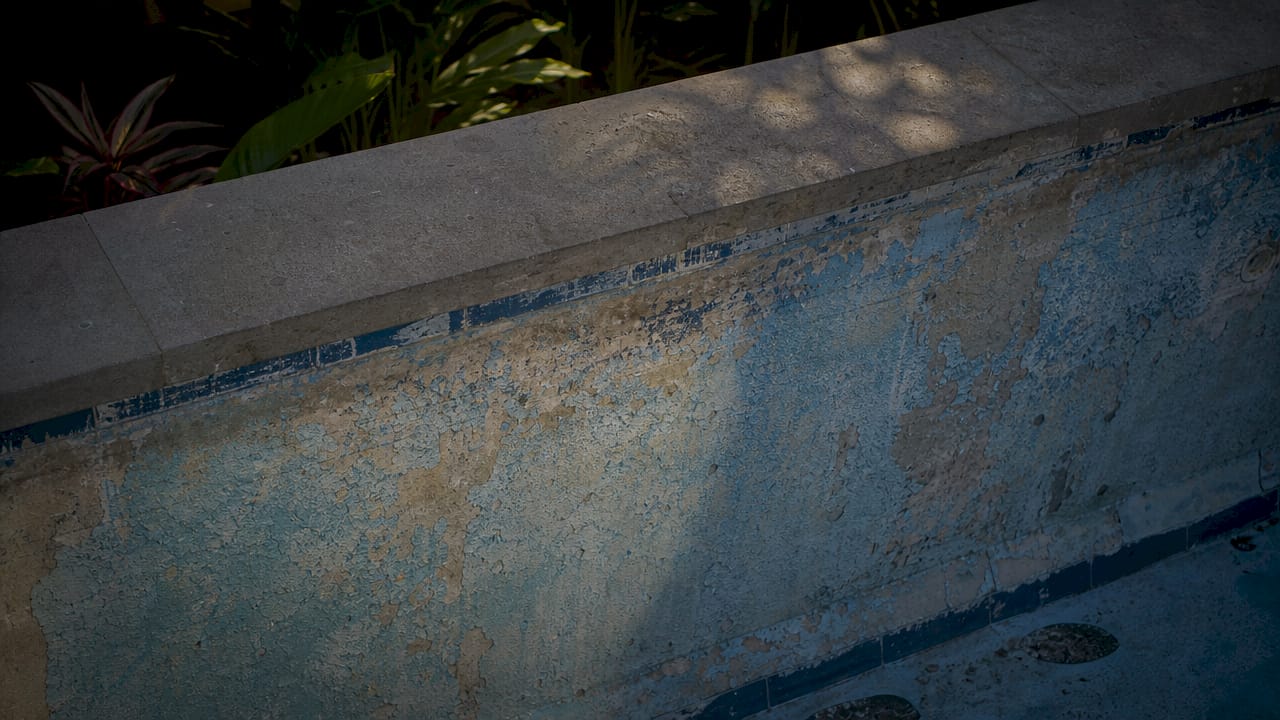
Resurfacing interrupts this sequence at the earliest stage. By applying a fresh bonded layer over the existing surface, it seals micro-cracks and porous zones before water finds a path inward. The analogy to biological renewal is useful here: ablative resurfacing stimulates collagen maturation over 12 months, producing structural improvements that last 3 to 5 years. In pools, the mechanism is physical rather than biological, but the principle holds. A fresh surface layer restores the barrier function that the original finish provided.
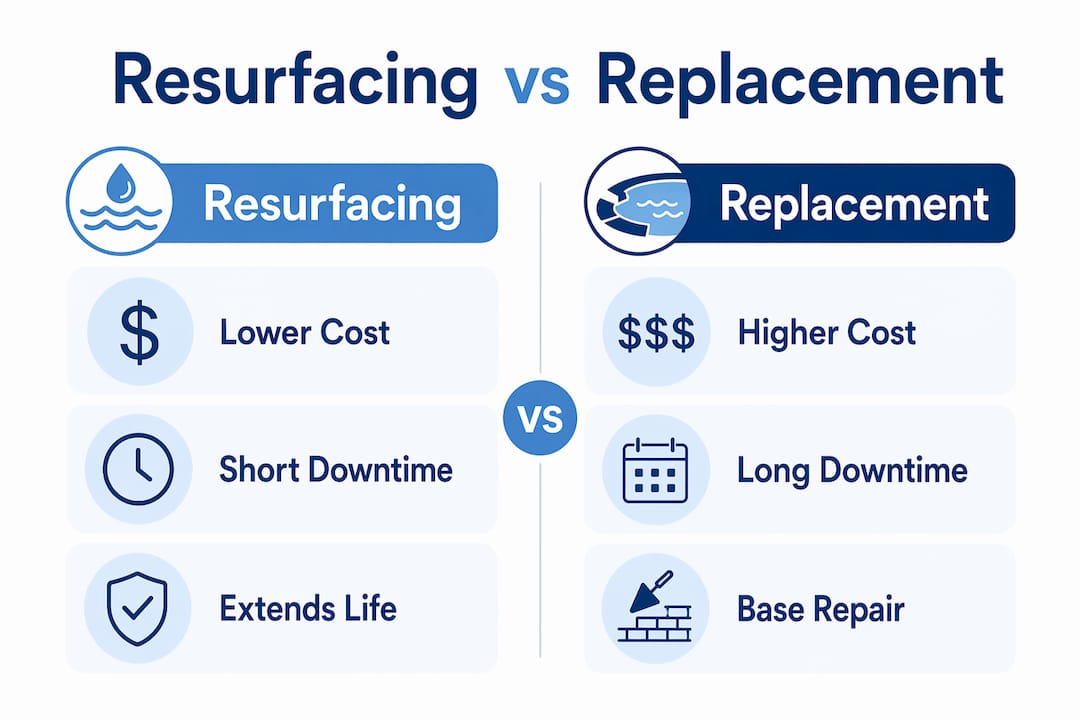
The lifespan numbers are concrete. Timely resurfacing extends functional life by 8 to 15 years when the structural base remains intact. That range means a pool resurfaced at year 10 can realistically reach year 25 before requiring major structural work. The cost comparison is equally clear: resurfacing runs approximately $1.50 to $3.00 per square foot, versus $5.00 to $7.00 per square foot for full replacement. That is a cost reduction of 40 to 60%, which on a standard residential pool translates to thousands of dollars saved in a single decision.
Downtime is the other factor property managers weigh carefully. Resurfacing completes in 24 to 48 hours versus 5 to 7 days for full reconstruction. For a hotel pool or community facility, that difference is the gap between a minor scheduling adjustment and a week of lost revenue.
| Factor | Resurfacing | Full Replacement |
|---|---|---|
| Cost per square foot | $1.50 to $3.00 | $5.00 to $7.00 |
| Downtime | 24 to 48 hours | 5 to 7 days |
| Lifespan extension | 8 to 15 years | Full reset |
| Best suited for | Intact structural base | Compromised shell |
Pro Tip: Before scheduling resurfacing, have a professional assess the base integrity through visual inspection and, if needed, core sampling. Resurfacing over a compromised shell produces poor results regardless of the material used.
When is the right time to resurface for maximum lifespan?
Timing is where most homeowners make the costliest mistake. They wait until the problem is obvious, which usually means the damage has already crossed the threshold where simple resurfacing solves it. Visible degradation beyond 30% shifts the repair from a 1 to 2 day resurfacing job to a 5 to 7 day rebuild. That is not a gradual cost increase. It is a category change.
The signs that resurfacing is needed, but still viable, are specific:
- Rough or sandpaper texture on the pool floor or walls, which indicates the finish has worn through its protective layer
- Visible staining that does not respond to chemical treatment, signaling that the surface has become porous and is absorbing minerals
- Small surface cracks or crazing, which are networks of fine lines across the finish that allow water to seep beneath
- Plaster nodules or blistering, which occur when water gets under the surface and pushes it outward
- Fading or discoloration that affects the pool’s appearance and signals UV and chemical breakdown of the finish
You can find a detailed breakdown of these warning signs at signs of pool surface damage to help you assess where your pool currently stands.
The infrastructure principle known as the “15-year rule” applies directly to pools. Resurfacing before base degradation exceeds 25% prevents cost increases of up to 300%. For a residential pool, that means acting on the early warning signs above rather than waiting for structural failure. Most pool finishes in Florida require resurfacing every 10 to 15 years under normal use, though high-bather-load commercial pools may need attention sooner.
Pro Tip: Schedule a professional surface assessment every 5 years, even if the pool looks fine. Surface integrity issues are often invisible until they are expensive.
Resurfacing vs. full replacement: what actually makes sense?
The decision between resurfacing and full replacement comes down to one variable: the condition of the structural base. When the shell is sound, resurfacing delivers 40 to 60% cost savings with comparable durability outcomes. When the shell is compromised, resurfacing is a short-term fix that delays an inevitable rebuild.
| Consideration | Resurfacing | Full Replacement |
|---|---|---|
| Structural base condition | Intact, minor surface wear | Cracked, shifted, or compromised |
| Cost efficiency | High, 40 to 60% cheaper | Lower, full material and labor cost |
| Aesthetic outcome | Significant improvement | Complete transformation |
| Post-work maintenance | Standard chemical balance | Same, with new warranty period |
| Realistic lifespan added | 8 to 15 years | 20 to 30 years from scratch |
One nuance that rarely gets discussed: proper maintenance after resurfacing influences longevity more than the resurfacing method alone. A premium finish applied to a well-maintained pool will outlast the same finish on a pool with chronic chemical imbalance. The resurfacing investment only pays off when the follow-on maintenance is consistent.
Resurfacing also has a clear limitation that professionals are direct about. Resurfacing acts as a surface treatment and cannot compensate for deep structural failure. If the gunite shell has shifted, cracked through its full depth, or shows signs of rebar corrosion, no surface material will hold long-term. A base integrity assessment before committing to resurfacing is not optional. It is the step that determines whether you are making a sound investment or delaying a larger expense.
How do resurfacing materials affect durability and appearance?
The material you choose for resurfacing determines both how long the surface lasts and how the pool looks and feels during that time. Florida pools face specific demands: intense UV exposure, high chemical consumption, and frequent use. Not every finish performs equally under those conditions.
The most common options, ranked by durability, are:
- Marcite (white plaster): The standard entry-level finish, typically lasting 7 to 10 years. It is smooth, affordable, and easy to apply, but it is the most porous of the common options and requires careful chemical management to avoid staining and etching.
- Quartz aggregate finishes: A mid-tier option that blends plaster with quartz crystals, extending lifespan to 12 to 15 years. The added hardness resists staining and chemical erosion better than plain marcite.
- Pebble finishes (including Pebble Tec®): The premium category. Pebble Tec can last up to 25 years under ideal conditions, making it the highest-longevity option available for residential and commercial pools. The exposed aggregate surface is slip-resistant, stain-resistant, and visually distinctive.
The material choice also affects post-resurfacing maintenance requirements. Pebble finishes are more forgiving of minor chemical fluctuations than marcite, which means lower maintenance burden over time. For property managers overseeing multiple pools, that difference in day-to-day upkeep adds up significantly over a 10-year period.
One technical point that applies to all materials: resurfacing without correcting drainage issues risks accelerated failure from water pooling and binder erosion. Proper slope and drainage corrections during the resurfacing process are not optional extras. They are structural prerequisites for the new surface to perform as expected. Classicmarcite addresses this as part of every resurfacing project, which is one reason the company’s work across more than 100,000 pools holds up over time.
For a detailed look at how to choose between these options, the guide on pool resurfacing materials covers the trade-offs clearly.
Key takeaways
Resurfacing extends pool life by 8 to 15 years at 40 to 60% of replacement cost, but only when the structural base is intact and post-resurfacing maintenance is consistent.
| Point | Details |
|---|---|
| Act before 30% degradation | Waiting past visible 30% damage converts a resurfacing job into a full rebuild. |
| Cost advantage is significant | Resurfacing costs $1.50 to $3.00 per square foot versus $5.00 to $7.00 for replacement. |
| Material choice drives lifespan | Pebble Tec lasts up to 25 years; marcite averages 7 to 10 years under similar conditions. |
| Maintenance determines outcome | Post-resurfacing chemical balance and upkeep influence longevity more than material alone. |
| Base integrity is non-negotiable | Resurfacing over a compromised shell produces short-term results regardless of finish quality. |
Why resurfacing is a decision, not a reaction
Most homeowners treat resurfacing as something they do when the pool looks bad. That framing is the source of most avoidable pool repair costs. Planned resurfacing reduces lifecycle costs and disruption far more than reactive repairs do. The pools that last 25 to 30 years without major structural work are almost always the ones where the owner resurfaced on schedule, not in response to a crisis.
The other mistake I see consistently is choosing a material based on upfront cost alone. Marcite is cheaper to apply, but if it needs replacement every 8 years while a pebble finish lasts 20, the math reverses quickly. The total cost of ownership over a 20-year period almost always favors the premium finish, especially when you factor in the labor and downtime of an additional resurfacing cycle.
The third pitfall is skipping the base assessment. A professional who recommends resurfacing without first evaluating the shell condition is not doing you a favor. The assessment takes an hour and can save you from spending $3,000 on a surface that fails in two years because the underlying structure was never sound.
Resurfacing done right is a planned, assessed, material-specific decision. It is the difference between a pool that costs you money every decade and one that holds its value and function for a generation.
— Classicmarcite
Professional pool resurfacing from Classicmarcite
Classic Marcite has resurfaced more than 100,000 pools across Orlando, Jacksonville, and beyond since 1988. The company is the largest Pebble Tec® applicator in Central Florida, which means access to the highest-durability finish available at competitive pricing.

Whether your pool shows early signs of wear or you are planning ahead to protect your investment, Classicmarcite provides free estimates and professional surface assessments before any work begins. From residential pools in Winter Park to commercial facilities across Florida, the team delivers resurfacing that lasts. Explore the full range of pool resurfacing services or get a quote for your specific location, including pool resurfacing in The Villages and surrounding Central Florida communities.
FAQ
How long does pool resurfacing extend a pool’s life?
Timely resurfacing extends a pool’s functional lifespan by 8 to 15 years when the structural base is intact. The exact range depends on the material chosen and how consistently the pool is maintained after resurfacing.
What are the early signs that a pool needs resurfacing?
Rough texture, persistent staining, surface crazing, and blistering are the primary indicators. Acting on these signs before visible degradation exceeds 30% keeps the repair in the resurfacing category rather than full reconstruction.
Is Pebble Tec worth the higher cost for longevity?
Pebble Tec lasts up to 25 years under ideal conditions, compared to 7 to 10 years for standard marcite. Over a 20-year ownership period, the higher upfront cost is typically offset by avoiding one or two additional resurfacing cycles.
Can resurfacing fix structural cracks in a pool?
Resurfacing addresses surface-level damage and seals minor cracks, but it cannot repair deep structural failure in the gunite or concrete shell. A base integrity assessment before resurfacing determines whether the surface treatment will hold long-term.
How often should Florida pools be resurfaced?
Most Florida residential pools need resurfacing every 10 to 15 years under normal use. High-bather-load commercial pools may require attention sooner due to accelerated chemical and physical wear.
