TL;DR:
- A pool shell is the permanent structural body that holds water and withstands ground forces. Concrete, fiberglass, and vinyl systems each offer different durability, costs, and installation timelines, impacting long-term maintenance and lifespan. Choosing the appropriate shell type based on site conditions and budget is essential for ensuring pool longevity and performance.
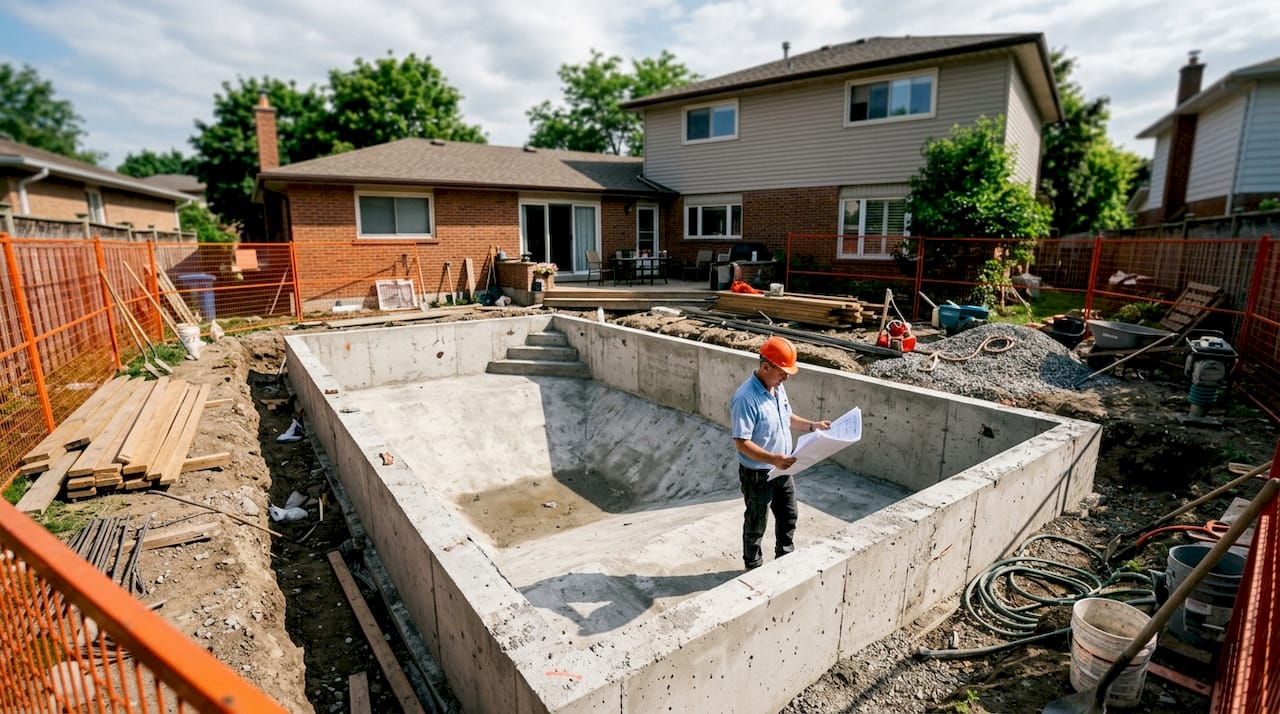
A pool shell is defined as the permanent, water-holding structural body of an inground pool, excluding surface finishes, coping, and decking. Think of it as the skeleton of your pool. It resists hydrostatic pressure, ground movement, and soil shifts to keep the basin intact for decades. The three main pool shell materials are concrete, fiberglass, and vinyl liner systems. Each carries different costs, timelines, and long-term maintenance demands. Understanding what a pool shell is before you build or renovate saves you from expensive surprises down the road.
What is a pool shell and what are its main types?
The pool shell definition covers the structural basin that gives a pool its shape and holds water under pressure. Industry professionals use the term “pool shell” to describe this load-bearing structure, distinct from the interior finish applied on top of it. The shell must handle the weight of thousands of gallons of water plus the lateral pressure of surrounding soil. Get this structure wrong and no surface finish will save you.
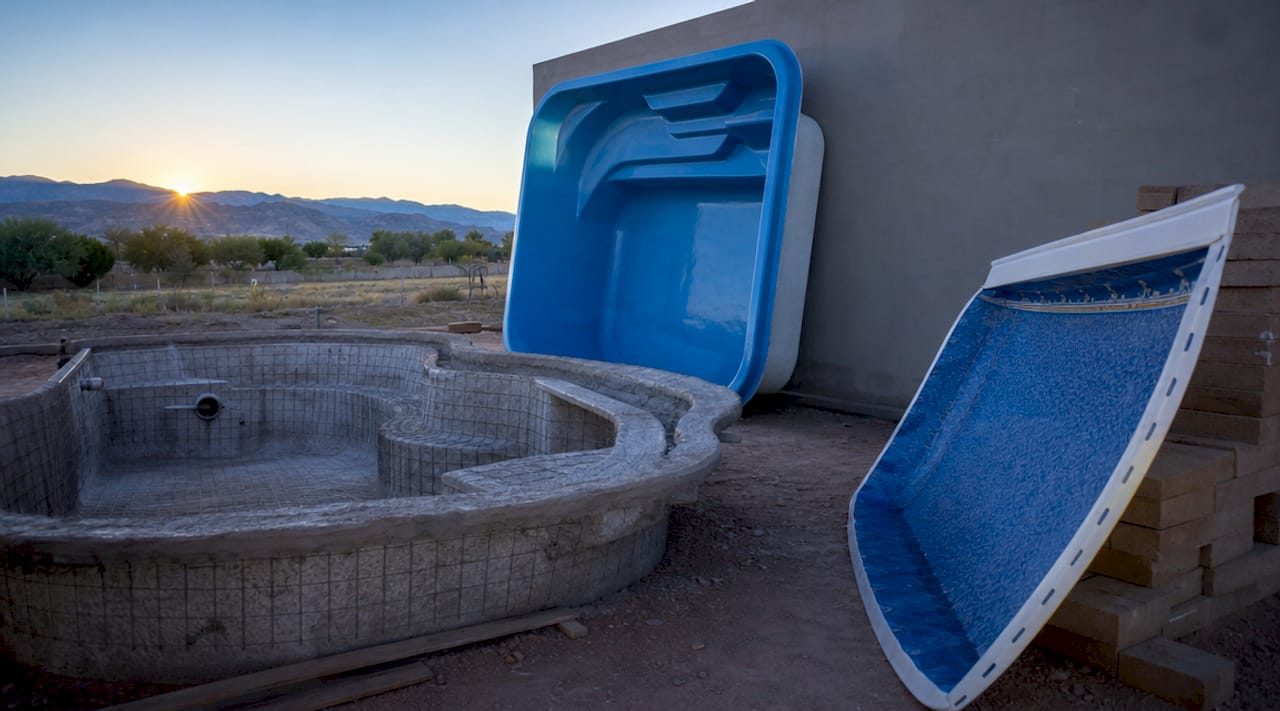
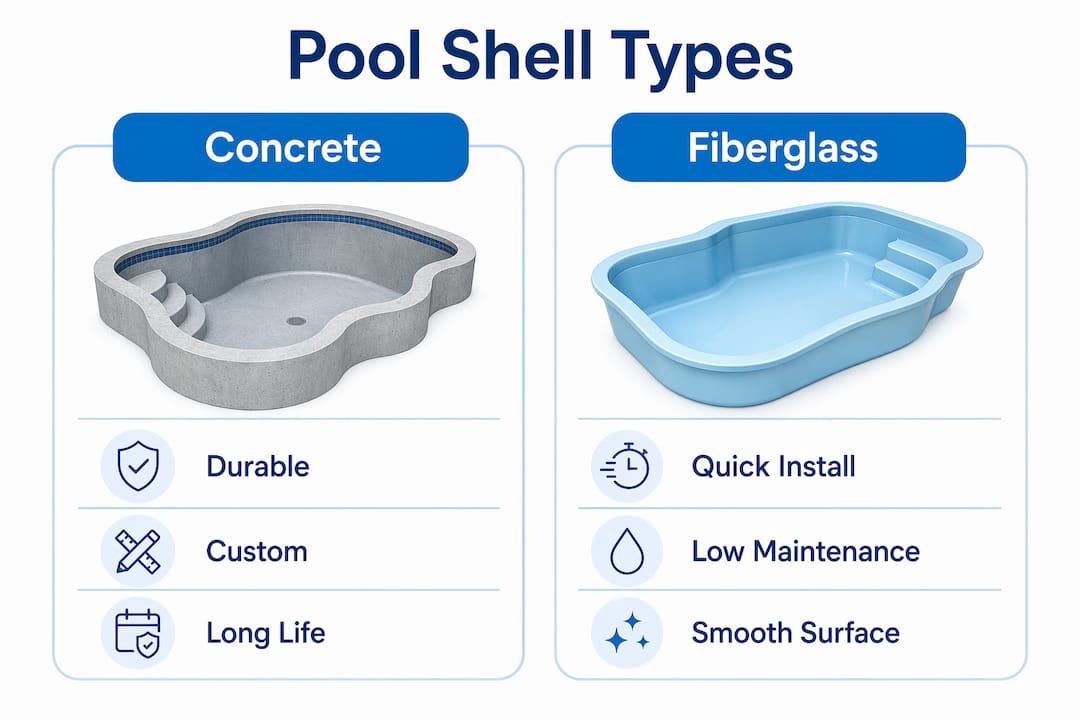
Three primary construction methods exist for residential and commercial pools: concrete (gunite or shotcrete), fiberglass, and vinyl liner systems. Each method produces a structurally different result with its own performance profile.
Concrete pool shells
Concrete shells are built by spraying gunite or shotcrete over a steel rebar cage, forming a monolithic basin. This method allows unlimited design freedom. You can build any shape, depth, or configuration your site requires. Concrete shells are considered permanent installations and can last 50 or more years with proper care.
Fiberglass pool shells
Fiberglass shells are factory-manufactured as a single unit and delivered to the job site by truck. The shell is built from multiple resin and fiberglass layers, starting with a gelcoat interior that determines surface appearance and chemical resistance. The gelcoat is the first defense against water infiltration and algae growth. Fiberglass shells carry structural warranties of 25–30 years.
Vinyl liner systems
Vinyl liner pools use a steel, plastic, or foam frame as the structural support, with a vinyl liner stretched over it to hold water. Vinyl liner pools lack a permanent structural shell comparable to concrete or fiberglass. The liner itself needs replacement every 7–10 years, which adds recurring costs. This system is the most budget-friendly to build but the least permanent structurally.
| Shell Type | Core Material | Structural Permanence |
|---|---|---|
| Concrete | Gunite or shotcrete over rebar | Permanent, 50+ years |
| Fiberglass | Resin and fiberglass layers with gelcoat | Permanent, 25–30 year warranty |
| Vinyl Liner | Steel/plastic/foam frame with liner | Non-permanent, liner replaced every 7–10 years |
How do pool shell types compare in cost, installation, and durability?
Cost and timeline are the two factors that most often drive the final decision on pool shell type. Knowing the numbers upfront prevents budget overruns and scheduling conflicts.
Concrete pools cost between $50,000 and $120,000 and take 8–12 weeks to complete. That timeline reflects the complexity of forming, spraying, and curing a custom structure. The payoff is a pool that can be shaped to any specification and will outlast most other residential structures on your property.
Fiberglass pools run $40,000–$80,000 and install in just 1–2 weeks. That speed comes from the factory-built shell arriving ready to drop into an excavated hole. The tradeoff is size. Fiberglass shells are limited to roughly 16 feet wide by 40 feet long due to road transport restrictions. If your project requires a larger or uniquely shaped pool, fiberglass is not the right fit.
Vinyl liner pools cost $35,000–$65,000 and take 2–4 weeks to install. They are the most accessible entry point for homeowners on a tighter budget. However, liner replacement every 7–10 years adds recurring costs that close the price gap with fiberglass over time.
| Shell Type | Cost Range | Install Time | Lifespan |
|---|---|---|---|
| Concrete | $50,000–$120,000 | 8–12 weeks | 50+ years |
| Fiberglass | $40,000–$80,000 | 1–2 weeks | 25–30 years (warranty) |
| Vinyl Liner | $35,000–$65,000 | 2–4 weeks | Frame permanent, liner 7–10 years |
Maintenance costs also differ significantly. Fiberglass pools reduce chemical use by 40–50% compared to concrete because the non-porous gelcoat resists algae. Concrete pools require resurfacing every 10–15 years, which adds thousands of dollars to the long-term ownership cost. Factoring in those recurring expenses changes the true cost comparison considerably.
Pro Tip: When comparing pool shell costs, calculate the 20-year total cost of ownership, not just the build price. Include resurfacing, liner replacements, and chemical costs to get an accurate picture.
What are the real benefits and limitations of each pool shell?
Each pool shell type delivers specific advantages. The right choice depends on your priorities, not on which shell is objectively “best.”
Concrete shell benefits:
- Unlimited design freedom for custom shapes, depths, and features
- Longest lifespan of any shell type at 50 or more years
- Supports complex water features, beach entries, and vanishing edges
- Works on any lot size or configuration
Concrete shell limitations:
- Highest upfront cost and longest build timeline
- Requires resurfacing every 10–15 years
- Porous surface demands more chemical treatment
Fiberglass shell benefits:
- Fastest installation at 1–2 weeks
- Non-porous gelcoat reduces algae and chemical costs
- Smooth surface is gentler on swimmers
- Low ongoing maintenance compared to concrete
Fiberglass shell limitations:
- Size and shape are fixed at the factory
- Transport limits cap width at 16 feet
- Cannot be customized after manufacture
Vinyl liner limitations worth noting:
- The liner is not a structural shell. The frame carries the load.
- Liner punctures and tears require prompt repair or full replacement
- Long-term costs rise with each liner replacement cycle
For Florida homeowners weighing these tradeoffs, the vinyl vs. concrete comparison is particularly relevant given the state’s high water table and soil conditions.
Pro Tip: If you want a pool finished in under a month and plan to use it heavily, fiberglass is the practical choice. If you want a pool that fits a specific backyard layout or includes custom features, concrete is worth the longer timeline.
What are key steps in pool shell installation and maintenance?
Installation quality determines how long any pool shell performs. Cutting corners during construction creates problems that surface finishes cannot hide.
- Excavation and site preparation. The hole must be dug to precise dimensions with proper drainage provisions. Poor drainage causes hydrostatic pressure to build under the shell, which can crack concrete or pop a fiberglass shell out of the ground.
- Rebar cage construction (concrete only). Steel rebar is tied into a grid that matches the pool’s shape. This cage becomes the skeleton the concrete bonds to. Spacing and coverage must meet structural specifications.
- Gunite or shotcrete application (concrete only). Concrete is sprayed at high pressure over the rebar cage. The result is a dense, monolithic basin. Thickness must be consistent throughout.
- Curing period (concrete only). Concrete requires about 28 days to reach full strength. Rushing this phase risks structural failure. Cracks that appear later often trace back to inadequate curing time.
- Fiberglass shell placement. The factory-built shell is craned or lifted into the excavated hole. Backfill material is added in stages while the shell is filled with water simultaneously. This balances pressure on both sides of the shell wall.
- Gelcoat and resin quality check (fiberglass). The gelcoat and resin layers must be inspected before installation. Thin or inconsistent layers allow water infiltration and osmotic blistering over time. Ask your installer for the shell manufacturer’s quality documentation.
- Surface finish application. Once the shell is in place and cured, the interior finish is applied. This is where materials like Pebble Tec®, plaster, or tile come in. The finish protects the shell and defines the pool’s appearance.
Ongoing maintenance differs by shell type. Fiberglass shells need less chemical intervention due to their non-porous surface. Concrete shells need acid washing and resurfacing on a regular schedule. Proper pool maintenance after resurfacing extends the life of both the finish and the underlying shell. Neglecting either shortens the pool’s functional lifespan considerably. Consistent water chemistry management protects all three shell types from premature deterioration.
The shell decision is more consequential than most buyers realize
Most homeowners spend more time choosing tile colors than evaluating their pool shell type. That is a mistake. The shell is the one component you cannot easily change after construction. Every other decision, including the finish, the coping, and the equipment, sits on top of it.
My honest assessment after seeing thousands of pools: fiberglass wins on convenience and fiberglass pools are genuinely easier to own. But convenience is not the only variable. Florida’s soil conditions, high water tables, and intense UV exposure create a specific environment that affects all three shell types differently. A fiberglass shell in a poorly drained lot can pop. A concrete shell with a rushed cure will crack. A vinyl liner in direct Florida sun degrades faster than the manufacturer’s estimate.
The builders and renovators who produce the best long-term results are the ones who match the shell type to the site conditions first, then to the homeowner’s preferences. Speed and budget matter. They should not be the only factors. If you are renovating an existing concrete pool, the shell is likely sound. The surface finish is what needs attention. That distinction matters because it changes the scope and cost of the project entirely.
Choosing professional pool services for installation and ongoing care is not optional if you want the shell to perform at its rated lifespan. The difference between a 50-year concrete pool and a 20-year concrete pool is almost always the quality of installation and the consistency of maintenance.
— Results
Protect your pool shell with professional resurfacing
A pool shell is only as good as the surface protecting it. Once the interior finish wears down, water penetrates the shell and accelerates structural damage. Classicmarcite has resurfaced over 100,000 pools across Florida since 1988, working with residential homeowners, commercial properties, and resort facilities. As the largest Pebble Tec® applicator in Central Florida, Classicmarcite applies premium finishes that extend the life of concrete and fiberglass shells for decades.

Whether your pool needs a full renovation or a targeted resurfacing service to restore its structural integrity and appearance, Classic Marcite offers free estimates for projects across Orlando, Jacksonville, and surrounding Florida communities. Contact Classicmarcite today to protect the investment you have already made in your pool shell.
FAQ
What is a pool shell exactly?
A pool shell is the foundational structural body of an inground pool that holds water and resists hydrostatic pressure and ground movement. It excludes surface finishes, coping, and decking.
How long does a pool shell last?
Concrete shells last 50 or more years with proper maintenance, while fiberglass shells carry 25–30 year structural warranties. Vinyl liner frames are durable, but the liner itself requires replacement every 7–10 years.
What is a fiberglass pool shell made of?
A fiberglass pool shell is built from multiple layers of resin and fiberglass, starting with a gelcoat interior. The gelcoat and resin layers prevent water infiltration and resist algae growth over the shell’s lifespan.
Can a pool shell be repaired without full replacement?
Concrete shells can be repaired through patching, crack injection, and resurfacing. Fiberglass shells can be repaired with resin patches for minor damage. Full shell replacement is rarely necessary unless structural failure has occurred.
What is the difference between a pool shell and a pool liner?
A pool shell is the structural basin itself, made from concrete or fiberglass. A pool liner is a vinyl membrane stretched over a frame in liner-style pools. The liner holds water but does not provide the structural integrity that a concrete or fiberglass shell delivers.
Key takeaways
The pool shell is the single most consequential structural decision in any pool build or renovation, and the right material depends on your site, budget, and timeline.
| Point | Details |
|---|---|
| Pool shell definition | The shell is the permanent structural basin that holds water and resists soil and hydrostatic pressure. |
| Concrete shell advantage | Concrete offers unlimited design freedom and a 50-plus year lifespan, making it the most durable option. |
| Fiberglass efficiency | Fiberglass installs in 1–2 weeks and reduces chemical maintenance by 40–50% compared to concrete. |
| Vinyl liner distinction | Vinyl liner pools lack a true structural shell; the liner requires replacement every 7–10 years. |
| Curing is non-negotiable | Concrete shells need a full 28-day cure to reach structural strength; rushing this phase causes long-term failure. |