TL;DR:
- Proper pool repainting depends on thorough surface prep, correct paint chemistry, and strict adherence to drying and curing times. Neglecting these steps often leads to peeling, adhesion failure, and short-lived results. Following a detailed sequence ensures a durable finish that can last five to seven years with professional-quality results by diligent homeowners.
Peeling paint, chalky surfaces, and blotchy color are some of the most common complaints homeowners have after a pool repaint that went wrong. Most of the time, the paint itself is not the problem. The process is. Step by step pool repainting done correctly means following a specific sequence of prep, paint selection, application, and curing that leaves no room for shortcuts. This guide walks you through every stage so you can avoid the mistakes that cause most DIY repaint failures and get a finish that actually lasts.
Table of Contents
- Key takeaways
- What you need before starting step by step pool repainting
- Preparing the pool surface for a lasting finish
- Applying pool paint for coverage and durability
- Post-paint care: curing, refilling, and maintenance
- Common mistakes that ruin a repaint
- My honest take on DIY pool repainting
- When professional resurfacing makes more sense
- FAQ
Key takeaways
| Point | Details |
|---|---|
| Prep determines success | Surface preparation is the single biggest factor in whether your pool paint lasts one season or several years. |
| Paint chemistry matters | Using the wrong paint type over an existing coating causes immediate adhesion failure. |
| Drying time is non-negotiable | After acid washing, the pool surface needs 3 to 5 days to fully dry before any paint touches it. |
| Two coats minimum | Applying at least two coats of paint is standard practice for adequate coverage and durability. |
| Curing before refilling | Wait 5 to 7 days after the final coat before refilling your pool to avoid peeling and finish failure. |
What you need before starting step by step pool repainting
Getting your materials and tools together before you drain a drop of water saves time and prevents costly mid-project stops. Here is what you will need for a proper DIY pool repainting project.
Tools and safety gear
- Wire brush and putty knife for removing loose paint
- Acid-resistant gloves, safety goggles, and chemical-resistant boots
- Garden hose with strong pressure or a rented pressure washer
- Paint rollers with 1/2″ nap sleeves (avoid thicker nap to prevent shedding)
- Natural bristle or synthetic brushes for cutting in edges and steps
- Drill mixer attachment for mixing two-part epoxy paints
- Painter’s tape for protecting tile lines and hardware
- Wet/dry vacuum for removing standing water from drains
Choosing the right pool paint
Picking the right paint type for your pool surface is critical. There are three main categories to know.
| Paint Type | Best For | Typical Lifespan | Key Consideration |
|---|---|---|---|
| Epoxy | Concrete, marcite, or previously epoxy-coated pools | 5 to 7 years | Cannot be applied over chlorinated rubber |
| Chlorinated Rubber | Concrete pools, existing chlorinated rubber coatings | 2 to 4 years | Easier to apply, limited to compatible surfaces |
| Water-based Acrylic | Fiberglass, previously painted pools | 1 to 3 years | Shortest lifespan but simplest to apply |
Paint chemistry incompatibility is one of the top causes of early failure. Two-part epoxy systems cannot go over chlorinated rubber coatings without causing delamination. If you are unsure what is on your pool, do a spot test: dab a rag soaked in xylene on the surface. If the old paint softens, it is likely chlorinated rubber. If it stays hard, it is probably epoxy.
Environmental conditions for painting
Paint between 50°F and 90°F, and avoid painting in high humidity or when rain is expected within 24 hours. Wind can also cause the paint to dry too fast, leading to lap marks.
Pro Tip: Check a 72-hour weather forecast before you drain the pool. In Florida and other humid climates, morning humidity can exceed 90%, making early afternoon the best window for applying paint.
Preparing the pool surface for a lasting finish
This is where most DIY jobs either succeed or fail. Rushing prep leads to early failure regardless of how expensive your paint is.
- Drain the pool completely. Use your submersible pump and remove all standing water. Even small puddles left in the deep end can trap moisture under the new paint. You can read more about the full process of prepping for resurfacing if you want a deeper breakdown.
- Let the surface dry. Open the pool to airflow. In dry climates this may take 24 to 48 hours. In Florida-style humidity, plan for longer. Do not rush this step.
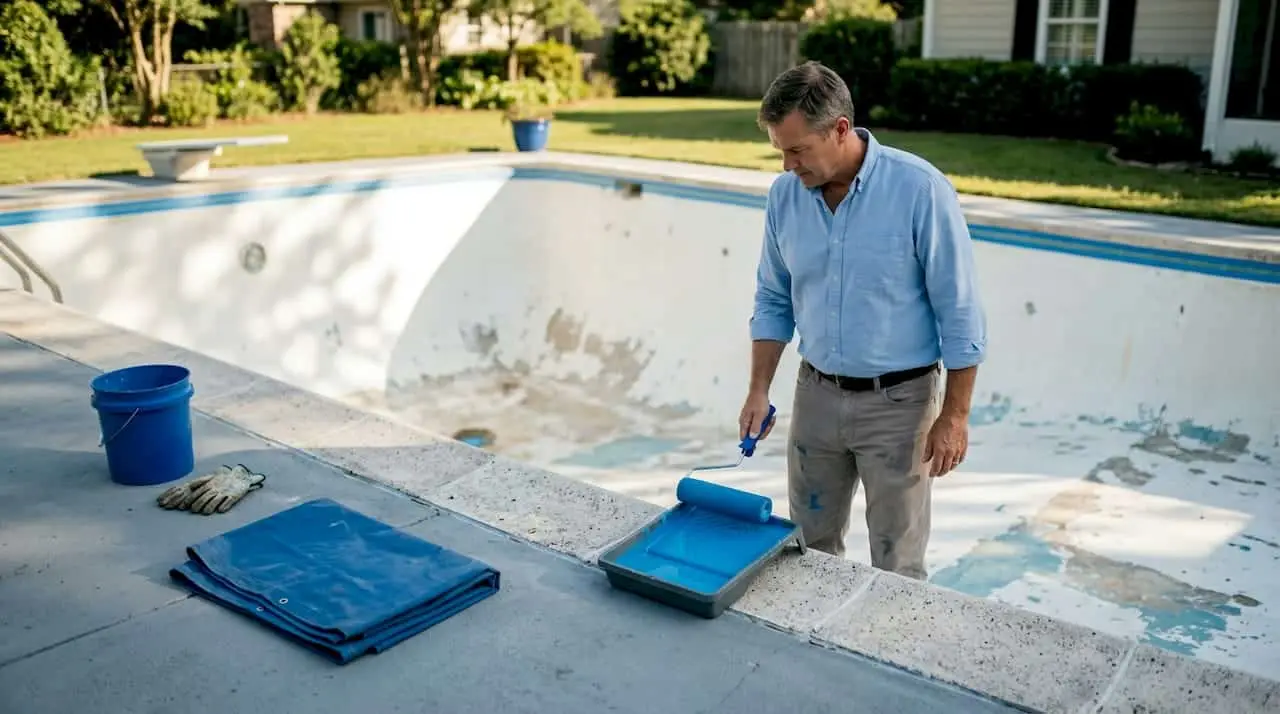
- Remove all loose and flaking paint. Use a wire brush, putty knife, or rented sandblaster for larger areas. Any paint that is not firmly bonded to the surface will cause the new coat to fail in the same spots.
- Wash with TSP (trisodium phosphate). Mix according to package directions, scrub the entire pool surface, and rinse thoroughly. TSP removes oils, sunscreen residue, and algae that plain water misses.
- Acid etch the surface. Mix a 50/50 solution of muriatic acid and water. Always add acid to water, never the reverse. Apply to the entire pool surface using a long-handled brush. Acid etching creates a surface profile that gives the paint something to grip. This step is especially important on smooth plaster or previously unpainted concrete.
- Neutralize the acid. Mix one pound of baking soda per gallon of water and apply it across the etched surface. This stops the acid reaction. Rinse the pool completely with clean water.
- Rinse and dry again. After neutralizing, rinse multiple times to remove all residue. Then allow the pool to dry for a minimum of 3 to 5 full days before painting. This drying window is not optional. Even a surface that looks dry may still hold moisture in the plaster pores.
- Repair cracks and chips. Use a hydraulic cement or a pool-specific patching compound to fill any cracks or voids. Proper crack repair before painting ensures a smooth, durable surface. Once the repair compound has cured fully, sand it smooth.
Pro Tip: Run a dehumidifier inside an enclosed pool area or use fans to move air across the surface during the drying period. Even in summer, trapped humidity can extend drying times significantly.
Applying pool paint for coverage and durability
Once the surface is clean, dry, and repaired, it is time to paint. Technique matters as much as the product you choose.
Mixing the paint. Two-part epoxy requires combining Part A (resin) and Part B (hardener) in the exact ratio listed on the can. Use a drill with a mixing paddle for a full two to three minutes. Scrape the sides of the can as you mix. Some epoxy products benefit from a short induction time after mixing, typically 15 to 30 minutes, before application begins. Check your specific product label.
Thinning. Only thin paint if the manufacturer explicitly allows it. Over-thinning reduces film thickness and durability. If the label allows thinning, use the specified solvent and only add the maximum amount stated.
Application order and technique. Start at the deep end and work your way toward the shallow end and steps. This way you are always painting away from the wet edge you just applied, which prevents footprints and drips landing on fresh paint.
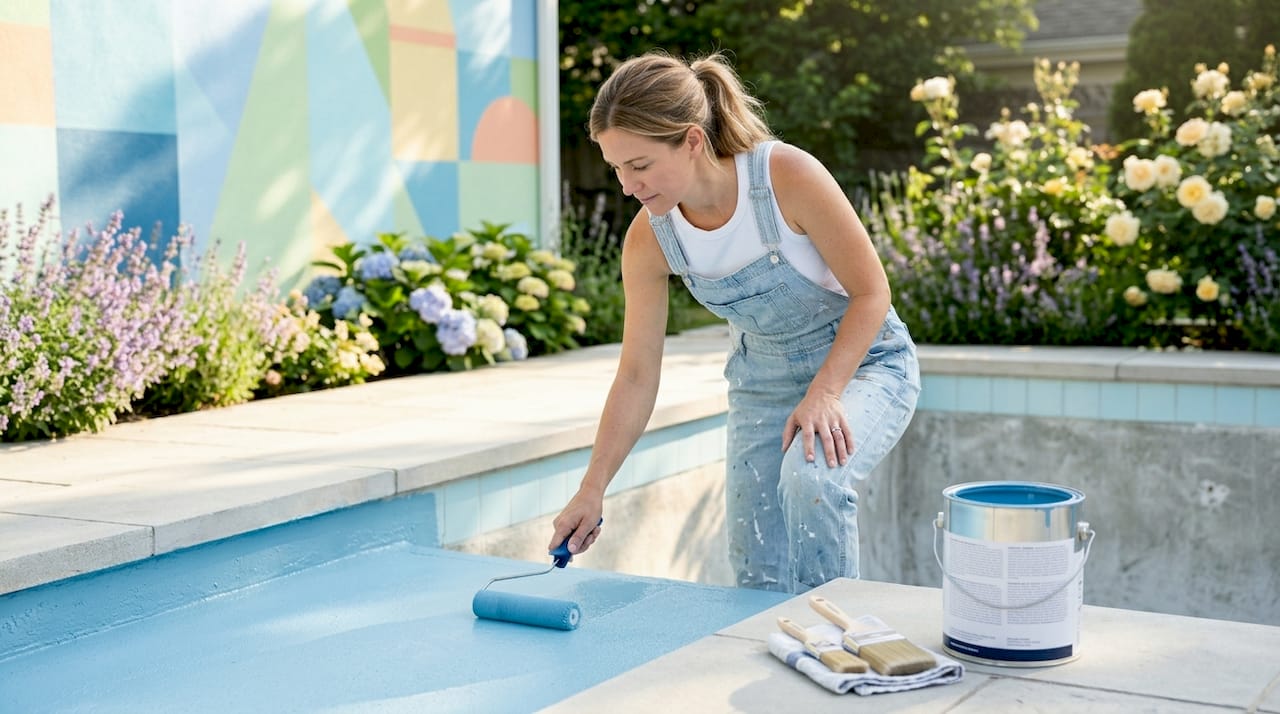
Use a 1/2″ nap roller for walls and the floor. Cut in all corners, steps, and tight areas with a brush first. Keep a wet edge at all times to avoid lap marks. Roll in consistent, overlapping strokes.
| Application Detail | Recommendation |
|---|---|
| Roller nap thickness | 1/2 inch |
| Coat application | Deep end to shallow end |
| Minimum coats | 2 |
| Recoat window (epoxy) | 12 to 24 hours (check your product) |
| Temperature range | 50°F to 90°F |
Applying multiple coats. Applying at least two coats is standard practice. Let the first coat dry within the manufacturer’s recoat window before applying the second. Applying too late can prevent proper bonding between coats, so do not let the window expire.
Pro Tip: Tape off all tile lines, fittings, and return jets with painter’s tape before the first coat. Removing paint from tiles after it has hardened is far more difficult than applying the tape beforehand.
Post-paint care: curing, refilling, and maintenance
Getting paint onto the walls is only step one of the finishing process. What happens after the brush dries matters just as much.
Curing time before refilling. After the final coat, wait 5 to 7 days before filling the pool. Filling too soon causes the water to soften and lift uncured paint. This creates peeling that cannot be fixed without starting over.
Handling rain during curing. A light shower after the paint has dried to the touch is usually not catastrophic. A hard rain within the first 24 hours of application can wash away or mottle the fresh coat. If rain is likely, delay your application.
Signs your paint is properly cured:
- The surface feels hard and does not scratch easily with a fingernail
- There is no solvent smell coming off the walls
- The surface has consistent sheen across the entire pool
Restarting the pool after refilling. Fill slowly and run your filtration system as normal once the pool reaches the skimmer level. Balance your water chemistry carefully. Fresh paint is more sensitive to pH swings in the first few weeks. Aim for a pH between 7.2 and 7.6 and keep chlorine levels within the normal range. For more detail on keeping your new surface in good shape, see this guide on maintaining pool finish durability.
Pro Tip: Avoid using a robotic cleaner with abrasive brushes for the first four to six weeks after refilling. The cured paint continues to harden during this period and aggressive scrubbing can scuff it prematurely.
Common mistakes that ruin a repaint
Knowing the errors that cause the most failures gives you a real advantage. Most problems are preventable.
- Painting over an incompatible coating. As noted earlier, epoxy over chlorinated rubber will delaminate. If you cannot identify the existing paint type, strip it entirely or switch to a universal primer before repainting.
- Painting on a damp surface. Micro-moisture in the substrate is invisible to the eye but will ruin epoxy adhesion. Always respect drying times.
- Skipping the acid etch. Without it, paint sits on top of the surface rather than bonding into it.
- Missing the recoat window. Apply the second coat too late and you lose intercoat adhesion.
- Over-thinning paint. More solvent does not mean easier rolling. It means a thinner film and shorter lifespan. See common renovation mistakes for a broader list of what to avoid.
“Poor surface prep, incompatible old coating, and applying paint on damp surfaces are consistently the top causes of pool paint failure.” (Epoxy Pool Paint Application Guide)
My honest take on DIY pool repainting
I have seen hundreds of pool repaint projects, and the single biggest predictor of a good outcome has nothing to do with which paint you buy. It comes down entirely to surface preparation. Homeowners who spend three days on prep and one day on painting almost always get better results than those who flip the ratio.
The other thing I have noticed is that impatience costs money. Skipping drying time or repainting in questionable weather conditions is never a one-time shortcut. You end up doing the whole job again inside a year, spending twice what you would have if you had just waited. Weather and timing awareness are skills that separate a DIY job that holds up from one that peels by summer’s end.
My honest advice: treat this like a tiling job, not a fence painting job. Pool paint operates under continuous chemical and thermal stress. The margin for cutting corners is almost zero. But if you follow the sequence in this guide carefully, you absolutely can achieve a professional-looking finish as a homeowner. Realistic expectations help too: a well-done epoxy repaint gives you five to seven years of service. That is a solid return on a weekend’s effort done right.
— Classicmarcite
When professional resurfacing makes more sense

DIY pool repainting works well when the underlying surface is structurally sound and paint adhesion is the only issue. But if your pool has widespread cracking, exposed gunite, or a failing marcite surface, repainting over those problems only delays a larger repair bill. That is where professional pool resurfacing services deliver lasting value. Classic Marcite has resurfaced over 100,000 pools since 1988 across Orlando and Jacksonville, using high-quality materials like Pebble Tec® that outperform paint in both longevity and appearance. If you are in Central Florida and want a finish that lasts a decade or more, explore resurfacing options in your area or request a free estimate directly from Classicmarcite.
FAQ
What is the best paint for a concrete pool?
Two-part epoxy is widely considered the best paint for concrete pools because it bonds deeply into the surface and resists the chemical exposure that degrades other coatings. It typically lasts 5 to 7 years with proper preparation and application.
How long does step by step pool repainting take from start to finish?
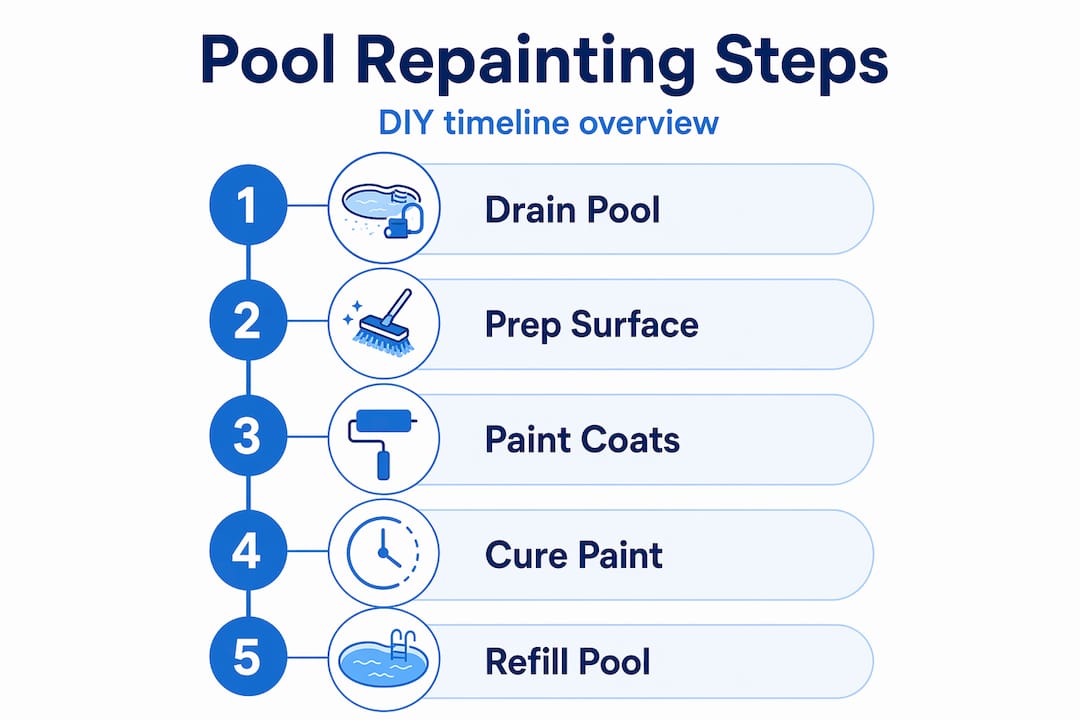
From draining to refilling, the full pool painting process typically takes 10 to 14 days. Surface preparation and drying alone account for most of that time, with painting itself taking only one to two days.
Can I paint over old pool paint?
Yes, but only if the existing paint is firmly bonded, fully compatible with your new paint type, and the surface is properly prepped. Painting over incompatible old coatings like applying epoxy over chlorinated rubber will cause delamination.
How many coats of paint does a pool need?
A minimum of two coats is the standard recommendation for pool paint. The first coat seals the surface and the second coat provides the full film thickness needed for durability and water resistance.
When can I refill the pool after repainting?
Wait at least 5 to 7 days after applying the final coat before filling the pool. Filling too soon allows water to penetrate uncured paint and causes peeling that requires a complete redo.
