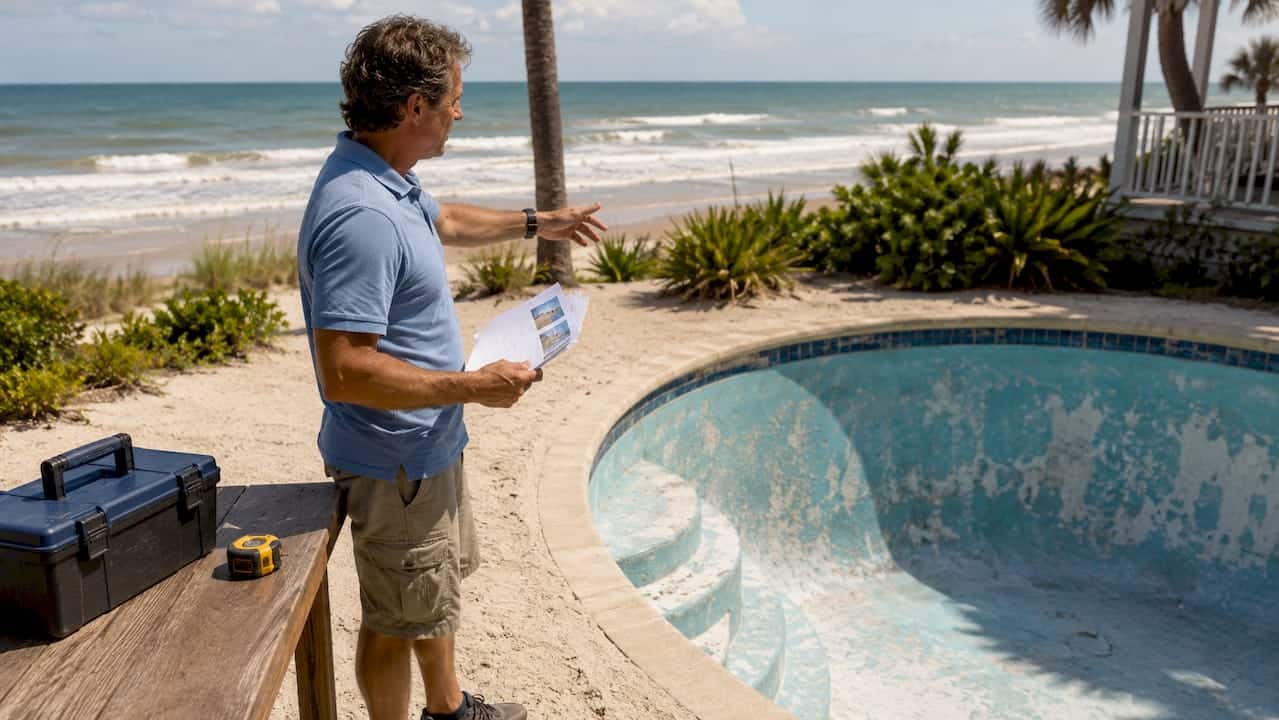
TL;DR:
- Pool resurfacing involves replacing a worn interior surface to enhance safety and appearance. Jacksonville homeowners benefit from choosing durable finishes like pebble, which last up to 25 years and reduce long-term costs. Proper timing, permit compliance, and thorough maintenance are essential for maximizing the lifespan of the new pool surface.
Pool resurfacing is defined as the process of removing a pool’s worn interior surface and applying a new finish to restore safety, appearance, and structural integrity. This Jacksonville pool resurfacing guide covers the three main material tiers, local permit rules, 2026 pricing, and the maintenance steps that determine how long your new surface actually lasts. Jacksonville pools face a specific challenge: Florida’s heat, humidity, and heavy chemical demand accelerate surface wear faster than in cooler climates. Choosing the right finish from the start, whether plaster, quartz aggregate, or a premium pebble product like Pebble Tec®, determines your cost per year and your maintenance burden for the next decade or more.
1. What are the best pool resurfacing materials for Jacksonville pools?
The three standard resurfacing materials are white plaster, quartz aggregate, and premium pebble finishes. Each sits in a different price and performance bracket, and Jacksonville’s climate pushes the tradeoffs into sharper focus than they would be in a milder state.
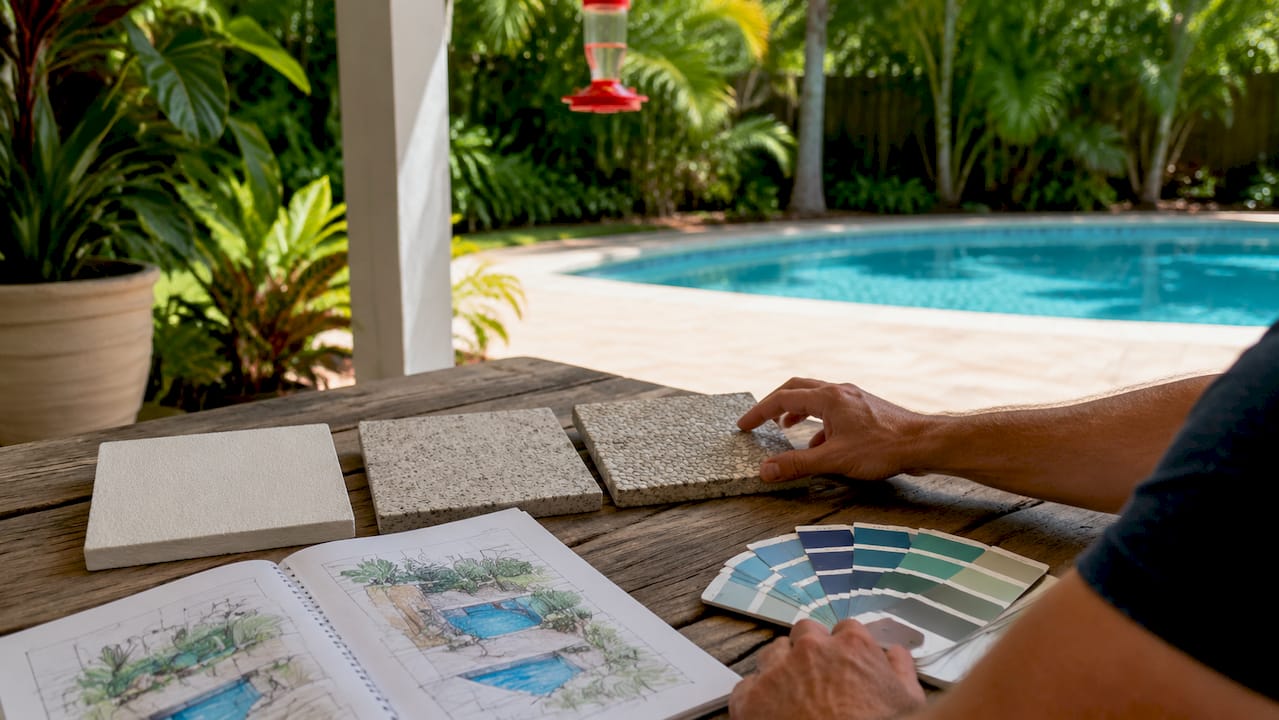
Standard white plaster is the entry-level option. It costs the least upfront and delivers a smooth, classic look. The tradeoff is a shorter lifespan of 10–12 years and higher sensitivity to chemical fluctuations. In Florida’s heat, plaster surfaces tend to etch and stain faster than in northern pools.
Quartz aggregate blends white plaster with quartz crystals to produce a harder, more stain-resistant surface. It lasts 12–18 years and offers a wider range of color options. The mid-tier price makes it a practical choice for homeowners who want better durability without committing to a premium finish.
Premium pebble finishes, including branded products like Pebble Tec®, are the top tier. They last 20–25 years and provide natural slip resistance from the exposed aggregate texture. The upfront cost is highest, but pebble finishes average $590 per year over their lifespan, compared to plaster at $636 per year and quartz at $667 per year. That math makes pebble the most cost-effective choice for primary residences.
Here is a side-by-side comparison of the three materials:
| Material | Cost Range | Lifespan | Cost Per Year | Best For |
|---|---|---|---|---|
| White plaster | $5,000–$9,000 | 10–12 years | ~$636 | Budget-conscious or short-term owners |
| Quartz aggregate | $7,000–$13,000 | 12–18 years | ~$667 | Mid-term ownership, color variety |
| Premium pebble | $9,000–$18,000 | 20–25 years | ~$590 | Long-term primary residences |
Pro Tip: If you plan to stay in your Jacksonville home for more than seven years, pebble finishes pay for themselves through reduced replacement frequency and lower annual maintenance costs.
You can also explore pool finish options for Florida homes to see how each material looks in real residential projects before committing.
2. How long does Jacksonville pool resurfacing take?
A standard resurfacing project in Jacksonville runs 5–7 working days for the physical work. That includes draining the pool, blasting off the old surface, applying a bond coat, installing the new finish, refilling, and starting up the water chemistry.
The physical work is only part of the timeline. Premium pebble finishes require a strict 28-day chemical curing period after application. During that window, water chemistry must stay within tight parameters. Mismanagement during curing causes irreversible surface damage that voids most warranties.
Most homeowners can resume normal pool use 14–21 days after the startup chemistry stabilizes. That means the full process from drain to swim is roughly three to four weeks for a pebble finish project.
Timing matters in Jacksonville. The best window for resurfacing is late fall through early spring, when temperatures are lower and humidity drops. Summer projects are possible but require more attention to curing conditions and chemical evaporation rates.
Here is the typical sequence for a Jacksonville resurfacing project:
- Drain and prep (Day 1): Pool is fully drained and the old surface is acid-washed or mechanically blasted.
- Surface repair (Day 1–2): Cracks, hollow spots, and structural issues are patched before any new material goes on.
- Bond coat application (Day 2): A bonding layer is applied to help the new finish adhere correctly.
- Finish application (Day 3–5): The chosen material, plaster, quartz, or pebble, is applied and hand-finished.
- Refill and startup (Day 5–7): The pool is refilled and startup chemistry begins.
- Curing period (Days 7–35): Water chemistry is monitored and adjusted daily, especially for pebble finishes.
Pro Tip: Schedule your resurfacing project before a planned vacation or extended time away from home. The curing period requires daily attention, and having a professional service manage that phase protects your investment.
For a detailed breakdown of each stage, the Florida resurfacing timeline guide from Classicmarcite covers what to expect week by week.
3. What are the costs and permit requirements for pool resurfacing in Jacksonville?
Pool resurfacing in Jacksonville falls into three cost tiers: plaster at $5,000–$9,000, quartz at $7,000–$13,000, and premium pebble at $9,000–$18,000 for a standard residential pool. For a 16×32 pool specifically, quartz runs $5,600–$8,000 and pebble runs $8,000–$12,000. Pool size, shape, and existing surface condition all affect the final number.
On the permit side, Jacksonville homeowners get a clear rule: permits are not required for cosmetic resurfacing in Duval, Clay, and St. Johns counties. Replacing the interior surface alone does not trigger a permit. Permits become mandatory the moment the scope expands to include plumbing changes, electrical work, or structural shell repairs.
Key cost and permit facts to know before you start:
- Surface-only resurfacing in Duval, Clay, and St. Johns counties requires no permit.
- Adding new lighting, jets, or equipment upgrades requires electrical or plumbing permits.
- Structural crack repair that penetrates the shell requires a structural permit.
- Contractor labor typically accounts for 40–60% of total project cost.
- Getting three quotes from licensed Jacksonville pool contractors is the standard practice before signing any contract.
Pro Tip: If you are planning tile line upgrades, new lighting, or equipment replacement alongside resurfacing, pull all permits at once. Combining scopes under a single permit application saves time and reduces inspection fees.
4. How to maintain your pool after resurfacing to extend its life
Post-resurfacing maintenance is where most homeowners either protect or waste their investment. The first 28 days are the most critical, especially for pebble and quartz finishes. After that, a consistent weekly routine keeps the surface in good condition for the full lifespan of the material.
The correct chemical order is alkalinity first, then pH, then sanitizer. Adjusting pH before alkalinity creates chemical swings that are difficult to correct and can etch or stain a new surface. Each chemical addition should be followed by running the pump for at least 30 minutes before testing again.
Brushing is the most underrated step in post-resurfacing care. Weekly brushing of walls and floors prevents algae biofilm from forming on the surface before it becomes visible. By the time you see green, the biofilm has already bonded to the finish. Brushing before algae appears is the correct approach.
Core maintenance habits to build after resurfacing:
- Test and adjust alkalinity first, targeting 80–120 ppm before touching pH or chlorine.
- Brush all pool surfaces weekly, including steps, corners, and the waterline tile.
- Run the pump long enough each day to turn over the full water volume at least once.
- Avoid adding multiple chemicals at the same time. Space additions by at least 30 minutes.
- During the first 28 days post-pebble application, test water chemistry daily, not weekly.
Pro Tip: Keep a simple log of your chemical readings for the first 60 days after resurfacing. If something goes wrong with the finish, that log is your best evidence when working with your contractor or warranty provider.
The post-resurfacing maintenance guide from Classicmarcite walks through the full startup protocol with specific chemical targets for each phase.
5. How to choose the right resurfacing option for your situation
The right material depends on three factors: how long you plan to own the home, how heavily the pool gets used, and what your total budget covers. There is no single correct answer, but the tradeoffs are clear once you map them to your situation.
Short-term ownership or tight budget: White plaster is the practical choice. It costs the least upfront and performs adequately for 10–12 years with proper maintenance. If you plan to sell within five years, plaster gives you a fresh-looking pool without overinvesting.
Mid-term ownership: Quartz aggregate hits the balance point. It lasts longer than plaster, resists staining better in Florida’s chemical-heavy environment, and comes in colors that improve the pool’s visual appeal. For homeowners planning to stay 8–15 years, quartz is the value play.
Long-term primary residence: Premium pebble finishes are the clear choice. At $590 per year over 20–25 years, they cost less annually than either plaster or quartz. They also require less frequent resurfacing, which means less disruption to your backyard over time.
Resurfacing is also the right time to address deck drainage or equipment inefficiencies that could cause premature surface failure. Ignoring a drainage problem before applying a new finish means the new surface fails for the same reason the old one did. Local contractors in Jacksonville recommend planning resurfacing as part of a broader pool upgrade that may include tile lines, lighting, and energy-efficient equipment.
If you want to compare replastering vs. resurfacing in detail, Classicmarcite breaks down the differences in method, cost, and long-term impact for Florida pools.
Key takeaways
Premium pebble finishes deliver the lowest annual cost and longest lifespan for Jacksonville pools, making them the best long-term investment for primary residences.
| Point | Details |
|---|---|
| Material choice drives lifetime cost | Pebble finishes cost ~$590/year vs. plaster at ~$636/year over their full lifespan. |
| Curing period is non-negotiable | The 28-day chemical curing phase after pebble application determines finish longevity. |
| Permits depend on project scope | Surface-only resurfacing in Duval, Clay, and St. Johns counties requires no permit. |
| Chemical order matters | Adjust alkalinity before pH and sanitizer to avoid damaging chemical swings. |
| Resurfacing is the time to fix underlying issues | Address drainage and equipment problems before applying a new finish to prevent early failure. |
What I have learned after watching hundreds of Jacksonville pools get resurfaced
The single biggest mistake Jacksonville homeowners make is choosing a finish based on upfront cost alone. I have seen plaster pools resurfaced twice in 18 years while a neighbor’s pebble pool from the same era still looks sharp. The math on pebble is not complicated, but it requires thinking past the invoice.
The second mistake is underestimating the curing period. Homeowners who rush back into the pool or skip daily chemistry checks during those first 28 days often end up with surface discoloration or etching that no amount of brushing will fix. Patience during curing is not optional. It is the difference between a 25-year finish and a 12-year finish on the same material.
My honest recommendation: plan resurfacing as part of a broader project. If your tile line is dated, your lighting is old, or your equipment is inefficient, do it all at once. Mobilizing a contractor twice costs more than bundling the work. And the disruption to your backyard happens once instead of twice.
Finally, hire a contractor who knows Jacksonville specifically. Northeast Florida’s water chemistry, humidity levels, and seasonal temperature swings are different from Central Florida’s. A contractor who resurfaces pools in Duval County regularly will know the local water conditions and how they affect curing and long-term maintenance. That local knowledge is worth paying for.
— Results
Get expert pool resurfacing in Jacksonville from Classicmarcite
Classic Marcite has resurfaced more than 100,000 pools across Florida since 1988, including hundreds of residential projects in Jacksonville and the surrounding Northeast Florida area. The team specializes in Pebble Tec® applications, quartz aggregate finishes, and standard plaster, with every project matched to the homeowner’s budget, usage pattern, and ownership timeline.

Free estimates are available for Jacksonville homeowners, and the team handles project management from drain to startup chemistry. If you are ready to see what your pool could look like with a new finish, explore Jacksonville pool renovation services or get a quote directly through the Classicmarcite website. For a full overview of what resurfacing covers and what it costs, the Florida resurfacing basics page is a solid starting point.
FAQ
How much does pool resurfacing cost in Jacksonville?
Pool resurfacing in Jacksonville costs $5,000–$9,000 for plaster, $7,000–$13,000 for quartz, and $9,000–$18,000 for premium pebble finishes on a standard residential pool. Exact pricing depends on pool size, surface condition, and material selected.
Do I need a permit to resurface my pool in Jacksonville?
No permit is required for cosmetic surface replacement in Duval, Clay, and St. Johns counties. Permits are only required when the project includes plumbing, electrical, or structural shell work.
How long does pool resurfacing take in Jacksonville?
The physical work takes 5–7 working days, followed by a 28-day curing period for pebble finishes. Most homeowners can swim again 14–21 days after startup chemistry stabilizes.
What is the longest-lasting pool finish for Florida pools?
Premium pebble finishes last 20–25 years and are the most durable option for Florida’s climate. They also carry the lowest annual cost at approximately $590 per year over their lifespan.
Can I resurface my pool myself?
DIY pool resurfacing is not recommended for Jacksonville homeowners. Proper surface preparation, bond coat application, and chemical startup require professional equipment and expertise. Errors during any phase, especially curing, can permanently damage the new finish.