TL;DR:
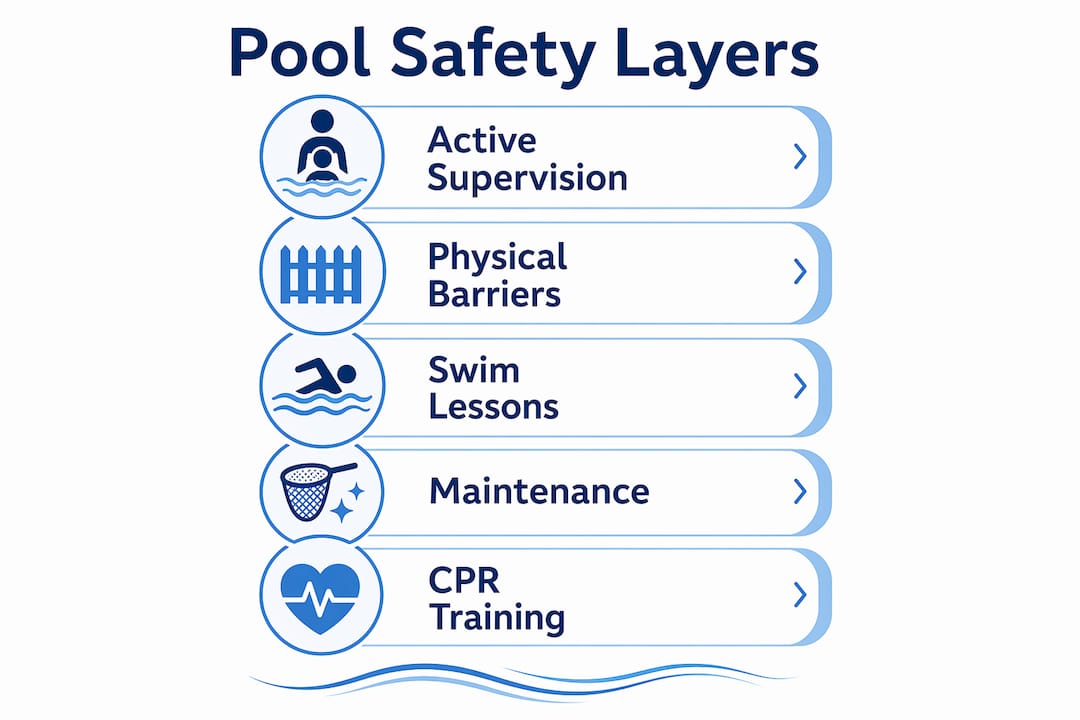
- Effective pool safety depends on active supervision, compliant physical barriers, proper flotation devices, and consistent maintenance as a layered system. Continuous vigilance, regular inspections, and responsible behavior are essential to prevent drowning and injuries. Combining these measures with swim lessons and CPR certification enhances overall pool safety for all users.
Pool safety is defined as a multi-layered system of protective measures that work together to prevent drowning and pool-related injuries. Knowing how to improve pool safety means combining active supervision, compliant fencing, pool alarms, and swim lessons into one coordinated approach. The CDC, American Academy of Pediatrics (AAP), and the Pool Safely campaign run by the CPSC all agree: no single measure is enough on its own. Drowning can occur silently and quickly, sometimes in as little as 2 inches of water. That fact alone makes layered protection the only responsible standard for any home or property with a pool.
How to improve pool safety through active supervision
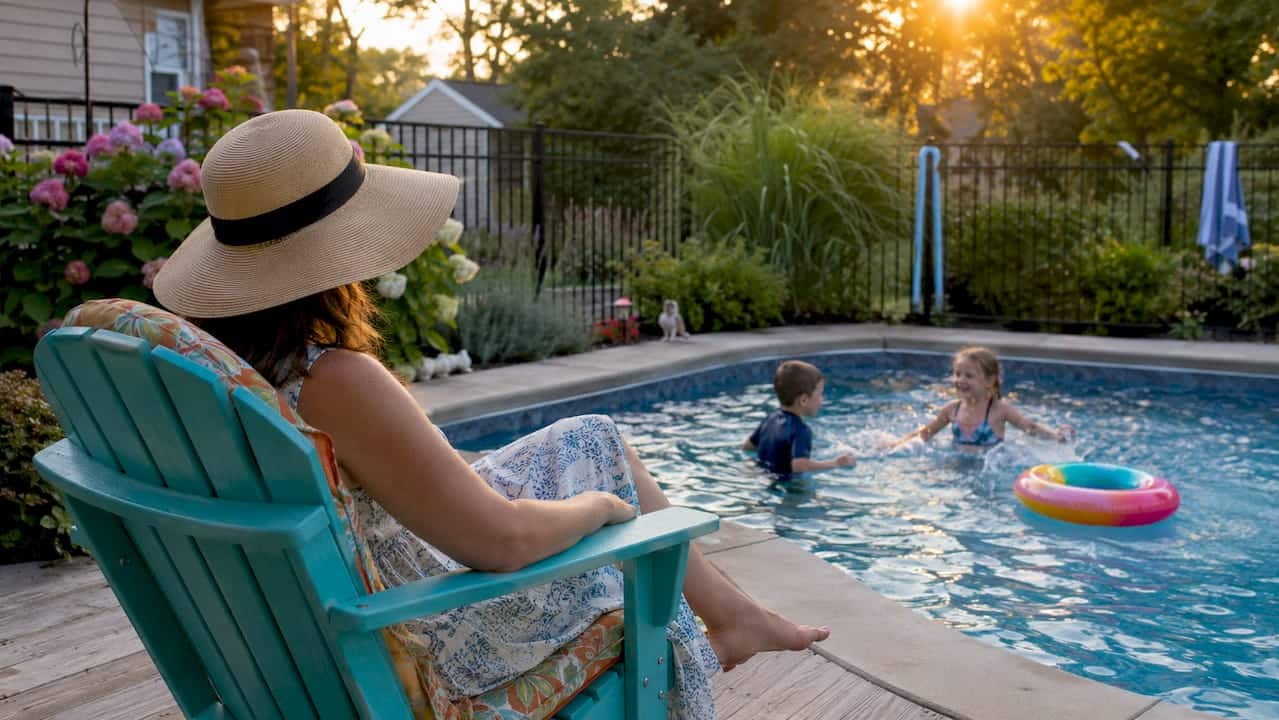
Active supervision is the single most critical layer in any pool safety system. The AAP defines it as watching children continuously, without any distractions, for the entire time they are near water. For toddlers, HealthyChildren.org recommends “touch supervision”, meaning an adult stays within arm’s reach at all times.
Distractions are the leading cause of supervision failures. Phones, alcohol, and household chores all pull attention away from the water at the worst possible moments. Many child pool drownings occur when the child was last seen inside the home, missing for less than 5 minutes. That statistic shows how fast a tragedy can unfold when supervision lapses.
The best pool safety tip for group settings is to designate a rotating “Water Watcher.” This is one adult whose only job is to watch the pool, with no phone, no drink, and no conversation. Diffusion of responsibility during group events is a documented cause of supervision failures. Assigning one person eliminates that ambiguity.
Key supervision rules to follow every time:
- Put your phone away before children enter the water
- Assign one adult as the Water Watcher during parties or group swims
- Rotate the Water Watcher role every 15–20 minutes to maintain focus
- Never leave children unattended to answer the door or take a call
- Keep toddlers within arm’s reach, not just within eyesight
Pro Tip: Print a “Water Watcher” card and hand it to the designated adult at the start of every pool session. The physical card reinforces the responsibility and signals to others that supervision is assigned.
What are the best physical barriers for home pools?
Physical barriers are the second layer of protection and the one most often installed incorrectly. HealthyChildren.org recommends four-sided fencing that is at least 4 feet high, with closely spaced vertical slats that offer no footholds. The fence must completely surround the pool, separating it from the house and yard.
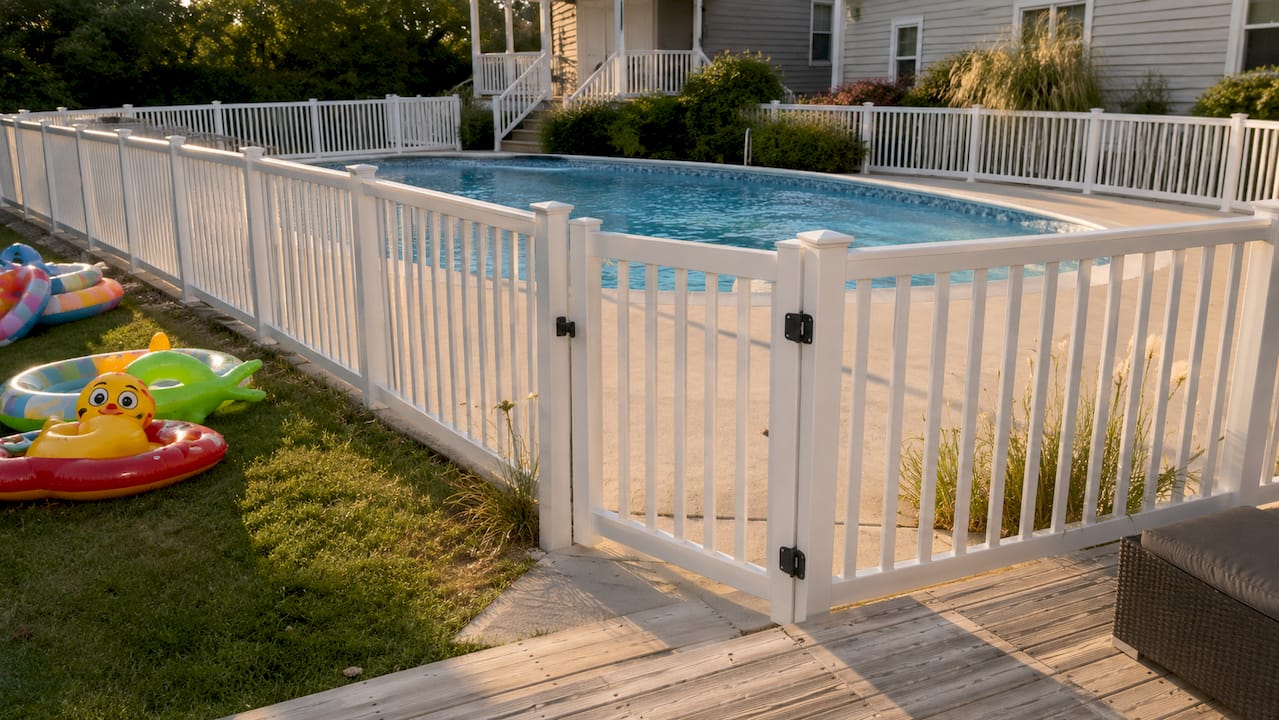
Gates are where most barrier systems fail. Self-closing and self-latching gates are required, with the latch positioned at least 54 inches from the ground. Many pool fence failures come from overlooked climb-proofing details, including horizontal rails that act as ladder rungs for small children. Check your fence for any feature a child could use to climb.
Here is a ranked list of physical barriers from most to least critical:
- Four-sided, climb-proof pool fence at least 4 feet high with no footholds
- Self-closing, self-latching gate with latch height at or above 54 inches
- Door and window alarms on any house entry that leads to the pool area
- Pool surface alarms that detect motion or water disturbance
- True safety pool covers rated to support adult weight
- Locked or removed ladders on above-ground pools when not in use
| Barrier Type | What It Does | Key Caution |
|---|---|---|
| Four-sided fence | Blocks unsupervised pool access | Must have no climbable footholds |
| Self-latching gate | Prevents children from opening the gate | Latch must be 54+ inches high |
| Pool alarms | Alerts adults to water entry | Supplement only; not a replacement for supervision |
| Safety pool cover | Blocks pool surface access | Floating solar covers increase drowning risk |
| Drain covers | Prevents entrapment | Must meet federal safety standards |
Pool drain safety requires compliant drain covers that meet CPSC federal standards. Entrapment at a pool drain can trap a child underwater in seconds. Ask your pool service provider directly whether your drain covers are compliant.
Pro Tip: Walk your fence line at the start of every swim season. Look for gaps, loose posts, and any objects near the fence that a child could use as a step. A 10-minute inspection can close the gaps that cause accidents.
Do swim lessons actually prevent drowning?
Swim lessons reduce drowning risk, but they do not make any child drown-proof. The CDC confirms that swim lessons improve water safety but still require adults to stay within arm’s reach and remain free of distractions during pool time. Lessons build skill and confidence. They do not replace supervision.
Age-appropriate lessons can start as early as age 1 for children who are developmentally ready, according to AAP guidance. The goal at that age is water familiarity and basic survival skills, not competitive strokes. Older children benefit from structured programs that teach treading water, floating, and reaching the pool wall.
One of the most common and dangerous misconceptions in pool safety involves floaties, arm bands, and water wings. These are toys, not safety devices. They can deflate, slip off, or give children a false sense of security that leads them into deeper water. The correct choice is a properly fitted U.S. Coast Guard approved life jacket.
What to know about personal flotation devices:
- U.S. Coast Guard approved life jackets are the only reliable flotation option for weak swimmers
- Life jackets should be worn in and around pools, not just on boats
- Floaties and water wings provide no reliable protection and should not be used as safety tools
- Life jacket fit matters: a jacket that rides up over the chin is too large and can flip a child face-down in the water
How to maintain a safe pool environment year-round
A safe pool environment requires ongoing attention, not just a one-time setup. Pool toys left near the water attract children who may enter the pool area unsupervised. Store all toys away from the pool after each swim session. Out of sight means out of mind for young children.
Regular inspections are the backbone of any pool safety checklist. Check your fence, gate latch, and alarms at least once a month during swim season. Pool covers need attention too. Safety covers must fully support weight and must not accumulate standing water. A puddle on top of a pool cover is a drowning hazard for a toddler. Remove standing water immediately after rain.
Unsafe behaviors around the pool cause a significant share of non-drowning injuries. Diving in shallow water, running on wet decks, and jumping from non-designated areas all create serious risks. Set clear rules before anyone enters the pool area and enforce them consistently.
CPR training is the preparedness layer that saves lives when all other layers fail. Every adult in a household with a pool should hold a current CPR certification from the American Red Cross or American Heart Association. Seconds matter in a drowning emergency, and bystander CPR before emergency services arrive dramatically improves survival outcomes.
| Maintenance Task | Frequency | Why It Matters |
|---|---|---|
| Fence and gate inspection | Monthly during swim season | Identifies gaps, loose posts, and latch failures |
| Drain cover check | Annually or after service | Prevents entrapment hazards |
| Pool cover water removal | After every rain event | Eliminates standing water drowning risk |
| CPR certification renewal | Every 2 years | Keeps skills current for emergencies |
| Toy and equipment storage | After every swim session | Reduces unsupervised pool access by children |
For a broader look at summer pool preparation, including surface and equipment checks, Classicmarcite has published a detailed guide for Florida homeowners that covers pre-season readiness from top to bottom.
Key takeaways
Effective pool safety requires active supervision, compliant physical barriers, proper flotation devices, and regular maintenance working together as a system.
| Point | Details |
|---|---|
| Active supervision is non-negotiable | Assign a dedicated Water Watcher and keep toddlers within arm’s reach at all times. |
| Fencing must be four-sided and climb-proof | Gates need self-latching hardware with latches at least 54 inches from the ground. |
| Floaties are not safety devices | Use only U.S. Coast Guard approved life jackets for children who cannot swim confidently. |
| Pool covers require ongoing management | True safety covers must support adult weight and must never hold standing water. |
| CPR training closes the preparedness gap | Every pool-owning household should have at least one adult with current CPR certification. |
What i’ve learned after years of watching pool safety get overlooked
The hardest part of pool safety is not knowing the rules. Most parents and property managers know fencing matters. The hard part is sustained vigilance, and that is where most systems break down.
I’ve seen properties with beautiful four-sided fences where the gate latch was broken for an entire season. Nobody noticed because nobody checked. The fence looked right from a distance. That is the gap between having a safety system and maintaining one. Physical barriers require the same recurring attention as any other piece of equipment.
The Water Watcher concept sounds simple, but it solves a real behavioral problem. In a group setting, everyone assumes someone else is watching. Naming one person and handing them a card changes the social dynamic completely. It removes the assumption and replaces it with accountability.
My honest view on swim lessons: they are worth starting early, but they create a dangerous overconfidence in some parents. A child who completes a beginner swim course is not safe to be near a pool unsupervised. Lessons reduce risk. They do not eliminate it. The CDC’s position on this is clear, and I think it deserves more emphasis than it typically gets.
For property managers running HOA pools or multi-unit communities, the layered safety approach used in general outdoor property maintenance applies directly here. Assign responsibility, document inspections, and treat pool safety as a recurring operational task, not a one-time installation project.
The one thing I would tell every pool owner: get CPR certified before swim season starts, not after an incident makes you wish you had.
— Classicmarcite
How Classicmarcite supports a safer pool environment
A damaged pool surface is a safety hazard, not just an aesthetic problem. Rough, cracked, or deteriorating plaster can cut feet, harbor bacteria, and create uneven surfaces that cause slips and falls. Addressing the physical condition of your pool is a direct part of how to prevent pool accidents.

Classic Marcite has resurfaced more than 100,000 pools across Florida since 1988, making it the largest Pebble Tec® applicator in Central Florida. The company’s pool resurfacing services restore pool surfaces to a smooth, durable finish that reduces injury risk and extends the life of the pool. Whether you manage a residential property or a commercial facility, a sound pool surface is the foundation every other safety measure depends on. Contact Classicmarcite for a free estimate and make surface condition part of your pool safety checklist this season.
FAQ
What is the most effective pool safety measure?
Active supervision is the most critical single measure, but the most effective overall approach combines supervision, four-sided fencing, pool alarms, and CPR training into a layered system. No single measure is sufficient on its own.
At what age should children start swim lessons?
The AAP supports age-appropriate swim lessons starting as early as age 1 for children who are developmentally ready. Lessons at any age reduce drowning risk but do not replace adult supervision.
Are pool alarms enough to replace a fence?
Pool alarms are a supplemental layer that buys response time, not a replacement for a compliant four-sided fence. Alarms and technology should always be viewed as additions to barriers, not substitutes for them.
What type of pool cover is safe for child drowning prevention?
Only true safety covers rated to fully support adult weight are appropriate. Floating solar covers increase drowning risk and should never be used as a safety barrier. Remove standing water from any cover after rain.
How often should i inspect my pool fence and gate?
Inspect your pool fence and gate at least once a month during swim season. Check for loose posts, gaps, climbable footholds, and confirm the self-latching gate mechanism closes and latches fully every time.