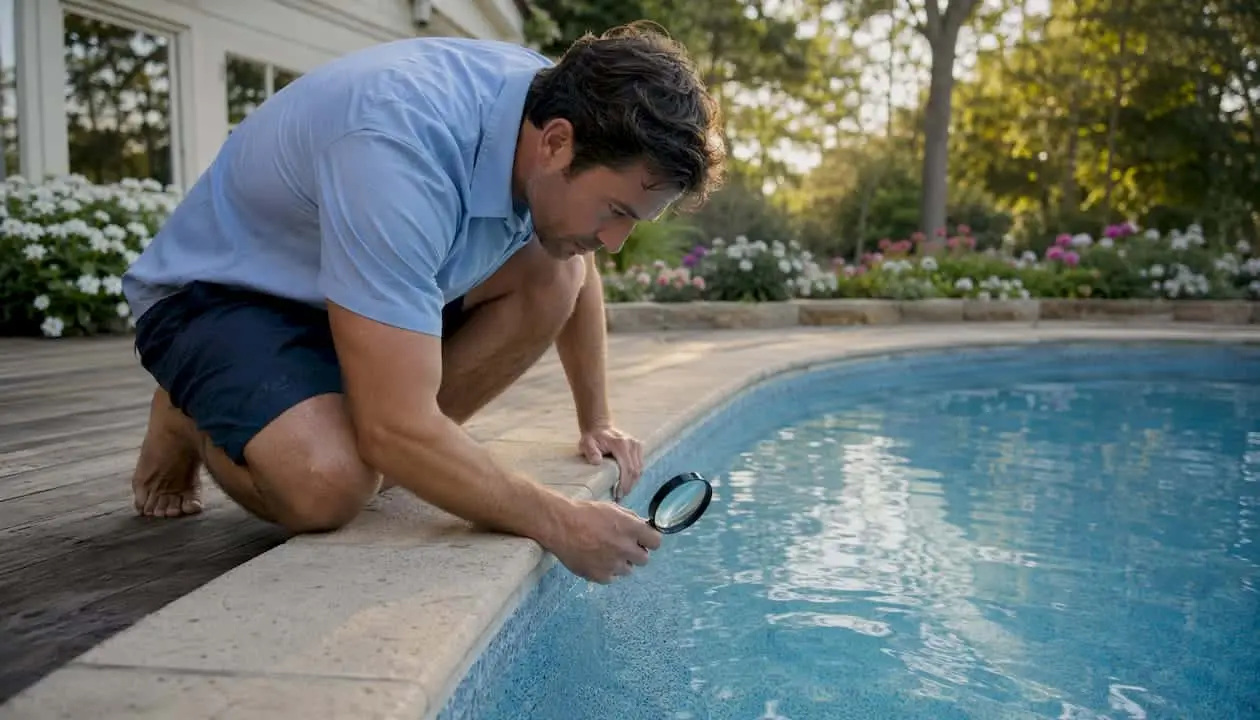
Pool surface texture directly affects whether your pool is safe to swim in, how much time you spend maintaining it, and what it looks like from across the yard. These are not minor considerations. The finish on your pool’s interior touches every part of the ownership experience, from the grip underfoot on a wet step to the color of the water on a sunny afternoon.
Here is what you need to know about pool surface texture in 2026:
- Safety: Texture determines slip resistance at steps, ledges, and entry points.
- Maintenance: Rougher, more porous surfaces trap algae and demand more chemical balancing.
- Aesthetics: Aggregate color and surface profile shape how light reflects off the water.
- Longevity: Water chemistry interacts with surface texture to either preserve or degrade the finish.
- Comfort: Coarser textures can cause skin abrasion, especially for children.
- Standards: ANSI/APSP and ASTM guidelines address texture-related safety and water chemistry requirements for pool interiors.
Choosing the right finish means weighing all of these factors together, not just picking a color from a swatch board.
Table of Contents
- What are the main pool surface types and how do their textures differ?
- How does pool surface texture affect safety and swimmer experience?
- How does surface texture drive maintenance needs and signal when to resurface?
- How does pool surface texture shape water appearance and backyard aesthetics?
- What Classicmarcite’s 35 years of resurfacing experience reveals about texture
- Key Takeaways
What are the main pool surface types and how do their textures differ?
Pool surfaces fall into five broad categories, and each one delivers a distinct texture profile that shapes the ownership experience from day one.
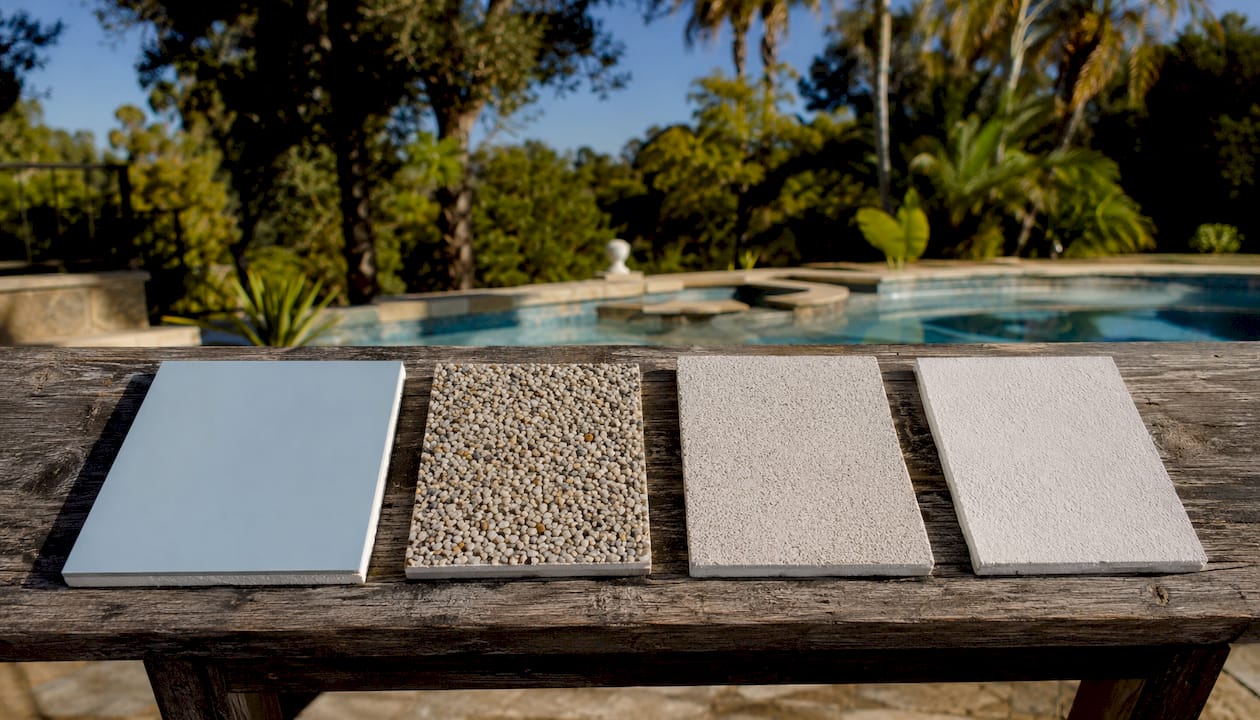
Standard white plaster is the classic choice. It starts with a slightly rough, chalky feel and gradually smooths over time as water chemistry and foot traffic wear the surface. Traditional plaster lasts for many years, though it requires periodic acid washing to maintain texture and slip resistance. It is the most affordable entry point and accepts tinting and aggregate blends.
Pebble aggregate finishes, including the widely recognized Pebble Tec® brand, embed natural river pebbles, glass beads, or crushed shell into a cement binder. Application thickness runs 3/8 to 5/8 inch depending on pebble size, and the exposed faces create a three-dimensional, irregular surface. The result is excellent grip but a noticeably coarser feel underfoot.
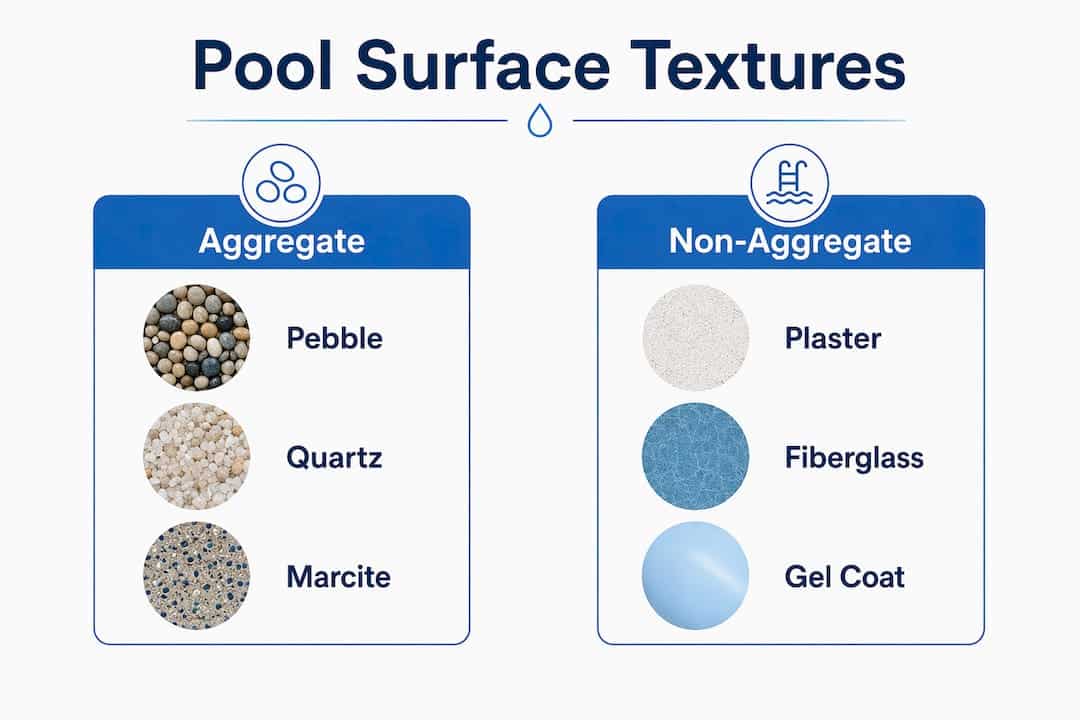
Quartz aggregate sits between plaster and pebble. Quartz crystals are blended into the cement matrix, producing a surface that is smoother than exposed pebble but rougher than standard plaster. It resists staining better than plain plaster and adds subtle sparkle to the water.
Fiberglass arrives as a factory-molded shell with a gel coat finish. The surface is smooth, non-porous, and consistent throughout the pool. It carries a wet friction coefficient of about 0.6, which provides reliable grip without sharp aggregate.
Vinyl liners offer the smoothest feel of any option, with a slip resistance rating of about 0.5. They are affordable and comfortable, but susceptible to tears and UV degradation, typically requiring replacement every 7–10 years.
Key texture comparisons at a glance:
- Plaster: moderate texture, customizable, ages toward smoothness
- Pebble Tec® and similar exposed aggregates: high texture, excellent traction, coarser feel
- Quartz: intermediate texture, good stain resistance, moderate grip
- Fiberglass gel coat: smooth, non-porous, wet friction coefficient of about 0.6
- Vinyl liner: very smooth, slip resistance rating of about 0.5, requires careful monitoring for damage
Classicmarcite specializes in both Classic Marcite plaster finishes and Pebble Tec® application, giving homeowners access to the full range of texture profiles from a single experienced contractor.
How does pool surface texture affect safety and swimmer experience?
Slip resistance is the most direct safety consequence of surface texture, and the numbers tell a clear story. Fiberglass gel coat delivers a wet friction coefficient of about 0.6, while vinyl liners come in at about 0.5. Exposed pebble aggregate exceeds both on raw traction, though that advantage comes with trade-offs.
The problem with maximizing texture everywhere is skin abrasion. Rough pebble surfaces cause what pool professionals call “pebble toe,” where repeated contact with coarse aggregate scrapes the soles of feet, knees, and elbows. Children are especially vulnerable because they spend more time crawling and sliding along pool walls and floors. Concrete and gunite surfaces create similar friction that leaves red marks or scratches after contact.
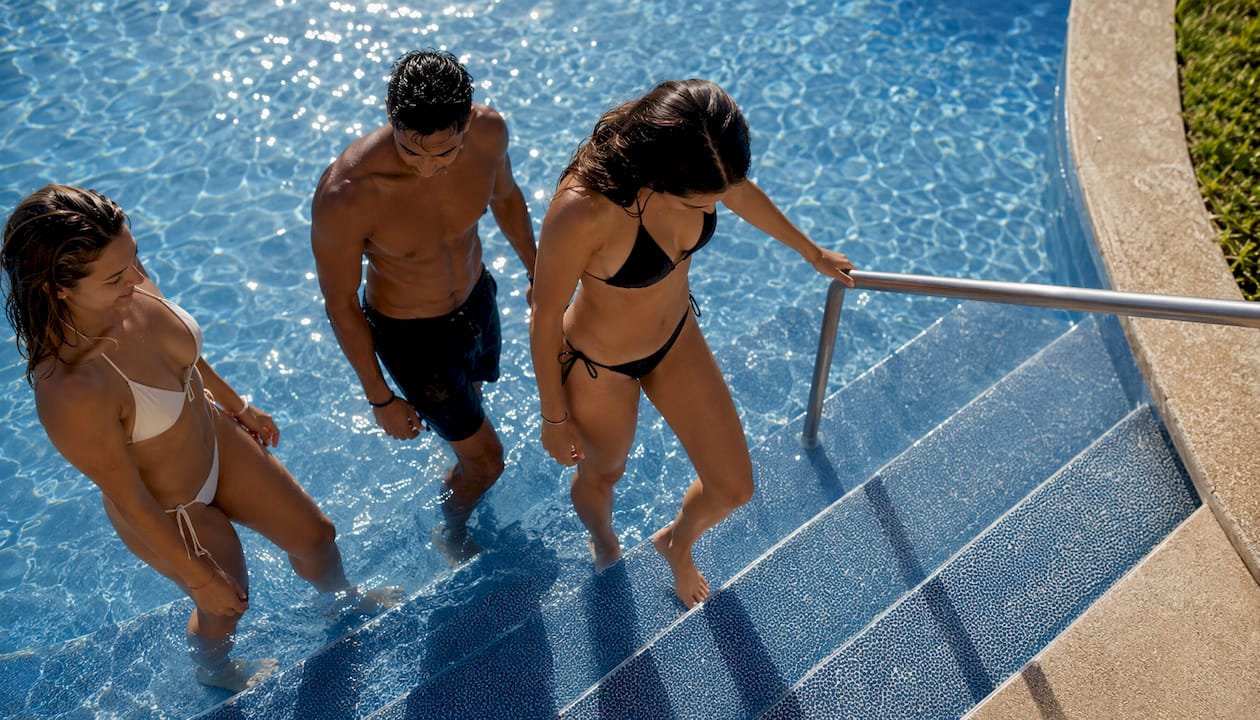
The practical solution is zonal design. Higher-traction finishes belong at steps, tanning ledges, and shallow entry areas where footing matters most. Smoother finishes in the main swimming area reduce drag and skin irritation without sacrificing safety where it counts. Wet slip resistance and swimmer comfort tend to work against each other, so placing the right texture in the right zone is how you get both.
Pro Tip: When specifying a new finish, ask your contractor to apply a coarser texture profile specifically on steps and the first two feet of the shallow end floor. Keep the deep-end walls and floor smooth. This single decision prevents most slip-related incidents while keeping lap swimming comfortable.
Texture also shapes how swimmers perceive a pool’s cleanliness and quality. A rough or pitted surface suggests neglect, even when the water chemistry is perfectly balanced. That perception affects how often people actually use the pool, which matters for both residential enjoyment and commercial occupancy rates.
How does surface texture drive maintenance needs and signal when to resurface?
Texture and porosity are inseparable. Rougher, more porous surfaces create microscopic crevices where algae spores embed and colonize. Smooth surfaces inhibit these algae microhabitats by giving organisms fewer places to grip, which translates directly to less scrubbing and fewer chemical interventions. Fiberglass, for instance, reduces algae buildup and maintenance compared to plaster, which demands weekly brushing and careful pH monitoring.
Water chemistry is the other major factor. Unbalanced water, specifically water with low calcium hardness, low pH, or low carbonate alkalinity, dissolves compounds in cementitious finishes through a process called chemical etching. The National Plasterers Council defines “balanced” water as pool water maintained to prevent both etching and scaling conditions. Etching appears first at aggregate interfaces and tile inserts, creating small pitted spots that roughen the surface and accelerate further deterioration. Maintaining water within ANSI/APSP approved levels is the single most effective way to preserve texture integrity in plaster, quartz, and pebble finishes.
Warning signs that texture deterioration has reached the resurfacing threshold:
- Persistent roughness that brushes or acid washing cannot correct
- Visible pitting or cratering around aggregate particles
- Discoloration that does not respond to chemical treatment
- Staining concentrated along grout lines or aggregate edges
- Swimmers reporting skin abrasion during normal use
Maintenance routines by surface type:
- Plaster: Weekly brushing, acid washing every 3–5 years, daily pH monitoring
- Pebble aggregate: Regular brushing with a stiff nylon brush, close attention to calcium hardness levels
- Quartz: Similar to plaster but with greater stain resistance; less frequent acid washing needed
- Fiberglass: Light brushing with non-abrasive cleaners, minimal chemical intervention
- Vinyl: Monitor liner integrity quarterly; replace every 7–10 years
For guidance on preserving your finish after a resurface, Classicmarcite’s resource on post-resurfacing care covers the critical first weeks in detail. Understanding why pools develop rough surfaces can also help you catch problems before they require a full resurface.
How does pool surface texture shape water appearance and backyard aesthetics?
The finish on your pool’s interior does more than protect the shell. It determines the color of the water, the way sunlight plays across the surface, and how the pool fits into the surrounding yard.
Smooth, light-colored finishes reflect sunlight upward, producing the bright, turquoise-blue water associated with resort pools. Darker aggregate colors absorb more light and create deep blue or green tones that read as more natural and dramatic. The aggregate’s size matters too: finer particles scatter light more evenly, while larger exposed pebbles create a faceted, almost jewel-like shimmer. Pebble Tec® color selections, which range from warm earth tones to deep ocean blues, give homeowners precise control over the water’s final appearance.
Textured finishes also reduce glare. Exposed aggregate and matte surfaces scatter light in multiple directions rather than reflecting it as a single harsh plane, which makes extended swimming sessions more comfortable on the eyes. Smooth, polished finishes produce more intense reflections, which can be visually striking but harder to look at directly.
Beyond the water itself, the finish ties the pool to the surrounding design:
- Natural stone aggregate blends with tropical landscaping and wood decking
- White or gray plaster suits clean, contemporary architecture
- Quartz blends with metallic flecks complement modern tile and glass features
- Dark pebble finishes anchor pools designed to mimic natural swimming holes
The aesthetic impact extends to property value. A pool with a fresh, well-chosen finish reads as a maintained asset rather than a liability. Discolored or pitted surfaces, regardless of water clarity, signal deferred maintenance to buyers and appraisers. Choosing a finish that holds its appearance over time, and maintaining the water chemistry that protects it, is one of the more straightforward ways to protect the investment.
For a deeper look at how finish choices affect both beauty and long-term value, Classicmarcite’s guide on choosing the right pool finish walks through the decision from both angles.
What Classicmarcite’s 35 years of resurfacing experience reveals about texture
Classicmarcite has been resurfacing pools since 1988 and holds the position of Central Florida’s largest Pebble Tec® applicator, with over 100,000 pools completed across residential, commercial, and international projects. That volume of work produces a clear picture of what actually fails in the field and why.
The most common mistake homeowners make is treating surface texture as a purely aesthetic choice. After resurfacing thousands of pools across Florida, the pattern is consistent: pools where the owner understood the connection between texture, water chemistry, and maintenance outlast comparable pools by years. A Pebble Tec® finish applied correctly and maintained with balanced water can hold its texture and color for well over a decade. The same finish neglected through chronic pH imbalance will show etching and roughness within two or three seasons.
The Florida climate adds specific pressure. Intense UV exposure, high bather loads during long swim seasons, and the mineral content of local water all accelerate surface wear. Pebble Tec® handles these conditions better than standard plaster because the embedded aggregate resists the dissolution that etching causes in plain cement paste. The cement matrix holding the pebbles together still requires balanced water, but the aggregate itself provides a durable, UV-stable surface layer.
Pro Tip: In Florida’s climate, test your pool water at least twice a week during summer. Calcium hardness is the variable most homeowners overlook. Letting it drop below the ANSI/APSP recommended range is the fastest way to etch a cementitious finish, regardless of how new it is.
When selecting a texture for a specific situation, Classicmarcite’s experience points to a few consistent principles. High-traffic commercial pools and properties with children benefit from pebble or quartz finishes at entry points and steps, with a smoother quartz or plaster field in the main swimming area. Residential pools prioritizing comfort and low maintenance often do well with a quality plaster or fine quartz blend. Properties where aesthetics drive the decision, resorts, high-end residential, and vacation rentals, consistently choose Pebble Tec® for its color depth and longevity.
After resurfacing, the first 28 days are critical. New cementitious finishes cure while submerged, and water chemistry during that window sets the baseline condition of the surface. Classic Marcite provides detailed surface restoration guidance to clients to protect the finish through the curing period and beyond.
For homeowners in Central Florida considering a resurface, Classicmarcite’s pool resurfacing services in The Villages and surrounding communities bring the same expertise that has shaped over 100,000 pools to your backyard.
Key Takeaways
Pool surface texture determines safety, maintenance burden, and visual appeal simultaneously, making it the single most consequential decision in any pool renovation.
| Point | Details |
|---|---|
| Texture drives slip resistance | Fiberglass gel coat delivers a wet friction coefficient of about 0.6; zonal design puts higher traction where entry and exit occur. |
| Rougher surfaces demand more maintenance | Porous, textured finishes trap algae and require more frequent brushing and chemical balancing than smooth alternatives. |
| Water chemistry protects texture | Maintaining ANSI/APSP balanced water prevents chemical etching that roughens and pits cementitious finishes over time. |
| Aggregate choice shapes water color | Pebble and quartz aggregate size and color directly control how light reflects and what tone the water appears. |
| Pebble Tec® suits Florida’s climate | Exposed aggregate finishes resist UV degradation and handle Florida’s long swim seasons better than standard plaster alone. |
