TL;DR:
- The lifespan of pool surfaces varies widely by material, from seven years for plaster to fifty years for glass tiles. Proper installation, water chemistry management, and regular maintenance are essential to maximize surface longevity and reduce long-term costs. Choosing premium finishes and ensuring skilled installation can significantly extend the pool’s lifespan and save money over time.
Pool surface lifespan is defined as the expected functional life of a pool’s interior finish before resurfacing becomes necessary. Understanding pool surface lifespan explained in practical terms means knowing that plaster lasts 7–12 years, quartz aggregate lasts 12–20 years, pebble finishes last 15–25+ years, and glass tile can last 25–50 years with proper care. For homeowners and property managers, these numbers are not just trivia. They are the foundation of every smart maintenance budget and renovation schedule. The material you choose today determines how often you pay for resurfacing tomorrow.
What are the typical lifespans of different pool surface materials?
Pool finish longevity varies widely by material, and the gap between the shortest and longest options is significant. Plaster, quartz, pebble, and tile represent four distinct tiers of durability, cost, and texture. Choosing the right tier depends on how long you plan to own the property and how much maintenance you are willing to commit to.
| Finish Type | Lifespan | Texture | Cost per Sq Ft | Maintenance Level |
|---|---|---|---|---|
| Plaster | 7–12 years | Smooth | $4–$7 | High |
| Quartz aggregate | 12–20 years | Slightly textured | $7–$10 | Moderate |
| Pebble aggregate | 15–25+ years | Textured | $10–$15 | Low to moderate |
| Glass tile | 25–50 years | Smooth, reflective | $30–$50+ | Low |
Plaster is the most common entry point for pool owners because of its low upfront cost. The tradeoff is a shorter service life and a higher sensitivity to water chemistry imbalances. Quartz aggregate finishes blend cement with quartz crystals, which adds hardness and extends the surface life considerably. Pebble finishes, such as those applied using Pebble Tec®, embed small stones into the surface layer, creating a finish that resists staining and chemical wear far better than plain plaster. Glass tile sits at the top of the durability range. Its non-porous surface resists algae, staining, and chemical erosion, which explains why it can last up to 50 years when properly installed and maintained.
Pro Tip: Reaching the upper end of any finish’s lifespan range requires consistent water chemistry management from day one, not just good material selection.
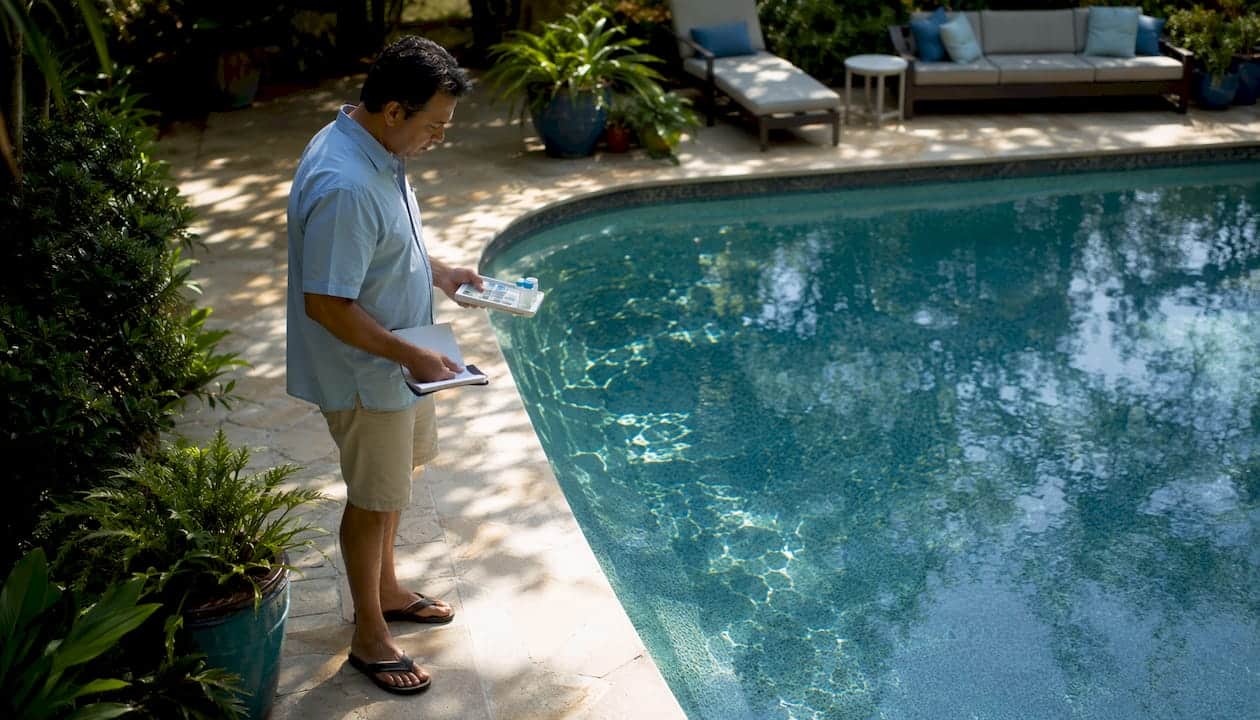
Water chemistry is the single biggest variable in whether a surface reaches its lower or upper lifespan limit. A plaster pool with perfectly balanced water can outlast a pebble pool with chronically aggressive water chemistry.
What factors affect the longevity of pool surfaces?
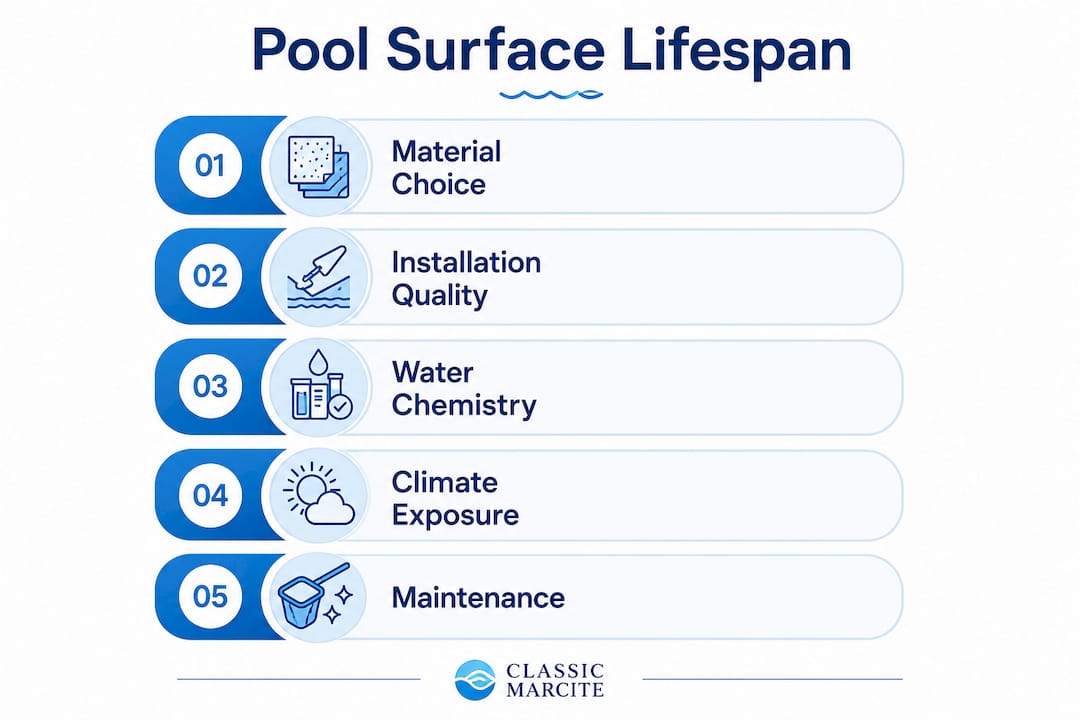
Installer technique and water chemistry management are the two biggest variables in pool surface durability. Material quality matters, but it cannot compensate for poor installation or neglected chemistry. Both factors operate invisibly until visible damage appears, which is why understanding them early saves money later.
Installation quality
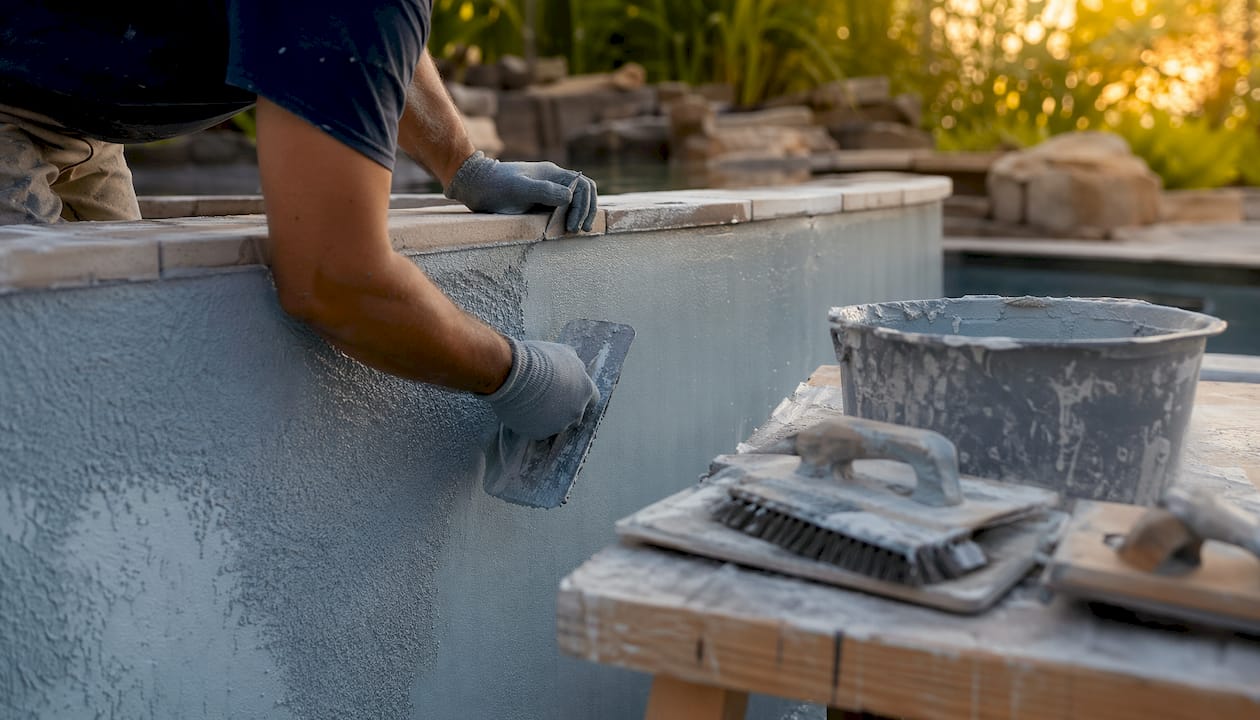
The water-to-cement ratio during plaster application directly affects surface density and porosity. A mix that is too wet produces a weaker surface that degrades faster. The curing process after application is equally critical. Errors during curing, such as uneven hydration or premature exposure to chemicals, cause early finish failure that no amount of maintenance can reverse. This is why installer expertise matters as much as the material itself.
Water chemistry
The Langelier Saturation Index (LSI) measures whether pool water is balanced, corrosive, or scale-forming. Maintaining the LSI between 0.0 and 0.3 prevents water from leaching calcium out of plaster and aggregate surfaces. When the LSI drops below 0.0, water becomes aggressive and actively dissolves the cement matrix. Maintaining pH between 7.2 and 7.6 and calcium hardness between 200–400 ppm prevents the corrosion that causes roughness and pitting over time.
Climate and environmental exposure
Florida’s heat and UV intensity accelerate surface aging compared to cooler climates. Pools in regions with freeze-thaw cycles face a different risk: water that seeps into micro-cracks and expands when frozen can fracture a surface from within. In both cases, the surface absorbs environmental stress that compounds over time.
Early warning signs to watch for
Catching surface problems early prevents minor issues from becoming full replacements. Watch for these indicators:
- Rough texture that scratches swimmers’ feet or hands
- Peeling or flaking sections of the finish layer
- Persistent staining that does not respond to standard cleaning
- Hairline cracks running across the surface
- Rising chemical consumption, which signals that failing plaster porosity is forcing increased acid and sanitizer use
Pro Tip: Test your water chemistry at least once a week during swim season and once every two weeks in winter. Catching an LSI drift early costs a few dollars in chemicals. Ignoring it for a season can cost thousands in surface repairs.
How can pool owners prolong the lifespan of their pool surfaces?
Extending pool surface life is a maintenance discipline, not a one-time decision. The choices you make every week compound over years into either a surface that reaches its maximum lifespan or one that fails a decade early. These steps apply to every finish type, from basic plaster to premium pebble aggregate.
-
Test and balance water chemistry weekly. Keep pH between 7.2 and 7.6, calcium hardness between 200–400 ppm, and the LSI between 0.0 and 0.3. Balanced water protects the cement matrix and prevents the corrosion that roughens surfaces prematurely.
-
Brush the pool walls and floor two to three times per week. Use a nylon brush on plaster and aggregate surfaces. Avoid steel brushes, which scratch the finish and create sites where algae and staining take hold. Regular brushing also prevents calcium deposits from bonding to the surface.
-
Manage water levels carefully during draining. Draining a pool and leaving it exposed to hot sun causes rapid drying of plaster, which leads to cracking and delamination. Schedule any draining for cooler months and minimize the time the shell sits empty.
-
Schedule professional inspections every two to three years. A trained eye catches early surface deterioration that homeowners miss. Addressing small cracks or rough patches promptly prevents water intrusion that accelerates structural damage.
-
Plan resurfacing before the surface fails completely. Proactive resurfacing around 15 years is advisable even when the surface looks acceptable. Underlying deterioration increases maintenance costs and can damage the pool shell if left unaddressed.
For a detailed routine, the Classicmarcite guide on pool surface maintenance covers each step with specific product and frequency recommendations.
Pro Tip: Pool chemicals serve a dual role: sanitation and surface preservation. Treating chemistry as purely a health issue misses half the equation. Balanced water protects your finish as much as it protects swimmers.
What are the long-term financial implications of different pool surfaces?
The upfront cost of a pool finish is only part of the financial picture. The full cost of ownership includes how many times you resurface over 20 years and what each resurface costs. Plaster’s lower upfront cost often results in two full resurfaces over a 20-year period, while premium aggregate finishes typically require only one. That pattern makes premium finishes more cost-effective over time despite their higher initial price.
| Finish Type | Cost per Sq Ft | Est. Lifespan | Resurfaces in 20 Years | Annualized Cost |
|---|---|---|---|---|
| Plaster | $4–$7 | 7–12 years | 2 | Highest |
| Quartz aggregate | $7–$10 | 12–20 years | 1 | Moderate |
| Pebble aggregate | $10–$15 | 15–25+ years | 0–1 | Lower |
| Glass tile | $30–$50+ | 25–50 years | 0 | Lowest long-term |
For a 500-square-foot pool, two plaster resurfaces at $4–$7 per square foot add up to $4,000–$7,000 in resurfacing costs alone over 20 years, not counting the labor disruption and downtime. A single pebble aggregate application at $10–$15 per square foot costs $5,000–$7,500 once and lasts the same period or longer. The math favors premium finishes for anyone planning to stay in the property long-term.
Property managers overseeing multiple pools benefit most from this analysis. Staggering resurfacing schedules across a portfolio and selecting durable finishes for high-use pools reduces total maintenance spend significantly. For a broader look at pool installation costs and how surface choices factor into the full project budget, third-party cost breakdowns provide useful context.
The right finish choice depends on your time horizon and usage level. A vacation rental property with heavy use demands a pebble or quartz finish. A lightly used residential pool where the owner plans to sell in eight years may be better served by a quality plaster application with excellent water chemistry management.
Key Takeaways
Pool surface lifespan depends on material choice, installer quality, and consistent water chemistry management, with premium finishes delivering the lowest annualized cost over 20 years.
| Point | Details |
|---|---|
| Material determines baseline lifespan | Plaster lasts 7–12 years; pebble aggregate lasts 15–25+ years; glass tile can last 50 years. |
| Installer quality is non-negotiable | Errors in water-to-cement ratio or curing cause early failure that maintenance cannot fix. |
| LSI balance protects the surface | Keep the Langelier Saturation Index between 0.0 and 0.3 to prevent calcium leaching and pitting. |
| Premium finishes cost less long-term | Pebble and quartz finishes require fewer resurfaces over 20 years, lowering total ownership cost. |
| Resurface before visible failure | Proactive resurfacing around 15 years prevents structural damage and rising maintenance costs. |
What I’ve learned after watching thousands of pool surfaces age
The most common mistake I see is homeowners treating pool chemistry as a sanitation task and nothing more. They shock the pool, add chlorine, and consider the job done. What they miss is that water chemistry is also a preservation system for the surface itself. Aggressive water does not announce itself. It quietly dissolves the cement matrix over months until the surface feels like sandpaper and staining becomes impossible to control.
The second misconception is that brand name alone determines durability. It does not. I have seen premium aggregate finishes fail in five years because the installer rushed the curing process. I have also seen basic plaster surfaces hold up beautifully for 14 years because the owner tested water twice a week without fail. The material sets the ceiling. The installer and the owner determine whether you reach it.
The industry is moving toward aggregate and pebble finishes as the standard rather than the premium option. The cost gap has narrowed, and the durability advantage is too significant to ignore for anyone planning to own a property for more than a decade. If you are choosing a finish for a pool you intend to keep, the benefits of pebble finishes make them the practical choice, not just the aesthetic one.
My honest advice: spend the extra money on the installer, not just the material. A certified applicator who follows proper curing protocols will get more life out of a mid-range finish than a rushed crew will get out of the most expensive product on the market.
— Results
Classicmarcite pool resurfacing: built for Florida’s demands
Florida pools face some of the harshest conditions for surface longevity: intense UV exposure, high swimmer loads, and year-round chemical demands. Classicmarcite has resurfaced over 100,000 pools across Orlando, Jacksonville, and beyond since 1988, applying premium materials including Pebble Tec® with certified installation techniques that protect your surface from day one.

Classicmarcite’s team guides homeowners and property managers through finish selection, water chemistry setup, and post-resurfacing maintenance so every surface reaches its full lifespan potential. Whether you need pool resurfacing in The Villages or a full renovation across a commercial property, Classicmarcite delivers the installation quality that makes the difference between a surface that lasts 10 years and one that lasts 25. Request a free estimate and get a finish that holds up.
FAQ
How long does a pool surface typically last?
Pool surface lifespan ranges from 7–12 years for plaster to 25–50 years for glass tile, depending on material, installation quality, and water chemistry maintenance.
What are the signs that a pool surface needs resurfacing?
Rough texture, peeling, persistent staining, hairline cracks, and rising chemical consumption all indicate that a pool surface is deteriorating and may need resurfacing.
Does water chemistry really affect how long a pool finish lasts?
Yes. Maintaining pH between 7.2 and 7.6 and the Langelier Saturation Index between 0.0 and 0.3 prevents corrosive water from dissolving the cement matrix and shortening surface life.
Is it worth paying more for a pebble or quartz finish?
Premium finishes like quartz and pebble aggregate typically require fewer resurfaces over 20 years, making their annualized cost lower than plaster despite the higher upfront price.
When should I schedule pool resurfacing?
Proactive resurfacing around the 15-year mark is advisable even if the surface appears acceptable, because underlying deterioration increases maintenance costs and risks structural damage to the pool shell.