TL;DR:
- Early signs of pool surface damage include abnormal water loss, rough textures, and visible cracks that indicate potential issues. Florida’s climate accelerates mineral buildup and surface deterioration, requiring regular inspection and maintenance to prevent costly repairs. Professional evaluation helps identify serious problems like delamination and structural cracks before they lead to extensive and expensive resurfacing.
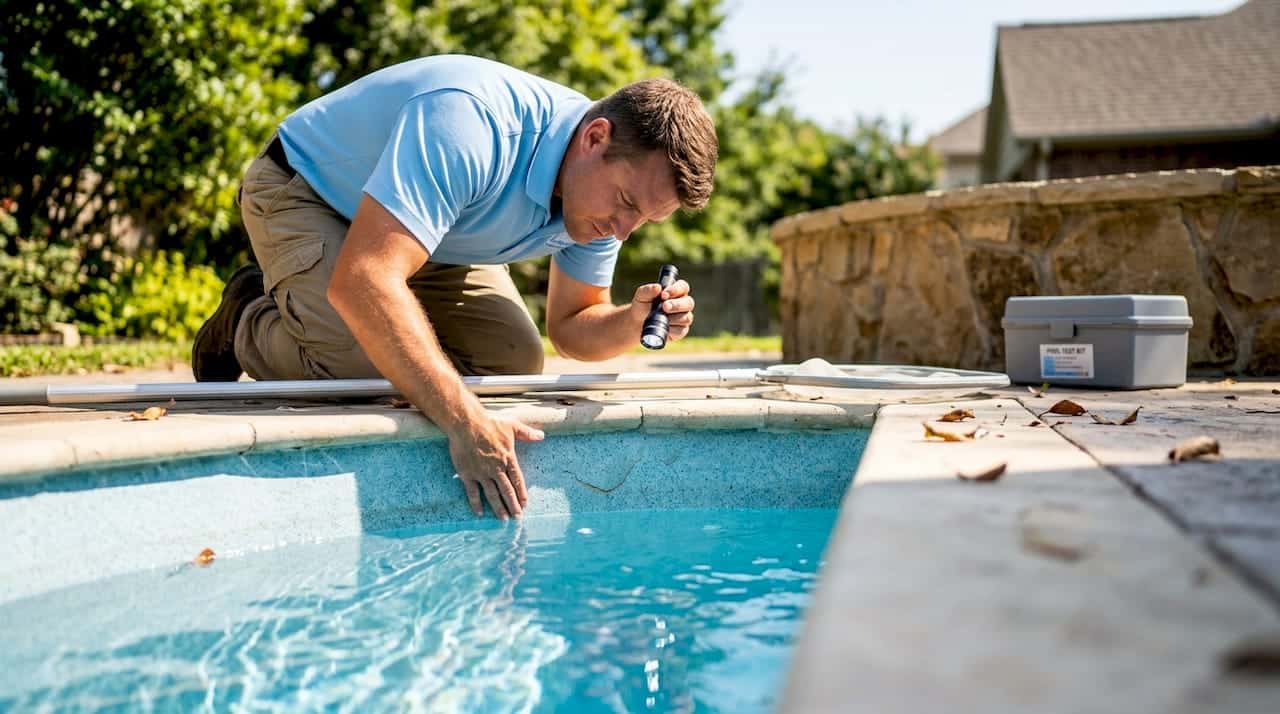
Your pool’s surface is telling you something long before you notice it standing at the edge. Recognizing the signs of pool surface damage early is the difference between a quick, affordable fix and a full structural repair bill that can run into thousands of dollars. Florida’s heat, humidity, and aggressive sun put pool surfaces under stress that homeowners in cooler climates simply don’t deal with. This guide walks you through every major warning sign, from abnormal water loss to surface peeling, so you can assess your pool with confidence and act before small problems grow.
Table of Contents
- Signs of pool surface damage: water loss and leaks
- Surface texture changes: roughness, spalling, and calcium buildup
- Cracks and structural damage: identifying severity and risks
- Delamination and surface peeling: recognizing advanced damage
- Staining, discoloration, and surface erosion: cosmetic and safety concerns
- Comparison of damage signs and their urgency for repair
- Our perspective: the damage you ignore is the damage that costs you
- Ready to get an expert assessment of your pool?
- Frequently asked questions
Key Takeaways
| Point | Details |
|---|---|
| Excessive water loss | Losing more than 2-4 inches of water weekly signals possible leaks or surface damage. |
| Surface roughness | A rough or abrasive pool surface indicates plaster wear or chemical imbalance needing attention. |
| Cracks require evaluation | Cracks larger than 1/16 inch or leaking warrant professional inspection and repair. |
| Delamination warning signs | Hollow sounds or peeling plaster mean bond failure and often need resurfacing. |
| Staining and erosion | Persistent stains and pitting signal deeper surface deterioration and safety hazards. |
Signs of pool surface damage: water loss and leaks
Water loss sounds simple, but it’s one of the most misread signals homeowners encounter. A pool in Orlando or Jacksonville will naturally lose about a quarter-inch of water daily through evaporation, which adds up to roughly 2 to 4 inches per week in Florida’s climate. That’s normal. What isn’t normal is losing more than that consistently, especially when your pool cover is on.
Here are the most common leak indicators to track:
- The bucket test: Fill a bucket with pool water, set it on a step inside the pool, and mark both water levels. After 24 hours, compare evaporation rates. If the pool drops significantly more than the bucket, you likely have a leak.
- Refilling frequency: Frequent top-offs more than once weekly are a clear signal that water is escaping somewhere beyond normal evaporation.
- Wet spots near the equipment pad: Soft or soggy ground around your pump, filter, or pipe fittings points to a plumbing leak rather than a surface issue.
- Leaks at material transitions: The areas where different materials meet, such as where tile meets plaster at the water line, or where fittings pass through the shell, are the most common failure points.
To keep ahead of this, learn what practices maintain pool finish durability over time, and understand when pools need resurfacing before a small leak becomes a structural headache.
Pro Tip: Run the bucket test for two consecutive days before calling a contractor. A single day’s result can be skewed by wind or splashing. Two consistent days of excess pool drop confirm a problem worth investigating.
Surface texture changes: roughness, spalling, and calcium buildup
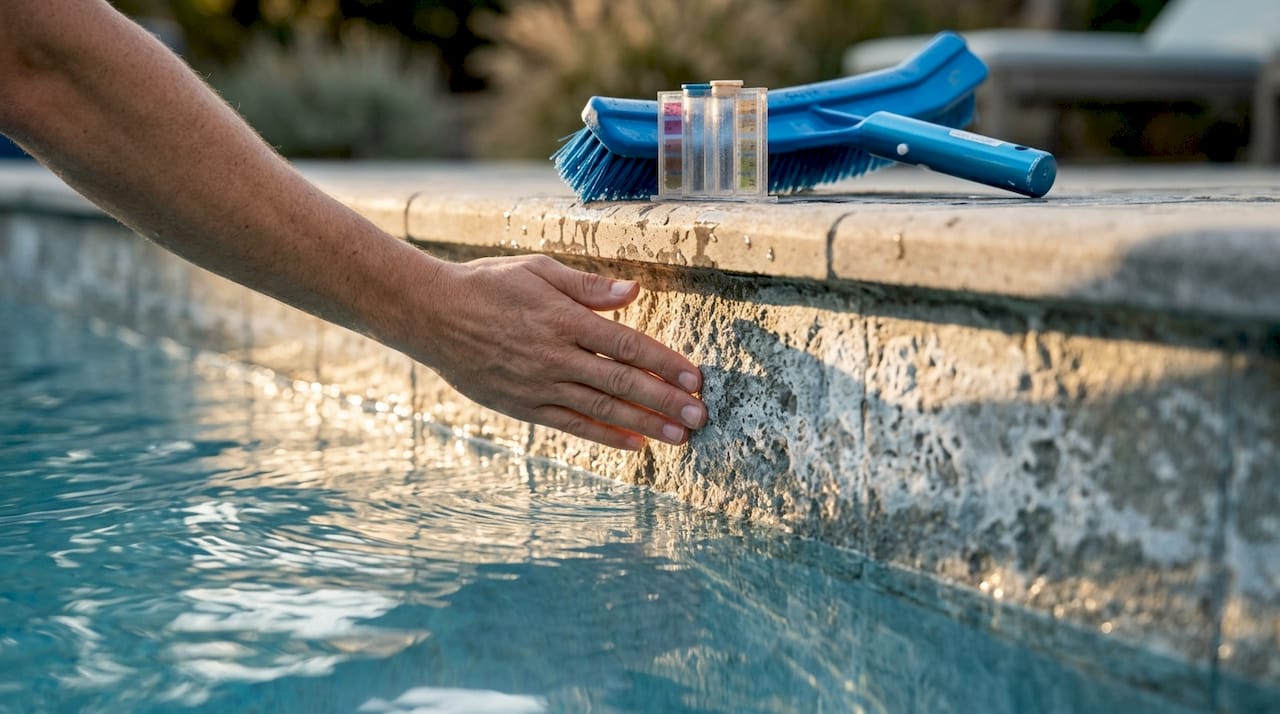
Run your hand along the pool wall underwater. The surface should feel smooth or have a consistent, intentional texture. Anything that feels unexpected, whether sharp, sandpapery, or flaking, signals a problem that won’t fix itself.
What to watch for:
- Pool rash: Rough textures cause swimmer skin irritation, often called “pool rash,” where abrasive plaster scrapes the skin of anyone who touches the walls or floor.
- Spalling: This is when plaster peels away in thin layers. It happens when low pH or improper calcium hardness breaks down the plaster’s bond. You’ll notice thin chips or flaky patches lifting from the surface.
- Calcium scale: High pH or high calcium hardness causes mineral deposits to build up, leaving a sandpaper-like texture that also turns water gray. It’s more than cosmetic. Scale traps algae spores and makes chemical treatment less effective.
- Etching: The opposite of scale, etching is surface erosion from water that’s too acidic. The plaster dissolves slightly, leaving a pitted, chalky feel.
Florida pools face an accelerated version of these problems. The high evaporation rate concentrates minerals in the water faster than in cooler regions, which means chemical balance needs more frequent attention here than almost anywhere else. Good pool surface maintenance practices and consistent pool maintenance in Florida are essential to prevent these texture issues from developing in the first place.
Pro Tip: Test your calcium hardness monthly, not just when the water looks off. Calcium buildup begins forming well below visible thresholds. Catching an upward trend early lets you adjust chemistry before scale locks onto the surface.
Cracks and structural damage: identifying severity and risks
Not all cracks are equal. A hairline crack the width of a human hair is cosmetically annoying but rarely an emergency. A crack you can feel with your fingernail is a different conversation entirely.
Types of cracks to identify:
- Hairline cracks: Thin surface fractures less than 1/16 inch wide, often caused by surface shrinkage or minor settling. Monitor them monthly but don’t panic immediately.
- Structural cracks: Cracks wider than 1/16 inch or actively leaking require professional evaluation. These can allow water to migrate behind the shell, leading to erosion of the supporting soil.
- Spiderweb cracks: A cluster of radiating cracks, often indicating broad stress across the surface from ground movement or age-related shrinkage.
- Step and corner cracks: Cracks along pool steps or at wall-to-floor transitions are high-stress areas. They almost always need repair before they spread.
Structural cracks often indicate soil movement beneath the pool, freeze-thaw cycles (less common in Florida but relevant), or poor original installation. In Central Florida and the Jacksonville area, soil shifting from rain-saturation and drought cycles is a real factor.
| Crack type | Width | Risk level | Recommended action |
|---|---|---|---|
| Hairline | Less than 1/16 in | Low | Monitor monthly |
| Surface crack | 1/16 to 1/8 in | Medium | Repair within 3 months |
| Structural crack | Greater than 1/8 in | High | Immediate professional inspection |
| Leaking crack | Any width | Critical | Repair immediately |
If you want to understand your repair options before calling anyone, the DIY pool crack repair guide is a good starting point. For anything that looks structural, the structural crack repair guide covers costs and solutions in detail.
Delamination and surface peeling: recognizing advanced damage
Delamination is what happens when pool plaster separates from the underlying shell. You can’t always see it at first. But you can hear it.
Signs of delamination:
- Hollow sounds: Take a hard plastic mallet or even your knuckle and tap along the pool wall when it’s drained. A solid surface sounds dense. A delaminated area sounds hollow, like tapping on an empty drum.
- Visible bubbles or blisters: Raised areas on the surface are almost always delamination. Water has worked its way between the plaster and the shell, and pressure creates the bubble.
- Peeling sections: Large flaps or chunks of surface material lifting away are advanced delamination, usually caused by years of chemical imbalance or poor original application.
- Localized patches of discoloration: Delaminated areas often look darker or blotchy because they absorb water differently than bonded plaster.
Here’s the key distinction homeowners miss: isolated delamination spots can be patched, but when you find multiple hollow areas scattered across walls and floor, patching creates a patchwork problem rather than a real solution. At that point, full resurfacing is the better investment.
Pro Tip: Do the tap test at least once a year when your pool is drained for cleaning. It takes five minutes to walk the perimeter and costs nothing. Catching one or two hollow spots early is far better than discovering a dozen during a scheduled drain.
Staining, discoloration, and surface erosion: cosmetic and safety concerns
Surface staining is frequently dismissed as a cleaning problem. Sometimes it is. But persistent staining that won’t respond to standard treatment indicates that the surface has lost its protective layer and absorbed minerals or metals into the plaster itself. That’s a surface integrity issue, not a chemistry issue.
Common staining and erosion signs:
- Rust-colored stains: Iron from well water or corroding equipment leaves orange to brown streaks that penetrate porous plaster. Chemical treatments reduce them temporarily but won’t eliminate them if the surface is compromised.
- Blue-green stains: Copper from algaecides or corroding heater components leaves teal or green marks, particularly around fittings and returns.
- Mottled or blotchy surface: Inconsistent coloring across large areas often signals uneven plaster application during the original build or resurface.
- Discoloration near fittings: Dark rings or streaks around return jets, main drains, or light housings hint at water intrusion behind the surface.
- Pitting and erosion: Visible pitting creates rough spots that harbor algae and make cleaning significantly harder. It’s also a barefoot safety concern.
| Stain or issue | Likely cause | DIY fixable? | Professional action needed? |
|---|---|---|---|
| Rust stains | Iron in water or corroding parts | Temporarily | Yes, if recurring |
| Blue-green stains | Copper in water | Partially | Yes, if absorbed |
| Mottled surface | Chemical imbalance or age | No | Resurfacing |
| Pitting | Acid etching or long-term erosion | No | Resurfacing |
| Fitting discoloration | Water intrusion | No | Inspection and repair |
For a broader look at what surface problems are most common in Florida conditions, the guide on common pool repairs and pool maintenance tips for lasting surfaces both offer practical context.
Comparison of damage signs and their urgency for repair
To help you prioritize, here’s a comparison of common pool surface damage signs with guidance on how urgently to address each.
| Damage sign | Severity | Primary risk | Recommended timing |
|---|---|---|---|
| Abnormal water loss | Medium to high | Water waste, structural erosion | Inspect within 2 weeks |
| Rough texture or spalling | Medium | Swimmer injury, chemical waste | Address within 1 to 3 months |
| Calcium scale buildup | Low to medium | Algae growth, equipment wear | Treat at next chemical service |
| Hairline cracks | Low | Cosmetic, potential leak start | Monitor monthly |
| Structural cracks | High | Leaks, shell failure | Immediate professional inspection |
| Delamination | High | Surface failure, leaks | Professional evaluation within 2 weeks |
| Persistent staining | Low to medium | Aesthetics, surface degradation | Address within 3 to 6 months |
| Pitting and erosion | Medium to high | Algae harbor, safety hazard | Resurface planning within 6 months |
Our perspective: the damage you ignore is the damage that costs you
After resurfacing more than 100,000 pools across Florida since 1988, the pattern we see most often is not neglect. It’s misread timing. Homeowners know something looks off. They see the rough spot, they notice the waterline stain, they check the bucket test and get an odd result. But they wait, thinking they’ll deal with it next season.
Here’s what that actually costs: a single delaminating patch that gets ignored through one more Florida summer becomes three or four patches by spring. A hairline crack that sits untreated through a wet season often absorbs enough water behind the shell to create a structural problem. The surface replacement that could have been avoided with a timely patch repair turns into a full shell evaluation.
The conventional wisdom is that pools are expensive to maintain. What’s actually expensive is reactive maintenance. Pools that are inspected annually, have consistent chemical balance, and get small problems addressed early routinely last 10 to 15 years between resurfacings. Pools that are ignored until the problem is impossible to ignore often need resurfacing in 7 to 8 years, sometimes sooner.
The tools to assess your pool early are not complicated. A bucket, your knuckles, your hand on the wall, and eyes on the waterline. Use them. The cost of a professional inspection is always less than the cost of discovering a structural problem that could have been caught a season earlier.
Ready to get an expert assessment of your pool?
If what you’ve read here matches what you’re seeing in your pool, the next step is a professional evaluation from someone who has seen every variation of Florida pool surface damage up close.

Classic Marcite has resurfaced more than 100,000 pools across Orlando, Jacksonville, and Central Florida since 1988, and we’re the largest Pebble Tec® applicator in the region. Whether you’re seeing early staining, hearing hollow spots, or dealing with cracks you’re not sure how to classify, our team can give you a clear picture of what’s happening and what it will take to fix it. Contact us for a free estimate and find out exactly where your pool stands before minor damage becomes a major project.
Frequently asked questions
What is normal water loss for a residential pool and when should I worry?
Normal water loss is about a quarter inch per day or 2 to 4 inches per week due to evaporation. Losing more than this consistently suggests leaks or surface damage that warrants professional inspection.
How can I identify if cracks are structural or just cosmetic?
Cracks wider than 1/16 inch or actively leaking are typically structural and need prompt professional attention. Hairline cracks are usually cosmetic but should be monitored for any changes in width or length.
What does pool plaster delamination sound like and why is it concerning?
Delamination produces a hollow, drum-like sound when you tap the plaster lightly, indicating the surface has separated from the shell. Left unaddressed, it spreads and typically requires full resurfacing rather than spot repair.
Can calcium buildup on my pool surface be removed without resurfacing?
Mild calcium scale can be treated with a wet pumice stone or water additives, depending on your pool surface type. Severe or widespread buildup, especially in older plaster, often needs professional resurfacing to prevent the problem from returning.