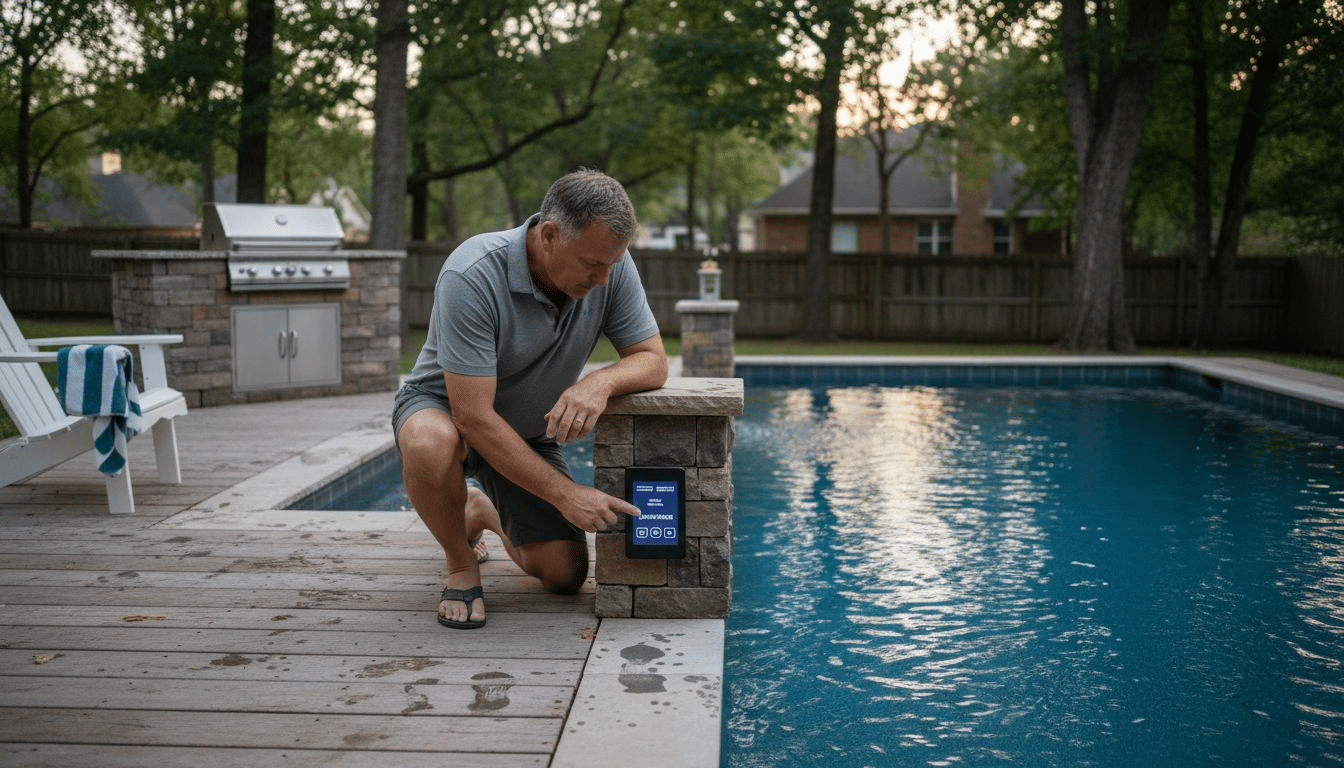
Modern pool renovations often overlook a critical element that determines safety, usability, and aesthetic success. Proper lighting can reduce pool-related accidents significantly by illuminating hazards that become invisible after sunset. Beyond preventing injuries, strategic lighting transforms pools into inviting nighttime retreats while extending swim hours year-round. This guide explores how lighting integration during renovation delivers measurable safety improvements, enhanced functionality, and visual appeal for Orlando and Jacksonville pool owners.
Table of Contents
- Introduction To Pool Lighting In Renovations
- Safety Benefits Of Pool Lighting
- Functional Benefits And Usability Enhancement
- Aesthetic Enhancements And Placement Strategies
- Technological Options And Energy Efficiency
- Installation Challenges And Solutions
- Common Misconceptions About Pool Lighting
- Practical Takeaways For Homeowners And Property Managers
- Enhance Your Pool Renovation With Expert Lighting Solutions
- Frequently Asked Questions
Key takeaways
| Point | Details |
|---|---|
| Safety enhancement | Pool lighting illuminates edges, steps, and underwater hazards, dramatically reducing nighttime accidents. |
| Extended usability | Quality lighting enables safe swimming after dark, effectively doubling your pool’s available hours. |
| Energy efficiency | LED and nicheless lighting solutions cut energy use by up to 87% compared to traditional options. |
| Strategic placement | Spacing lights every 8 feet with low wattage creates uniform coverage without glare or dark spots. |
| Code compliance | Professional installation meeting NEC Article 680 standards ensures electrical safety and long-term reliability. |
Introduction to pool lighting in renovations
Lighting serves as the foundation for safe, functional pool environments that homeowners can enjoy beyond daylight hours. Modern pool lighting upgrades during renovation integrate seamlessly with resurfacing projects, architectural improvements, and equipment updates to create cohesive results. Thoughtful lighting design complements new finishes like Pebble Tec surfaces while addressing practical safety concerns that plague older installations.
Today’s lighting technologies offer unprecedented flexibility for renovation projects:
- LED systems deliver brilliant illumination while consuming minimal electricity
- Fiber optic installations provide unique visual effects with enhanced safety profiles
- Nicheless lights simplify retrofit applications by eliminating structural modifications
- Smart controls enable remote operation, color customization, and automated schedules
- Low-voltage systems reduce electrical hazards while maintaining powerful output
Property value increases when renovations include professional lighting that enhances both form and function. Strategic placement transforms ordinary pools into stunning nighttime focal points that attract buyers and impress guests. Coordinating lighting installation with resurfacing work maximizes efficiency while minimizing disruption to your outdoor space.
Safety benefits of pool lighting
Visibility determines whether pools remain safe recreational spaces or become nighttime hazard zones. Illuminated pool edges, entry steps, and depth transitions prevent the slips and falls that send thousands to emergency rooms annually. Parents supervising children during evening swims gain crucial visual advantages when lighting reduces pool-related accidents through comprehensive coverage.
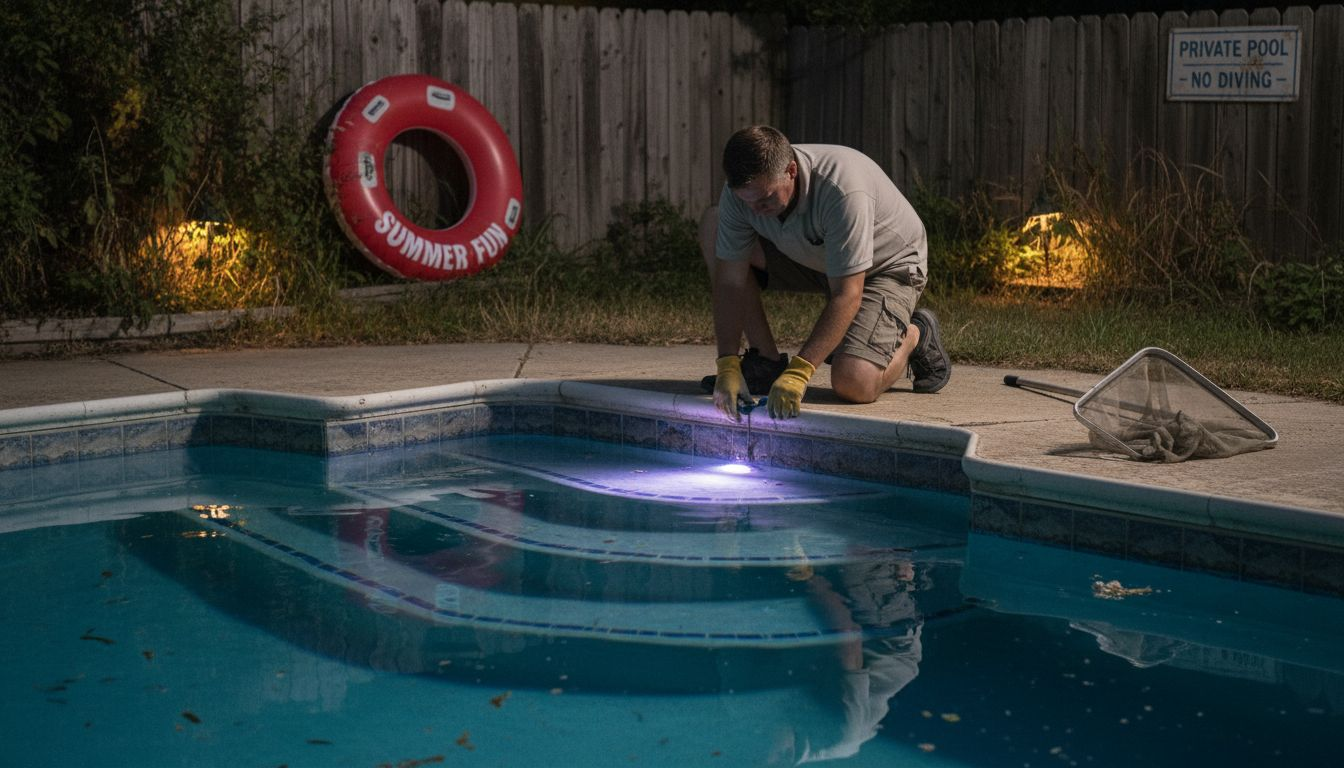
Electrical safety requirements protect swimmers from potentially fatal shocks in wet environments. NEC Article 680 mandates low-voltage GFCI-protected lighting installations specifically designed for aquatic applications. Licensed electricians ensure connections meet Florida building codes while incorporating proper grounding and circuit protection. These safeguards become especially critical during renovations when existing wiring may be outdated or degraded.
Proper installation addresses multiple safety dimensions:
- Strategic fixture placement eliminates dangerous dark spots where swimmers lose spatial awareness
- Glare control prevents eye strain and disorientation near water surfaces
- Waterproof housings protect electrical components from moisture infiltration
- Emergency shutoff systems enable quick power disconnection during incidents
- Regular maintenance schedules identify failing components before hazards develop
“Comprehensive lighting coverage transforms pool areas from risky nighttime zones into safely monitored recreational spaces where families confidently gather after sunset.”
Integrating lighting improvements with broader reasons for pool remodeling creates synergistic benefits. Resurfacing projects provide ideal timing for upgrading outdated fixtures to modern, code-compliant systems. Coordinated installations reduce labor costs while ensuring lighting complements new finishes and architectural features.
Functional benefits and usability enhancement
Quality lighting effectively doubles pool availability by enabling safe night swims that extend recreational hours well past sunset. Florida’s warm evenings become prime swimming time when proper illumination eliminates visibility concerns. Families maximize their renovation investment by enjoying pools during cooler nighttime temperatures rather than limiting use to hot midday hours.
Versatile lighting systems adapt to different activities and occasions. Adjustable brightness supports everything from vigorous lap swimming to relaxing evening floats. Color-changing LEDs create party atmospheres for social gatherings or romantic settings for couples. This flexibility transforms static pools into dynamic entertainment spaces that serve multiple purposes throughout the week.
Practical benefits compound over time:
- Increased usage generates better return on renovation investments
- Extended swim seasons justify maintenance and operating expenses
- Enhanced supervision capabilities reduce accident risks during gatherings
- Improved aesthetics encourage more frequent pool enjoyment
- Smart scheduling optimizes energy consumption based on actual usage patterns
Pro Tip: Install dimmable LED systems that adjust from bright task lighting for swimming to soft ambient glow for relaxation, maximizing versatility without multiple fixture types.
Understanding why renovate your pool includes recognizing lighting’s role in transforming underutilized assets into highly functional spaces. Properly lit pools become natural gathering spots that enhance property appeal and family lifestyle. Evening entertaining becomes feasible when guests navigate pool areas safely and comfortably after dark.
Aesthetic enhancements and placement strategies
Strategic lighting placement balances functional illumination with visual artistry that elevates pool environments. Spacing one light every 8 feet provides baseline coverage for most rectangular pools, with adjustments for unique shapes and architectural features. Multiple low-wattage fixtures create even light distribution without harsh shadows or glaring hot spots.
Color temperature and hue selection dramatically impact ambiance and mood. Cool white tones replicate natural daylight for active swimming, while warmer colors create inviting evening atmospheres. Programmable RGB systems enable seasonal themes, holiday displays, or personalized color schemes that reflect individual preferences. Highlighting water features, landscaping, and hardscaping adds depth and visual interest to nighttime pool areas.
Design considerations for optimal results:
- Position lights to showcase architectural details like raised spas or vanishing edges
- Avoid direct upward angles that create uncomfortable glare for swimmers
- Layer underwater and perimeter lighting for dimensional effects
- Coordinate fixture finishes with deck materials and pool surfaces
- Use accent lighting to emphasize landscaping and create visual boundaries
| Lighting Approach | Visual Effect | Best Application |
|---|---|---|
| Uniform spacing | Clean, even illumination | Safety-focused installations |
| Accent clustering | Dramatic focal points | Architectural feature highlighting |
| Color zones | Dynamic visual interest | Entertainment and party settings |
| Perimeter only | Subtle ambient glow | Minimalist aesthetic preferences |
Common pool lighting myths debunked include the misconception that brighter always means better. Thoughtfully placed moderate-intensity fixtures outperform fewer high-powered lights by eliminating shadows and providing comfortable viewing conditions. Glare control becomes especially important near reflective pool surfaces where excessive brightness causes eye strain.
Technological options and energy efficiency
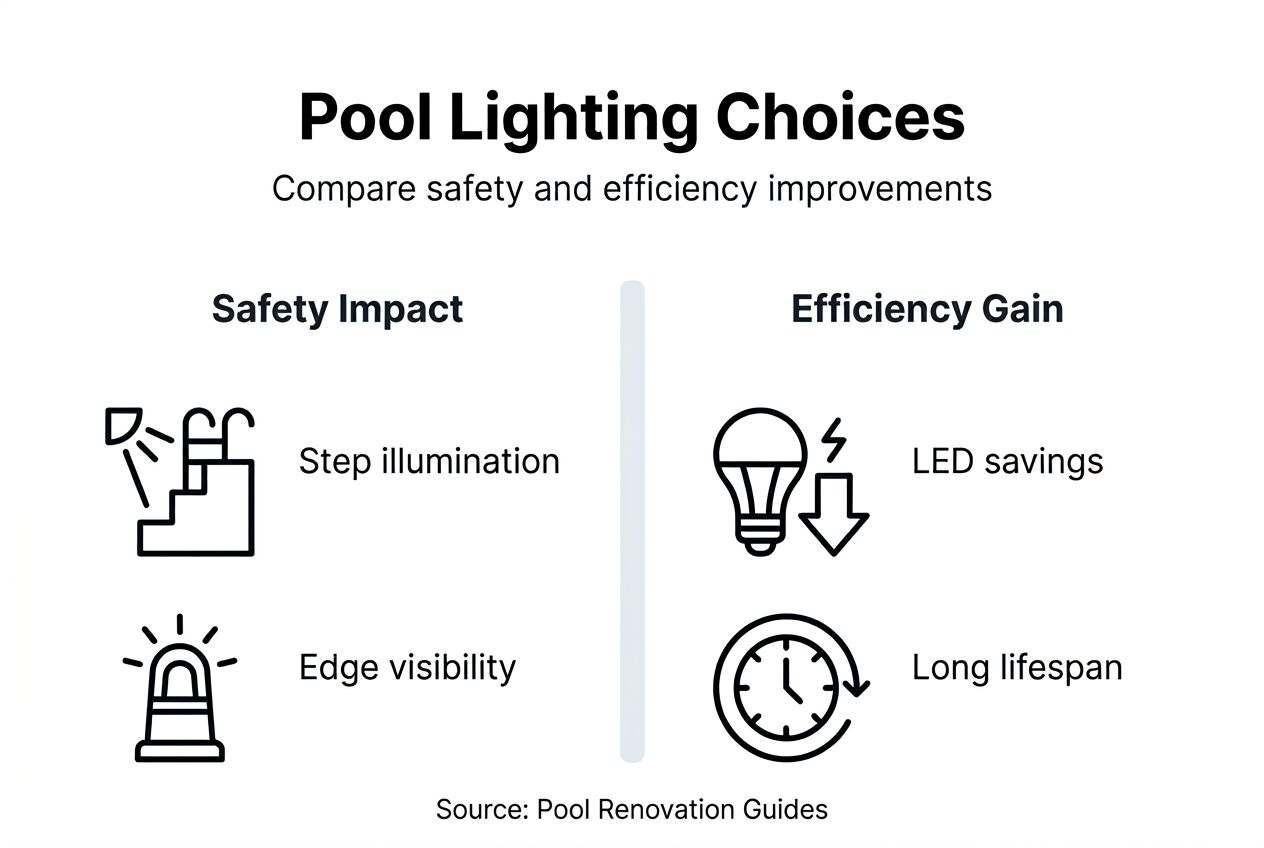
LED technology dominates modern pool renovations by delivering 80-87% energy savings compared to incandescent alternatives while lasting 10 times longer. These substantial efficiency gains translate to lower utility bills and reduced maintenance expenses over the fixture’s 50,000-hour lifespan. Color-changing LED systems provide entertainment value without the energy penalty of traditional colored bulbs.
Fiber optic lighting offers unique advantages for specific applications despite limitations. These systems keep electrical components away from water, enhancing safety in sensitive installations. However, fiber optic lights have moderate brightness levels and require more frequent maintenance than LED alternatives, making them less suitable for primary illumination in large pools.
| Technology | Energy Efficiency | Lifespan | Brightness | Best Use Case |
|---|---|---|---|---|
| LED | Excellent (80-87% savings) | 50,000+ hours | High | Primary pool lighting |
| Fiber Optic | Good | 15,000 hours | Moderate | Accent and decorative |
| Incandescent | Poor (baseline) | 2,000 hours | High | Legacy systems only |
| Halogen | Fair | 4,000 hours | Very High | Specialized applications |
Nicheless LED lights revolutionize retrofit installations by threading directly into existing plumbing without cutting pool shells. This innovative design eliminates costly structural modifications while delivering modern performance. Smart controls add another efficiency layer by enabling remote operation, scheduled activation, and automated responses to ambient light levels.
Pro Tip: Prioritize LED systems with smartphone integration for convenient control and energy monitoring that identifies usage patterns and optimization opportunities.
Exploring pool renovation cost saving tips reveals lighting’s long-term value proposition. Higher upfront LED costs pay back quickly through reduced electricity consumption and virtually eliminated bulb replacement expenses. Understanding eco-friendly pool renovation benefits includes recognizing how efficient lighting reduces environmental impact while improving functionality.
Installation challenges and solutions
Retrofitting lighting into existing pools presents unique obstacles that require careful planning and execution. Older installations often lack proper electrical infrastructure or feature outdated wiring that fails to meet current safety standards. Nicheless LED pool lights simplify retrofits by threading into existing returns and fittings, preserving pool integrity while upgrading performance.
Coordinating electrical work with other renovation tasks minimizes disruption and controls costs. Installing conduit and junction boxes during resurfacing projects avoids subsequent deck demolition for wire runs. Licensed electricians ensure compliance with NEC Article 680 GFCI protection requirements that prevent electrical hazards in wet environments.
Practical installation considerations:
- Schedule electrical inspections before closing walls or pouring decking
- Plan wire routing to avoid conflicts with plumbing and structural elements
- Install oversized conduit to accommodate future technology upgrades
- Incorporate accessible junction boxes for maintenance without excavation
- Document final electrical layouts with photos for future reference
Future-proofing installations saves money and hassle down the road. Smart-ready systems accommodate emerging control technologies without rewiring. Modular designs enable fixture upgrades as LED technology continues advancing. Proper planning during initial renovations prevents costly retrofits when adding automation or expanding lighting coverage.
Specialized guidance for remodeling older pools emphasizes lighting integration as a critical modernization component. Updating electrical systems during comprehensive renovations addresses safety concerns while enabling contemporary features. Professional contractors coordinate lighting installation with resurfacing schedules to optimize efficiency and minimize pool downtime.
Common misconceptions about pool lighting
Many homeowners mistakenly believe fewer high-wattage fixtures provide superior illumination compared to distributed low-intensity systems. Reality proves otherwise, as multiple low-wattage lights create safer coverage by eliminating shadows and reducing glare. Even distribution prevents the harsh contrasts that impair depth perception and spatial awareness near water.
Fiber optic technology often receives undeserved credit as the premium lighting solution. While offering safety advantages through electrical isolation, these systems deliver lower brightness levels and shorter lifespans than modern LEDs. The maintenance burden and limited output make fiber optics better suited for accent applications rather than primary pool illumination.
Critical misconceptions to address:
- Viewing pool lighting as purely decorative rather than essential safety infrastructure
- Assuming any bright light provides adequate coverage regardless of placement
- Believing older incandescent systems perform comparably to modern LEDs
- Expecting fiber optic installations to match LED brightness and longevity
- Thinking DIY installations save money compared to professional code-compliant work
Ignoring lighting during renovations creates missed opportunities that become expensive to correct later. Installing fixtures after resurfacing requires cutting into new finishes and disrupting recently completed work. The integrated approach coordinates lighting with structural improvements, delivering cohesive results that maximize both safety and aesthetics.
Avoiding common pool lighting mistakes requires understanding these misconceptions before finalizing renovation plans. Additional pool renovation lighting myths include beliefs that lighting adds minimal value or that basic illumination suffices for modern pool environments. Professional guidance helps navigate these misunderstandings toward optimal solutions.
Practical takeaways for homeowners and property managers
Successful lighting integration starts with systematic assessment of current conditions and future goals. Walk your pool area after dark to identify hazardous shadows, inadequate coverage zones, and opportunities for aesthetic enhancement. Document specific concerns like dark steps, invisible pool edges, or areas where supervision becomes difficult.
Follow these steps for optimal results:
- Evaluate existing lighting performance, noting safety gaps and usage limitations
- Research LED and nicheless options that balance efficiency with installation complexity
- Develop placement plans ensuring uniform coverage with appropriate fixture spacing
- Interview licensed electricians experienced with Florida pool codes and NEC Article 680
- Specify smart controls for convenient operation and energy management capabilities
- Coordinate lighting installation timing with resurfacing and remodeling schedules
- Verify final installations meet all safety codes before signing off on completed work
Pro Tip: Create a lighting mock-up using temporary fixtures before finalizing permanent installations, allowing you to test placement and intensity in real-world conditions.
Prioritize energy efficiency throughout the selection process. LED systems pay for themselves through reduced operating costs while delivering superior performance and longevity. Smart controls add convenience while optimizing consumption based on actual usage patterns rather than fixed schedules.
Professional pool remodeling services streamline lighting integration by coordinating electrical work with other renovation tasks. Experienced contractors understand pool resurfacing basics and how lighting installation timing impacts project efficiency. Their expertise ensures code compliance while achieving your safety, functional, and aesthetic objectives.
Enhance your pool renovation with expert lighting solutions
Transforming your pool through strategic lighting requires specialized knowledge and precise execution that Classic Marcite delivers across Orlando and Jacksonville. Our comprehensive renovation services integrate advanced lighting systems with premium resurfacing materials like Pebble Tec, creating cohesive results that enhance safety while elevating visual appeal. Since 1988, we’ve completed over 100,000 pool projects, developing expertise in coordinating electrical upgrades with structural improvements for maximum efficiency.

Professional installation ensures compliance with Florida electrical codes and NEC Article 680 requirements that protect your family from hazards. Our licensed technicians coordinate lighting placement with your pool’s unique architecture, delivering uniform coverage that prevents accidents while creating stunning nighttime ambiance. Whether upgrading an older installation or planning a complete renovation, we customize solutions matching your budget, timeline, and aesthetic preferences. Explore our pool renovation services in Jacksonville or review pool resurfacing basics to understand how integrated lighting transforms ordinary pools into extraordinary outdoor retreats. Contact Classic Marcite today for a consultation and discover how expert lighting design enhances your renovation investment. Our step by step pool remodeling guide outlines the complete process.
Frequently asked questions
What is the role of pool lighting in safety during renovations?
Proper lighting illuminates pool edges, entry steps, and depth transitions that become invisible hazards after sunset, significantly reducing nighttime accidents and injuries. Compliance with NEC Article 680 electrical codes ensures GFCI protection and low-voltage systems that prevent potentially fatal shocks in wet environments. Strategic fixture placement eliminates dangerous dark spots while providing clear visibility for supervising children and guests during evening swimming.
How does pool lighting affect energy costs after renovation?
LED lighting systems use 80 to 87 percent less energy than traditional incandescent bulbs while lasting up to 50,000 hours, dramatically reducing both electricity bills and replacement expenses. Smart lighting controls with programmable schedules and remote operation further optimize energy consumption by activating fixtures only when needed. The combination of efficient LED technology and intelligent automation typically pays back initial investment costs within two to three years through ongoing savings.
Can I retrofit pool lighting during a resurfacing project?
Nicheless LED lights install directly into existing plumbing returns without cutting pool shells or removing fixtures, making them ideal for resurfacing retrofits that preserve structural integrity. Coordinating lighting upgrades with scheduled resurfacing work minimizes disruption while reducing labor costs through efficient project management. This integrated approach avoids subsequent demolition of newly finished surfaces that would be necessary for lighting installations performed after resurfacing completion.
What are common mistakes to avoid with pool lighting in renovations?
Using too few high-wattage fixtures creates uneven illumination with harsh shadows and glare that actually reduce safety compared to properly spaced low-intensity systems. Ignoring local electrical codes and NEC Article 680 requirements leads to installations that pose serious shock hazards and fail inspections. Selecting lighting based solely on initial cost rather than considering long-term energy consumption and maintenance expenses results in higher total ownership costs over the fixture’s lifespan.