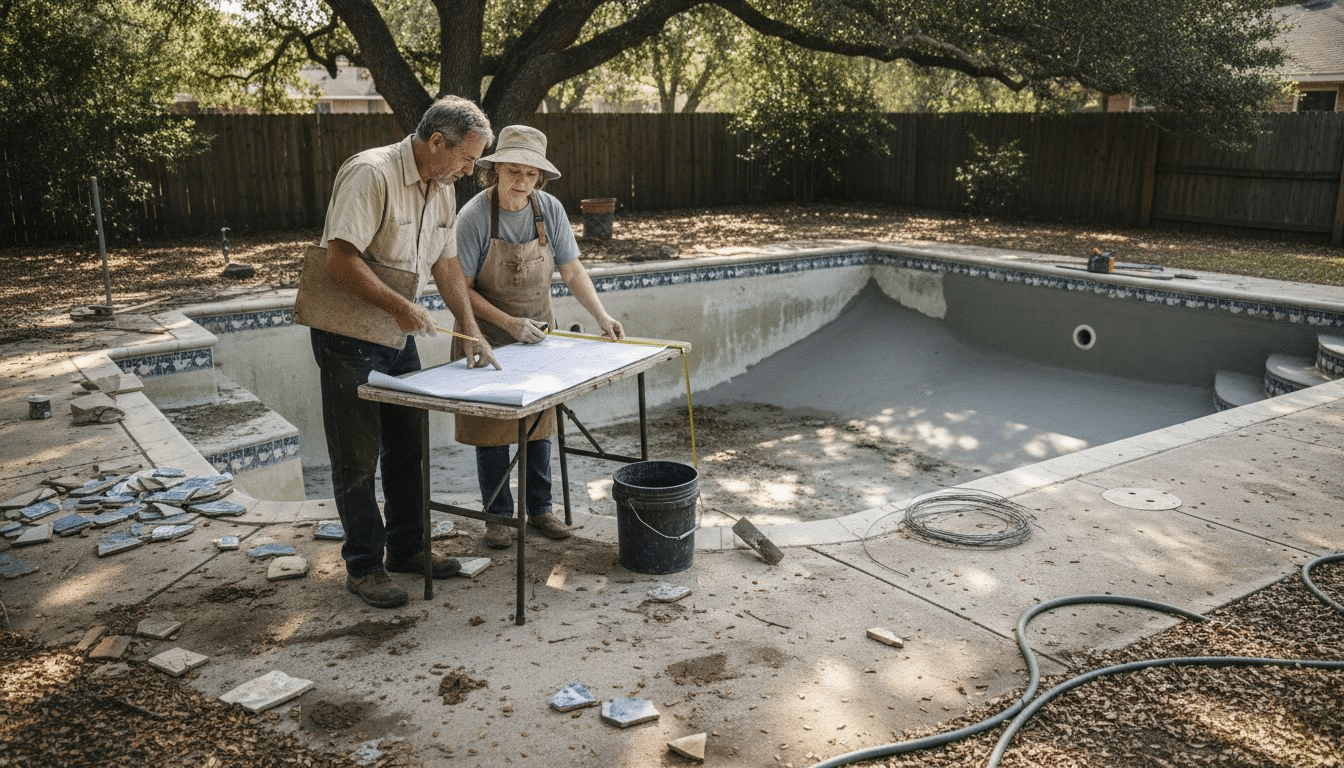
Most American homeowners discover that neglected pool surfaces often hide costly structural problems. In cities like Orlando and Jacksonville, Florida’s climate puts extra stress on aging pool materials, making regular inspections vital for your peace of mind. This guide walks you through practical steps that ensure your pool not only looks beautiful but also lasts longer, saving you money and reducing maintenance worries in the years ahead.
Table of Contents
- Step 1: Inspect Existing Pool Structures For Issues
- Step 2: Plan Design Updates And Material Selections
- Step 3: Prepare Pool Surfaces For Remodeling Work
- Step 4: Apply New Finishes, Tiles, And Deck Upgrades
- Step 5: Verify Quality And Complete Final Checks
Quick Summary
| Main Insight | Explanation |
|---|---|
| 1. Inspect for Structural Issues | Thoroughly assess pool surfaces for cracks or damage to prevent costly repairs later. |
| 2. Plan for Sustainable Design | Choose energy-efficient materials and incorporate features that minimize water loss and operational costs. |
| 3. Prepare Surfaces for Finishing | Clean and repair surfaces meticulously to ensure proper adhesion and longevity of new materials. |
| 4. Select Durable Finishes | Opt for finishes that resist staining and UV damage, enhancing both aesthetics and performance. |
| 5. Conduct Final Quality Checks | Meticulously verify all installations for safety and functionality to ensure optimal pool performance. |
Step 1: Inspect existing pool structures for issues
Inspecting your older pool is crucial for identifying potential problems before they become expensive repairs. The goal is to systematically assess the pool’s structural integrity, electrical safety, and overall condition.
Begin with a comprehensive visual inspection of the pool surfaces. Look for signs of structural damage like cracks, chips, or uneven areas in the pool shell. Concrete pools are particularly prone to developing stress fractures over time. Pay special attention to areas around fittings, corners, and high-stress zones where water pressure and ground movement can cause structural weakening. Checking pool structural integrity requires careful examination of material conditions and potential defects.
Next, focus on electrical safety components. Proper grounding is essential to prevent potential hazards. Grounding and electrical safety involves inspecting all metal equipment, ensuring electrical connections are secure, and verifying that grounding wires meet National Electric Code standards. Check pool pumps, lighting fixtures, and surrounding electrical components for signs of corrosion, loose connections, or water damage.
Pro Tip: Use a bright flashlight and wear polarized sunglasses during your inspection to help reveal subtle surface imperfections that might be difficult to spot under normal lighting conditions.
Step 2: Plan design updates and material selections
Planning your pool remodel requires strategic thinking and careful consideration of design elements that will transform your aging pool into a modern, efficient backyard oasis. Your goal is to create a design that balances aesthetic appeal with practical functionality and long-term durability.
Start by evaluating your pool’s current limitations and your desired outcomes. Consider water-efficient design practices that can reduce operational costs and environmental impact. This might include selecting materials that minimize water loss, choosing energy-efficient equipment, and incorporating innovative features like pool covers that reduce evaporation. When selecting materials, prioritize durability and low maintenance. Look for surface finishes that can withstand Florida’s intense sunlight and temperature variations while maintaining their visual appeal.
Pay close attention to technical design considerations that impact your pool’s long-term performance. Pool design best practices recommend integrating sustainability features that improve operational efficiency. This could mean selecting nonporous resurfacing materials that resist algae growth, selecting pump systems with variable speeds, or designing decking that minimizes water runoff.
Pro Tip: Collect material samples and color swatches before making final selections to ensure they complement your existing landscape and home exterior.
Step 3: Prepare pool surfaces for remodeling work
Preparing your pool surfaces is a critical step that sets the foundation for a successful remodeling project. Your goal is to create a clean, stable surface that will ensure the longevity and performance of your new pool finish.
Begin by thoroughly draining the pool and conducting a comprehensive inspection. Surface preparation techniques involve carefully removing old finishes and addressing any structural issues. Look for cracks, chips, or areas of deterioration that need repair. Use specialized tools to roughen the existing surface slightly to promote better adhesion for new materials. This process might involve sandblasting or using grinding equipment to create a texture that will help the new finish bond effectively.
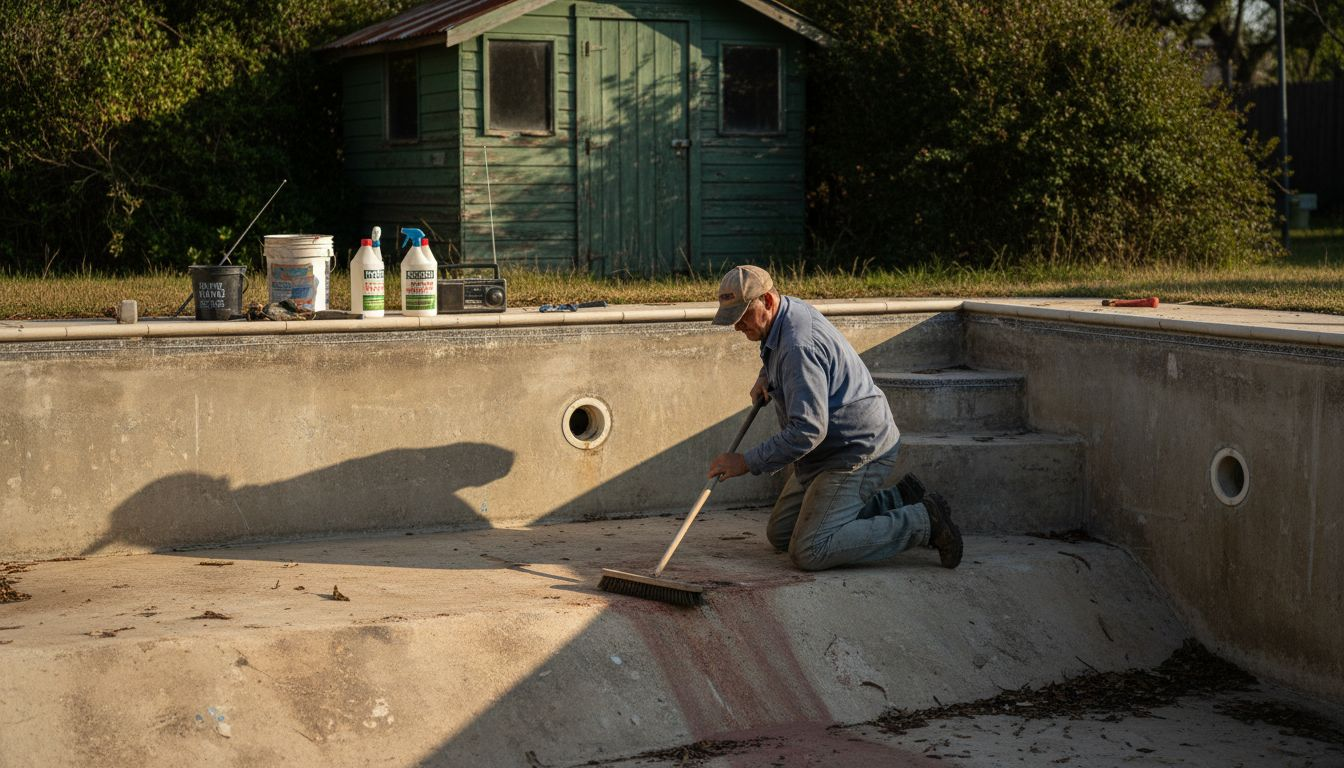
Next, focus on addressing any underlying structural concerns. Pool surface renovation standards emphasize the importance of ensuring water tightness and addressing potential corrosion points. Repair any structural cracks with appropriate pool repair compounds, paying close attention to the edges, corners, and areas around fixtures. Ensure that the surface is completely clean and free of debris, old materials, and any contaminants that could interfere with the new finish application.
Pro Tip: Invest in professional-grade cleaning solutions specifically designed for pool surfaces to remove stubborn stains and ensure a perfectly prepared base for your new pool finish.
Step 4: Apply new finishes, tiles, and deck upgrades
This stage of pool remodeling transforms your aging pool into a stunning backyard centerpiece. Your objective is to select and install materials that not only look beautiful but will withstand Florida’s challenging environmental conditions.
Pool renovation materials require careful consideration for durability and aesthetic appeal. Start by selecting your pool finish carefully. Options like smooth plaster, textured aggregate, or ceramic tiles each offer unique benefits. For the pool interior, consider materials that resist staining, provide slip resistance, and complement your overall design aesthetic. Pay attention to color and texture choices that will enhance your pool’s visual appeal while providing long term performance.
Here’s a comparison of common pool finish types and their key advantages for renovation projects:
| Finish Type | Durability | Maintenance Needs | Visual Appeal |
|---|---|---|---|
| Smooth Plaster | Moderate lifespan | Needs periodic care | Clean, classic look |
| Textured Aggregate | High resilience | Low upkeep | Natural appearance |
| Ceramic Tile | Very long lasting | Minimal cleaning | Premium modern style |
Next, focus on deck upgrades that integrate seamlessly with your pool design. Choose materials that can withstand intense sunlight, heavy foot traffic, and potential moisture exposure. Concrete overlays, textured stone, and modern composite materials offer excellent options for creating a functional and attractive poolside environment. Pool surface upgrade standards recommend selecting materials that provide safety, durability, and visual harmony with your pool’s new finish.
Pro Tip: Order slightly more materials than your calculated measurements to account for cuts, waste, and potential future repairs.
Step 5: Verify quality and complete final checks
The final verification stage is your opportunity to ensure every aspect of your pool remodel meets the highest standards of quality, safety, and performance. Your meticulous review will confirm that the extensive work and investment result in a stunning and functional pool environment.
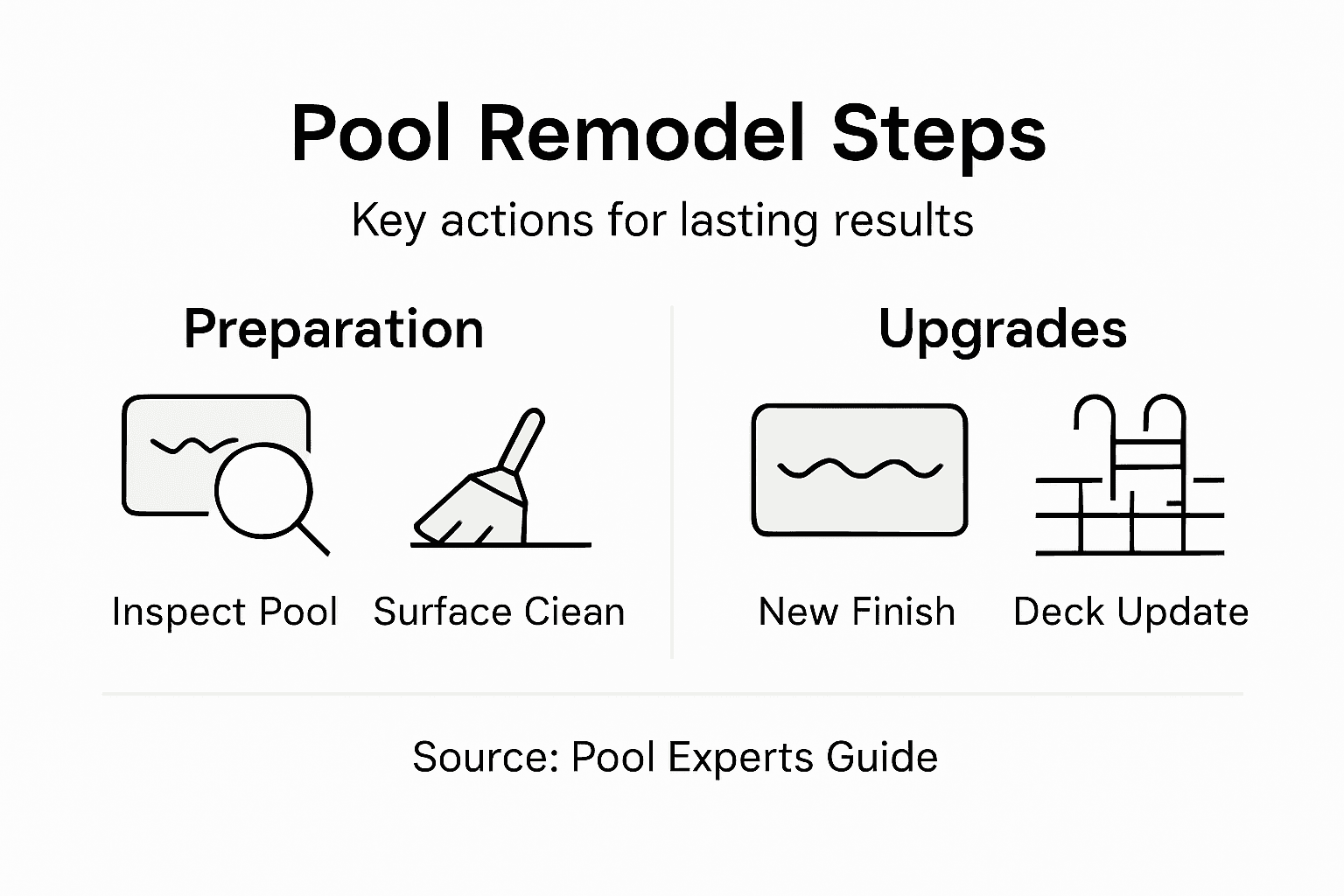
Quality verification processes require a systematic and comprehensive approach. Walk around the entire pool area, examining each surface carefully for consistent finish, smooth transitions, and absence of imperfections. Check that tiles are evenly spaced and securely installed, pool surfaces have uniform color and texture, and deck areas show no signs of uneven installation. Test all functional elements including pool lighting, water features, and equipment connections to ensure everything operates smoothly and safely.
This summary outlines essential final check steps to confirm pool remodel quality:
| Inspection Area | What to Look For | Testing Method |
|---|---|---|
| Pool Surface Finish | Even color, no flaws | Visual, touch inspection |
| Tile Installation | Uniform spacing, secure fit | Manual pressure check |
| Equipment Function | Proper operation, safety | System test run |
| Decking | Stable, smooth transitions | Walk-through assessment |
Conduct detailed functional tests that simulate real world usage conditions. Run pool pumps and filtration systems through complete cycles, check water flow rates, and verify that all new finishes respond appropriately to water exposure. Quality assurance testing involves more than visual inspection. Use moisture meters to check for potential water penetration issues, examine grout lines for consistent sealing, and test surface slip resistance to guarantee safety standards are met.
Pro Tip: Document your inspection with dated photographs and notes to create a personal record of your pool remodel and assist with any future maintenance needs.
Transform Your Aging Pool Into a Lasting Oasis
Remodeling an older pool brings unique challenges like repairing structural cracks, upgrading electrical safety, and selecting durable, weather-resistant finishes that withstand Florida’s climate. If you want lasting beauty and durability without the hassle of trial and error, relying on proven specialists is essential. Classic Marcite has resurfaced over 100,000 pools using high-quality materials like Pebble Tec® to enhance both strength and appearance while addressing key pain points such as water efficiency and long-term maintenance.

Don’t let surface imperfections, worn tiles, or outdated pool equipment hold you back from enjoying your backyard sanctuary. Contact Classic Marcite today to experience expert pool remodeling and resurfacing in Orlando and Jacksonville. Act now to secure your free estimate and start the transformation your pool deserves. Visit Classic Marcite to explore how our craftsmanship ensures your remodel achieves flawless quality and enduring performance.
Frequently Asked Questions
How can I identify structural issues in my older pool?
Inspect your pool for cracks, chips, and uneven areas in the shell. Conduct a thorough visual inspection around fittings and stress zones where damage is likely to occur. Document any findings to prioritize repairs and ensure you’re addressing structural integrity.
What design updates should I consider for my pool remodel?
Focus on enhancing both the visual appeal and functionality of your pool. Incorporate water-efficient design practices and choose durable materials to create a sustainable and attractive space. Review your design objectives and align them with modern features that will improve performance and aesthetics.
How do I prepare my pool surfaces before applying new finishes?
Begin by draining the pool and inspecting surfaces for any damage or deterioration. Remove old finishes carefully and address any structural issues, ensuring the surface is clean and stable before applying new materials for the best adhesion.
What types of finishes and tiles are best for a durable pool remodel?
Choose materials that are not only visually appealing but also resistant to staining and slip hazards. Popular options include smooth plaster, textured aggregate, or ceramic tiles, each offering unique benefits in terms of maintenance and longevity. Evaluate your choices based on durability, maintenance needs, and overall aesthetic appeal.
How can I verify the quality of my pool remodel after completion?
Conduct a detailed inspection of the entire pool area to check for even surfaces, secure tiles, and properly installed equipment. Perform system tests to ensure everything functions correctly, and check for any sign of imperfections or issues that need addressing before considering the project complete.
What maintenance steps should I take after remodeling my pool?
Regularly inspect finishes and tiles for wear and address any minor damages promptly to avoid larger issues. Establish a routine for cleaning and maintaining equipment to ensure long-term performance, aiming for at least quarterly checks to keep everything in optimal condition.
Recommended
- Reasons For Pool Remodeling: Improve Safety And Value
- 7 Types Of Pool Remodeling Every Homeowner Should Know
- 7 Best Pool Resurfacing Materials For Long-Lasting Results
- Pool Resurfacing: Boosting Durability And Looks
- 10 Best Homemade Grout Cleaners
- Pool Resurfacing Maitland FL
- Pool Resurfacing Winter Park FL