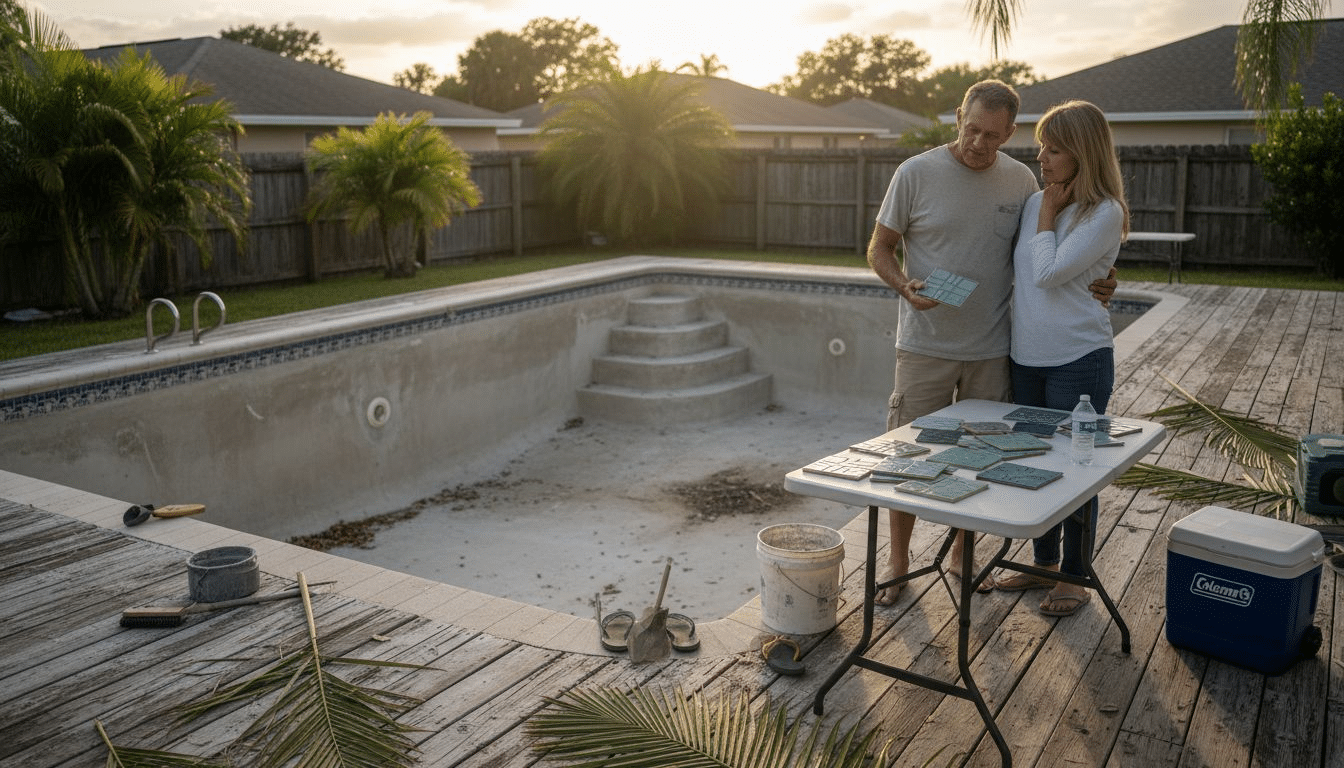
Conflicting advice and popular rumors often leave Orlando and Jacksonville homeowners puzzled about pool renovation. With so much at stake in protecting your backyard investment and family safety, sorting fact from fiction matters. This guide untangles the basics of renovation, tackles widespread myths, and highlights how choosing the right materials and following safety rules can save you serious time, money, and headaches.
Table of Contents
- Pool Renovation Basics And Common Myths
- Different Pool Resurfacing Types Explained
- Truth About Costs And Permit Requirements
- Material Choices: Durability Versus Appearance
- Risks Of Diy And Choosing The Wrong Contractor
Key Takeaways
| Point | Details |
|---|---|
| Renovation Importance | Pool renovation enhances surface durability, safety compliance, and long-term value, not just appearance. |
| Myths to Dispel | Common myths suggest that pool resurfacing is solely cosmetic and that any contractor can do it—both are incorrect. |
| Material Selection | Choosing the right resurfacing material is crucial, as it affects durability, maintenance, and cost over time. |
| Professional Oversight | Hiring qualified contractors and obtaining necessary permits are essential to avoid legal issues and ensure safety during renovations. |
Pool renovation basics and common myths
Pool renovation sounds complicated, but understanding the basics clears up confusion fast. Most Orlando and Jacksonville homeowners operate on outdated information or hear conflicting advice from neighbors.
Let’s break down what actually happens during renovation and separate fact from fiction.
What pool renovation really involves
Pool renovation isn’t just about appearance. It addresses three critical areas: surface durability, safety compliance, and long-term value protection for your home.
The main process includes:
- Draining and cleaning the pool interior thoroughly
- Removing old, deteriorating surface material
- Repairing structural damage or cracks
- Applying new finish material (like Pebble Tec® for superior durability)
- Reinstalling decking, coping, and equipment
- Final inspection and water balancing
Each step builds on the previous one. Skipping preparation leads to premature failure of the new surface.
Quality pool renovation transforms not just how your pool looks, but how long it lasts and how safely your family enjoys it.
Common myth: “Resurfacing is purely cosmetic”
This is the biggest misconception we encounter. Your pool surface deteriorates constantly—Florida’s sun, salt air, and chlorine chemicals accelerate breakdown significantly.
A worn surface exposes concrete shell to water penetration and structural damage. Within 5-10 years, this costs thousands in repairs. Renovation prevents this cascade of problems.
Common myth: “My pool is fine; it just needs cleaning”
Dirt accumulation differs from surface damage. When you see stains that won’t brush away or feel rough spots under your hand, the surface itself has degraded.
Surface damage won’t improve with cleaning alone. Pressure washing a damaged surface actually speeds deterioration by forcing water into cracks.
Common myth: “Any contractor can handle pool renovation”
Pool resurfacing requires specialized knowledge about materials, water chemistry, climate factors, and structural assessment. The difference between an experienced team and an amateur shows up within the first year.
When evaluating contractors, ask about their experience with pool renovation mistakes homeowners should avoid and their specific material certifications.
Common myth: “All pool finishes last equally long”
Finish materials vary dramatically in durability and maintenance needs. Some require acid washing annually; others resist algae growth naturally.
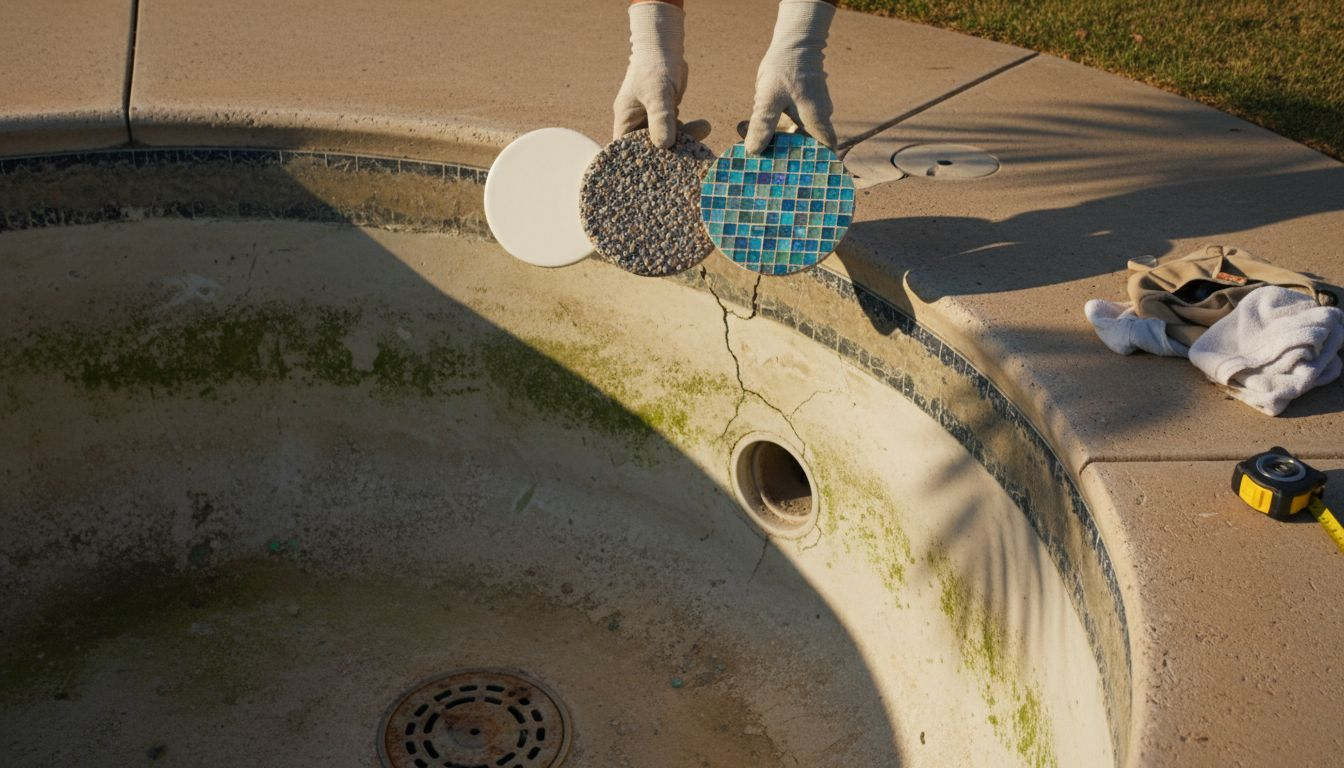
Your climate and water conditions determine which finish performs best. A finish chosen by price rather than compatibility fails prematurely.
Common myth: “I can delay renovation indefinitely”
Pool surfaces reach a critical failure point. Once structural water penetration begins, renovation costs spike dramatically because contractors must address concrete damage underneath.
Early renovation costs less than emergency repairs after failure. The difference between planned renovation and emergency repair can exceed $5,000.
Safety requirements matter too
Proper pool safety equipment includes barriers, fencing, and drain protection. Many homeowners don’t realize that renovation offers the perfect opportunity to upgrade safety systems.
Florida law requires specific barrier types and maintenance standards. Renovation ensures your pool meets current requirements.
Common myth: “Renovation takes months and disrupts everything”
Modern renovation timelines depend on pool size and surface choice. Most residential pools complete in 2-3 weeks, with families returning to the water quickly.
Planning ahead lets you schedule around your family’s preferences.
Pro tip: Schedule your pool renovation during Florida’s fall or winter months when you’re less likely to use the pool daily—this maximizes contractor availability and minimizes family disruption.
Different pool resurfacing types explained
Your pool’s surface is the foundation of everything—durability, appearance, safety, and maintenance all depend on material choice. Understanding the differences helps you make an informed decision for your Orlando or Jacksonville home.
Let’s walk through the most common resurfacing types and how they perform in Florida’s climate.
Plaster: The traditional choice
Plaster remains the most affordable resurfacing option and works well for basic pool needs. It provides a smooth, clean finish that homeowners recognize immediately.
Plaster typically lasts 5-7 years in Florida before needing reapplication. The sun and chemicals break down the material faster than in cooler climates.
Key characteristics:
- Most budget-friendly upfront cost
- Smooth finish that feels pleasant underfoot
- Requires regular acid washing (yearly recommended)
- Susceptible to staining and algae growth
- Needs frequent chemical balancing
Plaster works best for homeowners prioritizing initial cost over long-term durability.
Pebble finishes: Superior durability
Pebble finishes blend small pebbles with cement to create textured, durable surfaces. They resist staining, algae, and UV damage significantly better than plaster.
Pebble Tec® and similar aggregate finishes last 10-15 years, sometimes longer. The textured surface provides superior grip and comfort.
Benefits include:
- Exceptional durability in Florida heat
- Resists staining and algae naturally
- Beautiful aesthetic with color options
- Lower maintenance than plaster
- Better water chemistry balance
Fiberglass and coating systems
Fiberglass coatings offer a different approach—they’re applied over existing surfaces to seal and protect. These epoxy-based systems create waterproof barriers that extend pool life.
Pool resurfacing materials for long-lasting results include modern coating technologies that weren’t available a decade ago. Fiberglass provides moderate durability at mid-range pricing.
Considerations:
- Applied over damaged surfaces sometimes
- Medium lifespan (7-10 years)
- Moderate cost between plaster and aggregates
- Smooth, glossy finish
- Less grip than textured options
Tile and stone surfaces
Tile and stone represent premium resurfacing choices for high-end pools. Glass tile, porcelain, and natural stone offer luxury aesthetics and exceptional durability.
These materials last 15+ years but cost significantly more. Installation complexity increases project timelines and labor expenses.
Cost comparison and Florida performance
Understanding different resurfacing material durability and costs helps balance your budget with longevity expectations. In Florida’s harsh environment, cheaper materials often mean higher long-term costs.
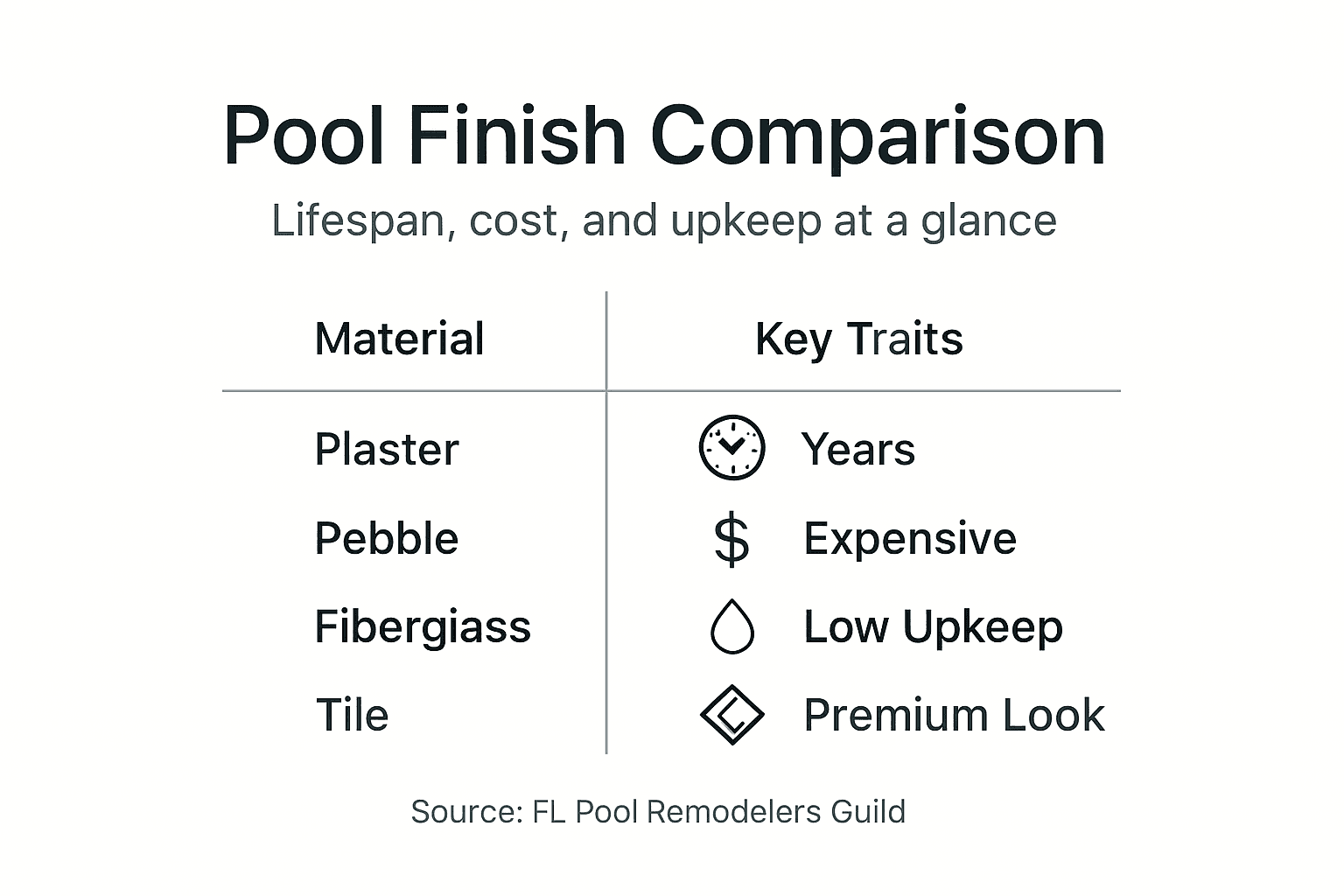
Resurfacing type comparison:
| Material | Lifespan | Cost Level | Maintenance |
|---|---|---|---|
| Plaster | 5-7 years | Low | High |
| Pebble | 10-15 years | Medium-High | Low |
| Fiberglass | 7-10 years | Medium | Medium |
| Tile | 15+ years | High | Low |
Choose based on your priorities
Your choice depends on how long you plan to own the pool, maintenance willingness, and budget. Florida’s sun and salt air are brutal on pool surfaces.
Pebble finishes dominate Central Florida for good reason—they outlast alternatives while reducing maintenance dramatically. The initial investment pays back through extended service life.
Here’s a comparison of pool resurfacing materials and their suitability for different homeowner priorities:
| Material Type | Best For | Main Drawback | Typical Owner Priority |
|---|---|---|---|
| Plaster | Initial low cost | Shortest lifespan, stains | Budget-conscious, aesthetic |
| Pebble Finish | Low maintenance, durability | Higher upfront cost | Longevity, easy upkeep |
| Fiberglass | Smooth surface feel | Moderate durability, less grip | Moderate budget, comfort |
| Tile/Stone | Premium appearance | Highest cost, labor intensive | Luxury, visual impact |
Pro tip: Request samples of each material option in natural sunlight at your property, then visualize them filled with water—color and texture change dramatically based on lighting and water depth.
Truth about costs and permit requirements
Pool renovation costs vary wildly depending on pool size, material choice, and scope of work. Permits add complexity that many homeowners don’t anticipate. Understanding both helps you budget accurately and avoid costly surprises.
Let’s break down what actually happens with pricing and local requirements in Orlando and Jacksonville.
Permit requirements are non-negotiable
Florida law requires permits for most residential pool renovations. This isn’t optional—skipping permits creates legal liability and makes future home sales problematic.
Swimming pool permit guidelines specify exactly what documentation your contractor must submit. Local building departments review plans, calculate structural safety, and verify compliance with current codes.
Permit applications typically include:
- Detailed construction drawings
- Site plans showing pool location and setbacks
- Material specifications and engineering calculations
- Proof of contractor licensing
- Proof of insurance
Permits protect you legally and ensure your renovation meets current safety standards—they’re not bureaucratic red tape.
What permits actually cost
Permit fees in Orange County and Duval County typically range from $300-$800, depending on project scope. These fees cover plan review, inspections, and administrative processing.
Some contractors bundle permit costs into their quotes; others bill separately. Ask upfront whether permit fees are included in your estimate.
Permit timelines matter
Plan review takes 1-3 weeks typically. Some projects get approved quickly; others require revisions and resubmission, extending timelines by weeks.
Building departments schedule inspections at specific phases: before draining, during surface work, and after finishing. Missing inspection windows delays project completion.
Cost breakdown for typical residential renovation
Resurfacing costs depend heavily on pool size, material choice, and repair needs. Here’s what homeowners typically spend:
Small pool (15,000 gallons):
- Plaster: $3,000-$5,000
- Pebble finish: $6,000-$9,000
- Permits and inspection: $400-$700
Medium pool (25,000 gallons):
- Plaster: $5,000-$7,500
- Pebble finish: $9,000-$14,000
- Permits and inspection: $500-$800
Large pool (35,000+ gallons):
For easy budgeting, review these typical Florida pool renovation costs and timelines:
| Pool Size | Plaster Cost | Pebble Finish Cost | Permit + Inspection Fees | Typical Duration |
|---|---|---|---|---|
| Small (~15k gal) | $3,000 – $5,000 | $6,000 – $9,000 | $400 – $700 | 2 weeks |
| Medium (~25k gal) | $5,000 – $7,500 | $9,000 – $14,000 | $500 – $800 | 2–3 weeks |
| Large (35k+ gal) | $8,000 – $12,000 | $14,000 – $20,000 | $600 – $900 | 3+ weeks |
- Plaster: $8,000-$12,000
- Pebble finish: $14,000-$20,000
- Permits and inspection: $600-$900
Hidden costs to budget for
Unexpected expenses emerge frequently during renovation. When contractors drain your pool, they sometimes discover structural damage requiring repair before resurfacing.
Common surprises include:
- Concrete crack repair or structural patching
- Deck restoration or coping replacement
- Drain system upgrades for safety compliance
- Equipment repairs discovered during access
- Water testing and balancing chemicals
Budget an additional 10-15% beyond your estimate for contingencies.
Local health department involvement
Local health departments review plans for major renovations to ensure safety and sanitation compliance. Inspection appointments happen at specific project phases.
Failing inspection delays project completion and requires expensive corrections. Hiring experienced contractors who understand local codes prevents this scenario.
Premium for emergency vs. planned renovation
Planned renovations cost significantly less than emergency repairs. When you schedule during off-season, contractors offer better pricing and availability.
Emergency situations—pool failure requiring immediate draining—eliminate your negotiating position and force expedited work at premium rates.
Pro tip: Request an itemized estimate breaking down labor, materials, permits, and contingency separately—this prevents surprise billing and clarifies exactly what you’re paying for.
Material choices: durability versus appearance
Every pool material offers trade-offs between how it looks and how long it lasts. Your choice determines whether you’re repainting in five years or enjoying the same surface for 15.
Understanding this balance helps you make decisions aligned with your actual lifestyle, not just your Instagram-worthy vision.
The durability-appearance spectrum
Materials cluster along a spectrum. Some prioritize beauty but need frequent maintenance. Others sacrifice initial aesthetics for bulletproof durability.
Your pool’s location in your backyard, how much you actually use it, and your tolerance for maintenance work heavily influence the right choice. A pool you swim in weekly has different needs than a decorative focal point.
Plaster: Beautiful but demanding
Plaster finishes create the classic pool look—smooth, clean, and inviting. The brilliant white surface reflects light beautifully and feels pleasant underfoot.
The trade-off? Plaster requires constant attention. It stains easily, requires acid washing annually, and deteriorates faster in Florida’s harsh sun. Within 5-7 years, that perfect finish needs replacement.
Plaster works best for:
- Homeowners who enjoy pool maintenance
- Properties with partially shaded pools
- Budget-conscious renovators accepting shorter lifespans
- Pools primarily for aesthetics rather than frequent use
Choose plaster if appearance matters more than long-term durability and low maintenance.
Pebble finishes: Beauty that lasts
Pebble finishes blend durability with genuine visual appeal. The textured surface offers color options and sophisticated aesthetics without the maintenance nightmare.
They resist staining, algae growth, and UV damage significantly better than plaster. Most last 10-15 years—double or triple plaster’s lifespan. Pool resurfacing boosting durability and aesthetics commonly relies on pebble finishes for this exact reason.
Characteristics:
- Exceptional durability in Florida heat
- Lower maintenance than plaster
- Beautiful textured appearance
- Cost moderately higher than plaster
- Natural resistance to algae and staining
Fiberglass coatings: Smooth longevity
Fiberglass coatings create ultra-smooth surfaces with glossy appeal. They’re waterproof barriers that extend pool life by protecting concrete underneath.
Moderate durability (7-10 years) falls between plaster and pebble finishes. Appearance stays consistent throughout the lifespan without the staining issues that plague plaster.
Tile and stone: Premium durability and style
Tile and stone surfaces represent the ultimate durability choice. Glass tile, porcelain, and natural stone last 15+ years while offering premium aesthetics.
The trade-off is substantial cost and complex installation. These materials demand precision workmanship and specialized contractors. Once properly installed, they require minimal maintenance.
Use tile for:
- High-end properties where appearance is paramount
- Long-term homeowners planning to stay 10+ years
- Pools designed as design focal points
- Projects where maintenance is lowest priority
Chemical resistance matters in Florida
Understanding material durability against chemical exposure is critical in Florida. Chlorine, salt, and pH fluctuations accelerate degradation of some materials.
Plaster deteriorates quickly under aggressive chlorine use. Pebble finishes resist chemical damage naturally. This fundamental difference explains why durability varies so dramatically between materials in Florida’s climate.
Making your choice
Ask yourself these questions:
- How many years will you own this home?
- How frequently do you actually use the pool?
- How much maintenance appeals to you?
- What’s your realistic annual maintenance budget?
- Does appearance or durability matter more?
Your honest answers guide the right material selection. Many Orlando and Jacksonville homeowners discover pebble finishes offer the best balance—they look great and last long without becoming a maintenance burden.
Pro tip: Visit properties in your neighborhood with different pool finishes and ask owners about their actual maintenance experience—real-world feedback from people in your climate zone beats any sales pitch.
Risks of DIY and choosing the wrong contractor
DIY pool renovation sounds appealing until you realize you’re working with electrical systems, structural elements, and chemical safety. One mistake cascades into expensive repairs—or worse, serious injuries.
Choosing the wrong contractor creates similar disasters. Let’s talk about what can go wrong and how to avoid it.
DIY pool renovation: Where it fails
Pool renovation isn’t like painting a bedroom. It involves specialized knowledge about materials, structural engineering, water chemistry, and safety compliance that takes years to master.
Homeowners attempt DIY work thinking they’ll save money. They often spend double correcting mistakes and paying for emergency repairs.
Safety risks are real and serious
Electrical hazards top the danger list. Pools require proper grounding and bonding of all electrical components to prevent fatal shocks. Improper grounding and bonding creates electrical hazards that kill or permanently injure people.
Unqualified work leads to:
- Electrical shock injuries or fatalities
- Equipment malfunctions from improper wiring
- Fire hazards from faulty connections
- Permanent nerve damage from electrical exposure
One electrical mistake in a pool renovation can be fatal. This isn’t an area where learning-on-the-job is acceptable.
Chemical handling mistakes
Pool chemicals require precise understanding of safety protocols. Improper mixing, storage, or application causes chemical burns, toxic fumes, or explosions.
DIY mistakes here aren’t minor—they create hazardous conditions that linger long after your project ends. Neighbors’ properties and groundwater can be contaminated.
Structural damage from poor preparation
Skipping proper preparation or using incorrect techniques damages pool structure permanently. Once concrete fails, repair costs exceed original renovation budgets by 300-400%.
Common DIY mistakes:
- Inadequate surface preparation leading to premature failure
- Improper drainage before resurfacing
- Wrong material application techniques
- Missed cracks or damage during assessment
- Failing to seal concrete properly
Permit and inspection problems
Skipping permits saves money upfront but creates massive liability. If your pool injures someone, insurance denies claims because work wasn’t permitted. You’re personally liable for medical costs.
Future home sales stall when buyers discover unpermitted work. Banks refuse to finance properties with code violations.
Choosing the wrong contractor
Not all contractors are equal. Hiring based solely on price guarantees problems. Selecting qualified pool contractors requires verification of licensing, insurance, references, and experience.
Red flags to avoid:
- Contractors without proper licensing
- No proof of liability insurance
- Unwilling to provide references
- Vague estimates without itemization
- Pressure to pay cash or upfront deposits
- No written contract or warranty
- Poor communication or unprofessional behavior
What to verify before hiring
Ask specific questions and demand documentation:
- Request current license verification with the state
- Confirm liability and workers’ compensation insurance
- Ask for minimum three recent project references
- Request detailed written estimates
- Verify their experience with your specific material type
- Confirm they’ll handle all permits and inspections
- Get warranty terms in writing
Cost of cheap contractors
Cheap estimates hide problems. When contractors underbid, they cut corners on material quality, labor time, or safety compliance.
You pay later through poor results, frequent repairs, or dangerous conditions. The difference between a $6,000 estimate and an $8,500 estimate often represents legitimate quality and safety, not contractor greed.
Verification matters
Understanding why licensed contractors matter protects your investment and family safety. Licensed contractors carry insurance, follow codes, and face professional consequences for poor work.
Unlicensed contractors disappear when problems emerge, leaving you responsible for repairs and liability.
Pro tip: Get three detailed estimates from licensed contractors, then check references from all three—ask specifically about timeline accuracy, communication, and any unexpected issues that arose during their projects.
Take Control of Your Pool Renovation with Trusted Experts
Florida homeowners understand the frustration of costly misunderstandings when it comes to pool renovation. From debunking myths about surface durability to navigating complex permit requirements and choosing the right materials like Pebble Tec®, your pool needs a trusted partner who delivers both beauty and long-term performance. Avoid the common pitfalls such as improper resurfacing, unsafe electrical work, and premature repairs by relying on proven professionals with decades of experience.

Ready to transform your pool with craftsmanship that stands the test of Florida’s harsh climate? Discover why Classic Marcite has resurfaced over 100,000 pools and remains Central Florida’s largest Pebble Tec® applicator. Visit us at Classic Marcite to explore our comprehensive pool resurfacing services and learn more about how we ensure your renovation meets safety, durability, and aesthetic goals. Don’t delay costly repairs—schedule your free estimate now and take the first step toward a safer, more beautiful pool today.
Frequently Asked Questions
What is included in a pool renovation?
Pool renovation includes draining and cleaning the pool, removing old surface material, repairing structural damage, applying new finishes, reinstalling decking and equipment, and conducting final inspections for water balance.
How often should I renovate my pool?
Renovating your pool should be considered every 5-15 years, depending on the surface material and environmental conditions. Regular maintenance helps avoid costly repairs due to water damage.
Can I handle my pool renovation myself?
While DIY pool renovation may seem cost-effective, it poses significant risks. Proper electrical safety, chemical handling, and structural assessment require specialized knowledge and experience.
What are the common myths about pool renovation?
Common myths include the belief that resurfacing is only cosmetic, any contractor can manage renovation, and that all pool finishes last equally long. In reality, the condition of your pool and material choice significantly impact durability and safety.